Fleetwood Mac will be reuniting with Stevie for a global tour, according to a new report. The most famous band lineup will begin rehearsing next March, with tentative plans to be on the road by June 2018.
Category: Fleetwood Mac

REVIEW: Fleetwood Mac – Tango in the Night [Deluxe Edition]

(Neal Preston) FLEETWOOD MAC
TANGO IN THE NIGHT
Warner Brothers (3-CD, LP, DVD Box Set)**** (4 stars out of 5)
Five years on from their last album, Mirage and 10 years after Rumours, Fleetwood Mac were more-or-less in tatters when they re-emerged in 1987. Lindsey Buckingham was in the throes of a new solo album, Stevie Nicks in the grip of all manner of personal problems, Mick Fleetwood and the McVies were living their own lives. If Tango in the Night was not a contractual obligation that they had no choice but to fulfill, then it’s hard to imagine why they even thought they could make a record.
Actually, the answer to that is simple — Christine McVie did a TV program, Fleetwood and Buckingham joined her for the occasion and between them they hatched what was simultaneously one of the most anticipated albums of the age and, once past the admittedly sizable fan club, one of the most unnecessary. 1987 was the year of hair metal et al. Who cared about Fleetwood Mac?
Even today, Tango is viewed less as the final installment of that imperious succession of monsters that this latest incarnation of the band had released, and more as the first in the run of “who cares?” sets that wound down the band’s original career (Behind the Mask and do-you-even-remember Time followed it up.)
And yet… song for song, performance for performance, Tango in the Night is one of the strongest albums in the band’s entire canon. Be honest — even Fleetwood Mac (1975) and Rumours have the songs you skip on the occasions you play them; Tusk is only perfect if you weed out one-third of its bodyweight; and Mirage… well, it’s Mirage, isn’t it.
Tango, though, defiantly boasts just two truly deplorable songs, and as they are both the work of Ms. Nicks (“Welcome to the Room… Sara” and the positively wretched “When I See You Again”), we will accept that she maybe wasn’t in the best place for the sessions… and, according to the liners, wasn’t even in the room for more than a couple of weeks.
 Even the love grunts that punctuate “Big Love” were recorded by Lindsey and Christine, and then sped up to a Nicksian pitch, and on the subject of “Big Love,” it’s peculiar the way history has written it off as little more than a barrage of snorting, to which a half-written song has been painfully grafted. Because, listened to again, it’s great and, if you can overlook the retching, it’s a nigh-on perfect locomotive rocker, and second only to the title track in terms of intensity.
Tango in the Night itself is phenomenal, an anguished guitar work-out that harks back to the Peter Green-era “Green Manalishi” in terms of deliverance and release, and makes you wish that this was the side of Fleetwood Mac that snagged the headlines… add “I’m So Afraid,” “The Chain” and “Tusk” to the line-up and there’s barely another band on earth can touch Mac for that earthy, emotional ooomph.
Christine McVie, too, seems more than usually inspired; the songs on which she takes at least a co-credit (the hits “Everywhere” and “Little Lies,” and three tracks written with Buckingham) include some of her finest ever Mac contributions, with “Mystified” maybe her best of all time. And, while the production (very ’80s, as you’d expect) might well have painted over a lot of the cracks that had obviously splintered the quintet, a second disc of demos and alternates (and a couple of B-sides) reinforces the strength of both songs and players. The “full version” of album closer “You and I, Part II,” now sensibly subtitled “Part 1 and 2,” is consummate Fleetwood Mac; a song that effectively incorporates everything that had made them so magical for the past 12 years. What better way could there have been to conclude this phase of the group’s existence?
The remainder of the deluxe box set, in comparison to those that preceded it, feels sparse but really, it isn’t. One disc rounds up the various 12-inch mixes that accompanied the album’s five singles; another serves up the promo videos and a lush 5.1 mix of the album; and finally, the original LP is present on vinyl, and a lovely job they made of it.
Yes, the liners could have been more expansive, delving deeper into the triumphs and tragedies that we know accompanied the sessions… and for heaven’s sake, how many times did the author need to refer to the band’s career as a dance? Across a touch over two pages, Tango becomes “the last dance,” “a graceful turn in the extended dance,” “a complex moment” in a “complicated dance” and, of course, we are still being moved by the band’s “dance with history.” Which makes you wonder which of their albums is next for the beautifully boxed, deluxe-o-rama treatment? Well, it probably won’t be Time. The one after that, on the other hand…
Dave Thompson / Goldmine / June 2017 (p34)

REVIEW: Fleetwood Mac Tango in the Night (Deluxe Edition)
The music of Fleetwood Mac could fairly be said to define the 1970s – in all its style, tumult, and excess. Where did that leave the union of Mick Fleetwood, John McVie, Christine McVie, Stevie Nicks, and Lindsey Buckingham once a new decade emerged? 1982’s Mirage found Fleetwood Mac trying to recapture the magic of 1977’s epochal Rumours, and succeeding in large part. Yet Mirage felt as if it firmly had one foot planted in the previous decade. With its belated follow-up, 1987’s Tango in the Night, the band embraced the 1980s and created an album for all time. In true Mac fashion, the group was also dissolving in the process. Now, Tango in the Night is the fourth of their albums to receive a multi-format reissue campaign from Warner Bros. Records and Rhino including a slipcased 3-CD/1-DVD/1-LP Deluxe Edition box set.
The tango, is of course, a dance characterized in part by “stylized body positions” per Merriam-Webster – or an “interaction marked by a lack of straightforwardness.” Both of those definitions have bearing on the Mac’s nocturnal dance, as producer-arranger Buckingham and longtime co-producer Richard Dashut crafted a stylish and beguiling set of textured, varied soundscapes that could hardly be called straightforward; note even the lurking, ominous eyes in the otherwise-tranquil, Henri Rousseau-inspired cover artwork. The productions embraced the technological advances of the late 1980s and the prevailing, synthesized radio-friendly sound, while crucially never ignoring that Tango in the Night was a “band” record. It may not be as conceptual as Rumours or as boldly experimental as Tusk, but Tango remains a potent collection nonetheless.
Seven of the twelve songs on Tango were, in full or in part, penned by Lindsey – betraying its roots as a solo album. The pulsating opener “Big Love” is quintessential Buckingham, with the band offering taut accompaniment to his vocals, guitar and Fairlight sampler. Both utterly contemporary and appropriately edgy, with Buckingham providing the provocative male and female utterances that are a key part of the track’s rhythm, it became one of Tango‘s six (!) singles and made it all the way to the top five of the Hot 100. “Caroline” is an impressionistic and mysterious ode to, or warning about, a captivating woman, driven by its thick, heavy and percussive drum sound. Title track “Tango in the Night” captures Buckingham’s mastery at creating a sonic atmosphere as it shifts from calm to restive, a soft ‘n heavy mélange of rumination. “Family Man” is a gentler composition with its simple lyric statement of “I am what I am/A family man…”
Three tracks were co-written by Buckingham and McVie, who are currently preparing for the release of their first joint album, simply entitled Lindsey Buckingham Christine McVie. Their swooning “Mystified” is a gentle, lightly tropical oasis on Tango, while the rocker “Isn’t it Midnight” (co-written with Eddy Quintela, McVie’s then-husband) is a cool depiction of a roguish figure. The gleaming, uptempo “You and I (Part II)” has sweetness and longing in equal measure. (Part I of the song was released on a non-LP single; while that edited version isn’t present on the Deluxe Edition, the combined full version of Parts I and II can be found on Disc Two.)
In David Wild’s typically excellent liner notes to this reissue, Stevie Nicks notes that “Christine is the hit songwriter in Fleetwood Mac.” Indeed, McVie penned the album’s two chart-topping and arguably most enduring hits: the shimmering romantic declaration “Everywhere” (No. 1 AC/No. 14 Pop) and the bittersweet, insistent “Little Lies” (No. 1 AC/No. 4 Pop). The latter was also penned with Quintela. Both songs proved undoubtedly that Fleetwood Mac, a decade post-Rumours, were still indisputably a force with which to be reckoned.
Stevie Nicks’ three major contributions to Tango all showed different aspects of her strong personality despite the fact that she wasn’t closely involved with the album’s creation. “Seven Wonders,” predominantly written by her friend Sandy Stewart, is a wistful reflection with a big hook, given a strong pop-rock sheen in Buckingham and Dashut’s production. Nicks brought Gone with the Wind imagery to “Welcome to the Room…Sara,” a personal account of her stay at the Betty Ford Center. Though the lyrics are typically enigmatic, the emotional underpinning shines brightly. The tender “When I See You Again” boasts both gravitas and intimacy as a duet performed by famous ex-lovers Nicks and Buckingham.
An entire disc of Demos, Alternates, and B-Sides is available as part of the Deluxe Edition or the 2-CD iteration, and as per usual in this series, these rarities are exceptional finds. All of the tracks are previously unreleased other than the B-sides: Tango yielded four unique flipsides including Buckingham’s “Down Endless Street,” Buckingham and Nicks’ “Book of Miracles,” and Buckingham and McVie’s “You and I (Part I)” and “Ricky.”
“Book of Miracles” is Lindsey’s instrumental arrangement of Stevie’s “Juliet,” which subsequently appeared in a different, full version with lyrics on her 1989 solo album The Other Side of the Mirror. “Juliet” itself is heard in a raw, rocking run-through version, too, as well as a demo of Nicks’ “Ooh My Love,” which would also find its way to The Other Side. Listen for Stevie’s effusive in-studio chatter following “Juliet” for an extra bit of fun.
Of the alternate versions, an early take of “Seven Wonders” is compelling even in embryonic form, while two versions of “Mystified” – an instrumental, and a lo-fi vocal version – in tandem offer a window into the song’s creation. The rather fully-produced demos included here are real treats, as well. “Tango in the Night” is radically different than the completed version. There are a couple of never-before-released songs, too. Buckingham’s “Special Kind of Love” is a slice of buoyant pop, and his and McVie’s “Where We Belong” has an in-progress feel that leads one to wonder how it would have developed had the band continued refining it. Nicks’ “Joan of Arc,” also mooted for Tango, is not among the still-generous array of selections here.
The Deluxe box also boasts a third disc of fourteen 12-inch remixes sure to please completists. These reinterpretations by Arthur Baker and John “Jellybean” Benitez of five Tango tracks (“Big Love,” “Seven Wonders,” “Little Lies,” “Family Man” and “Everywhere”) don’t supplant the originals, of course, but capture a particular time and place – that of the late-1980s dance/pop scene. Their inclusion is mightily welcome on this set. Unlike previous releases in this series, no live concert has been included, likely because Lindsey Buckingham departed the group before the tour supporting Tango.
The Deluxe Edition’s DVD has the album’s five era-defining music videos, and a pristine 24/96 stereo version of the album. (No surround mix was available this time around.) For listeners with the capabilities to enjoy it, this high-resolution version is the preferred way to experience Tango in the Night. A vinyl LP of the original album only rounds out the package. A gatefold houses the LP as well as a slots for each of the discs in a unique sleeve.
The various components of Tango in the Night have been optimally remastered by Dan Hersch, while the previously unreleased material has been lovingly mixed by Brian Kehew with Bill Inglot, who produced the set with Steve Woolard. David Wild provides the essay in the 12-page LP-sized booklet, drawing on fresh and revealingly candid (and often humorous!) quotes from Stevie Nicks, Lindsey Buckingham, and Mick Fleetwood. Mick marvels at the “strange but true” story of the band, but one thing is clear listening to this revitalized Tango in the Night – that these rock-and-roll survivors could put aside their differences to come together and create something vital. This Tango is as mysterious and beguiling as ever.
Joe Marchese / The Second Disc / April 18, 2017

REVIEW: Fleetwood Mac Tango in the Night
If you were never much of a fan of the world-beating, Buckingham-Nicks version of Fleetwood Mac, Tango in the Night was the album that bore out all your reservations. Bland, self-indulgent, easy-listening, cold, clinical, calculating, mercenary: On the surface, especially in 1987, it was all of that where the band’s previous million-sellers hadn’t quite checked all the boxes.
Time and trends have been kind, though. Tango in the Night’s hits never really left the radio, becoming nearly as ubiquitous as those from Rumours. And a lot of what was previously dismissed as overproduction now simply sounds modern. Lindsey Buckingham, the band’s grand marshal, has been given his rightful place among rock’s bonafide Creative Geniuses. The climate is ripe for critical reassessment.
Fair enough, but let’s not get ahead of ourselves.
From a cynical perspective, Tango in the Night is the sound of a band doing exactly what it had to do in order to reclaim lost sales (the preceding Mirage and Tusk had sold mere millions rather than tens of millions), please record company execs and radio programmers alike, and keep pace with then-current trends.
The whole thing has a gauzy, digital coating that comes from a combination of cold professionalism and heavy reliance on technology. It’s all right there in the two most enduring radio hits, “Everywhere” and “Little Lies”. Both Christine McVie compositions, they are the very embodiment of adult-oriented, FM-radio easy listening. Where McVie’s previous unabashed love songs felt endearing and sweet, these feel slight and rote. McVie and her bandmates seem like mere vehicles that are necessary for the technology and production to flow through. To a cynic, “Everywhere” and “Little Lies” have stuck around for their utility. When there are no more FM radio stations or waiting rooms around not to offend anyone, they will finally go away.
Those specific hits are emblematic of the album as a whole. The other tracks are either second-tier versions of them or toned-down versions of Buckingham’s whimsical indulgences.
But it all works. Each track is so listenable, so much a ready-made, state-of-the-1987-art symbol of the Fleetwood Mac you know and love, that the whole collection takes on an additive power. Yes, this is Fleetwood-Mac-by-numbers, but it is the best Fleetwood-Mac-by-numbers you could possibly imagine. Which, even 30 years later, is preferable to a lot of other pap on the radio.
The project that became Tango in the Night began as a Lindsey Buckingham solo album, which is its saving grace. His arranging skills and attention to detail make the even boilerplate material interesting. Take away the twinkling harp on “Everywhere”, the tinkling xylophone on “Mystified”, or the sneering backing vocals on “Little Lies”, and the songs hardly demand to be heard twice, much less a hundred times.
Stevie Nicks did not have much involvement in Tango in the Night, as she was busy with her solo career and averse to recording in ex-lover Buckingham’s home studio. When she does show up, she sounds disheveled. This quality works to the band’s benefit on “If I See You Again”, one of those vulnerable Nicks ballads. When Buckingham takes the vocal at the end, it is easily the album’s most poignant moment for anyone familiar with the pair’s turbulent history.
For his part, Buckingham picks up the slack and delivers a solid set of songs. “Caroline” remains one of the most fun, sing-along-inducing melodies he has written. The sultry title track, while not subtle, features some of his most scorching guitar work. It also lends the album some much-needed dynamics. “You and I, Part II” is breezy yet laced with regret. In hindsight, it is easy to hear Buckingham trying out techniques that would serve him very well in his subsequent solo work.
This “30th Anniversary” edition of Tango in the Night has an excellent audio remaster to recommend it. It can’t remove some of the dated synth sounds, but it does get rid of a lot of that gauzy coating and add more dimension and definition. The second disc, with outtakes and demos, offers few revelations aside from a couple nice Buckingham/McVie tracks that were shelved. The Deluxe version adds 12” remixes from Arthur Baker, videos, hi-def audio, and vinyl.
Yes, on the surface Tango in the Night confirms every troubling notion about the world-beating version of Fleetwood Mac. But this well-done reissue also reaffirms a surprising number of the strengths that got them to that position.
 Fleetwood Mac
Tango in the Night
Warner Bros.
US: 31 MAR 2017Rating: 7/10
John Bergstrom / Pop Matters (UK) / 12 April 2017
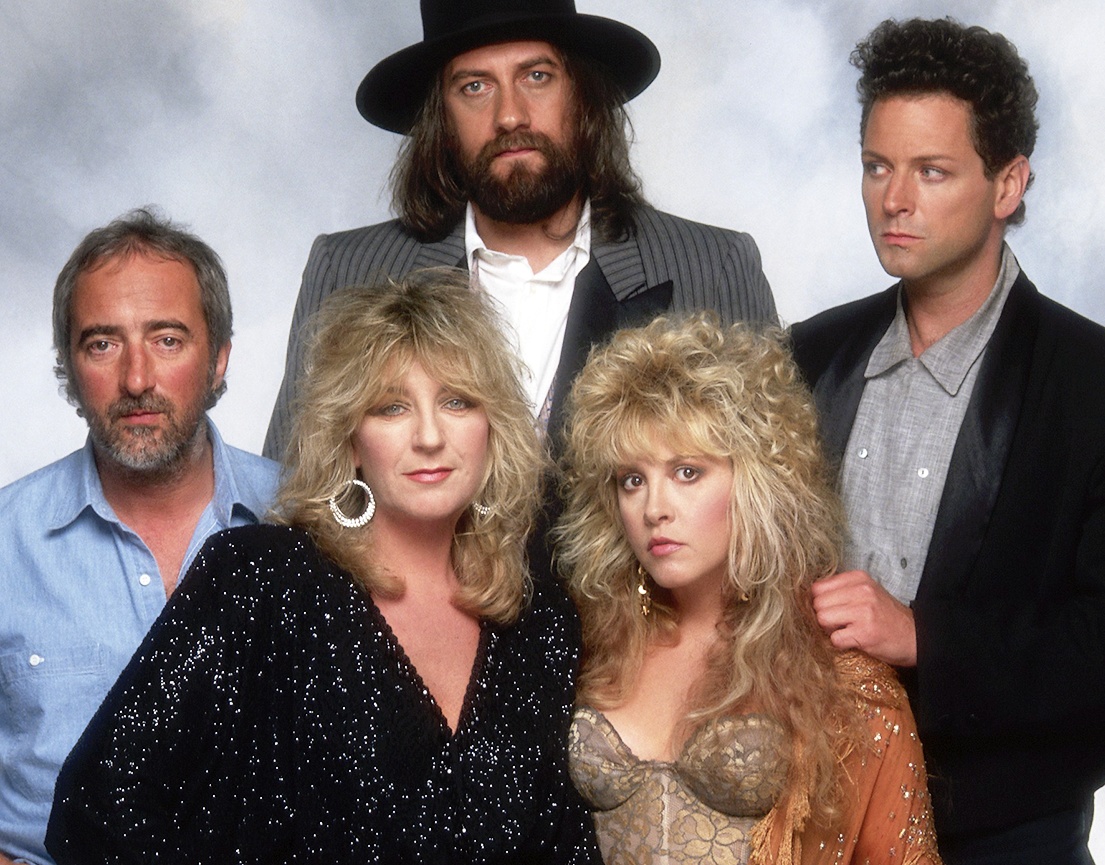
REVIEW: Fleetwood Mac Tango in the Night (Deluxe Edition)
Fleetwood Mac’s peak occurred between 1975 and 1977, when the band—reinvigorated by the addition of Lindsey Buckingham and Stevie Nicks—issued an eponymous album and Rumours. Many critics viewed the 1979 follow-up to the latter LP, Tusk, as a bit of a disappointment, and after that it was all supposedly downhill—way downhill.
I’m not buying this party line, as I’ve noted in my reviews of deluxe reissues of Tusk and 1982’s Mirage. I think those albums were largely terrific, and I can say the same about 1987’s Tango in the Night. I’m probably not alone in rejecting the critical consensus about Tango, moreover, since the CD has sold more than 15 million copies and ranks as the second-bestselling album of the group’s career (after Rumours).
The record, which started out as a Buckingham solo project and wound up being his last album with the group, has now joined the Fleetwood Mac reissue series. And, like its predecessors in that series, this repackaging lives up to its “deluxe” billing. Three CDs respectively deliver a 2017 remaster of the original album; 13 B-sides, demos, and early and alternate versions; and more than a dozen 12-inch mixes of five Tango tracks. There’s also a DVD that includes videos for five of the tunes and a high-resolution stereo mix of the LP; and, for those who miss the pre-digital era, a vinyl record that contains the 2017 remaster. If all that’s not enough to keep you busy, you can turn to the enclosed oversized booklet, which features an essay about the album, plus lyrics, photos, and credits.
The rhythmic original LP, which sounds better than ever thanks to the remaster, is loaded with pleasures, not to mention hit singles. Among the highlights: Buckingham’s “Big Love,” which gives Donna Summer’s “Love to Love You Baby” a run for its money in the sensuality department; and such ear candy as “When I See You Again” and “Seven Wonders,” both with passionate Stevie Nicks vocals; and the sublime “Everywhere,” “Little Lies,” and “Mystified,” all sung by Christine McVie. Songs like these leave no doubt that Fleetwood Mac were masters of melody and production and that any one of its three vocalists would have been enough to make another band famous. A few tracks, such as “Family Man,” deliver more studio wizardry than emotion but the bulk of this material is the real deal.
Disc two is stronger than you might expect. “Down Endless Street” is as catchy as anything on the original album and, while you can see why Tango’s versions improved on some of the outtakes and demos here, they’re virtually all interesting and well-executed.
It’s difficult to be as enthusiastic about disc three, which dilutes everything that’s special about Fleetwood Mac by introducing disco beats and embellishments. If you’re nostalgic for Studio 54, this is the record for you. If not, you’ll likely prefer the songs on the original album.
I have mixed feelings about the DVD. It’s good to see the videos—which feature “Big Love,” “Seven Wonders,” “Little Lies,” “Family Man,” and “Everywhere”—but it would have been better to have some concert material from the period; what we have here instead are pretty visuals accompanied by a lip-synching band. As for the high-resolution version of the album on the DVD, it sounds even better than the CD; but it would have sounded better still if it were a 5.1 surround mix.
Happily, the album is being made available in several formats. Casual fans can opt for a single CD with the remastered album, though I’d recommend that listeners seriously consider a two-CD package that incorporates the disc of outtakes and other rarities. The everything-but-the-kitchen-sink edition described above is a somewhat more debatable (and, of course, pricier) purchase, but if you’re a big fan of the group, you might well be glad to have it.
Jeff Burger / The Morton Report / April 3, 2017
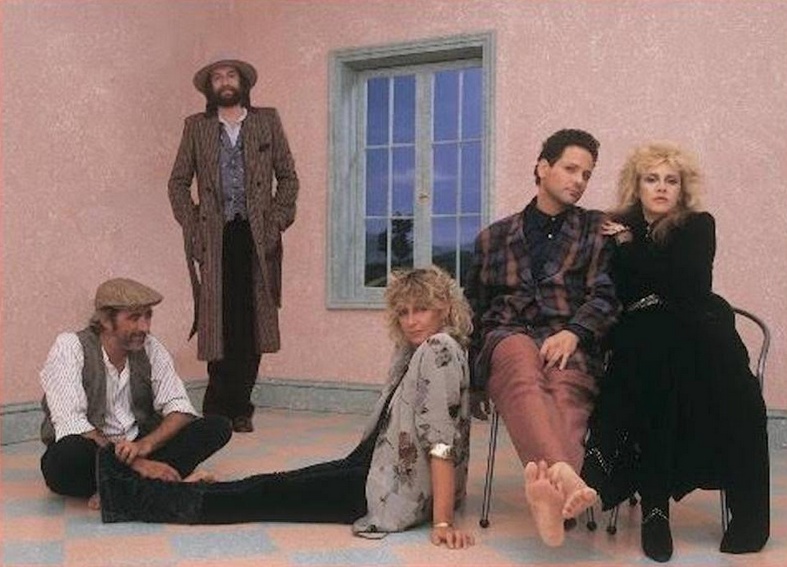
Fleetwood Mac: Tango In The Night
 Fleetwood Mac
Tango In The Night
*** (3 stars)
Warner Bros 0081227946388
(3CD+DVD+LP/2CD/CD)Big box for Big Love
If their roller-coaster career offers frequent comparison to a high-gloss soap opera, then Tango In The Night is surely the lull before the storm: everyone seemingly on their best behaviour, the sleekest of production values and a plot that moves the story on while never straying too far from the crowd-pleasing formula that won us over in the first place.
Some 14 albums in, this actually ended up the second best-selling of their career but, despite outward appearances, all was not well with the classic line-up, who hadn’t actually released a new record in five years. Stevie Nicks was largely absent promoting her own material during the 18 months that work took on the album, and Lindsey Buckingham quit in August 1987, just four months after its release.
Largely remembered for the mainstream pop hits of “Little Lies” and “Everywhere,” this 12-track 30th anniversary collection has been remastered and the deluxe edition, packaged with a vinyl repress, comes with a CD of B-sides, outtakes and demos (10 of which are previously unissued). A third disc compiles 14 ubiquitous remixes in all their ’80s glory and the DVD includes the five singles’ videos and a stereo mix of the set.
Mark Elliott / Record Collector (UK) / April 2017 (p92)

UPDATE: Buckingham McVie out June 9
According to the L.A. Times, Fleetwood Mac members Lindsey Buckingham and Christine McVie are planning to release their first…wait for it…duets album! There’s no doubt that Lindsey and Christine have long had musical chemistry. After all, some of their best songs — “Don’t Stop” and “Hold Me” — have been Buckingham/McVie collaborations, not to mention Billboard Top 5 singles and now SiriusXM classic rock radio staples.
But are they serious? Maybe. Stevie has made it clear that she isn’t in a hurry to release another Fleetwood Mac album, arguably residual effects from the contentious 2003 Say You Will sessions, where Stevie and Lindsey bickered like bitter ex’s (cue: their screaming match in Destiny Rules documentary DVD). The rest of the band is clearly restless to get back on the road and probably hoping to support something besides Rumours for the gazillionth time. So now they’re tired of waiting.
But the proposed name of the album, Buckingham McVie, sounds like a little…cheeky…and far too similar to the iconic Buckingham Nicks brand. And will they seriously go down the indie route again, like 2013’s Extended Play. (Warner Bros. Records is unlikely to back a Fleetwood Mac release without Stevie Nicks.) Sounds a little fishy.
With Mick Fleetwood and John McVie still involved in the project, it seems more likely the latest media bombshell is intended to light a fire under Stevie to finally get on board with a legitimate Fleetwood Mac release. It’s a passive-aggressive approach, but it may ultimately get Stevie to declare, “Uh, not over my dead body! Still, with Stevie’s 24 Karat Gold Tour to pick up again this February in the States, with a possible leg in Australia and New Zealand to follow, the dream of another Fleetwood Mac album with the classic 1975 lineup seems to be fading.
Whatever happens, the latest news adds yet another dimension to the crazy Fleetwood Mac story, whether it’s “the-drama-of-the-moment” posturing or going their own way, once again.
REVIEW: Fleetwood Mac Tango in the Night (expanded)
Any kind of contemporary reflection on Fleetwood Mac is going to necessarily make reference to the band members’ endeavours off the field of play. That’s not because they were better known, or even as well known, for their extracurricular activities as their music, but rather because the individual members’ personal lives seeped into the songs with such frequency and ferocity as to render the two worlds inextricable. There was certainly never a Chinese wall.
If anything, Rumours’ resurgence in recent years, the result of a bright new Urban Outfitters-clad generation discovering it, has been pleasantly innocent and pure, with the evergreen nature of the songs themselves apparently holding the core appeal rather than the stories behind them. It seems daft to talk about a record that’s shifted 28 million copies in a manner that suggests it’s somehow been hard done by, but there was a time when Rumours wasn’t cool — when “Dreams” was most prominent in the popular imagination for having just been covered by The Corrs, and when the very specific Seventies production style — clean lines, sharp tones — was viewed as positively kitsch.
Overall, though, Rumours — and, by way of extension, the entirety of the band’s Buckingham-Nicks glory years — is always going to be viewed through the prism of what was going on behind the scenes because that tension, be it romantic, creative or chemical, made the songs what they were. “Go Your Own Way” wouldn’t hit home the way it does if you didn’t know that every syllable was actually, honestly dripping with seething resentment. Fleetwood Mac’s folklore made their self-titled album, Rumours and, to a lesser extent, Tusk and Mirage what they were.
This is precisely why Tango in the Night is the anomaly in the catalogue. Unlike its predecessors, it wasn’t a product of the strife surrounding it; for the first time, Fleetwood Mac made an album in spite of intra-band turbulence, rather than because of it. By the time they started work on it in late 1985, nobody in the group was in an especially good place; as Lindsey Buckingham would later surmise, “everybody was leading their lives in a way that they would not be too proud of today.”
They were drugged up and worn out. It was probably the glow of youth wearing off; the lifestyle they’d fallen into as individuals had lost its lustre by this point. Stevie Nicks was struggling, her prodigious cocaine habit no longer romantic but sad; she wasn’t long out of the Betty Ford Center, and had more or less lost interest in the band with her solo career burgeoning. When she did turn up to cut vocals for Tango in the Night, she made a point of knocking back brandy beforehand; as a result, Buckingham would quietly bin most of her takes after she’d left.
His own investment in the band had dwindled, too. He’d put out two solo LPs, Law and Order and Go Insane, and was intending to cut a third when Mick Fleetwood nudged him back in the direction of writing for the group, if only because the financial rewards were likely to be more lavish. Despite his own personal issues, Fleetwood remained the anchor and the likeliest cheerleader for another record, with Christine and John McVie adrift; the former making her own records and the latter quite literally, as he retreated from music to go sailing.
Relations were strained, then, and nobody could reasonably claim to be on top form. That they managed to make a record isn’t necessarily all that impressive. Contractual commitments probably would’ve seen to that either way, as they did for The Rolling Stones around this time in the Eighties; Undercover and Dirty Work are now long forgotten and so they should be, sounding every inch what they were — albums made at a time when Ronnie Wood was probably the member of the band of most sound mind (talk about dire straits). The minor miracle was that Fleetwood Mac made a classic with Tango in the Night.
That there were multiple songwriters within the band was basically the foundation they were built on and the strange thing is that it never really proved problematic, either between themselves or in terms of how the records ran; even McVie’s contributions on Rumours, for instance, which are unlikely bedfellows for the rest of the album in terms of content and tempo, never derailed the overall sense of cohesion. Buckingham had overseen a similar atmospheric homogeny on Tusk in masterful fashion, bringing together no end of disparate creative threads to create a sprawling record that wasn’t ever properly fractured. It’s quite the trick and it’s one he pulled off again on Tango in the Night; it’s obvious that the writers were in very different places musically and personally, and yet the whole album is dripping with the same coat of lush pop gloss, laid on thick enough to conceal the fault lines.
The singles from the record would go on to rank amongst the band’s biggest hits; on that front, it’s McVie and her sharp ear for melody that are the stars, with “Everywhere” and “Little Lies” the out-and-out pop highlights. The former has an irresistible buoyancy that falls just the right side of the line in terms of its saccharine charms where, say, “Don’t Stop” overstepped the mark in its cloying optimism. The latter, meanwhile, features one of the hooks of the decade on the chorus. “Big Love” would become a setlist staple, too, simmering with the viscerally nervous energy that’s always been Buckingham’s calling card; that sense of simmering drama runs through the title track also, and he’s such a methodical writer that you know it was there by design rather than accident – even if the situation surrounding him surely fed into it.
As much as Tango in the Night might be viewed as a classic, it certainly isn’t timeless; everything about the sonic architecture screams the Eighties. It’s largely Buckingham’s doing and the instrumentation consistently sounds very much of its era — the chugging guitars on “Isn’t It Midnight,” the twinkly synths throughout “Seven Wonders,” the simple electronics that “You and I, Part II” opens with and that sound like they were plucked straight from an old arcade game like Outrun.
With that decidedly retro image of Tango in the Night in mind, though, it’s easy to forget just how vibrant, rich and layered the production is. That’s really brought to the fore on this remaster, on which the songs are a little brighter and deeper than we’ve ever heard them. Buckingham was a stickler for detail on the original and it was this perfectionism that led to him applying the same palette to every track, regardless of who’d written it, an approach he’d been refining ever since Tusk.
The sound, then, involves a clear break from the group’s Seventies identity, but many of the same themes continue to swirl. That’s especially true of Nicks’ contributions; always the band’s most confessional songwriter, she mines her own demons as usual, recapping rehab with “Welcome to the Room…Sara” and dropping a lyrical clanger in the process, her interpolation of the titular line from “The First Cut Is the Deepest” less nimble intertextuality than bizarre shoehorning.
She’s on affecting form throughout, though, and inevitably her relationship with Buckingham pops up on “When I See You Again”; given that this is the final album by the classic Rumours lineup and frankly the final true hit full-length they had, in the wider imagination that track is probably the one that closed the book on their tormented musical back-and-forth. Buckingham left the band a few months after the album came out, missing most of the tour in support of it; years later, he’d admit that he did so in order to finally put Nicks behind him. That frisson, clearly, had yet to properly fizzle out.
The reissue itself arrives to mark the thirtieth anniversary of Tango in the Night’s release and, as usual, is pleasant but not essential in and of itself. The remaster, as mentioned, makes everything a touch punchier than in 1987, and whilst the bonus material is by no means indispensable, there’s plenty of it and lots to aid the more devoted fan in picking apart Buckingham’s creative process.
The second disc offers up the B-sides “Down Endless Street” and “Ricky” — the former’s worth a look, the latter less so — as well as previously unreleased demos of songs that didn’t make the cut, like “Ooh My Love” and “Juliet.” The stripped-back alternate take of “Mystified,” also new, is perhaps the pick of the bunch, along with an early sketch of the title track that lacks vocals. Disc three collects the 12-inch mixes (remember them?) and will doubtless hold value for nostalgists; this is definitely a record that lent itself to being chopped up and bent out of shape, so solid was its pop grounding.
If Tango in the Night really is the point at which Fleetwood Mac ‘stop’ in the minds of anybody beyond their committed followers — and let’s be honest, the man on the street would probably struggle to name an album of theirs after this one — then it genuinely is a fitting place for them to have brought the curtain down. The Eighties stylings are so pronounced as to be almost aggressive and you can understand why, on a superficial level, that still puts off the same kids that are just now getting into Rumours, but scratch beyond that and you still have the consummate Fleetwood Mac record; brilliant pop songs, plenty of high drama and a story surrounding it all of its own, of the hazy portal the album provided them to escape from their problems.
It’s a remarkable testament to the talent of the five of them that they produced a classic despite being so burnt out heading into it, like a washed-up old prizefighter coming back for one last bout and rolling back the years to upset the odds. For many other bands, Tango in the Night would’ve been their masterpiece. It has to settle for second place in this particular catalogue, but divorced as they are stylistically, Tango in the Night shares something in common with Rumours — it reinforced the bedrock of the Fleetwood Mac mythology. One last time, they took their broken hearts and made them into art.
Fleetwood Mac
Tango in the Night (expanded)
Label: Rhino Release Date: 31/03/2017Joe Goggins’s rating: 9/10
Joe Goggins / Drowned in Sound (UK) / March 28, 2017

Timely reissue coasts from gloss to gloom
Fleetwood Mac’s 1987 classic Tango in the Night is a blend of solid-gold pop and super-slick production, interwoven with the sound of a band sliding into chaos.
The mid-80s were not the kindest time for 60s and 70s rock legends. For every gimlet-eyed operator who successfully navigated an alien and unforgiving landscape of power ballads, crashing snare drums, Fairlight synthesisers and MTV moonmen – the Eagles’ Don Henley and Glenn Frey; Tina Turner – there were scores who seemed utterly lost. It was a world in which the natural order of things had been turned on its head to such a degree that the drummer from Genesis was now one of the biggest stars on the planet. David Bowie, Bob Dylan, Neil Young, Joni Mitchell, Lou Reed … at best, they ended up making albums that diehard fans pick over for tiny morsels that suggest they’re not as bad as the reputations preceding them; at worst they made stuff they’d spend subsequent years loudly disowning, involving terrible clothes, inappropriate producers, awful cover versions and – in extreme cases – attempts to rap.In theory at least, Fleetwood Mac should have been in more trouble than anyone. The band that reassembled after a four-year hiatus to record 1987’s Tango in the Night was in even greater disarray than usual. The celebrated complications in their personal lives that had fuelled 1977’s 40m-selling Rumours were still taking a psychological toll, as was the band’s celebrated capacity for excess. Singer Stevie Nicks emerged from rehab, free of cocaine but soon to become addicted to clonazepam, a tranquilliser so strong she claimed not to remember a subsequent four-month US and European tour. Nicks rarely turned up to the recording sessions at guitarist and vocalist Lindsey Buckingham’s home studio; when she did, Buckingham banished her and drummer Mick Fleetwood to a Winnebago on the driveway, horrified at the state they were in. Bassist John McVie’s drinking was out of control; he had an alcohol-induced seizure the year Tango in the Night was released. The era was brought to a suitably miserable close when Buckingham and Nicks had a physical altercation after the former announced his departure from the band.
Tango in the Night should have been a disaster; instead it sold 15m copies. But despite Buckingham’s belief that its synthesised slickness successfully “bulldozed” away the chaos behind its making, this 30th-anniversary edition, complete with two CDs of outtakes, B-sides and remixes, reveals Tango in the Night isn’t quite so straightforward. It is certainly polished to gleaming perfection – the only outtake that isn’t improved on is the version of closer “You and I,” four minutes longer and packed with gorgeous vocal harmonies and dreamy atmospherics, curiously excised from the album. And there’s some bulletproof pop songwriting here, a lot of it from the pen of Christine McVie, always the most poised of Fleetwood Mac’s trio of composers: “Little Lies,” the peerless “Everywhere” and “Isn’t It Midnight,” the latter a confection of booming drums, precise, tinkly synth and wailing guitar solos that sounds as if it’s just waiting to appear in the background of a film starring Ally Sheedy.
But there are also tracks that speak loudly about Tango in the Night’s background. Most obviously, Nicks’s performances, which are pretty frayed at the edges. She pulled herself together for “Seven Wonders,” a song as gold-plated as any of McVie’s – though, in fact, it was written by Sandy Stewart and her contribution to its composition extended to mishearing and thus mis-singing a line. The reality of Nicks’s situation is revealed in “Welcome to the Room … Sara,” a fractured retelling of her time in rehab (“This is a dream, right?”) and “When I See You Again,” an acoustic ballad – or as acoustic as anything got in Tango in the Night’s heavily buffed sound world – on which she sounds authentically zonked, a spectral presence at the centre of her own song.
Buckingham, meanwhile, couldn’t seem to stop an unsettled twitchiness seeping into even his most commercial songs: the staccato vocals of “Family Man”; the title track’s surges from quiet tension to florid solos; “Big Love’s” backing of grunts, moans and scampering guitar riffs. The latter found an unexpected audience in Ibiza as a Balearic anthem, but it’s hardly blissed out. Quite the opposite: it’s edgy and self-loathing (“I wake up alone with it all”); music with its eyes nervously darting about.
This deluxe reissue feels timely. Buckingham may publicly fret that Fleetwood Mac are “incredibly unhip”, but we now live in a world where their influence hangs heavy over pop, from the sound of Haim to hipster DJ collective Fleetmac Wood, who play nothing but Fleetwood Mac records. Rumours is hailed as a work of consummate songwriting power, rather than the kind of thing punk came to save us from, Tusk is viewed as an experimental tour de force rather than a confused sprawl, and even 1982’s soft-rock compromise Mirage is lauded by artists including Hot Chip. But somehow Tango in the Night has escaped critical re-evaluation: something of what you might call the unrevived 80s – the aspects of the decade too crushingly uncool to warrant nostalgia – still clings to it.
But if anything, Tango in the Night seems even more deserving of the “flawed masterpiece” tag than Tusk. The gloss can’t hide the turmoil, no matter how thickly it’s applied. As with Roxy Music’s Avalon, you’re struck by the sense of an album with something far darker and odder at its core than its reputation as a yuppie soundtrack suggests. In the 30 years since its release, the five people behind Tango in the Night have not managed to make another album together. That’s a pity – as the run of albums that began with 1975’s Fleetwood Mac and ended here demonstrates, the quintet were once an unstoppable musical force, even when forces conspired to stop them. But listening to Tango in the Night’s repeated lurches from breeziness to angst and sparkle to gloom, it doesn’t seem terribly surprising.
Alexis Petridis / The Guardian (UK) / Thursday 23 March 2017
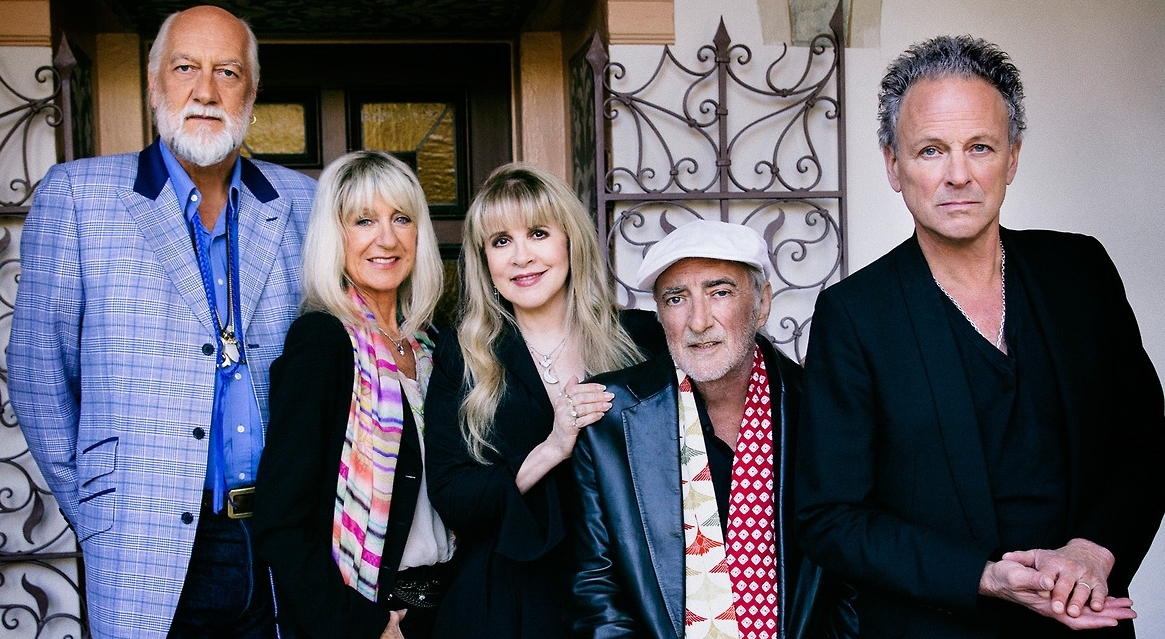
Fleetwood Mac headlines Classic West on July 16
Fleetwood Mac will be closing out Classic West at Dodger Stadium in Los Angeles on Sunday, July 16. The supporting Classic West acts will be Journey and Earth, Wind & Fire.
The West Coast concerts are part of the larger Classic East Classic West Festival, debuting this summer. The Eagles, Steely Dan, and The Doobie Brothers are tentatively scheduled to kick off Classic West on Saturday, July 15.
Classic East will be held two weeks later on July 29 and July 30 at Citi Field in New York. The Classic East lineup is still being finalized.
Read More