Tag: stevie nicks

  • ‘I lived that song many times’

    ‘I lived that song many times’

    In conversation with Stevie Nicks

    Stevie Nicks talks with Elio Iannacci on a recent cameo, a Fleetwood Mac reunion and a new solo album decades in the making

    Q (Elio Iannacci): Your album 24 Karat Gold took more than 30 years to make. Has there been some sort of cathartic release now that the demos are re-recorded?

    A (Stevie Nicks): I haven’t gotten to enjoy it at all. Rehearsal for the Fleetwood Mac tour started the sixth of August, and we made 24 Karat Gold in three five-day weeks in Nashville, and then came back to my house in Los Angeles and did three more five-day weeks.

    Q: Rather than have a current photo of yourself taken for the album cover, why did you choose to use a photograph from the ’70s?

    A: It takes away the conceptual thing of finding a photographer that you like, that’s going to shoot you right, that’s going to get a picture where you don’t look 9,000 years old. I have all these old Polaroids smashed together in shoeboxes. I pulled out one [photo] and said, “This is the cover; it’s a golden picture. That’s solved.”

    Q: Who took them?

    A: I took all of them. In those days, Polaroids came with a little [self-shooting] plug that had a button on the end of it. So I can be sitting here and build my set around this couch if I wanted to. I’d usually put flowers or found a lamp to put a shawl over and then start shooting.

    Q: Would you consider them your version of selfies?

    A: It’s not a selfie at all. It’s a self-portrait. I did most of those Polaroids on the road. I’d read something by Horst, the photographer. He said, “Don’t take a lot of pictures. Pretend like you have no film.” With phone cameras, you take millions of shots. This was carefully planned. An exhibit of them already showed in L.A. and Art Basel in Miami. I’ve made a lot of money.

    Q: You’ve also sketched quite a bit. Are there plans to exhibit your drawings?

    A: Yes, at some point. Strangely enough, I’ve been drawing all afternoon. I’ve just been working on a drawing I drew in 2007 when Mick [Fleetwood]‘s little girl [Ruby]—who has a twin [sister, Tessa]—almost drowned. I started with a drawing of [Tessa], who felt responsible. Then I drew another girl next to her and she became like the fairy queen. I called it the Fairy Guardians. I sketch the faces upside down because it’s like drawing from the left side of the brain or the right side of the brain. I never took an art lesson in my life.

    Q: A song on 24 Karat Gold called Belle Fleur—originally from your debut disc—mines the memories of people you called “canyon ladies.” Joni Mitchell defined these women as people who were domestic and in traditional relationships in her song Ladies of the Canyon. Is there a connection?

    A: This song wasn’t about that. Belle Fleur was about not being able to have a relationship because you were a rock ’n’ roll star. Those women are me, [my sister] Lori … and friends I had from 1975 to 1978. The [lyric] “When you come to the door of the long black car”—that’s the limousine that’s coming to take you away. Then your boyfriend is standing on the porch waving at you, like, “When are you going to be back?” And you’re like, “I don’t know, maybe three months?” But then we would add shows to a tour and I could end up not being back for six months. It was difficult for the men in my life. I lived that song so many times.

    Q: The songs also implies there is a joy to that kind of unbridled freedom.

    A: The [experience] causes you to become one with the road. I’m comparing it to the witches in the mountains. That’s just my metaphor with the [lyric] “Mountain women live in the canyon / dancing all night long.” That’s just us coming back from shows and taking Polaroids all night long.

    Q: Many of your songs have been able to foresee your own future.

    A: The real premonition songs were I Never Promised You a Rose Garden and After the Glitter Fades, which starts with the line “I never thought I’d make it here in Hollywood.” They were poems I wrote before I joined Fleetwood Mac. The lyrics are so telling: “Now I have a big house with pillars standing tall all around / I’ve got a garden with roses dangling down to the ground / and I’ve got money, men to love me / and acres of land / I’ve got all these things / I’ve got all these things but a small gold band on my finger on my left hand.” I think that’s probably the most astute premonition I ever had.

    Q: A lyric from the song I Don’t Care from 24 Karat Gold reveals your disdain for getting a proposal with a diamond ring. At what point did you know that you couldn’t get married?

    A: Right away! In the beginning of my relationship with Lindsey, I realized that being in a relationship with a very powerful, controlling man probably wouldn’t work out for me in the future as an artist. Something in my little songwriter’s heart said, “This is what I’m always going to do. I’m going to do that whether I’m with Lindsey or whether I go and find another guitar player to play music for me and we go play at Chuck’s Steak House.”

    Q: Were you ever close to having a husband?

    A: If I look back over all the men in my life, there’s the first category: those are the great loves. They didn’t understand. Even if they were in the business, they were jealous and they were resentful and had a hard time with my life and they didn’t like all my friends. They didn’t like the fact that the witches of the canyon were around all the time. The next category were men who really liked me, guys who trusted me—they were not the least bit resentful of what I did when I was on tour. They would say, “Bye, keep in touch, have a good time, be great on stage and maybe I’ll fly out and see you some weekend,” but we didn’t connect in other ways because my life, my career, just got bigger.

    Q: They couldn’t keep up?

    A: Guess what: I had two full-on careers going! [My solo record] Bella Donna took three months to [record]—which was not very long. When it was put out, it went to No. 1. I did a very short six-week tour for it and then went straight back to Fleetwood Mac. My [close] friend Robin had leukemia and was dying all the way through the making of Bella Donna.

    Q: Yet so many of 24 Karat Gold’s songs are not about affairs but of what you call “the great loves.”

    A: Those are the glory songs. I couldn’t write that album today. None of those songs were written after a one-night stand because there weren’t very many of those in my life. Those are all about relationships that lasted. All my relationships lasted.

    Q: 24 Karat Gold could easily have a Part 2 or 3 because of the number of demos you have. What would you include on it?

    A: I think that this is one of the best records I’ve ever made. So I can’t just let this record go. When the Fleetwood Mac tour is over, I might go straight back to Nashville and record eight or nine songs, and Warner Brothers can take it and repackage the album. I have another 10 demos. There’s a song that’s called City of Hope that I love that needs to go out because that’s [the name of the California-based hospital] Robin was in. I spent a lot of time driving through the big sign that says “City of Hope” when there was no hope. With a bottle of brandy and a gram of cocaine, thinking, “Please God, don’t let her die.”

    Q: You also have a song about JFK. Is it on your list of possibilities to record for the second volume of 24 Karat Gold?

    A: I’ll probably do that, too. It’s called The Kennedys. That was about a strange dream I had about meeting the Kennedy men, at a cocktail party benefit in the Hamptons. I went in to play the piano and sing [for the party] and Martin Luther King walked me down the hallway. It has this amazing part that I just think would fit with the world right now: “Please God, show them the way. Please God, on this day. Spirits all gather round. Peace will come if you really want it. Peace will come if you fight harder. I think we’re just in time to save it.” I’m ready for Jack Kennedy’s dreams. I’m ready for there to be somebody leading the country that somehow puts some kind of a respect and charisma into things … basically the same thing that Clinton had.

    Q: When I interviewed Cher last year, she said was 100 per cent behind Hillary Clinton becoming the next U.S. president.

    A: Well I am, too. Hillary is experienced. Bill Clinton will tell you that he was in college with her and she was so much more motivated than he was. She’s the one. When I first met her with her [daughter] Chelsea, it was such a moment. She’s funny and she’s really nice. You don’t think that when you meet her but she is really sweet.

    Q: Why is she the best choice?

    A: She’s so damn smart. As far as the Republicans go—and my parents were both Republicans—there is no rising star. If you think of the great Republican presidents, there is no that guy. There is no John Kennedy rising in the Republican world. There is no Ronald Reagan. In the Democratic world, there is no that guy either. There is Hillary. Period. She’s my around age, and I’m 66 and a half years old. I hope that she doesn’t go like [whispers]: “I just can’t do it,” because she has a daughter, a granddaughter and a life and Bill. You have to forget about your life and determinedly and totally throw yourself into being the leader of this country.

    Q: You know something about being determined. You’ve had to fight for many of your songs to get recorded. Which song would you identify as being the toughest one to release?

    A: The battle of Silver Springs was pretty bad. [Fleetwood Mac] took that off [Fleetwood Mac’s 11th studio album, Rumors] and they didn’t even ask me. They replaced it with I Don’t Want to Know—which was a good song, but it was short. They took Silver Springs off because they thought it was too long on the record and there was no way to cut it down. I was told in the parking lot after it had already been done.

    Q: You must have felt avenged when it finally hit the charts 20 years later.

    A: I had given that song to my mother so it was kind of a bummer, because it ended up being kind of a dead gift. What was great was that when we went back together to do [a live album, 1996’s The Dance] it was the single. My mom ended up getting a $50,000 cheque two months after The Dance went out. To my mother, it had been a million-dollar cheque.

    Q: Regarding the Fleetwood Mac tour, does it get any easier to share a stage with an ex who is singing about a soured relationship you had decades ago?

    A: I just try to sink back into it and that’s not the hard part for me. The hard part for me is how physically difficult the three-hour set is. I walk off stage and I get into the hallways, and the first thing that comes out of my mouth is “This is too much for me!” It’s too hard, it’s too long, this set should only be an hour and a half long—we are all over 65! This is 40 shows! I feel like my bones are breaking.

    Q: On tour, you thank American Horror Story for giving your song Seven Wonders a new life. Was appearing on the show an easy thing to do?

    A: It could have been corny . . . but I thought it was just awesome. We really did just make a music video with me singing parts of Seven Wonders and Has Anyone Ever Written Anything For You. I must have sung it [for the series’ star, Jessica Lange] 20 times because they had to film it from every possible vantage point. Jessica Lange is not an easy girl to get to know, but after singing to her for 10 hours, I think we made a connection. Afterward, I wrote her a long letter. In the scenes [we shared], she helped me by doing her part perfect every time.

    Q: What would you say has been the most emotional moment you’ve experienced while being on tour with the band?

    A: When I finish [performing] Silver Springs [with Lindsey Buckingham], Christine [McVie, Fleetwood Mac’s keyboardist and vocalist] waits for me and takes my hand. We walk off and we never let go of each other until we get to our tent. In that 30 seconds, it’s like my heart just comes out of my body.

    Q: Do you feel that putting your solo work and art on hold for Fleetwood Mac has been worth it?

    A: You get to a point in your life where some things have got to go if anything else new is going to come in. Then you face the fact that the Fleetwood Mac tickets sold out in three weeks for 80 shows. I don’t want to hurt anybody’s feelings. I don’t want the audiences to be disappointed. I want everybody to be happy. I want the people in Fleetwood Mac to be happy. I do adore being back with Christine. She’s had a 16-year rest [McVie took a 16-year touring hiatus from the band]. She’s like ready to rock. I had forgotten how wonderful that was. I had forgotten how close we were.

    Elio Iannacci / Maclean’s Magazine / Friday, January 23, 2015

  • How Stevie Nicks created a coven of Gold Dust Women

    How Stevie Nicks created a coven of Gold Dust Women

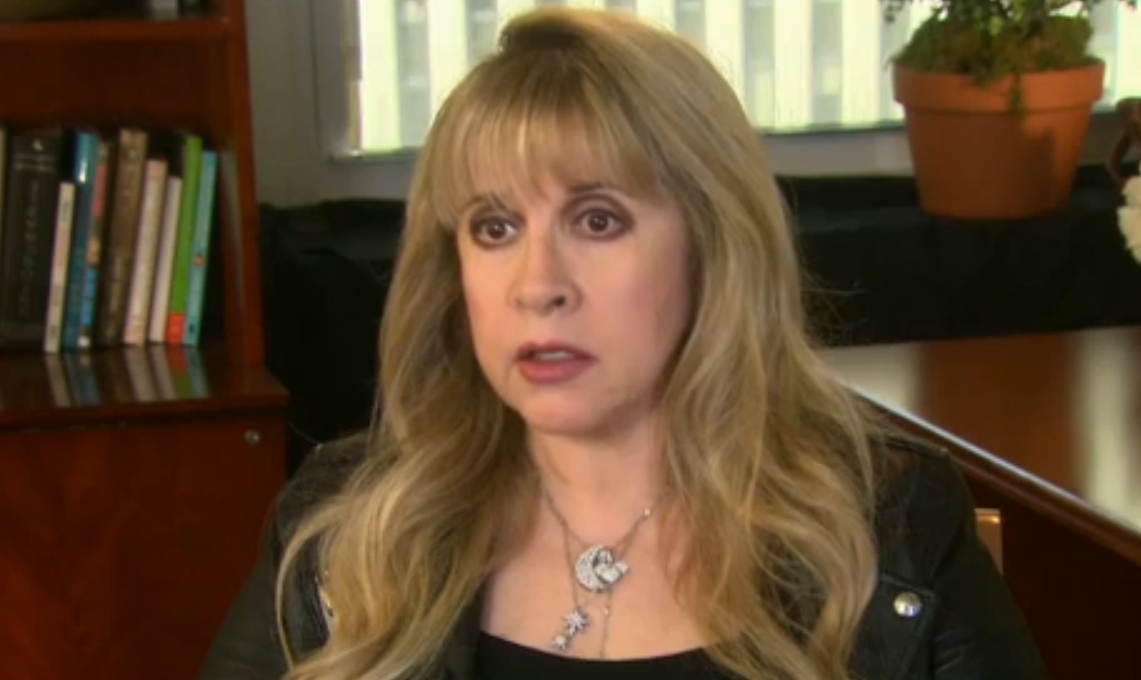
    Sitting in a suite at the top of one of the fanciest hotels in Manhattan, Stevie Nicks plays with a diamond-encrusted silver moon necklace. The charm was given to her by the father of a young woman named Sara, who Nicks met through the Make-A-Wish foundation in 2005. Sara died in 2008 of a rare type of cancer and Nicks dedicated her 2011 album In Your Dreams to her. “I need to wear this because it’s the 32 diamonds of the 32 shows she came to,” Nicks said, pressing her fingertips to the moon. “If you flip it, it’s a gold moon. It’s whatever you want it to be.”

    It had been a month since Nicks released her most recent album, 24 Karat Gold: Songs From The Vault, comprised of unrecorded songs written between 1969 and 1995. “To me, these songs are the pieces of jewelry you put away in your special jewelry box and save and will someday give to your daughters,” she said, “or your fairy goddaughters or your nieces or the people you love that you will leave your jewelry to.”

    At 66, Nicks is in the midst of some of the busiest years of her life. In the last 42 months, she released In Your Dreams and a documentary about its creation, toured endlessly with Fleetwood Mac, welcomed keyboardist and vocalist Christine McVie back to the band, appeared on both NBC’s The Voice and FX’s American Horror Story: Coven, debuted 24 Karat Gold and opened a well-received exhibit of Polaroid self-portraits at the Morrison Hotel Gallery. With just a few days to spare in between show dates, Nicks came to New York to promote the record. She booked an appearance on “The Tonight Show,” a “Today” show spot and multiple interviews.

    “I don’t want this record to die,” she said, leaning back in a massive armchair draped in a bath towel to calm her dust allergy. “These old hotels,” she said before arranging herself. The sun had set hours ago, but ombre sunglasses sat low on her nose. “When I made this record I didn’t know it was going to be what I consider one of the best record I’ve ever made. I was just doing it to fulfill an obligation to my record company.”

    Recorded in Nashville, 24 Karat Gold was made in just 10 weeks, before Fleetwood Mac started rehearsals for the “On With The Show” tour. It’s a look back at Nicks’ storied past, dotted with allusions to former lovers and idols. “Mabel Normand” is her warning song against drugs. “Cathouse Blues” and “Lady” are specifically about her former lover and constant bandmate Lindsey Buckingham, whose shared history with Nicks could fill a book. Two tracks, “24 Karat Gold” and “Watch Chain,” were written about Mick Fleetwood, the six-foot-five Fleetwood Mac drummer whom Nicks had an affair with after she and Buckingham broke up. Fleetwood was married at the time, but is credited with introducing Nicks to the album’s namesake, 24-karat gold. She’d never seen that kind of metal before. “I was in love with Stevie, or the closest thing to knowing what that is,” Fleetwood said. “Who knows, I maybe bought her a few things of 24 karat. I hope I did.”

    The songs were meant for the mothers and daughters who attend her concerts in matching, floor-length velvet coats. For the obsessive Stevie Nicks fan who goes to the Night of 1000 Stevies, the annual Stevie Nicks tribute party in New York City, like it’s church. For the American Horror Story fans who just discovered her witchy ways. For the diehard Fleetwood Mac fan who will listen to anything she writes because in a world where everything changes, Stevie Nicks is one constant.

    “Any woman that is close with her would do anything for her.”

    “My songs are just one continuation from beginning to end, from 1965 when I wrote my first song when I was 15,” Nicks said, “just kind of the same song, goes along and we twist it and scramble it and change it a little bit. I just tell a neverending story.”

    Along the way, she’s invented a mythology that explains her extreme Stevie-ness. She sings about birds, horses and fantastical magical castles where Nicks, or perhaps her alter-egos Rhiannon or the Gold Dust Woman, lives, reincarnated in real-time. Her Victorian aesthetic — fitted velvet riding coats, long black skirts, top hats, platform boots and shawls (oh, those shawls!) — never changes. On stage she’s a force, twirling expertly with a tambourine, often in front of two ex-boyfriends. “There’s really such a thin veil between the everyday Stevie and the Stevie on the stage,” her close friend , singer-songwriter Vanessa Carlton, said. “That is a testament to her really knowing who she is as a woman.”

    Nicks’ influence on music is easily seen in bands like Haim, Destiny’s Child, Lady Antebellum and the Dixie Chicks. A long list of artists that includes Beyonce, Taylor Swift, Florence Welch and Courtney Love have spoken at length about how Nicks inspired them to be their own kinds of rock stars.

    From where she stands now, arguably as rock and roll’s reigning queen, Nicks has found a greater role as mentor. From Carlton and Sheryl Crow to Rookie founder Tavi Gevinson and the Haim sisters, Nicks has created a coven, filled with disciples who aspire to the Stevie Nicks gospel: being emotionally direct in your work and the most honest version of yourself you can be.

    “I’m looking for the great people, the legends,” she said. “These, I think, are legendary women. I want to do what I can do to help them stay on track.”

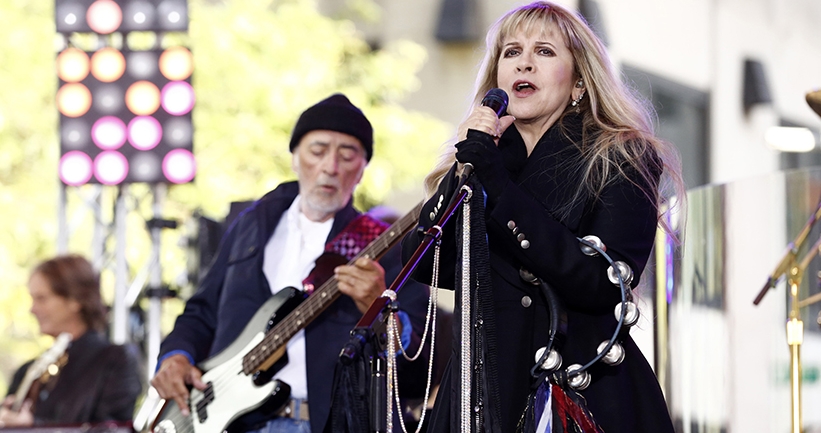
    Stevie Nicks, left, and Lindsey Buckingham of Fleetwood Mac perform at the Staples Center on July 3, 2013, in Los Angeles. (Photo by Chris Pizzello/Invision/AP)
    Stevie Nicks, left, and Lindsey Buckingham of Fleetwood Mac perform at the Staples Center on July 3, 2013, in Los Angeles. (Photo by Chris Pizzello/Invision/AP)

    The one time I ever went to therapy,” Nicks said, sinking into her chair, “this lady said to me, ‘I think the saddest day of your life in a lot of ways was the day you joined Fleetwood Mac because you are such a caretaker. From that day on everybody wanted to take care of you and you didn’t really want that.’”

    Nicks doesn’t drive, own a phone or a computer. Her assistant of 25 years, Karen Johnston, lives barely a mile from her in Los Angeles. She’s one of the biggest celebrities on the planet and has had to admit that, yes, she needs people to help her out. But her natural caretaking instincts kick in constantly. They fuel her desire to nurture relationships with the next generation of artists who are as dedicated to their crafts as she is to hers.

    “She showed me how to put on a show,” Carlton said, referring to the North American leg of Nicks’ 2005 tour. That was the first time the two toured together. “As much as she herself is crafting and creating all of this stuff on her own, it’s really interesting to see how important the other element is to her, to serve and really entertain.”

    The Haim sisters connected with Nicks for a T Magazine story and remembered having dozens of questions to ask her during the five-hour shoot. “We asked her, ‘Were you ever scared of the future? Were you ever worried about things?’” Alana Haim said. “And she said, ‘Honestly from the start, I knew exactly what I wanted and I walked into a room saying, This is who I am. This is what I want.’” They spoke at length about their music and Danielle Haim came away with Nicks’ biggest piece of advice: Don’t ever release a song you don’t believe in. “It was that song, ‘Reconsider Me,’” Alana said. “She was like, ‘No one could ever make me sing a song like that. I would never ask a man to reconsider me.’ We would never do that either.”

    2014-1124-HuffPost-haimAny psychology student could muster up a connection between Nicks’ natural attraction to mentorship and not having kids. She’s quick to make the comparison herself, before waving the notion off. “But even if I had had a couple of daughters, I would still be doing this. I would still be looking around the music business or the arts business for people that I like and respect, that I think can carry on my tradition, which is just the tradition of simply being as great as you can be.”

    “I feel like we maybe as a society have grown into what Stevie has always represented,” said New York Magazine reporter Jada Yuan, who wrote a profile of Nicks in 2013. “But there are so many women that are taking the path that she took, which was she found a love of music and she gave up being a mother and having a family to pursue something that she felt she had a greater purpose doing.”

    For Nicks, her greater purpose lies in cultivation, in growth. “They know they can call me. I’m never far away,” she said. “I like to say a fairy godmother as opposed to a mom because I don’t become their moms. They have moms. They don’t need another mom, but maybe they need a fairy godmother.”

    When I read that quote back to Carlton a few days later, she laughed. “That’s so Stevie. She very much looks at herself as a service to the people. I think that Stevie is like a sister to us. She feels more like an older sister to me than a mother.”

    One word comes up in nearly every conversation about Stevie Nicks: generous.

    “She’s a straight shooter,” Rolling Stone‘s Rob Sheffield, who’s been writing about Nicks for 25 years, said. “It’s fascinating to hear her talk because it’s coming from the same place, same wild heart, so to speak, as her music.”

    It’s the same kind of selflessness that she puts into her performances. If you buy tickets to a Stevie Nicks show, you know she will twirl, bring out a gold shawl and seem infinitely taller than her five-foot-one frame. “The first time we performed together,” her longtime guitar player and bandleader Waddy Wachtel said, “I told her, ‘You’re a rock and roller. I never knew that about you and I will never forget it.’”

    After Yuan’s profile hit newsstands, Nicks dedicated “Landslide,” the fan-favorite Fleetwood Mac ballad, to her at a Jones Beach concert. “I cried,” Yuan said. “This is this incredibly generous act that somebody’s doing for me. That’s who she is. She knows what kind of impact that would have on me, for someone like her to do that for someone like me.”

    Come Christmas, Nicks said she will fly back to New York to welcome Carlton’s new daughter with her husband, Deer Tick singer-guitarist John McCauley, whose wedding Nicks officiated. Last year, Carlton had emergency surgery for an ectopic pregnancy. “It almost killed me,” she said. “Honestly, Stevie is the first one to get me on the phone before and after that surgery. She’s right there with a hilarious story making me laugh even though you’re on all these drugs in the hospital. That’s the kind of friend she is.”

    “She makes you feel good,” Carlton added. “The biggest thing I’ve taken away from my time knowing Stevie is that warmth. It doesn’t take much and it’s really powerful.”

    As we spoke, Nicks brought up a letter she had written to the Haim sisters. The T Magazine shoot was meaningful for both parties, and Nicks was eager to continue a relationship with Este, Danielle and Alana. “When I get back, I want to spend time with them,” she said. “I would love to make a record with them. I would love to go on tour with them. I would love to be a part of their lives because I think they’re the best of the best to come along in a long, long time. I think they’re going to be a major force in rock and roll.”
    We asked Nicks to pick her favorite songs from newer artists. Here’s what she’s listening to these days.

    2014-1124-HuffPost-vcAt the end of their interview, Nicks gave each of the sisters (and their mother) a moon necklace, declaring them all Sisters of the Moon, a phrase taken from a 1979 Fleetwood Mac song by the same name. When performed, it’s known as the “speaking in tongues” song. Nicks becomes otherworldly, as if reaching out to gather her literal sisters of the moon. Nicks has given moons to Carlton, Gevinson and other people she’s fallen in love with over the years. “They deserve to have a moon. They deserve to have that inspiration and that little tip of my top hat to them to say I believe in you and I think that you’re amazing. So I’m telling you right now, you can have it all if you want it.”

    “That moon necklace holds a lot of power,” Alana said. “Ever since I put it on, every single person I’ve met has been like, ‘Where did you get that necklace?’ People are drawn to the moon. I can’t express it.”

    Nicks gave Carlton her moon a few weeks into their first tour together, and four years later “upgraded” it to a more solid gold one, Carlton remembered. “Jewelry holds energy so when you’ve worn something for five years it’s good to give it to your next person,” she said. “It’s her band of people. I think that’s what matters the most, connecting. Any woman that is close with her would do anything for her.”

    Nicks didn’t have a true musical mentor in her early years. She was extremely close with her mother, who died suddenly after a bout with pneumonia in 2011, but her only female pseudo-role model came when she joined Fleetwood Mac. McVie, who was five years older, had experienced success and helped Nicks navigate the early stages of fame. “I did have a mentor and I did have somebody who was able to help me and be my friend, but understood that I was a really strong woman and that I didn’t need her to take care of me,” she said. “But did I have Stevie Nickses around to give me 24-karat moons or just the wisdom? No, I didn’t. I just had to figure it out … and I did figure it out.”

    Last month, after Fleetwood Mac’s two-night Madison Square Garden run, I sat in my apartment with two friends rewatching old Stevie Nicks clips. Someone queued up the one where she doesn’t know she’s being filmed singing “Wild Heart” at a Rolling Stone cover shoot. I picked the one where she and Buckingham stare each other down on stage while singing “Silver Springs,” a song that can make your heart hurt just a little bit. We tried to pinpoint why we were all drawn to her, and came up with this: It was just music in the purest sense. You can love Stevie Nicks and her winding stories when you’re 8, 25 or 70 years old. Accessible and friendly, but dark and dramatic, Nicks’ music holds the answers to secret love affairs and bitter tragedies. She describes the scary parts of our world in ways we can understand: awe in “Seven Wonders,” innocence in “Edge of Seventeen,” courage in “Stand Back” and the comedown in “After The Glitter Fades.” “She has this confidence and magic,” Carlton said. “Her wings cannot be nailed down.”

    “I want every woman in the world to meet her,” Alana Haim said. “After I met her, I’m telling you, I looked at the world a different way. She makes you feel like you’re a better person. Every time I see her I feel like I can lift a bus and throw it across the world.”

    Stevie Nicks doesn’t care if her taste is “cool.” She likes what she likes: Twilight and NCIS, fairies and tiny dogs. She hasn’t changed her stage uniform in 40 years because she knows what looks best. She has lived on the brink of death, snorted enough cocaine to blow out her nose, gone to rehab twice, experienced great, tragic love stories, and lived to tell the tales in ways that rival the Pied Piper. “I got to sing, I got to dance/ I got to be a part of a great romance still forbidden, still outrageous,” she sings on “For What It’s Worth,” a song from In Your Dreams. It’s one of many Nicks songs that gets at the heart of human pain. She doesn’t apologize for broadcasting her emotions. She doesn’t have to. Neither do we.

    “Maybe you don’t have the greatest voice in the world, but maybe you have the greatest soul in the world and your music is going to be spectacular because you just have so much soul,” Nicks said. “You might not be the best of the best, but you might be the one that’s famous.”

    Jessica Goodman / Huffington Post / Tuesday, November 24, 2014

  • Stevie: ‘Haim are major force in rock and roll’

    Stevie: ‘Haim are major force in rock and roll’

    STEVIE NICKS gushed over sibling rockers HAIM during a concert in California on Saturday (Nov 29, 2014), calling them a “major force in rock and roll.”

    Fleetwood Mac brought its On With the Show tour, complete with keyboardist Christine McVie, to Los Angeles’ The Forum venue and among those in the audience were sisters Alana, Este and Danielle Haim.

    Singer Nicks told the audience, “Maybe twice in my lifetime I have met a group of other singers, artists, songwriters that I have thought were going to be a major force in rock and roll. And tonight the ladies Haim are here – Alana, Este and Danielle. And I have to say, because I love sharing stuff with the audience about other people that I love – we’ve been on the road for 27 shows and I play their record every day; I love it…

    “It gives me answers, it gives me advice, it wraps its wings around me and it tells me everything will be okay, and I have such respect for them, and I have such respect for who they are and how they play music and how they put their music together, and it just blows my mind.

    “So, girls, never stop. Don’t stop thinking about tomorrow. Don’t stop. Keep doing what you’re doing because you’re important to this world.”

    In October (14), Nicks invited Haim to her house for an interview with the New York Times’ T Magazine, where they performed an impromptu rendition of Fleetwood Mac’s Rhiannon, and the legendary singer presented each sister with matching gold necklaces with moon pendants and declared them fellow “sisters of the moon”.

    Following Saturday’s concert, Haim took to Twitter.com to share a video of Nicks’ dedication to them at the gig, and added the caption, “Was reunited with the original sister of the moon last night (we cried).”

    Express (UK) / Monday, December 1, 2014

  • VIDEO: Stevie takes trip down memory lane

    VIDEO: Stevie takes trip down memory lane

    Rock icon Stevie Nicks is in the middle of the massive sold out Fleetwood Mac tour. But she still found the time to release her eighth solo studio album, 24 Karat Gold: Songs from the Vault. Access Hollywood sat down with Stevie, who enjoyed her music trip down memory lane.

  • 24 Karat Gold exhibition, sale at WeHo Morrison Hotel Gallery

    24 Karat Gold exhibition, sale at WeHo Morrison Hotel Gallery

    There will be a special exhibition and sale, Stevie Nicks: 24 Karat Gold, The Self Portrait Collection at the Morrison Hotel Gallery’s West Hollywood location this weekend from Friday, November 28th – Tuesday, November 2. Check it out if you are in the area!

    The gallery is located in the Sunset Marquis Hotel at 1200 Alta Loma Road, West Hollywood, CA 90069. Parking at Sunset Millenium Parking lot, enter via Sunset Blvd towards Alta Roma Road.
    Please contact the gallery at 310-881-6025.

    Click HERE to order prints online:


  • Stevie Nicks stays gold

    Stevie Nicks stays gold

    Multiple-Grammy-winning Rock and Roll Hall of Famer Stevie Nicks has soaked up a lot of wisdom over her 47-year career. But she can’t help chuckling over the prescient accuracy of knowledge passed down from legendary hard-partying L.A. guitarist Waddy Wachtel, who worked with her on 24 Karat Gold – Songs From the Vault, her stellar new collection of previously unrecorded originals, dating from 1969 to 1995. His hilarious quote? “Naps are the new cocaine.” “And it’s so true, it is sooo true!” she purrs, phoning one recent afternoon from her oceanfront Los Angeles home. “And you know what? I was going to take a power nap today, and we forgot that we had to talk to you. So I said ‘Okay—no power nap today!’”

    As a kid, adds the singer, 66, her own mother would catnap daily: “And I used to think ‘That is so stupid—you’re going to go lay down for 35 minutes?’ And she’d go ‘Yeah, but it changes your life!’ And when we were younger, we would never have thought that that would have helped. But it does. So I do that, too. And about five o’clock every day, I start going ‘Okay—I need to lay down.’ And people look at me like, ‘Really?’ And I’m like, ‘No. Seriously. I need to go lay down and be away from all you people for 30 minutes to an hour. So I am disappearing now.’”

    As interviews go, not a bad way to start. Your subject is awake and ready to talk. Groggy, perhaps. Maybe just a tad resentful. But definitely eager to discuss the current renaissance that’s sweeping through her life and rocketing her back onto the pop-cultural radar. This May, she finally received a coveted BMI Icon Award for her composing, which caught fire when she and then-boyfriend Lindsey Buckingham (who had recorded one 1973 album as Buckingham Nicks) joined British blues-rock outfit Fleetwood Mac in 1975, forever transforming its sound and sales figures—The Mac’s definitive 1977 blockbuster Rumours went platinum 45 times over, even though many of its songs detailed the couple’s breakup.

    2014-1118-paste-magazine-issue-165In 2011, Nicks released her first solo set in a decade, In Your Dreams, produced by her longtime chum Dave Stewart, of Eurythmics renown. Its kickoff single “Secret Love” was a vintage chestnut she had originally demoed back in 1976 for Rumours but never officially cut. The album debuted at No. 6 on the Billboard Chart, the same week that Fox TV’s hit series Glee broadcast an entire episode revolving around Rumours material, bouncing that landmark disc back up to No. 11. “That is the power of the media, and that is the power of [Glee creator] Ryan Murphy, and that is the power of that show,” Nicks sighs, appreciatively.

    Over the next three years, rock’s grande dame would go on to: release a documentary video, also titled In Your Dreams; appear on NBC’s snarky sitcom Up All Night, trilling duets with its stars Maya Rudolph and Christina Applegate and appear on another Murphy project, the camp-creepy American Horror Story: Coven, sporting her fabled circa-1920s top hat she employs onstage to portray a non-practicing keyboardist witch who serenades its star Jessica Lange with “Rhiannon,” “Has Anyone Ever Written Anything For You?” and “Seven Wonders,” a dusty relic that was so well-received by viewers that Fleetwood Mac is including it in its current “On With the Show” tour set. The world-traversing jaunt also features a rejuvenated Christine McVie on keyboards, back after a 16-year semi-retirement.

    Then there’s 24 Karat Gold, also produced by Stewart and tracked in three rapid-fire weeks in Nashville, using straightforward session vets. “You could never write these songs now, because it took 20, 30 years to write these songs,” explains Nicks of tracks like “Starshine,” “Blue Water,” “The Dealer,” and the oldest number, “Cathouse Blues,” which would all have fit nicely on The Mac’s adventurous Rumours follow-up Tusk, or possibly Nicks’ dream-rocking first solo set from 1981, Bella Donna. “But it’s strange to be trying to do a little promotion for this record, and then also being on a huge Fleetwood Mac tour—I’m trying to do a lot at one time,” she says. “I’m trying to multitask. But I’m really proud of the album, and I’m really proud of what Fleetwood Mac is doing, because these shows are just amazing.” She pauses. “So I just have to get more sleep to fit it all in. That’s all.”

    When she first came up with her 24 Karat concept earlier this year, Nicks recalls, she thought it sounded absurd, almost inconceivable. When Mac bassist John McVie was diagnosed with cancer, the band canceled its spring Australian tour while he sought treatment. Left to her own devices, she decided to make her next album. And since the Internet was brimming with recordings of old material that she had never officially issued, re-tracking them seemed like a no-brainer. This was in April, she stresses. And come Aug. 6, she would submerge into demanding Fleetwood Mac rehearsals, and then head right back out to play stateside arenas. In Your Dreams had taken over a year to perfect. How could she possibly get its successor completed in three months?

    Nicks did the only thing she could think of at the time—she phoned Stewart, asking his opinion. He had a one-word reply: “Nashville.” That’s what they do there, he swore. The city was full of professional studio players, ready to cut professional sessions at the drop of a hat. With the cock ticking, she agreed to give it a whirl. “And before I got there, I’m going ‘Wow. I hope he’s right. Because I don’t know how we’re going to record 17 songs in three weeks!’” she says. “But we recorded them in two weeks! They did two songs a day, and sometimes three. And it was all done live. Only myself and the piano player were in vocal booths, and the rest of the band was all in one big room. Kind of like The Rolling Stones.”

    Full of adrenaline, the artist returned home to L.A., where—in another three-week stint—she added backing vocals, plus guitar overdubs from Wachtel (who co-produced with her and Stewart), The Heartbreakers’ Mike Campbell and Davey Johnstone. “And then we immediately started on the cover,” she adds. “So it was an amazing experience, because we know that, come Aug. 6, I was done. I was then being handed over to Fleetwood Mac, and that was it. But it was all done in under two and a half months, which is ridiculous. Because never—never—has Fleetwood Mac or me ever done a record like that, especially including mastering, mixing, and all that other stuff you have to do. So this was just a ridiculous project that we jumped into.”

    But the CD cover idea? That’s where things really got interesting. And where Nicks—already in a reflective frame of mind from unearthing her lost songs—really went tripping back down memory lane. In old shoeboxes, long mothballed away in storage, she dug up scratchy old Polaroids that she’d taken of herself, on tour with Fleetwood Mac in the late ‘70s—essentially some of the earliest selfies, a la the brilliant self-referencing photographer Cindy Sherman (although Nicks was thinking more Diane Arbus at the time). She first started experimenting with a Polaroid camera in high school, she says. Everyone in class had one, and part of the thrill of using one was the instant gratification involved. You took your shot, waited for the film to eject, shook it, and in a couple of minutes you had a perfectly developed picture. She loves remembering the nascent beginnings of her second favorite craft, her third being painting/drawing: “When I joined Fleetwood Mac, we started touring, and you’re on a long tour and you’re by yourself, and you stay up until five in the morning, no matter what—this is me we’re talking about. And so I just started taking pictures. I was like, ‘I’d like to be a photographer, so I’ll just take Polaroids, and I’ll get other people to model for me!’ But that didn’t work out very well.”

    In fact, only a few days earlier, the shutterbug had reminded an astounded Christine McVie of their typical post-concert conversation as they returned to their hotel each night:

    NICKS: “Do you want to come over to my suite?”
    McVIE: “Well, when?”
    NICKS: “1:30? It’s 12:30 now, so like, in an hour?”
    McVIE: “Uh…no, listen, I’m good. I’m going to the bar. See ya!”

    “That was the answer I got from everybody,” Nicks says, laughing. “’Love to help ya! But, err, really don’t want to!’ So I had to become my own model, because I didn’t have anybody else. So I’d be in a beautiful room, and there’d be a fireplace and a beautiful chair, and I’d throw quilts and stuff over the chair, and I’d drag lights in from all over the suite and I’d light it up as bright as I could get it. And then I would have a tripod with a long, long extension cord with a button. Then I’d put a plant or something sitting on the chair, just to get it focused. Then I’d think of something, smile and look at the camera, and then I’d run back and look at the picture.”

    Sometimes there would be too much light. Other instances, not enough. But the Polaroid experiments grew more and more elaborate, sometimes lasting two nights if the band was staying over in town a second day. Nicks would leave a note for the maid not to move any of her carefully situated backdrops. She’s amazed that no hotel chain ever commented on her strange nocturnal hobby. “I mean, I would completely destroy the suite making my set,” she says. “And I had a lot of hats that folded up, that I could just store in a suitcase, so I had a lot of little props that I traveled with. So in a lot of my pictures—and some pictures where I actually did get people to sit for me—everybody is wearing all these same hats. And I’d be blasting music, like Led Zeppelin or something, and I’d be singing, and suddenly it would be five o’clock, and I’d go ‘Okay—time for bed.’ Because I could sleep until one, and that would be eight hours. And either I’d get the picture, or I wouldn’t, and I’d cut up all the really bad ones and throw them away. I was doing my own deleting.”

    Nicks loves going into detail about her Polaroids. Photography really means a lot to her. And it was nice being in a stadium-sized outfit like Fleetwood Mac, she admits. In the middle of the night, if she ran out of film, she’d simply send the band’s tour manager out in a private limo to comb 24-hour stores for more (he’d usually only be able to procure a couple of boxes). The experience taught her two important things. By adding and subtracting lamps, and rarely using an eye-reddening flash, she learned how to perfectly light herself. “So I could take a great picture of anybody,” she declares. “I could take a picture of a really unattractive, anorexic person, or I could take a picture of a very heavy person, or I could even take a picture of a person who didn’t want their picture taken. I could take a picture of them, no matter what, and it would be in my hands, not theirs.”

    Additionally, she continues, she learned how to inhabit the fleeting persona she had momentarily created. “That’s how I learned to be the kind of model who was not just sitting there and looking at the camera, doing a dippy smile. I was in the world.” She stops, then repeats, “I was in the world. And I would be a courtesan from the 1800s, or I would be a modern girl from Paris in 1920—I would think of all this. So it was very much like writing songs, in a way, because I would just create a whole little magical world for each particular picture.”

    Stevie Nicks 24 Karat Gold -- Songs from the VaultSo why hire a photographer and schedule some elaborate shoot? Nicks—who recently opened an Instagram account and employs a high-tech Canon these days—asked Stewart. Why not paw through those shoeboxes? “And within two minutes, I had the front and the back shots,” she says of the ethereal, doe-eyed Polaroids that bookend 24 Karat. “I pulled out the first one and thought ‘This is a golden picture, a 24-karat gold picture. And I picked up the one that’s on the back, and said ‘This is a golden picture, too, but it’s very different.’ It’s like the front cover is ‘I’m happy with you,’ but the back cover is like the dealer—she’s more rough, raw, and you’re a little scared of her, maybe. And that’s the two sides of me, totally—that’s the two Gemini sides of me.” She found others to complement various album tracks.

    The songs themselves have a spooky aura of déjà vu hovering over them. On the organ-embossed “The Dealer,” for instance, her classic whiskeyed voice is smokier, well-seasoned, stronger than ever as she mournfully warbles “I was the mistress of my fate, I was the card shark/ If I’d looked a little ahead, I would have run away.” And almost conversationally, she inhabits “Mabel Normand,” her take on the tragic silent film star who fell prey to cocaine addiction decades before Nicks ever discovered the drug. The lilting, acoustic-strummed “Hard Advice” recounts some serious counsel offered to her by her longtime chum Tom Petty, after she left rehab for Klonopin addiction, long after she kicked the coke habit.

    “I asked Tom to write a song with me, because I was having a little writer’s block,” Nicks remembers. He told her no, he wouldn’t do it, that she was a great composer herself, and all she needed to do was sit down at her piano and play. He wasn’t kidding around. “And when Tom Petty looks at you like that, like you think he might have a knife in his boot and he’s going to cut a lock of your hair off and set it on fire, you have to listen to him. Because he’s really smart. He’s really wise. And he’s gone through a lot in his life.”

    Ditto for Nicks herself. She still growls, recalling the post-Rumours rumor that—since she typically wore ebony onstage and danced her own mystical fairy-princess hora—she was probably involved in witchcraft, or at least more Earth-mothery white magic. “And I let that witch thing bother me a lot in 1976, ’77, when all of a sudden I started getting some wacko fan mail,” she says. “And I made some serious statements, like ‘Look, I wear black because it makes me look thin, not because I’m a witch! So let’s drop that witch thing.’ So when I got offered my American Horror Story role, and I found out that it wasn’t just a walk-on, that I was really written in as a witch, it kind of freaked me out at first. But then I thought ‘You know what? Come on—this is a story. It’s fun, and I need to enjoy this and not be freaked out about it. So hey, bring it on!’”

    Then the playful truth sank in: American Horror Story: Coven was just Glee in horror drag. “That’s what Ryan Murphy and his writing partner Brad do—they write about misfits,” she’s concluded. “And they explain it in all different kinds of ways. A bunch of witches in a coven? They were all witches that didn’t fit in anywhere, and didn’t understand their powers, and all go to a school for witches. Same thing in Glee—the kids are in school, and they have their amazing teachers and their amazing music that keeps everybody happy and laughing and dancing, even when they have all these problems. And the quarterback can be a quarterback and in glee, even if he does get ridiculed for it. That’s what they do. And the way they use music in their shows is just brilliant.”

    It didn’t take the novice actress long to acclimate herself on the eerie New Orleans set of Coven. At first, she felt awkward singing to Jessica Lange’s wicked cocktail-swilling character at the keyboard. “And you know we had to film that scene about 50 times,” she explains. “But by the time we got to the last 10 takes that they filmed, it was like it was real—it was really her house, we really were there, and I was really her old friend, and I was singing to her because she’d had a really bad day. It really was perfection—it was something that I will never forget. Ever.”

    What does Nicks now know to true, that she didn’t in her wild youth? That time passes, she sighs. And no matter how insurmountable an obstacle seems, you can always get around it, onstage or off. “As long as you’re rehearsed, you’re prepared, and you’ve done your work, you’re going to be fine,” she says. “If you’re prepared and you’re a pro, you’re going to be okay. And I think that goes for anybody, in any kind of job. And you learn that when you’re 66 years old, and you start to actually get it and be a little bit more kind to yourself.”

    Take, for example, a recent incident where any less grounded human being would have been screaming in shivery panic. Nicks—sad that she didn’t get to do a Coven with another of the show’s stars, Kathy Bates—was delighted when Bates and her sister came down to watch her act, and then opted to fly back to Hollywood with her. “It was a five-hour flight in a very creepy private plane, and to this day, none of us can figure out how we got this creepy, weird plane,” she shudders. “It had a back seat like a ’57 Chevy, you know? And then very small seats in the front, and it was very dark and dingy. But we needed to get out of there fast and get home, so that’s what they came up with for us.

    “So Kathy and her sister were hysterical. She told us all the stories of everything in New Orleans, and the first two seasons of American Horror Story, like the asylum one. And there was lightning and—when we came into L.A.—terrible turbulence, so bad the plane was going sideways. So we really had, like, a happening, an experience up there, and we had four Yorkies with us, too. But the turbulence was so bad, Kathy Bates’ sister said ‘Okay. Here’s how it’s going to read: “Award-winning Rock and Roll Hall of Fame member Stevie Nicks and Academy Award-winning, amazing character actress Kathy Bates were killed in an airplane crash today. And there were four others. Oh—and some dogs.”’”

    That broke the tension. And Nicks couldn’t stop laughing, as the storm raged. “It was late at night, too, so it all just went along with the American Horror Story theme,” she cackles, but not in a witchy-woman way. “It was like the coven was on the plane!”

    Tom Lanham / Paste Magazine / Tuesday, November 18, 2014

  • Stevie Nicks delivers solid gold performance on Fallon

    Stevie Nicks delivers solid gold performance on Fallon

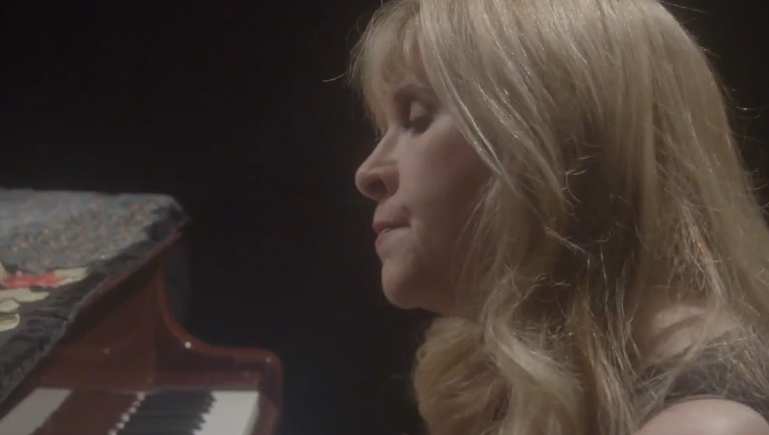
    When last Stevie Nicks met Jimmy Fallon, the latter was wearing a blonde wig and playing the part of Tom Petty for a performance of “Stop Draggin’ My Heart Around.” Last night, Nicks returned to The Tonight Show, this time in support of recent archival release 24 Karat Gold: Songs From The Vault. She delivered a sterling rendition of “Lady” along with a piano ballad version of Fleetwood Mac’s classic “Rhiannon”. Watch both performances below.

    Despite the new solo release, Nicks is still out on the road with the Christine McVie-featuring Fleetwood Mac. Their next string of dates picks up in Canada (Winnipeg, to be exact) on November 10th, and they have stops scheduled all over North America through March 31st, 2015. See their full itinerary here.

    Ben Kayeon / Consequence of Sound / Tuesday, November 4, 2014

    THE TONIGHT SHOW STARRING JIMMY FALLON -- Episode 0154 -- Pictured: Musical guest Stevie Nicks performs on November 3, 2014 -- (Photo by: Douglas Gorenstein/NBC/NBCU Photo Bank via Getty Images)
    (Douglas Gorenstein / NBC)

    Rhiannon

    https://www.youtube.com/watch?v=Xn4ozPvSkhw

  • REVIEW: Solo Stevie shines up some oldies

    REVIEW: Solo Stevie shines up some oldies

    Stevie Nicks reclaims her leaked demos in flamboyant fashion on 24 Karat Gold: Songs from the Vault.

    Handily timed to coincide with Fleetwood Mac’s return to the road, floaty chanteuse Stevie Nicks reclaims songs mostly written between 1969 and 1987 that apparently leaked onto YouTube as demos. The singer, in typically flamboyant fashion, declares they represent her life “behind the scenes, the secrets, the broken hearts, the brokenhearted and the survivors.” In keeping with its retro/spontaneous theme, the artwork is made from more never-before-Steseen Polaroids, while the package is also available in both limited-edition double vinyl and as a deluxe photobook CD with two bonus tracks.

    And what of the music? Producers Dave Stewart and Waddy Wachtel gild the likes of “Starshine,” “Carousel” and “Cathouse Blues” with the necessary 70s/80s sheen. “Lady” is a refreshingly unadorned power ballad, while the intro to “Hard Advice” will sound familiar to fans of Lonestar’s “Amazed.” Which came first, one wonders?

    Diehard Nicks-ites aren’t happy with the song choices, believing some of the brightest and best have been overlooked, but there are undoubted gems such as “The Dealer” (originally from Mac’s Tusk sessions, later recut for/ omitted from Nicks’ solo album Bella Donna) that will win universal approval. If you don’t like ’em, you can always revert to YouTube

    24 Karat Gold: Songs From The Vault *** (out of 5 stars)
    Warner Bros, cat no tbc (CD / 2LP)

    Michael Heatley / Record Collector / November 2014,  p. 96

  • ALBUM REVIEWS: 24 Karat Gold – Songs from the Vault

    ALBUM REVIEWS: 24 Karat Gold – Songs from the Vault

    Positive (10) / Mixed (4)

    Fleetwood Mac star heads to Nashville, chasing the songs that nearly got away.

    Rating: 7/10

    As if Stevie Nicks hasn’t done enough soul-searching during her 40 years in one of the world’s biggest bands… On her eighth solo album, Nicks immerses herself in her past, gathering 16 of her long-lost songs together like errant children and dressing them in traditional costume — the billowing robes and gypsy shawl — before sending them out, fully Nicksed, into the world.

    24 Karat Gold – Songs from the Vault finds the 66-year old getting her memories in order with the help of longtime associates Waddy Wachtel (he first played with her on 1973’s Buckingham Nicks) and Dave Stewart, producer of Nicks’ last solo set, 2011’s In Your Dreams, and a band of hired hands in Nashville who knocked out new versions of Nicks’ old songs in 15 days last May. In Your Dreams, somewhat tarnished by Dave Stewart’s sweet tooth, took 14 months. Fleetwood Mac records take far longer.

    The songs in question stem from demos Nicks wrote at various stages in her career between 1969 and 1995, intended for her solo or Fleetwood Mac albums. One ballad, the bonus track “Twisted,” written in 1995 with Lindsey Buckingham for the film Twister, she felt deserved a wider audience. “When songs go into movies you might as well dump them out the window as you’re driving by because they never get heard,” she tells Uncut.

    Many of these songs will be familiar to Mac devotees, having appeared online and on bootlegs or box sets in one form or another. Indeed, Nicks’ main incentive for the project was to record definitive versions of those unauthorized tracks floating around online that her assistant had drawn to her attention. Nicks hates computers and was once so worried about internet piracy that she didn’t release a solo record between 2001 and 2011, so this principled stance represents some sort of progress; if you can’t beat’em, join’em. “Just because I think computers are ruining the world, I can’t expect everyone to be on my wavelength,” she reasons. But to most, 24 Karat Gold is effectively a brand new album, albeit one that one occasion has the luxury of revelling in the twists and turns of a vintage Nicks number like “Lady,” formerly a fragile piano demo from the mid-’70’s called “Knocking On Doors” that’s now a footstep away from “Landslide.”

    With these demos newly upholstered as mid-tempo soft-rock ballads by a solid Nashville outfit, it’s tempting to view the collection as an alternative look at Nicks’ life in music, each song offering a slightly different take on key moments in her colourful career. Nicks, too, her live-in voice stained with experience, seems to relish the chance to reacquaint herself through her lyrics with the girl she once was. The earliest cut here, a corny speakeasy pastiche called “Cathouse Blues,” was written by a 22-year old Nicks in 1969 before she and Buckingham, who played on the original, moved to Los Angeles. By “The Dealer,” a musky Tusk-era tumble, she’s already world-weary: “I was the mistress of my fate, I was the card shark / If I’d’ve looked a little ahead, I would’ve run away,” runs the chorus.

    On Bella Donna cast-offs “Belle Fleur” and “If You Were My Love”, Elton John guitarist Davey Johnstone reprises his original role and plays on these new versions. Her trusted foil, Mike Campbell of the Heartbreakers, rolls up his sleeves for AOR james “Starshine” and “I Don’t Care”, tracks he just about remembers writing with Nicks in the early 80’s. “Mabel Normand,” a moving parable based on the tragic life of the 1920s silent movie star, came to Nicks when she herself was dancing with the devil in 1985. Following the death of her godson from an accidental overdose in 2012, the song has a more profound resonance today.

    As befits a compilation of songs that weren’t up to scratch first time around, 24 Karat Gold contains a few tinpot tracks that even the Nashville boys couldn’t fix. Most, too, spill over the five-minute mark. but as fresh testament from one of Rock’s great survivors, it makes for a fascinating listen.

    24 Karat Gold – Songs from the Vault will be released October 6th in the UK.

    Piers Martin / Uncut (UK) / September 23, 2014 (November 2014 issue, p.82)


    Stevie Nicks: 24 Karat Gold – Songs from the Vault

    * * * *1/2 (four and a half stars out of five)

    With the subtitle Songs from the Vault, you’d be forgiven if you thought 24 Karat Gold was an archival collection of unreleased material and, in a way, you’d be right. 24 Karat Gold does indeed unearth songs Nicks wrote during her heyday — the earliest dates from 1969, the latest from 1995, with most coming from her late-’70s/early-’80s peak; the ringer is a cover of Vanessa Carlton’s 2011 tune “Carousel,” which could easily be mistaken for Stevie — but these aren’t the original demos, they’re new versions recorded with producer Dave Stewart. Running away from his ornate track record — his production for Stevie’s 2011 record In Your Dreams was typically florid — Stewart pays respect to Nicks’ original songs and period style by keeping things relatively simple while drafting in sympathetic supporting players including guitarists Waddy Wachtel and Davey Johnstone and Heartbreakers Benmont Tench and Mike Campbell. It’s certainly not an exacting re-creation of Sound City but Stewart adheres to the slick, hazy feel of supremely well-appointed professional studios, so 24 Karat Gold has a tactile allure. Sonically, it’s bewitching — the best-sounding record she’s made since 1983’s The Wild Heart but, substance-wise, it’s her best since that album, too. If there aren’t many remnants of the flinty, sexy rocker of “Stand Back” (the opening “Starshine” is an exception to the rule), there’s enough seductive, shimmering soft rock and the emphasis on Laurel Canyon hippie folk-rock feels right and natural. Retrospectively, it’s a surprise that Nicks sat on these songs for years, but that only indicates just how purple a patch she had during Fleetwood Mac’s glory days. It’s a good thing she dug through her back pages and finished these songs, as she’s wound up with one of her strongest albums.

    Stephen Thomas Erlewine / All Music / Monday, October 6, 2014


    Review Stevie Nicks looks back on shimmering 24 Karat Gold

    Stevie Nicks
    24 Karat Gold: Songs From the Vault
    (Warner Bros.)
    * * *1/2 (three and a half stars out of four)

    Now that young bands such as Haim and One Direction are reviving the polished pop-rock of Fleetwood Mac, it seems only right that the group’s iconic frontwoman, Stevie Nicks, would look back as well.

    As its title suggests, 24 Karat Gold: Songs From the Vault offers new recordings of tunes Nicks wrote as long ago as 1969; the most recent is from 1995. You can tell the material is old too. In the aching “Hard Advice” she sings about listening to the radio and hanging out in a record store. (Remember those?)

    But Nicks has always found fresh drama in the past — think of “Rhiannon,” loosely inspired by an ancient Welsh legend — and here she sounds no less energized chewing over bygone resentments in the throbbing title track and pondering bad decisions in “The Dealer,” which rides a silky groove reminiscent of the one in the Mac’s indelible “Dreams.”

    For “Mabel Normand” she reaches back further, sympathizing with a real-life silent film star thought to have struggled with cocaine.

    Recorded mostly in Nashville with Nicks’ longtime guitarist Waddy Wachtel and Dave Stewart (who also produced Nicks’ excellent “In Your Dreams” from 2011), “24 Karat Gold” makes room amid the retrospection for some new sounds. “Cathouse Blues” touches unexpectedly on ragtime, while “Blue Water,” with backing vocals by Lady Antebellum, shimmers with traces of country and soul.

    There’s also a couple of crunching hard-rock numbers, including “I Don’t Care,” that feel powered by the same aggression Fleetwood Mac channeled on its 2013 arena tour. (Now reunited with Christine McVie, the group launched yet another road show last week and will hit the Forum in November.)

    Whatever the arrangement, though, Nicks’ voice — that signature drone that’s gotten only more appealingly imperious with age — defines the music here. Her singing dominates as easily now as it ever did.

    Twitter: @mikaelwood. Copyright © 2014, Los Angeles Times

    Mikael Wood / Los Angeles Times / Monday, October 6, 2014


    Stevie Nicks, 24 Karat Gold: Songs from the Vault

    (Review: Positive)

    The first question you’re likely to have about Stevie Nicks’s new album is, when was this recorded? It’s almost impossible to tell, because Nicks sounds so classic, as if surveying each decade of her long career on her own and with Fleetwood Mac. 24 Karat Gold is Stevie at her Nicks-iest: a gold dust woman, caught mid-twirl.

    Nicks notes in the press materials that most of these songs were written between 1969 and ’87, with a pair from the early ’90s, but the album was recorded this year in Nashville and Los Angeles.

    To her credit, she and fellow producers Dave Stewart and Waddy Wachtel have a light touch here, letting Nicks’s silvery voice lead with grace and grit. So many of these songs evoke yesteryear Nicks, from the serpentine, “Rhiannon”-like groove of “Mabel Normand” to the starry prettiness of “If You Were My Love.” “Blue Water” has a dusky country vibe; it could have been a Fleetwood hit, right down to its line “And I wait for the sound of my gypsy.”

    There are also new shades of her — all the color of midnight blue, of course — including a jazzy little number called “Cathouse Blues.” “I just care that you love me,” she growls on the heavy rocker “I Don’t Care.” And a piano ballad, “Lady,” is big and bare, a chance to savor Nicks in full splendor. (Out Tuesday)

    ESSENTIAL “Blue Water”

    Stevie Nicks performs with Fleetwood Mac at TD Garden on Oct. 10 and Oct. 25. James Reed can be reached at jr***@***be.com. Follow him on Twitter @GlobeJamesReed

    James Reed / Boston Globe / Monday, October 6, 2014


    Review: Stevie Nicks – 24 Karat Gold

    Rating: 7/10

    Immediately 24 Karat Gold is exactly what you’re expecting from Stevie: it’s all jazz piano and bluesy guitar with that husky rock n’ roll girl voice that just makes you want to dedicate the rest of your life to growing your hair our and wearing lots of tassels. But Stevie has been solo for quite a while, and her personal style has developed somewhat, with moderate to pleasant results.

    Lyrically, the album is much weaker than those that have come before it; the storytelling is clumsy and a bit desperate, and often the languid content is mirrored by a lethargic tone. There’s a glassy attempt at depth in many of the songs, and in favour of her once minimalist style of writing Stevie seems to be pouring any thought she fancies into 24 Karat Gold, with the tone of a person who wrote an entire album to make someone listen to their problems.

    Saying this, one place where Stevie Nicks could never fail is musically: there is no denying that she stands strong with off-beat piano and the smoothest guitar melodies, not to mention the odd use of the pedal to remind us all that she’s a rock n’ roller at heart. Rescued by their excellent instrumental arrangements, “Lady” and “I Don’t Care” are probably the best songs on the album, followed by the slightly weaker “Carousel,” which is one of the few songs on the album that doesn’t sound like a 100bpm diary entry.

    There are lots of positives to this album; Stevie’s voice is warm and relaxing, and there is not an ounce of aggression in her tone. I would recommend the album is you’re feeling pensive, or just nostalgic for old skool chick rock.

    Jodie Rigden / The Knowledge (UK) / Monday, October 13, 2014


    ALBUM REVIEW: Stevie Nicks 24 Karat Gold – Song from the Vault

    (Review: Positive)

    Fleetwood Mac may have just started a mammoth tour of the United States, their first with songbird Christine McVie in 17 years, but Stevie Nicks has still managed to release a new solo album, this month.

    24 Karat Gold: Songs From the Vault, is a collection of 14 songs from Nicks’ enormous back catalogue of demos that never made it onto her records- songs which were written between 1969 and 1995.

    Recorded over a three-month period, Eurythmics’ Dave Stewart was once again on production duties. After producing her last album, In Your Dreams, which was something of a let-down both musically and lyrically compared to 2001’s Trouble in Shangri-La, 24 Karat Gold makes much more of a statement than both of the aforementioned releases.

    This may be, in part, due to Nicks herself also producing the record, with the help of long-time collaborator Waddy Watchel, who featured heavily on her early solo albums.

    The reason this record has much more of an impact than her more recent albums, is possibly because each of the 14 tracks follow the same theme. In the liner notes, Nicks states: “ Each song is a lifetime. Each song has a soul. Each song has a purpose. Each song is a love story… They represent my life behind the scenes, the secrets, the broken hearts, the broken hearted and the survivors.”

    Kicking off with the Rolling Stones-esque Starshine, Nicks’ unmistakeable nasal voice remains as constant as her chiffon scarves and platform boots.

    Next up is “The Dealer,” which was demoed for both her first solo album, Bella Donna, and her third, Rock A Little. Finally making it onto 24 Karat Gold, it is very similar to the superior first version, demoed for Bella Donna.

    Other fine up-tempo tracks include “I Don’t Care,” the token snarling ‘rock-out’ moment, which features at least once on most of Nicks’ solo records; and “Cathouse Blues,” more honky tonk in flavour.

    That being said, this album’s finest moments take shape in the form of its darkest tracks. The title track begins with a pounding bassline, and goes into a haunting piano rhythm and jarring guitar part from Mr Watchell, as Ms Nicks sings about the chains of love.

    Mabel Normand is another highlight on the record. Originally demoed for the Rock A Little album in 1985 – a time when Nicks was paying the price for her years of cocaine abuse – it documents the life of the silent film actress it is named after, who had the same substance battle several decades before. It becomes clear that Nicks is writing about Normand and herself in the song, as she sings: “She did her work, but her heart was quietly crying. I guess she even felt guilty about even dying.”

    Gorgeously simple ballads, such as If You Were My Love and Hard Advice, nicely juxtapose the rockier material on the album.

    24 Karat Gold is probably the most consistently fine selection of Nicks’ self-penned material since her 1983 album, The Wild Heart. A fine selection of similar yet different songs, each holding their own within this album, which is not something that could be said for Nicks’ last solo effort.

    This is a real insight into the last 45 years of the life of one of the most unique and mystical talents there has ever been. Nicks has held nothing back, this time.

    James Nuttall / Yorkshire Evening Post (UK) / Monday, October 13, 2014


    Stevie Nicks 24 Karat Gold: Songs from the Vault Review

    (Review: Positive)

    Listening to 24 Karat Gold is like being caught in a time warp. Then is now, now is then, and the listener feels confronted by Stevie Nicks’ 1981 solo debut Bella Donna’s scandalous twin: the sister sent away for telling truths no one wanted known.

    But time and truth have a way of not being denied. Ditto songs that yearn to be heard. And so Nicks, one of romance and gypsy mysticism’s great ciphers, returns to these songs of love left to die, romances unrealized and adventures that haunted her long after their end.

    Written from 1967 through the mid-’00s, it is the chronicle of a wild heart that knew no caution and took the battering inherent to living amongst the outlaws. Advance press confirms these songs were inspired by Fleetwood Mac partners/former paramours Lindsey Buckingham and Mick Fleetwood, Don Henley and good friend Tom Petty.

    In the fraught wreckage of a life fully inhabited, if perhaps faithlessly shared, Nicks puts her angst outside her skin and stitches the songs up with Waddy Wachtel’s searing guitar lines, notably on the Petty homage “Hard Advice.” In many ways, Wachtel’s twisting sting and bass player Michael Rhodes’ melodic throb give these songs shape and offer presence.

    But the real star is Nicks’ voice, every bit as throaty and suggestive as in her “Rhiannon”/”Edge of 17” heyday. Earthy and resonant, it teases on the gently undulating “Cathouse Blues,” sweeps wide-open across the luminous “Starshine” and haunts the lonesome piano-grounded “Lady.”

    If “I Don’t Care” is an awkward lite-metal track that topples into pensive songwriter territory and “All The Beautiful Worlds” is a pretty-enough romp through a painfully self-conscious implosion, the ambitious “Mabel Normand” considers Nicks’ own storied addiction against the prism of an obscure ‘20s comedienne of that name.

    And that is the challenge of this collection.

    Nicks teams again with Dave Stewart, and the excesses are indulged to a lush extreme which doesn’t always serve her songs. While “Blue Water” feels like classic-if-generic SoCal ‘70s rock, with harmonies from country’s boy-girl-boy crossover Lady Antebellum, Mark Knopfler’s co-written “She Loves Him Still” is as gorgeous as any of Nicks’ signature ballads (“Landslide,” “Beautiful Child”), proving Nicks’ magic remains.

    That’s the vexation and amazement of Gold’s frozen-in-amber reality. For as much as her acolytes wish they could twirl in chiffon scarves and platforms, few remain as ageless or beyond the clock as Nicks; in that gap ripples the nostalgia that stains these songs.

    Holly Gleason / Paste Magazine / Wednesday, October 15, 2014


    Stevie Nicks: 24 Karat Gold-Songs from the Vault

    * * *1/2 (three and a half stars out of five)

    The title is misleading: Originally written by Nicks between 1969 and 1995, these are new recordings cut with Nashville session pros. But it’s an inspired move — after all, Music City pop scientists have cribbed shamelessly from Fleetwood Mac for years. With California expat steel man Dan Dugmore as cultural bridge alongside veteran Laurel Canyon scene guitarist Waddy Wacthtel, plus Nicks’ longtime backing singers Sharon Celani and Lori Nicks refracting Mac harmonies, Nicks conjures the old black lace magic and makes it feel new.
    Not all the material is top shelf, and her voice is starting to show its milage. But Nicks uses it to her advantage. Most convincing: “Mabel Normand” a tribute to a powerhouse silent film star and legendary coke fiend with whom Nicks apparently identifies (go figure). Best flashback: the triple harmony California dreaming of “Belle Fleur” (“Canyon dancing/ All night long”). Second best flashback: “The Dealer,” a casino metaphor that — like many songs here — may or may not be about Lindsey Buckingham. Most surprising: “Cathouse Blues,” a Dixieland-band-bordello strut in which the singer confides, “I need some new red velvet shoes,” then purrs, “I’m still a dreamer’s fancy. True that.

    Will Hermes / Rolling Stone / October 26, 2014


    CD Reviews: Stevie Nicks

    Stevie Nicks 24 Karat Gold – Songs From the Vault
    Reprise Records
    * * * * (four stars out of five)

    For all the guys who fantasised about being with her and the girls who wanted to be her, Stevie Nicks is back to her best with an album of new tracks that could have been plucked from the ’70s and ’80s.
    After the theft of demos from her house, Nicks put Dave Stewart in the producer’s chair and with a host of rock legends reworked the previously unheard tracks.

    24 Karat Gold is so laden with gems it seems absurd only to hear them now.

    Stewart stays faithful to a hazy vibe synonymous with Nicks’ sultry huskiness, as Stevie reels back her years of romantic misfortune.

    Single download: Mabel Normand
    For those who like: Fleetwood Mac, Marianne Faithful, Sheryl Crow, Tom Petty

    Mark Orton / Otago Daily News (NZ) / Monday, october 20, 2014


    Album Review: Stevie Nicks – 24 Karat Gold: Songs from the Vault

    “Each song is a lifetime. Each song has a soul. Each song has a purpose. Each song is a love story.” – Stevie Nicks

    Before there was Taylor Swift there was this woman: a self-confessed poet, a woman that has lived a notoriously interesting life; Gold Dust Woman anyone? Stevie Nicks remains to be an influential story teller, and a clever one at that.

    24 Karat Gold isn’t a continuation of that journey but a glimpse of a past; a tale that has intrigued the masses for over twenty-five years, yet was understood through her music. It is difficult to categorise such an album, with its eclectic mixture of country, folk and old school rock that I would simply call a story.

    Opening with a bluesy number “Starshine,“ 24 Karat Gold is an album that existing fans will rejoice in and cause new fans to emerge, and with that undertone of country flowing through there is certainly room for it within the world of Garth Brooks and Reba McEntire. In all honesty, Nicks created the way for such story tellers to exist.

    Personally, I feel a lot can be learnt from this album, especially for young songwriters. Stevie Nicks has that extra layer, that extra part of her soul to bare that allows her to create a diversity and power that can be told through this medium. We even get a hint of rock ‘n’ roll with punchy “I Don’t Care” and a guest appearance from Lady Antebellum on “Blue Water,” a true test to their ability that her trust was gifted to them. Ending with the mellow “She Loves Him Still,” which is the perfect way to wind down the album with its addition of the cello and violin, it reiterates the fact that Nicks creates beautiful music, as well as stories.

    For those afraid that 24 Karat Gold is all about being deep and meaningful, don’t be. You will be taken on a journey of emotions, where you will want to dance to “Cathouse Blues” and “If You Were My Love,” as well as wish you had it to play on your record player, which is exactly how I feel. As someone who appreciates and loves vinyl, this particular record suits it to the ground and reminds me of how music is as its best: raw and honest.

    My favourite track is a tricky one to pick, but it has to be “The Dealer” – I can feel it in my heart.

    @georgiejourno

    Georgie Robbins / Cult Noise (UK) / Friday, November 14, 2014


    Mixed Reviews (4)

    Music review: 24 Karat Gold: Songs From the Vault

    New Stevie Nicks collection holds both riches and rejects from Fleetwood Mac star’s past

    * * * (three stars out of five)
    Stevie Nicks, star of Fleetwood Mac, has rerecorded songs from earlier years for her new solo collection.

    Catchy music can obscure the meaning of a song just as surely as it can enhance it. When a melody achieves perfection, it steals attention from the lyrical core. That dynamic forms a key part of the puzzle of pop. But it has special relevance to the latest release from Stevie Nicks.

    Unlike her beautifully pruned work with Fleetwood Mac, many songs on her latest solo work fray at the seams, or wander outside the confines of an ideal melody. The album does contains a few must-have highlights, but key parts feature lyrics that wobble awkwardly on their tunes. Yet those very flaws and indulgences wind up casting a clearer light on Nicks’ character, and concerns, than ever.

    There’s good reason for the music’s wavering quality: The album is a collection of castoff songs from Nicks’ 45-year career. True, Nicks recorded all the music anew over the last year, but she wrote most of the material between 1969 and 1987. A few songs date from 1994-95.

    Any Nicks-oholic will immediately notice her trademark lyrical tics. Words like “silver,” “dream” and “chains” keep turning up. She’s often left “alone in a room” or found standing “out in the rain.” There’s also her tendency to split her inner voice into a conversation between what “I said” and what “she said.” Nicks’ broader themes also hold — the tug between professional achievement and personal relationships, between the desire to connect and the need for free-range love.

    The most finely formed songs use those themes to raise goosebumps. In the piquant “Hard Advice,” Nicks recounts the tough words from a friend, who told her to quit pining for a famous musician who has already moved on. As with many Nicks songs, speculation on the boldfaced lover’s identity is very much encouraged.

    “Lady” pushes further, with its grand melody and gripping lyrics that find Nicks wondering if her loneliness will one day devour her.

    The sole cover — of Vanessa Carlton’s “Carousel” — both furthers the theme and breaks up the melodic familiarity.

    Otherwise, the album meanders through songs of significant energy, but with middling tunes (the Tom Petty-esque “Starshine”), or with lyrics tha turn ­verbose (the mess “Mabel Normand”).

    If Lindsey Buckingham had his way, this stuff would surely have been sharpened. But there’s a happy consequence to his absence. We get pure Stevie — needier than some might find comfortable, but also unexpectedly wise. It’s too much for the casual listener but catnip for the devoted.

    Stevie Nicks appears with Fleetwood Mac at the Garden Tuesday.

    jf*****@*********ws.com

    Jim Farber / New York Daily News / Tuesday, October 7, 2014


    Stevie Nicks 24 Karat Gold: Songs from the Vault

    * * * (three stars out of five)

    24 Karat Gold: Songs from the Vault is a glorified act of copyright protection. Stevie Nicks reportedly decided to revisit old demos when she was informed that they’d been bootlegged and uploaded to the Internet. This was no doubt a shock to the technophobic Nicks, who doesn’t own a cellphone and communicates with fans via handwritten letters that are uploaded to her website by members of her team.

    The material, written from 1969 through the ’90s and newly recorded here, is significantly sharper than what was found on Nicks’s last studio album, 2011’s In Your Dreams. The new recordings mostly dispense with the awkward electronic flourishes (vocal distortion, canned synths) that have marred other recent Nicks-related recordings. “Starshine” is given an uptempo, straight-ahead rock treatment that recalls Nicks’s collaborations with Tom Petty, while on “The Dealer” she almost perfectly embodies her ’70s glory days with Fleetwood Mac. The latter finds Nicks looking back at a failed relationship, though it cleverly doubles as a longer-term survey of loves lost and reconciled, particularly with bandmates Lindsey Buckingham and Mick Fleetwood. “If I’d known a little more, I’d have run away,” she laments, but of course she didn’t, and now she’s on a sold-out tour with both of those men.

    Old flames occupy much of the subject matter throughout the album, and even when Nicks isn’t explicitly singing about herself, it’s hard not to read autobiographical meanings into the songs. The silent-era comedienne Mabel Normand, who gets a tribute song here, is a character with whom Nicks clearly identifies, singing about her “quietly crying” heart underneath all her beauty and talent. And Nicks even tips her hat to friend Vanessa Carlton with a cover of the latter’s “Carousel,” adding little to it beyond some fairy-tale harpsichord, though there’s poignancy in seeing Nicks return the favor of paving the way for Carlton’s career with a song about how everything comes back again.

    Unfortunately, 24 Karat is stuffed with too many stately piano-and-guitar ballads that return to the same theme of bygone romance. The one wild turn from that format is “Cathouse Blues,” a slinky ode to Nicks’s high-heeled strut that sounds like something you’d hear wafting from a sweaty bar on the Mississippi River. While not Nicks’s first time fetishizing the South (see “New Orleans”), it’s unfortunately so ill-suited to the California mystical dream-girl aesthetic that she’s carefully cultivated over the years that it comes off as an unintended joke.

    There’s a fundamental paradox to Nicks’s brand, which she once referred to in a moment of rare self-awareness as “the Stevie Nicks thing.” Though she plays the perpetually tender, romantic, emotionally available, spurned woman, Nicks has always had an air of cool detachment that puts her at a remove from listeners. On songs like “The Dealer,” “She Loves Him Still,” and “Hard Advice,” she re-spins the same old image of a Nicks who’s gripped by long-ago love affairs with fellow musicians—”dreams to be sold,” as she puts it on the title track—while her current life is kept somewhere out of view. The most illuminating moment is on “Lady,” which reveals the deep chasm between the naïve woman who wrote it after moving to L.A. to become a rock star and the 66-year-old she is now, looking uncertainly over her empire. “What is to become of me?” she pleads with appropriate dramatic irony. Nick has always given us just enough snatches of insight to keep us wondering the very same thing.

    LABEL: Warner Bros. RELEASE DATE: October 7, 2014

    Paul Rice /Slant Magazine / Tuesday, October 7, 2014


    Stevie Nicks – 24 Karat Gold: Songs From The Vault

    (Review: Mixed)

    (Warner) UK release date: 6 October 2014

    Fleetwood Mac‘s ‘classic’ line-up (ok, the classic line-up post-Peter Green) may be back together and touring, but the wait goes on for a new album. Despite the arena tours and the yearly rumours (pun intended) about the band headlining Glastonbury, Say You Will from 2003 remains the most recent Fleetwood Mac record.

    Some may say that’s hardly important with such a back catalogue of riches to draw upon, but those who are really experiencing withdrawal symptons may well be sated with this, Mac stalwart Stevie Nicks‘ 10th solo album. And it’s no ordinary solo album – as the slightly self-aggrandising title, 24 Karat Gold: Songs From The Vault, would suggest, this is a collection of old demo versions that Nicks has abandoned over the years, spruced up and re-recorded. So, there’s Fleetwood Mac songs that could have been, lost Buckingham/Nicks numbers – everything in fact, to make a hardcore Mac fan salivate.

    It doesn’t sound like a hotch-potch of songs all thrown together either, as you may expect from that description. Indeed, most of the songs that Nicks has resurrected are strong enough to make you wonder why she scrapped them in the first place. And, considering that the timespan of these songs stretches from the late ’60s up to the mid ’90s, it sounds like a surprisingly cohesive album, even if the hour-plus running time means that a more judicious editor would have ensured that some tracks remained in demo form.

    There is some gold unearthed though, albeit maybe not of the 24 Karat variety. “Starshine” kicks the album off to an energetic start, and the sad tale of silent film star Mabel Normand, who died at the age of 37 of tuberculosis, following years of cocaine abuse is a story that’s obviously close to Nicks’ heart. Long-term Nicks fans who scour the internet for bootlegs will be well aware of the gorgeous country workout “Blue Water,” which sounds – on this version at least – like it would have fitted in nicely onto the Mirage album, not least because the word ‘gypsy’ is referenced in the lyrics.

    Talking of “Gypsy,” that famous Fleetwood Mac song is more than musically echoed in the title track, one of a few numbers that are inevitably reminiscent of Nicks’ band’s golden era. Yet this doesn’t sound like a ‘lost’ Fleetwood Mac album, mainly because Nicks’ backing band have the nouse not to copy Buckingham, Fleetwood and the McVies. Instead, it sounds like what it is – a collection of old songs, spring cleaned and brought up to date.

    Obviously, Nicks’ voice has lost its wispy, breathy quality over time, but her more mature, throaty growl sounds perfect for these songs. Her performance on the powerful ballad Lady is genuinely affecting, the sound of a woman looking back on her life and contemplating regret and loneliness (as the song’s key line has it: “I’m tired of knocking on doors when there’s nobody there”. There’s also some familiar lyrical ground trodden over, such as Hard Advice’s intriguing tale of a doomed affair with a rock star and the inevitable ‘is this about Lindsey?’ song, “She Loves Him Still.”

    With only the creaky, clunky “Cathouse Blues” and the rather pointless Vanessa Carlton cover “Carousel” counting as real duds, this is a surprisingly strong album considering it consists of songs initially rejected or abandoned by their creator. Nothing on 24 Karat Gold comes close to classic Fleetwood Mac songs, but long-term fans will delight in hearing decently recorded versions of tracks that they may otherwise only have heard as scratchy demos.

    John Murphy / Music OHM (UK) / Thursday, October 9, 2014


    Stevie Nicks: 24 Karat Gold: Songs from the Vault

    Rating: 6/10

    Stevie Nicks Empties the Vault

    Everyone wishes that their favorite artist or band would release a rarities album filled with unreleased songs, B-sides, and other hidden gems. With 24 Karat Gold: Songs from the Vault, that is exactly what Stevie Nicks fans gets, an album composed of reworked, and in some cases, completely reimagined demos, some dating as far back as the late ‘60s. And despite this collection being composed of songs recorded at different periods in time, it’s still a surprisingly cohesive and unified album that is as much a part of Stevie Nicks’ canon as are beloved albums like Bella Donna and The Wild Heart.

    Although it is a distinctly Stevie Nicks experience, certain songs on 24 Karat Gold: Songs from the Vault do borrow from other bands, and/or popular musical styles from the time they were originally recorded. With its glam infused blues sound, lead track “Starshine” is reminiscent of early ‘70s Rolling Stones, and its eerily easy to envision Mick Jagger singing along with Stevie. “Mabel Normand” has that patented Tom Petty and the Heartbreakers pop-rock sound to it that adds an intriguing dimension to Nicks’ hauntingly vivid lyrics. Adding to the diverse nature of the album is “Twisted”, a song that sounds better suited for the adult contemporary charts of 1995.

    Not only is it a refreshingly eclectic sounding album, it’s still one that is wholly and uniquely Stevie Nicks. Amongst the decade spanning diverse sounds, reminiscent of other bands, Nicks even finds time to include other artists on this album. Lady Antebellum provides backing vocals on “Blue Water”, as well as a superb cover of Vanessa Carlton’s “Carousel”, which deals with the uncontrollable passing of time, something that Nicks’ lyrics have dealt with for over 40 years now.

    One of the album highlights, “She Still Loves Him”, features one of the most poignant and underrated collaborations of her career with music and a melody written by Dire Straits member Mark Knopfler. “She Still Loves Him” answers the question of “What Stevie Nicks album would be complete without a love song to Lindsey Buckingham?” It’s the direct sequel to one of the most beloved B-sides of all time in “Silver Springs”, another songs written by Nicks for Buckingham. Nicks is the titular “She” as Buckingham is “Him”, the misunderstood object of her affection, and it’s a proclamation, better yet, an exaltation of her love for him despite the passing of time and the impossibility of ever being with him again. The entirety of her relationship with Buckingham can be summed up in one of the last lines of the album: “Oh no, they would not like it much anyway, but she still loves him.” It’s strikingly powerful, yet somberly intimate which makes it a Stevie Nicks classic after the first listen.

    Despite the fact that the songs on the album were recorded at different points, and despite the fact that they are influenced by the times in which they were recorded, what saves the collection from falling off the rails, which it very easily could have, is Stevie Nicks’ ever present aura. All of her songs, even when with Fleetwood Mac, possess an intangibility to them. There’s a certain enchantment to all the songs on the album that blends in nicely with the rest of her catalog. Even an outlandish track like “Cathouse Blues” with its snazzy 1940s sound is still imbued with Nicks’ gypsy charm.

    Just as much as she borrows from other musicians and sounds, she also borrows from herself on 24 Karat Gold: Songs from the Vault. “Dealer” sounds like an updated version of “Gypsy” even though it was written and recorded around the time of Tusk. Nonetheless, it’s still interesting to listen to these tracks knowing their chronology and literally listening to how her own personal sound and style has changed over the years. If you know Stevie Nicks, it’s pretty easy to ascertain when each song on this album was originally recorded.

    One thing that has most definitely changed over the years is Nicks’ voice. At her best, she sounds exactly how you’d think 29 year old Stevie Nicks would sound at age 66. At her worst, on “If You Were My Love”, she sounds like Bob Dylan with a stuffy nose. Despite some pitfalls and missteps, the raspy, scratchy vocals of Stevie Nicks are still preserved and come through rather nicely when all is said and done.

    Bear in mind that being 16 tracks deep, this is a long album clocking in at 70 minutes. Understandably, pacing problems ensue. While it’s thoughtful of Nicks to dig deep into her unreleased catalog, the middle third of the album drags on a little too much as the middle five songs can, and should have, all been cut down by a minute each. The pacing of the album isn’t as flawed as Exile on Main Street, nor does drag its feet through its most boring section, but halfway through 24 Karat Gold: Songs from the Vault listeners will get antsy waiting for the pace to quicken again. Thankfully with “Watch Chain”, one of the standout tunes, the album recovers and conservatively sprints to the finish line with tracks that range from the passable (“Hard Advice”), to the mesmerizing (“She Still Loves Him” and “Carousel”).

    It’s great to see an artist dig so far back and deliver an album of unreleased, and unused material, especially when their fanbase has been begging for one. 24 Karat Gold: Songs from the Vault owes its inception to the rampant number of bootlegged copies circulating YouTube. Clearly there was a demand for an album like this, and Stevie Nicks certainly delivered. Albums like these are intended solely for the real fans, as casual listeners would like two or three songs, but they wouldn’t fully appreciate it as much as others would. With such a mix of songs spanning almost 40 years, Stevie Nicks proves that if you open the vault, you might as well empty it out.

    Andrew Doscas / PopMatters / Tuesday November 25, 2014

    Andrew Doscas is a pop culture analyst who seeks to explore the intrinsic meaning of all medium that make up our popular culture. He tries to make sense of society by using Batman Forever, The Who and the 1993-1994 New York Knicks as makeshift paradigms for the entire universe. In his spare time he writes for his own blog at nowherebutpop.com where he tries to defend One Hot Minute and explain why most musicians eventually go insane.