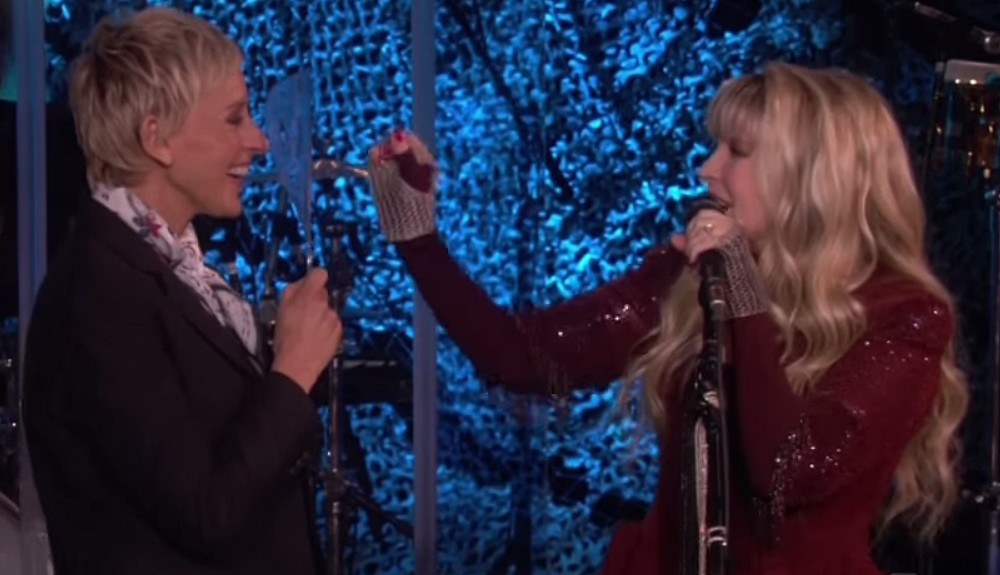
When Stevie Nicks started her musical and romantic relationship with Lindsey Buckingham, both were still in high school. By the time the romance ended, the folk-pop duo were in one of the world’s hottest bands, which also contained another splitting couple, John and Christine McVie, as well as drummer Mick Fleetwood, who also was in the throes of divorce. Their tangled, cocaine-addled lives—and Nicks’ affair with Fleetwood—would become fodder for 1977’s Rumours, one of the best-selling albums of all time. In the years since, Fleetwood Mac’s members would go their own ways, only to come together again periodically. But of all their solo careers, Nicks’ has been the most successful.
Her string of hits, with and without Fleetwood Mac, represents one of pop music’s most beloved canons: the list includes “Rhiannon,” “Landslide,” “Dreams” (a favorite topic), “Edge of Seventeen,” “Leather and Lace” (a duet with one-time lover Don Henley), “Stand Back” and, with Tom Petty, “Stop Draggin’ My Heart Around.” Her gypsy/witchy-woman look—Victorian-inspired gowns, high-heeled boots, leather and lace, silk and satin, romantic hats over long, blonde hair, all shown off with frequent stage twirls—set a tone in the ‘70s from which she hasn’t wavered to this day. Her songwriting methods hadn’t changed much, either, till she called Dave Stewart and asked him if he’d like to produce her first solo album in 10 years. Released in May, In Your Dreams contains the first song collaborations she’s ever done with another writer while sitting in the same room, raw and open to anything.
Their output, it turns out, is remarkably strong. This time, she’s inspired by soldiers, angels, vampires, New Orleans, Edgar Allen Poe and, of course, romantic notions—past, present and future. (Both Buckingham and Fleetwood are on the album, along with guitarist Waddy Wachtel, with whom she’d also reportedly been linked at one time.) Sometime writing partner Mike Campbell also participated. In a wide-ranging conversation, Nicks discusses her unusual methodology.
You’ve written some of the most enduring songs in the pop-rock lexicon. I’m sure you’re very proud of that. How about if we start with Buckingham Nicks? “Frozen Love” was the biggest song that you two were known for as a team. Did you write that together?
No, I wrote it. Lindsey and I did not ever write a song together. The only—strangely enough—time I’ve ever written a song with anybody is Dave Stewart.
Wow!
I mean anybody in the same room. I do write with [Heartbreaker] Michael Campbell, but he sends me a CD that has three or four tracks on it, so he’s not sitting there. That’s very different, because if you don’t like it you can like wait three days and call and say, “You know, I just didn’t see anything/hear anything right now, but I’ll revisit it.” So you can kind of get out of it without hurting anybody’s feelings. That’s a problem with writing songs with people—you can really end up hurting peoples’ feelings, because if you don’t like it, you either get stuck with something you don’t like or you’re honest and you tell them you don’t like it, and, it takes a very special team to be able to write together without that ego thing happening. So Lindsey and I never wrote. He would leave guitars all over our little house and they’d all be tuned in different tunings and God knows what. He’d be gone, I’d write a song, I’d record it on a cassette, and then I’d put the cassette by the coffee pot and say, “Here’s a new song, you can produce it, but don’t change it.” Strict orders. “Don’t change it, don’t change the words, don’t change the melody. Just do your magic thing, but don’t change it.”
Did you ever overcome that feeling that once it was done, nobody could touch it?
No. Very superstitious.
How does that translate into your songwriting? When it’s done, it’s done?
It’s done—pretty much. Sometimes when I write a song, I’ll just write the first two verses and the chorus, and in my head I know I still have to write another verse, and maybe I’ll do that down the line a couple weeks later or maybe even a month or two later, but it’s very set in stone because—I always have a tape recorder going, and usually the first time, if I’m singing [sings] “Now there you go again, you say you want your freedom /who am I to keep you down?”—I’m not changing that. And I know it. The second it comes out of my mouth, I’m like “Oh, that was good.” So I have a little overhead lightbulb thing that goes off, so then I’m never going to go back and change that even though a good example is Don Henley—I was going out with Don Henley when I was writing “Dreams,” and it says [sings], “When the rain washes you clean, you’ll know.” Well, he didn’t like that [sings]“washes you” [accent on “es”], and he wanted me to go, “When the rain washes you clean” [accent on “wash”]. And I’m like, “No, I don’t like it.” [laughs] And he’s like, “Well, wash-ES doesn’t sound good,” and I’m like, “Well, wash-ES is the way it’s gonna be.” So then you start getting into that with somebody, and we’re talking an ego [of] a fantastic songwriter here. So I’m arguing with Don Henley over this, you know? That’s why I really stayed away from writing songs with other people.
Especially men, I guess.
Well, yeah, and but then if you slip it over to women, then of course women are more sensitive. So then you’re really actually going to hurt somebody’s feelings. It didn’t hurt Don’s feelings that I didn’t like his idea. I think he just—he was like, way more famous than me, you know, Don Henley and the Eagles—so I think he probably just thought, “Well, you’re an idiot.” And just left it at that because certainly, me not liking the word “washes” is not going to wreck Don Henley’s confidence. But at the same time, it was a little thorn there for a moment.
It’s interesting that you say, “He was way more famous than me.” In retrospect—and it’s so strange to ask a question like this: “Do you guys ever sit there and consider who is more famous?”—but honestly, as time has gone by, wouldn’t you say it’s pretty much equaled out?
Well, maybe. But then, that was—well, when was “Dreams”? Was “Dreams” on the first or second record; I can never remember—whatever, when Lindsey and I drove to Los Angeles in 1971, “Witchy Woman” was on the radio, “One of These Nights” was on the radio, and we were totally inspired by them and by their amazing harmonies and amazing song craftsmanship. So in my little mind, this was two years—1976 is when it was, because that’s when I went out with Don—so in my mind, they had been famous for a good solid five, six years longer than we had been famous. So I was listening to the Eagles long before I even knew if we’d make it or not. There’s bands that are famous—well it’s generations —five years before us, and then us, and there’s the five-years-after-us generation, and then there’s even older than that, which would be Eric Clapton and his generation, a little bit older than the Eagles generation. So that’s actually like a two-year-older generation, so each one of those generations brought up these amazing bands, so I, Stevie Nicks, would open for the Eagles in a second because they’re awesome and they were my big inspiration. It’s why I was able to go out on the road just now and feel very good about opening for Rod Stewart, because Rod Stewart [is] awesome; one of my big influences.
I was gonna ask you how that tour went.
It went great. He’s trippy, he’s charming. I’m used to English people so I’m very comfortable with the English people. They are very witty and very funny and charming. You can’t not like Rod Stewart because he’s darling, and he was very good to me and he gave me a chance to take my new album around the United States and do 18 arena gigs, which, by myself, I could not command. I can’t play the arenas that Rod Stewart and Fleetwood Mac play. So taking me with him, he allowed me to be able to go play my single and say a few little words about my record in 18 huge cities, in 18 huge venues. He gave me a wonderful platform for that. On the last night I said to him, “If this record really does well Rod, I’m going to be sending you a cashmere blanket.” He really helped me in giving me that platform.
Did it feel like there was a particular age group in the audience or were you reaching new fans as well?
In Rod’s show?
Yeah.
Well, I’m starting to really be aware that there are children out there, I mean there’s kids, there’s 14-year-olds and 15-year-olds and 12-year-olds and 18-year-olds and 25-year-olds and 32-year-olds. It’s pretty much going across the board now, which is great. And it’s the same with Fleetwood Mac. When Fleetwood Mac first reconvened in 1998 for The Dance after not playing since 1987, since Tango in the Night, there were mostly people that were our age, a lot of people who looked definitely older, and Lindsey said, “Where are the younger people?” I said “Lindsey, give it a chance here, these are all the people that are our fans, and their children will come along with them and so will their grandchildren, by the way, so just give it two weeks,” and in fact that’s exactly what happened. Within weeks, there was like, super young people there, and it’s because we had great, serious fans, original fans in 1975-’76, ’77, ’78, and their children have grown up with us, and their children. Lindsey and I were 27 and 28 when we joined Fleetwood Mac—we had fans for those first two records that were probably, 50? Twenty-two years older than us? So think about that now. We’re 63 and 62. So if they’re still alive, we have fans in their 80s! [laughs]
That’s what’s so cool about rock ‘n’ roll. When I was growing up, which was when you were coming out with Buckingham Nicks and Fleetwood Mac was out, the last thing you would ever do was go to a show with you parents. You didn’t even want them to consider liking your music.
Right, but now it’s pretty different. I mean, I think that they might go in different cars and be at the same concert and not hang out that much, but they’re both there.
If they’re lucky, their parents even bought them the ticket.
So let’s get back to the craft of songwriting I’m amazed that they come out, from what you’re saying, fully formed almost. Do you sit down and start to write and have to plan it? Or do you just go with inspiration whenever?
Mostly, I write poems. And my poems come directly out of my journals. On the righthand side of my big, leather-bound journals, I write prose, which is basically what happened today. If nothing good or spectacular happened, I don’t write. But I just got back from London; I did Hard Rock Calling for like 50,000, 60, 000 people, so of course I’m going to write about that. So out of that, whatever I wrote about, if I see something that looks like a song, then I’ll go to the lefthand page, which I never write on except for poetry. And I’ll pull a poem straight out of that, so I might write a song about the experience of Hard Rock Calling—not that I am; that’s just a good example of something that was really fun and really exciting, and there were so many people there and I had been in London for three weeks, so I was really feeling very English—so I might pull a poem out of there and call it “Hard Rock Calling.” And then what I do—it’s a full-on, formal poem—let’s see, let’s compare it to the full-on formal poem of, say, “Soldier’s Angel,” which is a poem that has existed since 2005, five formal verses. Then I go to the piano, and I sit there and I stare at the words and I start playing. And just like in that little bit of “Dreams” I sang for you, all of the sudden I’ll just go [sings]“I am a soldier’s angel in the eyes of a soldier/ in the eyes of a soldier I am a soldier’s mother,” and then I’m on a roll, and the whole song just comes … it usually takes 20 minutes.
I’m sure there are a lot of other writers who would be insanely jealous to know it’s so easy for you.
They are, because anybody who knows me knows that’s how I write. I had a great experience when I was writing “For What It’s Worth.” I had gone to Hawaii for two weeks and my niece Jessi, who’s 19, came over, and I had some tracks from Mike and I had listened to them a couple months before didn’t hear anything, but I said, “I’m gonna revisit those tracks.” And there were, like, 10 tracks, and I hit track seven and I went, “oh my …” and I just started—I didn’t even have a formal poem—which doesn’t often happen. There’s this little train bell at the beginning and I started thinking about my granddad and how my grandfather rode the rails in the ‘40s and was a songwriter and played gigs all over the United States. And I just started singing along, and I was running around the room at the same time looking for paper and pencil and yelling at my assistant to get some kind of recording device. And all we have is a camera, so we immediately put the camera on video and we were able to record it. And then Jessi came in and I said, “Do you want to hear this?” I just sang it to her and at the end she said—and she’d lived with me, her parents [brother Chris and sister-in-law/backup singer Lori Nicks] have lived with me off-and-on for years—and she just said, “Oh, Aunt Stevie, that is so awesome.” Because it was the first time in the whole 19 years that she had known me that she actually saw the process and saw a brand new song happen; the second time I sang it, I sang it for her. And she was like, “How did you do that?” and I’m like, “I don’t know, Jess. It’s my little special gift from God.” That’s how I look at it.
A lot of artists have said it’s just like channeling. So you always come up with the music after? Unless somebody like Mike offers some to you?
Pretty much.
How about with you and Dave, did you just trade verses, lyrics?
No, what we did was, I called him in January 2010 and asked him if he wanted to produce this record that I had decided to do after 10 years. And that day I sent him 40 pages of poetry, never really expecting him to read all of it, but he did. We had my living room set up with a Pro Tools rig, so I’m sitting on my couch, he’s sitting across from me in front of the fireplace. He puts his guitar on and he takes one of the poems out of the binder that I had sent him, and he said, “I like this poem. Let’s do this one.” And I’m like a deer in headlights at this point because I want to say to him, “I don’t really write songs with people.” But I didn’t because something in me said, “Don’t say that. Just sit there and see what he is gonna do.” And he just started playing guitar, playing kind of a cool thing, and I’m staring at him like, I’m still the deer, you know, and he looks and me and he goes, “Well, sing.” And I’m like, dying, and I start reciting the poem in a sing-songy sort of way. That’s actually the third to the last song on the record, it’s called “You May Be The One.” [Sings]“You may be the one, but you’ll never be the one, you may be my love, but you’ll never be my love,” So that’s how it started, and 20 minutes later, we had a really good song and it was recorded.
And I went to myself, “OK, I now understand why people write together. I understand why John Lennon and Paul McCartney wrote together when they didn’t have to, because they were great on their own. [It’s] because of what just happened between me and Dave.” Because there were no egos; he can read me like a book. He could tell if he played a chord I didn’t like. I didn’t say, “Stop, I hate that chord.” I think that my face probably twisted up, so he was reading my face as we went, and if I seemed to falter, he would go to another chord. So we never even stopped, it just went all the way through, almost as if I was writing it myself.
I wrote all the lyrics on the whole record except for the chorus of “Everybody Loves You,” and that’s the first song that he sent me the night that I called him. It had the chorus, which said [sings], “Everybody loves you but you’re so alone, no one really knows you, but I’m the only one.” He said, “Write the verses to that.” And I said, “OK.” But that’s not like getting a track with no vocals. He had set the song up with that chorus, so then I had to build a story around those four lines, which was great—it was a challenge. And I immediately took it like he was writing that about Annie Lennox, because that sounded like a person from a duo writing a song about the other person in the duo. And what Dave and I had that was great was that we’d both been in really famous duos, so the whole time we were making this record, I feel like Lindsey and Annie were floating around in the room. Because a lot of the stuff that we both wrote seemed to be directed to our years as famous people in duos.
Have you ever talked to Lindsey about that?
Well, he’s very aware. And the words to “Everybody Loves You” came from a poem that’s pretty old, like maybe 12 years old, that was definitely written about him. Where it says, “No one else can play that part. No voice of a stranger could play that part/It broke my heart,” that’s pretty much all about Lindsey. I took Dave’s lead on that because I knew that this was about being in a duo, because being in a duo’s very different than being in a band, especially a man and woman. There haven’t been many famous duos, not that many men-and-women duos, that really lasted.
True, and the ones there are, generally they are romantically linked.
Lindsey and I were broken up at the end of 1976, so we were no longer a “duo” even within Fleetwood Mac, because we were no longer romantically linked. So you can be romantically linked and be a duo, or be in a band and that falls apart, and you can still stay in the band if you make the choice that you’re not gonna quit. And your reaction to that is like, “You quit, I’m not quitting. I’m not leaving Fleetwood Mac because we’re not getting along. You leave.” So nobody’s leaving.
Was it stubbornness or resiliency?
I think it was both, definitely. And it was all of us knowing that we had a good thing. And that none of us were gonna break that up over a personal relationship.
That’s part of what’s amazing about your story—you all understood that the strength of the band outweighed all of the drama that was going on. Looking back on it with 20/20 hindsight, would you have changed any of it?
No. I think it was fated. It was totally destiny that the guy who found Lindsey and I in San Francisco and who produced Buckingham-Nicks and the first Fleetwood Mac record would play “Frozen Love” for Mick Fleetwood. He knew that Mick was looking for a studio; he wasn’t that schooled in the fact that Mick was also looking for a guitar player because Bob Welch was getting ready to leave. Mick [was] searching for somebody to replace him if he did, so when Keith Olsen played “Frozen Love” for him, he definitely heard strains of Peter Green and all the other famous guitar players who had been in Fleetwood Mac for the five years before that. So the fact that that happened out of nowhere—that this big tall guy would come in and Keith Olsen would play him a song off a Buckingham-Nicks record that never really went anywhere, that two years before had opened to critical acclaim and then was dropped like a rock by Polydor—what are the chances of that? One in 20 million?
I wanted to ask you a little bit about how you restored your voice, because there was a period of time when it went away or faltered, and now you sound so great. Can you give me a little bit on that?
Sure. Well, I study with a vocal coach, a really great vocal coach who goes on the road with me. If I’m going on at 8 o’clock, I have to be done with my vocal lesson at 5, three hours before I sing. So at, like, 2:30 to 3, I work with Steve—his name is Steve Real—I work with him from 2:30 to 3 and then I work with him from 4 to 4:30 so that I’m done by 5. I do that absolutely rigidly before every single show. And if for some reason he’s not there—and he’s almost always there—if he’s not there, then I have a tape that is exactly what we do. It’s not as good as having him in person because he’s like the voice doctor, he can hear things in your voice that you don’t really hear, and he’ll be able to say, “You’re having a little trouble.” Like where I’m talking right now, sometimes that’s where the problem is, because I talk so much. So that’s what I’ve been doing since 1997, and he’s amazing, and he said to me, “If you want to sing into your 70s like opera singers do, then this is what we have to do.” And of course, in the beginning I was really reticent. I’m thinking, “That’s like going to the gym, that’s a big commitment,” or let’s put it this way: “I could be going to the gym.” That’s an hour commitment and I won’t be able to, because I’ll be spending an hour with you every single day before I go onstage. “how I realized that it worked was in 1997, for The Dance, we were in rehearsal and we were doing a dress rehearsal, and we’d invited like 500 people, and I was sick and I was this close to canceling it on that day, and my friend Liza said, “I have a great vocal coach. Can he come over and spend a half-hour with you?” And I said, “Oh, I’m so sure that this guy isn’t going to be able to do anything that’s going to be able to make me sing tonight. I am sick.” And she said, “Just give it a chance, Stevie.” So he came over about 3 in the afternoon and I hobbled downstairs to the living room and we sat at the piano, and for 30 minutes, he just ran me through some very interesting little scales. And he was very sweet and I liked him very much, and then he went home and I thought, “I’m going back to bed for two hours, so I won’t cancel it yet.” And I walked on that stage and sang pretty damn great considering how sick I was, and at that moment I said, “I will never go onstage without doing that workout again—ever—because I will never have another bad night if I do this, and I commit to this. I will never have another bad night no matter what—if I’m sick or if I’m having allergies or whatever happens to people that sing—sinus infection, whatever. I will still be able to sing and be able to sing pretty damn good no matter what if I do my 40 minutes with Steve.” And I have done it absolutely, determinedly, ever since.
Do you use any potions or anything like that on top of it?
No. Potions don’t work.
I meant like tea, honey …
No. Honey is acidic, for me. You can drink all the tea in the world, and I drink all the tea in the world, you can sip on olive oil, you can do tons of things that really don’t actually have one thing to do with the actual studying with a voice coach. Because when you study with a voice coach, what you’ll do is [demonstrates vocal exercise] and what you’re doing is, you’re vibrating the gunk off of your cords, because literally, you create a vibration. So anything that is on your vocal cords will vibrate right off. You can’t do that with tea. So it is worth it for any singer—and you don’t have to have your vocal coach come with you everywhere you go—what you do is, you go in and you do like two or three lessons with them and they’ll make you a tape. If it’s a good person, they’ll make you a tape, and then you use that. If you’re just playing in a little band and you do three gigs a week, you do your little tape a few hours before you go on and you’ll never have vocal problems; you’ll never get nodes, you’ll never get the nodule things, you’ll never have to have surgery. It’s like a gift. And if somebody had told me that in the first 15 years of Fleetwood Mac, man.
Is there was anything you want to mention about the new album, any song in particular you want to talk about? You have some of the great usual suspects that you’ve hung around with for years on there; did you ever at any point have them all together at the same time?
We did … we had Waddy, we had Mike … mostly it was me and Dave and the girls, Lori and [backup singer] Sharon [Celani], at my house. We did the record at my house, which was just fantastic. It was like a happening in San Francisco in 1968 or ’69. We only went into a big studio for two weeks to do the drum track. We started in January and we finished it Dec. 1. It was the best year of my life. I am probably more proud of this record than anything I’ve ever done. I am more proud of these songs than anything I’ve ever done—seven of them were written with Dave—and I think that caused the record to be diversified in a way that I could’ve never done by myself. Because you’re bringing another spirit in, and his spirit is great, and it’s all-knowing, and he has such a command of music, that to be working and writing with somebody like him was an adventure for me every second of every day.
He would come Mondays, Wednesdays and Fridays, and then on Tuesdays and Thursdays and Saturdays and Sundays, the girls and I would work on our harmonies and on all our parts so that when Dave would come back, we’d have all the singing parts worked out to the song that we had just written two days before.
We were moving fast and because of that, it was never a dull moment. It was just a lot of laughter. We made dinners for 10 or 12 every night in my dining room and we sat and talked about music and politics and the world, and it was the dream album to make.
Every day when I would get up, I would just be going, “Today is going to be another amazing new song.” And whether it became “Moonlight” or “New Orleans” or “Cheaper Than Free,” which I personally think —I look at Dave sometimes and say, “This song, ‘Cheaper Than Free,’ may be the best song either of us ever writes,” because it’s such a precious song—I’m just very proud of it. This has been a big thing for me, to make a record that I think is this good at my age.
And out of that—the diversification of “Secret Love” to “Soldier’s Angel” to “New Orleans” to “Ghosts Are Gone” to “Wide Sargasso Sea” to “You May Be The One”—I think of these songs and they’re all so different, and that’s what I love. My guitar player and musical director, Waddy Wachtel, always says, “In a way, since you only know six chords, you kind of just write one song.” And just after I kick him for saying that I say, “Well you’re right, actually.” So this allowed me to go places with my voice and with my creativity that I couldn’t go because I don’t know a thousand chords. I really do only know six or seven guitar chords and I never took piano lessons, so what I do on the piano is very much, the right hand never moves and the bottom hand moves bass notes, and that’s how I play. Which totally works for me, don’t get me wrong, it’s worked very well for me my whole life, but I’m really flying by the seat of my pants a lot of the time. And to have somebody like Dave, who just enjoys my life, enjoys my friends, enjoys the way I live, enjoys my hippie flowy things on the lamps and the candles and all that, he enjoys all that, he embraced all that, it really was like going back in time to when, like, Led Zeppelin made records at the Grange or that kind of situation. Every day when I would get up, I would just be going, “Today is going to be another amazing new song.” And whether it became “Moonlight” or “New Orleans” or “Cheaper Than Free,” which I personally think—I look at Dave sometimes and say, “This song, ‘Cheaper Than Free,’ may be the best song either of us ever writes,” because it’s such a precious song —I’m just very proud of it. This has been a big thing for me, to make a record that I think is this good at my age.
Lynne Margolis / American Songwriter / Thursday, September 1, 2011


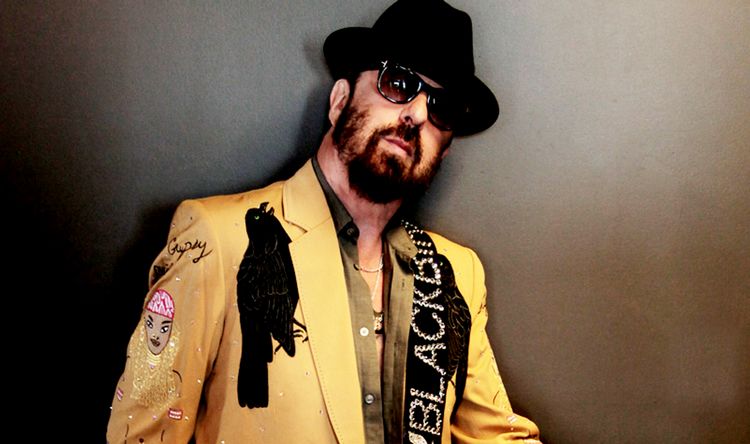

 “Reese Witherspoon was in the studio watching me and Stevie record, and when I said I was coming to Nashville for the first time she said, ‘Oh, you can stay in my condo,’ “Stewart recalls. “Stevie said, ‘Yeah, that would be cheap,’ and Reese said, ‘What’s cheaper than free?’ I turned around and said, ‘Hey, that’s a great song,’ and Stevie and I wrote it.”
 STEVIE NICKS In Your Dreams