Category: Lindsey Buckingham

  • Lindsey Buckingham

    Lindsey Buckingham

    The Fleetwood Mac member on humble beginnings, Bel-Air bachelor pads, and digging in

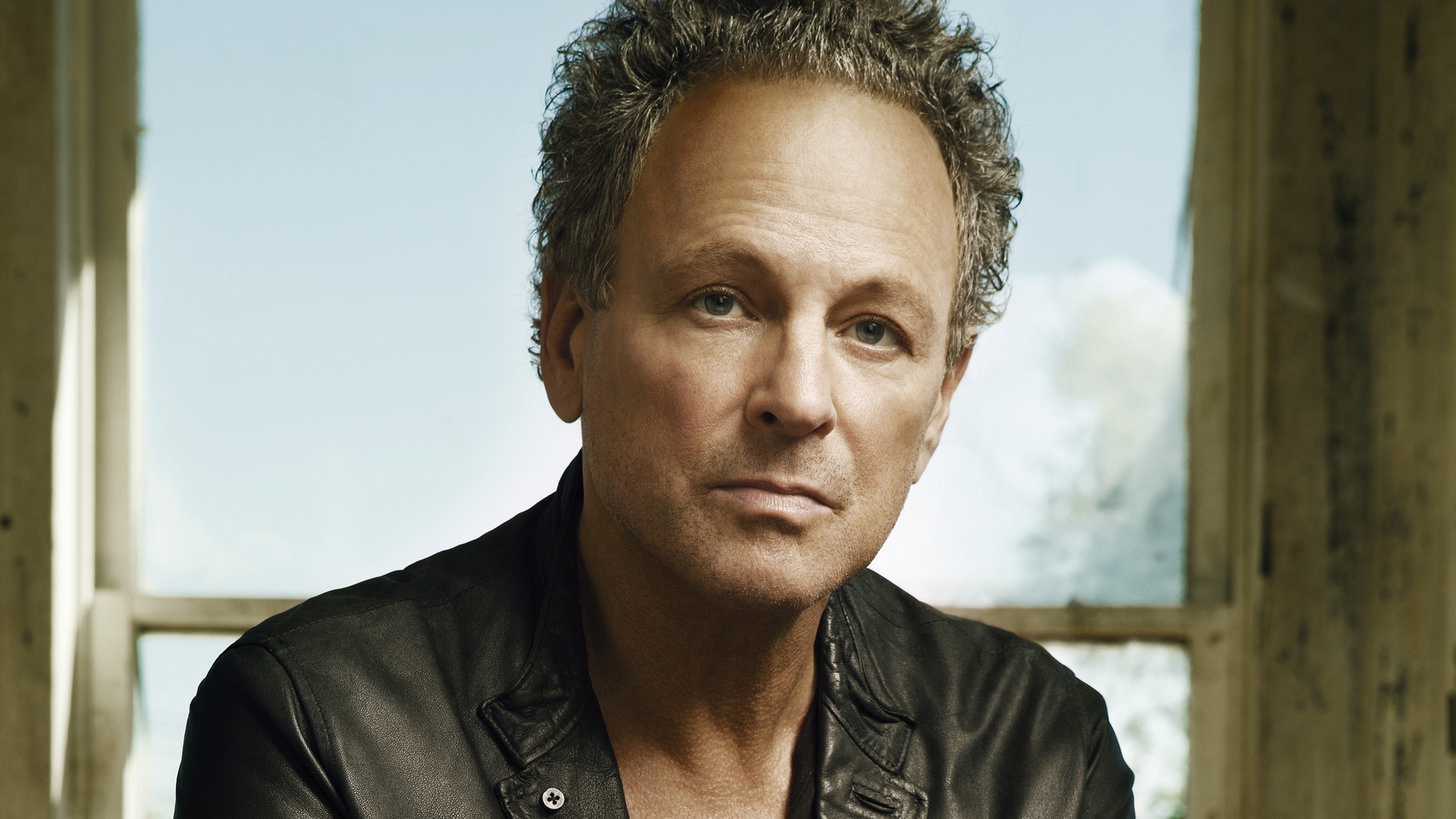
    Lindsey Buckingham (Jeremy Cowart / © 2011)
    Lindsey Buckingham (Photo: Jeremy Cowart © 2011)

    By Julia St. Pierre / Los Angeles Magazine
    Thursday, May 23, 2013

    I grew up in Atherton, right near Stanford. Stevie [Nicks] and I were in a band that bottomed out, but there was interest in us as a duo. We came up with enough material for an album, and we intuited that if we were going to make things happen, we needed to move to where the action was. We lived right off Coldwater — it wasn’t a dirt road, but it was close. L.A. was an adjustment, for sure — it’s big, it’s random.

    Less than six months after we moved, we got a record deal. We had one album, Buckingham Nicks, and it didn’t sell, so we lost our deal. We had to make ends meet, so we did a lot of shows to get extra money. I remember playing a club with Stevie called the Starwood on Santa Monica. We also played the Troubadour. At Sound City studios the owner was very gracious to let us use Studio B when there was nobody booked to work on a second album. It was there that we ran into Mick Fleetwood, who was really just looking for a studio. He didn’t know [guitarist-vocalist] Bob Welch was going to quit Fleetwood Mac. I walked into Studio A, and the band was listening to our song “Frozen Love” at top volume and Mick was completely grooving to the guitar solo. A couple of weeks later Mick called and said, “Do you want to join Fleetwood Mac?” and I said, “You have to take my girlfriend, too.” That was a very lucky moment for us.

    I had a house up in Bel-Air for a long time. It was not a family house; it was a bachelor house. So we bulldozed it. My wife was quite happy because there was a lot of symbolism to having everything that went before bulldozed. We are in Brentwood now. We needed to come down off the hill.

    I’ve thought about whether it would be advisable or possible to move out, but this is the thing about Los Angeles: People come here and they stay. It’s not just because there is an illusionary carrot, although that is part of it. You could probably find actors or musicians who are not much younger than myself who still haven’t caught their break. So that’s part of what drives Los Angeles. If you do happen to get lucky, as Stevie and I did, then there are reasons to stay. Unless you want to be Neil Young and live up in the mountains, there’s not a lot of motivation to move. Whatever there may be about the city that you could take to task, it’s a pretty great place.

    I don’t think I would’ve wanted to raise my kids elsewhere, but it is a mixed bag. Growing up in Atherton, you could just get on your bike, go to school, and come home. You had a level of autonomy that doesn’t exist for kids today. Some of that has to do with L.A. and some of it has to do with the times. I grew up in one place. Stevie, on the other hand — her dad was a businessman who uprooted his family regularly, so she learned how to make a splash everywhere they went. It took its toll on her in other ways, and that’s not something I want for my kids. We’re dug in here, and we’re happy.

    QUE ‘EM UP

    Gift of Screws (2008)

    On this solo effort, “Time Precious Time” shows off Buckingham’s guitar chops, while “Did You Miss Me” is pure, perfect pop.

    Tusk (1979)

    Yes, Rumours was the breakout Fleetwood Mac hit, but this double album, initially deemed a failure, was Buckinham’s creative magnum ops and became a band favorite.

    Buckingham Nicks (1973)

    The lesser-known album that started it all, this early LP may (finally) be re-released on CD for the first time this year.

  • How Lindsey Buckingham took Fleetwood Mac to the top

    How Lindsey Buckingham took Fleetwood Mac to the top

    1979-lindsey-buckinghamBy Ted Drozdowski
    Gibson
    Saturday, April 6, 2013

    In the annals of Fleetwood Mac’s guitar history, Peter Green gets nearly all the black — in part because of his key role in making the Gibson Les Paul Sunburst an integral part of rock and blues history. But the Mac also featured another great Les Paul player who took lead of the band and helped the group reach its zenith of popularity: Lindsey Buckingham.

    (more…)

  • Lindsey Buckingham on surviving Fleetwood Mac

    Lindsey Buckingham on surviving Fleetwood Mac

    On Stevie: "There will never be romance there, but there are other kinds of love to be had." (Photo by Ture Lillegraven / Corbis)
    On Stevie: “There will never be romance there, but there are other kinds of love to be had.” (Photo by Ture Lillegraven / Corbis)

    As Fleetwood Mac kicks off its first tour in four years, Lindsey Buckingham reflects on the band’s drug-fueled nights, blowout fights, and unbreakable bonds.

    By Brian Hiatt
    Men’s Journal
    April 2013

    For Lindsey Buckingham, recording an album used to mean doing just enough coke to nail a guitar part at 3 am, getting in screaming fights with Stevie Nicks, and, in one case, allegedly throttling an engineer who erased the wrong track. But that was all long ago. These days, he wakes up at six, has breakfast with his three young kids, hits his home studio alone, and is done by dinner. “It’s a nice balance,” says Buckingham, 63, who is reuniting with Fleetwood Mac for an arena tour beginning this month (and has a solo live album, ‘One Man Show,’ out now). “That’s the whole lesson for me now. For many, many years in Fleetwood Mac, it was a study in life out of balance.”

    You had your first child at 48. Do you recommend late-life fatherhood?

    It depends on the man. You could almost say I’m someone who doesn’t practice age. I went to a high school reunion a few years back, and all these people seemed 20 years older than me, physically and mentally. So having kids late is good if you’re the kind of person who needs to wait – though in 20 years, I may have a different perspective.

    Your most recent studio album, ‘Seeds We Sow,’ got great reviews but didn’t sell. Why?

    There’s a disconnect between the preconceptions that go with being the age I am and what the music is. I sent the album to Daniel Glass, who runs [hip record label] Glassnote, and he loved it. Then he played it for his staff, guys in their twenties, and they said, “Well, what are we going to do with it?”

    What do you remember about the argument that led to your leaving Fleetwood Mac for a while in 1987?

    All I recall is that Stevie ran after me crying and yelling and kind of beating on my back. I don’t remember any physical confrontation, not to say there wasn’t.

    Is it safe to say, though, that you had a temper in the past?

    Sure. It’s been well documented. But we were doing all sorts of substances, too, that probably had something to do with blowing certain behaviors way out of proportion.

    Has age calmed you down?

    Some of it was situational. You’ve got to understand, it was very difficult for me to have Stevie break up with me and to still be in a band with her, to never get a sense of closure. It took its toll emotionally.

    How come drugs never got too out of control for you?

    The substances that were in the studio were not part of my lifestyle at home. I had to take them so I could stay up till two or three, and even then, Mick [Fleetwood] would want to go later. My MO if I really wanted to leave would be to say, “I’m going to the bathroom,” and then walk out the door and drive away.

    Now that pot is practically legal in California, are you tempted by it?

    No. I did a lot of that back then, and it was good for a certain kind of abstract thinking. But we all thought we had to be altering our consciousness on a daily basis in order to be creative, which turns out to be crap. It’s just about finding your center, that quiet place.

    You and Stevie broke up decades ago, but you have to deal with her forever. What’s that like?

    You get used to it. And for me, getting married and having children was a positive outcome. I wonder sometimes how Stevie feels about the choices she made, because she doesn’t really have a relationship – she has her career. But there are a few chapters to be written in the Stevie-Lindsey legacy. There’s a subtext of love between us, and it would be hard to deny that much of what we’ve accomplished had something to do with trying to prove something to each other. Maybe that’s fucked up, but this is someone I’ve known since I was 16, and I think on some weird level we’re still trying to work some things out. There will never be romance there, but there are other kinds of love to be had.

    It’s about as complicated as a relationship can be.

    Oh, my Lord, yes.

  • Lindsey Buckingham talks new Fleetwood Mac music

    Lindsey Buckingham talks new Fleetwood Mac music

    Fans knew a Fleetwood Mac tour was imminent, but what they didn’t know was that new music was in the works. Two new songs, “Sad Angel” and “Miss Fantasy,” will come out before the tour kicks off in April. But longtime fans of Lindsey Buckingham and Stevie Nicks might be even more thrilled with this development: They’re seriously considering reviving their pre-Fleetwood Mac career as Buckingham Nicks – and recently recorded a song that was originally intended for the follow-up that never came to their one self-titled album. Buckingham sat down to talk exclusively to MSN about the new (and old) recordings.

    MSN: When we spoke last year about your solo album Seeds We Sow you said a Fleetwood Mac reunion would happen.

    Lindsey Buckingham: “Did I say it was going to happen in 2012?”

    Yes, but you said you wanted to do an album first. Stevie told me she wanted to do an album but people aren’t interested in them anymore, so you have just the two songs for now.

    “Oh no, that’s not true. I don’t know what she’s talking about. She just didn’t come with any songs. She didn’t want to do an album. I said ‘Stevie, what do you think?’ and she said ‘No, I don’t want to do that.’ So I didn’t push it. I’ve got all this stuff sitting around. I’ll get John (McVie) and Mick (Fleetwood) over here from Hawaii and do a low-key, under-the-radar situation, producer-wise, just see what happens. We cut like seven, eight tracks with Mitchell Froom and the stuff turned out great. We did it all in the proper keys for Stevie’s range, and for her to drop in her parts. My hope she would hear some of this stuff and love it and get drawn in. She wasn’t really prepared to love it, so she didn’t. She’s starting to love it more now, now that she’s on a couple. She felt sort of put-upon and that’s fair enough I guess. She had her idea of not wanting to do it and here I was getting John and Mick over, doing this rah-rah thing. Come on guys!”

    I have a feeling this interview is going to get the tour canceled before it begins…

    “No, no, no, not at all. But I think probably she felt put-upon in the sense she didn’t have a lot of material sitting around to bring. Maybe there was a sense of pressure on her part. I was talking to Mick yesterday. At some point we’re going to be very glad we did this material. Something’s gonna happen with this. What that is remains to be seen. If we only use a couple of these for now, that’s fine. Stevie still needs to come with something. Who’s to say? I’m not pushing for an album. Down the line, maybe. I think it would be great. Stevie’s gotta be happy, she’s gotta be comfortable and that’s really the bottom line.”

    How did you hook up with Mitchell Froom?

    “I had never met Mitchell but spoke with him on the phone. I like the guy. I like some of his reference points that I was aware of. I also knew he was a very skillful string-arranger in case we wanted anything more outside the box like that. And to top it off he lives about five minutes from me. We did this whole thing in a very handcrafted way. I’d go into his house and gave him all my rough demos first, some of which were fleshed out, others just snippets of things hummed into my phone….we sort of agreed on what songs we’d do, worked on arrangements. We had the whole thing worked out before John and Mick showed up. Then it was pretty organic. It was interesting for him – the peculiarity of how we do things… for three weeks we came up with all that’s stuff. It’s all very pop. It hearkens back to the Fleetwood Mac classic feel. And John and Mick were just playing their asses off.”

    With all your recent touring and solo albums and new songs are you in a particularly prolific phase?

    “I’m not sure. It’s maybe the fruition, or something like that, of the choices I’ve been able to make and implement. You can take it way back if you wanna get really philosophical and go back to Tusk. Since 2005, we got off the road from doing the Say You Will tour. I was working on a certain level of frustration at having several attempts of solo projects being co-opted and turned into Fleetwood Mac projects. It happened several times. I asked for three years off in order to do two back-to-back albums, which I did, just trying to get it all out of my system … I did Under the Skin and Gift of Screws … I began to get a much stronger sense of myself by putting some chronological things together …confidence enters into it, I guess, but just focus and momentum.”

    Let’s talk about the new music coming out. There’s another deluxe Rumours package coming out with more unreleased stuff. After the DVD-A and the previous deluxe release what’s left in the vaults for that?

    “You’re asking the wrong guy (laughs). I probably shouldn’t be saying this, but it’s a marketing thing. I don’t have much invested in that. What my function is when these things come out – someone else finds this stuff, finds stuff that hasn’t come out before. Then it’s my job to make sure it’s OK, that it’s something I’m comfortable with… that the whole thing makes sense or even relates to the Rumours album. Having said that I’m not a fan of repackaging things over and over again. I wouldn’t lose any sleep if this package didn’t come out, let’s leave it at that.”

    It’s frustrating to fans to get that again while the surround-sound mix of Tusk is still sitting in the vaults.

    “We did it! Getting Warner Brothers to put it out is another matter. And getting the band to want to put it out. That was my baby and there’s a certain subtext of it being the undermining factor of the brand. Maybe there’s a certain sublime level of suppression going on – not that anyone’s sitting around saying that, it’s just not on anybody’s A-list of things to do (laughs).”

    Tell me about the new songs “Sad Angel” and “Miss Fantasy.”

    “I was writing a lot of stuff. I was thinking about Stevie when I was putting these together. Many of the songs I came up with were directed at Stevie. They were a dialog to her. Both those are very much that. ‘Sad Angel’ – I think of her in all her traumatic splendor as having quite a bit of sadness that she still deals with. At the moment that it was being written I really was thinking about the fact that she and I were not agreeing on the idea of an album. The chorus is ‘Hello, sad angel, have you come to fight the war?’ It goes on to talk about ‘the crowd’s calling out for more.’ It’s sort of a cyclical look at our lives, the competitiveness of it yet the underlying unity of it. Each of our journeys has never been not a little about the other. ‘Miss Fantasy’ is more of the same thing. It’s a look back on….it’s talking about having a dream, recalling certain events that occurred years and years ago. The chorus is talking about ‘Miss Fantasy, it may be that you don’t remember me, but I remember you.’ That’s addressing all that’s happened over the course of time. You remember the person you were and the person I was back then? Is there any way to find any of that? Do we want to? Is it important to? Those are songs about Stevie and me.”

    Doing the song “Stephanie” on your solo tour from the out-of-print 1973 Buckingham Nicks album raised fans’ hopes that it’ll come out on CD someday. You also made a comment on the BBC about working with Stevie again. I assume that meant this tour but it was interpreted by some as you saying you might want to re-form Buckingham Nicks.

    “That’s not a misinterpretation. I would love to go out and do Buckingham Nicks. It’s sort of ironic because when Stevie came over here and started working we just had a great time, the best time we have had in years. She did bring in one song that was supposed to be her contribution to the Fleetwood Mac thing. After we were done with it she decided she wanted to put it on the Buckingham Nicks album (laughs). So that’s fine too. I don’t care. It’s an old song from pre-Fleetwood Mac. It was written sometime after Buckingham Nicks came out but before we joined Fleetwood Mac. We were working on a second possible Buckingham/Nicks album that never happened. So yes. The issue with all of that is once again a logistics issue. I have no problem with dropping a bonus track or one from her and one from me and putting out Buckingham Nicks finally on CD. …she said ‘We could do some dates between legs of the Fleetwood Mac tour.’ I’m thinking ‘No, I don’t think so. I don’t think it’s logistically possible.’ We’ve got a little less than 40 dates on the books, we’ll probably add a few more…we’ll do Europe and probably go down and do the summer in Australia and New Zealand. When the hell are we going to get together and rehearse a Buckingham Nicks show? So in my mind if she’s really serious what would be good to do is wait to put the (old) album out, or put it out and then do a new Buckingham Nicks album. The tour would have to wait till after that. Whether or not that will happen….she’s very heartfelt about what she’s saying, but it isn’t always clear. I don’t know what to say about that. But yes, to be very direct in response to your question if it were up to me… I would love to go out and do that again. That would be so cyclical and so karmically appropriate. If you see Stevie just tell her I said that.”

    Mark C. Brown / MSN

  • Q&A with Lindsey Buckingham

    Q&A with Lindsey Buckingham

    Lindsey BuckinghamThere’s Lindsey Buckingham, contributor of meticulous production, searing guitar and one of the all-time great musical kiss-offs (“Go Your Own Way”) to the soon-to-be-on-again Fleetwood Mac. Then there’s Lindsey Buckingham, the enigmatic eccentric behind celebrated solo efforts such as 2006’s acoustic-based Under The Skin and 1983’s bouncy “Holiday Road” (of National Lampoon’s Vacation fame), not to mention one of the most influential commercial flops in rock history, Fleetwood Mac’s 1979 double albumTusk, which has been covered in its entirety by Camper Van Beethoven and cited by Stephin Merritt and Matthew Sweet as a misjudged masterpiece.

    Buckingham’s latest solo album, Gift Of Screws (Reprise), is made palatable to the Mac-loving masses by buoyant pop songs such as “The Right Place To Fade” (a dead ringer for Rumours opener “Second Hand News”) and the breezy “Did You Miss Me.” They provide a radio-friendly counterpoint to the batshit-crazy yelps and drummer Mick Fleetwood’s caveman stomp on the title track and the cut-and-paste electro clatter pulsing through opener “Great Day.”

    While his classic-rock peers have opted for the safety of summer shed tours and Wal-Mart partnerships, the 59-year-old Buckingham has spent the last several years crafting self-described “boutique” albums, mostly by his lonesome, then taking them on the road to entertain a devoted cult following.

    Your musical approach seems at odds with the fact that you came of age in the suburbs of San Francisco during the ’60s. Your style encompasses varied bits of what came before and after the Summer of Love, the psychedelic explosion and all that.

    I took all of that in. But I had been playing guitar since I was about seven, and many of my sensibilities were intact already. Most of the people I knew were picking up a guitar for the first time because of the 1967 scene, so there was a difference between how I was looking at the stuff and what I was pulling from it. The other thing is that by the time I got into a band—and because my sensibilities were somewhere between folk and (Elvis Presley guitarist) Scotty Moore and whatever else—I couldn’t play lead. I didn’t have the gear to play lead. [Laughs] I played bass in my first band.

    So you were more of an observer than a gleaner of what was going on around you musically?
    Yeah. I saw a lot of people—Zeppelin, the Who, Janis Joplin—at the Fillmore. And what was so great was the intimacy in which you got to see these people. The scene was so ripe at that time. It hadn’t quite gotten to the level of exploitation that it soon got to. There was innocence about all of that. The idealism was so intact.

    What attracted you to folk music as a kid?
    In the early ’60s, when that first wave of rock ’n’ roll started to become less interesting, I looked to folk. The Kingston Trio were a group I liked because they were taking folk to a commercial, dare I say produced, level. There was something interesting about that to me. They were not Pete Seeger doing some extension of Woody Guthrie; they were interested in making records.

    Prior to joining Fleetwood Mac, you got to work with Don Everly.

    Economics entered into the situation, and Stevie (Nicks) and I were trying to do whatever we could to pay our rent. We had not made any substantial money from [1973’s] Buckingham Nicks album. Our management company had the Carpenters and Jim Croce; they had some pretty big acts and weren’t too interested in us. [Laughs] I knew Warren Zevon, who had been playing with Don. There was an opening for a guitar player, and I got the gig. But the problem with that situation was that Don was wrestling with this idea of wanting to be Don Everly on his own, which is understandable. We were playing clubs, and everywhere we would go it was heartbreaking. All we would get was people yelling, “Play ‘Bye Bye Love,’ ‘Wake Up Little Susie.’” He was coming right out of being [in the Everly Brothers] and couldn’t take it. After about three cities, he pulled the plug on the tour. He said, “I can’t do this.”

    Did those kind of music-biz setbacks have an impact on the decision for you and Stevie to join Fleetwood Mac?

    Around the time we were asked to join Fleetwood Mac, we had started to do some shows based on the regional popularity of the Buckingham Nicks album. And it blew our minds, because we would go to fairly obscure places like Tuscaloosa, Ala., and would be able to headline for 3,000 or 4,000 people. Yet we couldn’t fill a club in L.A. It sort of gave us a little pause as to whether we were doing the right thing (by joining Fleetwood Mac), because there was this inkling that maybe something might’ve taken hold if we had seen it through.

    Your recent solo records have a hushed feel that’s not dissimilar to younger artists like M. Ward and Iron And Wine. Are you familiar with them?

    I’m not familiar with anything that new, really. You get to a certain point with your method and in your personal life—when you’re a father—where your context of things moves a little more to the right, shall we say. In my younger days, there was a communication of what to listen to based on what a group of people had. A lot of that’s gone away. I think the need to seek things out becomes a little less important when you’ve defined a way of working, something that’s more internally based. I try to listen to things that are fresh. Radiohead and Thom Yorke’s solo album I really love. Death Cab For Cutie, too; I love how they use 6ths and 9ths a lot in their melody lines.

    Legend has it that in your thirst to check out the punk scene in the late ’70s while Fleetwood Mac was on tour in the U.K., you would venture out to clubs on your own to see gigs.

    Yeah, but probably not as much as it’s been portrayed.

    Do you recall seeing anyone specifically?

    I can’t say I do, but man, I sure wish I’d seen the Clash back then. Maybe the Pretenders? I really can’t recall. Bands like that played a role in the motivation behind Tusk. There was the reaction to avoid making Rumours II. But there was the fact that there was a ton of new stuff coming out that felt closer to my heart. It was ballsier, it was chancier. It felt more in the spirit of what rock ’n’ roll began as. That helped to inspire the confidence to do Tusk.

    Tusk has taken on a life of its own among a younger generation of artists who identify with its avant-garde slant and the integrity in not making a safe follow-up to Rumours. What does the album represent to you 30 years on?

    It was the beginning of everything for me. You could look at that almost as a first solo album. Certainly it was the setting of a tone to which I still try to adhere. A point of departure in terms of what I think is important. I don’t think I would’ve gotten to that point had we not had this hugely successful album preceding Tusk. I gained perspective on the lack of freedom that success can give you.

    I’m of a mind that it’s not as “weird” a record as it’s usually portrayed once you get past the sonic presentation. You went from these pristine sounds on Rumoursto some fairly crude production techniques and loosely played parts with Tusk, especially the drums.

    Yeah, real loose. [Laughs] Much of that was a byproduct of the band allowing me to work on my own and bring in these finished tracks. On “Save Me A Place,” the rhythm track is a box of two-inch tape hit with a hand. I had a lot of fun, at some degree to Mick’s discomfort, because I was really into making sloppy drum statements. Obviously, that was his area.

    How do Fleetwood Mac records like (1982’s) Mirage and (1987’s) Tango In The Night sit with you? They both definitely have their moments.

    Mirage kind of represents a treading-water period for me. What happened in the wake of Tusk not selling 16 million albums or whatever, this dictum came down from the whole band that we weren’t going to engage in that kind of experimentalism anymore. And the time right after Mirage and through Tango In The Night was just the craziest time as far as the band goes. The lack of discipline, the personal habits, the alienation, everything. Making Tango, which was largely done in my garage, was almost impossible. Out of a year of working, we probably saw Stevie for maybe three weeks. It was smoke and mirrors. At the end of that album, I just couldn’t contemplate going out on the road with that. That was the beginning of me trying to pull back and regain some of my sense of self and sanity, which was not really too present within the microcosm I was living. [Laughs] But that’s showbiz.

    Patrick Berkery / Magnet Magazine /

  • Lindsey Buckingham Soundstage with Stevie Nicks premieres

    Lindsey Buckingham Soundstage with Stevie Nicks premieres

    2005-1108-lb-soundstage
    Soundstage featuring Lindsey Buckingham and special guest Stevie Nicks premiered  on PBS networks across the country on Thursday, September 8.

    During the PBS performance, Nicks joined Buckingham for two songs, “Never Going Going Back Again” and “Say Goodbye.”

    A DVD of the performance is available through Amazon sellers.

  • From the heart: Stevie Nicks returns to Phoenix for annual benefit concert

    From the heart: Stevie Nicks returns to Phoenix for annual benefit concert

    2001 Trouble in Shangri-La
    (Photo: Frank-Micelotta)

    By Leigh Flayton
    City AZ
    Friday, November 30, 2001

    Local hero Stevie Nicks’ national tour culminates in a hometown show that’s dear to her family’s heart — it’s also the hottest ticket of the year.

    She’s back. Phoenix’s favorite songbird returns home this December 6 to play her annual benefit concert for the Arizona Heart Institute at America West Arena. And, what can fans expect this year, whether they score the premium $1,000 tickets–which include access to the private post-concert party — or the more affordable, yet still intimate, seats throughout the venue?

    We’ll have many of the same guests this year: Sheryl Crow, Don Henley, Lindsey Buckingham,” Nicks said recently via telephone. “They’re all my friends; they’re my circle.”

    Also in attendance will be any of us who were smart enough to purchase tickets, for we will not only see a one-of-a-kind show, we’ll be supporting a terrific cause. The benefit concert is the passion of Stevie’s father, Jess Nicks — whose brother and mother died of heart disease — and who has suffered from the disease himself, along with Stevie’s mother, Barbara.

    “My dad is almost 77 years old, and when you get to be 77 you get to thinking, ‘I better start doing all this,’” Nicks says. “He is determined to build heart hospitals, and these benefits keep him going because he really goes to work on this. It makes him young again.”

    Last year’s show was a magical musical moment. Nicks sang unforgettable versions of her greatest works, including acoustic renderings of “Landslide” and “Gypsy”, with longtime friend, collaborator, and former lover Lindsey Buckingham. Also, many of the Nicks’ friends were onhand singing duets with her in addition to their own songs. Yet the best part was that every cent derived from the performance — titled “Stevie Nicks and Friends” — went to the Arizona Heart Institute Foundation’s efforts to eradicate heart disease, and to provide for advanced research into the treatments.

    “It’s not like collecting funds that spray into the wind and you have no idea where they go,” Nicks says. “The second my father gets that money in his hand, he takes it to where it’s gotta go.”

    Nicks has been benefiting millions with her music during the last three decades, beginning with her days with Fleetwood Mac. Since 1981, when her solo career took off upon the release of her first album, Bella Donna, she has been one of America’s premier artists — a fact that she takes very seriously.

    Her dedication to what she does was almost usurped, like most Americans’, last fall. Nicks was on tour in New York on September 11, the 21st-century’s very own date of infamy. Four days later, her first performance since the attacks was scheduled for Atlantic City.

    “It’s been very hard for me to be out on the road [since the attacks],” Nicks admits. “I thought about going home, because I just didn’t know that I could stand up there and smile. There were some days when I was calling home every day, really hysterical.” But Nicks got through that difficult first show. “It was hard to go back onstage. I have been very afraid, but we all have to get back on the plane. If we don’t, this country isn’t going to make it.”

    That concern inspired Nicks to write a poem “We Get Back on the Plane” which she composed aboard the nerve-racking flight out of Atlantic City, which was accompanied by an F-16 fighter plane. When we spoke a week later, she admitted she had been “song creeping” around the piano, knowing she would soon set the words she wrote to music.

    “My Mom and Dad keep going back to World War II,” Nicks says. “They keep saying, ‘You’re part of the USO right now; you must do this.’ I know that if we don’t get back to work, we’re in huge trouble.”

    So Stevie Nicks — the artist — took her own advice and got back to work. “I told the audience in Atlantic City to ‘let us let the music just take us away,’” she says. And, she admits, it did.

    Nicks says she knows that music does make a difference, and now, during the height of the greatest American crisis in a generation, she still believes music can help change the world.

    “During Desert Storm I received a flag from one of the first tanks that went in,” she recalls. “They were listening to my music and they made a very big deal to me about how important it was, to listen to my records. Entertainment — per se — is really uplifting. And now, of course, all my songs take on a different meaning.”

    Nicks has said she’s made sacrifices in her pursuit of the artist’s life, but her returns have meant so much to her listeners as well as for herself. She says she “knows” when she’s written something particularly meaningful; usually because it happens so quickly.

    I knew at the end of “Has Anyone Ever Written Anything for You”, I knew at the end of “Landslide”, and I knew at the end of “Love Is” from the new album,” she admits about realizing the brilliance of her songwriting. “I do have a feeling of it because what happens with songs is, sometimes you get halfway through and stop. Something isn’t right.”

    But sometimes, according to Nicks, it’s a flawless process.

    “There are ones that just flow out with no problem,” she admits. “I really did write a poem called “We Get Back On the Plane”, and I don’t know when I’m going to write it [as a song]. I might write it; I could write it. Those songs all have a really great story; they all have a real reason to be written. The ones that are really memorable are the ones that give that feeling of I have to do this. And, it’s going to be forever.”

    Like the heart hospitals Jess Nicks is determined to build, this year’s teaming of Nicks & Nicks will be yet another gift to the Valley. Jess will take his annual seat in the front row and beam — no doubt — as our desert angel takes the stage.

    For tickets call 602.266.2200 ext. 4619 or go to www.azheart.com.

  • Post-Mac attack

    “I’M NOT TRYING TO COMPETE with Kris Kross now, just like I didn’t try to compete with Christopher Cross in the old days.”

    Lindsey Buckingham–the pop genius and sonic architect behind Fleetwood Mac’s string of platinum successes in the Seventies and Eighties–is sitting under a velvet Elvis portrait in his home studio in the lovely hills of Bel Air, California. Buckingham has spent a substantial portion of the last four years in this room. Now, however, he’s finally on the verge of sharing with the public some of the music that he and Richard Dashut, his coproducer and writing partner, have been creating here, and he’s considering the question of how popular his eccentric brand of melodic pop will be these days.

    “I guess it’s obvious that making this album hasn’t been an especially speedy process,” says the master of the understatement. “But I had to let a lot of emotional dust settle. People might think I’ve been off on some island getting my ya-yas out. The truth is, I’ve basically been here twelve hours a day. I’ve been goofing off only in the most productive sense.”

    Asked if he’s grown sick of the windowless room, Buckingham pauses as if he hasn’t considered the issue before. “Well, I’m not really sick of it,” he says finally. “But I haven’t come inside here for a while, and I’m not sure why. A couple of weeks ago, I opened the door and just looked in. And I couldn’t relate to having spent the amount of time I did in here. This room became more my reality than the rest of the house. At times the whole thing seems like a weird dream to me.”

    Buckingham pauses again and looks around the room. “You know,” he adds, “actually, I guess I am pretty damn sick of this place.”

    Happily, all of Buckingham’s work has paid off. Out of the Cradle–his first release since he decided to go his own way and leave the Big Mac shortly after the release of 1987’s album Tango in the Night–is a wildly impressive coming-out party for the forty-two-year-old Buckingham. A veritable one-man show, the album is an artfully crafted song cycle whose romantic lushness is effectively balanced by a healthy dose of ripping guitar. More ambitious than the two solo albums he squeezed in between Mac projects–1981’s Law and Order and 1984’s Go Insane–Out of the Cradle represents Buckingham’s finest work since 1979’s Tusk, the album that established a creative high-water mark for his former group. That album–the controversial follow-up to 1977’s Rumours, one of the best-selling records of all time–was also, according to Buckingham, the beginning of the end for him and Fleetwood Mac.

    Buckingham and his then creative and romantic partner, Stevie Nicks, joined Fleetwood Mac in late 1974. At the time, Buckingham was already a “complete studio rat.” He first caught the bug when he set up a recording room at his father’s coffee plant, in Daly City, California, after dropping out of college in the early Seventies. Around the same time, he and Nicks started playing together with a Bay Area group called Fritz. They moved to Los Angeles in 1973, recording an album as Buckingham-Nicks the next year.

    “Our record company had no idea what to do with us,” says Buckingham. “They said something about wanting us to be the new Jim Stafford, and they wanted us to play steakhouses.” Opportunity knocked when Mick Fleetwood went to check out an L.A. studio and producer Keith Olsen played a track from the record he’d done with Buckingham-Nicks as a demonstration. Impressed, Fleetwood asked the pair to join his band a week later. It would prove to be a savvy decision. The reconstituted Mac–with Buckingham and Nicks joining bassist John McVie; his then wife, keyboardist and vocalist Christine McVie; and Fleetwood–debuted with 1975’s Fleetwood Mac, a multiplatinum smash that sold nearly 6 million copies worldwide, followed by the classic Rumours two years later.

    Yet Buckingham says it was never an easy fit–though at first the tensions within the band fueled the music. “Fleetwood Mac was one big lesson in adaptation for me,” says Buckingham. “There were five very different personalities, and I suppose that made it great for a while. Obviously, having two couples–and soon enough, ex-couples–added a lot more tension and some great subject matter to the mix. But the problems really kicked in when you started adding five managers and five lawyers to the equation. Once Stevie was singled out and selected as the star of the band, the machinery of the rock business clicked in, and things really got stupid. By the time of Tango, you could hardly fit all these people in one room for a band meeting. It was a heartbreaking thing to watch, until it became almost comical.”

    Musically, however, things just got better and better for Buckingham until the release of Tusk, an under-appreciated pop epic that met with a mixed response commercially, selling only 2 million copies. “It was a bizarre left turn,” Buckingham says. “But I knew if we made Rumours II that we’d have to make Rumours III and Rumours IV. We’d sold 14 million copies of Rumours [21 million worldwide], so we were in that mega-Michael Jackson area, and that’s a dangerous place to be. There was a big backlash. It wasn’t like the people around me at the time were saying, `Hey, Lindsey, let’s keep going in that interesting direction where we sell a lot less records than we used to.’ I really had the wind taken out of my sails, and I felt set adrift for a while.”

    In 1982 the band returned to the top of the charts with the more user-friendly Mirage, but for Buckingham the thrill was gone. “It became more and more this big machine that had to have hits to keep working,” he says. “There was no room to grow. After Tusk, it was basically all disappointment for me. It became a soap opera.”

    Partly in an attempt to give Fleetwood Mac a more fitting swan song, Buckingham and Dashut returned to help whip Tango in the Night into shape. In the end, that record became the group’s biggest album since Rumours, with sales of 8 million. Still, the experience was hardly an easy one. “It was a mess,” he says. “Whatever was going on in people’s personal lives, I can’t really say. I was never the one up all night creating shenanigans and high jinks anyway–I was the one who went up to my room to work on songs. But for whatever reasons, there was no camaraderie left. Just getting people in the same room to create more semblance of a group became a huge hassle. Especially with Stevie, who was probably around for something like ten days for that whole record.”

    Buckingham’s split with the band came when he decided he couldn’t tour to support the album. “They’d smoothed things over and coerced me, and I’d kind of agreed to go,” he says. “Then I realized I just couldn’t do it. I called another meeting, and they were shocked and hurt. I knew they wouldn’t leave it at that, so basically you could say I was let go.”

    The group added two new members, Billy Burnette and Rick Vito, in an attempt to fill the void left by Buckingham’s departure. Diplomatically, Buckingham says only that Behind the Mask– the 1990 record the group made without him–was “not an album I can say I took to heart.”

    Buckingham did, however, take to heart some of the slights meted out by Fleetwood in his 1990 tell-all tome, Fleetwood. “I didn’t read the whole book,” Buckingham says, “but I did skim it, and there were a lot of . . . untruths, shall we say. Mick was basically trying to underplay my contribution, but the thing that really upset me is the incident he describes of the night I left the band. He had this thing in there about me slapping Stevie. I mean, she probably deserved to be slapped. But it never happened that way. I don’t know what Mick was talking about.”

    “Wrong,” one of the tracks on Out of the Cradle, was inspired in part by Buckingham’s reaction to Fleetwood. The rest of the album reflects Buckingham’s experiences with the group in a much more vague and positive manner. “There’s no sense in my hiding from the association,” he says. “I feel like fifteen years with Fleetwood Mac was like working on my thesis, doing research for some kind of paper. And I wanted to make an album that sort of put it all in a real healthy perspective with maybe a little more maturity in there somewhere. Because even though I feel younger than I did ten years ago, the fact is, I’m not eighteen and there’s no point in pretending I am.”

    Buckingham decided to bury the hatchet with his former band mates and made a cameo appearance onstage at the end of Fleetwood Mac’s last concert in 1990. More recently, he agreed to work with the group on some new tracks for an upcoming box set, if time permits. “Going up onstage with them one more time wasn’t any sort of nail in the coffin for me emotionally,” he says, “because I already felt pretty detached. Still, the minute I saw Mick, the chemistry was still there, and that was pretty much the case with everyone. It was a gas.” As for the new songs, Buckingham says: “There’s no reason for me not to do it. I’d have to feel a lot of animosity toward those people not to work with them, and I don’t feel that way.

    “I left Fleetwood Mac to make myself happy,” says Buckingham, “and fortunately it worked. That’s why I spent all this time in the garage–trying to make something that made me happy.” And though Buckingham says that “so much in my life is work right now,” he admits to having left the studio occasionally to spend time with longtime girlfriend Cheri Caspari, whom he met while making Go Insane.

    Still, Buckingham says, he’s more than willing to leave his home long enough to support Out of the Cradle by hitting the road. “It’ll be great to get out of the studio, get some air and play with some other musicians,” he says. “In the Fleetwood Mac days we got used to the private jets and everything when we toured, but this time I’ll take the public bus if I have to.”

    At the same time, Buckingham wouldn’t mind selling some records, too. “My other solo records were made quickly as sidebars to a more mainstream situation,” he says. “That’s not the case anymore, so there’s no point in my being esoteric just for the sake of it now. I’m certainly not interested in making a cheap-shot sellout. This is no longer the sideshow, this is the main event, and I hope there are hits on there somewhere.”

    Lenny Waronker, president of Warner Bros. Records, Buckingham’s label, believes there’s no shortage of hits. “It’s the height of great songwriting and record making,” he says, “and I think the power and quality of the music will bring people in.”

    Buckingham named the album Out of the Cradle after the Walt Whitman poem “Out of the Cradle Endlessly Rocking.” “The phrase just had a certain resonance,” Buckingham says. “Some people thought there was an unnecessary reference in the title to my leaving Fleetwood Mac, and I suppose you could make an argument for that. You could also argue that there’s something ironic and weird about a guy over forty thinking of himself as leaving any sort of cradle. But that’s the way it feels. And it feels very good.”

    PHOTOS: Lindsey Buckingham (E.J. CAMP)


    David Wild / Rolling Stone / June 25, 1992 (Issue 633, p32)
  • Lindsey Buckingham takes a breather

    Lindsey Buckingham takes a breather

    The Fleetwood Mac of all trades, Lindsey Buckingham takes a breather with his own one-man band.

    Solo albums marked the beginning of the end for the Beatles. So when Fleetwood Mac’s Stevie Nicks recorded her album Bella Donna and Mick Fleetwood himself made The Visitor, the music world buzzed with speculation. Was the Big Mac disintegrating into a bunch of McNuggets? Rumors heated up again last fall when the band’s artistic well-spring, Lindsey Buckingham, 32, released his own first LP, Law and Order. Many wondered if the title of his Top 10 single meant what it suggested—Trouble.

    The answer seems to be: Not yet. Fleetwood Mac has long been rock’s turbulent version of The Young and the Restless, and Buckingham swears it’s all just a harmless way of blowing off a little creative steam. “With the band,” he explains, “there are five distinct personalities, lots of second-guessing, and it’s tough to get from point A to point B.” (Neither of the other two band members, John McVie and his ex-wife, Christine, has gone solo since joining Fleetwood Mac.)

    Buckingham is generally credited with transforming the blues-rock band into a commercial powerhouse. If praised for the 16 million sale of 1977’s Rumours, though, he also shouldered much of the blame for Tusk, a double-disc white elephant that was critically acclaimed but peaked at “only” four million in 1980. After a 76-city world tour, the band decided it needed time off. “John went on a cruise,” recounts Lindsey. “Christine just layout in the sun. But three weeks off and I go nuts. Working makes me happy.”

    He began his solo project in a studio in his garage. It was a singular undertaking indeed. Buckingham sang, played drums, guitar and keyboards, and supervised the recording. “It was like a painter working on a canvas,” he says. “When I work with Fleetwood Mac it’s more like making a movie.” Artistic independence does have its price, though. “Doing all the production and playing nearly all the instruments,” he says, “you begin to lose your objectivity as to what’s good.” (Lindsey eventually called in Fleetwood Mac engineer Richard Bashut to co-produce in the studio.) Of the album’s title, he says, “Rock is usually about escapism, lack of discipline and promiscuity. Law and Order is about the sense of personal order in your life. If there are songs about a special, stable relationship, it’s because that’s what I have.”

    He means his five-year romance with Oklahoma-born Carol Harris, 28, a part-time fashion model. They met in a Los Angeles recording studio in 1976 where Carol was a receptionist, and they moved in together the following year.

    Buckingham’s previous paramour, of course, was Nicks. Their celebrated breakup took place in the mid-’70s at the same time the McVies were divorcing. Having gotten through “years of pain,” Lindsey says he and Stevie are able to maintain a stable working relationship. After the Tusk session, though, Nicks complained that it was “like being a hostage in Iran and, to an extent, Lindsey was the Ayatollah.” Says Buckingham with a smile, “I did have definite ideas.” On their relationship outside the studio, he reflects, “I don’t think we’ll ever be good friends. There was a lot of passion, but not a lot of camaraderie.” Is he bothered by the fact that Stevie’s solo album has sold two million copies? “It’s easy to feel envious of someone who gets as much fan mail and sells as many records as Stevie,” he confesses. “Obviously my stuff is a little more off the wall, but I like my album better than hers.”

    One of three sons of a coffee company executive father, Lindsey grew up in the San Francisco suburb of Atherton. “I was one of the tons of guys who ran out and got a guitar when Elvis came along,” he recalls. As a junior in high school he met Nicks, who was a senior. A year later they started playing in a band called Fritz, became lovers and soon split off to make one album as a duo, Buckingham Nicks.

    Though the LP died in the market, it caught the ear of Fleetwood, who had founded Mac in 1967. Looking for someone to replace the just-departed Bob Welch, he invited both Nicks and Buckingham to join in 1975. “I guess it was a good thing,” understates Lindsey. His tunes, such as Monday Morning and Go Your Own Way, helped Mac become one of the best-selling groups of all time.

    Today Lindsey and Carol live in a three-bedroom house in L.A.’s starry Bel Air. They’re obviously taking their time about setting a wedding date; Lindsey says only, “We’ve discussed it.” As he finishes mixing the next all-Mac album, scheduled for release this spring, Lindsey is planning a brief solo tour of small clubs and will then join Mac for a national tour. He is optimistic. “Now that we have these other outlets, it’s easier to do things as a group,” he says. “I wouldn’t be surprised if we stay together a long while.”

    PHOTO (COLOR):In the studio Buckingham triples on guitar, drums and electric piano. Rehearsing in L.A. (inset) with Mac mates Mick Fleetwood, Christine McVie and Stevie Nicks, he sticks to lead guitar.
    PHOTO (COLOR):[See caption above.] PHOTO (COLOR):”Having a relationship and a recording career is a full-time job,” says Lindsey, working at it with housemate Carol Harris.
    PHOTO (COLOR):”We write about what is happening to us,” muses Buckingham, noodling here in the solarium of his Bel Air home.

    David Sheff / People (Vol. 17 Issue 7, p63. 2p) / February 22, 1982