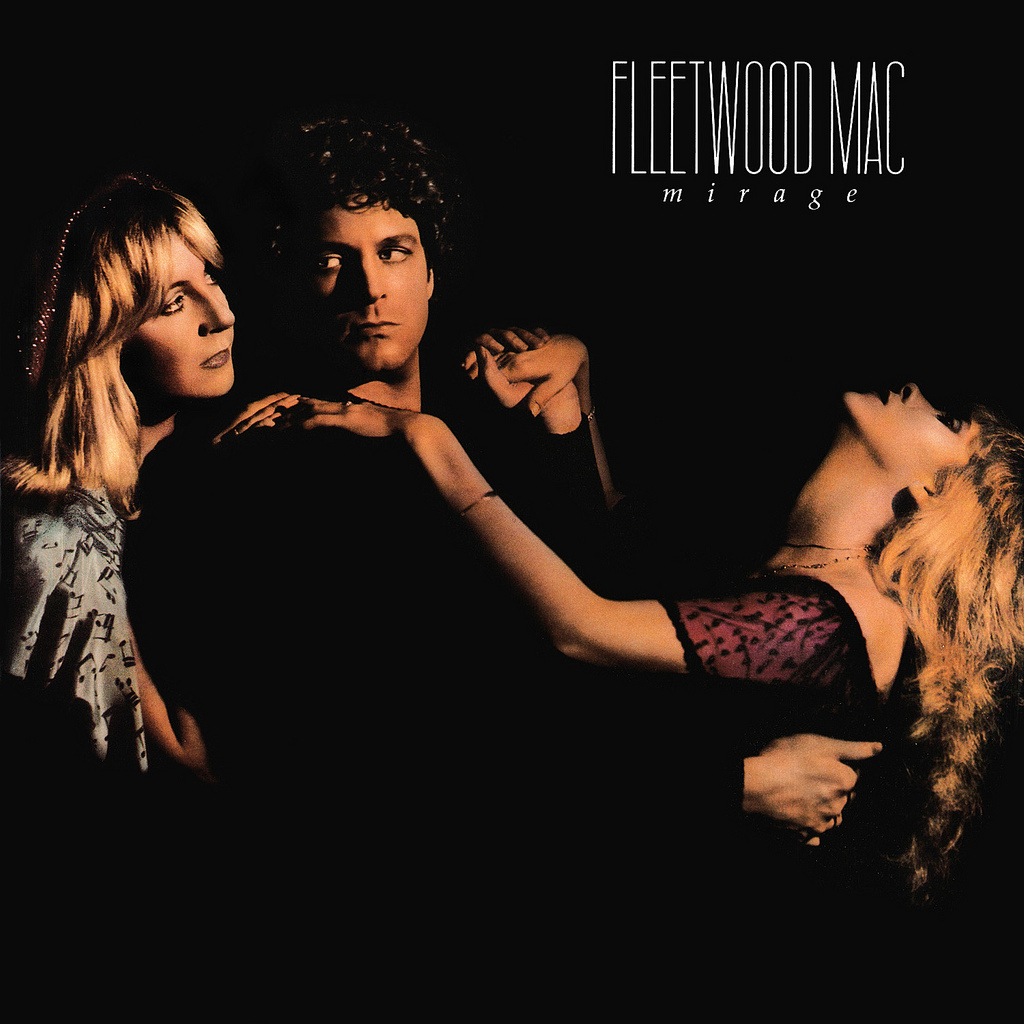
Tag: Deluxe Edition

  • The resurgent appeal of Stevie Nicks

    The resurgent appeal of Stevie Nicks

    Her generous songs provide an antidote to today’s often embattled pop music.

    Stevie Nicks Bella Donna (1981)The cover of Bella Donna, Stevie Nicks’s first solo album, shows the artist looking slender and wide-eyed, wearing a white gown, a gold bracelet, and a pair of ruched, knee-high platform boots. One arm is bent at an improbable angle; a sizable cockatoo sits on her hand. Behind her, next to a small crystal ball, is a tambourine threaded with three long-stemmed white roses. Nicks did not invent this storefront-psychic aesthetic—it is indebted, in varying degrees, to Hans Christian Andersen’s Thumbelina, de Troyes’s Guinevere, and Cher—but, beginning in the mid-nineteen-seventies, she came to embody it. The image was girlish and delicate, yet inscrutable, as if Nicks were suggesting that the world might not know everything she’s capable of.

    This intimation is newly germane: a vague but feminine mysticism is in. Lorde, Azealia Banks, FKA Twigs, chvrches, Grimes, and Beyoncé have all incorporated bits of pagan-influenced iconography into their music videos and performances. Young women are now embracing benign occult representations, reclaiming the rites and ceremonies that women were once chastised (or worse) for performing. On runways, on the streets, and in thriving Etsy shops, you can find an assortment of cloaks, crescent-moon pendants, flared chiffon skirts, and the occasional jewelled headdress.

    While Nicks’s sartorial choices have been widely mimicked, it’s rare to hear echoes of her magnanimity in modern pop songs, which are frequently defensive and embattled, preaching self-sufficiency at any cost. It’s difficult to imagine Nicks singing a lyric like “Middle fingers up, put them hands high / Wave it in his face, tell him, boy, bye,” as Beyoncé does in “Sorry,” a song from her newest album, Lemonade. Nicks’s default response to betrayal is more introspective than aggressive. Her music has long been considered a balm for certain stubborn strains of heartache; her songs are unsparing regarding the brutality of loss, yet they are buoyed by a kind of subtle optimism. It’s as if, by the time Nicks got around to singing about something, she already knew that she would survive it.

    Stevie Nicks - Bella Donna Deluxe EditionThis month, Bella Donna, from 1981, and Nicks’s second solo album, The Wild Heart, from 1983, are being reissued. Nicks was thirty-three when Bella Donna was released. Though its cover might not suggest an excess of reason, in its songs she is a sagacious and measured presence. Her acknowledgment of the heart’s capriciousness is gentle, if not grandmotherly. There’s surely no kinder summation of love’s petulance than the chorus of “Think About It,” a jangling folk song about taking a breath before hurling yourself off a metaphorical cliff. “And the heart says, ‘Danger!’ ” Nicks sings. She pauses briefly. “And the heart says, ‘Whatever.’ ” For anyone busy self-flagellating over an error in judgment, this can feel like a rope ladder thrown from above—an invitation to scramble up and out of despair. It is generous and knowing, and offers a clear-eyed conclusion: some things can’t be helped.

    Stevie Nicks - The Wild Heart Deluxe EditionIn 2012, Tavi Gevinson, the young founder of Rookie, an online magazine concerned chiefly with the complexities of teen-age girlhood, ended a tedx talk with some blunt advice: “Just be Stevie Nicks. That’s all you have to do.” What does it mean to be Stevie Nicks? To understand loss and longing as being merely the cost of doing business? To acknowledge the bottomless nature of certain aches, yet to know, in some instinctive way, that you’ll keep going? Nicks evokes Byron, in spirit and in certitude: “The heart will break, but broken live on.”

    Nicks was born in 1948, in Phoenix. Her paternal grandfather, A. J. Nicks, Sr., was a struggling country musician, and he taught Nicks how to sing when she was four years old. She was given an acoustic guitar for her sixteenth birthday, and immediately wrote a song called “I’ve Loved and I’ve Lost and I’m Sad but Not Blue.” The title is a surprisingly succinct encapsulation of Nicks’s lyrical alchemy: a combination of acceptance (I am hurting) and perspective (I will not hurt forever).

    1966-menlo-athertonIn 1966, when Nicks was in her senior year of high school and living in Atherton, California—her father, an executive at a meatpacking company, had been relocated there—she met the guitarist Lindsey Buckingham at a party. He was sitting cross-legged on the floor—bearded, curly-haired, and strumming the Mamas and the Papas’ “California Dreamin’.” Uninvited, she joined him in harmony. (“How brazen!” she later said.) Buckingham asked Nicks to join his band, Fritz. By 1971, the two were romantically involved. They eventually took off for Los Angeles, where they tried to make it as a duo, called Buckingham Nicks, releasing one album, in 1973, to very little acclaim. Not long afterward, Buckingham was asked to join Fleetwood Mac, a British blues band featuring the singer and keyboard player Christine McVie, the bassist John McVie, and the drummer Mick Fleetwood; the group was being rebooted as an American soft-rock act. Buckingham insisted that Nicks be invited, too. She ended up writing two of the band’s biggest early hits, “Landslide” and “Rhiannon.”

    1977_uncredited03Extraordinary success often leads to spiritual dissolution, and Fleetwood Mac had its share of psychic turmoil. In 1975, Fleetwood divorced his wife, the model Jenny Boyd, after she had an affair with one of his former bandmates. Nicks and Buckingham broke up the following year. Around the same time, John and Christine McVie’s marriage collapsed. There was an ungodly amount of brandy and cocaine on hand to help nullify the despair. Still, in 1977, Fleetwood Mac—now five wild-eyed, newly single people—released Rumours, a collection of yearning songs about love and devotion. The record spent thirty-one weeks at the top of the charts, and is one of the best-selling albums in American history.

    (Norman Seef)
    (Norman Seef)

    Tusk, which the group released two years later, was a bombastic double LP that cost a million dollars to produce. The critic Stephen Holden, in his review of the album for Rolling Stone, suggested that Nicks sounded “more than ever like a West Coast Patti Smith.” Superficially, at least, Nicks and Smith aren’t obvious analogues. Nicks is hyperfeminine, intuitive, and bohemian; Smith is androgynous, cerebral, and gritty. But both are unusually perceptive chroniclers of their time and place.

    If Smith is obliged to the Lower East Side of Manhattan—and the punk scene that included the Ramones, Television, and Suicide—Nicks’s debt is to Laurel Canyon, and to the sentimental, silky-voiced artists who emerged from L.A. in the late sixties and early seventies. Some of those acts—James Taylor, the Eagles—are now considered, fairly or not, irrelevant to the Zeitgeist: too mellow, too affluent, too sexless, too white. Candles and incense and macramé plant hangers; wistful thoughts about weather. Nicks’s lyrics often worry over domestic or earthly concerns—gardens, mountains, flowers, the seasons—and how they might affect the whims of her heart. “It makes no difference at all / ’Cause I wear boots all summer long,” she sings in “Nightbird.” When compared with the dissonant and provocative music coming out of downtown New York, the California sound could seem limp. But the scene in Laurel Canyon was tumultuous. Many of its artists—including, at various times, Nicks—were wrecked by drug addiction. Nicks’s voice, a strange, quivering contralto, gives her songs unexpected weight. Its tone reminds me of the gloaming—that lambent, transitional moment between night and day.

    Jimmy Iovine Stevie Nicks
    Jimmy Iovine and Stevie Nicks, 1981 (Chris Walter)

    Bella Donna was produced by Jimmy Iovine, a Brooklyn-born audio engineer who worked on Bruce Springsteen’s Born to Run and produced the Patti Smith Group’s Easter and Tom Petty and the Heartbreakers’ Damn the Torpedoes. Iovine spent time in California, but his sensibility was tougher and more plainly that of the East Coast. He later became a co-founder of Interscope Records, where he helped to establish the career of the rapper Tupac Shakur, and, for a period, he oversaw the hip-hop label Death Row Records. Iovine was aware of concerns that Nicks was too coddled and immature to make a solo record as good as the records she’d made with Fleetwood Mac. Regardless, there was romantic chemistry. “This record was our love story unfolding,” she has said.

    Bella Donna reached No. 1 on the Billboard chart, and produced four hit singles: “Stop Draggin’ My Heart Around,” a duet with Petty; “Leather and Lace,” with Don Henley; “Edge of Seventeen”; and “After the Glitter Fades.” The last, a country song about the travails of stardom—Nicks wrote it just after she and Buckingham moved to Los Angeles, long before she had a record deal, showing either hubris or prescience—contains organ, pedal steel, and reassurances. “The dream keeps coming even when you forget to feel,” she sings.

    Nicks, like most artists, culls inspiration from disparate sources. She is prone to saying things like “ ‘Edge of Seventeen’ was about Tom Petty and his wife, Jane, my uncle dying, and the assassination of John Lennon.” But her personal life—a tangle of love affairs, often with her collaborators—informs her work in explicit ways. “Heartbreak of the moment isn’t endless,” she sings, in “Think About It.” This might seem like a billowy platitude, but if you are someone who does not think that every flubbed decision is fodder for personal growth, it is comforting to hear someone assert that nearly all mistakes can be neutralized, if not conquered. If Bella Donna contains a single directive, it’s to love freely, love fully, and hang on.

    Fleetwood Mac 1982
    (David Montgomery)

    In 1981, Iovine flew with Nicks to the Château d’Hérouville, in northern France, where Fleetwood Mac was recording its next album, Mirage. Iovine left almost immediately, to escape the interpersonal conflicts that roiled the band. Iovine and Nicks’s relationship foundered. The following fall, while Fleetwood Mac was on tour, Nicks’s childhood friend Robin Anderson died, of leukemia, at the age of thirty-three. “What was left over was just a big, horrible, empty world,” Nicks has said. Days before her death, Anderson had prematurely given birth to a son. Nicks, operating under the savage logic of grief, married her friend’s widower, Kim Anderson, thinking that she would help raise the child. They divorced three months later.

    By 1983, Nicks was ready to make another record. Her relationship with Iovine was strained, but Nicks asked him to produce the record anyway. The Wild Heart is inspired in part by the unravelling of that relationship, and in part by her mourning for Anderson. Nicks frequently cites as a guiding influence for the recording sessions the 1939 film adaptation of Emily Brontë’s Wuthering Heights, which depicts an undying, almost fiendish love. Mostly, the songs are about bucking against the circumstances that separate us from the people we need.

    (Herbert W. Worthington, III)
    (Herbert W. Worthington, III)

    The artist Justin Vernon, of the band Bon Iver, uses a brief sample of “Wild Heart” (a track from The Wild Heart) on the group’s new album, “22, A Million.” Nicks’s voice is sped up, pitch-altered, and barely discernible as human—just a high, grousing “wah-wah,” deployed intermittently. Vernon pinched it from a popular YouTube video of Nicks, in which she sits on a stool having her makeup done, wearing a white dress with spaghetti straps. She begins to sing. Soon, someone is messing with a piano; one of her backup singers joins in with a harmony. The makeup artist gamely tries to continue with her work, before giving up. While the studio recording of “Wild Heart” is saturated, almost wet, this version is all air, all joy.

    What affects me most about the video is how profoundly Nicks appears to love singing. Her voice has an undulating, galloping quality. It is as if, once it’s started up, there’s no slowing down, no stopping; the car is careering down a mountain, with no brakes. You can see on her face how good it feels just to let go.

    Stevie Nicks“Stand Back,” the first single from The Wild Heart, was inspired by Prince’s “Little Red Corvette,” which Nicks heard on the radio while driving with Kim Anderson to San Ysidro Ranch, in Santa Barbara, for their honeymoon. (Prince played keyboards on the track, though he’s not credited in the album’s liner notes.) The song was produced in accordance with the style of the era, with lots of synthesizer and rubbery, overdubbed percussion. The lyrics describe a deliberate seduction followed by an acute betrayal. “First he took my heart, then he ran,” Nicks sings. The chorus is appropriately punchy: “Stand back, stand back,” she warns. Nicks is capable of going fully feral before a microphone, perhaps most famously at the end of “Silver Springs,” a song intended for Rumours and one of several that she wrote about Buckingham. (It ends with Nicks hollering, “Was I just a fool?”) On “Stand Back,” she erupts briefly, on the middle verses, but for the rest of the song she is more characteristically sanguine. “It’s all right, it’s all right,” she concedes. “I did not hear from you, it’s all right.”

    Nicks went on to make six more solo albums, and three more with Fleetwood Mac. Following her divorce from Kim Anderson, she never married again, or had any children, though a rich maternal instinct runs through all her songs. This, more than anything else, may be the reason that Nicks’s work has endured—why listeners turn to her for consolation, especially now, when many feel wounded and the radio remains rife with confrontational whoops. To be Stevie Nicks is to offer shelter. ♦

    Amanda Petrusich / The New Yorker / November 28, 2016

    Amanda Petrusich is a contributing writer for newyorker.com, and the author of “Do Not Sell at Any Price: The Wild, Obsessive Hunt for the World’s Rarest 78rpm Records.” MORE

    This article appears in other versions of the November 28, 2016, issue, with the headline “What the Heart Says.”
  • Stevie Nicks does it again: New releases

    Stevie Nicks does it again: New releases

    A RELEASE of two deluxe albums next month will see a whole lot more Stevie Nicks blasting from radios, stereos and iPods across the country.

    On November 4, Warner Music Australia will release Bella Donna: Deluxe Edition and, two albums of classic songstress Stevie Nicks.

    Bella Donna was the debut album of the now legendary performer, released originally in 1981.

    The Wild Heart was Stevie’s following album, released in 1983.

    Both albums achieved platinum status, with Bella Donna in fact being certified quadriple-platinum.

    The album spawned four substantial hit singles during 1981 and 1982: the Tom Petty and the Heartbreakers-penned duet “Stop Draggin’ My Heart Around,” the Don Henley duet “Leather and Lace,” the iconic “Edge of Seventeen,” and country-tinged “After the Glitter Fades.”

    Bella Donna: Deluxe Edition and The Wild Heart: Deluxe Edition will be released by Warner Music Australia on November 4.

    The Northern Star (Lismore, N.S.W.) / 20 October 2016 / © Australian Provincial Newspapers 2016

  • LISTEN: ‘Bella Donna’ demo

    LISTEN: ‘Bella Donna’ demo

    Hear Stevie Nicks’ Intimate ‘Bella Donna’ Demo

    Deluxe reissues of singer-songwriter’s first two solo albums, Bella Donna and The Wild Heart, out November 4th

    On November 4th, Stevie Nicks‘ first two solo albums — Bella Donna and The Wild Heart — will be reissued via Rhino. Each deluxe release will feature not only the original LP but rarities and bonus tracks, like the previously unreleased demo of her solo debut’s title track, streaming below.

    Stripped of its backing vocals as well as the raucous live band and synthesizers featured on the original album version, Nicks’ demo is a tender, intimate take on the song. She sings softly above just the piano track, nearly whispering “Bella donna, my soul” and barely reaching the full-throated belt she unleashes on the 1981 recording.

    Later this month and just before releasing the reissues, Nicks will embark on a solo tour with opening act the Pretenders. Nicks’ tour is in support of her 2014 album 24K Gold, a collection of songs she had cut from her prior solo releases for various reasons. “These are the glory songs,” she told Rolling Stone of her reason to follow a multi-year world tour with Fleetwood Mac with the solo dates. “These are the sex, rock & roll and drugs songs that I’m actually not really writing right now, and these are the songs I could never write again.”

    Brittany Spanos / Rolling Stone / Thursday, October 13, 2016

  • Fleetwood Mac reissues Mirage, Deluxe Edition

    Fleetwood Mac reissues Mirage, Deluxe Edition

    Fleetwood Mac releases deluxe edition of 1982 album Mirage.

    Fleetwood Mac’s Mirage brought the on-again, off-again band into the Reagan era, and now the classic 1982 album is getting a deluxe reissue that adds two discs of rare gold.

    A disc of demos covers early versions of every song on the album—a highlight is Christine McVie’s initial take of “Hold Me,” which had a traditional piano-rock chorus rather than the smooth, layered experimental totally ’80s vibe the final cut got. (I kinda like the piano-rock version better?)

    The third disc is a Mirage tour concert from the LA Forum that’s been circulating for years as a crappy bootleg. Nice to have it all cleaned up.

    Chris Kohler / Wired / October 7, 2016

  • REVIEW: Fleetwood Mac – Mirage (Deluxe Edition)

    REVIEW: Fleetwood Mac – Mirage (Deluxe Edition)

    If ever there was a case of the media building up and then knocking down a band, it was the one involving Fleetwood Mac in the late-’70s and early-’80s. The critics cheered when the group—newly energized by the addition of Lindsey Buckingham and Stevie Nicks—delivered its chart-topping eponymous album in 1975 and the even better Rumours a year later.

    But many of those same critics spoke less kindly of the follow-up to Rumours, 1979’s Tusk. According to them, it eschewed commercialism in favor of self-indulgent experimentation, though major experimentation was in fact largely limited to the excellent title cut. Then, when the group reverted to fully accessible form on its next studio album, 1982’s Mirage, reviewers griped that the band was going backwards; never mind that this radio-friendly LP delivered exactly what the critics claimed was missing in its predecessor.

    Well, as I noted last year, Tusk ranks among the most underrated albums of the rock era. But Mirage—which Fleetwood Mac’s members recorded in France after pursuing solo projects—is arguably even more underrated. …

    Read the full review at The Morton Report

    Jeff Burger / The Morton Report / Monday, September 26, 2016


  • Mick Fleetwood reflects on overlooked Mirage

    Mick Fleetwood reflects on overlooked Mirage

    1982-mirage-album-cover

    Mick Fleetwood talks to Rolling Stone about the band’s ‘overlooked’ smash Mirage

    Ahead of new reissue, drummer Mick Fleetwood talks “wild and romantic” France sessions, opulent video shoots, and more

    “I don’t think it would be wrong to say it sort of got overlooked,” says Fleetwood Mac drummer Mick Fleetwood, reminiscing about his band’s 1982 album, Mirage, which will be reissued in a deluxe package via Warner Bros. on September 23rd. It’s something of an odd statement to make about a record that charted at Number One on the Billboard 200, spawned multiple hit singles and went on to sell more than three million copies. Of course, when you’re in Fleetwood Mac, the definition of what constitutes success is relative.

    The album, the band’s 13th studio effort overall and fourth to feature singer Stevie Nicks and singer/guitarist Lindsey Buckingham alongside longtime members Fleetwood, bassist John McVie and singer/keyboardist Christine McVie, came on the heels of one of the more impressive runs in rock: the lineup’s smash 1975 “debut,” Fleetwood Mac; the now-more-than-40-million-selling follow-up, Rumours; and the sprawling and sonically adventurous Buckingham-helmed double–LP Tusk (a commercial “failure” that still managed to move several million copies). By the time the band reconvened for Mirage in May 1981, they had been off the road for close to a year, during which time three members had recorded – but not yet released – solo albums (Buckingham’s Law and Order, Fleetwood’s The Visitor and Nicks’ eventual chart-topping, multi-platinum Bella Donna). That time apart, combined with the tensions that had been brought on by the experimental nature of the Tusk album, left them ready to recapture a bit of the old Rumours magic, so to speak.

    [jwplayer mediaid=”373865″]

    “There’s no doubt that having come off Tusk there was a conscious effort to make Mirage into more of a band album,” Fleetwood says. “Because Tusk had been very much Lindsey’s vision. And it was a great one – along with [1969’s] Then Play On, it’s probably my favorite Fleetwood Mac album. So it was a highly successful creative moment. But at the time we took some blows for it, and Lindsey in particular, because the album wasn’t as successful as Rumours. How could it be, anyhow? But that being beside the point, I think Lindsey sort of handed back the mantle on Mirage. It was, ‘Let’s just do this as a band.’ That was the vibe going into it.”
    The result was an album that, if judged by its two hit singles – Christine McVie’s buoyant “Hold Me” and Stevie Nicks’ somewhat autobiographical “Gypsy” – seemed to represent something of a step back to the concise, sharp-focus pop-rock that had characterized Rumours and Fleetwood Mac. Indeed, says Fleetwood, “If you were a sort of super-intellectual critic, which is maybe not a great place to come from, it would be fair game to say the album kind of went backwards.” But, he adds, “Having said that, the amazing thing is that, looking back on it now, in the present day, so many of those songs are at a very high level in the continuing story of Fleetwood Mac.”

    All the more reason, then, to revisit Mirage now. The new three-CD-plus-DVD deluxe package presents the original 12-track album in remastered form, along with one disc of B sides, outtakes and rarities, and another that collects 13 songs from two nights at the Forum in Los Angeles during the band’s 1982 Mirage U.S. tour. Also included is a vinyl copy of the album and a DVD of the original collection in 5.1 surround sound (additionally, there are two-CD, single-disc and digital download versions available). “The fact that we’re talking about it again is actually really cool,” Fleetwood says of Mirage. “Because we ended up making a far better album than we gave ourselves credit for for many years.”

    They also made an album that is more varied and quirky than it gets credit for. In addition to the two hit singles, there’s plenty more of the sort of expertly crafted soft rock the band had become known for by that point, such as Christine McVie–penned tracks like “Only Over You” and the propulsive opener (and minor hit) “Love in Store.” But there’s also the brittle electro-pop of Buckingham’s “Empire State” and lilting country-folk of Nicks’ “That’s Alright,” the latter a holdover from the Buckingham Nicks days a decade earlier. Furthermore, unlike the lineup’s three previous efforts, which were recorded mostly in and around California, Fleetwood Mac, along with Ken Caillat and Richard Dashut (who co-produced with Buckingham and the band), tracked Mirage largely in France, at the famed Château d’Hérouville, outside of Paris. Explains Fleetwood of the change of scenery, “My recollect was I asked the band if I could record overseas to help me out with some tax issues. And very kindly they did that. But in truth, knowing me, I think the main purpose of it was to get them the hell out of L.A. so that we could make an album without imploding.”

    “I personally had probably too much fun. I used to go into Paris every weekend and misbehave.”

    The band’s new environs offered up a different sort of vibe than the Southern California studios they were used to calling home. “We were at the Château, which was an historic place,” Fleetwood recalls. “If you look it up, you’ll see that some incredible shit was done there – [Elton John’s] Honky Chateau and all that. A whole load of people had recorded there. So it was an amazing place. It was wild and romantic. It’s a mansion in the French countryside, with cooks and food and wine, you know?” He laughs. “I personally had probably too much fun. I used to go into Paris every weekend and misbehave and come back for work on Monday morning. But it accomplished what we needed, and, all joking aside, the fact that we were in France and we were in the middle of nowhere, truly I think it had great value.”

    The band’s choice of location for recording their music wasn’t the only aspect of Mirage that showed Fleetwood Mac breaking with their past. They also explored new avenues in terms of how they offered up that music for public consumption. Mirage was released in June of 1982, less than a year after the launch of MTV. As a legacy band that had often proved surprisingly adaptable to current trends, Fleetwood Mac embraced the music-video age to great success. So much so, that, rather than merely mimic playing their songs in the clips, as most artists did in the network’s earliest days, Fleetwood Mac opted to take on acting roles. The first single from Mirage, “Hold Me,” came complete with a storyline that showed the band frolicking in the Mojave Desert, with Fleetwood and John McVie playing archeologists who excitedly stumble upon a cache of buried guitars and other musical instruments. The elaborate clip for “Gypsy,” meanwhile, had the distinction of being the most expensive music video ever produced at the time. “I’m really glad we made it,” Fleetwood says, “even though it cost a fortune for us.”

    [jwplayer mediaid=”15602″]

    As for the shoots themselves, the directors of the videos for both “Hold Me” and “Gypsy” have since discussed the fact that the band’s well-publicized and mythologized romantic entanglements led to some uncomfortable moments on the sets. Fleetwood, however, says he doesn’t recall as much. “I don’t have huge memory of any gossipy things happening,” he says. “But the amount of pain we were used to going through, maybe it was noticeable. Although we had an uncanny ability to suck it up. But ‘Gypsy’ especially, it’s interesting because they’re featuring Lindsey and Stevie dancing in it and you’re going, ‘This is quite profound. …’ It was like, ‘Wow, that’s a scene!’”

    He continues: “In general, though, we were really professional, and I believe from memory we were all hugely cooperative and into [doing the videos], really. There was no ‘I don’t wanna fucking do that,’ one-shot-and-we’re-out-of-there type stuff. And the directors, they were young filmmakers with big budgets, and they seemed quite conversant with handling lunacy. So they were fun days.” Fleetwood laughs. “I mean, to me everything was fun because I was having a party 24/7. So it didn’t really fucking matter! But I think we were good candidates for that sort of thing.”

    It would seem that Fleetwood Mac were in fact very good candidates for that sort of thing, as both “Hold Me” and “Gypsy” became staples on MTV, helping the band to achieve two of the biggest hits of their career. In fact, Fleetwood now acknowledges that “those songs became more memorable than the album as a whole. And that’s sort of an unusual slant.

    Mirage is part of our history,” he continues, “and as the band heads no doubt to a wind-down of some description in the next few years ahead, I think these types of cataloging events are important. Because it’s certainly not an album to be discarded. And now this little project is representing it, and giving it measured and investigated amounts of kudos. That’s a good thing.”

    Richard Bienstock / Rolling Stone / Tuesday, September 20, 2016

  • REVIEW: Fleetwood Mac Tusk

    REVIEW: Fleetwood Mac Tusk

    Fleetwood Mac’s beautiful and terrifically strange 1979 LP Tusk poses the question: What happens when love dissipates, and you have to find a new thing to believe in? What if that thing is work?

    Rating: 9.2/10

    The autumn of 1979 was, by any reasonable accounting, a challenging time to be alive. The world felt tenuous, transitional: panicked families were fleeing East Germany via hot air balloon, China was restricting couples to one child each, fifty-two Americans were barred inside the U.S. Embassy in Tehran, pending release of the Shah. It was also the year of Tusk, the album in which Fleetwood Mac, a soft-rock band second only to the Eaglesin their embodiment of easy 1970s gloss, completely lost their minds. It was the band’s twelfth album, though only its third with the now-iconic lineup of guitarist Lindsey Buckingham, drummer Mick Fleetwood, bassist John McVie, keyboardist Christine McVie, and singer Stevie Nicks, and it reflected a personal tumult so claustrophobic and intense it felt global in scale—an after-the-fall re-telling of catastrophic heartache and its endless reverberations.

    By this time, Fleetwood Mac was widely beloved for its melodic, harmonized jams, which evoked Laurel Canyon, curtains of strung beads, turquoise jewelry, pricey incense, scarves flung over floor lamps, and brandy poured into a nice glass. Despite their smooth, murmuring sound, few of the band’s records pull punches emotionally, but even compared to a cry of pain like “The Chain,” Tusk is singular. It is pocked with heartbreak, resignation, lust, hope, and deep hurt. It poses unanswerable questions. It reckons with the past, and what that past means for a future. It invariably makes some people want to lock their door, excavate half a joint from the recesses of their couch cushions, and spend the next fourteen hours contemplating the Buckingham-Nicks union as one of the great failed loves of the twentieth century.

    Just two years earlier, the band had released Rumours, a collection of pert and amiable love songs that sold over ten million copies and spent thirty-one weeks at the top of the Billboard 200 chart. Rumours is presently among the top ten best-selling albums in American history, and, as of 2009, has shipped more than forty million units worldwide. It was—it remains—an album owned by people who have only ever owned eleven albums.

    Commercial success on that scale is, of course, a complicated thing to navigate; for Fleetwood Mac, it was presaged and then aggravated by outrageous amounts of cocaine and an awful lot of intra-band copulation. I don’t mean to be reductive about the group’s emotional dynamic, but I can’t think of another assemblage of five able-minded adults who created and survived such a preposterous tangle of romantic investments and divestments (to wit: Nicks and Buckingham, McVie and McVie, Nicks and Fleetwood, Fleetwood’s wife and former member Bob Weston, McVie and the lighting designer, and Fleetwood and Nicks’ then-married best friend—to cite just the handful of permutations known to the public).

    By the time *Tusk *was released, the two primary relationships sustaining the band (Christine and John’s marriage, and Lindsey and Stevie’s long-standing romance) had fully dissolved, which seemed to qualify Fleetwood Mac, in some perverse way, to go on to become one of our best and bravest chroniclers of love’s horrifying tumult. Being tasked with singing backing vocals for a song written by your ex-lover, about you, months (and eventually years) after the relationship ruptured? Hold that in mind—just how excruciating that must’ve been. Then find a video of Buckingham and Nicks performing “Silver Springs” (a song written by Nicks about Buckingham, withheld from Rumours, and later released, either cruelly or keenly, as the B-side to the single “Go Your Own Way,” a song written by Buckingham about Nicks) and try not to lose your mind completely when, as if to narrate the precise mechanics of their break-up, Nicks announces: “I’ll begin not to love you… Tell myself you never loved me.”

    It’s “Silver Springs,” more than any other track in the band’s pre-Tusk discography, that tells the story of how Buckingham and Nicks lost each other, and, ergo, the story of Tusk; performing the song live, they frequently end up locked in a kind of tense combat stance. When Nicks’ cool, steady voice begins to dissolve into something feral and nearly deranged (“Was I just a fool?” she finally hollers) she’ll often take steps toward him. He always meets her gaze, calmly, and with determination. Maybe they’re putting us all on, but there’s something in those moments that makes True Love—the preposterous, fairy-tale kind, the sort that never resolves itself, that can’t be outrun or eschewed, not ever, not after decades, not after a lifetime—seem entirely possible, even to the most hard-boiled cynics. I bring this up because it’s the only explanation I can think of as to how the band kept going, despite what must’ve seemed, to anyone watching, like a cataclysmic implosion. True Love doesn’t care if your relationship ends; it remains, it buoys you.

    If Rumours was the band’s break-up record, Tusk covers arguably even more complicated ground: how to transform a romantic partnership into a purely creative one, while remaining mindful of all the perilous ways in which love nurtures art, and vice-versa. That the band did this at all, much less successfully, much less good-naturedly—in promotional photos for Tusk, Nicks is pictured resting her left hand disconcertingly close to a bulge in Buckingham’s blue jeans—is dumbfounding.

    The result is a beautiful and terrifically strange album. From the outset, Buckingham was insistent that the band not churn out a sequel to Rumours. His was a defensive, contrarian pose: Let’s deliberately not recreate that colossal commercial and critical success; let’s instead do something different, artier, less bulletproof, more experimental, more explicitly influenced by punk and new-wave, and less indebted to pop. Tusk contains twenty songs and is seventy-two minutes long. It retailed for $15.98 (or $52.88, in 2016 dollars). Its terrifically unattractive cover features a grainy, off-center photograph of a disembodied foot getting chomped on by a dog. The title is a euphemism for cock. Its sequencing is plainly insane, seesawing between two equally manic moods: “Everything is totally going to be fine!!!” and “This plane is going down and we’re all going to die!!!”

    Tusk took thirteen months to make, and was the first record to amass production costs of over a million dollars. It was called self-indulgent, and it is. Legends abound regarding the details of its composition and recording. Nicks described their space in Studio D as having been adorned with “shrunken heads and leis and Polaroids and velvet pillows and saris and sitars and all kinds of wild and crazy instruments, and the tusks on the console, like living in an African burial ground.” Everyone agrees Buckingham was losing it a little—that he was chasing something (artistic greatness? avant-garde credibility?) and pursuing it wildly, haphazardly, like a crazed housecat stalking a black fly about the living room. Did he really have a drum set installed in his bathroom so he could play while on his toilet? (More reasonable minds have suggested he merely liked the acoustics in there.)

    One solid argument against Tusk—though it could also be levied against Rumours—is that it lacks narrative coherence, in part because it features three songwriters (Nicks, Buckingham, and McVie), each working in their own distinct style. Still, while Nicks and McVie contributed some truly lovely tracks—“Sara,” “Beautiful Child,” “Think About Me”—the record clearly belongs to Buckingham, who wrote nearly half its songs, insisted upon its scope, and is its unquestionable spiritual center, the hamster on its wheel. The engineer Ken Caillat described Buckingham as “a maniac” during the sessions. He said it without equivocation. “The first day, I set the studio up as usual. Then he said, ‘Turn every knob 180 degrees from where it is now and see what happens.’ He’d tape microphones to the studio floor and get into a sort of push-up position to sing. Early on, he came in and he’d freaked out in the shower and cut off all his hair with nail scissors. He was stressed.”

    At one point, Buckingham insisted that the band rent out Dodgers Stadium, and arranged to have the 112-piece U.S.C. Marching Band back them on the title track (his bandmates went along with this; none of the group’s foundational romantic relationships were intact, but Tusk still couldn’t have been made by people who didn’t trust one another implicitly). “Why don’t you tell me what’s going on? Why don’t you tell me who’s on the phone?” Buckingham and Nicks chant, their voices paranoid. Buried somewhere in there is a riff that could have sold a zillion cassingles, had this been 1977. But it wasn’t.

    Though Tusk’s most memorable tracks are also its strangest (like “The Ledge,” a manic, pitter-pattering kiss-off in which the band’s signature harmonies are overridden by a guitar that’s been tuned down and turned up), there are a handful of songs that harken back to Rumours’ rich palatability. “Save Me A Place” plays like an extension, at least lyrically, of “Go Your Own Way,” in which Buckingham begrudges his lover’s unwillingness to grab what he’s half-offering her.  A lot of Buckingham’s lyrics from the late ‘70s seem to simultaneously admit trepidation and cast him as the aggrieved party; he seems, in an endearing way, oblivious to his own caveats, or how they might dissuade another person. “Guess I want to be alone, and I guess I need to be amazed/Save me a place, I’ll come running if you love me today,” he sings on “Save Me A Place.” He later described the song as vulnerable. “None of us had the luxury of distance to get closure… It’s about a feeling that’s been laid off to one side and maybe not been fully dealt with, sadness and a sense of loss.” It captures the wildness of recovery: what happens when love dissipates, and you have to find a new thing to believe in? What if that thing is work?

    Buckingham funneled all of his disorientation into these songs. Tusk is, more than anything else, a document of that feeling and that process—of bewilderment turning into ambition writ large. What happens when a complicated, wounded person grows exhausted and unimpressed by the commercial medium he took to naturally, maybe even instinctively, but no longer believes is important or curative? It’s not hard to imagine the voice of Buckingham’s internal foil during these sessions, whispering seedily, naysaying each new melody, pushing for more: “This is fine, but it’s not Art.” I don’t know anyone who cares about making things who hasn’t at some point lobbed the exact same challenge at themselves: Can’t you do better? Hasn’t someone done this before? Haven’t you done this before? You get the sense of a broken-down person trying to rebuild himself. He is diligent about getting the architecture right.

    All of which makes “I Know I’m Not Wrong”—the first song the band started recording for Tusk, and the last one to be finished – even more poignant. When Tusk was reissued, in 2015, the expanded release included six (!) different “I Know I’m Not Wrong” demos, all recorded by Buckingham in his home studio. The chorus is a declaration of intention, of confidence: “Don’t blame me/Please be strong/I know I’m not wrong.” It’s not a thing a person gets to say very often. But Tusk isn’t a record that gets made more than once.

    Amanda Petrusich / Pitchfork / July 17, 2016