Tag: In Your Dreams

  • In Your Dreams doc to be screened in selected theaters

    In Your Dreams doc to be screened in selected theaters

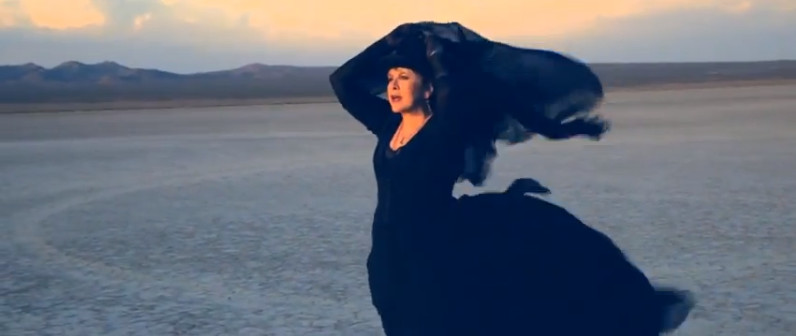
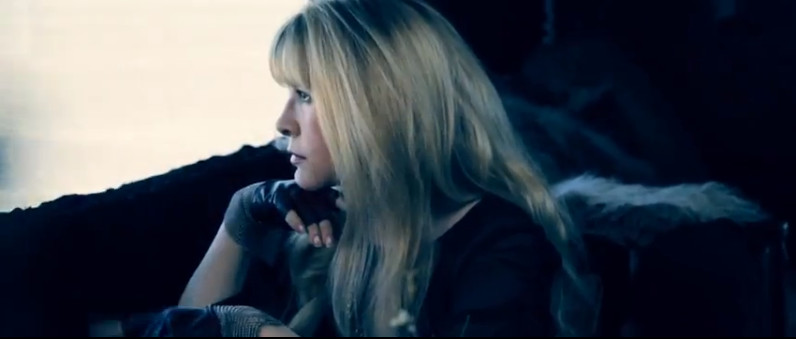
    In honor of her 2019 induction into the Rock and Roll Hall of Fame, Stevie Nicks’ 2012 documentary In Your Dreams, chronicling the recording of her acclaimed seventh solo album of the same name, will be screened in selected theaters starting in March. 

    Here is a partial list of theaters that will be screening In Your Dreams. Contact the theater(s) for more details.

    3/18 – Enzian – Maitland, FL

    3/18 & 3/20 – Santikos Entertainment

    3/19 & 3/26 – Luna Theater – Lowell, MA 

    3/20 – Cinepolis Rancho Santa Margarita – Rancho Santa Margarita, CA

    Use “Select Your Cinema” menu at bottom for all https://cinepolisusa.com/now-playing/details/Movie/HO00002575:

    • Cinepolis Del Mar – San Diego, CA
    • Cinepolis Luxury Cinemas Victory Park – Dallas, TX
    • Cinepolis Laguna Niguel – Laguna Niguel, CA
    • Cinepolis Dayton – Miamisburg, OH
    • Cinepolis Luxury Cinema Pacific Palisades – Pacific Palisades, CA
    • Cinepolis Westlake Village – Westlake Village, CA
    • Cinepolis Vista – Vista, CA
    • Cinepolis Jupiter – Julipter, FL
    • Cinepolis La Costa – Carlsbad, CA

    3/22 – ACME Screening Room – Lambertville, NJ

    3/22, 3/23, 3/24 – The Art Theatre – Long Beach, CA

    3/23, 3/24, 3/28, 3/29, 3/30, 3/31 – TSL Theater (Time & Space Limited Org) – Hudson, NY

    3/25 – GE Theater at Proctors – Schenedtady, NY

    3/26 – FTC (Fairfield Theater Co) – Fairfield, CT

    3/26 & 3/31 – IPIC Theaters  
         – IPIC Westwood – Los Angeles, CA
         – IPIC Scottsdale – Scottsdale, AZ
         – IPIC Pasadena – Pasadena, CA
         – IPIC Mizner Park – Boca Raton, FL
         – IPIC North Miami Beach – North Miami Beach, FL
         – IPIC Bolingbrook – Bolingbrook, IL
         – IPIC Pike & Rose – North Bethesda, MD
         – IPIC Hudson Lights – Fort Lee, NJ
         – IPIC Westchester – Dobbs Ferry, NY
         – IPIC Austin – Austin, TX
         – IPIC Fairview – Fairview, TX
         – IPIC Westheimer – Houston, TX
         – IPIC Redmond – Redmond, WA

    3/27 – Broadway Metro – Eugene, OR

    3/27 – Small Star Art House – York, PA 

    3/29 – Mystic Luxury Cinemas – Old Mystic, CT

    4/9 – Cinepolis Chelsea – New York, NY
    (Use “Select Your Cinema” menu at bottom: https://cinepolisusa.com/now-playing/details/Movie/HO00002575)

    4/11 – Frank Banko Alehouse Cinema – Bethlehem, PA

    5/12 – Sierra Theaters – Nevada City, NV

    IN YOUR DREAMS (2012)

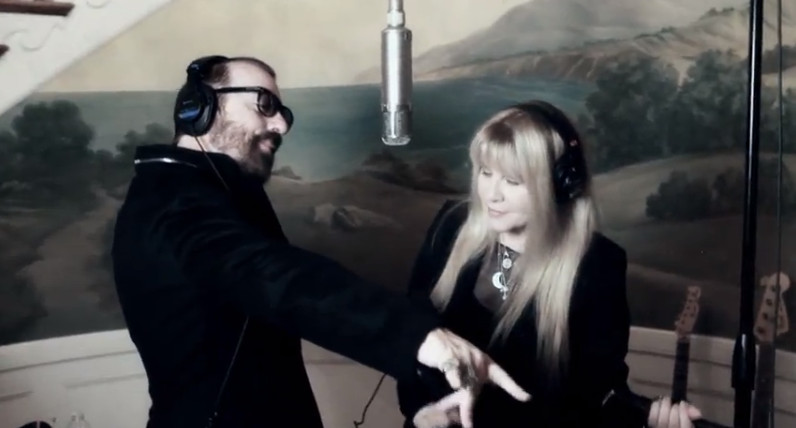
    In honor of Stevie Nick’s recent Rock and Roll Hall of Fame induction as a solo female artist, the inimitable Stevie Nicks has entranced millions of fans worldwide with her poetic lyrics, sultry singing and feather-and-lace style. In 2010 Nicks embarked on the recording of a new solo album, In Your Dreams, produced by former Eurythmics mastermind Dave Stewart. With cameras in tow, documentarian Stewart and diva Nicks set up shop in her home studio and reveal their collaborative creative process.
    (Rated NR, 1 hour 52 minutes)

    Thank you to Chuck Lovejoy for researching and sharing this information.

  • Fleetwood Mac’s Stevie Nicks recounts dark days of Rumours

    Fleetwood Mac’s Stevie Nicks recounts dark days of Rumours

    TORONTO – Fleetwood Mac songstress Stevie Nicks is tantalizing fans with a bold idea: a one-woman show.

    Could something along the lines of “My Name is Stevie” (in the vein of Barbra Streisand’s “My Name is Barbra”) or “Stevie With an I-E” (in the spirit of Liza Minnelli’s “Liza With a Z”) be in the tarot cards?

    The raspy-voiced veteran says it’s an idea her pal Dave Stewart has been trying to get her to embrace.

    Nicks made the comments while appearing at the Canadian premiere of her documentary “In Your Dreams,” which follows her and the Eurythmics hitmaker as they write and record her 2011 album of the same name.

    She says Stewart’s plan would involve massive video screens revealing images from Nicks’ storied life. But the “Landslide” crooner is laughing off the idea, noting: “I’m not Barbra Streisand.”

    I probably sold 300,000 records [of In Your Dreams]. It’s awesome if you’re an unknown artist, but it’s not really that awesome if you’re Stevie Nicks.

    Nicks’ creative bond with Stewart is traced in an affectionate documentary that reveals the veteran rockers nit-picking over melodies and brainstorming lyrics at her home recording studio in California. The film plays in Toronto through Thursday before heading to other cities.

    After the film, Nicks told a movie theatre full of fans that Stewart sees a new chapter in her career.

    “He wants me to have video screens, like a big room of video screens where it’s all my whole life (up there). And I (said): ‘Dave, I’m not Barbra Streisand’,” Nicks said smiling. “But maybe. Maybe someday.”

    She notes that her solo shows already feature a lot of talking, as opposed to the hit-laden concerts with her band Fleetwood Mac.

    “It’s very different. Fleetwood Mac’s much more sophisticated and grownup and my show is just like a big slumber party in an auditorium. And I tell everybody the meanings of all these new songs. Because that’s how I draw people in,” says Nicks, who turns 65 on May 26.

    After the movie, Nicks took questions from audience members, recounting the origins of her steadfast determination to be a star and dark days surrounding the recording of “Rumours.”

    “It wasn’t really a pleasant experience,” she says.

    “Lindsey (Buckingham) and I had pretty much just really broken up, and we’d kind of broken up off and on for a year before that. So this is 1977. None of the couples were happy… which, on one hand, really lends to the creative process.”

    The film includes interviews with Nicks about Fleetwood Mac’s rise to fame, current sources of inspiration, childhood memories and her surprising passion for the Twilight franchise.

    She notes that promoting the album In Your Dreams involved a grueling two years of touring and promotion. In the end, it didn’t amount to much.

    “I didn’t sell a lot of records, you guys. For me, for a big act like moi, I didn’t. Worldwide I probably sold 300,000 records. It’s awesome if you’re an unknown artist and you have a hit single but it’s not really that awesome if you’re Stevie Nicks,” she said.

    “It’s such a different age now.”

    “In Your Dreams” heads to Ottawa on Friday and Saturday. It reaches Winnipeg on May 2, May 3 and May 5; Saskatoon on May 13; Edmonton on May 14; Calgary on May 16; Vancouver on May 18 and 23; and Montreal from June 14 to 17.

    Fleetwood Mac performs at the Air Canada Centre on Tuesday. They head to Ottawa on April 23, Winnipeg on May 12, Saskatoon on May 14, Edmonton on May 15, Calgary on May 17 and Vancouver on May 19.

    Cassandra Szklarski / The Canadian Press / Monday, April 15, 2013 10:37 PM

  • Stevie Nicks’ sweet ‘Dreams’

    Stevie Nicks’ sweet ‘Dreams’

    In Your Dreams
    **** (4 stars)

    TORONTO – In the feature film about her life, Stevie Nicks wants Reese Witherspoon to play her.

    This is one of many revelations found in In Your Dreams, the documentary about the making of Nicks’ 2011 solo album of the same name, co-directed by Eurythmics’ Dave Stewart, who also helmed the record with Glen Ballard.

    On and off, over the course of a year, Stewart shot 50 hours of footage of the now 64-year-old Nicks, most intimately at her mansion high in the hills above Los Angeles. The resulting film features cameos by Witherspoon, Fleetwood Mac members Mick Fleetwood and Lindsey Buckingham, Heartbreakers guitarist Mike Campbell and, of course, Stewart, who is a bit of a character himself.

    When he’s not belting back the occasional martini, he’s got either an acoustic or electric guitar or camera in his hand.

    During one funny moment, Stewart is filming Nicks and she looks up and says: “Oh, that was you the whole time. I’m going like, ‘Who’s the chick in the white outfit that’s filming us?’”

    One genuine surprise? That until writing with Stewart, Nicks had never ever written a song with another person in the same room before.

    “I don’t like to be told what to do,” she says at one point.

    In another scene, she is seen arguing with Buckingham over tense changes in her lyrics.

    “Would you say that to Bob Dylan?” Nicks asks him.

    And when Stewart tries to insert some “too siren-y, too weird” guitar effects into a song, Nicks says bluntly: “Don’t quit your day job.”

    No pushover is Nicks. And she’s honest too.

    She admits to ending up with a demo reel of 23 Campbell tracks in the ’80s after visiting Tom Petty and stealing one — Runaway Trains — for a Fleetwood Mac song until Petty got wind of it.

    “All I could hear was Tom screaming,” she says to the camera. “I was so busted.”

    The movie is certain to appeal to fans of Nicks, whose gypsy persona, fashion style and throaty voice made her an icon.

    And for those who aren’t devotees, the behind-the-scenes music-making with some of rock’s top musicians will fascinate.

    In Your Dreams: Stevie Nicks is at the TIFF Bell Lightbox on Monday at 7 and 7:30pm, with Nicks conducting a Q&A afterward.

    Jane Stevenson / Toronto Sun / Sunday, April 14, 2013 08:02 PM EDT

  • Stevie Nicks: Reese is too old to play me in biopic

    Stevie Nicks: Reese is too old to play me in biopic

    As a member of Fleetwood Mac as well as a successful solo artist, Stevie Nicks is undeniably one of music’s true legends. Her wild past of sex, drugs and rock ‘n’ roll are the perfect fodder for the big screen and the singer knows who she’d like to portray her in a biopic — Reese Witherspoon. Her choice makes sense — Reese did, after all, win an Oscar for playing another iconic musician, June Carter Cash, in Walk the Line.  But it seems it might be too late to make this movie magic happen, since Stevie says, “I’ve already told her she’s almost too old.”

    True, Reese is no longer on the ‘edge of seventeen’ but too old? “I love her, but she’s like, ‘I could play your mother’ I’m like okay.”

    We caught up with the Gold Dust Woman on the Toronto red carpet of her new film, In Your Dreams. The documentary chronicles the making of Stevie’s first solo album in 10 years, of the same name, In Your Dreams.

    Filming the process was her producing partner, Dave Stewart’s idea. “He’s totally insane and fantastic and he films everything,” Stevie says of Dave, who himself is a member of one of music’s iconic groups, The Eurythmics. “When he suggested it I was like ‘oh please, you’re not serious, right?’” Stevie eventually agreed to let the cameras in, but assumed the footage would end up being a personal memento, not a full-length feature film! “I thought a few people would see it and love it and it would go back on the library shelf,” she explains. “They say good things come to people who wait… I think good things come to people who don’t expect anything!”

    Stevie walked the red carpet just over 24 hours before a reunited Fleetwood Mac are to take the stage for a nearly sold-out show at Toronto’s Air Canada Centre.

    Clad in her trademark head-to-toe black, Stevie admitted that, even after all these years of performing she still gets nervous before a big show: “I said to Lindsey (Buckingham) it’s disturbingly big because you’re putting on your shoes and all of a sudden you’re walking on stage in front of 16,000 people and you’re like, ‘is this really happening?’”

    Michele Yeo / ET Canada / Tuesday, April 16, 2013

  • Stevie Nicks, Dave Stewart team up for In Your Dreams movie

    Stevie Nicks, Dave Stewart team up for In Your Dreams movie

    (WENN)
    Dave Stewart and Stevie Nicks at the 20th Hamptons International Film Festival, Long Island, New York, Oct. 7, 2012. (WENN.com)

    By Jane Stevenson
    The Sun (Canada)
    Sunday, April 14, 2013 10:00 PM MDT

    Two rock icons, Fleetwood Mac’s Stevie Nicks and Dave Stewart of The Eurythmics, worked together on Nicks’ first album solo album in a decade, 2011’s In Your Dreams

    But their creative collaboration didn’t end there.

    There’s also a Stewart-directed 2013 behind-the-scenes documentary of the same name about making the record, co-produced by Glen Ballard, that will debut in Toronto Monday night. The film then moves across Canada over the next several weeks.

    “It’s a movie that Stevie Nicks’ fans love,” says Stewart, 60, from L.A.

    “Obviously, she’s been a bit of an enigma and very sort of mysterious and there’s an insight not only into her world and her home and how she works but inside her mind as well. How she works creatively and how she thinks. What’s good is that if you’re not a Stevie Nicks fan in particular and you watch it, you get kind of surprised at how kind of intense and focused she is working. Because I think a lot of the views or people’s opinions about artists during certain periods of their life is kind of spaced out, hippie like. And then you see Stevie at work in the film and you go, ‘Holy s—!’ She’s like a force of nature.”

    Turns out Stewart and Nicks met 30 years ago.

    The occasion was an Eurythmics show in Los Angeles and Nicks came backstage.

    “We got on really well,” says Stewart. “And I went back to stay in L.A. for a bit and we hung out and I was writing just experimental stuff with her and I ended up writing this song for her but then Tom Petty liked it and wanted to record it — Don’t Come Around Here No More — that’s why at the end (of the film, Stevie) says, ‘Hey, Dave, definitely come around here!’ Because it became this epic sort of song for Tom.”
    Stewart and Nicks regrouped again significantly in 2006 when Nicks appeared on a pilot for Stewart’s HBO music-themed interview show and they performed a 15-minute version of Rhiannon together.

    In the documentary, she reveals after that collaboration she knew she wanted Stewart to produce either her next solo album or a Fleetwood Mac record.

    “It all sort of organically turned into the record and the movie,” says Stewart.

    He says after recording the album with Nicks and shooting about 50 hours of footage — boiled down to one hour and 40 minutes on-screen — he learned two significant things about her.

    “Stevie’s incredibly generous. She’s always kept the same backing singers, the same friends… even the sounds guys and everybody. They’ve all stuck by her. They’re so loyal to her. And that’s an amazing thing that I discovered about Stevie of how deep that runs within her, this loyalty. And then all of the time and effort she puts into putting her lyrics together. Training herself in books and reading so much literature. She’s steeped in her job. She said it herself. She purposely decided not to have children because she just knew she couldn’t do both. It’s a massive decision.”

    In Your Dreams screenings in Canada:

    Toronto / TIFF Bell Lightbox (350 King St W) / April 15 (7 p.m and 7:30 p.m. with Stevie Nicks Q&A) and then April 16-18.
    Ottawa / Mayfair Theatre (1074 Bank St) / April 19 & 20
    Winnipeg / Winnipeg Cinema theque (100 Arthur St) / May 4 & 5
    Edmonton / Metro Cinema at the Garneau (8712 109th Street NW) May 14
    Calgary / Globe Cinema (617 8 Ave SW) / May 16
    Vancouver / Vancity Theatre (1181 Seymour St) / May 18
    Montreal/ Cinema du Parc (3575 Park Ave) / June 14-17

  • Stevie Nicks on In Your Dreams doc, Twilight-inspired song, Dave Grohl

    Stevie Nicks on In Your Dreams doc, Twilight-inspired song, Dave Grohl

    2011-0503-cheaper-than-free01

    Why she and Fleetwood Mac’s Lindsey Buckingham are getting along better than ever

    By Melinda Newman
    Hit Fix
    Monday, April 1, 2013 6:53 PM

    When Dave Stewart first suggested to Stevie Nicks that he film the making of her 2011 solo album, In Your Dreams, which he co-produced, her blunt reaction was “I think you’re nuts.”

    However, the Eurythmics co-founder convinced Nicks by simply reassuring her “If you don’t like it, we don’t use it.” And in the end, she not only liked it, but she saw the documentary as a way to extend the shelf life of the critically-acclaimed album, which debuted at No. 6 on the Billboard 200, but did not have the high-profile run Nicks hoped it would and fell off the charts after 16 weeks. (more…)

  • Stevie Nicks remakes ‘Secret Love’

    Stevie Nicks remakes ‘Secret Love’

    Stevie Nicks talks about recording of Rumours-era track ‘Secret Love.’

    It’s easy to forget that even the most legendary musicians grapple with self-doubt. Stevie Nicks reminds us of that in a new documentary, In Your Dreams, which chronicles the making of her album of the same name.

    In the exclusive clip below, Nicks discusses the recording of “Secret Love,” a song she wrote for Fleetwood Mac’s Rumours but never properly recorded for over 30 years. Oddly enough, a demo from those sessions found its way to YouTube, leaving Nicks with some mixed emotions.

    “I said, ‘I don’t know how to feel about that,” because I would have been happier if nobody ever heard ‘Secret Love,’ so I’m trying to look at it from the other way and go ‘Well, everybody that’s had it for 30 years is really happy that it’s going to actually come out as a real song.’”

    In the video, you can hear the original version and then watch as Nicks records the track with producer Dave Stewart, who also directed the documentary. For more information on In Your Dreams, visit the film’s official website. The documentary will screen around the U.S. for one night only on April 2, while Fleetwood Mac kicks off a world tour on April 4.

    http://embed.5min.com/517726643/

    [gigya src=”http://embed.5min.com/517726643/” width=”560″ height=”345″ allowfullscreen=”true” allowScriptAccess=”always” wmode=”opaque” ]

    Dan Reilly / Spinner / Thursday, March 28, 2013

  • A Conversation with Stevie Nicks

    A Conversation with Stevie Nicks

    Mike Ragogna: Stevie, how are you?

    Stevie Nicks: Good, how are you?

    MR: Pretty good, thanks. Stevie, you have a new documentary that’s going to be premiering on October 7th at Hamptons International Film Festival. The name of you new documentary with Dave Stewart is In Your Dreams, that title also having been the name of the last album. Obviosly, this was an important album for you.

    SN: This was an important album. This was an album that I probably was never going to make, because after I did Trouble in Shangri-La that came out in 2001, I went out on the road with Fleetwood Mac for a couple of years and then in 2005, I was going to make a record. I came off the road with Fleetwood Mac and that’s kind of what I’ve always done. I do my whole thing with Fleetwood Mac, and it was like a year and a half for Say You Will, and then I was going to make a record. I really got very depressed feedback from everyone in the business around me, which was like, “You know what, the business is so screwed up that really, right now, you just shouldn’t bother.” It wasn’t just my manager, it was everybody. It was like I’d tripped and fallen down the stairs. It was a really bad moment in my life, and I said, “Okay.” That’s really not like me, but with the whole internet piracy and everything, I don’t have a computer, I didn’t have one then, but I knew that was coming ten years ago. I knew that that was going to start to destroy the music business, and I was like, “Oh, my God, it’s happening, it’s even happening to me.”

    MR: Yeah, it took out the record companies, leaving them going, “How in the world are we going to make money now?”

    SN: Right, and then not to mention us—the elite bands from the seventies who never stopped playing and who could go out and do big tours, vis-à-vis Fleetwood Mac and The Eagles. We can have a three-hour repertoire if we want. We can have a five-hour repertoire if we want. We can still do these big tours and that’s where the money is right now. But what makes me very sad is all the kids, all those really talented kids anywhere from fourteen to thirty, just so talented and out there waiting to be found. But the problem is that record companies don’t have money so they can’t help you. In my day, they helped you. When we did Buckingham Nicks, Polydor helped us before they dropped the record. For two years, they helped us and they gave us money and they helped us with our rent and our car and food. You can’t get that now, so how in the heck is anybody that’s up-and-coming going to make it if they can’t support themselves because they’ve moved out of their parent’s house and their parents are like, “Hey, you’re on your own. We’re not going to just support you for the next ten years while you try to make it in a business where people are stealing your songs, even if you’re the best songwriter we’ve ever met.” That’s just so unfortunate. I feel so sorry for this generation—for the last five years’ worth of the generation coming up that so want to be in the music business that are having such a hard time because they cannot support themselves.

    MR: Stevie, let me ask you, what do you think of these talent shows like The VoiceAmerican Idol and the franchises that have popped up over the years? To me, it does seem like a last hurrah or a last gasp for the record companies to try to hook into something. But it’s the same problem, right, the loss of sales?

    SN: Yeah. The problem with that is, people ask me all the time, “If you and Lindsey moved to LA now and you were 23, 24 or 25, would you go on one of those shows?” and I’m like, “Well, first of all, I’d have to drag Lindsey kicking and screaming. However, oh you bet your life we would!” That is the last bastion right now to get noticed. But then again, I know people who have won these shows and some of them are doing really well and some of them disappear within the next year. I guess even once you’ve won those shows, then what? You put out a record, five hundred people buy it, and each one of those five hundred people sends it out to a hundred of their close personal friends and then each one of those close personal friends sends it out to another five hundred people and you may have won a big television show, but unless you’re Carrie Underwood or Kelly Clarkson, you’re still going to have a terrible time. My friend Michael Grimm who won America’s Got Talent, I took him on tour with me and he’s amazing. He’s like Boz Scaggs.

    MR: Yeah, I interviewed him a while back. Nice guy.

    SN: He’s so sweet and dear and he walks out there on that stage and that voice is amazing. He lives in Las Vegas, he’s doing gigs there, and he said, “You know, I actually had more gigs before I won America’s Got Talent, and it was a great thing. I won a million dollars and was able to set my grandparents up, who pretty much raised me, and I was able to take care of the people around me. But when it comes down to me, my goal…it’s like I’m really back to doing exactly what I was doing before.” The record companies don’t have the money. They’re going to be onto the next thing the second they even see you falter.

    MR: Yeah, remember when artists on A&M or Geffen or whatever and the label would hang in there for like four or five albums because they believed in you?

    SN: Our record company, after Rumours, when we did Tusk, needless to say, Warner Brothers was like, “What is this?” and Lindsey’s like, “We’re not making another Rumours. We’re making something completely different.” So he went in on a mission to make something that was the other side of Rumours and we did. The record company really wasn’t happy about it, at all, and it was a double album, so it was double bad. But they didn’t drop Fleetwood Mac, they said, “Okay, we’re going to let you guys be crazy…and when your record comes out, we’re going to totally promote it, and we’re going to go with you on this one because we are willing to hang with you and let you morph…from Fleetwood Mac to Rumours to Tusk to Mirage toTango In The Night.” They could have just dropped us. If it had been even in the last ten years, they would’ve dropped us so fast with Tusk. You would’ve never heard about Fleetwood Mac again.

    MR: Before you leave Tusk, I also got to interview Lindsey and one of the things I mentioned to him was that I’ve found that over the years, Tusk has become much more appreciated, with artists doing projects based on what they’ve learned from the project.

    SN: People love it now because it was way ahead of its time. I used to say that we were climbing to the top of the mountain to find the gods. It was a thirteen-month project where we there 24/7 every day. It was pretty outrageous, but we lived in that bubble where it was kind of strange and mystical world music, music from all over the world we were listening to in order to make that record. We knew it was weird, but we also knew in our hearts, I think, because…people always ask me with Fleetwood Mac, “You guys were doing a lot of drugs and you were all crazy and breaking up and mad with each other and stuff.” My answer to that is always, “Yes, that’s true.” However, we were so very focused on our music that we weren’t letting anything get in our way and if we were mad at each other, we did not take that into the studio. If we were a little bit too high, somebody would always say, “Why don’t you go home and come back tomorrow and don’t be that way.” It’s like with every one of the five of us there were always two or three people going, “Listen, what’s most important here?” Fleetwood Mac is most important here. Fleetwood Mac trumps everything that is happening in everybody’s life. So whatever it is, don’t bring it here.

    MR: Let’s get further into In Your Dreams. On camera, you appear fluid, informed, and very comfortable. You’re very at ease here.

    SN: Yes. You know what, I have been a little performer since I was four years old, and you’re going to see that in this film. I was just nuts for the stage. I came into the world dancing and singing, and my mom and dad, I think, knew from the very beginning. My grandfather was a country-western singer and a fiddle player and guitarist, and he wrote songs and traveled all over the United States and played gigs in the forties. My parents were very supportive of my love of music and my focus was very strong from when I was in grade school. They knew I didn’t want to be an actress, I didn’t want to take drama, I didn’t really want to take musical drama. I just wanted to listen to rockabilly and rock ‘n’ roll and R&B, and I just was in my own little musical world. I had it planned out. In sixth grade, I was wearing a black outfit with a top hat. I had it all planned out.

    MR: We like to diagnose things as ADD or ADHD, but how about, “No, she just had the music in her?”

    SN: Exactly, and I was really refusing to go any other way. But you know, the great thing about this record is that I wrote a song in the early seventies when Lindsey and I first moved to Los Angeles called “Lady From The Mountains.” It never got recorded for real, but a demo was made of it and the demo was stolen from my house and it went out as a bootleg. So the whole world heard this song called “Lady From the Mountains.” In 2009, we went to Australia and I saw the second movie in the Twilight series and I was very taken with it. Either you are or you aren’t; I was. I went back to my hotel in Brisbane and I took the first and the third verses from “Lady From The Mountains,” and I wrote the second verse and the chorus and it became the song, “Moonlight (A Vampire’s Dream).” When I finished that song and we did it on a demo, I got up from the piano and I said to my assistant, “Karen, I am ready to do a record now, and I don’t really care what anybody says and I don’t really care if the record business in trouble. I’m going to make this record for me. I need to do it and I feel the power right now.” So I did. I went straight back and I called Dave Stewart at the beginning of January and I said, “I’m going to do a record, Dave. Would you produce it?”

    We got together at his studio and offices in downtown Los Angeles and that’s when we decided to do it at my big house and from there on, within three days, we were filming. Even though the filming thing was like, “Okay, really, does that mean I have to wear makeup every day and I have to kind of dress up every day and do my floor-length hair every day,” he said, “Well kind of. Or you could come down in your pajamas, it’s okay, I don’t care.” He said to me, “Darling, if you don’t like it, we won’t use it,” and right there, it was like, “I love him and I trust him.” And I knew that, first of all, he really knows how to film women and has since Annie Lennox, and so that right there is a big, huge plus. So I said, “Okay, we’ll give it a go,” and by the end of the first two weeks, not only Dave was filming and not only did he have a friend of his who was a great film photographer who just came in with a small, really great camera, he had the girl background singers and the chef—my god-daughter who was a really great film photographer—he had everybody in the house filming. Then it became really, really fun because all of us had really great stuff. Not only were we writing songs and making this great album, but we were all part of this filming project. It was the best year of my life and that’s what I tell people. It’ll be hard to ever recreate something that is this much fun.

    MR: Yeah, and you’ve said you would like to leave this behind for people who are getting into music, which brings me to my next question. What advice do you have for new artists?

    SN: Well, if I had kids that were fifteen, sixteen, seventeen years old and I could see that they were so talented—Dave has a daughter that’s twelve and she’s super talented and she sings like Janis Joplin for real—it’s like what do you tell these kids? I would say, you have to do what you have to do, and if you really want to be a singer and you really want to be a songwriter, put a band together and you’re just going to have to live at your parents’ house and play everywhere in your city that you can, every night. And if you have to go to school at the same time like I did, that’s what I did. I practiced from five to ten with the band every night, and I studied from ten thirty to three every night and I went to college. I went to five years of college when I was in that band up in San Francisco before we moved to Los Angeles. So I did both—I went to school and I was in a band that was actually playing two to three gigs a week. You just can’t give up. I think it depends on how strong your spirit is to actually make it in the music business. If your spirit is super strong and you’ve really got the goods, then you’re going to take on that attitude that you’re not going to fail and you’re going to give it a try. You’re going to go after it in every place you can possibly play, from any mall that will accept you to a coffee shop to steakhouse to any place you can possibly get in. That’s what you do. That’s what you did then and that’s what you do now, except that, hopefully, you have a supportive family that let you stay at home for a couple extra years.

    MR: Yeah, or pay for you wherever you’re going to live.

    SN: Well that’s asking a lot, right there.

    MR: I know, who has money.

    SN: With this kind of financial crisis that’s been going on for eight years, you’re asking a lot. So you’re going to have to have a very supportive backup team besides being super-talented. You’re going to have to have a super support team. But you know what? Nobody would be able to tell me, if I moved to Los Angeles right now and I knew how good I was, because I did know how good I was, if I moved there and everybody said, “The record companies are screwed and you’re never going to get a record deal,” I would go, “Just watch me.” That’s how I would go into it. I would pack my bag and I’d be off to Los Angeles or New York in ten minutes. If I had to be a cleaning lady and have five waitress jobs and be a temp somewhere and substitute for dental assistants, whatever you have to do, you do it if you love it that much and then, five years later, you make a decision on what you’re going to do.

    MR: You, personally, have a very spiritual side that also keeps you driven, right?

    SN: Oh yeah—spiritual backed up by extremely hard work. I psychically knew in the sixth grade when I did a lip-syncing tap dance to Buddy Holly’s “Everyday” I was going to be famous. I flat out told my parents that. “I’m going to be famous. You do know that, don’t you?” They were like, “Well, okay, we get it, but you’re also going to go to school because you’re going to back up your fame with a good education.” My mother would say to me, “You know what Stevie? I totally believe that you’re going to be famous but you’re going to be able to stand in a room with all of the famous people that you’re going meet—and there are going to be politicians and movie stars and famous scientists—and you’re going to be able to totally be on their level because you’re going to have a five-year college education. You’re never going to feel like you’re not as smart as all these people are. You’re going to be able to sing and dance and do your thing, but you are going to be really educated.”

    MR: Stevie, your song “Landslide” has embedded itself in this culture to the point where it keeps getting re-recorded and sung during countless open mic nights. And it wasn’t a top ten Fleetwood Mac song. How do you explain that?

    SN: You know what, it’s just that little song. That’s what I tell people on stage when I do it. I wrote it in 1973 in Colorado in Aspen, and I knew when I was sitting on the floor looking out at the snow-covered hills and I wrote this little song, I knew. I got up from the floor and I said, “This is going to be that little song. This is going to be it.” That’s what I tell everybody in the audience. So when you’re writing songs—any of you out there that are songwriters—understand that when you write a song that’s really special, it could be the song that makes your whole life.

    MR: Yeah, there’s something about “Landslide.”

    SN: That is the one. That’s the one that can never go out of the set.

    MR: Stevie, any more reflections on the documentary?

    SN: I tell people that Dave created a magical sandbox for me and my singers to play in and that he became The Mad Hatter and this walk through ten months in my house is like going into Alice In Wonderland’s world. You really get to experience making this record. Anybody who loves music, wants to be in music, is a singer, is a writer, used to be a singer or a writer, is ninety years old and wishes they were still young enough to be a singer and a writer, it’s like you come into my world and it’s very, very special. I’m so proud of this that my real prayer for this film is that when people see this—because they get to see a little bit and hear a little bit of the finished product of each song, not a lot—but what I’m hoping is that in this world of “We don’t need to buy a whole concept record,” that they see this film and they go, “I really need to hear this record!”

    MR: Nice. And again, it’s debuting at the Hamptons International Film Festival on October 7th.

    SN: Right. Dave and I are going to be there and it’s going to be so fun.

    MR: I also want to congratulate you on your song “Soldier’s Angel.” It’s still very touching and I love that you are still with the Band Of Soldiers charity. You’ve contributed to our soldiers’ lives as well as the culture in beautiful ways.

    SN: Well, thank you. I think that “Soldier’s Angel” is probably the song off of this record that will live on forever because it does sort of capture a moment in time through Iraq and Afghanistan and everything that’s going on now. These wars aren’t over and these kids are coming back and they’re so wounded and they’re never going to be the same and people should try to remember that and try to take care of these guys because once they leave the hospitals, they’re on their own. When you actually sit on the bed of one of these injured soldiers, you’re like, “Oh my God, what can I do to help?” and I tell everybody every night, you need to send in five bucks a month. Do whatever you can.

    MR: All right, Stevie, I really appreciate your time. Thank you so much.

    SN: You too, and hopefully I’ll see you soon.

    MR: Yes, I’ll see you soon.

    Interviewed by Mike Ragogna / Transcribed by Galen Hawthorne
    KRUU-FM / Thursday, October 4, 2012

  • REVIEW: Stevie Nicks at The Joint

    REVIEW: Stevie Nicks at The Joint

    Stevie Nicks performs at The Joint in the Hard Rock Hotel on Oct. 15, 2011.

    Reigning rock ’n’ roll queen Stevie Nicks performed at The Joint in the Hard Rock Hotel last night as part of her In Your Dreams Tour, and Las Vegas’ America’s Got Talent winner Michael Grimm served as her opening act.

    “Hard Rock Hotel & Casino and AEG Live were honored to welcome the one and only Stevie Nicks to The Joint,” said Paul Davis, vice president of entertainment at Hard Rock Hotel. “We built The Joint with the idea of creating the ultimate music experience and having legendary artists such as Stevie Nicks perform on our stage.”

    Nicks, a multiple Grammy Award winner and Rock and Roll Hall of Fame inductee, has received glowing reviews for her new album. In Your Dreams debuted at No. 6 on Billboard’s Top 200 albums chart, and US Weekly declared it “the best album of Nicks’ four-decade career.” Nicks has enjoyed extraordinary success as a solo artist, live performer and member of the legendary band Fleetwood Mac.

    Her new single “For What It’s Worth” was just released by Reprise Records. It follows a string of hits, including “Landslide,” “Rhiannon,” “Edge of 17,” “Talk to Me” and “Gold Dust Woman.” Nicks recently appeared on Good Morning America, The Voice and Dancing With the Stars.

    Saturday’s set list included “Stand Back,” “Secret Love,” “Dreams,” “Moonlight,” “Annabel Lee,” “For What It’s Worth,” “Rhiannon,” “Landslide,” “Ghosts Are Gone,” “Leather and Lace,” “Edge of 17” and “Love Is.”

    Erik Kabik is a photographer based in Las Vegas.

    Robin Leach has been a journalist for more than 50 years and has spent the past decade giving readers the inside scoop on Las Vegas, the world’s premier platinum playground.

    Follow Robin Leach on Twitter at Twitter.com/Robin_Leach.

    Follow Vegas DeLuxe on Twitter at Twitter.com/vegasdeluxe.

    Follow VDLX Editor Don Chareunsy on Twitter at Twitter.com/VDLXEditorDon.

    Erik Kabik / Las Vegas Sun / October 17, 2011

  • Gold Dust Woman: Q&A with Stevie Nicks

    Gold Dust Woman: Q&A with Stevie Nicks

    When Stevie Nicks started her musical and romantic relationship with Lindsey Buckingham, both were still in high school. By the time the romance ended, the folk-pop duo were in one of the world’s hottest bands, which also contained another splitting couple, John and Christine McVie, as well as drummer Mick Fleetwood, who also was in the throes of divorce. Their tangled, cocaine-addled lives—and Nicks’ affair with Fleetwood—would become fodder for 1977’s Rumours, one of the best-selling albums of all time. In the years since, Fleetwood Mac’s members would go their own ways, only to come together again periodically. But of all their solo careers, Nicks’ has been the most successful.

    Her string of hits, with and without Fleetwood Mac, represents one of pop music’s most beloved canons: the list includes “Rhiannon,” “Landslide,” “Dreams” (a favorite topic), “Edge of Seventeen,” “Leather and Lace” (a duet with one-time lover Don Henley), “Stand Back” and, with Tom Petty, “Stop Draggin’ My Heart Around.” Her gypsy/witchy-woman look—Victorian-inspired gowns, high-heeled boots, leather and lace, silk and satin, romantic hats over long, blonde hair, all shown off with frequent stage twirls—set a tone in the ‘70s from which she hasn’t wavered to this day. Her songwriting methods hadn’t changed much, either, till she called Dave Stewart and asked him if he’d like to produce her first solo album in 10 years. Released in May, In Your Dreams contains the first song collaborations she’s ever done with another writer while sitting in the same room, raw and open to anything.

    Their output, it turns out, is remarkably strong. This time, she’s inspired by soldiers, angels, vampires, New Orleans, Edgar Allen Poe and, of course, romantic notions—past, present and future. (Both Buckingham and Fleetwood are on the album, along with guitarist Waddy Wachtel, with whom she’d also reportedly been linked at one time.) Sometime writing partner Mike Campbell also participated. In a wide-ranging conversation, Nicks discusses her unusual methodology.

    You’ve written some of the most enduring songs in the pop-rock lexicon. I’m sure you’re very proud of that. How about if we start with Buckingham Nicks? “Frozen Love” was the biggest song that you two were known for as a team. Did you write that together?

    No, I wrote it. Lindsey and I did not ever write a song together. The only—strangely enough—time I’ve ever written a song with anybody is Dave Stewart.

    Wow!

    I mean anybody in the same room. I do write with [Heartbreaker] Michael Campbell, but he sends me a CD that has three or four tracks on it, so he’s not sitting there. That’s very different, because if you don’t like it you can like wait three days and call and say, “You know, I just didn’t see anything/hear anything right now, but I’ll revisit it.” So you can kind of get out of it without hurting anybody’s feelings. That’s a problem with writing songs with people—you can really end up hurting peoples’ feelings, because if you don’t like it, you either get stuck with something you don’t like or you’re honest and you tell them you don’t like it, and, it takes a very special team to be able to write together without that ego thing happening. So Lindsey and I never wrote. He would leave guitars all over our little house and they’d all be tuned in different tunings and God knows what. He’d be gone, I’d write a song, I’d record it on a cassette, and then I’d put the cassette by the coffee pot and say, “Here’s a new song, you can produce it, but don’t change it.” Strict orders. “Don’t change it, don’t change the words, don’t change the melody. Just do your magic thing, but don’t change it.”

    Did you ever overcome that feeling that once it was done, nobody could touch it?

    No. Very superstitious.

    How does that translate into your songwriting? When it’s done, it’s done?

    It’s done—pretty much. Sometimes when I write a song, I’ll just write the first two verses and the chorus, and in my head I know I still have to write another verse, and maybe I’ll do that down the line a couple weeks later or maybe even a month or two later, but it’s very set in stone because—I always have a tape recorder going, and usually the first time, if I’m singing [sings] “Now there you go again, you say you want your freedom /who am I to keep you down?”—I’m not changing that. And I know it. The second it comes out of my mouth, I’m like “Oh, that was good.” So I have a little overhead lightbulb thing that goes off, so then I’m never going to go back and change that even though a good example is Don Henley—I was going out with Don Henley when I was writing “Dreams,” and it says [sings], “When the rain washes you clean, you’ll know.” Well, he didn’t like that [sings]“washes you” [accent on “es”], and he wanted me to go, “When the rain washes you clean” [accent on “wash”]. And I’m like, “No, I don’t like it.” [laughs] And he’s like, “Well, wash-ES doesn’t sound good,” and I’m like, “Well, wash-ES is the way it’s gonna be.” So then you start getting into that with somebody, and we’re talking an ego [of] a fantastic songwriter here. So I’m arguing with Don Henley over this, you know? That’s why I really stayed away from writing songs with other people.

    Especially men, I guess.

    Well, yeah, and but then if you slip it over to women, then of course women are more sensitive. So then you’re really actually going to hurt somebody’s feelings. It didn’t hurt Don’s feelings that I didn’t like his idea. I think he just—he was like, way more famous than me, you know, Don Henley and the Eagles—so I think he probably just thought, “Well, you’re an idiot.” And just left it at that because certainly, me not liking the word “washes” is not going to wreck Don Henley’s confidence. But at the same time, it was a little thorn there for a moment.

    It’s interesting that you say, “He was way more famous than me.” In retrospect—and it’s so strange to ask a question like this: “Do you guys ever sit there and consider who is more famous?”—but honestly, as time has gone by, wouldn’t you say it’s pretty much equaled out?

    Well, maybe. But then, that was—well, when was “Dreams”? Was “Dreams” on the first or second record; I can never remember—whatever, when Lindsey and I drove to Los Angeles in 1971, “Witchy Woman” was on the radio, “One of These Nights” was on the radio, and we were totally inspired by them and by their amazing harmonies and amazing song craftsmanship. So in my little mind, this was two years—1976 is when it was, because that’s when I went out with Don—so in my mind, they had been famous for a good solid five, six years longer than we had been famous. So I was listening to the Eagles long before I even knew if we’d make it or not. There’s bands that are famous—well it’s generations —five years before us, and then us, and there’s the five-years-after-us generation, and then there’s even older than that, which would be Eric Clapton and his generation, a little bit older than the Eagles generation. So that’s actually like a two-year-older generation, so each one of those generations brought up these amazing bands, so I, Stevie Nicks, would open for the Eagles in a second because they’re awesome and they were my big inspiration. It’s why I was able to go out on the road just now and feel very good about opening for Rod Stewart, because Rod Stewart [is] awesome; one of my big influences.

    I was gonna ask you how that tour went.

    It went great. He’s trippy, he’s charming. I’m used to English people so I’m very comfortable with the English people. They are very witty and very funny and charming. You can’t not like Rod Stewart because he’s darling, and he was very good to me and he gave me a chance to take my new album around the United States and do 18 arena gigs, which, by myself, I could not command. I can’t play the arenas that Rod Stewart and Fleetwood Mac play. So taking me with him, he allowed me to be able to go play my single and say a few little words about my record in 18 huge cities, in 18 huge venues. He gave me a wonderful platform for that. On the last night I said to him, “If this record really does well Rod, I’m going to be sending you a cashmere blanket.” He really helped me in giving me that platform.

    Did it feel like there was a particular age group in the audience or were you reaching new fans as well?

    In Rod’s show?

    Yeah.

    Well, I’m starting to really be aware that there are children out there, I mean there’s kids, there’s 14-year-olds and 15-year-olds and 12-year-olds and 18-year-olds and 25-year-olds and 32-year-olds. It’s pretty much going across the board now, which is great. And it’s the same with Fleetwood Mac. When Fleetwood Mac first reconvened in 1998 for The Dance after not playing since 1987, since Tango in the Night, there were mostly people that were our age, a lot of people who looked definitely older, and Lindsey said, “Where are the younger people?” I said “Lindsey, give it a chance here, these are all the people that are our fans, and their children will come along with them and so will their grandchildren, by the way, so just give it two weeks,” and in fact that’s exactly what happened. Within weeks, there was like, super young people there, and it’s because we had great, serious fans, original fans in 1975-’76, ’77, ’78, and their children have grown up with us, and their children. Lindsey and I were 27 and 28 when we joined Fleetwood Mac—we had fans for those first two records that were probably, 50? Twenty-two years older than us? So think about that now. We’re 63 and 62. So if they’re still alive, we have fans in their 80s! [laughs]

    That’s what’s so cool about rock ‘n’ roll. When I was growing up, which was when you were coming out with Buckingham Nicks and Fleetwood Mac was out, the last thing you would ever do was go to a show with you parents. You didn’t even want them to consider liking your music.

    Right, but now it’s pretty different. I mean, I think that they might go in different cars and be at the same concert and not hang out that much, but they’re both there.

    If they’re lucky, their parents even bought them the ticket.

    So let’s get back to the craft of songwriting I’m amazed that they come out, from what you’re saying, fully formed almost. Do you sit down and start to write and have to plan it? Or do you just go with inspiration whenever?

    Mostly, I write poems. And my poems come directly out of my journals. On the righthand side of my big, leather-bound journals, I write prose, which is basically what happened today.  If nothing good or spectacular happened, I don’t write. But I just got back from London; I did Hard Rock Calling for like 50,000, 60, 000 people, so of course I’m going to write about that. So out of that, whatever I wrote about, if I see something that looks like a song, then I’ll go to the lefthand page, which I never write on except for poetry. And I’ll pull a poem straight out of that, so I might write a song about the experience of Hard Rock Calling—not that I am; that’s just a good example of something that was really fun and really exciting, and there were so many people there and I had been in London for three weeks, so I was really feeling very English—so I might pull a poem out of there and call it “Hard Rock Calling.” And then what I do—it’s a full-on, formal poem—let’s see, let’s compare it to the full-on formal poem of, say, “Soldier’s Angel,” which is a poem that has existed since 2005, five formal verses. Then I go to the piano, and I sit there and I stare at the words and I start playing. And just like in that little bit of “Dreams” I sang for you, all of the sudden I’ll just go [sings]“I am a soldier’s angel in the eyes of a soldier/ in the eyes of a soldier I am a soldier’s mother,” and then I’m on a roll, and the whole song just comes … it usually takes 20 minutes.

    I’m sure there are a lot of other writers who would be insanely jealous to know it’s so easy for you.

    They are, because anybody who knows me knows that’s how I write. I had a great experience when I was writing “For What It’s Worth.” I had gone to Hawaii for two weeks and my niece Jessi, who’s 19, came over, and I had some tracks from Mike and I had listened to them a couple months before didn’t hear anything, but I said, “I’m gonna revisit those tracks.” And there were, like, 10 tracks, and I hit track seven and I went, “oh my …” and I just started—I didn’t even have a formal poem—which doesn’t often happen. There’s this little train bell at the beginning and I started thinking about my granddad and how my grandfather rode the rails in the ‘40s and was a songwriter and played gigs all over the United States. And I just started singing along, and I was running around the room at the same time looking for paper and pencil and yelling at my assistant to get some kind of recording device. And all we have is a camera, so we immediately put the camera on video and we were able to record it. And then Jessi came in and I said, “Do you want to hear this?” I just sang it to her and at the end she said—and she’d lived with me, her parents [brother Chris and sister-in-law/backup singer Lori Nicks] have lived with me off-and-on for years—and she just said, “Oh, Aunt Stevie, that is so awesome.” Because it was the first time in the whole 19 years that she had known me that she actually saw the process and saw a brand new song happen; the second time I sang it, I sang it for her. And she was like, “How did you do that?” and I’m like, “I don’t know, Jess. It’s my little special gift from God.” That’s how I look at it.

    A lot of artists have said it’s just like channeling. So you always come up with the music after? Unless somebody like Mike offers some to you?

    Pretty much.

    How about with you and Dave, did you just trade verses, lyrics?

    No, what we did was, I called him in January 2010 and asked him if he wanted to produce this record that I had decided to do after 10 years. And that day I sent him 40 pages of poetry, never really expecting him to read all of it, but he did. We had my living room set up with a Pro Tools rig, so I’m sitting on my couch, he’s sitting across from me in front of the fireplace. He puts his guitar on and he takes one of the poems out of the binder that I had sent him, and he said, “I like this poem. Let’s do this one.” And I’m like a deer in headlights at this point because I want to say to him, “I don’t really write songs with people.” But I didn’t because something in me said, “Don’t say that. Just sit there and see what he is gonna do.” And he just started playing guitar, playing kind of a cool thing, and I’m staring at him like, I’m still the deer, you know, and he looks and me and he goes, “Well, sing.” And I’m like, dying, and I start reciting the poem in a sing-songy sort of way. That’s actually the third to the last song on the record, it’s called “You May Be The One.” [Sings]“You may be the one, but you’ll never be the one, you may be my love, but you’ll never be my love,” So that’s how it started, and 20 minutes later, we had a really good song and it was recorded.

    And I went to myself, “OK, I now understand why people write together. I understand why John Lennon and Paul McCartney wrote together when they didn’t have to, because they were great on their own. [It’s] because of what just happened between me and Dave.” Because there were no egos; he can read me like a book. He could tell if he played a chord I didn’t like. I didn’t say, “Stop, I hate that chord.” I think that my face probably twisted up, so he was reading my face as we went, and if I seemed to falter, he would go to another chord. So we never even stopped, it just went all the way through, almost as if I was writing it myself.

    I wrote all the lyrics on the whole record except for the chorus of “Everybody Loves You,” and that’s the first song that he sent me the night that I called him. It had the chorus, which said [sings], “Everybody loves you but you’re so alone, no one really knows you, but I’m the only one.” He said, “Write the verses to that.” And I said, “OK.” But that’s not like getting a track with no vocals. He had set the song up with that chorus, so then I had to build a story around those four lines, which was great—it was a challenge. And I immediately took it like he was writing that about Annie Lennox, because that sounded like a person from a duo writing a song about the other person in the duo. And what Dave and I had that was great was that we’d both been in really famous duos, so the whole time we were making this record, I feel like Lindsey and Annie were floating around in the room. Because a lot of the stuff that we both wrote seemed to be directed to our years as famous people in duos.

    Have you ever talked to Lindsey about that?

    Well, he’s very aware. And the words to “Everybody Loves You” came from a poem that’s pretty old, like maybe 12 years old, that was definitely written about him. Where it says, “No one else can play that part. No voice of a stranger could play that part/It broke my heart,” that’s pretty much all about Lindsey. I took Dave’s lead on that because I knew that this was about being in a duo, because being in a duo’s very different than being in a band, especially a man and woman. There haven’t been many famous duos, not that many men-and-women duos, that really lasted.

    True, and the ones there are, generally they are romantically linked.

    Lindsey and I were broken up at the end of 1976, so we were no longer a “duo” even within Fleetwood Mac, because we were no longer romantically linked. So you can be romantically linked and be a duo, or be in a band and that falls apart, and you can still stay in the band if you make the choice that you’re not gonna quit. And your reaction to that is like, “You quit, I’m not quitting. I’m not leaving Fleetwood Mac because we’re not getting along. You leave.” So nobody’s leaving.

    Was it stubbornness or resiliency?

    I think it was both, definitely. And it was all of us knowing that we had a good thing. And that none of us were gonna break that up over a personal relationship.

    That’s part of what’s amazing about your story—you all understood that the strength of the band outweighed all of the drama that was going on. Looking back on it with 20/20 hindsight, would you have changed any of it?

    No. I think it was fated. It was totally destiny that the guy who found Lindsey and I in San Francisco and who produced Buckingham-Nicks and the first Fleetwood Mac record would play “Frozen Love” for Mick Fleetwood. He knew that Mick was looking for a studio; he wasn’t that schooled in the fact that Mick was also looking for a guitar player because Bob Welch was getting ready to leave. Mick [was] searching for somebody to replace him if he did, so when Keith Olsen played “Frozen Love” for him, he definitely heard strains of Peter Green and all the other famous guitar players who had been in Fleetwood Mac for the five years before that. So the fact that that happened out of nowhere—that this big tall guy would come in and Keith Olsen would play him a song off a Buckingham-Nicks record that never really went anywhere, that two years before had opened to critical acclaim and then was dropped like a rock by Polydor—what are the chances of that? One in 20 million?

    I wanted to ask you a little bit about how you restored your voice, because there was a period of time when it went away or faltered, and now you sound so great. Can you give me a little bit on that?

    Sure. Well, I study with a vocal coach, a really great vocal coach who goes on the road with me. If I’m going on at 8 o’clock, I have to be done with my vocal lesson at 5, three hours before I sing. So at, like, 2:30 to 3, I work with Steve—his name is Steve Real—I work with him from 2:30 to 3 and then I work with him from 4 to 4:30 so that I’m done by 5. I do that absolutely rigidly before every single show. And if for some reason he’s not there—and he’s almost always there—if he’s not there, then I have a tape that is exactly what we do. It’s not as good as having him in person because he’s like the voice doctor, he can hear things in your voice that you don’t really hear, and he’ll be able to say, “You’re having a little trouble.” Like where I’m talking right now, sometimes that’s where the problem is, because I talk so much. So that’s what I’ve been doing since 1997, and he’s amazing, and he said to me, “If you want to sing into your 70s like opera singers do, then this is what we have to do.” And of course, in the beginning I was really reticent. I’m thinking, “That’s like going to the gym, that’s a big commitment,” or let’s put it this way: “I could be going to the gym.” That’s an hour commitment and I won’t be able to, because I’ll be spending an hour with you every single day before I go onstage. “how I realized that it worked was in 1997, for The Dance, we were in rehearsal and we were doing a dress rehearsal, and we’d invited like 500 people, and I was sick and I was this close to canceling it on that day, and my friend Liza said, “I have a great vocal coach. Can he come over and spend a half-hour with you?” And I said, “Oh, I’m so sure that this guy isn’t going to be able to do anything that’s going to be able to make me sing tonight. I am sick.” And she said, “Just give it a chance, Stevie.” So he came over about 3 in the afternoon and I hobbled downstairs to the living room and we sat at the piano, and for 30 minutes, he just ran me through some very interesting little scales. And he was very sweet and I liked him very much, and then he went home and I thought, “I’m going back to bed for two hours, so I won’t cancel it yet.” And I walked on that stage and sang pretty damn great considering how sick I was, and at that moment I said, “I will never go onstage without doing that workout again—ever—because I will never have another bad night if I do this, and I commit to this. I will never have another bad night no matter what—if I’m sick or if I’m having allergies or whatever happens to people that sing—sinus infection, whatever. I will still be able to sing and be able to sing pretty damn good no matter what if I do my 40 minutes with Steve.” And I have done it absolutely, determinedly, ever since.

    Do you use any potions or anything like that on top of it?

    No. Potions don’t work.

    I meant like tea, honey …

    No. Honey is acidic, for me. You can drink all the tea in the world, and I drink all the tea in the world, you can sip on olive oil, you can do tons of things that really don’t actually have one thing to do with the actual studying with a voice coach. Because when you study with a voice coach, what you’ll do is [demonstrates vocal exercise] and what you’re doing is, you’re vibrating the gunk off of your cords, because literally, you create a vibration. So anything that is on your vocal cords will vibrate right off. You can’t do that with tea. So it is worth it for any singer—and you don’t have to have your vocal coach come with you everywhere you go—what you do is, you go in and you do like two or three lessons with them and they’ll make you a tape. If it’s a good person, they’ll make you a tape, and then you use that. If you’re just playing in a little band and you do three gigs a week, you do your little tape a few hours before you go on and you’ll never have vocal problems; you’ll never get nodes, you’ll never get the nodule things, you’ll never have to have surgery. It’s like a gift. And if somebody had told me that in the first 15 years of Fleetwood Mac, man.

    Is there was anything you want to mention about the new album, any song in particular you want to talk about? You have some of the great usual suspects that you’ve hung around with for years on there; did you ever at any point have them all together at the same time?

    We did … we had Waddy, we had Mike … mostly it was me and Dave and the girls, Lori and [backup singer] Sharon [Celani], at my house. We did the record at my house, which was just fantastic. It was like a happening in San Francisco in 1968 or ’69. We only went into a big studio for two weeks to do the drum track. We started in January and we finished it Dec. 1. It was the best year of my life. I am probably more proud of this record than anything I’ve ever done. I am more proud of these songs than anything I’ve ever done—seven of them were written with Dave—and I think that caused the record to be diversified in a way that I could’ve never done by myself. Because you’re bringing another spirit in, and his spirit is great, and it’s all-knowing, and he has such a command of music, that to be working and writing with somebody like him was an adventure for me every second of every day.

    He would come Mondays, Wednesdays and Fridays, and then on Tuesdays and Thursdays and Saturdays and Sundays, the girls and I would work on our harmonies and on all our parts so that when Dave would come back, we’d have all the singing parts worked out to the song that we had just written two days before.

    We were moving fast and because of that, it was never a dull moment. It was just a lot of laughter. We made dinners for 10 or 12 every night in my dining room and we sat and talked about music and politics and the world, and it was the dream album to make.

    Every day when I would get up, I would just be going, “Today is going to be another amazing new song.” And whether it became “Moonlight” or “New Orleans” or “Cheaper Than Free,” which I personally think —I look at Dave sometimes and say, “This song, ‘Cheaper Than Free,’ may be the best song either of us ever writes,” because it’s such a precious song—I’m just very proud of it. This has been a big thing for me, to make a record that I think is this good at my age.

    And out of that—the diversification of “Secret Love” to “Soldier’s Angel” to “New Orleans” to “Ghosts Are Gone” to “Wide Sargasso Sea” to “You May Be The One”—I think of these songs and they’re all so different, and that’s what I love. My guitar player and musical director, Waddy Wachtel, always says, “In a way, since you only know six chords, you kind of just write one song.” And just after I kick him for saying that I say, “Well you’re right, actually.” So this allowed me to go places with my voice and with my creativity that I couldn’t go because I don’t know a thousand chords. I really do only know six or seven guitar chords and I never took piano lessons, so what I do on the piano is very much, the right hand never moves and the bottom hand moves bass notes, and that’s how I play. Which totally works for me, don’t get me wrong, it’s worked very well for me my whole life, but I’m really flying by the seat of my pants a lot of the time. And to have somebody like Dave, who just enjoys my life, enjoys my friends, enjoys the way I live, enjoys my hippie flowy things on the lamps and the candles and all that, he enjoys all that, he embraced all that, it really was like going back in time to when, like, Led Zeppelin made records at the Grange or that kind of situation. Every day when I would get up, I would just be going, “Today is going to be another amazing new song.” And whether it became “Moonlight” or “New Orleans” or “Cheaper Than Free,” which I personally think—I look at Dave sometimes and say, “This song, ‘Cheaper Than Free,’ may be the best song either of us ever writes,” because it’s such a precious song —I’m just very proud of it. This has been a big thing for me, to make a record that I think is this good at my age.

    Lynne Margolis / American Songwriter / Thursday, September 1, 2011