Category: 2013 Australia/New Zealand Tour – Canceled

  • Stevie: 'I got my confidence back'

    Stevie: 'I got my confidence back'

    (Michael Baggs)
    (Michael Baggs)

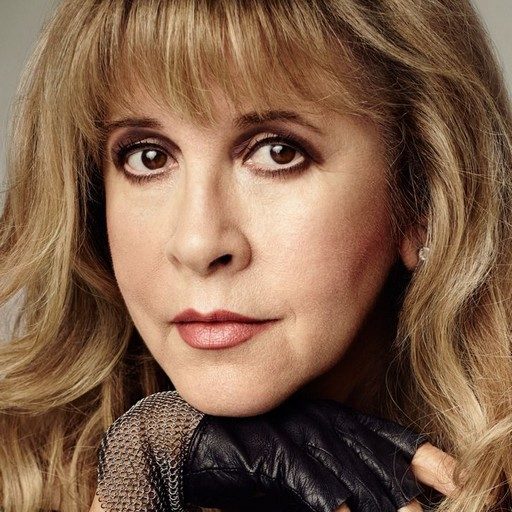
    Stevie Nicks talks about Fleetwood Mac, the dark days of drugs, and getting her confidence back to record a new album.

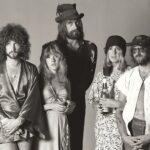
    It’s a miracle Fleetwood Mac are still together and touring. A musical soap opera of tangled love lives and drug and drink-fuelled breakups has lasted since the seventies, when the best-known lineup of the group formed.

    But it’s always been about the music. Surviving the breakup of two couples – Stevie Nicks and Lindsey Buckingham, and John and Christine McVie gave the band their multi-million selling 1977 album Rumours.

    But their love of their band and their belief in its music has helped them to endure and today they’re as popular as ever, currently in the middle of a mammoth world tour.

    Rip It Up meet Nicks in LA, where the band are in rehearsals. And the legendary singer says: “This band is the longest relationship any of us have had. It’s more than our individual issues.

    “When Lindsey and I split and Christine and John were about to break up, we were all in a room, saying, ‘Well, I’m not going to quit so you quit’.

    “Mick was in the middle saying ‘Well, is anybody quitting? If not, can we just carry on?’ “And that’s exactly what happened. No one was willing to give up Fleetwood Mac – it just wasn’t an option.”

    The band have endured what would have killed most other bands.

    The breakdown of Nicks and Buckingham’s five-year relationship and the McVies’ divorce during the making of landmark album Rumours became part of the Fleetwood Mac story. And even today, forty years after their split, it’s when Nicks and Buckingham get close on stage,that the crowd really erupt and cheer.

    “I guess fans are still fascinated by us,“ she admits in her famous husky drawl. “It’s part of the story and whatever happened between me and Lindsey or the others, the power of the band and the music meant more.”

    After her split with Buckingham, Nicks embarked on a two-year affair with band drummer and Fleetwood Mac founder Mick Fleetwood who was in the middle of a divorce with wife Jenny Boyd.

    And it wasn’t just the band’s love lives which were full of drama. The band’s intake of drugs in the Seventies and Eighties is also part of their story.

    Nicks says she first tried cocaine when she moved to Los Angeles from San Francisco with Buckingham.

    “Everyone did it then,” she confesses. “And if Lindsey and I had stayed in San Francisco there would never have been any drugs. We probably would never even have had a drink.”

    Nicks moved to LA with Buckingham to join Fleetwood Mac in 1974 – establishing a new line-up that remains the line-up of today – apart from Christine McVie who quit in 1988 but recently rejoined the band on stage at London’s O2.

    “Chris was a tough girl but she never really told us just how afraid she was of flying,” says Nicks.

    “She’d started having panic attacks about it. We did the Grammys and then she turned to me and said, ‘I can’t do this any more, I’m quitting.’ I said, ‘You’re leaving me? Abandoning me?’ “She goes, ‘I’m sorry, honey, I just can’t do it.’ So she went home, sold her beautiful house in Los Angeles, her piano, her truck, and she was gone in three weeks.

    “We never saw her again until we played Earls Court in London in 2004. You just have to respect her wishes but we’ll always be close. We’ll always be friends though it’s been very hard to try Christine’s songs in rehearsals. Lindsey and I have tried singing some in harmony but we were just disappointed with it.

    “Christine just can’t be replaced.”

    After Rumours came their experimental album Tusk which Nicks says saw her use of cocaine “go into overdrive”.

    By the time it came to making 1987’s Tango In The Night, Nicks was an addict and also “a mess”.

    “I had a hole on my nose,” she says honestly.

    “I checked into Betty Ford for two months and a plastic surgeon looked at my nose and told me it would collapse if I carried on. My vanity made me stop the coke.

    “I went to see a doctor who said the only way to stay off the drugs was to take a tranquilizer. If I didn’t then my nose was going to collapse. He prescribed Klonopin and I thought it was going to be the end of this chapter.”

    However, what Nicks wasn’t told was that Klonopin was also highly addictive and left her a wreck.

    She says: “I couldn’t move. I certainly couldn’t work and I was useless in the studio.

    “For Tango In The Night I couldn’t do anything. I just lay on the couch, called the deli and drank wine – and that went on for eight years. I lost eight years of my life – my forties – because of that man.

    “I went to Daniel Freeman Memorial Hospital in Marina Del Rey, LA, to wean myself off it.

    “It was hell. I thought I was going to die, I was in so much pain. I was really sick. To this day I will haunt the psychiatrist who gave me Klonopin. One day somebody is going to find out who the bastard is and I will be there.”

    As well as Fleetwood Mac’s world tour, Nicks is hoping to get time to work on another solo album after 2011’s In Your Dreams album that she made with former Eurythmics starDave Stewart.

    “I’m writing all the time,” she confesses. “I write down everything. Poems, notes, drawings all feature in my books which hold my life story. All my songs starts in here.”

    Working with Stewart, who she also co-wrote with for the first time in her career, gave her the confidence she’d been lacking. In Your Dreams arrived ten years since 2001’s Trouble In Shangri-La after Nicks believed no one was interested in her as a solo singer any more.

    “When we came off the road from Fleetwood Mac’s Say You Will tour in 2005, I was going to make a record but I was told not to bother by the powers that be,” she reveals.

    “ Everybody was depressed by the downturn in the music industry and I was not the fighter I usually am. I just believed what they said, that no-one would want to hear a Stevie Nicks album and went with it. But after the Fleetwood Mac Greatest Hits tour, I got my confidence back and decided I was going to hit the ground running the second I got home, and start an album and that’s what I did. I needed to do it for my soul as I’ve always made a record every couple of years.”

    As soon as she was home Nicks called Stewart and asked him over to hear what she’d been working on.

    “Before we knew it we were making a record. We didn’t even talk about it, we just started making it. He just said: “I’ll be back Wednesday.” It only took six months to record but making that record was the best year of my life – the most fun, satisfying and the most magical. Dave believed in me and saw something in my poetry. I keep all my poems in my journals and lock them away. They are the start of everything.

    “It gave me a creative burst, the kick that I needed. And long may it continue.”


    Jaime Wynn / Rip It Up (NZ) / Tuesday, October 29, 2013

  • Fleetwood Mac cancels Aussie/NZ tour, John McVie battles cancer

    Fleetwood Mac cancels Aussie/NZ tour, John McVie battles cancer

    (Neal Preston)
    (Neal Preston)

    Fleetwood Mac, who has just completed the European leg of their phenomenally successful worldwide tour, has announced the cancellation of their upcoming 14 date tour of Australia and New Zealand.

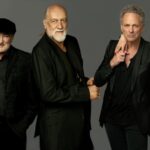
    John McVie, one of the co founding and original members of Fleetwood Mac, is now scheduled to be in treatment for cancer during that period of time.

    The band have released the following statement:

    “We are sorry to not be able to play these Australian and New Zealand dates. We hope our Australian and New Zealand fans as well as Fleetwood Mac fans everywhere will join us in wishing John and his family all the best.”

    Live Nation Australia wish John Mcvie a full and speedy recovery, and regret the disappointment that this announcement will cause for the band’s multitude of Australian fans.

    Ticket refunds will be available to all ticket holders as from Monday, October 28.

    For all tickets booked online or by phone, the refund will be refunded automatically to the credit card used in purchasing the tickets. Please allow up to 10 days to receive your refund.

    If the original credit card you used for the purchase has been cancelled or is no longer valid please contact the place of purchase.

    If you made your booking at an outlet please return to the original outlet where the tickets were purchased with your ticket(s) and with the credit card used to make the purchase in hand in order to obtain your refund. Refunds will be provided to the original purchaser only on presentation of photo ID.

    [jwplayer mediaid=”12038”]

    Related articles

  • Fleetwood Mac: The carry-on gang

    Fleetwood Mac: The carry-on gang

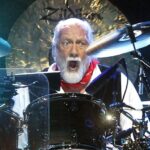
    MICK Fleetwood looks like a bohemian Santa with his bushy white beard, pastel shirt, black waistcoat and flat cap. Not all his tales from the rock ‘n’ roll frontline are as jolly as his appearance, though. At one point he has to choke back tears of regret. He has lived a life of such abandon that he admits he is lucky to still be here. “I’ve inherited some good genes,” he explains.

    It is often reported Fleetwood put $8 million of cocaine up his nose and, though this is an exaggeration, he says, if he hadn’t stopped consuming the drug so vigorously “the next stop would have been a wooden box.”

    His former bandmate in Fleetwood Mac, Christine McVie, tells me the men in the band used to rack out lines of coke like “blooming great rails”, whereas she and Stevie Nicks, the female contingent, would restrict themselves to “ladylike” portions, carried around their necks in jewelled buckles that had dainty silver spoons inside.

    “It was the 1970s,” she says with a shrug. “There was a lot going around.”

    Fleetwood says: “I’m not advocating cocaine at all, but the truth is, I had a good time. But then, without realising it, you’re getting too out of it. You’re sleeping for three days, or you’re up for nine days or whatever. And eventually you don’t feel good at any time.”

    He quit taking coke “a long time ago”, but the booze has been harder to let go. “I haven’t been drunk for five months now,” he announces.

    With a 46-date tour of the US about to begin soon after we meet, followed by European and Australian gigs, he has had to shape up. “I knew I was drinking too much,” he says. “And the more I don’t drink, the more I realise I was really drinking too much.

    Why still so excessive? Fleetwood is 66. Aren’t these meant to be the golden years, where living is easy?

    “We’re all still learning to take care of ourselves,” he says, “because Fleetwood Mac have worked really hard at pushing some envelopes. And of course you’ve got to change your behaviours, but I’ve had moments – really not that long ago – where I wasn’t getting it. I was still behaving like I was 32 years old, and you can’t be doing that shit. I suppose I was late getting off the bus.”

    Perhaps it has also been the process of writing his autobiography, Play On, due to be published next year, that has helped Fleetwood to take stock and start implementing some changes. Toning down his lifestyle has not been easy – playing rock ‘n’ roll is practically all he has ever done (aside from dabbling as a restaurateur, with rather mixed results).

    He was born in 1947 in Redruth, Cornwall, to a military family. His grandfather, John, was killed at Gallipoli in World War I, and his father, Mike, served in the RAF in World War II. Like many army brats, Mick was sent to boarding school, but hated it because he was an undiagnosed dyslexic and, as a result, “didn’t learn shit”.

    This gave him a lifelong fear of structured learning. “To this day, I don’t know what I’m doing,” he confesses.

    “I actually don’t know what a verse is, or a chorus. You can sing a song and show me, but don’t give me a bit of paper and say, ‘Oh, you know, that bit there’.”

    He says he is nervous about touring and still suffers from severe stage fright. “I’m just hoping I don’t forget all my parts.”

    It seems extraordinary that he still feels so shaky, despite having spent the past 47 years performing in one of the most commercially successful British rock bands since the Beatles.

    “It goes way back,” he says. “So this is going to be interesting. I’ll have a glass of wine beforehand, but I don’t want to drink myself into a stupor just so I don’t get frightened. If I have four glasses of wine during a show, that’s cool, so long as I don’t get on the plane and finish off two more bottles.”

    It is also surprising how raw he seems. I suspect he may be playing up to his own mythology a little – he is a self-confessed drama queen – but the disquiet seems real. I ask if his fear of not feeling is ultimately the fear of losing his creativity. “It’s more a fear of losing my life,” he says dramatically.

    Fleetwood left school as soon as he could, at 16, and moved to London to join the thriving blues scene. In this milieu he would meet bass guitarist John McVie, son of a west London sheet-metal worker, and they formed a band in 1967 with the guitarist Peter Green, who was a big star back then, but also a troubled soul who hated the limelight. So Green named the group after its rhythm section: Fleetwood Mac.

    Success would follow, as did numerous line-up changes. Green dropped too much acid and developed schizophrenia, and a series of other guitarists each had their own failings. One, Danny Kirwan, was highly strung and wept while he played; another, Bob Weston, was sacked after an affair with Fleetwood’s first wife, Jenny; and a third, Jeremy Spencer, popped out of a hotel in Los Angeles to buy a newspaper, joined a religious cult and never returned.

    When things fell apart it was often Fleetwood who rallied the troops and kept things going. He even became the band’s manager for a spell. “Mick would never let it end,” McVie says. “Fleetwood Mac is his baby.”

    Having moved to the US with the band in the early 1970s after a career lull, Fleetwood met two penniless musicians in Los Angeles, Lindsey Buckingham and Stevie Nicks, then a couple, and invited them to join.

    The first record they did together in 1975, Fleetwood Mac, was a hit that sold five million copies. But their career zenith arrived a year later with the release of the follow-up, Rumours. To date, the album has sold more than 40 million copies and is the ninth bestseller of all time.

    What made Rumours such a powerful piece of work was an almost perfect storm of dysfunction that engulfed its creators and which still affects the band now. As they recorded the album in Sausalito, California, Buckingham and Nicks’s 10-year relationship was ending; the eight-year marriage of the other couple in the band, Christine and John McVie, had just imploded; and Fleetwood’s marriage to model Jenny Boyd, with whom he has two daughters, had also recently collapsed.

    To make matters even more intense, their failed relationships became the subject of the bitter break-up lyrics that were artfully juxtaposed with sweet soft-rock melodies.

    But despite the shared heartbreak (and mutual loathing, depending on who was in the room together), all could hear the music’s potential. Songs such as Dreams and Go Your Own Way would take them to the top of the charts in record-breaking style – “Michael Jackson territory” is how Buckingham describes it. So they famously anaesthetised themselves with cocaine from an ever-present velvet bag to endure the recording. Keep numb and carry on.

    “Imagine your relationship fell apart, but you had children, and you both have to put your shit away to some extent and make sure the children aren’t damaged,” Fleetwood says.

    “The band was our child. We got through it, and not without some damage emotionally. Plus, it was the only thing we knew.”

    Well, almost. Fleetwood also knew how to party. The bandmate he is most similar to in this regard, he says, is Nicks, the witchy blonde rock goddess whose long, and ultimately successful, struggle with cocaine and tranquillisers is well documented. “We’re totally driven by drama,” Fleetwood says. “I think we’re calming down a bit, but we’re terrified of not feeling. So if nothing’s happening you’ll worry yourself into creating a drama just so you’ve got something to react to. It’s sort of an addiction, really.”

    And a highly lucrative addiction it has been, thanks to Fleetwood Mac’s ability to convert personal tragedy into musical alchemy. Rumours made the five members of Fleetwood Mac – the “classic” line-up – extremely rich. Estimates of the net worth of Buckingham (guitar, vocals, production), Nicks (vocals, tambourine), Christine McVie (keyboard, vocals) and John McVie (bass) range from $45m up to $65m.

    Estimates for Fleetwood’s haul are markedly more moderate: about $9m. This is partly because he has not been as prolific a songwriter as other members: he’s the drummer, so earns more from touring than from royalties.

    He has also lost a fortune on bad property deals and failed restaurants, though this hasn’t deterred him from opening another, Fleetwood’s on Front St, on the Hawaiian island of Maui, where he lives (he recently separated from his third wife, Lynn). A “Mick’s Margarita” from the cocktail menu includes tequila, elderflower liqueur, fresh-pressed lime juice, agave nectar and is “capped with Mick’s Pinot Noir.”

    For years after Rumours, the private-jet lifestyle kept running into turbulence. Band members were papering over the cracks, which must surely have widened when Fleetwood and Nicks had a fling, although Buckingham, her ex, denies it caused a problem.

    “It was a reflection of the times we were living in,” he tells me. “You can’t separate individual acts from the times. Stevie was prolific in that way, shall we say, and so was Mick – and so was I.

    “So it never really bothered me at all. I had dealt with the hurt of losing Stevie long before that.”

    But at least Fleetwood was gentleman enough to tell Buckingham about the affair in person before he heard any rumours. “He came over to my house and sat me down at my kitchen table and said, ‘Me and Stevie are an item’, ” Buckingham says. “And I said, ‘Oh, OK.’ Because, really, should I have been surprised?”

    The bubble was always going to burst. Christine McVie went on to date the Beach Boy Dennis Wilson – another renowned sybarite – before eventually burning out in the late 90s, selling her LA mansion and moving to a farmhouse in England’s Kent to lead a “solitary life”. This, she tells me, has recently become “rather lonely – apart from my brother and sister-in-law I still don’t know anyone down here”. She keeps in touch with the band, but insists she has no plans to rejoin them.

    Buckingham, meanwhile, left Fleetwood Mac for nine years before returning in 1996. “We were Bonnie and Clyde, me and Stevie, and Lindsey got fed up with it,” Fleetwood says. “But he left out of fear – he didn’t want to be around us, because we were too stoned.

    “Only recently, he admitted that he was really frightened that Stevie was going to die, and he didn’t want to be around it. That’s a really deep-rooted regard for someone.

    “And that’s [his voice is suddenly trembling and his eyes are moist, but the British stiff upper lip fast reasserts itself] … that’s part of our whole thing.”

    Predictably, this isn’t quite the way Buckingham recalls it. “Frightened may not be the right word,” he says evenly. “It was more frustrated. Or maybe I was frightened, but for myself.

    “Everyone in that subculture thought that drugs were what you had to do; that turned out to be a load of crap. You can be just as creative when you’re sober.

    “There was this idea that we were somehow rejecting values we didn’t believe in. And the irony was that we ended up becoming just as decadent as the things we were railing against.”

    As the US tour got under way in April, news broke that Fleetwood’s third marriage had crumbled. It was reported that he had filed for joint custody of his twin 11-year-old daughters. I wondered whether he would find succour among his bandmates, and whether he would conquer his demons on the road.

    Months later, I spoke to Stevie Nicks and asked how things were going.

    “I don’t know what’s come over Mick, but he’s on fire,” she said. “He’s playing better than he’s ever played. He’s rocking on that stage.”

    According to Nicks, Fleetwood had been venting everything during the shows – but not in the bar afterwards. The party animal had remained in his cage.

    “I’m up there on stage looking at everybody and thinking this is amazing, because we’re all sober up here,” Nicks intoned in a husky voice full of warmth and melancholy.

    “Nobody’s drunk. And we’re all having an incredible time.”

    Nicks also revealed she and Buckingham had only recently made their peace, after falling out in 2003 over creative differences (neither will elaborate).

    So it seems peace has finally broken out among the ranks of Fleetwood Mac. God only knows whether it will last. There is even talk of a new album. The band brought out a four-track EP, Extended Play, in April, their first new material for 10 years, and it has been warmly received by fans and critics. Naturally it’s full of elegiac songs about dysfunctional relationships and aching hearts.

    “This might sound corny,” Fleetwood had said to me just before we said goodbye, “but the biggest rumour about Fleetwood Mac is that we don’t really like each other.

    “I understand why people would think that, after everything we’ve said and done. But the reality is, we love each other. We just push the wrong buttons.”

    Fleetwood Mac’s Australian tour starts in Sydney on November 10, followed by concerts in the Hunter Valley, Adelaide, Perth, Melbourne, Geelong and Brisbane.


    Matt Munday / The Australian (Subscription) / Friday, October 12, 2013