Category: Articles

  • Stevie Nicks looks back

    Stevie Nicks looks back

    Rolling Stone 1227The rock goddess appears solo on our cover for the first time since 1981 and performs an exclusive acoustic ‘Gypsy’

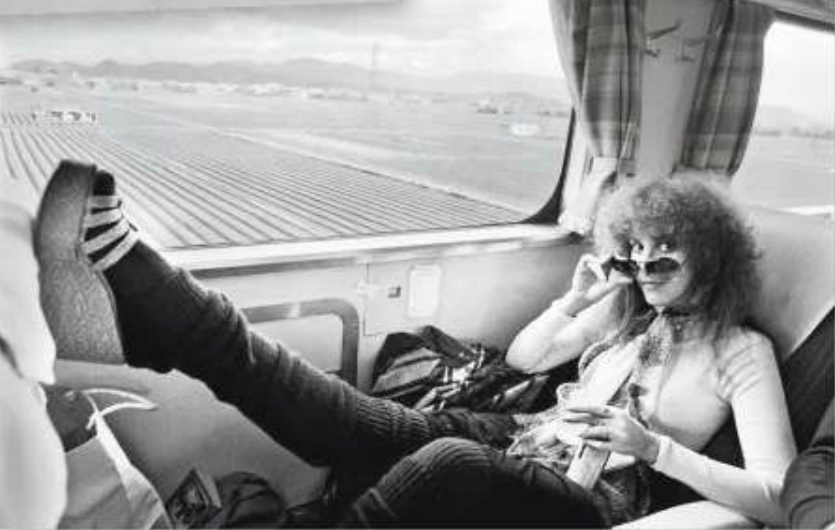
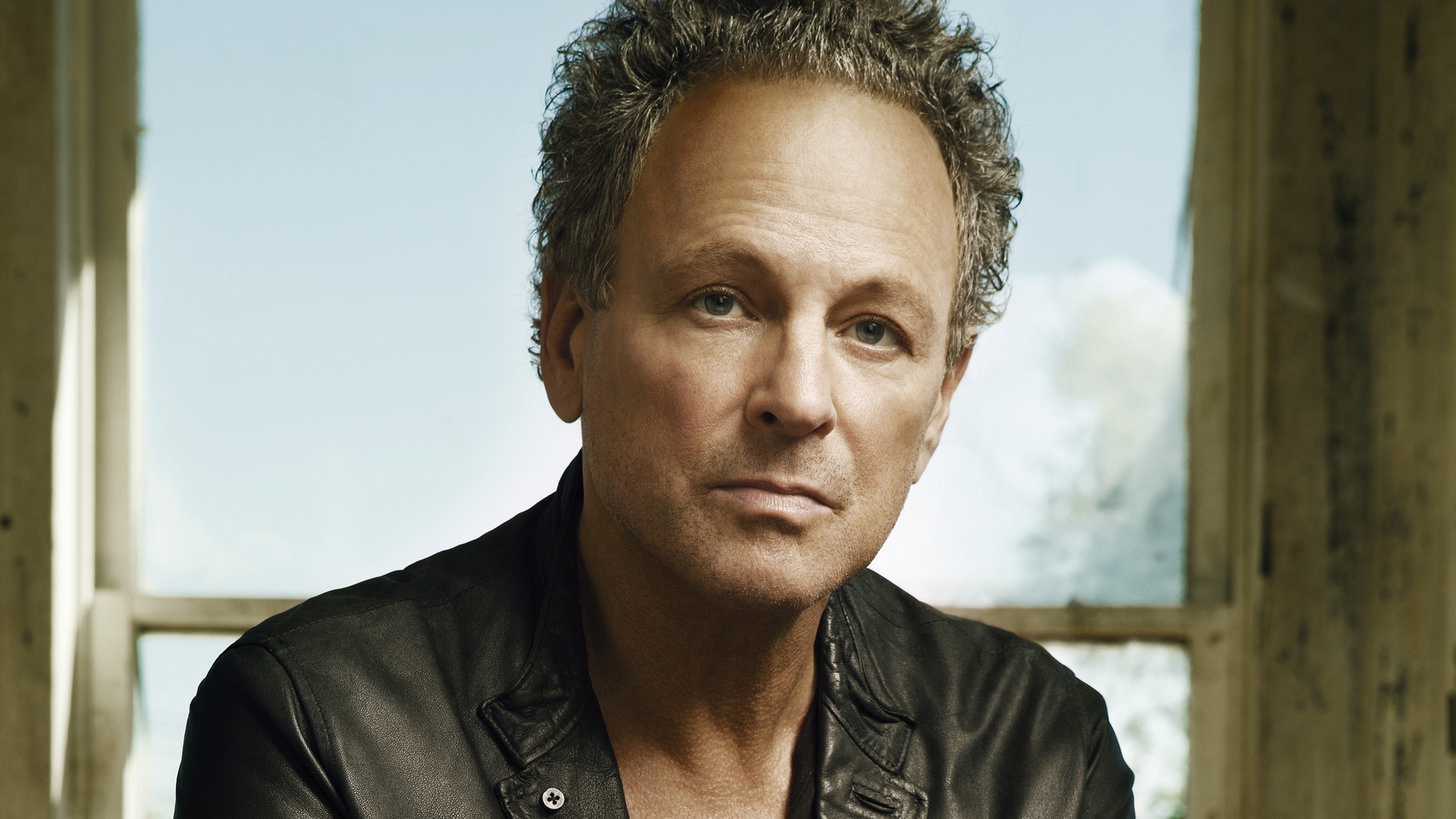
    Rock goddess Stevie Nicks – maker of myths, wearer of shawls – appears solo on the cover of Rolling Stone for the first time since 1981 in our new issue, hitting stands Friday. The intimate, 7,000-word cover feature by senior writer Brian Hiatt digs deep into Nicks’ life and career, from the endless drama of her relationship with Lindsey Buckingham (backstage at a Fleetwood Mac show in December, he bangs on Nicks’ wall to get her to turn her music down) to her decades-long band-crush on Tom Petty and the Heartbreakers (“Had Tom Petty called me up one day and said, ‘If you want to leave Fleetwood Mac to be in the Heartbreakers, there’s a place for you,’ I might well have done it. Anytime! Today!”)

    But Nicks has never really felt like she could leave Fleetwood Mac, other than for a few years in the Nineties. “We choose to stay,” she says. “Because we can’t do anything else. None of us are ever going to stand up and say, ‘I’m going to make my own choice for the first time in my life, and I’m going away, and I don’t know if I’m coming back.”

    Above, watch a performance of “Gypsy” that Nicks recorded exclusively for Rolling Stone, which marks the first time she’s ever played the song stripped-down and nearly a cappella.

    Among the cover story’s other revelations:

    Nicks’ coke habit was truly life-threatening. “All of us were drug addicts,” she says. “But there was a point where I was the worst drug addict. . . . I was a girl, I was fragile, and I was doing a lot of coke. And I had that hole in my nose. So it was dangerous.”

    “I did all I could to talk her into getting some help and getting right,” says Tom Petty. “I was very worried about her. To the point that if the phone did ring and they said, ‘Stevie died,’ I wouldn’t have been surprised.”

    Nicks never considered herself an alcoholic, and she still smokes a bit of weed, albeit as a creativity aid. “When I’m writing, I will allow myself to smoke a little bit of pot,” she says. “It’s my one little thing that I can do. I use it as a tool, and I’m very careful, you know? And I get results. However, if I thought it was going to lead me back to something worse, I’d stop.”

    The tension between Nicks and Buckingham never goes away. “Relations with Lindsey are exactly as they have been since we broke up,” says Nicks. “He and I will always be antagonizing to each other, and we will always do things that will irritate each other, and we really know how to push each other’s buttons. We know exactly what to say when we really want to throw a dagger in. And I think that that’s not different now than it was when we were 20. And I don’t think it will be different when we’re 80.”

    The moment Nicks joined Fleetwood Mac, she decided she would never think about money again. “I said, ‘That’s it, I’m never looking at another price tag,’ ” she says, laughing. “And I meant it.”

    Nicks quietly dated a younger guy – a handsome waiter – in the Nineties, and it didn’t work. “One day, he came home and said, ‘I got two tickets for Bill Maher, will you go with me?’ and I’m like, ‘Are you insane? No. I’m not going. I’m famous! I’m Stevie Nicks! Everybody’s gonna spend the whole time taking pictures of us. And I can’t keep on making excuses about why you can’t go anywhere I can go. Like, can I take you to the Grammys? No. Can I go to the market with you? No. Can we go to a movie together in downtown Santa Monica? No. All we can do is stay in.’”

    She doesn’t really want to date older men: “What if I fall in love with somebody and they die?” And she doesn’t hold out much hope for guys her age. “They wanna go out with somebody that’s 25,” she says. “That has been going on since the Bible, and I haven’t even read the Bible, but I know that. So what am I gonna do, compete with that? I’m not a competitor. So I don’t even wanna be in that situation.” So, in short, “I’ve narrowed it down to nobody,” she says, and laughs hard.

    Look for the issue on stands and in the iTunes App Store this Friday, January 16th.

  • From the Rolling Stone Vault: Fleetwood Mac

    From the Rolling Stone Vault: Fleetwood Mac

    Mega-platinum albums, high school drama, irresponsible living, plus cross-dressing: a quick history of the Mac in RS

    A Quick History of the Mac in RS

    The True Life Confessions of Fleetwood Mac
    RS 235 March 24, 1977

    In 1977, Fleetwood Mac’s breakout album, Rumours, was dominating the charts. But the band was in chaos — Christine and John McVie had split up, Mick Fleetwood was divorcing his wife, and Stevie Nicks and Lindsey Buckingham’s relationship was on the rocks. For their first Rolling Stone cover story, they took Cameron Crowe inside that isolation and heartache. “Try being with your secretary at work all day, in a raucous office, and then come home with her at night,” Nicks said.

    Winning Big
    RS 256 January 12, 1978

    When the Mac swept the 1977 Rolling Stone readers’ poll, Fleetwood donned a cheerleader costume for a cover shoot, and the band talked about celebrating its differences. “There’s no continuity in the five people,” said Nicks (right, on tour), “Except the spirit.”

    Like a White Winged Dove
    RS 351 September 3, 1981

    Nicks was enjoying the platinum success of her 1981 solo debut, Bella Donna, which included her duet with Tom Petty, “Stop Draggin’ My Heart Around.” Stevie talked about slowing down — “You get to a certain age where you want to be quieter,” she told RS — but she knew she would be back with the Mac: “[With] Fleetwood Mac, you can never really have any other plans for your life.”

    Say You Love Me
    RS 643 November 12, 1992

    Fleetwood Mac and Rolling Stone were both marking their 25th anniversaries in 1992. To celebrate, John McVie and Fleetwood posed for the magazine’s portrait issue. Says photographer Mark Seliger, “I told Mick, ‘I thought it would be really interesting to have you and John as a wedding portrait.’ And Mick goes silent for a minute and then says, ‘I like the idea. Just one favor: I want to be the bride.’”

    Rolling Stone / December 4, 2014

  • Witchy Woman: Stevie Nicks on her crazy Coven role

    Witchy Woman: Stevie Nicks on her crazy Coven role

    The legendary Fleetwood Mac frontwoman, 65, went from inspiring the cult hit American Horror Story: Coven to making an awesome cameo in the Jan. 8 episode. We talk to her about the role — and whether she’ll return to cast more spells.

    AHS co-creator Ryan Murphy said it was tough to get you to actually appear on the show. How did he finally convince you?

    When they asked if they could use my music, they just said, “There’s a character, and you’re a muse because she listens only to you, and she lives out in the swamp.” And that was good enough for me! [Fleetwood Mac] was in Europe, but we were able to pull up the first couple episodes. Of course, I fell into the spell. Then all of a sudden I had five weeks at home, and I was like, “Can I just do a walk-through? [Like] ‘Hello, witches! Goodbye, witches!” I had no idea I’d be written in until I got to New Orleans. I don’t want to go down in history as “Stevie Nicks: rock & roll star par excellence — terrible actress.” So I didn’t sleep very well.

    What was your experience like on the set?

    I did these scenes with Jessica [Lange], and I got to really watch an amazing actress act. I realized, Boy this is much harder than what I do. I get on, I’m on for two and a half hours, I get off stage, I get on the plane and go to the next city and order room service.

    Murphy says you have tons of script ideas — and that you’ll be back for the Jan. 29 finale.

    I know they’re like, “Are you part of the writing team now?” It’s just that I’m so unfortunately full of ideas! I wrote them a letter last night that said, “You know, my friends think I should up rock & roll and just go to work for you.” [Laughs]


    Ray Rahman / EW / January 2014

  • Fleetwood Mac’s creative glue

    Fleetwood Mac’s creative glue

    The real Lindsey Buckingham: He’s their creative glue

    Up close, there was something of the actor Kevin Kline about Fleetwood Mac’s guitarist, songwriter and producer Lindsey Buckingham in 1977. It isn’t the appearance, so much. It’s more that Buckingham’s nervy, jittery demeanour reminds me of Kline in one of his nervy, jittery film roles.

    It’s 10:30am and the tray in Buckingham’s hotel suite contains evidence of a healthy breakfast: lots of juice and half-eaten fruit. Buckingham looks wiry in black shirt, black jeans and flip-flops, but I notice that he wiggles his toes and jiggles a knee when answering some questions. Critics and the other members of Fleetwood Mac have described him as “uptight.” He is, but then he’s earned the right to be. Without Buckingham, Fleetwood Mac would probably have finished in 1975.

    The trouble is, Fleetwood Mac wasn’t what Lindsey Buckingham had in mind when he left the family home in suburban California to try and become a singer-songwriter. It was Stevie Nicks who persuaded him to join Fleetwood Mac. Their Buckingham Nicks album had tanked, and she was concerned they were going to starve. Buckingham, though, would have gone hungry for his “art.”

    His painstaking approach to writing and arranging is what made Rumours so great. That he then stuffed the follow-up album, Tusk, with wonky non-pop songs such as “The Ledge” and “Not That Funny” only makes you admire him even more. Buckingham can “do” pop as well as Nicks and Christine McVie, it’s just that he prefers to sprinkle a little broken glass into the mix as well. Like Nicks, he’s an emotional exhibitionist who bleeds all over his songs. The mind boggles at what it must have been like to have been around that extraordinary couple “back in the day.”

    Since the late ‘90s Buckingham has repeatedly parked his erratically brilliant solo career to make time for Fleetwood Mac. That’s where the money and the acclaim is, but it must have hurt handing over songs he’d earmarked for his own record to 2003’s Mac comeback album, Say You Will. That album went to Number 3 in the US; Buckingham’s next solo album, Under the Skin, made it to 80.

    When I next spoke with him in 2005, he’d become a father to three young children, and had lost that Kevin Kline-like jitteriness. When we spoke again in 2012, he was back on Fleetwood Mac duties, and sounded uptight again. But as the conversation wore on, he gradually thawed out. He admitted that, at times, yes, it was hard being in Fleetwood Mac and dragging all that history and emotional baggage around. But, as he said, it could have ended up like Peter Green.

    “Boy, I consider myself lucky,” he said, with a laugh. “I am one of the few who escaped…mostly unscathed.”

    Photo caption: Lindsey Buckingham, an emotional exhibitionist who bleeds all over his songs (Jeremy Cowart / © 2011)

    Mark Black / Q / October 2013 (from “The high times of Fleetwood Mac – 17-page collector’s special”)

  • The real Stevie Nicks: The white witch of rock ‘n’ roll

    The real Stevie Nicks: The white witch of rock ‘n’ roll

    Interview from 1997

    Stevie Nicks’s limousine is so huge that you can sit with your legs outstretched and still not bother the person in front of you. In this instance, it’s Nicks’s personal assistant, whose toes are about 12 inches from mine, and who’s eavesdropping on our interview and taking calls on what would now be a museum-piece mobile phone (this is the late ‘90s, after all).

    We are on our way to an airstrip, where Fleetwood Mac’s private plane is waiting to take them to Buffalo, New York. Nicks is sat next to me, dressed in black despite the blazing sunshine, and sipping a concoction of lemon and honey from a glass tumbler. “Oh, I could easily fallen for John,” she purrs, over the faint hum of the car’s engine and air conditioning. She is talking about Fleetwood Mac’s bassist John McVie. “It’s those eyes,” she adds.

    Nicks has volunteered this information after learning that I spent most of the previous evening in the hotel bar with McVie. “Of course, John drinks too much,” says Stevie. Her assistant looks aghast. “Well, he does,” she protests. “Everybody knows it.”

    Nicks’s vulnerability is what audiences loved from the start

    During our half-hour journey, Nicks is charming, gossipy and ridiculously candid. She discusses her past addictions (the prescription drug Klonopin, which “they gave me in the Betty Ford Clinic” was harder to get off than cocaine, apparently); ex-boyfriend Lindsey Buckingham (“His girlfriend is so good for him. She’ll straighten him out”); and why she’s never had children (“This is the life I have chosen”). I’ve barely asked any questions.

    Onstage, wafting about in her chiffon scarves and towering heels, Nicks comes across like a soft-rock version of some imperious Hollywood diva. Offstage, she is disarmingly down-to-earth.

    Growing up, first in Phoenix, Arizona, then California, Nicks was close to her grandfather, a struggling country singer. His lack of success haunted her, and she struggled to shake off feelings of inadequacy when writing songs alongside the more experienced Buckingham and Christine McVie. That vulnerability is there in hits such as “Dreams” and “Sara,” and is something her audience adored about her from the start. Listen to Tango in the Night’s “When I See You Again.” She sounds like she’s singing from another planet. But that’s sort of what makes it so appealing.

    The limo pulls up at the airstrip and Nicks waves goodbye. When I glance back, I see her hugging Mick Fleetwood. She looks like a small bird being wrapped in the wings of a much bigger bird. The limo drives me back to the crappy Holiday Inn in which I’ve been billeted. As I climb out, I notice the glass tumbler smeared with honey and lipstick jammed into the ledge of the door. I resist the temptation to take it as a memento. That would be too sad.

    Mark Blake / Q / October 2013 (From “The High Times of Fleetwood Mac – 17-page collector’s special”)

  • Stevie Nicks: The Original Rebel

    Stevie Nicks: The Original Rebel

    Fashion is having a rebel moment. But long before maverick icons Grace Jones in black rubber, Courtney Love in ripped tights and lace, and Chrissie Hynde who cut her own hair and never removed her leather jacket, there was Stevie Nicks. ‘My whole life is a rebellious moment,’ she laughs – a long, throaty, mocking-the-world-laugh.

    The look she invented for herself in the early Seventies was part Dickensian waif in raggedy chiffon and heavy boots, party romantic gypsy. At first, this came from her own wardrobe, but she later developed costumes with Californian designer Margi Kent. They made her look as if she inhabited an imaginary world of birds of paradise and fairies, but they were highly practical on stage: a leotard here, a floaty skirt and fringed scarf there. It is a look that still works for her now – deliberately so. ‘I planned to still be doing this when I’m 60. I wanted to make sure that what I wore then, I could wear at any age,’ she says. I suggest she should have started her own label. ‘I thought of doing a fashion line, but there would be a lot of work involved. I don’t have time.’ It’s a shame, as I’d certainly shop there. My entire wardrobe is stuffed with tops named Stevie. The black Stevie, the grey Stevie, the shimmery Stevie.

    At 65, she’s still rocking the Stevie, too — today’s is wispy and black. I am in something almost identical, which she admires, examining the label so she can buy the same. This makes me very happy. I have always loved Stevie – her look, mystical fairy meets ethereal temptress; her voice raw, rippled with emotion. I love her fearlessness and I love the drama of her falling in love with so many rock stars.

    This is actually the third time we have met. Today, we are sitting in a giant London hotel suite, decorated in muted and minimalist beige and grey – somewhat at odds with Stevie, who is most definitely maximalist. In the flesh she looks amazing – her hair still in thick, dirty-blonde cascades, her skin flawless. Her books, drawings and clothes are everywhere. She is here to promote the European leg of the reformed Fleetwood Mac tour – that they can still sell out stadiums (a total of 81 arena dates worldwide, in fact) almost 40 years after she joined the band is testament to the enduring power of their music, much of which Stevie wrote or co-wrote.

    Clearly, I am not her only superfan. Forceful women love her and want to channel her – the goddess persona, the voice, the look. Courtney Love is especially obsessed. When I visited the first lady of grunge at home, I spotted a Stevie shrine sitting next to her Buddha shrine. The fact that Stevie Nicks has lived a thousand lives makes her a great dispenser of advice – her great friend Sheryl Crow phones when I am sitting there. She knows how to feel deeply, how to ache, and also knows how to cauterise that pain with a great song.

    Since we first met in 2009, she has changed very little. She is always vibrant – her laugh, which starts as a low growl and heightens if she says something particularly hilarious, is exactly the same. If she talks about something sad, she seems to feel it only in that moment, then quickly moves on. Perhaps it’s this lack of baggage that means her face is plump, line-free and porcelain, although she attributes it to good genes. ‘I got my dad’s beautiful skin. But it’s also tough skin. He lived in Arizona and he was out in the sun all day.’ She smiles. The metaphor is deliberate. She has sensitive but tough skin.

    Her relative lack of wrinkles can also be attributed to sun avoidance. ‘I stopped laying out in the sun when I was 30. Probably because we were doing drugs all night long and I was sleeping all day.’ Now, she slaps on the most expensive skin care she can find. ‘I use Crème de la mer at night. I can afford it. Plus, I never go to bed with make-up on and I do a little massage thing two or three times a day.’ She demonstrates by gently slapping her own face.

    Botox is a no-go after a bad experience. ‘I did it in 2003, 10 days before Fleetwood Mac filmed Live in Boston. My eyebrows fell like this.’ She stretches them down and turns down her mouth like a revers smiley. ‘I would never do it again. It’s an ugly thing that changes your beautiful eyes. I looked like the sister of Satan.’

    She talks quickly but regales stores at length, chronicling her life, album by album, and talking about relationships as if they were started to better serve her songs. Born in Arizona, her family later moved to San Francisco, and during her senior year in high school she met a brooding and Byronic Lindsey Buckingham. He was in a folk group, she was already writing songs – together, they formed a duo, Buckingham Nicks, and put out a record of the same name. It caught the attention of Mick Fleetwood, who, on New Year’s Eve 1974, invites them to join the already-successful Fleetwood Mac. The chemistry and dynamic of Fleetwood, plus the two couples – John and Christine McVie, Buckingham and Nicks – was explosive. When Nicks and Buckingham left their low-key life to move to LA and join the band, it must have felt like joining the circus. Or at least a soap opera. There were drugs, there was sex, there were feuds.

    Stevie and Lindsey broke up while recording their Grammy-winning 1977 album Rumours, but the band didn’t split. The lyrics about love, losing it and finding it, became all the more emotive, making the album one of the biggest-selling of all time. But I’ve always thought her song was Landslide, which seems particularly poignant now. ‘Well, I’ve been afraid of changing / Cause I’ve built my life around you / But time makes you bolder / Children get older / I’m getting older too.’

    She has earned $7 million from that song alone – and, as she wrote or co-wrote many other Fleetwood Mac songs, plus all her solo albums, Stevie’s estimated worth is now $65 million. The first time we met, four years ago at her home in Pacific Palisades, LA – enclave for superstars and the super-rich-she was clutching an envelope containing her latest royalty cheque. So this year’s reforming of the band certainly isn’t driven by cash – at least not for her. However, as Mick Fleetwood went bankrupt in the 1980’s, she says, ‘He could certainly use the money.’

    Her house was large and comfortable, but perhaps less ornate than you’d expect. The art on the walls had a mystical bent and the bedroom was draped in silks and taffetas. Her walk-in dressing room was filled with lace and lingerie. It smelled of perfume, at the same time woody and floral. Into the giant American kitchen that looked like it had been cooked in, scampered Sulamith, a tiny Yorkshire terrier in a blue knitted coat. Her assistant informed me in a concerned tone that Stevie had thought her dog suffered from alopecia. Only after spending thousands on therapy in the belief it was caused by stress, did she find out that a Chinese crested dog, an entirely bald breed, had taken a fancy to Sulamith’s mother. The frisky pair produced this Chinese Yorkie, whose face is framed with a golden brown fringe, much like Stevie’s.

    Stevie was not embarrassed at all by this. Actually, she’s not embarrassed by anything. She doesn’t do regrets, living completely in the moment. After all, if she thought too much about it, she may not have had the roll call of rock-star lovers that were in the same band. If she felt passionate, she just went for it, not caring about shredded egos and imploding friendships.
    Breaking up with Buckingham but still having to write songs with him in Fleetwood Mac must have felt like a strange sort of incest. He wrote Go Your Own way about her and she is still writing songs about him. ‘The beginning of our relationship was the best time of our lives. Still, in every song I write there’s a line or two about Lindsey. He is my great musical love. He is like Johnny Cash to my June Carter. You can get to a state of mind where you can be happy, but it will always be difficult. You can find a good thing and you can be sad that you can’t be together.’ They always knew how to wind each other up, she says. Still do. ‘I just don’t think we will ever be friends,’ she concludes. And yet they will have spent almost every day together for the best part of this year.

    Life could have been very different if they’d stayed together in San Francisco playing fold clubs. ‘I ironed his jeans and sewed moons and stars on them, and made the house beautiful. I was the cleaning lady. Then we joined Fleetwood Mac and moved to LA and he became very jealous. I was trustworthy but he didn’t trust me, so he tortured me every day until I ended up having an affair.’

    That affair was with another man called Lindsey, who worked in a friend’s restaurant. Then there was Mick Fleetwood. She says it wasn’t out of revenge that she started the affair – they just fell in love. He left her for a friend called Sara. It was a powerhouse woman move to fall in love with two members of the same group – as if she wanted to prove to herself that her love is stronger than any band. And then she did it again with two members of the Eagles – Don Henley and Joe Walsh – in the early 1980’s. ‘Joe was a big rock star. Maybe he was the love of my life. Although I change who I think were the great loves of my life all the time.’

    She and Walsh were together from 1983-1986. They did not write songs together – they took drugs. ‘I don’t know what my relationship with Joe would have been like sober. I remember days of misery waiting by the phone; me in my house, with him saying, “I’m going to visit you.” I would kick everyone out because I just wanted to be with him, and not a phone call, nothing.’ Why did she put up with it – she was one of the biggest female stars in the world? ‘Because I was in love with him,’ she says in an isn’t-that-obvious tone. ‘I wouldn’t now. But we were doing a lot of drugs and drugs make you needy.’ She pauses. ‘And who wants needy?’

    She tells me about one day when Joe put the phone down on her and she thought they had just broken up. The next day, she went to see the Eurythmics and Dave Stewart asked if she had a boyfriend. ‘I said no. So Dave Stewart came back to my house and we spent the night together. But the next morning, I panicked. I threw him out of the bed and I started dressing him. All this leather! All these chains that I was threading through!’

    She and Joe did get back together, but he disappeared for good a few months later. ‘He told my friend he’d gone to Australia because he’s a coward. He said, “Tell Stevie I’m going because both of us are doing so much coke that one of us is going to die.” She was left broken-hearted – and, thanks to her addiction, with a hole in her nose so big that, legend has it, she could loop a belt through it. This, she says, is not quite true, but ‘If I wanted to put a gold ring through it I could. A gold ring with diamonds!’ She was addicted to cocaine for around a decade – Fleetwood Mac’s album credits famously feature a ‘thanks’ to their dealer – and she has estimated she spent over $1 million on the drug.

    If it hadn’t been for Joe dumping her, she would never had ended up getting clean in the Betty Ford Center in Palm Springs in 1986. When she came out, friends avoided cocaine around her – ‘I thought that whole world had stopped but it turns out they were just being respectful’ – and some persuaded Stevie to see a doctor to keep her sober. She now dearly wishes they hadn’t. He kept upping my dose and I was shaking so hard, I thought I had Parkinson’s.’ One day, she made her assistant take the pills so she could see the effects and the assistant passed out, so she came off the drugs immediately, checking herself into hospital. ‘I stayed there for 47 days. It made the cocaine detox look like a walk in the park. But I came out the other end shining, with a new lease on life.’

    Those years took their toll though – Stevie says she lost most of her 40’s, and some of her looks, to the drug. ‘Eight years of my life gone, my last vestige of youth ripped away. At least I still had a brain with coke.’ Her hair turned grey and her weight ballooned to 12 stone – she’s only 5ft 1in. She was also robbed of her last child-bearing years. One wonders if the overindulged with its extensive wardrobe and therapy is a maternal outlet.

    Stevie seems to have changed her mind about having children throughout her life. She once said, ‘If I were to get pregnant, I would have to stop being an over-achiever, get more rest, eat well, take my vitamins.’ But she also told me, ‘I don’t regret never having children because I wanted this life. I would have been jealous if my baby had to be turned over to a succession of nannies. I suppose I didn’t want to give up my career.’

    Her maternal instincts perhaps peaked when her best friend Robin Snyder died of Leukaemia in 1982, leaving behind tow-day-old baby Matthew. She married Robin’s husband Kim Anderson in the hope that they could recreate a family unit but the marriage was dissolved a few months later. She now calls the whole thing ‘insanity’, and says her friend would not have wanted Stevie to break her widower’s heart.

    She says she could have had her own family with Lindsey if they’d stayed in San Francisco. ‘Lindsey just wanted a nice woman and children. If we had not pursued our career, we could have made it as a couple. He would sometimes say, “I don’t care how much money we made or how famous we were. All Fleetwood Mac did was break us up and that was the thing I held most dear.’”

    Was that the thing she held most dear? ‘No,’ she says, perhaps a little too quickly. ‘I really am happy. I love my life. I made a choice a long time ago about what was going to be most important and that was my music and my art. My life’s been a dream come true but still, I always look to the future. And I think my life is going to be way beyond anything I’ve done now.’

    Chrissy Iley / Elle UK / October 2013

  • Stevie Nicks: Botox is the devil

    Stevie Nicks: Botox is the devil

    Stevie Nicks claims Botox is “an ugly thing” she will never have again.

    The Fleetwood Mac singer insists she will never turn to the wrinkle-defying injection again after a bad experience. Stevie remembers how the product changed the features of her face in a dramatic way.

    “I did it in 2003, ten days before Fleetwood Mac filmed Live in Boston. My eyebrows fell like this,” she recalled to the British edition of Elle magazine while pulling a face. “I would never do it again. It’s an ugly thing that changes your beautiful eyes. I looked like the sister of Satan.” (A video clip of Nicks’ Live in Boston performance appears below.)

    Stevie has changed her lifestyle dramatically since finding fame with the band in the 1970s. She especially avoids sitting out in the sun, which was a pastime of her late father.

    “I got my dad’s beautiful skin. But it’s also tough skin. He lived in Arizona and he was out in the sun all day. I stopped lying out in the sun when I was 30. Probably because we were doing drugs all night long and I was sleeping all day,” she admits.

    The 65-year-old musician relies on her beauty routine to keep her youthful looks. One product she can’t live without is a moisturiser by luxury beauty brand Crème de la Mer.

    “I use Crème de la Mer at night. I can afford it. Plus, I never go to bed with make-up on and I do a little massage thing two or three times a day,” she added.

    Belfast Telegraph / Wednesday, September 4, 2013


  • The high times of Fleetwood Mac

    Q (UK) has featured Fleetwood Mac in a 17-page collector’s special for its October 2013 issue. The feature revisits Fleetwood Mac long and varied history and promotes the band’s upcoming European tour, which begins in Dublin, Ireland on September 20. To subscribe to Q, click here.

  • REWIND: Rolling Stone Q&A with Stevie Nicks, July 2001

    REWIND: Rolling Stone Q&A with Stevie Nicks, July 2001


    A fog is pouring over the Pacific Coast Highway toward Stevie Nicks’ Southern California home, but the singer’s mood could hardly be brighter. The Fleetwood Mac alumna’s Trouble in Shangri-La has just entered the Billboard 200 at an impressive Number Five. Sheryl Crow, who co-produced five tracks, joined Nicks on the album, as did Macy Gray, Sarah McLachlan and Dixie Chick Natalie Maines. Nicks is also recovering from drug addiction— her latest was to the tranquilizer Klonopin. More recently, she’s come back from shooting her part in Destiny’s Child’s video for “Bootylicious,” which samples the Nicks classic “Edge of Seventeen.” “The wild thing is we’re together at, like, Number One and Number Five, and, of course, there’s about a 5,000-year age difference,” Nicks says with a sunny laugh.

    RS: Do you feel you’ve become a sort of Mother Superior for women in music?

    I do. I do. And it’s a nice feeling — I certainly would have never gone out looking for that, but it seems to be coming to me. I guess these are just all my lost children coming back into my arms.

    RS: What do you think of how women in music sell their sexuality these days?

    I definitely used my sexuality in a certain way. I kind of draped it all in chiffon and soft lights and suede boots. Everybody now is just much more blatant  Personally, I think that being a little more mysterious works better, and it lasts longer. You should be very careful that you don’t build everything you have around how cute you are or how sexy you are, because, unfortunately, no matter how cute you are or how sexy you are, in fifteen years, that won’t be the most important part of your music. I knew that in my twenties. And I prepared for that.

    RS: Do players really only love you when they’re playing?

    That’s just about groupies and rock stars and what happens out there on the road. It really doesn’t happen out there on the road to women. It didn’t really happen to me, but I saw it happening all around me.

    RS: I hear you’re into doing Pilates these days. Has Pilates replaced Klonopin for you?

    No, nothing replaces Klonopin. I’m not addicted to working out. I enjoy it, and I am doing it now not because I want to be thin but because I want to be healthy in twenty years.

    RS: With all that you’ve lived through, are you surprised you’re still alive?

    I am amazed. I feel very lucky. If I had not caught that Klonopin thing, I am absolutely sure I would have been dead in a year — no doubt in my mind. I feel really lucky that somebody tapped me on the shoulder — some little spirit — and said, You know what? You better go to a hospital right now and get better.

    RS: Did drugs ever erode your love for music?

    The Klonopin eroded my love for everything. Klonopin is a tranquilizer. So between Klonopin for the calm and some Prozac for the wellness feeling, you are never inspired. That’s what it does.

    RS: Did you sense that this album was going to turn things around for you?

    Well, I knew that this record would either make me or break me. I figured if I could do an album that the world loved after being addicted to that Klonopin stuff for eight years, and just having that be such a black hole, that I would be back on my way. That’s kind of how I feel. And the Fleetwood Mac reunion just slipped in there. I didn’t ever think that Fleetwood Mac would get back together. On that tour, I really regained my power, so when I came home from the Fleetwood Mac tour, I was really ready to finish this record.

    RS: Even though Christine McVie has now retired from the group, is it safe to say there is a future for Fleetwood Mac?

    Totally. Lindsey [Buckingham] and I and Mick [Fleetwood] and John [McVie], we are going to do this. Christine is OK. She has set us free and let us go. And she wants us to do this if we want to. And so we are going to do it. As soon as I get done with this [Shangri-La tour], and Lindsey is finished doing whatever he does in the next year, we’ll be done and we’ll come together, and we’ll do a record. And there’s a possibility that Sheryl could be a little involved in that.

    RS: As someone who lived through the ultimate rock & roll interoffice romance, do you have any advice for us on the subject?

    It doesn’t work. It just doesn’t, because when all the business and everything else is blended, you don’t have any space for anything.

    RS: On the other hand, you’ve had some fascinating men in your life — Lindsey Buckingham, Don Henley, Jimmy Iovine.

    They are all still my really good friends today. I just talked to Don Henley an hour and a half ago. We just did an incredible benefit for MS (Multiple Sclerosis) in Dallas two weeks ago. All the men who were in my life I’m friends with now, and it’s really nice. I chose to not be married. I chose to be single. I have a lot of fun this way. I can do anything I want, go anywhere I want, be with anybody I want, and I’m not angering anybody. Nobody is ever upset with me.

    RS: It must be intimidating to ask you out. It’s like asking out Cinderella.

    I would think it would be very intimidating for people. That’s probably why most people don’t, you know, because they’re scared [laughs]. I figure if there’s a soul mate for me out there somewhere, I’ll find him. He’ll find me.

    RS: Is the secret to your success that you really are a witch after all?

    I’m not a witch.

    RS: Not even a good witch, Stevie?

    I just like Halloween, and I thought that blondes look skinnier in black. That was my whole idea for that whole thing — a long, cool woman in a black dress, right?

    David Wild /Rolling Stone / July 5, 2001

  • Rod Stewart animated, Stevie Nicks more subdued

    Rod Stewart animated, Stevie Nicks more subdued

    Stevie Nicks performs at Consol Energy Center as part of the Heart & Soul Tour with Rod Stewart

    There’s no question that Stevie Nicks and Rod Stewart are legends in the music industry. One was a member of Fleetwood Mac, and was once called “The Reigning Queen of Rock and Roll” by Rolling Stone Magazine — not an accolade to be taken lightly. The other is one of the best-selling musicians of all time, both domestically and in the U.K., where he’s spawned an obscene 31 Top Ten singles.

    image
    (Bill Wade)

    It’s also pretty obvious that the masses understand what it is to have two Rock and Roll Hall of Famers touring together. Consol Energy Center was decidedly packed on Saturday night, from the folding chairs on the floor space far up into the nosebleeds. And despite what was likely a higher average age than most concerts at Consol, many came out in full dedication, sporting Stevie Nicks outfits or Rod Stewart hairdos.

    image
    (Bill Wade)

    However, the concert — which never featured the two singing together — took some time to get going. Nicks was the first to don the stage to the tune of Led Zeppelin’s “Rock and Roll” — a fun song, to be sure, but not necessarily well-suited for the rock singer. After playing through “Enchanted” and “Secret Love,” both of which seemed to be more suitable for her style, it was time for one of the big hits.

    Described by Nicks as Fleetwood Mac’s only number 1 single, “Dreams” brought the crowd to its feet as soon as the song started. However, it was in this particular track that it became apparent how much her vocals have changed: She was unwilling to hit some of the high notes required of the track, and her approach to singing has taken on an undesirable evenness. Essentially, her voice is still there, but its scope has begun to diminish.

    However, the dark and electric “Gold Dust Woman” was able to infuse her performance with more energy than previous tracks. The following “Stand Back” brought some welcome 80’s sound to a crowd eager for some dancing (even if it was often awkward).

    Stevie Nicks then took a moment to explain the inspiration for the song “Soldier’s Angel:” a visit to a military hospital. However, the description left a sour taste — she seemed to emphasize her sacrifice of “7 or 8 hours” there more than the sacrifice of the young men putting their lives on the line.

    But regardless, she finished her set with a trinity of blockbuster hits: Fleetwood Mac’s “Rhiannon,” and her own “Leather and Lace” and “Edge of Seventeen (Just Like the White Winged Dove).” By the time the last song played, the blatantly un-raucous crowd was singing and clapping along, and Nicks executed the songs with distinct accuracy. An encore of “Landslide” was clearly the highlight of her performance as it normally is, and the message was all the more powerful for a musician looking back on her career.

    The curtain (which featured a technicolor steam engine) lifted for the ever-jacketed Rod Stewart about a half-hour later at 9, though he maintained that they would play for as long as they could. And, true to his word, his performance ended close to the 11 o’clock curfew.

    image
    (Bill Wade)

    Starting with a cover of the O’Jays “Love Train,” Rod exuded his seasoned showmanship throughout the set. He continued with “Tonight’s the Night,” a song that would perfectly complement a suburban summer night. The swinging piano of “Having a Party” was countered by the slowness of the following “You Wear It Well.” And after the Vietnam War feel of “Rhythm of My Heart,” “Young Turks” did well to juxtapose increasing age with trying to maintain youthful fieriness. Rod then brought out the “Pittsburgh Strings” to perform a few more songs, including Van Morrison’s “Have I Told You Lately That I Love You?” A rendition of “The First Cut Is the Deepest” employed the entire section, giving the song a depth of flavor.

    image
    (Bill Wade)

    Rod ended his night with two of his biggest hits: “Hot Legs” (during which he punted soccer balls into the crowd) and the classic “Maggie Mae,” which the crowd began singing even before Rod himself. An encore of “Do Ya Think I’m Sexy” finished his enthusiastic set.

    For the night as a whole, Stevie Nicks’ more subdued style was countered by Rod Stewart’s always-animated performance- a well-executed one-two for the seasoned veterans.

    image
    (Bill Wade)

    By Elliot Alpern / Pittsburgh Post-Gazette / Post-Gazette / July 31, 2012