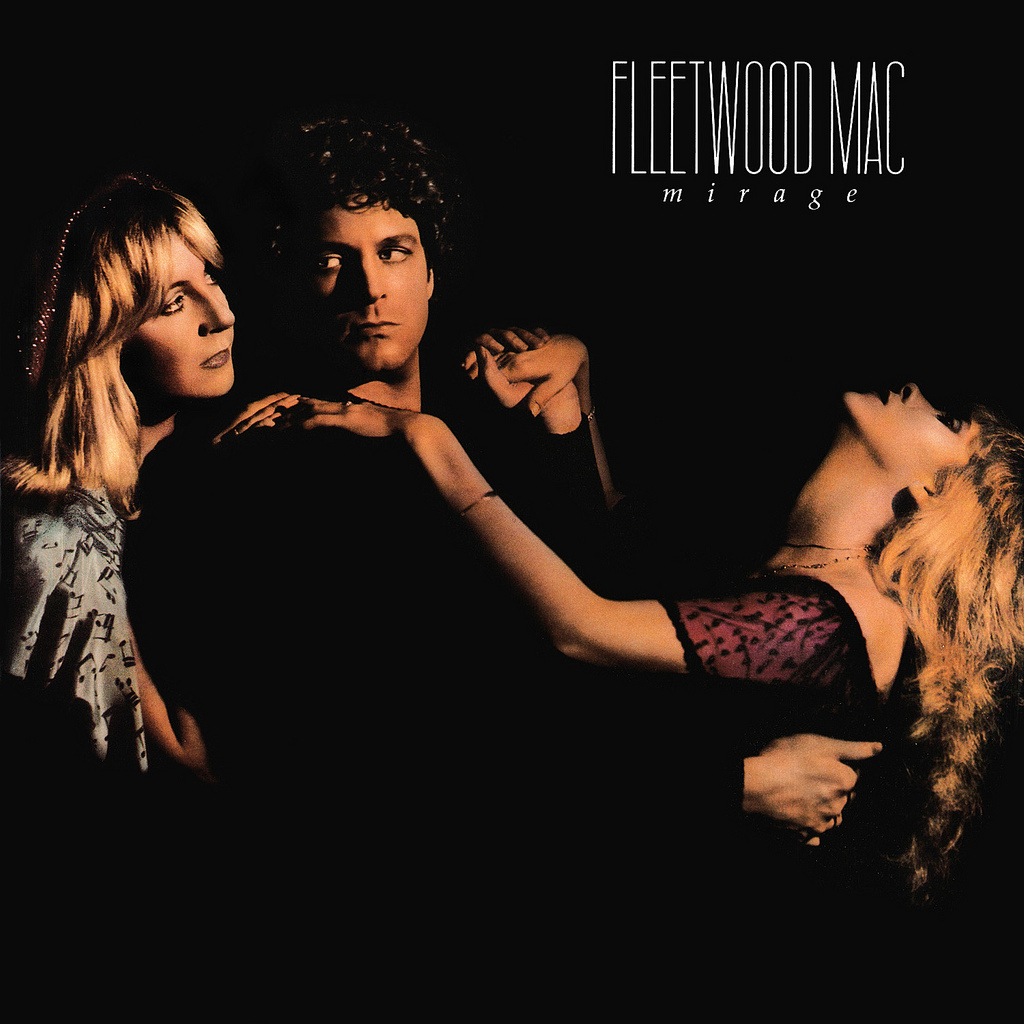
Category: Mirage (1982)

  • REVIEW: Fleetwood Mac on Mirage tour

    FLEETWOOD MAC’S records have always been better than its live shows. On records, the band has achieved a lovable blend of lyrical effervescence and studio polish. In concert, subtleties have been coarsened and Stevie Nicks in particular has undercut her impact with raw singing and loopy stage behavior.

    But the band’s only New York area show on its current Mirage tour, Tuesday night at the Brendan Byrne Arena in East Rutherford, N.J., was the best Fleetwood Mac show in this writer’s experience. Miss Nicks has found a persuasive way of capitalizing on her assets, and the band as a whole performed with tightness and intensity.

    ”Pleasing” is the operative word, however. Even with as tight and powerful a rhythm section as rock can offer, in Mick Fleetwood and John McVie, Fleetwood “hit” Mac is not a band to build to overwhelming concert climaxes. Quirky, buoyant pop, soulful lyricism and mysterious witcheries are more its game. The set meandered over its two-hour length, bursting out at the beginning with some of the group’s most impassioned songs but then settling down to more commonplace ups and downs.

    Miss Nicks provided several of the ups. She has lost the reedy fragility of her mid-1970’s voice. But she compensates with a hoarser, rougher rock contralto, and her stage demeanor blends glamour and a kind of dangerous charm. Lindsey Buckingham still has an underlying streak of bizarreness that seems more unsettling than stimulating, and his rave-up guitar solo — as well as Mr. Fleetwood’s drum solo — lacked the communicative artistry that such solos can entail; it was mostly note-ridden bedazzlement, and as such elicited the predictable ovation. But Mr. Buckingham is also responsible for some of the group’s best songs, and his clear, effortlessly produced tenor is now the highest voice in the band.

    Christine McVie, the keyboard player and third singer — there was also an anonymous guitarist on stage for some songs — was disappointing. Or, more properly, the uses to which she was put were disappointing. Her songs have always served as calm, cool contrast to the rest, but Tuesday they were slighted or arranged in an overly forceful manner.

    The set as a whole proved valuable beyond its function as tightly crafted entertainment. Never before has the band’s post-Buckingham Nicks material seemed so much of a piece. The Fleetwood Mac album established this configuration, with Rumours as a venturesome yet commercially potent follow-up. Tusk is generally considered a deviation, however, and Mirage a calculated return to form.

    But Tuesday’s performance stressed the disquieting oddities of the supposedly “safe” material and the accessibility of much of Tusk. It’s all one band, a perilous but potent mixture of unstable ingredients. And while it may not aspire to the heights of rock passion, it still makes honorable, even moving music lower down on the slopes.

    John Rockwell / New York Times / September 16, 1982

  • Fleetwood Mac: Where’s Stevie?

    Fleetwood Mac: Where’s Stevie?

    1982-mirage-album-coverFANTASY ISLAND, Ca. – On the kitchen table in Mick Fleetwood’s Malibu mansion sits a model of the stage design for Fleetwood Mac’s upcoming American tour.

    In between the tiny amplifiers, drums and pianos stand cardboard cutouts representing the five members of then band. There’s a Lindsey Buckingham doll, a John McVie doll, etceteras. Why does the Stevie Nicks doll have a cigarette burn where her heart is supposed to be? And why is a hand crumpling the flat, white expressionless thing into a little ball and tossing it into a trash can?

    MALIBU, Ca. – This scenario is entirely fictitious. It is a product of a demented writer’s imagination, fuelled by observations of Stevie Nick’s apparent hostility towards the rest of Fleetwood Mac, encouraged by sadistic editor, and starved by the brain-damaged illegals who run the hotel where I ordered a room-service burger that never came and attempted to write about what really happened at Mick Fleetwood’s house that afternoon.

    Certainly Mick Fleetwood, Lindsey Buckingham and Christine McVie, who were all present for the interview, did nothing to suggest the above fantasy; but all three did speak somewhat wearily of the constant speculation on the part of the press and public about the future of the band. They also acknowledged that here is more grist for the rumor mill than ever before: The roaring success of Nick’s solo album, Bella Donna, and her absence from recording sessions, interviews (at least those concerning Fleetwood Mac) and tour preparations seem ample evidence to support the notion that the singer has reached the point of self-sufficiency.

    Whether the topic was songwriting, recording or personalities, the conversation kept drifting back to the subject of Stevie Nicks, while the equally-absent John McVie was discussed only briefly and in the most benign of terms. The bassist, a road animal and an acknowledged studiophone, was sailing in the Virgin Islands at the time of the interview and was due to join the band a few days later to rehearse. Nicks, on the other hand, was scheduled to show up only for the last ten days of work prior to the start of the tour.

    “She phones her part in,” says McVie without a trace of irony. “She asks what songs we plan on doing and what songs we want her to do. The rest of it will be decided between Mick, Lindsey and me.”

    “I’m not that excited about touring myself,” admits Buckingham, who frequently expresses his preference for working in the recording studio. “But it’s something we should do, so I’m definitely going to do it. If you do an album, you might as well complete the cycle — otherwise, why do the album?” Fleetwood notes that “for the better part of six years, we all had a huge commitment to Fleetwood Mac. All we did was tour. I think that if after this much time there isn’t some sort of base that can withstand a certain amount of pounding from the people who helped create it, then it’s pretty useless.

    “People have been waiting for us to break up for years, and the subject’s coming up again. The most likely one to disappear is Stevie, but there’s absolutely no way of telling whether she wants to go off and not be a part of the band, and at other times it’s the opposite.”

    But there’s more to it than that. In arranging this interview, it was apparent at nearly every turn that Stevie Nicks has set herself apart from the rest of Fleetwood Mac in a way which is not exactly in the spirit of commitment. She has a record company virtually all to herself – Modern Records has released no product other than Bella Donna — and she alone among the Mac is represented by the industry’s most grudgingly-respecting hardballer. Irving Azoff, it should be noted, owns no piece of Fleetwood Mac’s action; and though his interest in this matter is solely Stevie Nicks, there’s no evidence to indicate that he’s responsible for pushing her away from the band.

    No one in the Fleetwood Mac organization seems to know for sure what Nicks’ intentions are with respect to the band, and when asked if she would respond to specific issues raised in the interview with the others, a representative of Azoff’s company said, “She just wants to work on her record.”

    It’s not hard to understand why Nicks might be reluctant to return to the enforced democracy of a five piece band after having established herself as a triple-platinum act with her own material and musicians — both in the studio and on the road — whose defined role is to play her music her way. But would Fleetwood Mac survive her departure?

    “Why not?” asks Fleetwood from the vantage point of one who’s seen some key personnel losses in his time: Fleetwood Mac numbers among its alumni Peter Green, Jeremy Spencer, Danny Kirwan and Bob Welch, all of whom were seen (by outsiders as least) as vital components of the Mac’s music. “I don’t think there’ll be a reason to madly look for someone else. If someone disappears, then that’s what happens. Who knows? The whole thing might blow up.”

    “I might leave,” McVie chimes in. “How about that?”

    Fleetwood then offers the ultimate scenario: “When it’s all totally finished I’ll probably still be standing there, totally deluded and thinking that everyone was still around me, waiting to go on stage.”

    Touché

    Fleetwood seems less concerned with the prospect of another personnel change that with maintaining an emphasis on musical growth. “I respect the fact that we’re still being creative and enjoying ourselves. The reason why we’re still here is that there is an underlying commitment to respecting the band, no matter how many times you might get fed up with it.”

    1982 Fleetwood Mac Mirage“There is definitely a chemistry that transcends everything else that might happen before or after we’re on stage,” McVie elaborates. “We play well together and sing well together. That side of Fleetwood Mac I really enjoy. And I feel very comfortable working with Lindsey. Dare I say this with him present?” She casts an affectionate wink his way. “I have a lot of respect for this man; I don’t really imagine anybody else being able to do what he does with my songs.

    “There have been many rough times,” she continues, “but we’ve always ended up on some high note, standing around and jamming, or whatever, just really getting a charge out of playing together. It’s a joyous situation, and that takes over the bad points.”

    “That may have something to do with why Stevie is the way she is now,” Buckingham suggests. “Because she is not a musician, she doesn’t share in that thing with us. She can feel totally out of her depth – which she is, on some levels – and you can understand why she doesn’t want to come down to the studio or be involved in certain things.”

    In spite of the overwhelming commercial success of her solo album, there is a certain, well, amateurish quality to Nicks’ songs. The way she lays a lyric across a melody sometimes makes for awkward phrasing and contributes to the spaciness of her musical persona, as does her rather childish lyrical point of view regarding life and love.

    Buckingham, Nicks’s former lover and bandmate of hers since the late ‘60s, when both were members of a Bay Area group called Fritz, admits to having always considered her songs “a little flaky.” But, “there’s obviously something about her material that people relate to. She’s always been a little bit hard for me to take seriously, because I really appreciate a beat, having been weaned on Elvis and Little Richard and Chuck Berry.

    “There’s something emotional that gets through, through,” he says, “and her voice’s so recognizable. I’ve been listening to Stevie sing for years and years, and when you’re that close to it, it’s easy to overlook certain aspects of anything.”

    “Stevie’s very prolific,” McVie notes. “She writes constantly, and all her songs are like babies to her, even though some of them are rubbish. When I write, I sit down and work on an idea until it’s finished, but Stevie cranks out songs all the time.”

    Between her songs and the way she appears to be conducting her life, Stevie Nicks comes off as a modern-day equivalent to the movie queens of the ‘30s, reaching inside herself for some ill-defined personal misery to fuel her creative machinery. Buckingham says that in all the time he’s known her, “Stevie has never been very happy, and I don’t think the success of her album has made her any happier. In fact it may have made her less happy.

    “She’s flexing come kind of emotional muscles that she feels she can flex now that she’s in a more powerful position. There’s a certain amount of leeway in how you can interpret Stevie’s behavior, I’d say, but at the same time there’s no denying that her success is making her feel that she can pull things that she wouldn’t have felt comfortable pulling before. And most of them aren’t particularly worthwhile, but she’s venting something — loneliness, unhappiness or something.”

    When a band member chooses not to participate fully in the process of making an album, it puts a certain kind of pressure on the people who do the work. Given the unique approach that Buckingham takes to record-making, it’s easy to see how an artist as moody as Stevie Nicks could second-guess what he does to her material.

    It’s in discussing the musicians’ studio relationship that he most complete picture of Fleetwood Mac emerges. Here, egos collide and coalesce for months on end; the pop magic that results has, ultimately, little to do with technology or technique, and everything to do with talented artists following the late sportswriter Red Smith’s dictum on how to do your best work: “Open a vein and bleed.”

    “There’s an exquisite sense of checks and balances in Fleetwood Mac, and that’s one of the things that makes the band work,” Buckingham observes. “Everybody’s always checking each other out to a certain degree, not only in choosing the material but on every level of our creativity. Maybe that contributes to the albums taking as long as they do. It’s not the most efficient way to do things, but it does seem effective in the end.”

    While it’s not unusual for a band member to walk into the studio, criticize the music and then walk out again, Buckingham is philosophical about it. “It’s just something you expect to happen from time to time,” he says. “It just goes with the territory.”

    Fleetwood agrees. “We definitely have a problem sometimes with Stevie and John, but if they hate being in the studio then they certainly have less right to complain about what’s done. That’s just a matter of fairness — and that’s why I hate being away from the studio. There are usually two or three poignant moments during the making of an album where there are hurt feelings walking around — ‘What have you done to my songs,’ or that sort of thing. But there’s also a lot of stuff which is appreciated by others.”

    “Having a producer’s kind of mind, I might take something too far,” concedes Buckingham, “but it’s better to have too much on a track and prune it back than to not have enough.”

    “Lindsey’s never that adamant about keeping a track a certain way,” comments McVie. “If everyone says that they think it’s caca, then obviously he’s not going to feel happy about it being on there anyway.”

    1982 Fleetwood Mac Schlitz BeerBuckingham has been referring to Mirage as “a reconciliation of opposites” from the time of the first sessions. “There are some aspects of Tusk and some aspects of Rumours,” he explains, “but Mirage is a much more of a band album than Tusk was. After Rumours sold 16 or 17 million copies, we had the freedom — and the courage — to try some other things.

    “I got a lot of support from the band during the making of Tusk, but when it became apparent that it wasn’t going to sell 15 million albums, the attitudes started to change. That was sad for me in a way, because it makes me wonder where everyone’s priorities are. To me, the point of making records is to shake people’s preconceptions about pop.”

    Fleetwood says that making Tusk was crucial from a strategic standpoint. “It was no big master plan, really, but Tusk may be the most important album this band will ever do — strategically, apart from the music.

    “If we hadn’t done Tusk, Lindsey would have a problem expressing himself within Fleetwood Mac,” he continues, pointing out also that Buckingham extended his Tusk experimentation on his solo album, Law and Order, and brought the fruits of his labors to bear more subtly on Mirage.

    “One of the reasons Tusk happened the way it did was because I wasn’t doing any solo work,” Buckingham says. “On Tusk I was doing a lot of things at my house, playing a lot of instruments myself, just like I did on Law and Order. That’s a valid approach to making records. But this time I wanted all my songs to be band songs, and result of that is an album that is a little less bizarre. Tusk had things that were good artistically, but it wasn’t good for the whole band, and I thought that I should limit that to my solo albums. If I want to be in a band, we should play as a band — and maybe the result of that is that Mirage is a little more traditional in some senses.”

    Traditional in every respect, one might say, except that 14 months passed between the first sessions (at Le Chateau in Herouville, France, later switching to Larabie Sound and the Record Plant in L.A.) and the album’s release. Buckingham quips that “Fleetwood Mac albums take about five years off your life,” but is stumped when asked to explain why.

    McVie jumps in. “Well, this particular one wouldn’t have taken quite so long had it not been for all the other albums (meaning Lindsey’s, Stevie’s and Mick’s solo LP’s) that were being made as well.”

    It’s fitting that McVie came to Buckingham’s aid when he was at a loss of words: although it’s not generally recognized, the two share a mutual respect for each other as musicians that pulls the band together in a special way. “I’m not really a writer. That’s not my strong point, lyrical or melody wise. “Trouble” (on Law and Order) is a good melody, “Go Your Own Way.” I’ve had my moments, but I don’t consider that to be my strong point at all. It’s the style involved.”

    Says McVie: “I don’t tell Lindsey, for example, ‘I want you to play such-and-such kind of guitar, that lick,’ That’s why Lindsey has got the additional production credit on the album — he’s been largely responsible for helping to bring across on the record the atmosphere that I want to come over on a song that I write.”

    “She and I have a real valid kind of rapport between us,” Buckingham continues, “something that was there before we even met. It’s like she can play the piano and I can play the guitar just wonderfully along with her. It’s almost like parallel lines during our formative years of music until we met, and it gave us a lot of common ground.”

    For McVie, the bottom line is that “we play well together,” referring to the entire band. “A lot of parts of Fleetwood Mac are really fun and rewarding. Of course, there are other people that we all play with and work with that are just as much fun, but not quite in the same way, I dare say, just because of the amount of years we’ve had together.”

    “When you play with other people, of course, it’s a lot of fun,” Fleetwood states, “but I would say it’s very unlikely — certainly for myself — that this situation will ever happen again in the reference of a musical combination. That commitment’s really the reason why the band is still here.”

    With the mention of the word “commitment,” the talk again turns to Stevie Nicks. The disinterested observer can’t help but question her contribution as this point, but the musicians who work with her are a bit more charitable in their analyses and deductions.

    “There’ve been many times when she might come out in the studio and try and sing along, and we’d tend to say, “Don’t do that right now, let us work this out first,” says McVie. “Now she’d just go to the studio and go, “There’s no need for me to be here.” She does feel left out.”

    Fleetwood’s take on the whole situation is that the process Fleetwood Mac goes through form day one in the studio through to the finished product is a highly-disciplined one, and that “Stevie doesn’t have the appreciation. She just emotes and goes into something, which is exactly her forte. But she does that all the time rather than being able to control and place where she does it — which is not a fault, it’s just the way it is.”

    But the key to understanding Fleetwood Mac in 1982 is not in wondering so much about the future without Stevie Nicks, but in understanding that the point was and always has been to make good music, and have fun doing it. Maybe that’s why Fleetwood himself can seem so unconcerned when discussing Nicks — the band plays on, regardless. “That notion is the most important thing: appreciating in a non-belabored way that the key element with all the people is to make the mistake of being very boring, and realizing all too late that they are fucking boring. Then the magic’s gone; whatever’s there has long since passed you by.

    “I consider myself very lucky to have been involved in a situation which had a lot of groundwork what led you to being able to make very objective, humorous analogies to what you’re doing, and having no puffed-up illusions about how important you are.”

    And at that point, the question of whether or not Mirage is the end of Fleetwood Mac as we now know it is moot. In fact, McVie says “it definitely isn’t.

    “This band has lived from day-to-day for seven years or so,” she points out, “and there’s always been some kind of turmoil from within — that’s common knowledge. I’m quite sure we’ll go on for another seven years doing the same thing.”

    © David Gans / The Record / September 1982

  • Pop music’s heyday said to be waning amid falling sales

    Pop music’s worst business summer in recent years is drawing to a close, and some insiders in the music industry are saying that an era appears to be ending.

    Summer concert revenues are down drastically from previous years, pop record sales are a fraction of what they were in the 1970’s, and music industry executives are increasingly concerned that young people are taping albums rather than buying them and spending their money on video games rather than on records and concert tickets.

    CBS Records announced yesterday that it was discharging 300 employees — 15 percent of its professional staff -including several vice presidents, and reducing its regional branch offices from 20 to 10.

    Robert Altschuler, the company’s vice president of press and public affairs, attributed the dismissals and branch reorganization to “current and projected market conditions.”

    ‘Real Bottoming-Out’

    Another insider in the record business said that there had been “an almost complete lack of business, a real bottoming-out.” The CBS action is the latest and most severe cutback in a wave that has swept the industry and is expected to continue at other companies.

    Ironically, many of rock’s top artists and most rock critics feel that artistically the music is stronger and fresher than it has been in a long time. A number of established artists have just made their best albums in years, and the big-city rock-club circuit has been launching a succession of new bands. But these bands have been spectacularly unsuccessful in attracting audiences.

    Ever since the beginning of the 1970’s, when pop music surpassed motion pictures as America’s biggest-grossing entertainment medium, summer has meant big outdoor concerts, big cross-country tours by rock’s most popular bands and a full schedule at such rock concert halls as the Asbury Park (N.J.) Convention Hall and the Palladium in New York.

    The biggest groups used to time their album releases to the beginning of summer vacation, hoping to come up with one of those magical summer hits that blasts from every radio and sells like hotcakes from June through September. As soon as those summer albums hit the stores, the groups would hit the road, where the immense seating capacity of outdoor stadiums and summer rock festivals virtually guaranteed that they would “clean up.”

    But those days are over. “Of 14 shows at the Asbury Park Convention Hall this summer, only four made money,” John Scher, New Jersey’s major rock-concert promoter, said. “Five years ago we would have called it a bad summer if we’d had three or four unprofitable shows. We also used to put on two or three big outdoor shows every year in Giants Stadium; now we’re doing one or two of those shows every one or two years.

    “The only groups that can fill a Giants Stadium now are a small handful of very, very big acts — the Rolling Stones, the Who and Bruce Springsteen.”

    Dropoff in Sales

    “It’s the 1980’s, and the cream is definitely off the top of the business,” said Irving Azoff, manager of some of the biggest rock stars. Back in the 70’s, five of Mr. Azoff’s clients, the Eagles, sold 15 million copies of their “Hotel California” album and broke attendance records across the country. He also manages members of Fleetwood Mac, whose Rumours album almost matched the Eagles’ sales.

    Now the Eagles have disbanded, and the band’s members are pursuing solo careers, with varying degrees of success. Fleetwood Mac has another No. 1 album, Mirage, but sales are in such a slump that it is unlikely to achieve more than a fraction of the sales of Rumours. While the group is going on the road this month, it will not be raking in the money at stadium concerts and outdoor festivals.

    Fleetwood Mac only had offers to do two outdoor shows in the whole country,” according to Mr. Azoff. “One was in a town that doesn’t have a large indoor arena; the other was the Us Festival, which is scheduled to take place Labor Day weekend in San Bernardino County in California and is going to be the summer’s only really big festival. There’s a very good reason why groups like Fleetwood Mac aren’t doing more stadium shows — the kids aren’t buying tickets.”

    Charts Are Not a Guarantee

    The kids are not buying records, either. As recently as the mid-70’s, the record industry was still enjoying the phenomenal spiraling growth that had carried it through the previous 15 years, when record sales doubled six times. Income from sales last year came to $3.6 billion, but the handwriting was on the wall; the industry shipped 55 million fewer albums and singles than in 1980.

    Performance on the best-seller charts no longer means huge sales. CBS undertook its cutback in spite of the fact that 24 of its albums are in the top 100.

    “Most of the executive-level record-company employees I know are being optimistic in public,” a CBS employee said recently, “talking about weathering a temporary downswing and learning to live with more modest expectations. But in private they’re talking Doomsday.”

    The popular-music industry has singled out several villains to blame for its present ills. The record industry’s No. 1 villain is home-taping – the youngster with the cassette recorder who tapes a friend’s album or tapes the album’s best songs off the radio rather than buy the album.

    Lobbying for Royalties

    Stan Gortikov, president of the Recording Industry Association of America, charges that “last year our industry sold the equivalent of about 475 million albums.” “But at the same time,” he added, “about 455 million albums were home-taped.”

    His figures, he said, were based on an elaborate survey financed and conducted by Warner Bros. Records in 1980. Record-industry leaders are lobbying for national legislation that would require manufacturers and importers of blank cassettes and cassette recorders to pay royalties to the record companies and artists who are ostensibly losing income because of taping. If the legislation were enacted, the cassette manufacturers and importers could probably be expected to pass their increased costs on to consumers.

    Another likely villain is the sweeping popularity of video games. “I go down to the Asbury Park boardwalk now and see all these kids putting $5 or $10 worth of quarters into a video game,” Mr. Scher said. “There are hundreds and hundreds of those games along the boardwalk now, and there’s no doubt in my mind that an awful lot of kids who would have spent that money on records or concert tickets a couple of years ago are now spending it in the game arcades.

    “Add to that the unprecedented number of popular youth-oriented movies that are showing this summer, and it adds up to a lot of competition for pop music.”

    Lack of Promotion

    No clear-cut connection can be proved, but most youngsters have limited allowances, and as revenues from video games continue to soar, revenues from record and concert sales plummet.

    Then there is radio. CBS, Warner’s and the other major record companies have not been falling over one another to record and promote fresh young performers who might capture the imagination of record buyers and help reverse the slump. The new groups that do manage to win recording contracts get very little air play. Album-oriented rock stations, called AOR, have become entrenched and conservative, resistant to new sounds and new faces.

    “Half the groups you hear on AOR these days are dead,” said Rick Carroll, program director at Los Angeles’s KROQ, one of the few successful FM rock stations that consistently play new bands and new music.

    “Radio stinks,” Mr. Azoff said. “The stations are making a lot of money, but they just aren’t taking chances.” The song that gets the most air play and the most requests at FM rock stations nowadays is “Stairway to Heaven,” a track from a 1971 album by the defunct Led Zeppelin.

    Rampant Standardization

    In recent months, some of the leading AOR stations — WMET-FM in Chicago, WCOZ-FM in Boston and WLLZ-FM in Detroit — have seen their audience-popularity ratings tumble by as much as two-thirds. These and most other AOR stations maintain strict and very limited lists of what records disk jockeys are allowed to play, and in many cases the contents of the playlists are determined by successful programming consultants.

    Even Lee Abrams, the most successful consultant — his Superstars format is heard on 80 AOR stations — concedes that the standardization has gotten out of hand. “Consultants have taken away the spontaneity and magic of AOR,” he added.

    The ratings success in Los Angeles of KROQ, which is rapidly closing in on the city’s entrenched AOR heavyweights, KMET-FM and KLOS-FM, has given supporters of new rock some cause for optimism. Most new-wavers are convinced that their music would inject enough freshness and sparkle into radio to reverse the listener desertions that are plaguing more and more of the conservative, rigidly formatted AOR giants.

    New-Wave Arena Fare

    The way things are going in the rock-concert business suggests that this could be true. The promoters of an Aug. 21 concert at the John F. Kennedy Stadium in Philadelphia, one of the summer’s handful of big outdoor shows, beefed up a bill topped by the venerable British progressive band Genesis with two new-wave favorites, Elvis Costello and Blondie, rather than with standard arena-rock fare.

    The country’s leading rock promoter, Bill Graham, is leaning heavily toward new-wave groups in booking for the Us Festival, which is scheduled to include an elaborate computer and video fair and is the only really ambitious outdoor festival of the season.

    Groups that have agreed to perform include the Police, the Talking Heads, the English Beat and the B-52’s as well as the more established and conservative Fleetwood Mac, Santana and Jackson Browne.

    Many insiders feel that the record industry’s ills boil down to a simple lack of consumer interest and that most of the music that CBS, Warner’s and the other big labels have been recording and releasing in recent years has not been engaging.

    Problem of Boredom

    Rock critics tend to agree; albums made by young groups with strong local followings and released by small independent labels have placed at or near the top of most critics’ annual 10-best-albums lists. Some of the small labels that have been releasing consistently vital music are Sugarhill of Englewood, N.J., which has popularized rap records, a black, inner-city phenomenon, and the punk-oriented Slash label, which built the popular Los Angeles club bands X and the Blasters into nationally known acts.

    The critics feel that many of the rock fans who seem bored with the latest superstar product would take to the music of the younger performers if the fans were exposed to it. But AOR stations do not play the new material, and only record stores that sell imports and independent releases to a relatively small and discriminating audience stock it.

    Some established artists whose records do get played on radio and sold in the major chain stores feel threatened by the new wave of youngsters. But a surprising number of stars agree with the newwavers and critics that AOR radio is boring and that the major record companies are not signing enough younger performers.

    In recent conversations, Rod Stewart, Mick Jagger of the Rolling Stones and Peter Wolf of the J. Geils Band criticized radio and the major labels for playing it safe and praised a number of younger bands and independent record companies for taking chances.

    ‘Hard to Keep Up With Them’

    “Anybody who thinks this is a lousy period for music just isn’t listening,” Mr. Wolf said. “Every city has good bands playing original songs and clubs where they can play, which is something you didn’t see back in the early and middle 1970’s. There are so many new bands coming up with fresh ideas and playing with the kind of fire that rock-and-roll is supposed to have that it’s hard to keep up with them.

    “We all listen to all the new music we can get our hands on, and we pay particularly close attention to college radio stations, which are the only stations consistently playing the new, adventurous stuff. Fortunately, we live in Boston, where there’s great college radio. People out there in Middle America don’t get a chance to hear much new stuff, if any. No wonder they’re not listening to the radio or going to as many concerts or buying as many records as they used to.”

    If so many insiders agree on the causes and dimensions of the crisis, why is not more being done to combat it? “Our business just isn’t reacting,” Mr. Azoff said. “Actually, the big companies have reacted by cutting back, trimming their staffs and their budgets. I think there’s going to be more of that.

    “And, of course, that means it will take even longer for the industry to get healthy again, because what’s going to be cut first? Who’s going to suffer?

    “The new acts, the future of the industry.”

    Robert Palmer / New York Times / August 14, 1982

  • THE POP LIFE: Fleetwood Mac – Mirage

    Fleetwood Mac Mirage cover 1982FLEETWOOD MAC’S Mirage (Warner Bros.) has already climbed to the top of the album best-seller charts, just a few weeks after its release. It sounds as if it could repeat the phenomenal commercial success of Rumours, which made the present Fleetwood Mac lineup into a supergroup several years ago and went on to become one of the best-selling pop-rock albums of all time.

    It also sounds a lot like a tinkly, trebly musical wind-up toy. The group’s experienced rhythm section and founders, Mick Fleetwood (drums) and John McVie (bass), lock into step so perfectly that they seem to go puttering along on their own momentum. And the dabs of glockenspiel, vibraphone and chiming guitars and stacks of sighing vocal harmonies float so ethereally that one has to remind oneself that there originally was a human agency behind them.

    Yet human agencies are precisely what separates Fleetwood Mac from its competition. Lindsey Buckingham, one of the group’s three singer-songwriters and the album’s chief producer, has always had a quirky voice (high-pitched, like so much of the rest of Mirage), and a quirkier knack for worshiping and subverting pop conventions at the same time. Stevie Nicks, whose voice is so trebly it can sound positively adenoidal, has a penchant for soft-focus, quasi-mystical hippie-airhead imagery that’s certainly individual, if not very deep, and Christine McVie, the most mature and consistently satisfying of the band’s frontpersons, brings a simple, bluesy elegance to everything she writes and sings.

    That puttering rhythm section has personality, too; closer listening reveals its tick-tock patterns to be the fruits of a seasoned, tersely eloquent ensemble style that recalls, if only distantly, Fleetwood Mac’s roots in the British blues revival of the 1960’s.

    Couple of Former Couples

    The ostensible subject of most Fleetwood Mac songs is the romantic entanglements and disentanglements of the group’s five members. The bassist John and singer-keyboard player Christine McVie used to be married but aren’t anymore, and Lindsey Buckingham and Stevie Nicks were a couple whose romance hit the skids after they joined Fleetwood Mac and hit the big-time. Most of the 12 new songs on Mirage relate to these romantic ups and downs in one way or another, but increasingly the band’s real subject seems to be pop music itself, and particularly the way pop music sounds.

    Mr. Buckingham’s corny lyrics for his “Book of Love” take a back seat to his ravishing vocal harmonies, which constitute an overt homage to the Beach Boys’ Brian Wilson. There are so many Stevie Nicks vocals overdubbed on her “That’s Alright” that the somewhat unfocused words seem to evaporate like smoke; the song’s feeling of loss is communicated more by the singer’s inflections than by anything she says. Only in Christine McVie’s “Love in Store” and “Hold Me” do the simple emotions expressed in the words and the artful arching simplicity of the melodies and arrangements successfully complement each other.

    But these are quibbles. The wind-up-toy sound of Mirage clearly has seduced the nation’s pop listeners. Like this summer’s most successful movies, the album is pure escapist entertainment. But the music has been so cleverly crafted, and polished to such a mesmerizing high-gloss sheen, that by the time one notices that nothing much is being said, it’s too late.

    Robert Palmer / New York Times (Late Edition) / August 11, 1982

  • Fleetwood Mac: Mirage

    Fleetwood Mac: Mirage

    1982-mirage-album-coverFORMULA, BEATS-per-minute, ahhh. Fleetwood Mac really do have a lot of honour for folks with such a pile of cash. Coming after this line-up’s eponymous breakthrough platter and the sullen beauty of Rumours, the double Tusk was a brave but shrewd sidestep; people who milk and milk and milk one day find that their tits have fallen off. So not FM (thost apt initials!), the general usefulness of their extravagances forgiving, perhaps, the economically appropriate live double sloggo.

    Now, Mirage may bear superficial resemblance to Rumours, but in actuality it’s far more UP, the lightweight feel locking with the title; it’s Parallel Lines (of what?) for Beverly Hills.

    The cover photo, by George Hurrell, seems set to portray Lindsey Buckingham as sex-object supreme with Stevie and Christine fawning over him, while like a good Cheap Trick album the two dodgy geezers are consigned to the back. Like ABC, the Mac are still concerned with love: lost, tossed, reborn…Love in all its aspects. That many of the tunes cannot be called to mind after several plays is, for once, not a minus. It’s the ringing, flighty nature of the creatures, all harmonies and gossamer backing, that maketh the magic.

    As always, Christine McVie is still perfect (geddit?), offering two of the best in the miraculous, meticulous cirrus hymn to a Beach Boy “Only Over You” and side two’s ecstatic, catchy rave-up of slinky repetition, “Hold Me.” And yes, Stevie Nicks is still in fairyland and it’s still fine by me, especially when on “Gypsy” she comes up with the amazing line “So I’m back, to the velvet underground”.

    Of course, too, all would not be right in the garden if weird Lindsey Buckingham wasn’t still putting broken glass in the pate sandwiches: “Empire State” is tetchy, odd-rock about lusting after NYC instead of LA, the guitar as idiosyncratic as ever, as it is on his frantically compelling flare-up “Eyes Of The World.” Just to prove he’s a nice guy he also contributes “Book Of Love” and “Oh Diane,” the latter being positively, perversely Bobby Vintonesque in its unashamed schoolboy schlockiness.

    Fleetwood and McVie the male are perhaps consigned to the valley of the back cover for a reason: They contribute nothing to Mirage (except, of course, their not inconsiderable performing talents). Still, they look mighty pissed-off over there. “Wish You Were Here” sings Christine at the end of the record. Mirage is sooo good…

    Let’s start a Rumour.

    Sandy Robertson / Sounds / July 17, 1982

  • Inside the Sleeve: Fleetwood Mac – Mirage

    Fleetwood Mac Mirage cover 1982This long-awaited studio follow-up to Tusk doesn’t harken back to that somewhat disappointing 1979 album, nor does it bear much semblance to the band’s earlier, more successful releases, such as Fleetwood Mac and Rumours. It is unique — pleasant enough — but hardly destined for the multi-platinum status of its predecessors.

    The over-all feel is one of understatement. Nothing stands out in particular, and the group seems more interested in creating a pleasant little summertime groove than in grabbing listeners by the shoulders and shaking them up. It is an album of fair-to-mediocre songs that somehow add up to more than the sum of their parts.

    The writing credits are divided fairly equally among Christine McVie, Stevie Nicks and Lindsey Buckingham, whose five numbers are all fairly banal. He writes silly, lightweight pop songs in the Paul McCartney vein, and none of the band’s remaining four members seem very interested in adding anything inspiring. As a result, “Empire State” and “Book of Love” have that same thin, unexciting feel as the numbers on Buckingham’s recent solo release, Law and Order.

    However, the material by McVie and Nicks is strong enough to save the album. McVie’s songs are unassuming, but pleasant. “Only Over You” is dedicated to Beach Boy Dennis Wilson, and utilizes some nice little Beach Boys harmonies. As for Nicks, although her “Gypsy” is a song in search of a melody, “Straight Back” is the best thing on the album. Nicks’ vocals soar over a simple and pervasive backbeat, raising the song almost to the status enjoyed by such Fleetwood classics as “Rhiannon.”

    Over all, though, Mirage seems a touch uninspired. In the rhythm section, drummer Mick Fleetwood and bassist John McVie appear to be going through the motions, straining themselves as little as possible. In fact, there’s more meat to one side of Nicks’ recent solo effort, “Dreams,” than Mirage can boast in total.

    • Pop
    • Mirage Fleetwood Mac
    • Saturday, July 17, 1982
    • Warner Brothers 92 36071

    Alan Niester / Globe and Mail (Canada) / July 17, 1982

  • Fleetwood Mac – Gypsy (1982)

    Fleetwood Mac – Gypsy (1982)

    [jwplayer mediaid=”15603″]
  • Fleetwood Mac: Mac attack

    Fleetwood Mac: Mac attack

    Sandy Robertson finds out what’s eating Christine McVie of Fleetwood Mac

    1982-mirage-album-cover

    CREDIBILITY IS a weird thing, that’s for sure. Impossible to explain how it is attained, difficult to define once it has arrived. But one thing is assured: whatever it is, Fleetwood Mac have it.

    From a blues band to a broken unit with deranged members exiting left and right to an unknown outfit in American exile to a megabuck mélange of wild divorcees, credibility has (surprisingly) never been far behind the Mac. Even at their hugest with Fleetwood Mac and Rumours, they were the West Coast kids you were still allowed to like. Cripes, they could still release a double LP (Tusk) at enormous recording expense and be lauded for it: when they played Wembley the Mac got good reviews. Charmed lives, or a mirage?

    Mirage is the title of the brand new Fleetwood Mac LP and Christine McVie, as one of the English part of the band has been dispatched straight to London with a rough cassette of the work to play for sundry hacks. And I, being the first of the day, am (gasp!) told that I am the first scribbler in the world to hear the new Fleetwood Mac album!!!

    If I’m not wowed by the mystery, I’m jazzed by the trax: Mirage could almost be an album by another band, were it not for the assured harmonies and confident playing, the mood is so optimistic and up. Titles, hitpicks? “Oh Diane,” “Love In Store,” “Book Of Love” (no not…), and “Hold Me,” to mention but a handful. Every cut I heard had that Mac magic.

    Ms. McVie looks only slightly the worse for her Transatlantic wrestle with a failing Concord schedule, blonde hair offset by worldweary wrinkles as she sits in her plush suite. Extravagance? One had heard that the new Mac opus would represent a scaling down of the operations that led to Tusk costing as much as buying a whole studio. So was Mirage cheap?

    “No, it took a year to make, but then in the meantime there was Lindsey, Mick and Stevie’s solo stuff, so in fact we had four albums in a year, which is pretty good if you look at it that way.

    “But the money isn’t as fluid as it used to be, though Fleetwood Mac have never been known to do things in a cheap way, we definitely like to do things in style! We don’t have crates of Dom Perignon delivered to the studio every night, in the past it’s been outrageous. We don’t cut short on the music, just personal needs.”

    Was it really all caviar and decadence?

    “Caviar is an exaggeration, but our riders were ridiculous! One time Dennis Wilson came down and said ‘The food and booze you guys have here costs more per week than it’d cost me to hire a studio!’ It was kind of getting ludicrous,” she avows with a certain nostalgia in her voice.

    I didn’t ask about the rumour of Coke bottle lids filled with their powdered namesake backstage at Wembley. Myth, myth…

    She seems unperturbed by the vagaries of the Press and blissfully unsurprised by the good reviews.

    “You get good Press, you get bad Press, if we get any Press it’s good! Just as long as they’re still writing about you. The thing is when you don’t get any at all you start worrying. We set the fashions, we don’t follow them”. I express surprise at how, er, raunchy they were live at Wembley.

    “The albums are a lot cleaner in general, they’re well thought out. I figure there’s definitely two sides to Fleetwood Mac, the live side is a lot more rock ‘n’ roll than people think we are, we’re not so clean-cut.”

    I bring up the view of Mac oft perpetrated that says a writer/performer as talented as Christine McVie must find it galling to be upstaged by a young Stevie Nicks running around and changing frocks all the time.

    “Yeah, well she certainly does that! Believe me, I would hate to run around onstage changing clothes every five minutes and playing tambourines and things,” here her voice hints ever so slightly at claws extending in a feline manner. “I would hate to be in her shoes. I’m very happy, thank you, standing behind the keyboards. I’m a musician, y’know? I’m more a musician band member than a frontline…”, and her voice trails off for a second, the short silence making its own point.

    “There’s no competition, In fact, she’s jealous of me because I can play keyboards better than her.”

    Rock royalty of today suffer as much from intrusion into privacy as the Hollywood stars of old, but in the recent past Fleetwood Mac appeared to be revelling in the garish spotlight of who-is-doing-what-to-whom-with-what, an intergroup ménage-a-band scenario that wrecked relationships but sold records. In retrospect, do they resent all that?

    “We joke about that now, it’s a source of amusement to us. Now the pain is no longer there we’re all really good friends. In fact, we create things just for fun. In fact, she deadpans before a guffaw, “I’m going out with Mick at the moment!”

    Mirage reflects the upbeat current at work in Mac now, even on a ballad like McVie’s haunting “Only Over You.” Sadly, to these ears, there is nothing as willfully experimental as the title track of “Tusk” with its marching band pseudo-Charles Ives flavors.

    “No, there’s nothing weird on it at all, there’s no little hidden goblins anywhere, it’s all straightforward simple rock ‘n’ roll songs. Tusk sold nine million copies so it can’t be too shabby can it? But a lot of people gave us flak about that album. It’s very different, very different, very Lindsey Buckingham. I’ll have to say that. He was going through some musical experiments at the time.

    McVie swigs some wine, looking less like a rock star than an accountant’s wife from Maidenhead and compares Mirage to Rumours, noting the lyrical differences.

    “These songs are an awful lot happier. Rumours was kind of the message of doom, the songs were up but the words were all about each other’s jaded love lives”.

    Our photographer notes the resilience it must have taken to keep the band together while they all loathed each other.

    “We just go from day to day,” she says, like an advice column, “We have done for seven years and I’m sure we will for another seven. Right now we’re fine. We’re better friends now than ever”.

    It’s indeed a random alchemy that breeds success: “The band as it is now is by far the most popular series of people. Now and again someone’ll come up and say ‘What happened to Peter Green, Danny Kirwan, Jeremy Spencer?’ and we just go ‘Who?’“

    Do they ever see any of those groaning oldies, I wonder?

    “Not any more. Peter came over to the States and stayed with Mick for a while, Jeremy came over for a while, Danny Kirwan? I haven’t seen him since the day he left the band!”

    The Fleetwood Mac LP was the one that started the ball rolling in earnest.

    “Yeah, that Penguin album was our worst, even though there were a couple of my songs on it that I like and would like to re-do, but we knew that Fleetwood Mac record was good. And we knew we had a chemistry onstage even though we were playing to half-filled halls of people going ‘Oh no! They haven’t got another line-up have they?’ But the people who did come went crazy, without smoke bombs or weird make-up. I mean, we’re too old to be punky, we’re all knockin’ on now!

    “I’m being educated at the moment, but I’m not too familiar with all these new up-and-coming bands here, I’m ashamed to say”.

    I venture to tell her about the merits of the wonderful ABC, the pulsing talent of Martin Fry and his merrymen. “ABC, is that a band?”

    That is California stardom!

    © Sandy Robertson / Sounds / May 6, 1982

  • Lindsey Buckingham takes a breather

    Lindsey Buckingham takes a breather

    The Fleetwood Mac of all trades, Lindsey Buckingham takes a breather with his own one-man band.

    Solo albums marked the beginning of the end for the Beatles. So when Fleetwood Mac’s Stevie Nicks recorded her album Bella Donna and Mick Fleetwood himself made The Visitor, the music world buzzed with speculation. Was the Big Mac disintegrating into a bunch of McNuggets? Rumors heated up again last fall when the band’s artistic well-spring, Lindsey Buckingham, 32, released his own first LP, Law and Order. Many wondered if the title of his Top 10 single meant what it suggested—Trouble.

    The answer seems to be: Not yet. Fleetwood Mac has long been rock’s turbulent version of The Young and the Restless, and Buckingham swears it’s all just a harmless way of blowing off a little creative steam. “With the band,” he explains, “there are five distinct personalities, lots of second-guessing, and it’s tough to get from point A to point B.” (Neither of the other two band members, John McVie and his ex-wife, Christine, has gone solo since joining Fleetwood Mac.)

    Buckingham is generally credited with transforming the blues-rock band into a commercial powerhouse. If praised for the 16 million sale of 1977’s Rumours, though, he also shouldered much of the blame for Tusk, a double-disc white elephant that was critically acclaimed but peaked at “only” four million in 1980. After a 76-city world tour, the band decided it needed time off. “John went on a cruise,” recounts Lindsey. “Christine just layout in the sun. But three weeks off and I go nuts. Working makes me happy.”

    He began his solo project in a studio in his garage. It was a singular undertaking indeed. Buckingham sang, played drums, guitar and keyboards, and supervised the recording. “It was like a painter working on a canvas,” he says. “When I work with Fleetwood Mac it’s more like making a movie.” Artistic independence does have its price, though. “Doing all the production and playing nearly all the instruments,” he says, “you begin to lose your objectivity as to what’s good.” (Lindsey eventually called in Fleetwood Mac engineer Richard Bashut to co-produce in the studio.) Of the album’s title, he says, “Rock is usually about escapism, lack of discipline and promiscuity. Law and Order is about the sense of personal order in your life. If there are songs about a special, stable relationship, it’s because that’s what I have.”

    He means his five-year romance with Oklahoma-born Carol Harris, 28, a part-time fashion model. They met in a Los Angeles recording studio in 1976 where Carol was a receptionist, and they moved in together the following year.

    Buckingham’s previous paramour, of course, was Nicks. Their celebrated breakup took place in the mid-’70s at the same time the McVies were divorcing. Having gotten through “years of pain,” Lindsey says he and Stevie are able to maintain a stable working relationship. After the Tusk session, though, Nicks complained that it was “like being a hostage in Iran and, to an extent, Lindsey was the Ayatollah.” Says Buckingham with a smile, “I did have definite ideas.” On their relationship outside the studio, he reflects, “I don’t think we’ll ever be good friends. There was a lot of passion, but not a lot of camaraderie.” Is he bothered by the fact that Stevie’s solo album has sold two million copies? “It’s easy to feel envious of someone who gets as much fan mail and sells as many records as Stevie,” he confesses. “Obviously my stuff is a little more off the wall, but I like my album better than hers.”

    One of three sons of a coffee company executive father, Lindsey grew up in the San Francisco suburb of Atherton. “I was one of the tons of guys who ran out and got a guitar when Elvis came along,” he recalls. As a junior in high school he met Nicks, who was a senior. A year later they started playing in a band called Fritz, became lovers and soon split off to make one album as a duo, Buckingham Nicks.

    Though the LP died in the market, it caught the ear of Fleetwood, who had founded Mac in 1967. Looking for someone to replace the just-departed Bob Welch, he invited both Nicks and Buckingham to join in 1975. “I guess it was a good thing,” understates Lindsey. His tunes, such as Monday Morning and Go Your Own Way, helped Mac become one of the best-selling groups of all time.

    Today Lindsey and Carol live in a three-bedroom house in L.A.’s starry Bel Air. They’re obviously taking their time about setting a wedding date; Lindsey says only, “We’ve discussed it.” As he finishes mixing the next all-Mac album, scheduled for release this spring, Lindsey is planning a brief solo tour of small clubs and will then join Mac for a national tour. He is optimistic. “Now that we have these other outlets, it’s easier to do things as a group,” he says. “I wouldn’t be surprised if we stay together a long while.”

    PHOTO (COLOR):In the studio Buckingham triples on guitar, drums and electric piano. Rehearsing in L.A. (inset) with Mac mates Mick Fleetwood, Christine McVie and Stevie Nicks, he sticks to lead guitar.
    PHOTO (COLOR):[See caption above.] PHOTO (COLOR):”Having a relationship and a recording career is a full-time job,” says Lindsey, working at it with housemate Carol Harris.
    PHOTO (COLOR):”We write about what is happening to us,” muses Buckingham, noodling here in the solarium of his Bel Air home.

    David Sheff / People (Vol. 17 Issue 7, p63. 2p) / February 22, 1982