Category: History

  • Parents are rocker Stevie Nicks' biggest fans

    Parents are rocker Stevie Nicks' biggest fans

    barbara-jess-nicks

    The Arizona Republic
    Thursday, July 10, 2003

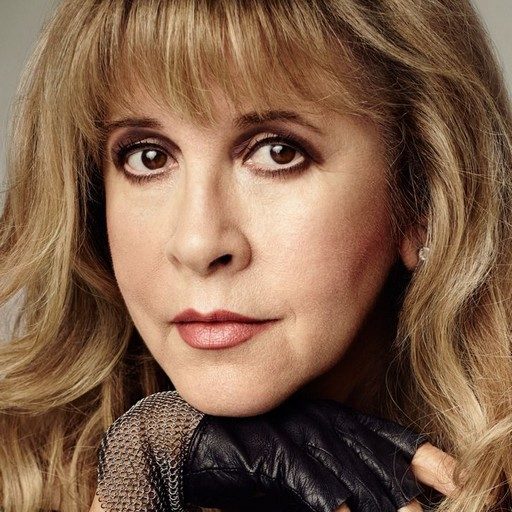
    Stevie Nicks’ musical career has spanned three decades. And it all started at The Arizona Republic.

    That’s where her parents, Jess and Barbara, first met. When Jess was a student at Arizona State University, he worked part time in the circulation department. So did Barbara.

    “I used to take Eugene Pulliam (former owner of the newspaper) his paper each morning,” Barbara recalled.

    “When I met Jess, I wrote in my diary that this was the man I was going to marry,” said Barbara, describing it as “love at first sight.” They were married one month later. That was about 56 years ago.

    Stevie was born at Good Samaritan Hospital in Phoenix. As Jess worked his way up the corporate ladder, the family lived in six cities, including Los Angeles and Chicago. In 1971, when Jess was chairman of Armour, he was asked to find its subsidiary, Greyhound, a new corporate home. He chose Phoenix.

    In 1979, after retiring from his position as president and chairman of Armour/Greyhound, Jess went into showbiz and built Compton Terrace. (The site, at 56th Street and Washington, closed in 1984, and now houses the Salt River Project.) The venue of 20,000 seats was the state’s largest outdoor facility. Jess booked big-name acts including Kenny Rogers, Willy Nelson and, of course, Fleetwood Mac, Stevie’s band.

    One of Stevie’s major influences was Jess’ father, Aaron Jess Nicks. “He was a frustrated musician,” Barbara said, “He played violin and piano and made Stevie a guitar when she was 4 or 5 years old.”

    The family has always been very close, even through tough times when Stevie was fighting to overcome an addiction to drugs.

    Today, the Nickses enjoy the success of their rock goddess daughter and their Paradise Valley home of 32 years. They have two dogs, a Yorkie named Rhiannon and Tina, a Chihuahua.

    Stevie, now 55, lives nearby with her two Yorkies, Sara and Sulamith, named for her favorite artist and illustrator, Sulamith Wulfing.

    Her brother, Chris, his wife, Lori, and their daughter, Jessie, live with the rock star in the gated five-bedroom home with two wings.

    The Nickses say the best part of being the parent of a celebrity is the pride they take in Stevie’s success. And the worst part? The strange letters or knocks on their door from questionable strangers trying to find the rock star. “Some of the letters are really disturbing,” said Jess of the mail they hand over to Stevie’s security team.

    The walls of Jess and Barbara’s living room are adorned with gold records, and examples of Stevie’s other talents. “She’s an artist too,” said Barbara, pointing to the intricate painting on the wall.

    “She has to be in Los Angeles a lot because of her career, but she’s always considered Phoenix her home,” Barbara said.

    These days, Stevie is touring with Fleetwood Mac, and the group will be performing in Phoenix on July 21 at America West Arena. It’s a fund-raiser for the Arizona Heart Foundation – a place very close to the family’s heart. Both Jess and Barbara had heart surgery there.

    Gov. Janet Napolitano, a Stevie Nicks fan, will be at the concert. The governor’s Homeland Heroes program is distributing 500 tickets to members of the armed forces throughout Arizona.

    The $1,000 tickets, which include a pre- and post-concert party, are sold out. But there are still $49, $85 and $125 seats available.

    If you go

    What: Fleetwood Mac Reunion Concert.
    When: 8 p.m. July 21.
    Where: America West Arena.
    Tickets: $125, $85, $49 seats are still available.
    More info: Ticketmaster at (480) 784-4444 or America West Arena for group sales at (602) 379-7878.

  • Fleetwood is glue that draws band together

    Fleetwood is glue that draws band together

    2013-0818-sunday-times

    By Alan Sculley
    Special to The Detroit News
    Sunday, June 6, 2003

    It’s never been a secret to those familiar with Fleetwood Mac that drummer and founding member Mick Fleetwood has been the antidote that has kept the band alive through its many breakups, reformations, reinventions and soap opera type dramas.

    Fleetwood played a key role in salvaging a world tour that would support the album “Tango in the Night” by recruiting guitarists Billy Burnette and Rick Vito when guitarist/singer Lindsey Buckingham abruptly left the group in 1987.

    It was Fleetwood, who after that lineup splintered, brought together guitarist Dave Mason and singer Bekka Bramlett to join returning members Burnette, Christine McVie (keyboards/vocals) and John McVie (bassist) in a mid-1990s release of “Time,” one largely overlooked album, before the group fell apart again.

    So when Buckingham invited Fleetwood to play drums on his in-progress solo album in 1995, Fleetwood says he knew he would be accused of trying to engineer a reunion of the classic Fleetwood Mac lineup, which consisted of himself, Buckingham, singer Stevie Nicks, John and Christine McVie. But that was OK with Fleetwood.

    He said he told Buckingham “I’m here because I really want to do this with you,” Fleetwood says, recalling his conversation. “I also need you to know that I would love to see Fleetwood Mac get back together, but really that’s at your discretion. And let’s see how this goes. ”

    The reunion took place in 1997 with the recording of a live CD, “The Dance” (supplemented by a handful of new studio tracks) and a tour which followed that fall.

    Eventually, Buckingham decided to use the songs intended for his solo CD as the foundation for the new Fleetwood Mac CD, “Say You Will,” an 18-song collection that also features nine songs that Nicks wrote or co-wrote.

    While the reunion seemed complete, Christine McVie, who wrote some of Fleetwood Mac’s most memorable ballads and mid-tempo pop tunes (including “You Make Loving Fun” and “Say You Love Me”), bowed out after “The Dance” tour.

    Fleetwood says McVie’s absence helped bring a bit harder edge and rougher sheen to the group’s sound on “Say You Will.”

    But the CD is mostly classic Fleetwood Mac with easy-going tunes, such as Buckingham’s “What’s The World Coming To,” “Peacekeeper” and Nicks’ “Throwdown” and “Say You Will,” that fit the band’s familiar signature smooth pop sound.

    Fleetwood said the personal lives of the band members are in an unusually good place.

    The band’s lives and its livelihood were filled with drama when Buckingham and Nicks ended a long romance and Christine and John McVie divorced prior to the landmark 1977 album “Rumours.”

    That has Fleetwood optimistic that “Say You Will” will lead to more recordings and touring.

    “We are actually at least looking forward to a future, which is sort of an interesting equation,” he remarks with a laugh.

    ”Something,” he says, ”the band normally doesn’t do.”

  • 'We're back together for the right reasons,' Stevie says

    'We're back together for the right reasons,' Stevie says

    2003-say-you-will-promo2

    USA Today
    Sunday, April 27, 2003

    Interviewed separately, Lindsey Buckingham and Stevie Nicks discuss a variety of musical and personal topics.

    THE CURRENT CHEMISTRY

    Buckingham: “I would say it’s elusive some of the time. Stevie and I have had many moments where we were able to acknowledge some things and get closer to closure than before.”

    Nicks: “The chemistry is good, and we’re back together for the right reasons. We don’t need the money. Our royalties will take care of us like a pension. What’s really important now is to share this magical year.”

    CHRISTINE McVIE’S EXIT

    Buckingham: “We did get her blessing. We asked her to come back, knowing she would say no. She was working through her own issues, and I think she had to burn a lot of bridges. She got a divorce, sold her house in L.A. and moved to the country in England.”

    Nicks: “We weren’t sure we could do this without Chris. She told us to go ahead and have fun. We did let two or three years go by. We didn’t want to make a wrong move. We finally decided she doesn’t care what we do. Under those circumstances, we can continue. Fleetwood Mac always continues.”

    EFFECT OF LINEUP CHANGE

    Buckingham: “I saw it as a challenge and an opportunity. In the past, there was never quite enough space for me to do what I wanted. Now there was 33% more room. Stevie and I were forced back into this mirror image, something closer to what we did before joining the band. My best guitar playing is on this record. Mick will tell you the best drumming he’s done is on this record.”

    Nicks: “It pushed Lindsey, John and Mick back into a power trio. It made us focus more on guitar. We thought about bringing someone else in, but we can’t replace Chris, and we’re not going to try.”

    SPECIFIC CONTRIBUTIONS

    Buckingham, on his Murrow Turning Over in His Grave: “I started this song when the O.J. Simpson trial was on. Before he retired, (pioneering journalist) Ed Murrow made a speech about how TV is used to delude and distract, and that people controlling TV needed to be more responsible. He must be turning over in his grave. Corporations own the media, and much of what passes for news these days is propaganda or fluff.”

    Nicks, on her Silver Girl: “It’s an ode to the girl rock star inspired by Sheryl Crow, though it could be turned around and be about Avril Lavigne. I really feel Sheryl would have been much happier to be in my generation. She’s not a coward, and she says what she feels.”

    WRITING HABITS

    Buckingham: “I’ve built a studio in my new house, and I’d love for Stevie and myself to sit down and do some stuff from the ground up with two-part harmonies. If we had one complaint about this album, it’s that we used a lot of older material, and a lot of mine was set in stone. Co-writing would be interesting. We’ve never done that.”

    Nicks: “Since 1969 in San Francisco, Lindsey and I have always written separately. And we’ve always been respectful to each other. He’d never say, ‘I think you need to change this line.’ I’d never say, ‘I don’t like the chorus.’ We both understand that once a song is written down and presented, it can’t be changed.”

    WAR, 9/11 AND POLITICS

    Buckingham: “We’re not a political band, and we never will be. Some songs seem to make a specific political comment only because certain events occurred. It’s a strange coincidence. On What’s the World Coming To, I tried to address insensitivity to the individual. Peacekeeper is a peace song that looks at this increasingly desensitized world. It asks what is peace. You can’t expect to have a static condition called peace. You can only work toward that as an ideal. It may have certain reference points that apply to events of the last couple of years. Attaching a narrow interpretation is not necessarily bad, but it probably robs those songs of a richer interpretation. Lyrics need ambiguity to be rich enough to be a Rorschach.”

    Nicks: “I was in New York on 9/11 during my tour. I’ve never been a political person, but suddenly I felt like I was in the middle of history. We were at the Waldorf with all these foreign diplomats. It was very scary. I watched people jumping (from the twin towers) on a Mexican TV channel. We put wet towels in the windows to keep out the burning iron smell. Illume is a poem about 9/11 and about getting through it and getting back home. Part of me wanted to pack my bags and cancel the tour. But my parents and friends like Tom Petty and Don Henley kept saying, ‘People paid to see your show, and if they’re willing to go out in this frightening world, don’t you dare come home.’ It was hard to walk on stage and not burst into tears. I was almost hysterical. All my songs suddenly seemed to be about 9/11.”

    SOLITARY CONFINEMENT

    Buckingham: “When I was little, I spent a lot of time in my room playing guitar. Later on, music certainly was a sanctuary, especially when I wasn’t feeling very safe in the band and feeling maybe not appreciated, certainly not understood. I did a lot of work on my own. When I did that with Tusk, it was not with the sanction of the band. The result was a little more radical by virtue of being a knee-jerk reaction to (Rumours). It’s tiring to stake out a space for myself and experiment, but I love it.”

    Nicks: “Writing songs is the love of my life. I didn’t come here to be a mom. I’m here to write songs. I knew that at 15, when I wrote my first song. I flat-out stated, ‘I will never be a secretary. I’m never going to get up at 8 to go to the office.’ I can be very content alone with my journals.”

    PERSONAL

    Buckingham (married father of two): “Having kids changed my view of myself. There’s an irony there in terms of my world and how obsessive I had been for so long, even after leaving the band. Working on albums was my whole life. I had something to prove, and maybe the reasons were not particularly noble to begin with, but they were the seeds for developing some incredible work habits much to the exclusion of everything else. It was not good for relationships or anything. There’s a reason to strike a balance now. Having children gave me a new mantra. I’m settling down, taking everything down a few pegs.”

    Nicks (unattached but looking): “I had two really nice relationships (since The Dance). Relationships seldom work for people like me. I’m simply too busy. Very few men are strong and secure enough to wave bye-bye when the limo pulls up to take me away. For it to work, someone would have to be incredibly secure, richer and more powerful than me and not bothered by my fame. I love to be in a relationship and be a caretaker, but it’s frustrating when I don’t have the time. Then I’m a half-assed girlfriend and a half-assed rock star.”

    MAC’S LEGACY AND CURRENCY

    Buckingham: “It’s not like we have to conform to what might be considered current. We have a base audience that’s been around a long time. At the same time, it’s hard to predict how sales will go. This is not a band resting on its laurels in any way. I can’t think of anyone who’s been around this long who’s come up with some of the best stuff they’ve ever done. We’re up against the pervasive cliché of a rocker burning out at 40, but look at writers and composers in other art forms who didn’t hit their stride until 50.”

    Nicks: “We are very blessed. Our music has been the tapestry of so many people’s lives. People in their 50s will hear this music and go, ‘I want to go back and live in that time.’ We are like the Pied Piper. We’ll draw them in and lift them up with these songs. I don’t care if we don’t sell 20 million copies. If we sell 2 million and add a couple of songs to the repertoire people love, that’s more important to us.”

    OUTSIDE PROJECTS

    Buckingham: “I could probably write three or four more songs (to add to a backlog) and put out a solo record. And I will do that if there’s no interest in continuing the band. The current circumstance is a lot easier and certainly more profound potentially. It seems so fitting that we’ve found each other after all this time. It seems a little bit sacred and worth nurturing. I’ve known Stevie since I was 16 and the others since I was 24. I don’t see any reason to put out a solo album at this point.”

    Nicks: “Fleetwood Mac comes first. But I also want to do an animated movie of Rhiannon. And I want to finish a children’s opera I started at 17 called The Ladybug and the Goldfish. In a dream I had when I was 14 or 15, I saw myself winning an Academy Award. I never figured out what for, but it would never be for acting. I’m not a good actress, and I’d never let people say, ‘Oh, that Stevie, a songstress, writer extraordinaire and the worst actress we’ve ever seen!’ I’ll stick to writing.”

    THE BAND’S FUTURE

    Buckingham: “I can’t speak for Stevie. I can’t predict how she’ll feel in a year. All I can do is try to cultivate the right feeling and the right atmosphere for us to go on. We had some disagreements toward the end of the album, but we found common ground. Can we survive the land mines that may exist down the road? I hope so, because I would love to do another album. There’s so much promise if we hang in there.”

    Nicks: “I’m used to going back and forth between Fleetwood Mac and my solo career. It seems right to me. I try to make sure my solo career doesn’t ever take anything away from the band. Fleetwood Mac is more important. We should continue as long as we’re having fun. It’s a great band with so much history.”

    THE LAST WORDS

    Buckingham: Say Goodbye, track No. 17:
    “Saw your face yesterday thinking on the days of old
    And the price that we paid for a love we couldn’t hold
    Oh I let you slip away, there was nothing I could do
    That was so long ago, still I often think of you.”

    Nicks: Goodbye Baby, closing track:
    “Goodbye baby, I hope your heart’s not broken
    Don’t forget me, yes, I was outspoken
    You were with me all the time
    I’ll be with you one day.”

  • Dysfunction doesn't fluster Fleetwood Mac

    Dysfunction doesn't fluster Fleetwood Mac

    Fleetwood Mac Say You Will (2003)

    By George Varga
    San Diego Union Tribune
    Sunday, April 6, 2003

    LOS ANGELES – If personal and creative tension between band members is essential to musical success in rock ‘n’ roll, Fleetwood Mac’s new album, “Say You Will,” is already a winner.

    “It hasn’t been an easy road,” said singer-guitarist Lindsey Buckingham, who produced or co-produced all 18 songs on the album. “It had some fork-in-the-road moments, and it had some very profound bonding moments.

    “Near the end it had some quite confrontational – and very pleasant – moments.”

    Due out April 15, the meticulously crafted collection is the first new studio album by Buckingham, singer Stevie Nicks, drummer Mick Fleetwood and bassist John McVie since 1986’s “Tango in the Night.”

    It is also only the group’s second album since 1970’s “Kiln House” that does not prominently feature singer-keyboardist Chistine McVie, whose songwriting credits include such Fleetwood Mac favorites as “Don’t Stop,” “You Make Loving Fun” and “Say You Love Me.”

    She quit after completing the enormously lucrative first leg of the quintet’s 1997 reunion tour, which then ground to a halt. Her departure came 10 years after singer-guitarist Buckingham had quit to pursue a solo career, over the heated objections of Nicks, Fleetwood and the two McVies, who were divorced in 1976 (a year after Buckingham and Nicks joined the band).

    “The Fleetwood Mac world certainly can be dysfunctional at times,” Fleetwood said, with classic British understatement. “But having been in this band for what seems to me forever – since 1967 – this is one moment in time that I think the band has done something quite exceptional.”

    Last month, on a day that – fittingly – was sunny one moment, cloudy the next, Buckingham, 55, Nicks, 54, and Fleetwood, 55, discussed their band’s tumultuous past and (for now) relatively peaceful present in separate interviews.

    Nicks spoke at her elegant, two-level home overlooking the ocean in Pacific Palisades. Buckingham (her boyfriend until the mid-1970s) and Fleetwood (who had an affair with Nicks that same decade) took turns chatting in a luxury trailer in Culver City.

    The trailer was adjacent to a massive sound stage, where Fleetwood Mac was rehearsing for its upcoming tour. At least for now, the three-month trek (which may be extended) skips San Diego in favor of a July 16 show at the Arrowhead Pond of Anaheim.

    Nicks and Fleetwood agreed that, in the years since the band achieved superstardom in the mid-’70s, its fortunes have ebbed and flowed depending on Buckingham’s degree of commitment.

    Buckingham, conversely, downplayed his importance to Fleetwood Mac, whose 1995 album without him and Christine McVie, “Time,” was such a commercial and artistic flop that Fleetwood and John McVie temporarily disbanded the group.

    “I don’t think the weight is so much on me,” Buckingham said matter-of-factly. “And I do think this thing is bigger than all of us.”

    That opinion was strongly disputed by Nicks, his former paramour.

    “Fleetwood Mac never would have broken up if it had been up to me, Mick, John or Christine. So this is all Lindsey’s ballpark,” said Nicks, as she curled up in front of the fireplace in her living room, filled with state-of-the-art workout equipment.

    “Lindsey either wants to be in Fleetwood Mac, or he doesn’t,” she stressed. “So he decided he wanted to do it again. And when he decides he wants to do it again, we all either say ‘No,’ or we say ‘Yes.’ Christine said ‘No,’ and the rest of us said ‘Yes, we’ll do it, we’ll give it one more run.’ And we all felt that we could do another great album, or we wouldn’t have done it.”

    In fact, Christine McVie is featured on “Say You Will’s” title track (written by Nicks as an homage to McVie) and on the Buckingham-penned song “Bleed to Love Her,” both of which date back to the band’s 1997 reunion tour. The majority of the new album, however, was recorded over the last 18 months in Los Angeles.

    With or without Christine McVie, this new album is the harmonious-sounding result of some of the same friction that’s fueled the group since 1977. It was then that “Rumours,” an album made in the wake of the McVies’ divorce and the Buckingham/Nicks split, made Fleetwood Mac one of the best-selling rock bands ever.

    “Say You Will,” while unlikely to match the success of the 17-million-plus-selling “Rumours,” has some of Buckingham and Nicks’ best work in years. It also boasts several likely hit singles, including the just-released “Peacekeeper,” although the 18-song album would be far stronger had it been trimmed by a third.

    “This was going to be a double album,” said Buckingham, who is dismayed that five songs had to be cut to contain “Say You Will” to one CD.

    “We ended up – in the process of the confrontations we were having about the (songs’) running order – pulling back and making it an aggressive single CD.”

    Fleetwood, who has headed the band through countless lineup changes over the decades, sounded fatherly when he weighed in on the album’s length.

    “Lindsey’s mind works on what’s right for the art, and I’m not devoid of that,” Fleetwood said. “But at some point I will be at least practical.”

    Buckingham is clearly proud of what he brought to “Say You Will.” But he sounded peeved that, while the rest of the band went to Hawaii on vacation, he had to remain behind to complete mixing and sequencing the album.

    “Well, somebody had to finish the record!” he said. “So that (process) went through a whole series of political spasms and not-very-pleasant phone conversations. But we got there.”

    The album showcases the most fluid and biting guitar work of Buckingham’s career. It also features nine songs he wrote or co-wrote, and nine that Nicks wrote or co-wrote, although the two do not share any of the co-writing credits.

    But Buckingham didn’t hesitate to express his disappointment that his work had yet to be praised by Nicks.

    “I know she must be thrilled with the album, on one level,” he said. “And yet, she’s never said anything to me, like ‘Nice job.’ That’s just been hard for us. So, in that sense, in the way that I’m almost disgustingly warm and fuzzy, she’s probably slightly defiant. But she’s great. I think all she needs to do is find her rhythm.”

    Her cosmic, hippie-dippie image to the contrary, Nicks was perfectly grounded and in sync as she spoke at her home.

    “I’m my own worst critic,” she said. “But I think my material on this album is some of my best material ever. And I think that Lindsay’s material is his best material ever. So I feel that whatever it was that made us reform, there was a real reason for it. And maybe it was all this material that needed to come out.”

    Buckingham regards Christine McVie’s departure as an “opportunity,” the next phase of the band’s evolution. Nicks agreed, if only to a degree.

    “The good news is that, without Chris, you take out the piano influence, since none of the rest of us play piano,” she said.

    “Since she’s gone and she doesn’t want to be here, and we have certainly done everything we can imagine to talk her into coming back, we have to accept that and move on. So it’s just the four of us. It’s going to be more guitar-oriented, it’s going to be more Ginger Baker and Eric Clapton and whoever the other guy (Jack Bruce) was (in Cream, rock’s proto-power-trio in the 1960s). . . .

    “The bad news is that I miss her, terribly. There’s not a day that I don’t think, ‘Where is she?’ It’s more about the friendship and her humor, and her funny, funny, stupid English jokes and how she could make everything lighten up with a flick of her personality. She was a joy to be around. And she was my best friend. So as much as I think that everyone else would like to hear me say, ‘Oh, it’s much better (now),’ no, I can’t say that. Because I miss her so much.”

    Ever the diplomat, Fleetwood carefully cast Christine McVie’s departure in a pragmatic light.

    “I think it’s just a change, and God knows we’ve changed as a band,” said the balding, white-haired drummer. “It’s allowed a whole new chapter of Fleetwood Mac, musically, to take place.”

    That new chapter should appeal to veteran fans, who made the band’s 1997 reunion one of the biggest-grossing tours of the 1990s, even without an album of new material. And Fleetwood Mac’s influence continues to be felt through the work of such admirers as the Dixie Chicks, who scored a major hit last year with their version of the Mac chestnut “Landslide.”

    The key questions now are whether or not Fleetwood Mac can draw a new generation of fans, especially if pop radio shuns its new album and whether the group’s appeal will be limited to nostalgia-hungry veteran fans, and if so, does it matter?

    “I think it’s always important, but it’s certainly not a tragedy if we don’t (reach new listeners),” said Fleetwood, the father of 1-year-old twin girls and, from a previous marriage, two daughters in their early 30s. “If you really want to know my opinion, I think this album is going to be huge. And I think it’s going to mutate into something that not even we can imagine.”

    “You know what?” Nicks asked. “I think that Fleetwood Mac’s fans’ children love Fleetwood Mac. I do. And that is what I seem to get through all my fan mail. Everywhere I go, really young kids come up to me.”

    She laughed.

    “If I had children, of course my children would have listened to exactly what I wanted to listen to for the last 20 years,” Nicks added with a grin. “I can’t help but think that people will love this record. But who knows? It could just tank completely.”

    Buckingham, the father of a 21/2-year-old daughter and a 41/2 -year-old son, is especially eager to attract younger fans. Accordingly, “Come,” one of his songs on “Say You Will,” is delivered with a musical and lyrical ferocity that should impress even the most hardcore, young industrial-rock fans.

    “It’s not a matter of playing down, but you can’t play to the age group that you think is your traditional buyer,” he noted. “Nor can you be something you’re not. We’re just trying to do what we think is interesting, and to be ourselves, but still push the envelope.”

    And should the members of this edition of Fleetwood Mac decide to go their own ways, will honcho Fleetwood put together a new version of the band that has been his life for nearly 40 years? Don’t count on it.

    “I would venture to say that that would just not be on the cards. This is it,” he declared with finality. “This is it for how I see this. And if this can work and (we can) be happy, my hope would be to go forward. That’s how I’m approaching it.”