It’s not much of a surprise when a current act such as Destiny’s Child debuts at No. 1 on the albums chart. What might not have been as expected is the second-highest debut this issue, a posting at No. 5 for Trouble in Shangri-La (Reprise), the latest album from Stevie Nicks. It’s the highest-debuting solo album ever for the Fleetwood Mac singer and, in its first chart week, is already tied with 1983’s The Wild Heart as the second-highest charted album of Nicks’ solo career.
Nicks spent one week at No. 1 in 1981 with her first-charted solo LP, Bella Donna. Her latest release is her first album of new material to appear on the Billboard 200 since Street Angel peaked at No. 45 in 1994. A boxed set, The Enchanted Works of Stevie Nicks, reached No. 85 in May 1998.
And Chart Beat reader Pat Kelly adds his 2 cents’ worth again, pointing out that Nicks is not only No. 5 but is also represented on the No. 1 album Survivor, as Destiny’s Child has sampled “Edge of Seventeen” on the track “Bootylicious.”
Fred Bronson / Billboard (Chart Beat) / May 19, 2001
Stevie Nicks will tour North America this summer and fall in support of her new Reprise album Trouble in Shangri-La.The full itinerary is not yet finalized, but according to Nicks’ official Web site, the trek will begin July 6 in Pittsburgh and keep her on the road through late September.
Trouble in Shangri-La debuted at No. 5 on The Billboard 200 earlier this month, earning Nicks her highest album chart showing since 1983, when The Wild Heart bowed at the same position. First single “Every Day” is No. 21 on Billboard’s Adult Contemporary chart this week.
Don’t expect Nicks to drench her live sets with songs from the new album. “I learned an important lesson back during the first Rumours tour with Fleetwood Mac,” she told Billboard in January. “You can’t shove new songs down your audience’s throat. You can do three or four at the most.”
“On that Rumours tour,” Nicks added, “we did most of that album, and people didn’t want any part of it. They want familiarity. They want the comfort of songs that feel like old friends. You can’t exploit your fans by forcing them to embrace songs they don’t know yet.”
Here are Stevie Nicks’ confirmed tour dates:
July 6: Pittsburgh (venue TBA)
July 7: Clarkston, Mich. (DTE Energy Music Theatre)
July 14: Mansfield, Mass. (Tweeter Center)
July 21: Holmdel, N.J. (PNC Bank Arts Center)
July 25: Raleigh, N.C. (Walnut Creek)
Aug. 3: Dallas (Smirnoff Music Centre)
Sept. 4: Noblesville, Ind. (Verizon Wireless Music Center)
Sitting two feet in front of Stevie Nicks, it is difficult to tell this is the same Fleetwood Mac siren who once lived the sex, drugs and rock ‘n’ roll lifestyle so severely that she has the quarter-sized hole in the cartilage of her nose to prove it.
Not only did the 10-year cocaine habit (which she quit in 1985) leave her permanently damaged, the addiction to tranquilizers that followed for eight years afterwards also nearly killed her. Then there were the breast implants that left her poisoned with the Epstein-Barr virus, causing lethargy, followed by a 30-pound weight gain in the mid-90s, which depressed Nicks to the point she swore never to sing in public again.
Combine all of that with the three decades she has spent on the road with Fleetwood Mac and as a solo artist, and you would expect Nicks to look a bit bedraggled.
Instead, the singer/songwriter, who turns 53 on May 26, remains radiant, and claims she is the healthiest she has ever been.
Nicks gives some of the credit for her slim, tiny frame and smooth skin to her high-protein, low-carbohydrate diet, and a vow at age 30 to stop sunbathing.
“Even in the worst of times, I kind of think I tried to take care of myself. I’ve never had a facelift,” says Nicks in a recent interview during a press-tour stop in Toronto to promote her latest solo album, Trouble in Shangri-La.
Nicks, dressed in form-fitting shiny blue pants, a long black shirt and open-toed black sandals, her signature straight blond hair resting on her chest, says she would consider having cosmetic surgery around her neck, but not on her face.
“The idea of really changing my face, I don’t want to do that,” she says. “I don’t want to look like another person. All of those other people who have plastic surgery don’t like the way they look.”
The what-you-see-is-what-you-get attitude is also evident on Nicks’s new album, which she describes as a reflection of her own life experiences.
“The whole concept of the record, Trouble in Shangri-La, is really about people making it to the top of their field and messing it up really bad.”
While the album is not about O.J. Simpson, it was written during the last two months of the trial, Nicks says.
Its release last week also fits in nicely with the recent career dive actor Robert Downey Jr. is experiencing after his arrest again last month for illegal drug use.
“I think Robert Downey fits right into my Shangri-La mode. Someone who is as respected and loved as he is — it is just Shangri-La and the fall of Shangri-La.”
Nicks acknowledges her own storied background fits into the same fall-from-utopia category, but she says the album is not all autobiographical.
“Of course I went through it, but sometimes you write more about other people than you do yourself. If you are sad about something, maybe you don’t write so much about it. When you see someone else go through it, well, there you go.”
Trouble in Shangri-La also features such guests as Sheryl Crow, Dixie Chick singer Natalie Maines, Macy Gray and Canadian singer/songwriter Sarah McLachlan.
While Crow made the largest contribution, co-producing and performing on five of the songs, McLachlan sings background vocals and plays guitar and piano on “Love Is,” the final track.
McLachlan’s husband, Ash Sood, also plays drums on “Love Is,” which is one of the first songs Nicks wrote when she started working on the album six years ago.
Nicks first learned of McLachlan in 1994 while hearing her song “Possession” on the radio, while fast asleep during a visit in her hometown of Phoenix, Arizona.
“It woke me up … I sat up and said ‘Who is this?’ “ Nicks recalls. She bought the CD the next day.
She calls McLachlan’s contribution to her new album “one of those perfect accidents.”
Canadian producer Pierre Marchand was supposed to go to Los Angeles to record “Love Is” with Nicks, but had trouble crossing the border, and instead arranged a meeting in Vancouver. He then asked Nicks if she was interested in having McLachlan, now on a career hiatus and living in Vancouver, perform on the album.
Nicks agreed, and spent time with McLachlan and Sood at their home for a week in November.
“I really got to hang out with her. It was really neat.”
Not only are McLachlan’s musical talents on the album, but her artwork as well. She drew the ‘S,’ used to spell out ‘Stevie Nicks’ on the cover of Trouble in Shangri-La. Turned upside down, the ‘S’ is meant to be a picture of a dragon.
Nicks says she saw McLachlan’s drawing on the coffee table in the Vancouver studio and asked if she could use it on the album.
“This record was very hand-stitched,” Nicks says. “I love that part about this record, that everybody did a really special thing.”
Also appearing on the album is Nicks’s ex, Lindsey Buckingham, with whom she recorded her first album in 1973, Buckingham-Nicks, where the couple appeared nude. (She calls doing the nude cover “the most terrifying moment of my entire life.”) A year later, thanks to the nude cover, which got them noticed, the couple joined Fleetwood Mac, which became one of rock’s most storied and highly successful acts. That band’s 1977 album, Rumours, sold more than 17 million copies, and stood as the all-time best-selling album for several years.
Despite the band’s acrimonious past, which included Nicks’s affair with Mick Fleetwood after she and Buckingham split, Nicks says members of the band remain friends.
She rejoined Fleetwood Mac in 1997 on tour for the album The Dance. Since then, Buckingham has remarried and has a child, which Nicks says has been good for their professional relationship.
“It is all good now,” says Nicks, who is single and has no plans to have children. “He is very married, which kind of takes out that thing of ‘Will Lindsey and Stevie get back together when they are 90?’ It makes it easier for us.”
Nicks begins touring for Trouble in Shangri-La in early July in the United States. No Canadian dates have yet been scheduled.
Meantime, she says Fleetwood Mac will head back into the studio again at the end of the year. The band will record another album, but this time without singer and keyboard player Christine McVie.
Nicks is also considering collaborating with the all-girl group Destiny’s Child, who have asked her to play guitar in the video of their next single, “Bootylicious,” which uses music from Nicks’s 1982 solo song (single) “Edge of Seventeen.”
When Sheryl Crow helped induct Stevie Nicks and her Fleetwood Mac mates into the Rock and Roll Hall of Fame in 1998, Crow called the siren “the woman all young girls wanted to be and all men wanted to be with.” After years of drug abuse and health problems in the 80’s, Nicks has not only cleaned up her act, she has polished it. On her first solo album since 1994, she reins in her loopy side with an assist from Crow, who co-produces, plays guitar and sings backup on a few tracks. And though Nicks dresses like Rhiannon heading for Wicca practice on the cover photo, she keeps things real lyrically — ”Sorcerer” is apparently about a deal dealer, not a mystic. Enlisting the gravelly soul of Macy Gray on “Bombay Sapphires” and the Dixie Chicks’ Natalie Maines on “Too Far from Texas,” she also keeps it real vocally. Best of all is “Fall from Grace,” a rocker about sin and redemption from one who has been there and back.
Bottom line: Another side of pop paradise
Steve Dougherty, Picks & Pans / People / May 7, 2001
The Stevie Nicks story so far goes: innocence, enormous fame, debauchery, drug hell, rehab hell and burn-out, but now, as she tells James McNair, there’s a new chapter: triumphant comeback
Like many thirty-something men, I, too, once lusted after Stevie Nicks. And although I’m aware that her infamous, hack-seducing days are probably behind her, it is with clean boxers and a sense of occasion that I arrive at her Malibu mansion.
Like many thirty-something men, I, too, once lusted after Stevie Nicks. And although I’m aware that her infamous, hack-seducing days are probably behind her, it is with clean boxers and a sense of occasion that I arrive at her Malibu mansion.
Dressed down and wearing little make-up, she looks great for 53, and greets me with a yapping Yorkshire terrier under each arm. While her live-in PA carts Shulamith and Sara Belladonna elsewhere, I clock my surroundings. The sizeable house isn’t overly ostentatious, but its beach views, velvet chaises longues and antique dolls convey Nicks’s rock star status.
The rock band in question were of course Fleetwood Mac, and as a key songwriter on their 1977, AOR colossus Rumours, Nicks must be worth millions in royalties. Up until about five years ago, though, her story was that clichéd one that goes: innocence, fame, debauchery, drug hell, rehab hell, burn-out.
At the height of Mac’s success, Nicks had a cocaine habit that would have daunted Danniella Westbrook, but, contrary to prevailing rumours, Stevie’s septum never quite gave out. She still has a dime-sized hole in her nasal membrane, though.
In true tragi-hedonist style, Nicks’s class-A intake was accompanied by a series of tempestuous, ill-starred relationships. As well as dating Fleetwood Mac guitarist Lindsey Buckingham and the band’s drummer Mick Fleetwood, Nicks was romantically involved with the Eagles’ Don Henley. Henley is often described as one of rock’s leading misogynists, and Lindsey Buckingham famously tried to strangle her.
But as Fleetwood Mac classics such as “Dreams”, “Gold Dust Woman” and “Landslide” testify, Nicks’s meditations on love and life often made for some rather fine tunes.
With hindsight, the career trough that engulfed her solo career circa her 1994 album Street Angel had been a long time coming. It’s telling, though, that she doesn’t equate it with cocaine abuse or heartache.
“I had been taking a tranquilliser called Klonopin for about seven years,” she says, “and mixed with all the Valium and Prozac, it took all my creativity away. I have horrible memories of doing promo interviews for Street Angel, and not having anything good to say about it. By the time I finished the accompanying tour I’d kicked out all the new material. I made that album disappear like it had never happened.”
Nowadays, the tranquillisers have long since gone, as have the self-doubt, the two packs of Cools a day, and the writer’s block. This last is pleasingly apparent on Nicks’s superb new album, Trouble in Shangri-La. Co-produced by Sheryl Crow, among others, the record finds Nicks’s throaty drawl restored to its former glory and features other famous girlfriends such as Macy Gray, Sarah McLachlan and the Dixie Chicks’ Natalie Maines.
The wooden treadmill in her lounge offers further testimony to her reinvention; but the person who restored her confidence as an artist was her close friend Tom Petty.
“I distinctly remember him lecturing me back in 1995”, she says. “He was playing in Phoenix, and I went down to the Ritz Carlton to meet him for dinner. He said, ‘you know Stevie, it’s too bad that you’ve had a hard time, but it’s over and you just need to get in your car, go home and start writing songs.’” She maintains that she sat down at the piano again that very night, and that she’s barely stopped writing since.
As your correspondent witnessed at the previous evening’s showcase gig, there’s a special dynamic between Nicks and Sheryl Crow. Like Courtney Love, Crow, now 38, recognises Nicks as one of rock’s last great matriarchs; a strong career woman with much sex, drugs and rock’n’roll related wisdom to impart. I’m particularly intrigued, then, by a song on Trouble in Shangri-La that Crow wrote for and about Nicks after the older woman had confided in her. There’s a line in “It’s Only Love” which says ‘If only love comes around again it will have been worth the ride.’ Is it an accurate reflection of Nicks’s current philosophy?
“Well that’s pretty interpretative,” she says flatly, “but I do think Sheryl sometimes looks at my life and sees her future. And that’s probably pretty scary, because Sheryl wants to be married with children at some point.”
“There’s also a line which goes ‘you were master to so many, but saviour to none’. Is Sheryl saying maybe you could have worked some of those relationships out, maybe you could have had children by now ? But I chose not to, you know? And that’s really what that song is about.”
But she’s still so attractive, and she must get lonely at times, right ?
“Yeah, but I’d really have to fall in love with somebody to make them put up with my crazy life. I mean…”
She stops in mid-flow; her expression and body language are both signalling that she is about to confide something.
“… I did actually see someone for a while about three years ago. It was while we (Fleetwood Mac) were working on The Dance album. He’d call me at rehearsals, and I’d be like, I’m sorry I don’t know when I’ll be home. All of a sudden it’s defensive, and I’m thinking ‘you’re endangering what I do’. That’s just the way I am.”
Watching Nicks sing “Landslide”, its lyrics about growing older now more poignant than ever, it struck me that everything seems to be turning full-circle for her. In the past, Lindsey Buckingham has been notoriously non-committal about Nicks’s solo output, but with great satisfaction, she tells me that he thinks her new album is “the best I ever did”. Given that Buckingham voiced this opinion during a business meeting with Nicks and Mick Fleetwood, it seems prudent to ask about the possibility of a new Fleetwood Mac album.
“I want it to happen, so I’ll make it happen”, she says. “I have my solo career, but it will never be quite like Fleetwood Mac. When those five people walk into a room there’s something very special about it.”
‘Trouble in Shangri-La’ is out this Monday on Warner Reprise
Will you write this for me? He says, ‘No, you write your songs yourself,’” sings Stevie Nicks in “That Made Me Stronger” on her soon-to-be-released Trouble In Shangri-La. The line references a conversation she had with her longtime friend Tom Petty, and it’s interesting on a couple of levels. First and foremost, it was the kick that Nicks seemed to need to finish writing “Trouble In Shangri-La.” Stevie tells the story of how, when this exchange actually happened, Petty told her that she was a premier songwriter and didn’t need any help. As far back as 1973’s Buckingham Nicks album, Stevie Nicks has had one of the more unique and recognizable voices in rock & roll, but she’s also written some of the most memorable songs of our generation. “Rhiannon,” “Landslide,” “Dreams,” “Gold Dust Woman,” “Edge Of Seventeen,” “Leather And Lace,” “I Can’t Wait”…for more than a quarter-century her relevance in the rock canon has never been in question. Apparently, Nicks needed to be reminded of this.
Trouble In Shangri-La was predominantly recorded in and around Los Angeles (the album’s closing number, “Love Is,” was done in Vancouver). Stevie wrote nine of the 13 cuts, and co-wrote one other. No less than seven different producers are credited, with Sheryl Crow’s, John Shanks’ and Nicks’ names appearing most often. The short list of performers includes Crow, Lindsey Buckingham, Mike Campbell, Sarah McLachlan, Waddy Wachtel, Benmont Tench, Macy Gray, Natalie Mains of the Dixie Chicks, Patrick Warren, Rami Jaffee of The Wallflowers and Steve Ferrone. And yet, despite the relative disjointedness all that implies, Trouble In Shangri-La is a cohesive work that is both timeless and current. In short, it’s a robust reintroduction from an artist who, save for Fleetwood Mac’s 1997/’98 world tour and The Dance, has been noticeably absent since 1993’s Street Angel.
It was the kind of clear, windy March day that follows an L.A. storm when Stevie called to discuss Trouble In Shangri-La. She’d been decorating her house near scenic Pacific Coast Highway, but for nearly an hour she put that task aside in favor of chitchatting about everything from Fleetwood Mac (they plan to record a new album next year) to her eight-year battle with drugs to her upcoming tour.
Is this nail-biting time or is this calm time for you, waiting for the CD to actually come out?
“When I gave it up, I gave it up. I handed the record in right before the end of the year and it was like, ‘This is it—I’m not gonna touch it now, it’s finished.’ A record is like a painting—you could certainly go on for a hundred years.”
So how do you know when a record is done?
“You just feel it. You just know that it’s done.”
Some of these songs have been around for years, haven’t they?
“The old ones are ‘Candlebright,’ ‘Sorcerer’ and ‘Planets Of The Universe.’ ‘Sorcerer’ was written in ’74, ‘Planets Of The Universe’ was written in the end of 1976 and ‘Candlebright’ in 1970. Those were in the Rumours group of songs—it’s not that they weren’t considered or that they weren’t really good, it was just that there was not room. That’s why I did a solo career. Bella Donna was simply the songs that could not fit on the first three Fleetwood Mac records.
“And these were really, really precious songs to me, too, so I waited for the right time.”
Were “Candlebright,” “Sorcerer” and “Planets” considered for every solo album since then?
“Uh-huh. ‘Planets Of The Universe’ and ‘Sorcerer’ were bootlegged 25 years ago, so the fans are going to be very interested to hear these songs.”
Are the versions on this album completely new since then?
“Completely new and redone.”
The opening guitar line in “Planets” is a nod to Lindsey’s guitar part from “Rhiannon.” Did you write it that way back in ’76?
“Well, it’s the same chords basically as ‘Rhiannon’; it’s not exactly the same, but there are parts of it that are the same. ‘Planets Of The Universe’ was one of the ‘Rhiannon’ songs—I have 11 songs over all of these years that if I ever wanted to [I could] do a movie or something built around the story of ‘Rhiannon.’ Those songs are all continuations of each other—‘Planets,’ ‘Rhiannon’ and ‘Sorcerer.’ I have recorded all 11 of them, just sat and played them all in a row to see what my line was through the whole thing, and for a long time I didn’t want to separate them.”
Are we familiar with any of those other tracks or are they songs that haven’t been released yet?
“There’s two or three on all the solo albums all the way back, but there’s probably seven left.”
When did you start working on this CD?
“The first song was written in the last month of 1994; the very end of that year I wrote ‘Love Is,’ which is the last song on the record—one year later I wrote ‘Trouble In Shangri-La,’ and that’s when I named the record. In my heart I believed that this record was gonna be important when I wrote ‘Love Is.’ At that point I set out to make my little dream come true; then the Fleetwood Mac thing happened and for two solid years I was pretty much stopped, but when I went out on the road with Fleetwood Mac I wrote a lot of the poetry that ended up in the Trouble In Shangri-La songs.”
And when did you actually enter the studio?
“Sheryl and I recorded ‘Candlebright’ and ‘Sorcerer’ about two-and-a-half years ago. She really wanted to produce the record, and I wanted her to, but she had just released The Globe Sessions and it was like, ‘Are we crazy? You can’t produce my record right after you just released your own record.’ So I went into a little bit of shock, where I didn’t know exactly what to do, you know? I kind of worked around and I went back to writing at that point. I worked with a couple of other people, but it didn’t really work out. I came into the studio January a year ago and started. This record, except for ‘Sorcerer’ and ‘Candlebright,’ really was just about completely done between last January and December, so it didn’t really take near as long as everybody thinks. We weren’t working constantly, either. If we went back and checked through all of my journals and all of my assistant’s journals of what we did, I bet you this record took four months—except for the two songs that I did with Sheryl two years before…and they only took four days.”
Those weren’t the only two songs you did with her, right?
“We did the two songs for [the movie] Practical Magic a little before that, and that’s when we realized that we could work together.”
And what about “Touched By An Angel,” which is on the new Sweet November soundtrack?
“That was one of my very favorite songs and when they told me I had to cut down from 16 songs to 12 [for this CD] I was horrified. The only reason I let ‘Touched By An Angel’ go was because they said, ‘We have a great movie that it could go in and it’ll have its own little starring role.’ It’s about AIDS and about the angel that I believe is with us all that takes you through to the next side. And so it was a very precious song to me. And the other three that didn’t make the record I pulled back to redo next year with Fleetwood Mac.”
Okay, let’s go there for a moment: you’ve said that you think Christine McVie has had enough, that she probably won’t ever tour again. Will she be on the Fleetwood Mac album?
“Well, it’s a choice that we’ll have to make then because she will not ever tour again. If she participates fully on the record then what do we do if we have a big hit single and no Christine? So if we’re gonna do it we’ve got to go on without her—and she wants us to go on without her. We waited for three years for her to change her mind. Bless her little heart, she is fine and having a fabulous life in England. She doesn’t want to be a rock star anymore. she wants to be an artist. She was an artist before she joined Chicken Shack [the band she was in prior to joining Fleetwood Mac in 1970]. She paints and draws, and she’s an incredible chef. She wants to do other things. She’s been doing this since she was 16 years old. I didn’t join Fleetwood Mac until I was 28, so my life was very normal until I was 28; Christine was on the road at 17. She has every right to say no. She’s not gonna change her mind and I don’t want her to change her mind if she doesn’t want to.”
So then that begs the question in 2001, 2002, who’s Fleetwood Mac?
“Fleetwood Mac is a power trio.”
A power trio? Who? You, Mick and Lindsey or Mick, you and John?
“Mick and John and me and Lindsey, but you know I don’t play.”
Oh, okay; the Led Zeppelin/Who format. So are you gonna play Robert Plant or Roger Daltrey?
“I’m gonna be Robert Plant. It’s very exciting and actually we just had a great meeting—Mick and Lindsey and I—and I gave Lindsey 17 more songs. It’ll happen.”
Getting back to your new CD, one of the things I noticed that’s dramatically different from your earlier albums is that where those albums had a lot of keyboards and synthesizer sounds, this one is…
“More guitars.”
…more guitars and percussion. Was that the plan early on or did it just kind of organically come out that way?
“It just organically happened. My first bands were very heavy, two keyboard players that played really, really good and really full. This wasn’t an album that I did with all of my own people. Sheryl used her people, Pierre Marchand used his people, John Shanks used his people, Rick Nowels used his people.”
“Silver Springs” finally became a hit 22 years after it got pulled from the Rumours album. How gratifying was it for you to finally have that song see the light of day?
“First of all, when I first recorded it I gave it to my mother as a present. My mother would never take a penny from me, so I figured the only way I could actually give her some money would be to give her a song. ‘Silver Springs’ was her favorite song; she named her antique store The Silver Springs Emporium. Then they took it off the record, so it was very much of a dud gift.”
You gave her the royalties?
“The whole thing. Writer’s [royalties] and publishing—everything. So then it was like, ‘Well, mom, guess what? It’s not going on the record and I’m really sorry.’ But she continued to own it.
“And they are getting ready to release a 5.1 DVD mix of Rumours that is stunning. I went out to hear it and I started to cry three times. You can only hear so much out of two speakers. In the 5.1, stuff that the band did that you never heard is all there now. It’s outrageous.”
Is there video on the DVD as well?
“There’s an interview, there’s stuff from the past and there’s pictures from the recording of Rumours. It’s a really nice interview from before, and it’s incredible. So my mom stands to totally rule one more time because they’ve put ‘Silver Springs’ onto Rumours as if it were always there.”
You’ve done a lot of duets: Don Henley, Kenny Loggins, Bruce Hornsby, John Stewart, Tom Petty, and now Natalie Mains of the Dixie Chicks. What’s the appeal to duet?
“Because I’m really a harmony singer. That’s why Lindsey and I came to this town as a package. I love to sing harmony. I love to sing with people. That’s why I have Lori [Nicks] and Sharon [Celani], who are not just background singers. When we sing, the three of us, it’s amazing, just like when Chris and Lindsey and I sing. Since I first started singing in the fourth grade, I can remember always going to a harmony. I very seldom ever sang melody.
“That’s why it was very hard when Christine came into Lindsey’s and my thing, because we were so practiced and we were such a good duo. As soon as we had to sing with a third person, our duo singing became less and less and we became more trio singers. I loved singing with the three of us, but I also was very sad to see the Lindsey/Stevie thing start to go.”
What have you heard about Lindsey’s next record?
“He has a double-album and he’s in the midst of making a decision whether or not he wants to turn it around and make it into a Fleetwood Mac record. He’s got way too many songs for one record, so even if he puts a record out, he’s still gonna have another 15 songs left that aren’t chopped-liver songs. So we don’t really know exactly what he’s gonna do yet.
“And you know Lindsey, he’s worse than me moving furniture—he changes stuff constantly. That artist thing, when you have to say, ‘I’m done,’ is hard for him.
“So anyway, I really don’t know exactly what he’s gonna do, but he’s very much thinking about it right now. I mean, Tango In The Night was [going to be] a solo record and he decided to flip it to a Fleetwood Mac record. And we’re all behind him—we just want him to do whatever will make him happy. I’m gonna be gone for a year, so we really can’t start this until the end of this year. So even though I did give Lindsey 17 songs, who knows? What I basically feel, Jim, is that there’s a good feeling around everything, so I’m not worried about anything.”
You’re gonna be gone for a year, covering, I would imagine, most of the world?
“Yes, absolutely.”
Are you geared up for that?
“I’m geared up for it. I’ve been working out for two years and have a little of my strength back. I figure I’m not gonna wait for 10 years to do it because I’m not gonna want to do it in 10 years, you know? So it’s like if we’re gonna get out and really do this in a big way one more time, we need to do it.”
You’ve said that you didn’t like Street Angel. I bet you’re feeling much better about this album, huh?
“This album is so much different because right before Street Angel came out, I was in rehab for 47 days—so I was totally clear when the record went out. So I really saw how not good it was.
“I tried to fix it in a couple of months’ time, but it was just not possible, and I was so depressed about it. When I left rehab and went back to Phoenix to write my songs, I knew this would be a whole new part of my life, so I can honestly give these [new] songs out to people, and say, ‘Not only do I think these are good songs, but I want you all to know that I’m okay now.’ Trouble In Shangri-La is saying a lot more than just, ‘Here’s some really nice songs for you to listen to.’ It’s saying, ‘My life was almost gone and what saved me is my music.’ That’s really what gave me the strength to say, ‘I don’t want to die, I want to be alive, I want to have fun, I want to write more songs, I want to tour, I want to do all of that.’”
Was it that bad?
“Yeah, it was that bad. And in another year I think I would have been dead because I would have OD’d on something really stupid, like a couple swigs of Nyquil or something. When you take Klonopin for eight years, it just takes away your good judgment, it takes away your soul. You don’t do anything well because you’re not really yourself.
“I talk about it in every interview so that in case somebody says to one of my fans, ‘We think you should go on this—let’s do a trial Klonopin run,’ they’ll run out of the room screaming. So I really try to mention it to everybody I talk to because it almost killed me. It makes you feel lousy; it makes you feel so blah and so bored that you just don’t care about anything, so you try to medicate yourself to make yourself feel a little better. Maybe you’ll take a couple of Pamprins or some Nyquil, or maybe you’ll take a whole bunch of Excedrin PMs because you can’t sleep. I would have done something really stupid. One day I woke up and said, ‘I’m going to the hospital.’”
I don’t bring up things like drug problems in interviews because I think it’s a private thing for people. Does it feel uncomfortable to you that we know all of these details about your drug problems?
“No. I want you to know in case some day you go to a psychiatrist and they try to put you on this stuff. Or at least you and everybody that I ever talk about is able to say, ‘Let me research this first.’”
Is that how you started?
“I went to a psychiatrist and he said, basically, ‘You’ve just given up cocaine and I think you should take this because it will calm your nerves. You’ll be better.’”
All it did was give you something else to be addicted to.
“Oh my God. If I could go back to that day and just get up from that chair and walk out, my life would be so different now. Now you’re gonna say, ‘Maybe you wouldn’t have written Trouble In Shangri-La,’ and, ‘Maybe you had to go through all of that to get to this place,’ and if so, that is a drag. I would have just as soon taken the eight years and not had to go through that.”
You and Lindsey released Buckingham Nicks back in 1973. At the time, when it was still full of potential and everybody was excited about it, you must have had a dream of how it might be if that album took off and was successful. So here we are 28 years later—does the here and now match up in any way to what you thought it might be like in ’73?
“I knew we were gonna be famous—I really believed that. I don’t think I ever thought it would be this huge because how could I relate to that? I didn’t know any rock stars, you know? So now as I sit here in my beautiful home that I thank God for every day, I think, ‘I knew I would be here.’
“We moved to L.A. in 1970; in 1973 we did Buckingham Nicks; in 1974 they dropped it. The last day of 1974 Mick called us, so we had that one bad year. Lindsey and I were both seriously not believing in us, wondering if we were going to be able to overcome this incredible town. That never entered our minds until they dropped that record. So then we were really strapped for money. That’s the only time I thought it wasn’t gonna work out.
“I’m really happy now. I’m feeling very creative again and after not being creative for a long time, it’s so wonderful that I can just sit down at the typewriter right now if I wanted. I could go and write a song about this conversation. I’m looking at my beautiful view and I’m enjoying talking to you—I am happy and it did work out great.”
On May 1, 2001, Stevie Nicks released her sixth solo recording Trouble in Shangri-La, a concept album based on the highs and lows of fame. Stevie has described it as the difficulty of maintaining “Shangri-La” or staying at the top of one’s career or profession. The album includes the singles “Every Day,” “Planets of the Universe,” and “Sorcerer” (featuring Sheryl Crow), all charting well on the Billboard’s adult contemporary chart surveys.
Backed by VH1’s “Arist of the Month” campaign, Trouble in Shangri-La earned a gold certification from the RIAA for the shipment of 500,000 copies to retailers. “Planets of the Universe” (remixed by DJs Tracy Young and Illicit) topped Billboard Dance Club Play on August 11, 2001 and scored a nomination for Best Female Rock Vocal Performance at the 2002 Grammy Awards.
Fleetwood Mac’s full-pelt excess and partner-swapping made for rock’s most incredible soap opera. But there’s one question everyone wants to ask Stevie Nicks. It concerns a large pile of cocaine, a tube and a loyal-to-a-fault assistant. “You know, I heard that rumour too,” she scowls at Paul Elliott.
HEARD THE ONE about the 70s rock superstar whose cocaine habit damaged her nose so badly that she paid someone to blow the coke up her arse instead? Stevie Nicks has. Her eyes narrow. “You know, I heard that too,” she snaps. “But of course that never, ever happened. That is an absurd statement. It’s not true. Maybe that nasty rumour came from the fact that people knew I had such a big hole in my nose, which of course didn’t stop me from doing cocaine one little bit.
“The hole in my nose is this big,” she says, sketching a diagram of her face with a circular hole at the right side of her nose, not much smaller than an eye. “I have very delicate tissue, so it ate away my nose. It’s so painful. I curse the day I ever did cocaine. Nothing really works right in my head now.
“That hole goes against God’s plan,” she frowns. “I’m a singer. I can’t fix it because it would change my voice, so I’m stuck with it forever, and it slowly deteriorates. If I could get hold of all these people who are doing cocaine right now, I’d say, ‘Let’s just put this pen through my nose and we’ll see how much you like that. Or better still, let’s put a belt through my nose, because that’s how big the hole is.’ If it’s doing that to your nose, imagine what it’s doing to your head, brain, and the workings of your entire body.”
*
(Photo: Neal Preston)
At 53, Stephanie Lynn Nicks feels lucky to be alive. And it has certainly been an extraordinary life. As singer and songwriter for Fleetwood Mac, Nicks became a rock icon, sex symbol, multi-millionaire and drug addict. Her casual blonde beauty and classically Californian hippy-chick couture made her the most desirable rock singer on earth, at least until Debbie Harry came along.
Songs like ‘Dreams’ and ‘Sara’ — sung in a sexy, just-got-out-of-bed voice, at once husky and nasal — charmed the pants off America. A succession of rock stars fell under her spell: first Fleetwood Mac’s Lindsey Buckingham, then notorious rock pig Don Henley of the Eagles, then another bandmate, Mick Fleetwood. Then a brief marriage to Kim Anderson, the widowed husband of Nicks’s close friend Robin Anderson, who had died of leukaemia.
In the mid-’80s, Nicks conquered her decade-long coke habit at the Betty Ford Center in Palm Springs, then got hooked on prescription sedatives for another eight years. This, she says, nearly killed her. During this time she was diagnosed with Epstein-Barr virus, the cause of glandular fever, which results in extreme lethargy. Nicks also experienced an unsuccessful and painful cosmetic breast operation, details of which remain sub judice.
In short, Stevie Nicks has lived a bit. Nevertheless, the singer is a bag of nerves as she sits for Q‘s photographer in a Los Angeles studio. She has homes here and in her hometown of Phoenix, Arizona. Delicately, she explains that her most recent photo shoot reduced her to tears. “Photo sessions make you feel vain and bitchy,” Nicks sighs.
Today she is fussed over by a small army of women: hairdresser, stylist, make-up artist, plus Nicks’s assistant and two record label staff. Nicks’s two Yorkshire terriers scamper about. One is named Sulamith, after an obscure European artist famed for her paintings of fairies and angels, and recommended to Nicks by Mick Fleetwood. The other is christened Sara Belladonna after two of her mistress’s biggest hits.
After three long hours of make-up and preening, Nicks appears as she truly is — a beautiful woman of 53 — although her dissatisfaction as she peers through glasses at test Polaroids suggests a yearning to appear as she did in 1977, at 28, on the cover of Fleetwood Mac’s 25 million-selling Rumours.
As she poses for photos, a visit to the toilet where she has changed reveals a silk dress hung on a rail, a huge make-up bag and, oh, a pair of flesh-tone knickers on the floor. Stevie Nicks’s kecks. Imagine.
No traces of white powder are visible on the lacy material.
Nicks is facing up to the camera again because she has a new album to sell. Trouble In Shangri-La is her first solo recording since 1994 s Street Angel and, while a few of the songs date back to the early 70s, the album has a fresh twist. Guest appearances from Sheryl Crow, who produces five tracks, Macy Gray, Sarah McLachlan, Lindsey Buckingham, Tom Petty’s Heartbreakers (albeit without Petty) and Natalie Maines of the Dixie Chicks lead Warner Brothers execs to believe that Nicks may affect a Santana-style renaissance.
Moreover, the best of these songs bear comparison to classic Fleetwood Mac. ‘Sorcerer’, written in 1974 and rejected for Fleetwood Mac’s ’79 album Tusk, confirms Nicks’s status as one of America’s finest songwriters. Strange, then, that she lacked the confidence to make this record until given a pep talk by old pal Tom Petty, whose duet with Nicks, ‘Stop Draggin’ My Heart Around’, was a hit in ’81.
*
You’ve waited a long time to make this album. What was worrying you?
Epstein-Barr makes you so tired. I was complaining a lot. I had dinner with Tom Petty in ’95. We’re close like a brother and sister, so Tom can say stuff to me that nobody else can. I said, “Will you help me get started on this —help me write some songs?” And he got angry with me. He said, “Yeah, you had a couple of bad years, but you need to reinvent yourself. You’re one of the best songwriters I know. You don’t need help.” I went home that night and told everyone, “This is it — I’m starting a new record.”
With Shangri-La’s co-producer Sheryl Crow
Is Sheryl Crow another of your rock star friends?
She is. I can’t pull anything with Sheryl, nor her with me. Also, I can give her advice because I’ve already gone through everything she could possibly think of going through. She’s like the little sister I never had.
Rosanna Arquette and Laura Dern were with you in the studio when you were recording the track ‘Fall From Grace’. Do you have any “normal” friends?
You know what? That was the first time I met them! The only reason they were there was because they’d come to see Sheryl Crow. Sheryl does know everybody. I don’t. My producer John Shanks was cutting three verses out of that song until Rosanna and Laura told him, “John, put these things back in — you’re screwing up the story!”
Stevie Nicks with Macy Gray
How did Macy Gray fit in?
The only reason that Macy is on the record is because we’re managed by the same people. Originally I wanted Sting to sing that little high part on ‘Bombay Sapphires’, but I chickened out on calling him and I asked Macy to do it.
Why didn’t you call up Courtney Love or Prince? They’re friends, aren’t they?
Courtney and I would be friends if we’d spent more time together, but the Fleetwood Mac thing happened again in ’97 [the band reformed for an album The Dance] and my whole life was sucked away. I didn’t see her for a while and if you don’t work on friendships they drift away. Maybe when this whole thing is over I’ll call Courtney and have dinner. I like her.
Do you like her music?
I was disappointed that her last record didn’t do better. The songs were really well crafted. She sent it to me and I was, like, “Oh God, what if I don’t like it?” But I was pleasantly surprised. I was very disappointed for her that people didn’t get behind that record. I think she was very hurt about that.
And Prince? Didn’t he pester you to write sexier songs?
Prince is overtly sexual. I am very quietly sexual. That’s the difference. Prince always wants to be outrageous and flamboyant. I told him, “I do write about sex — you’re just not hearing it because you’re looking for this overt thing, a girl in a window, and that’s not what I’m about.”
Hasn’t he heard ‘Sara’? That bit about undoing the laces… you weren’t talking about your football boots, were you?
[Smiles] That was a very good line, right?
*
Stevie Nicks was 18 when she met the man who would change her life. It was 1966 and young California was celebrating a new love revolution with lots of soft drugs and shagging. Nicks, known as Stevie ever since she was a tot who could not pronounce “Stephanie”, was in her first and only year at Atherton High School in San Diego when she attended a student party and saw a hairy Lindsey Buckingham, sitting cross-legged on the floor, strumming a guitar. As if by magic, Buckingham was singing The Mamas And The Papas’ current hit ‘California Dreamin”. Without a trace of embarrassment, Nicks sat by him and joined in. They were destined to become American rock’s golden couple, albeit briefly. Of course, Nicks was not to know that it would end messily 11 years later with Buckingham screaming: “Get that woman out of my life — the schizophrenic bitch!”
Did you fall in love right there and then?
No, that didn’t happen ’til years later. I can’t really remember how it actually happened, but I must have just walked up and burst into song because I knew the words so well. How brazen! And then I didn’t see Lindsey again for two years. The drummer in his band Fritz called me and asked me if I wanted to sing with them.
Early days with Fritz
Good name, Fritz. So when did it finally happen?
’71. We were in a band for three years and had our own partners and it was never even a question. Our relationship happened because we wanted to move to LA, and I don’t think either of us would’ve been brave enough to get in the car and drive to LA alone.
For a couple of years you worked as a waitress so that Lindsey could stay at home to write songs. Didn’t you end up hating him?
When you have a tragic, starving artist, if you hang out at home all the time you just get more tragic, so for me to go to that job for five or six hours a day was good. I said, “You can sit around thinking about being famous, but somebody’s gotta pay the rent here, and it’s obviously not gonna be you!” It was as independent as I’ve ever been, before or since.
You made one album as Buckingham-Nicks before Mick Fleetwood invited Lindsey to join Fleetwood Mac. Lindsey insisted that he and you were a package deal. Did you feel like a spare part?
Maybe at first, but I knew that I would be standing centre stage and I knew I was good. All they wanted was a guitarist to play like Peter Green, and Lindsey can do that. They did not need another woman in the band.
*
To many, Fleetwood Mac might appear cursed. Peter Green quit the group in 1970, his mental health damaged by heavy drug use. Another guitarist, Jeremy Spencer, disappeared a year later, also afflicted by drug-related trauma, and resurfaced as a member of US religious cult The Children Of God. A third guitarist, Danny Kirwan, was fired in 1972 and later admitted to psychiatric hospital. It would have been only natural for Nicks and Buckingham to fear the curse of the Mac. “Of course!” she says, spinning fingers by ears to signify madness. “They were all completely nuts. And, you know, Lindsey’s gone through his accursed guitarisms too…”
One day I woke up and felt that my friends were gonna find me dead, that’s gonna be a real bummer. I am much better now.
With Buckingham and Nicks writing and singing the bulk of the songs, Fleetwood Mac rapidly developed into one of the biggest rock acts in the world, but offstage their lives were a mess. As they began recording Rumours, Buckingham and Nicks were breaking up, as was the group’s other couple; bassist John McVie and his wife of seven years, singer and keyboard player Christine.
Nicks would later have an affair with Mick Fleetwood following his divorce from Jenny Boyd, sister of legendary rock star muse Patti. Ironically, it was Jenny Boyd’s affair with guitarist Bob Weston that precipitated Weston’s sacking from Fleetwood Mac in 1973. Just another minor scandal for rock’s most dysfunctional group.
After you and Buckingham split so acrimoniously, how tough was it working with him?
On TV one time he came right out and said it: “Sometimes, because of what had happened between us, I really didn’t want to help her.” I was very aware of that. I would be thinking, “I know you like this song — you’re just not doing anything with it because you’re mad at me.”
Were you shocked when he admitted sabotaging your songs?
You never really know anybody, do you? Really, you don’t. Look at all the people who come home one day to find that their husband has two other wives and 25 children and has been living a simple, perfect life with all these people.
Still, you said during Fleetwood Mac’s reunion tour in 1997 that when you and Lindsey sing those songs again on stage, under “beautiful lights”, with you in black chiffon, you’re in love again...
That’s the power of the music. It doesn’t matter what happens offstage — when we’re up there it’s like the old days because our spirits never really change. It really is wonderful. It’s just not wonderful when the affair comes off the stage. That screws up the band more than anything. You can be in love on stage and that’s fine, but as soon as you mess up and take it offstage, you don’t want to talk to people, you don’t want to stand next to them and you don’t want them to put their arm around you.
You’re not uneasy around two ex-lovers?
I feel the same way about Mick and John and Chris and of course Lindsey that I feel about my parents and my brother and my sister-in-law. That’s because I’ve spent about as much time with them as I have with my family. In hindsight, all my relationships have been truly wonderful. I just spent Monday night with Mick and Lindsey, and played Mick my record because he hadn’t heard it. A minute ago I said you never really know people, but I really do know pretty much everything about Mick.
Did he really name Tusk after his penis?
I don’t know. I’m gonna call him as soon as I get home and ask him.
Did he tell you he was going to give his coke dealer a credit on Rumours?
Well, it’s probably true, but everybody always got it for me so that I didn’t have to go and hang out with the dealers.
*
Fleetwood’s dealer was the victim of a gangland execution before Rumours was released. Not entirely suprisingly, Nicks describes the period 1975 to 1986 as “the cocaine years”.
“I did not do any more coke than anybody else in that band did,” she insists, but her lifestyle was certainly that of the coked-up prima donna. Mick Fleetwood once commented, “If Stevie wanted a hotel suite painted pink with a white piano in it, what are you going to do — say no?”
Guilty?
[Spluttering] No, I wasn’t that bad! But I always wanted a fabulous room. Absolutely! From the first day I joined Fleetwood Mac, we got a first class ticket and a limousine picked us up. So it’s their fault that I’m like this!
You got together with Don Henley as he was finishing Hotel California and you were working on Rumours. Was it the perfect rock star romance it seemed?
My relationship with Don was really nice but precisely because we were both really famous rock stars, it didn’t last. It was too hard. But we really did care about each other and we still do.
Did Henley really have you whisked to his side in a Learjet, prompting him to quip, “Love ’em and Lear ’em”?
I never heard him say that but that’s something he would have said. He sent a little cranberry-red Learjet to pick me up from a Fleetwood Mac gig somewhere and fly me to New York. It waited on the ground for me to fly back the next day so I could make my gig. That was one of the first things that had me thinking, “Being a rock star really is wild!”
The Cocaine Years, then…
I managed to slip by pretty well. I had a lot of fun, and I wrote a lot of great songs. It still almost killed me, but what I regret the most was taking tranquillizers, and that wasn’t even my idea. It really sucked away my creativity.
I went to Betty Ford to get off coke and when I came out I was totally fine. I was done with it. Nobody believed it, but I knew. People bugged me about getting some sort of therapy, so finally I saw a psychiatrist who treated me with sedatives, which is fine if you’re really screwed up, but I wasn’t. I was this girl sitting here right now. A little nervous, but that’s me. I was told, “If you take this, you probably won’t go back to cocaine.” Finally I said OK. And in the next eight years I did so much that I regret. I fired people. I didn’t care.
Because of the pills?
You don’t really feel much when you take this stuff. You don’t feel like when you take a blue Valium and you get all cosy. You have a feeling of calmness that is so overwhelming, you have no soul left. So the songs I wrote in those years were terrible. I’m pissed because I missed ten years. I went from my thirties to my fifties. Isn’t that a drag?
Are you happier with your life now?
I appreciate evey day, because I really don’t feel that I would have lived for very much longer if I’d gone on with it. I would have OD’d on something really stupid, because you’re just constantly looking for something to make you feel a little bit better. You can really screw up. One day I woke up and felt that my friends were gonna find me dead, that’s gonna be a real bummer. I am much better now.
*
Cocaine, pills, illness, affairs, a broken marriage, a holy nose and the curse of Fleetwood Mac: Nicks has survived it all. She remains happily single, “way too old” for kids, and comfortable with her age, at least when she is not being photographed.
She maintains her health using a treadmill every day and adhering to Dr Robert Atkins’s low-carb diet (no bread, cereal, fruit, sugar or pasta). “Otherwise,” she warns, “I’ll turn into a little plump old lady.”
“I like being my age,” she declares. “I like the wisdom I have, the experience. I like the fact that I know what’s going on. In my thirties I was a crazed rock star. I like my life better now.”
She is no Buddhist, she says, but this is Stevie Nicks’s mantra. If she repeats it enough times she can keep believing it.
**STEVIE NICKS Planets of the Universe (4:21) PRODUCERS: John Shanks, Stevie Nicks WRITER: S. Nicks PUBLISHER: Welsh Witch, BMI Reprise 00572 (CD promo)
STEVIE NICKS Every Day (3:34) PRODUCER: John Shanks WRITERS: J. Shanks, D. Johnston PUBLISHERS: EMI-Virgin/Little Miss/Line One, ASCAP Reprise 00570 (CD promo)
One of music’s true originals previews Trouble in Shangri-La, her first studio collection in five years, with a sterling pair of tunes that nicely reflects the project’s overall tone. “Planets of the Universe” shows Nicks in classic form, wrapping her unique brand of romantic poetry in jittery electric guitars and a chugging groove, la her now signature 1982 smash “Edge of Seventeen.” Meanwhile, “Every Day” casts the artist in a more time-conscious mode, as she gamely interprets a sweet John Shanks/Damon Johnston song amid a cozy swirl of synths and strumming acoustic guitars. Although “Planets” is wisely aimed at mainstream rock and triple-A formats and “Every Day” is geared toward AC and top 40 outlets, the currently quirky (that is, narrowcast) nature of radio dictates that Nicks’ best shot at airplay for either track is at AC. Given a choice, most programmers will likely opt for “Planets,” if only because it’s her strongest self-penned effort in years. It’s also a refreshingly vibrant, instantly memorable recording on which Nicks performs with the kind of heart that’s made her an enduring rock heroine. In the end, though, both songs are several notches above the material currently vying for attention right now. You can’t lose by choosing either tune.
CONTRIBUTORS: Patrick Eves, Larry Flick, Rashaun Hall, Chuck Taylor. SPOTLIGHT: Releases deemed by the review editors to deserve attention on the basis of musical merit and/or Billboard chart potential. VITAL REISSUES: Released albums of special artistic, archival, and commercial interest, and outstanding collections of works by one or more artists. PICKS (**): New releases predicted to hit the top half of the chart in the corresponding format. CRITICS’ CHOICES (*): New releases, regardless of chart potential, highly recommended because of their musical merit. MUSIC TO MY EARS (***): New releases deemed PICKS that were featured in the Music to My Ears column as being among the most significant records of the year. All albums commercially available in the U.S. are eligible. Send review copies to Chuck Taylor (Billboard, 770 Broadway, 6th floor, New York, N.Y. 10003), or to the writers in the appropriate bureaus.
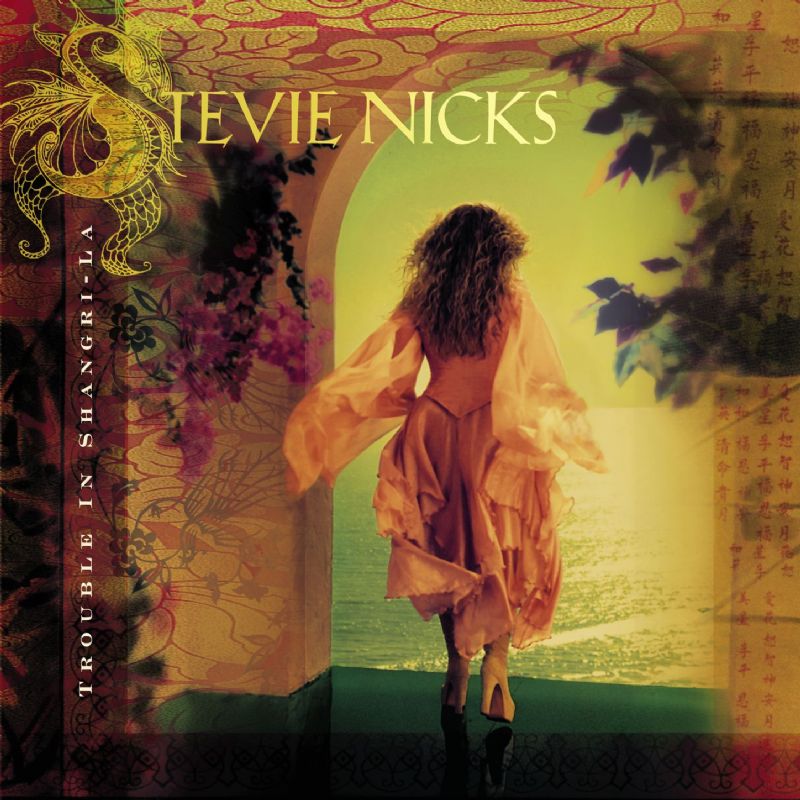
 When Sheryl Crow helped induct Stevie Nicks and her Fleetwood Mac mates into the Rock and Roll Hall of Fame in 1998, Crow called the siren “the woman all young girls wanted to be and all men wanted to be with.” After years of drug abuse and health problems in the 80’s, Nicks has not only cleaned up her act, she has polished it. On her first solo album since 1994, she reins in her loopy side with an assist from Crow, who co-produces, plays guitar and sings backup on a few tracks. And though Nicks dresses like Rhiannon heading for Wicca practice on the cover photo, she keeps things real lyrically — ”Sorcerer” is apparently about a deal dealer, not a mystic. Enlisting the gravelly soul of Macy Gray on “Bombay Sapphires” and the Dixie Chicks’ Natalie Maines on “Too Far from Texas,” she also keeps it real vocally. Best of all is “Fall from Grace,” a rocker about sin and redemption from one who has been there and back.

 Fleetwood Mac’s full-pelt excess and partner-swapping made for rock’s most incredible soap opera. But there’s one question everyone wants to ask Stevie Nicks. It concerns a large pile of cocaine, a tube and a loyal-to-a-fault assistant. “You know, I heard that rumour too,” she scowls at Paul Elliott.


