Tag: Fleetwood Mac

  • MUSIC REVIEW: Fleetwood Mac, Extended Play (iTunes)

    MUSIC REVIEW: Fleetwood Mac, Extended Play (iTunes)

    Lindsey Buckingham Stevie Nicks 2013Fleetwood Mac Extended Play (iTunes)

    In the decade since Fleetwood Mac released 2003’s Say You Will, a new surge of interest in the group’s distinctive pop style has taken hold in the modern pop, alternative and country communities. Recent music by artists as diverse as Cut Copy, Lady Antebellum, Vampire Weekend, Haim, Daft Punk, John Mayer and Little Big Town was inspired by the warmth and harmonic richness of Fleetwood Mac’s Lindsey Buckingham/Stevie Nicks era, and last year’s tribute album, Just Tell Me That You Want Me, offered persuasive testimony to the band’s enduring influence.

    John McVie Mick Fleetwood 2013But for all the enthusiasm those acts show for Fleetwood Mac’s pop shimmer, most would balk at walking a mile in their shoes, and continued tension within the band is a key reason why they only mustered four tracks for Extended Play, Fleetwood Mac’s first new material since 2003. But this concise burst of fresh songs, mostly co-produced by Buckingham and Mitchell Froom (Crowded House), says more about what it really means to be part of Fleetwood Mac than anything since Rumours and Tusk. Buckingham takes it on directly with “Sad Angel,” which addresses the challenge of getting Nicks on board with new Mac material while the fans are “calling out for more.” Even the inclusion of “Without You,” an unreleased Buckingham Nicks song, underlines the continued tension — putting the song on Extended Play was a compromise after Nicks and Buckingham could not agree on how to handle the 40th anniversary of the Buckingham Nicks album.

    News OK / Friday, May 3, 2013

  • ALBUM REVIEW: Fleetwood Mac returns

    ALBUM REVIEW: Fleetwood Mac returns

    Fleetwood Mac Extended Play 2013

    Fleetwood Mac, Extended Play (LMJS Productions) * * * 1/2

    Fleetwood Mac’s first new music since 2003’s Say You Will is short on Stevie Nicks, who resisted recording a full album with the group. The resulting four-track EP, released to iTunes as a digital download, makes you wish for more on the strength of Lindsey Buckingham’s three new songs.

    Nicks contributes the folksy “Without You,” a reject from the 1973 sessions for the Buckingham Nicks LP. The pair harmonize over Buckingham’s tinny acoustic strumming. Meh.

    Much better: Buckingham’s fresh songs in which he returns to writing crisp, accessible, engaging California pop/rock, like the infectiously melodic and rhythmically driving “Sad Angel” and the breezy “Miss Fantasy,” a piquant taste of Mirage-era Mac that makes great use of the famed rhythm section of Mick Fleetwood and John McVie.

    His stark solo piano ballad, “It Takes Time” — imagine Christine McVie’s “Songbird” as its closest cousin — intrigues the most because it’s unlike anything the guitarist has released.

    Howard Cohen / Miami Herald / Friday, May 3, 2013

  • First impression: Fleetwood Mac’s four-song Extended Play

    First impression: Fleetwood Mac’s four-song Extended Play

    Fleetwood Mac Extended Play 2013The four songs on the new Fleetwood Mac EP — which the legendary pop-rock outfit put up for sale on iTunes on Tuesday morning with little advance warning — arrive steeped in echoes of the past, in at least one case quite literally: “Without You,” a strummy acoustic number overlaid with harmony vocals by Lindsey Buckingham and Stevie Nicks, reportedly dates back to sessions for the two singers’ 1973 album as a long-haired vocal duo deeply opposed to shirts.

    But the other tunes on Extended Play, newly composed by Buckingham and co-produced by him and L.A. studio pro Mitchell Froom, feel no less rooted in earlier iterations of this on-again/off-again institution.

    “Miss Fantasy” has some of the folky back-porch guitar action of “Never Going Back Again,” while the stripped-down “It Takes Time” could be Buckingham’s version of Christine McVie’s big piano ballad, “Songbird.” And opener “Sad Angel,” which you can hear below, shimmers with the glossy textures of 1987’s Tango in the Night. (Incidentally, if you want to get a sense of Fleetwood Mac’s enduring influence on synthed-up young rock acts like Phoenix, go straight to Tango — it looms larger these days than the vaunted Rumours does.)

    Nothing about this self-reference surprises, of course, especially given that Fleetwood Mac is in the midst of a giant arena tour that will bring the band to the Hollywood Bowl on May 25 and Anaheim’s Honda Center on May 28. Old hits are what the members are playing onstage — “Don’t Stop,” “Dreams,” “Go Your Own Way,” “Silver Springs” — so old hits are what the members are hearing in their heads.

    And yet Extended Play — Fleetwood Mac’s first studio output since Say You Will in 2003 — doesn’t sound stale or overworked; indeed, the songs have an impressive crispness (after only a handful of spins, anyway) that makes their familiarity seem less like evidence of a tapped creative supply than like proof that this is simply the kind of music Fleetwood Mac writes.

    “I remember you,” Buckingham sings over and over again near the end of “Miss Fantasy,” and he might be addressing his own melody. But it’s a good one. You’ll remember it too.

    Mikael Wood / Los Angeles Times / Wednesday, May 1, 2013

  • Mick Fleetwood interview

    Mick Fleetwood interview

    Mick FleetwoodMick Fleetwood on Fleetwood Mac: ‘It Would Make A Great Play’

    Not long ago, the idea of Fleetwood Mac ever touring again seemed far-fetched at best. But as of this spring, not only is the band back on the road — according to drummer and founder Mick Fleetwood, they’re having an easier time filling seats than in the past.

    “We seem to have a band of angels up there organizing what we do down here. … I don’t know; maybe people think we’re never gonna do this again, or we’re all gonna drop dead or something,” Fleetwood says. “But on a positive note, I think it’s indicative of Fleetwood Mac’s extremely interesting story — that just when you think it’s sort of going into a ditch, it comes out the other side.”

    This week, Fleetwood Mac unveiled another surprise: a four-song EP of brand-new music, released digitally via iTunes and simply called Extended Play. Mick Fleetwood spoke with NPR’s David Greene about the band’s uncommon staying power. Hear the radio version on Morning Edition tomorrow (the audio will then be archived at the link on this page).

    There have been drugs; there have been relationship ups and downs in the band. Does that mean you almost have to come to the edge, and then kind of come back from the edge to keep doing what you’re doing? Is that necessary?

    God knows I don’t know whether it’s necessary, but the fact is it happened. And without getting artsy-fartsy or therapeutic, the reality is you have to take responsibility — not only as a person within the group of people, but then you look at it as a collective, which is the band known as Fleetwood Mac. And we have.

    A lot of your fans, I think, see you still out there — after all the roller-coaster and the soap opera — and a lot of fans are like, “Wow. Fleetwood Mac, through all the changes, all the years, different faces — they’re still here.” Are you surprised that you’re still here as well?

    [Laughing] Hmm … no. I’m not. I think what I have to confess to is that I had nothing else to do apart from keep this band going. So I’m sort of not surprised.

    It sounds like you’re almost a prisoner to the band and the idea.

    Well, that’s an interesting phrase. And in truth, just as of late — the last few years, really — I’ve had to work at just not being this creature that almost gets obsessed: “It’s gotta continue,” and “What if … ?” And I’ve truly done pretty good at letting go. And it’s truly appropriate: We’ve done way too much, all of us, to be herded into my world of, “At all costs, Fleetwood Mac.”

    So now, what you see is really pretty much a version of a bunch of people that happen to want to do something. And they haven’t been coerced or crafted, or sold their soul to the company store. … All of that stuff is gone. Which makes this, again, a really, really clear vision of what we’re doing. And I can’t think of any other band that I know that has gone through the arc of all of these [changes], even before Stevie and Lindsey. It would make a great play, and I hope one day that we somehow do that.

    And of course, you’ve played a role in the play. You’ve had the struggles that we all know about with drug addiction; there was a relationship with you and Stevie Nicks that a lot of people read about. Is there a song from Fleetwood Mac that you feel like kind of captures your role in the whole play?

    I’d say “The Chain.” [That song’s message should] be written on my grave: “That’s what he did. He half-killed himself keeping this bunch together.”

    Are you playing that song out on the tour right now?

    Yeah. It’s one of the songs, I think, that if we didn’t play, we’d be lined up and shot.

    You told my colleague Scott Simon, about four years ago, that you actually realized that the audience wanted the old ones. You were actually happy to report that you had no new songs to play, because you wanted to spare your audience — let them enjoy the oldies.

    Well, that’s true. People love to hear things that they tell their own stories to. Creative stuff that comes from the artist very quickly becomes the property, as it should, [of the audience] — to be reinterpreted and create a backdrop for parts of their lives.

    Have you seen a change in the audience over the years?

    Absolutely. There’s retrospection involved, I’m sure. … The lovely thing is, we truly are blessed with huge amounts of young people that are totally getting what we’re doing. And that’s why these new songs are hugely important. Lindsey would be the main flag-waver as to being really excited about the thought that we’re not treading water, and that we are creative.

    He’s pushing for new material.

    Yeah, and I think that’s his epitaph, or would be. Stevie’s is a bit of everything, including the blessing of truly and naturally being just so … well, talented for sure; we know that. But she has a magic mantle that is very profound, and it comes only once in a while to certain performers, and she is one of them for sure.

    That’s her epitaph. Yours is, “Let’s keep the band together,” and Lindsey’s is, “Let’s continue being creative.”

    We’ve all had functions in Fleetwood Mac. And because of that, I think, it’s not a stretch to [say] that’s probably why we’ve survived all this.

    One of the songs on the new EP, “Miss Fantasy,” strikes me as something that could have been on Rumours in 1977; it’s very much your sound from the ’70s.

    Whatever that is [laughs]. I think it’s fair to say that that album has become tonally timeless.

    It feels like you’re not trying to break into some new sound in this new day. You’re carrying on a tradition that you feel good about.

    It’s the band. The Stones did their Beatle thing, and they go, “Eh, we’re The Rolling Stones. Let’s just leave this alone.” That’s who they are, so whatever they do, you know it’s them — and they’re comfortable with it, and they’re really good at it. … So I take that as a huge compliment, what you’re saying.

    Stevie Nicks has said that she hasn’t spent much time on the Internet, doesn’t have a laptop. She’s sort of said, “I guess we need to put songs out on this thing called iTunes.” You don’t seem like a band that’s embracing all sorts of new technologies. You seem like you’re kind of doing it the old way.

    We know that this is really something we’ve never done — put out something on iTunes. And we’re going, “Well, we don’t have a completed album.” And maybe we’ll find out that people really, actually, seriously want us to do that. And if not, then this has been fun.

    You said that you thought a lot of people might be coming out to your concerts right now because they’re worried this might be the end; they want to say goodbye. Is that a possibility?

    No, I think it’s incredibly vibrant, the lifeblood of Fleetwood Mac. So you can pull that one out of your psyche.

    This is not a farewell tour. Not even close.

    No. We’re just bowled over that something is showing itself in this funny, mysterious way — hence me talking about this bunch of angels up there, organizing what we do. I’m thinking they’re very busy planning something into the future for Fleetwood Mac.

    Listen to the interview on Morning Edition from NPR

    NPR / Tuesday, April 30, 2013
  • SONG REVIEW: ‘Sad Angel’

    SONG REVIEW: ‘Sad Angel’

    Official Ultimate Classic Rock rating: 7 out of 10

    Earlier today (April 30), Fleetwood Mac released a four-song EP, Extended Play, their first new studio material since 2003′s Say You Will. While the EP is available for purchase exclusively at iTunes, you can stream the lead track and first single, “Sad Angel,” below.

    Written by Lindsey Buckingham, “Sad Angel” opens with some typically kinetic, percussive Buckingham rhythm guitar before his vocals come in, and joined later by the whole band. The rhythm section of John McVie and Mick Fleetwood chug along in typical no-nonsense, muscular fashion, with some keyboards and a few layers of guitars to fill it out.

    Even though she sings in tandem with Buckingham for all but the opening 15 seconds, Stevie Nicks is largely invisible. She takes her lines well and the two still blend together very well, but there’s little of her trademark personality on display. Maybe that’s a little harsh, but for a band that has traded so frequently on the duo’s history together, “Sad Angel” doesn’t offer much in the way of tension between its two lead singers.

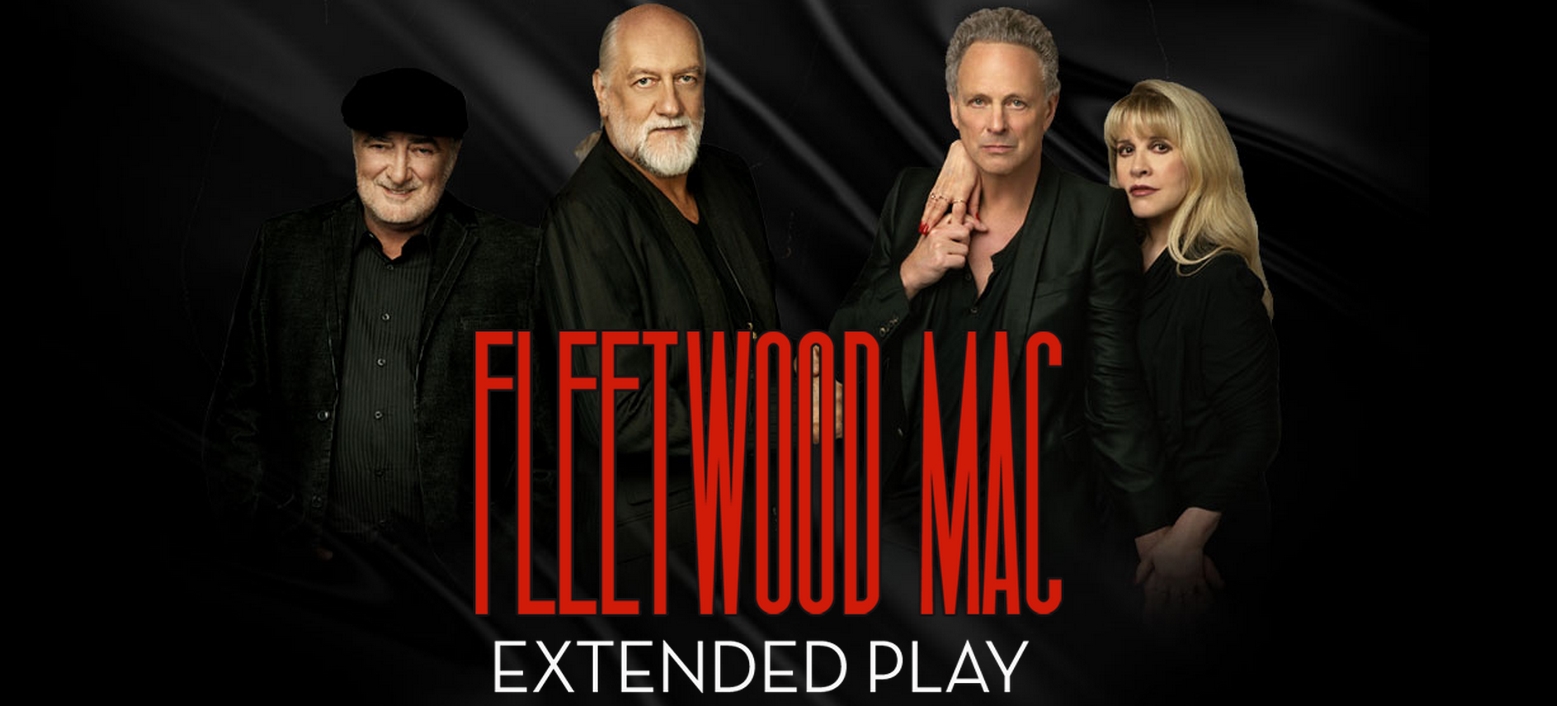
    Not that that’s a bad thing, of course. Throughout the run-up to the release of ‘Extended Play,’ we’ve heard about how those past issues are behind them — note how they’re posed in the press photo above — so what better way to prove it than with a nice, poppy song that is, lyrically, light years removed from their famously autobiographical work.

    Or is it? The ambiguous lyrics could be Buckingham acknowledging that he and Nicks need each other, and are never better than when they’re together. “We fall to Earth together / The crowd calling out for more / Hello, hello sad angel / Have you come to fight the war?” they sing in the chorus. It’s hard to tell, because we usually associate Nicks with gypsies or witches, not angels.

    If “Sad Angel” is about her, then it’s a nice peace offering as the two of them prepare to write the newest chapter in their incredibly long history together. If not, then it’s still a welcome return to form for one of rock’s most enduring bands.

    Dave Lifton / Ultimate Classic Rock / Tuesday, April 30, 2013

  • Where Do I Start With Fleetwood Mac?

    Where Do I Start With Fleetwood Mac?

    Fleetwood Mac Extended Play 2013Fleetwood Mac, which put out a new EP today, was one of the few music choices my parents and I could agree on. I would scream along with the rocking chorus of “The Chain” on the way to school and dance around the house to “Little Lies.” Since then, my appreciation for the band—from Lindsey Buckingham’s virtuosic guitar playing to the group’s layered harmonies—has grown more sophisticated, but the songs still pack the simple, emotional wallop they did for me 15 years ago.

    Alternately credited with and cursed for creating “adult contemporary,” the members of Fleetwood Mac are almost as famous for their personal drama as for their classic songs. Originally, though, Fleetwood Mac was a simple British blues band, formed in 1967 by guitarist Peter Green and named after drummer Mick Fleetwood and bassist John McVie. This lineup, with a few additions, put out three albums, which did well in the U.K., but received little attention stateside. (One of the singles from that era, “Black Magic Woman,” became a major hit for Santana.) In 1970, Green left the band after suffering from a mental breakdown (he was later diagnosed as schizophrenic). A year later Christine McVie, John’s new wife, officially joined. A keyboardist who wrote her own music, Christine increasingly came to shape the band’s sound. Mick and the McVies stuck together through the early ’70s and more personnel changes—one of their guitarists joined the Children of God and another had an affair with Fleetwood’s wife—as they tried to replicate their British success in the U.S.

    They didn’t have much luck until 1974, when Mick recruited the American folk duo Buckingham Nicks. For their first album together, this new version of Fleetwood Mac combined Christine’s songs with some that Lindsey and Stevie had already written. The eponymous result finally brought the band the American popularity they’d been looking for, selling five million copies and reaching No. 1 on the charts. It had four hit singles, including McVie’s poppy “Say You Love Me” and Nicks’ haunting “Rhiannon,” which highlighted her wild performance style.

    Success also brought trouble, as it does. The band’s two couples began to unravel—as did Mick Fleetwood’s marriage to model Jenny Boyd—just as they returned to the studio. And so the musical legend of Rumours was born: The album is made up of songs that Christine, Lindsey, and Stevie wrote about their dissolving relationships. The most famous of these are Buckingham and Nicks’ dueling takes on their doomed love, her ethereal “Dreams” and his aggressive “Go Your Own Way.” But at the heart of the album is the only song all five of the band members ever collaborated on, “The Chain,” which emphasizes their commitment to carrying on as a group despite their personal disagreements.

    After the massive sales of Rumours, the studio invested heavily in the band’s follow-up. But Buckingham was determined not to repeat himself and began experimenting with different recording techniques (including, for instance, laying on a tile floor as he sang into the microphone). Meanwhile, Stevie had embarked on a secret affair with Mick—which ended, much to her chagrin, when he left her for her best friend. Eighteen months and the largest recording budget of all time produced the messy Tusk. The album sold about a quarter of the copies its predecessor did, but the unnerving title track, which features the USC marching band, balances Buckingham’s desire for punky weirdness and the rest of the band’s gift for grandeur.

    The band put out two albums in the ’80s: 1982’s Mirage—which was largely overshadowed by Nicks’ solo release Belladonna—and 1987’s Tango in the Night. Tango was troubled; the band’s lifestyle remained extravagant and Nicks had abandoned coke for Klonopin, which made her spacey and unreliable. Buckingham and McVie, who had a hit with my old favorite, “Little Lies,” took over most of the songwriting duties, but Nicks, with the help of Sandy Stewart, still managed to contribute one great song, the cheerful “Seven Wonders.”

    After another blow-up with Nicks, Buckingham left the band right before the Tango in the Night tour. The split wasn’t permanent, but the band never really recovered; in 1997, Christine McVie permanently retired from Fleetwood Mac. The remaining foursome has toured sporadically since then. Their 2003 album, Say You Will, was fairly successful, but failed to live up to their earlier work.

    The new EP is the band’s first new material since then. The best of its tracks, “Sad Angel,” hearkens back to the catchy pop-rock of Rumours, rather than the smoothed-out sound of their more recent stuff. Perhaps they’ve rediscovered the knack they used to have for transmuting a troubled dynamic into powerful songs, though it’s hard to tell on the basis of just three new songs, all by Buckingham. (The fourth track, “Without You,” is an old Buckingham Nicks tune.) However it turns out, I’ll always have “The Chain.” And if you’ve never given the band much thought, you’ll find 10 tracks to get you started below, both as a Spotify playlist and on YouTube and Amazon. Enjoy.

    “Rhiannon” from Fleetwood Mac (1975)

    “The Chain” from Rumours (1977)

    “Black Magic Woman” from The Pious Bird of Good Omen (1969)

    “Seven Wonders” from Tango in the Night (1987)

    “Tusk” from Tusk (1979)

    “Dreams” from Rumours (1977)

    “Second Hand News” from Rumours (1977)

    “Say You Love Me” from Fleetwood Mac (1975)

    “Little Lies” from Tango in the Night (1987)

    “Go Your Own Way” from Rumours (1977)

    Alex Heimbach / The Slate / Tuesday, April 30, 2013

  • Fleetwood Mac release Extended Play, first new music in a decade

    Fleetwood Mac release Extended Play, first new music in a decade

    Fleetwood Mac Extended Play 2013Fleetwood Mac have released their first collection of new music in a decade. As promised, the legendary band tabled a full album in favor of an EP, titled Extended Play and available exclusively on iTunes.

    The foursome — Lindsey Buckingham, Stevie Nicks, Mick Fleetwood and John McVie — announced the release on the band’s website on Tuesday.

    The record kicks off with the bouncy “Sad Angel,” in which Buckingham and Nicks harmonize over looping guitar and Mick Fleetwood’s driving beat. “Hello, hello sad angel, have you come to fight the war?” they ask.

    The rest of the EP includes the classic-sounding “Without You,” which started as a track for Buckingham Nicks, the duo’s pre-Mac group. There’s also a piano ballad by Buckingham called “It Takes Time” and the album closer “Miss Fantasy.”

    It’s their first new music since 2003’s Say You Will, which debuted and peaked at No. 3 on the Billboard 200.

    The band told Billboard in February that, “Big, long albums don’t seem to be what everybody wants these days.” Whether a full-length album emerges from this current reunion is entirely up to fans, Nicks said.

    “[Let’s] see if the world does want more music from us,” Nicks said. “If we get that feeling, that they do want another 10 songs, we can reassess.”

    Billboard / Tuesday, April 30, 2013

  • Fleetwood Mac keeps going its own way

    Fleetwood Mac keeps going its own way

    The band became arguably the biggest act in rock in the late 1970s after guitarist/singer Lindsey Buckingham and singer Stevie Nicks joined three previous members of Fleetwood Mac — drummer Mick Fleetwood, bassist John McVie and keyboardist/singer Christine McVie (the bassist’s former wife) — in 1975 and released three straight blockbuster albums, Fleetwood Mac (1975), Rumours (1977) and Tusk (1979) that established the lineup as the classic edition of Fleetwood Mac.

    In a conversation with Fleetwood, it’s very clear that today’s four core band members (Christine McVie retired in 1998) are very much invested in the band and far from complacent about its live show. In fact, the band spent six full weeks rehearsing for this year’s tour, it’s first in three years.

    “We know the nuts and bolts are all in place and we have confidence in that,” Fleetwood says. “But we also have like a garage band-like mentality where we go sh–, we’re actually playing down at the local town hall next week. We better be good. And it [that nervousness] doesn’t really go away, which is a nice thing. We’re not all jaded and so showbizzed out that we’re all super slick and go ‘Ah, piece of cake.’ We’re not like that at all. We’re all quite sh—ing ourselves.”

    Fleetwood says the shows will, of course, feature signature hits.

    “We know that we have sort of a body of songs that, in truth, if we didn’t do them, we’d probably be all lined up and shot,” he says. “So we have sort of eight or nine songs that no matter what, we know people are going to want for us to do them, and we are totally cool with doing them. If we walked on the stage and didn’t play ‘Dreams,’ I think people would be shocked. So we don’t go there. So what we do is we take the prime songs, ‘Go Your Own Way,’ ‘Dreams,’ songs like that, and then build a new show around the fact that we, of course, are going to be doing those songs.”

    This is Fleetwood Mac’s first tour since 2009’s “Unleashed” tour. Buckingham and Nicks are busy with solo careers, making Fleetwood Mac part of the picture, but not the entire one. Following the “Unleashed” tour, Buckingham released the studio album, Seeds We Sow, and Nicks released In Your Dreams. Both artists toured extensively to support the albums.

    The personal history and inter-personal dynamics within Fleetwood Mac also create challenges, and, according to Fleetwood, are another indication of why the four band members are all in when they reunite.

    “When we do do it, we work really hard at it and we’re committed to it,” he says. “We fundamentally have to be happy to be doing this because we’re all ex-lovers and all the stuff that is well worn news out there.”

    As has been well documented, Buckingham and Nicks were a couple (and were recording as Buckingham-Nicks) when they joined Fleetwood Mac. The McVies were also married at that time. But the relationships soon frayed, and the Rumours album (a deluxe expanded edition of the CD was released in January) was written in the midst of those breakups. Fleetwood and Nicks later became a couple for a time, while Buckingham later married and started a family.

    “[This is] a bunch of people who aren’t just connected by the music, but connected by spending huge amounts of time [together], including Lindsey, Stevie and their journey,” Fleetwood says. “No, they’re not in love and Lindsey has an incredibly wonderful family. But the story they tell as two people is huge. And you know, there I am with Stevie, and me and Stevie had a long-lasting love affair. She’s the godmother of my children and it’s a trip. It’s a trip.”

    This year’s reunion could turn out to be even more eventful than the one in 2009.

    On the “Unleashed” tour, Fleetwood Mac essentially played a greatest hits set. But Fleetwood says this tour will blend in three or four new songs from those recorded last year when Buckingham, Fleetwood and McVie got together for a writing and rehearsal session.

    “Stevie was on the road, and during that period she lost her mother, who passed,” Fleetwood says. “So she was not set up to come and join the party in that few weeks that me and Lindsey and John put some ideas together that Lindsey had.”

    Nicks has since added her vocals to several of the songs Buckingham, Fleetwood and McVie recorded during the sessions and three of those songs will be available through iTunes shortly. Another song was written by Nicks. It’s an unreleased tune that dates back to before Nicks and Buckingham joined Fleetwood Mac, and was recently rediscovered by Nicks and recorded with the band.

    “It really tells the story of how Stevie and Lindsey joined Fleetwood Mac, which is when they were known as Buckingham-Nicks,” Fleetwood says. “It was an unrecorded song that Stevie actually wrote about Lindsey, and it’s a beautiful song …

    “And this was the music that I heard in the studio that spurred me on to make the phone call and ask them to join Fleetwood Mac.”

    Fleetwood says with any luck these songs will form the basis of a new Fleetwood Mac album that may be recorded later this year and released either ahead of Christmas or in early 2014.

    This would be Fleetwood Mac’s first collection of new music since 2003’s Say You Will. That was the band’s first album without Christine McVie, and the tour that followed the album was not as harmonious as the band members would have wanted.

    For Nicks, it was difficult to be the only woman in the band and she sorely missed her close friend, McVie. And before regrouping for the “Unleashed” tour, the band flirted with having Sheryl Crow (a good friend with Nicks) join the band.

    Nicks, in various interviews, has said she now is comfortable in the four-person Fleetwood Mac lineup, and Fleetwood notes that the guys try to help create a good environment for Nicks.

    “Certainly the guys in the band are very aware of making sure that Stevie feels safe,” Fleetwood says. “When she comes back to Fleetwood Mac, she’s in a man’s world, you know. And two of them are men that she each had relationships with. It’s hugely important that she feels safe — and loved. And that’s the funny old thing that this band is all about. It’s powerful.”

    FLEETWOOD MAC

    • When: 8 p.m. April 6
    • Where: Wells Fargo Center, Broad Street, Philadelphia
    • How much: $49.50, $79.50, $149.50
    • Set list: Hits such as “Go You Own Way” and “Dreams,” and recently recorded new music
    • Info: comcasttix.com

    Alan Sculley / The Morning Call / Thursday, April 4, 2013

  • VINTAGE VIDEO: ‘Sisters of the Moon’

    VINTAGE VIDEO: ‘Sisters of the Moon’

    “Sisters of the Moon” from Fleetwood Mac’s 1982 concert at the Los Angeles Forum is an essential performance by most longtime fans’ standards. “Intense silence” as she walks onto the stage, Stevie channels the spookier elements of “Rhiannon” and “Gold Dust Woman.” With her blond locks teased forward and black chiffon pulled over her head, she transforms from fragile gypsy beggar to high-octane rock and roll ballerina. It’s always sheer excitement to see Stevie so engaged and impassioned in tour-de-force rock mode, but the rest of the band seem to be having a great time, as well. With Lindsey rocking a verse, Christine head-banging at her keyboards, bug-eyed Mick fixated on Stevie’s curious movements, and even the normally-stoic John swinging his bass around a few times, “Sisters of the Moon” remains an unforgettable band moment in the Fleetwood Mac live catalog. It’s been more than 30 years since Fleetwood Mac performed the song in concert, but the anticipation has been building ever Stevie revealed on Thursday at SXSW that a resurrection is approaching on April 4…just in time for Easter. Perfect!

  • Back with Second Hand News: Fleetwood Mac’s Rumours

    Back with Second Hand News: Fleetwood Mac’s Rumours

    Fleetwood Mac Rumours

    I remember reading an issue of Rolling Stone a few years ago about the ‘100 Greatest Albums of All Time’, and thinking about how these countdowns might differ in different magazines – NME’s top 10 will almost certainly not be the same as Kerrang’s.

    Getting down to the top 10, all the usual candidates I would expect in modern music magazines were there (The Beatles, Stones, Dylan etc.), but the number 4 on the list was an album I’d never really heard of: Rumours by Fleetwood Mac. I wondered how an album considered canonical by one of the world’s biggest music magazines could have passed me by; why all the ‘Top 100…’ articles I’d read in British magazines could have ignored Rumours in the top bracket. The album itself was popular and critically acclaimed on both sides of the Atlantic, unsurprising given the Anglo-American core of the band, and yet an avid reader of British music magazines in the 21st-century might never consider Fleetwood Mac’s seminal LP in the same bracket as many of the well-trodden ‘classic’ albums.

    This has the chance to change with the impending re-release of Rumours, more than 25 years after its original release. Whether milking a cash-cow or hoping to disseminate their work to a new, younger audience, there is a sense that such an album is coming at the right time. The musicianship of the songs forms an interesting juxtaposition to the works of many of today’s new breed of guitar bands (From The Vaccines to Palma Violets), and, despite the recordings having inevitably aged, the songs themselves remain just as potent as they did in the 1970s.

    When looking back upon the process of its recording, it is hard to fathom that such cohesive, well-written pop songs coincided with a time when the relationships in the band were falling apart; songs like the Nicks-penned ‘Dreams’ and Buckingham’s ‘Go Your Own Way’ even seem a direct discourse, the ‘unfurled back and forth’ Buckingham would later recall in ‘Eyes of the World’. Yet in such a capable group of musicians and songwriters, the talent will always out, and a real ear for melody and intelligently crafted lyrics interact in such a way that can seldom be accidental.

    Despite a deceptive amount of experimentation, there is always a sense, simply, that each addition works; the driving rhythm of ‘Second Hand News’, made by McVie hitting his drum stool, the explosive coda of ‘The Chain’, the only song written by all five bandmates, and the now iconic ‘Go Your Own Way’, a song that was nearly scrapped as a single for having ‘no real beat’. Each song knows what it is doing and does it well- every addition stands alone as much as forms part of the album’s overall dynamic.

    One could argue that such a mode of song-writing has been lost in recent guitar bands, and the next generation of NME bands could do worse than get themselves a copy of Fleetwood Mac’s best LP. The creative harmonic interchange in songs like ‘Second Hand News’ and ‘I Don’t Wanna Know’ shows that a use of familiar modular chords can still avoid sounding dull and derivative (something that bands like Tribes and The Vaccines have yet to learn). There can be many discussions about what makes a classic album, but for sheer song-writing talent, Rumours deserves its place amongst the greats.

    Fleetwood Mac’s Rumours is out on reissue from 29th January published by Rhino Records.

    Oliver Hancock / Oxford Student / Wednesday, February 27, 2013