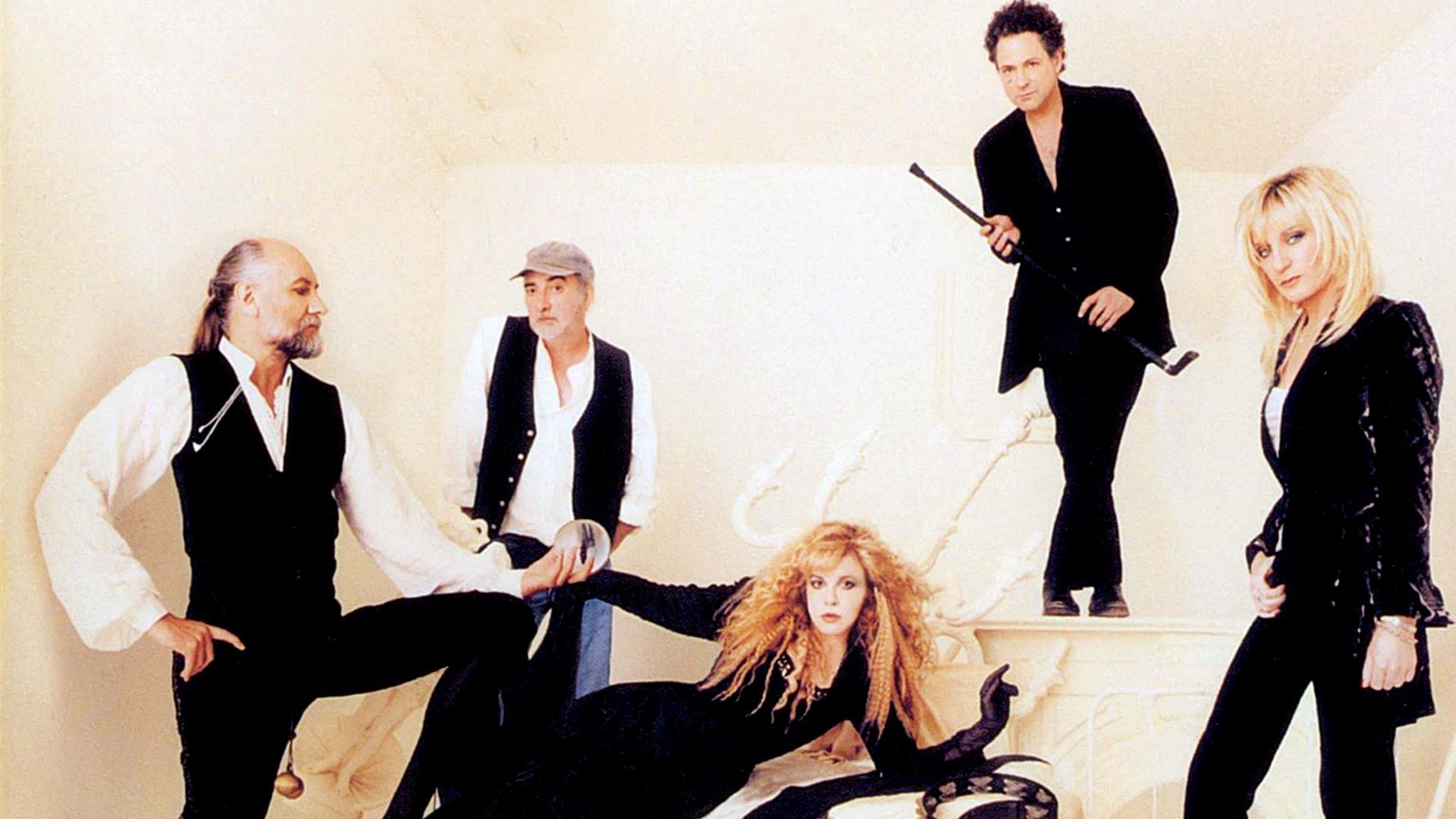
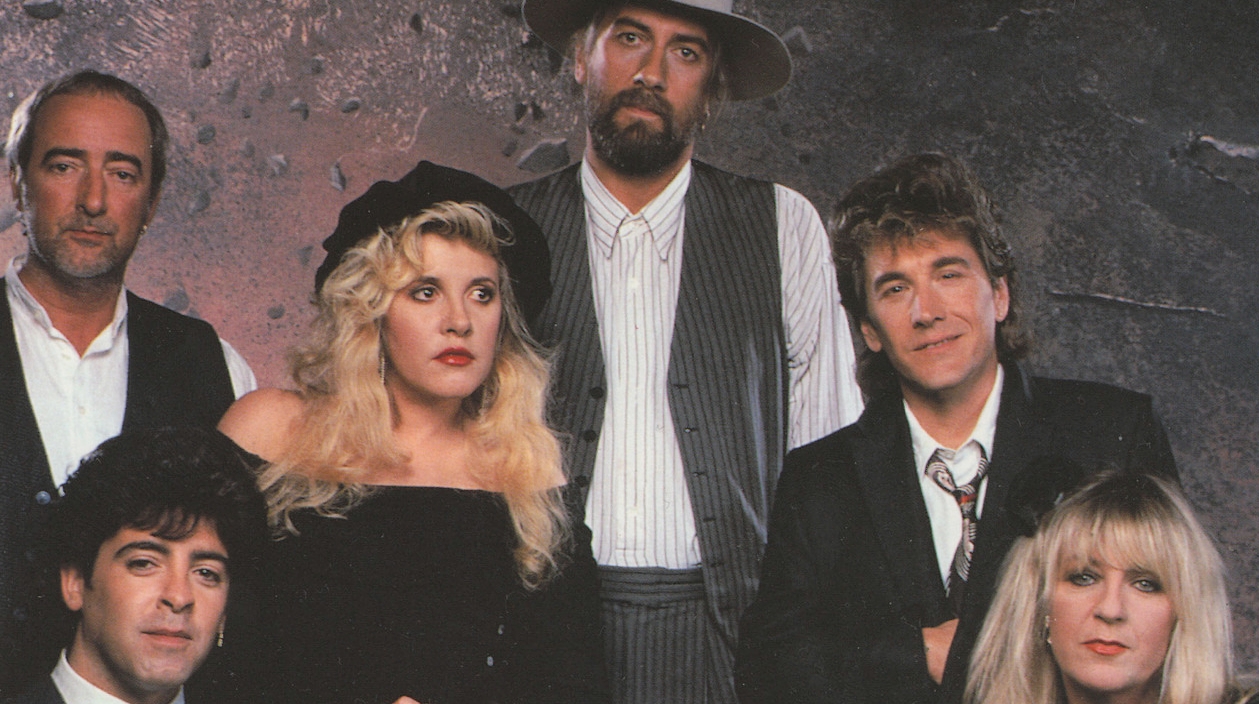
Fleetwood Mac is about halfway through recording its latest album, which is due next year. The release will feature all the regular crew members except Christine McVie.
Mick Fleetwood tells allstar that he heard from McVie earlier this week, though, and she said she would like to record with the group, but not tour.
As a result, Fleetwood says he’s a bit perplexed. “If she writes and records with us, and does not tour,” he explains, “then it’s hard to play those songs in concert. Lindsey [Buckingham] and Stevie [Nicks] have already done most of their work.” Fleetwood is not sure if he will take her up on her offer at this time.
Fleetwood Mac will probably tour the states late next summer or early fall. Fleetwood favors indoor arenas rather than outdoor amphitheaters. “We can get better sound and lights indoors,” he says.
“LANDSLIDE” Written by Stevie Nicks Published by Welsh Witch Music: Sony/ATV Music (BMI)
Among the many treasures in Fleetwood Mac’s repertoire, the beautiful ballad “Landslide” is one of the most memorable. Penned by Stevie Nicks, the tune was first recorded on the band’s self-titled 1975 album and was released in 1980. However, the song didn’t chart as a single until it was culled from the Mac’s most recent album, “The Dance.” It climbed to No. 10 on Billboard’s Adult Contemporary chart in April 1998 and peaked at No. 51 on The Billboard Hot 100 in August last year:
Most recently the song received a gorgeous, harmony-laden treatment from California-based folk/pop foursome Venice on its new albums, “Spin Art.” The Vanguard Records act consists of brothers Mark and Michael Lennon and their cousins Pat and Kipp Lennon (brother of “The Lawrence Welk Show’s” singing Lennon Sisters). “Landslide” is the only cover tune on the 13-track album.
“Growing up as a family, we always listened to the Beatles, Crosby, Stills & Nash, and the Eagles. Then Fleetwood Mac came along the blew us away,” says Mark Lennon. “When we formed a band 20 years ago, we started doing cover tunes, playing all the clubs in Hollywood. They’d tell me, ‘You’re 14. You come out to sing’ … Then we started writing our own original stuff and doing acoustic shows in 1988 or ’89.
“We started doing a few covers in our acoustic shows and decided to do ‘Landslide.’ We did it in the same key as Stevie Nicks. We just added our own harmonies on the chorus, and people were going crazy.
“We did it for so many years that everybody started saying, ‘You guys should record that. Finally, on this album we were talking about doing a cover time tune. We do the Jackson 5’s ‘I Want You Back’ in our live show for our blended together; but everyone kept saying, ‘You need to do “Landslide.”‘ So finally after all these years, we said, ‘Let’s record it, and if it makes the 12 or 13 of the final cut, it’s there.’
So that’s what we did. It made the cut on the album, and now we’re getting this great feedback from it.”
Lennon says Nicks’ gift as a lyricist makes the song an enduring classic. “Stevie Nicks writes in such an incredible way. Her lyrics are so different. Ten different people could tell you what that song means, and it would all be different meanings … The Lyrics mean something else to everybody. That’s how mystical she is. She can really pull you in. You can make her songs what you want them to be about. Overall, that song is undeniably a beautiful hit.”
Deborah Evans Price / Billboard / September 18, 1999
WE’RE THE LOVINGEST, FIGHTINGEST, DRUGGINGEST BAND OF THE ‘70s. TWENTY YEARS LATER, THE PSYCHODRAMA CONTINUES …
TWENTY MINUTES AFTER COMING OFFSTAGE IN Burbank, Calif., Stevie Nicks and Christine McVie look just a touch stunned in the unsparing light of a trailer that’s serving as their ad hoc lounge. A film of sweat fights it out with their foundation makeup. They’ve just played go minutes’ worth of what was meant to be Fleetwood Mac gems. Tonight’s show wasn’t entirely to their liking: Nicks muffed the first verse of “Dreams” while crane-mounted TV cameras cruised and snooped, and McVie simply seemed to be hoarding strength for the next taped show Friday evening, I9 hours from now. They have the wideeyed graciousness of party givers who can’t get their guests to leave as they politely shake hands and slump back beside a zealously beaming Winona Ryder, who rises to depart with a fervent observation: “Weren’t they amazing?”
You can see on the ladies’ faces that they don’t feel that amazing tonight, but they’re glad for Ryder’s dewy-eyed vote of confidence. When a man is tired of London, said the essayist, he is tired of life; and if you tire of this rejuvenated band, you are tired of, well, classic rock. You could feel both audience and band rediscovering that in the first few measures of the first number, “The Chain”: Mick Fleetwood’s peaty bring-out-your-dead opening drumbeats; Lindsey Buckingham’s astringent guitar; Christine McVie, Nicks and Buckingham’s baleful harmony “Listen to the wind blow/Watch the sun rise . . .”; and John McVie’s darkly muttering bass combined to pretty well blow the dust off the legacy and bring you forward in your seat – this is as bleakly intoxicating as what the trade magazines call pop music can get. By the time Buckingham was squeezing out an anguished “And if you don’t love me now/ You will never love me again,” he had reclaimed, at 47, the title of angriest dog in rock. Fleetwood’s face, which in repose is capable of a kind of distracted, offputting gravity that wouldn’t be out of place in an old German vampire movie, creased happily as he patted the song to a close.
It’s from 1977’s Rumours, of course, the only cut on which all five shared the writing credit. It’s also the band’s old and new testament to its own tortured togetherness, because it perfectly captures the ominousness of that chain letter warning you of loneliness and loss: “I can still hear you saying/You must never break the chain.”
As we know, this band did individually suffer whether because it broke the chain or because it really could not – a string of woes including but not limited to heartbreak, enmity, alcoholism, cocaine addiction, penury, divorce, carpal tunnel syndrome and, as Fleetwood tried to pound the body back to life, being sandwiched on a nostalgia package tour, in 1995, between REO Speedwagon and Pat Benatar. In place of FRED SCHRUERS last wrote about Fleetwood Mac in RS 344, when he traveled to Ghana with Mick Fleetwood.
Buckingham and Nicks, that Mac iteration featured such unlikely figures as one-time Traffic operative Dave Mason and Bekka Bramlett, daughter of the redoubtable ‘70s rock duo Delaney and Bonnie.
It was Buckingham, of course, who left the gate open for the impostors with his repeated walkouts on the band, but he is also the creative linchpin of the fivesome. Nicks had her solo hits like “Edge of Seventeen” and a pair of great duets with Tom Petty; Christine McVie is a viable solo artist with (like Nicks and Buckingham) a label deal at the Mac home base of Warner/Reprise; and Fleetwood and bassist John McVie are always employable as what Fleetwood calls “gigsters” – but Buckingham is the tormented genius you could lift out of ‘7os rock and set down, with his fierce chops and raging vocals, anywhere you like.
Among the mixes for his next solo album, which is on hold as the band tours, is a cut that takes its title from the last word of the lyric “Think of me, sweet darlin’, every time you don’t come” and features a honking guitar workout that should serve as a do-yafeel-lucky-punk invitation to any doubting arrivistes who haven’t replaced their six-strings with samplers. Buckingham’s back-to-back performances of “Big Love” and “Go Insane” (the latter of which shows up only on the long-form, costs-money video version of the band’s new live album, The Dance) made the audience in Burbank stand up peering, midway through the generally sedate tapings, like a crowd watching stock cars flip over.
The wall chart of the Mac’s fortunes goes in its rough strokes by io-year jumps, at least in the Buckinghamcentric view of things: from 1967, their founding as an English blues band; to 1977, when Buckingham and Nicks invigorated the band’s 25 million-selling Rumours; to 1987, when, after the torturous Tango in the Night sessions at Buckingham’s house, he balked at touring and was sent away; and now to 1997, when Buckingham has been persuaded to join up again and co-produce The Dance. The question that hangs over the entire enterprise is whether the current U.S. sweep of 43 dates in major cities will turn into a world tour. And while Nicks and Christine McVie hint that they may yet opt out of the larger plan, it’s really Buckingham’s call to make.
“You know,” says Nicks, who still wears chiffon but is a good deal more battle-hardened (and speaks a bit deeper) than the hippie priestess of one’s former imaginings, “Lindsey made a whole lot more money than everybody else did because he produces. The producers get paid first. And he probably didn’t spend nearly as much money as everybody else did; he lives way simpler. So he didn’t have to do this for money, you know. The rest of us would all like to put something away for, you know, our golden twilight years. But he has to want to do it, or we don’t want to do it, either.”
If Buckingham is the brains of the operation, Fleetwood is the heart and viscera, keeping the beat going in every sense. Picture him just a few years ago, Rumours money squandered, brandy bottle near, coked out and lying in a borrowed bed in a damp cellar watching soap operas, and you know this is a heart through which hard times and bad habits could not drive a stake.
The reunion may have been inevitable from the moment that Buckingham invited Fleetwood to help with his solo album. “I had some ambivalence about Mick,” Buckingham says. “He was clearly into my album, and yet I knew he was to a substantial degree instigating this whole band thing. I couldn’t be mad at him, because Fleetwood Mac is his life’s blood, really. He’s spent his whole life trying to keep the ship afloat.
“Everyone has said to me, `This is going to be a good thing for you,’ and, of course, you kind of are suspicious of their motives, too. I’m a suspicious guy. I’m working on that.”
LINDSEY BUCKINGHAM WAS BORN TO RELATIVE privilege in Palo Alto, Calif., and raised nearby in Atherton. His father, Morris, ran a coffee plant (“Small and slowly not doing so well and eventually went under”); two older brothers were golden, suburban jock types – brother Greg won a silver medal for swimming in the ‘68 Olympics. Lindsey was a high school junior singing “California Dreamin’ “ at somebody’s house when transfer student Stephanie Nicks, a senior, saw him. Two years later, she was the chick singer and he the bassist in a post-high school band called Fritz. It was understood that none of the guys would hit on her. But when Nicks and Buckingham migrated to Los Angeles to shop the band’s demo (he was on guitar by now), they were tapped by the Polydor label – without their band mates. In Nicks’ room at the Tropicana Motel, confusion was sown, innocence lost. “Why it happened between me and Lindsey was because we were so sad that we had to tell the three guys in the band that nobody wanted them, only us,” she says.
Once they’d broken up with the band and their respective steadies, “our relationship was great,” says Nicks. “We had other problems: didn’t have a lot of money, alone in L.A., didn’t have our families, no friends, didn’t know anybody. But we had each other. “I knew that we were going to be somebody,” says Nicks. “I think that he had a little bit less belief in the fact that we would really make it big. I always knew.”
This particular crystal vision did have to wait. When Buckingham got mononucleosis, they moved back north, short on cash. Nicks continued college but often stayed with the Buckinghams in their living room. The two cut tracks, working nights in a spare room at the gloomy coffee plant. “It was scary there,” says Nicks. “Good acoustics, though.” Working with a four-track Ampex tape machine, they built songs one channel at a time, the old Beatles way. The tracks would form the basis for their 1973 album, Buckingham Nicks, but the musical idyll was interrupted by his father’s heart illness and death, at age 54. “His dad died within a year, as we watched, and it was awful,” Nicks says. “I picked up the phone and had to hand it to Lindsey the morning his father died. Devastating. Changed all of our lives.”
The singing duo set up shop in a slightly beat section of L.A. with engineer Keith Olsen and another musician friend, and despite the occasional passed-out session man on the floor, Nicks and Buckingham grew domestic. “From ‘71 through ‘75,” says Nicks, “I lived with Lindsey all those years. We were absolutely married. In every way [but for the ring]. I cooked, I cleaned, I worked. I took care of him.”
Buckingham Nicks, made with credentialed studio players like Jim Keltner, had an almost Delaney and Bonnie Southern twang and even got a pocket of rabid fans in Birmingham, Ala. This aberration may have been what led to an odd New York meeting with a Polydor A&R type who told them, “I think you’d be better off, you know, if you did something more like this,” and put a 45 on his office turntable Jim Stafford’s crackerbilly hit “Spiders and Snakes.” They had a tenuous spec deal to make a second record, but even as the advisers “were trying to glom us off on the steakhouse circuit, the one-way ticket to Palookaville,” as Buckingham says, Fleetwood was making his legendary visit to Olsen’s studio and hearing “Frozen Love,” from the duo’s LP. A week later, when Bob Welch left the band that Fleetwood had been nurturing since 1967, Buckingham got the call, and within days, the newly minted Mac were in rehearsals. What would become a sturdy friendship between Nicks and Christine McVie took immediately, in a let’s-see coffee-shop meeting. By contrast, John McVie, who still missed the band’s original but now acid-damaged guitar god, Peter Green, found Buckingham – who began by advising him to play “simpler” – brash.
John McVie, a man of wry and placid, not to say mournful, aspect, misses Green (now embarked on a low-key comeback) to this day. He distinctly recalls the fateful trip to Germany where Green went astray. “We had been selling more records than the Beatles,” he says. “It was an amazing time.” Then, one night at a gig, came “German jet-set kids, hippies with money, and they had a whole ploy. They dangled a carrot in the shape and form of a beautiful young German model in front of him, and they got him away for two or three days in a studio in a basement. And if I ever meet those bastards…because what they did is unforgivable.”
“Somebody gave him some bad acid,” says Christine McVie, who was married to John but not yet in the band, “and it freaked him out. I saw one Peter Green leave and a completely different one come back – pale, wan, depressed. A little mad, really.”
This was far from the end of sex, drugs and rock & roll for this most tumultuous of bands, but the fivesome’s honeymoon produced 1975’s Fleetwood Mac, with its suitably goofy cover art and, despite its pop accessibility, curiously dour demeanor. Christine McVie’s “Say You Love Me” thrummed irresistibly; Nicks”‘ “Rhiannon” was an obvious FM classic, and her “Landslide,” written in Aspen, Colo., during a bittersweet moment in relations with Buckingham, seemed to herald the arrival of a rock goddess just spooky enough for a generation’s second stoned decade. With the abruptly successful band trapped between its new hordes of hangers-on and its own romantic troubles (not just the couples: Fleetwood’s marriage had been running erratically ever since his wife, Jenny, briefly ran off with his pal, lead guitarist Bob Weston, from two lineups previous), Commander Fleetwood mandated that the record would be cut in the slightly remote outpost of Sausalito, just north of San Francisco. What they did there is one of the legendary blood-and-glory tales of rock-album making. “We had a good time, bad time, fun time, sad time,” says John McVie. “Something great came out of it.” Twenty-five million records later, Rumours carries its own bona fides; among its many attributes, it would seem to be the most inescapable album of its era.
Nicks and Christine McVie encamped in a pair of nearby condos. “All we had was each other, really,” says Mc Vie. “We certainly weren’t getting on with our respective husbands or boyfriends.” Meanwhile, says John McVie, “we lads had our thing, too.” In a residence that was part of the studio complex, the boys set up shop – “with parties going all over the house,” says John. “Amazing. Terrifying. Huge amounts of illicit materials, yards and yards of this wretched stuff. Days and nights would just go on and on. It was very loose.”
It got to the point where the craziness seemed normal. “In those days,” Christine McVie says, “it was quite natural to walk around with a great old sack of cocaine in your pocket and do these huge rails, popping acid, making hash cookies.” Oddly enough, Nicks’ “Gold Dust Woman” had been written several years before, when she had little experience with cocaine. By the time she cut the song, she still wasn’t fully wise to the drug. Even singing, “Take your silver spoon and dig your grave,” she says, “we did not realize how scary cocaine was. Everybody said it was OK, recreational, not addictive. Nobody told you that you may end up with a hole through your nose the size of Chicago.”
The steady drugging, combined with the pressures of recording under the band’s highly collaborative system, tore at the already weak fabric of the couples’ relationships. Though she’ll hint that Buckingham was at least somewhat possessive and controlling, Nicks says, “I don’t even remember what the issues were; I just know that it got to the point where I wanted to be by myself. It just wasn’t good anymore, wasn’t fun anymore, wasn’t good for either of us anymore. I’m just the one who stopped it.”
She remembers the day quite vividly: “In Sausalito, up at the little condominium. Lindsey and I were still enough together that he would come up there and sleep every once in a while. And we had a terrible fight I don’t remember what about, but I remember him walking out and me saying, `You take the car with all the stuff, and I’m flying back.’ That was the end of the first two months of the recording of Rumours.”
Fleetwood Mac
Back in L.A., in a Sunset Strip recording studio, Buckingham added the vocal to his “Go Your Own Way,” an outburst of a song to which Nicks dutifully added backup vocals. “I very, very much resented him telling the world that packing up, shacking up’ with different men was all I wanted to do,” she says. “He knew it wasn’t true. It was just an angry thing that he said. Every time those words would come out onstage, I wanted to go over and kill him. He knew it, so he really pushed my buttons through that. It was like,I’ll make you suffer for leaving me.’ And I did. For years. Lindsey immediately got girlfriends. I never brought men around, because I wasn’t going to tick him off any more than I had already.” Back and forth it went. When Nicks wrote a song, she’d bring it to him, and he’d ask, “Who is that about?” “You don’t really want to know,” she would say. “So I’m not going to tell you. It’s just about nothing.” Even so, without Buckingham’s help, some of those songs she was scrawling in her notebooks never quite got finished. Her productivity plunged. “That’s where the double-edged sword came,” Nicks says, “whether he wanted to help me or not: `So, you don’t want to be my wife, my girlfriend, but you want me to do all that magic stuff on your songs. Is there anything else that you want, just, like, in my spare time?’“
Meanwhile, Christine McVie remembers, “Mick was sort of holding everything together. But the music was, also. The music was very rewarding. It was very powerful to be there recording these songs.” Somehow, amid the emotional devastation, her signature tune, “Songbird,” arrived gift-wrapped. “I wrote it in half an hour,” she says. “Just stayed up late one night. I think I just was thinking of all the band members – `God wouldn’t it be nice just to be happy?’“
There was little chance of that, as she reluctantly prepared to split with John. “I dare say, if I hadn’t joined Fleetwood Mac,” she says, “we might still be together. I just think it’s impossible to work in the bared with your spouse. Imagine the tension of living with someone 24 hours a day, on the road, in an already stressful situation, with the added negativity of too much alcohol. It just blew apart.”
“John,” says Nicks, “drinks too much. And that’s why Chris and John aren’t together. Period. And John knows that he needs to quit, but you know none of us are going to go over there and nail him to the wall. So hopefully it will all be OK. You know, I pray every day, `Please, God, just take care of John.”
(Michael Ochs Archives/Getty Images)
FROM THE TIME THAT RUMOURS WAS released and had its quick, massive success until Buckingham ducked out, in i987, Fleetwood Mac were imprisoned by their own near-mythic popularity. Behind the tinted glass, things could get ugly. “It was just having to be together and being so unhappy,” says Nicks. “You don’t want to sit in the same room, be on a plane after a show, with somebody who hates you. It was not fun.”
As frontman for the band, Lindsey Buckingham gave performances that were more like exorcisms; toward the end of the U.S. leg of the 1977 Rumours tour, he collapsed in the shower in a Philadelphia hotel room and was later diagnosed as having a mild form of epilepsy. By then, Fleetwood and Nicks had a serious flirtation cooking – despite his marriage and her relationship with a record executive. On the band’s Pacific tour that fall, after a show in New Zealand, they went back to her room and began a covert affair that moved from there through Australia and back to the U.S.
“Mick and I,” says Nicks, “were absolutely horrified that this happened. We didn’t tell anybody until the very end, and then it blew up and was over. And, you know, Lindsey and I have never, never talked about Mick. Ever.”
That wasn’t the only psychodrama Australia would see; one evening, as Nicks performed her patented witchy dance on “Rhiannon,” twirling under her hooded poncho, Buckingham wrenched his jacket over his head and began dancing in a crude, crowlike imitation of her. “Lindsey was angry – just mad at me,” recalls Nicks. “That wasn’t a one-time thing. Lindsey and I had another huge thing that happened onstage in New Zealand. We had some kind of a fight, and he came over – might have kicked me, did something to me, and we stopped the show. He went off, and we all ran at breakneck speed back to the dressing room to see who could kill him first. Christine got to him first, and then I got to him second – the bodyguards were trying to get in the middle of all of us.”
“I think he’s the only person I ever, ever slapped,” says Christine Mc Vie. “I actually might have chucked a glass of wine, too. I just didn’t think it was the way to treat a paying audience. I mean, aside from making a mockery of Stevie like that. Really unprofessional, over the top. Yes, she cried. She cried a lot.”
Without quite denying such incidents, Buckingham looks genuinely a bit puzzled to hear them played back. “What I do remember,” he says, “is a show where I purposely sang much of the set out of tune. We got offstage, and everyone was irate, obviously. They were talking about firing me and getting Clapton. Very well founded, because it was not a professional thing to do.” Ultimately, the guitarist’s voluntary departure, in 1987, stopped the toxic brawls. In fact, except for a couple of weeks in the studio when the band cut Tango in the Night, in 1986, Nicks says she spent little time in the ‘8os around Buckingham “and his insane kind of going-insane thing.”
Nicks had her own battle to wage – against the cocaine that had become her key companion during her solo years. “I haven’t done cocaine since 1985,” she says, “when somebody advised me to go and see a plastic surgeon. He said to me, `The next toot that you do could be your last. The tissue in your nose is very delicate. It could go straight up to your head, and then you could drop to the floor and die a lousy, two-hour death.’ So what I did was finish my tour. I had to be very careful just a tiny little bit, very careful.”
Nicks came off the road and packed her bags for 28 days of rehab at the Betty Ford Clinic. “They are hard-nosed,” she says. “They’re harder on you if you’re famous – `Oh, if it isn’t Miss Special.’ It’s awful. But it works. Now, I don’t do things that make me feel bad, ‘cause I have way too much work to do. When they told me that my brain might blow up, it was very easy to quit.
FOR FLEETWOOD, THE WARNINGS would take longer to arrive. His marriage to Jenny Boyd was in trouble, his father was dying of cancer before his eyes, and he was spending the $3 million he’d already made from Rumours on cocaine and real estate. And despite, or almost because of, his cash influx, Buckingham was writhing uncomfortably as the band got huge. Distracted though he was, Fleetwood could see that Buckingham, “our chief architect and creator,” was under the spell of the Clash and other Brit-punk bands, and intended to kick the next album well to the left of Rumours. Buckingham told Fleetwood that he felt stifled by the band format and wanted to record some of his tracks at his home studio; further, he was sick of pouring his best musical ideas into the others’ songs.
Yet there were plenty such songs, and the band was ready to make the double album that would be named Tusk, after Fleetwood’s slang for an erect male member. (“We just liked the sound of the word in the abstract,” he later lied to People.) His father died, in the summer of 1978. In the life reassessment that followed, Fleetwood confessed to Jenny about the now-cooling Nicks affair; Jenny went back to England for good soon after. By year’s end, he had taken up with Nicks’ pal, model Sara Recor, who happened to be married.
The band was making new music: Buckingham’s plaintive “Walk a Thin Line” (“I said, `Stay by my side’/But no one said nothin’ “) and lurching “What Makes You Think You’re the One” and “Not That Funny”; Nicks’ “Sara” (where the libidinous Fleetwood appears “just like a great dark wing”); Christine Mc Vie’s poppy “Think About Me.” The title track was recorded with the USC marching band. The persisting joke is that Warner Bros. execs heard the scattershot, challenging two-record set and saw their Christmas bonuses fly out the window. To make the battle more uphill, Warner Bros. issued it in September 1979 with a price of $16, about three bucks more than was typical. Fleetwood Mac survived another wearying world tour the ailing Buckingham undergoing a diagnostic spinal tap that left him on all fours in pain and caused the cancellation of a gig for 8o,ooo people in Cleveland and fetched up back in L.A. so worn out that Buckingham impulsively told a crowd that it would be a long time before anyone saw the band again. Within days, after the four other band members told Fleetwood that they wanted more professional counseling than his Seedy Management could offer, the band agreed to take nine months off.
Fleetwood flew to Ghana to make a record with some pals and the local hotshot players. He drummed all day and led sprees all night. On one, grousing about poverty, he took off his $8,ooo Rolex President and smashed it to bits with the heel of a beer bottle. Buckingham immortalized the expedition in his sardonic solo song “Bwana.” “We all have our demons/And sometimes they escape,” he wailed. “The jungle cries for more.”
Fleetwood’s demons were definitely about. He bought a house in the same L.A. canyon as Don Henley and Barbra Streisand, dubbed it the Blue Whale and made it the clubhouse of his Zoo band – many musicians, too much coke. Making payments on two sizable homes, running the parties, he was finally forced to declare bankruptcy. Christine McVie remembers the sad epoch when Big Daddy became Little Daddy: “Everything about him became little. He wasn’t walking with his shoulders straight like he always used to. It was sad to see that. He didn’t seem happy, didn’t know how to function unless he was high. He would just sleep the whole time – just hooked on drugs, about as low as he could get. I remember him telling me he was living in somebody’s basement with a damp carpet. The carpet was soaking wet, and the bed was damp, and he used to lie in bed watching soap operas all day long.”
For the recording of 1987’s Tango in the Night, Fleetwood was functional enough to play the drums. Buckingham, encouraged by the band’s willingness to come to his home studio, labored long and hard to produce the album’s rich sonic sheen. His own unfettered “Big Love” featured overlapping sex moans (Buckingham’s voice equalized into something many thought was Nicks’). Christine McVie’s “Everywhere” took the band’s vocal formula to a teeth-achingly pretty extreme. But Buckingham had put off his third solo record – for 17 months – and torn his favorite songs out of it for Tango. Here’s how he remembers those era-closing sessions: “I think the final snapshot I have is from that period of time, making Tango up at my house. We had a Winnebago parked in front because we didn’t want the whole house to be used for a lounge, so to speak. I had a girlfriend then who was very threatened by the whole situation, and that didn’t really work very well, either. But the snapshot would be us trying to get things done in an atmosphere where there was just a lot of crazy stuff going on and not a lot of focus, and not a lot of unity and certainty. And no sense of us wanting to do this for . . . for the reasons we originally got into it for. That’s my last snapshot of 1987. And then a little 10-year vacation.”
THE NIGHT AFTER IT AMAZED Winona Ryder, the band reconvened for another show. Once again, the invited 400 seemed to want the Mac thing very much. Brought to attention by “The Chain,” stroked by “Everywhere,” almost chastened by the rigors of “I’m So Afraid,” the band settled in during the deceptively peaceful opening strains of “Silver Springs.” But Nicks, who had shown a good deal of power the previous night, was clearly going for the whole enchilada this time. “Time has cast a spell on you, but you won’t forget me/I know I could have loved you, but you would not let me,” chanted all three singers as Nicks gathered herself, then gripped the mike and turned toward her ex-lover with every semblance of smoldering anger and hurt: “You’ll never get away from the sound of the woman that loved you.”
By the time Nicks was virtually shouting, “Was I just a fool?” and “Give me just a chance,” Buckingham was peering sideways as he sang his part, eyes guarded behind whatever masking his guitar and mike stand could afford him. “ `Silver Springs’ always ends up in that place for me,” says Buckingham later, “because she’s always very committed to what those words are about, and I remember what they were about then. Now it’s all irony, you know, but there is no way you can’t get drawn into the end of that song.”
It’s four months later as night settles in outside Stevie Nicks’ L.A. house, and a couple of dozen candles stacked around the room flicker in the breeze coming through the open French doors. “At night the ocean gets really loud,” Nicks says. “And then you realize how close you are to it.” An oversize original print of her and Buckingham bareshouldered, as they appeared on Buckingham Nicks, sits nearby, awaiting shipping to a museum. She’s discussing he performance of “Silver Springs” that will be seen in a few days on MTV. “I never did that before,” she says of he fervent, face-off reading of the song. “I left that for Friday night. The earlier shows were good. I just paced myself. They weren’t the show I wanted to leave behind for posterity, just in case Fleetwood Mac never did another thing.”
“I think,” says Buckingham, “some people are probably getting the impression that we are back together or something along those lines. Which is certainly not true. Not yet, anyway. You never know. I don’t foresee that at all. But, you know, things…”
Stevie Nicks sits up very straight when she hears that notion: “Over my dead body. See, I don’t want to be part of that darkness. He knows that. When we’re up there singing songs to each other, we probably say more to each other than we ever would in real life. If you offered me a passionate love affair and you offered me a high-priestess role in a fabulous castle above a cliff where I can just, like, live a very spiritual kind of religious-library-communing-withthe-stars, learning kind of existence, I’m going to go for the high priestess.”
MICK FLEETWOOD HAS INVITED Lynn, his wife of two years, to come out on the road and see a few shows – just not the early ones. “Lynn and I were talking to someone who is new to this whole thing called Fleetwood Mac,” he says. “And she said, `What you’ve got to understand is that these people have something in between them that is extraordinarily theirs. And you will never know. It is you and them, but you have to get used to it, because when these people are together, there is an unspoken thing that absolutely exists.’
“You know, this whole thing is not happening as a bunch of corporate decisions. The celebration that Stevie and Lindsey are now able to have is interesting to watch. It’s good – an understanding of where they’ve come from. I would hate to see anyone walking away or something going wrong, because now they’re at the point in their lives where they can relate to the fact that they did come as a couple – first as a couple musically, then they joined this thing called Fleetwood Mac. And then they went to hell and back, basically. And now they are able to talk about that. It’s also a celebration for me and John – I sometimes go, Wow, this man has been standing next to me for 30 damn years: Christine, too. It’s something to be proud of.” Christine McVie, singing a couple of songs at stage front for the first time, says she occasionally feels “like I’ve stood up in an airplane that’s in turbulence.” But back behind her keyboards, she thinks of history, too: “I do have flashbacks occasionally. The beast might have had its nails clipped a bit – I don’t know. We’re certainly not as dangerous for each other as we used to be. If anything, I’m hoping that we’re now going to be good for each other. Wouldn’t that be a nice way for things to turn out?”
Fred Schruers / Rolling Stone 772 / October 30, 1997
On Aug. 19, Reprise Records will commemorate the 20th anniversary of Fleetwood Mac’s landmark Rumours recording with The Dance, a live album culled from an MTV special that reunites the band’s classic lineup of Lindsey Buckingham, Stevie Nicks, Mick Fleetwood, Christine McVie, and John McVie. The set will trigger a 40-city U.S. fall tour that will put the group on the road together for the first time since 1982.
The 17-track collection, which combines four new songs with familiar tunes, was gathered from three performances on a Warner Bros. Studios soundstage in June. The 90-minute MTV special, which will begin airing on Tuesday (12), will be issued Aug. 26 on h ome video via Warner Reprise Video, with a DVD release planned for Sept. 23. A laserdisc version of the show will be handled by Image Entertainment and will be offered Sept. 23.
“This has become a monumental event that pays long-overdue tribute to a band that continues to have immeasurable influence on new musicians,” says Craig Kostich, senior VP of artist development/creative marketing (U.S.) at Reprise. “These songs sound as strong now as they did when they were first released. Judging from early interest in this project, people are still clearly very turned on by them.”
The extensive marketing strategy behind The Dance started to unfold July 22, when Reprise issued the album’s first emphasis track, “Silver Springs,” to pop, AC, and mainstream rock radio formats. Since then, the Nicks-fronted tune–which was originally recorded for Rumours but did not make the final track listing–has gathered airplay on 47 stations, with audience impressions of 3.8 million, according to Broadcast Data Systems.
WNOK, a top 40 station in Columbia, S.C., played “Silver Springs” more than a dozen times its first week out, but PD Jonathan Rush says it’s too early to determine the ultimate fate of the song. “I think the album will do very well, but will the single do well? I don’t know. It doesn’t jump off the radio quite like we’d like it to,” he says.
However, Rush believes it was a good choice for a first single as a way to bridge the gap between the past and the present. “I think it’s kind of neat that it was an old song that was never on an album, and here’s a revised edition recorded by the same p arty in a new era.”
Reprise widened the radio scope of The Dance by issuing a promotional CD pressing of “The Chain” Aug. 4.
“We’re planning to go several cuts deep into this album,” Kostich says, noting that the label will eventually focus on the set’s new songs, which hark back to the sound of the band’s heyday.
Since word of the Fleetwood Mac reunion has circulated for months, retailers are anticipating a strong consumer response to The Dance. “We’re already getting a strong buzz on this; the word has been out for a long time,” says Eric Keil, buyer for Compact Disc World, a New Jersey chain. “People have been asking about it and when is it coming out, when can they get it.
“We put Fleetwood Mac albums in a [summer] promotion, and the Greatest Hits and Rumours flew out of the stores. We know there are people out there who still love this band. This has the potential to be big, not as big as [the Eagles’] Hell Freezes Over, but it could approach that. That was a monster for us.”
Television exposure beyond MTV–which has already begun airing clips of “Silver Springs” and “The Chain” from the special–will play a vital role in the marketing of the album. VH1 will air a condensed, 60-minute version of the special in September and has designated Fleetwood Mac as the network’s artist of the month in October.
VH1 has also recently featured Rumours in a recent episode of its “Classic Albums” series.
Additionally, various members of the band are tentatively slated for a string of high-profile stints on shows, including “The Rosie O’Donnell Show,” “Good Morning America,” and “The Tonight Show With Jay Leno.” Most of these appearances will be made before Fleetwood Mac begins its tour in mid-September. Dates for the trek were still being confirmed at press time.
The seeds of the band’s reunion were sowed earlier this year. Fleetwood and Buckingham had been working together on Buckingham’s solo project, so for Fleetwood, the reunion seemed like a natural progression.
“I was really excited,” he says. “I felt we had already met musically somehow, because I had been working with Lindsey for over a year, or being there and being supportive. I knew the creative light was alive. It was not like a business manager called up and said, ‘You’ve been offered $20 billion to reconvene.’ It was not like that.”
Fleetwood had disbanded the group two years ago, only after different permutations failed to ignite. “I was a person that very much tried to keep Fleetwood Mac together at any cost, literally,” he says. “It has been my life, and the letting go was a decision John [McVie] and I made. Every brick wall, people would say this is the end, but keeping it going was the only thing I knew.
“We’d had such a cycle of reinventing ourselves as a band. After the [1995] album with Billy [Burnette] and Bekka [Bramlett], we realized that we weren’t going anywhere, and that was a major thing for me to admit, and it took me a little time to absorb t hat.”
For Fleetwood, it was a chance to realize that he could survive in a world without Fleetwood Mac. “I truly had let go, and that was good. I sobered up and changed my life; there was a different life to be had, and it was a good one. I know now that I can function without the [band].”
But to Nicks, functioning without Fleetwood Mac was never a question. “We can all go our separate ways for periods of time, but we always seem to come back to each other,” she says. “There’s a connection between each of us that has nothing to do with business. When I got the call about doing this, I took a deep breath, and then I said yes.”
Because Buckingham was recording a new solo album, he was the hardest member to convince to come back; however, no reunion would have happened without his participation. His decision was based somewhat on the clout a reunion would give him when it came time to return to his solo work.
“A lot of people seem to think that if you make an album every four years or so, as I do, there was nothing to be lost in doing the reunion, and possibly a great deal to be gained in terms of visibility and opening political doors,” he says.
“The hardest part was thinking about putting down [an album] I’d been working on for two years plus and just leaving it on the back burner,” he continues. “[Warner Bros. Records chairman/CEO] Russ Thyret called me and said, ‘Are you doing this [reunion]? ‘ And I said, ‘Give me until the first of April,’ and I just took a chance, and I can’t say I’m sorry. I’m a different person now. It’s a great thing for everybody in the group. I mean, I feel like I’m giving something to these people who have contribute d to my life.”
After Buckingham agreed to the reunion, the band began rehearsing immediately on April 1 for the MTV taping. “We thought MTV was Fleetwood Mac adverse, but they weren’t,” says Buckingham. “We rehearsed for six or seven weeks, which wasn’t quite enough. I think there was a general view that this thing may disintegrate in a week, and I was gonna do my best to make sure it wasn’t me that made that happen.
“But, you know, Stevie is in a really good place, and there was something good about it. You just have to keep watching yourself to make sure that you don’t get petty. I went in and I tried to make nice, and it wasn’t hard. It’s sweet, it’s nostalgic; yo u could cry over it if you let yourself.”
Nicks says there were actually quite a few tears shed during the last of the three shows the band played for the special. “In my heart, I knew that final show was the one that we would use, and I paced myself emotionally. Something clicked as we started to play that night. The magic was there again, only we weren’t mad at each other anymore. I looked into Lindsey’s eyes during so many of the songs, and the tears came. It was uncontrollable. And it was a beautiful night for us and everyone in the audience.”
Buckingham was pleased with the wide demographics the taping attracted. “There really was a nice element of a younger, 20s and 30s crowd, which was great, because a lot of those people learned about us from their parents, or from the rekindled interest in the band since Billy Corgan and a few others have said, ‘Fleetwood Mac is not the enemy.’ “
Nicks agrees, noting the previously untapped young audience that “Gold Dust Woman” reached after Courtney Love covered the Rumours cut with Hole late last year. “She claims to know more about me and my music than I can even remember–which is terrifying but probably very true,” Nicks says with a laugh. Love will interview Nicks for Spin magazine this fall.
Buckingham confesses it’s been “surprisingly pleasurable” reuniting with his bandmates. “It’s been kind of a trip, because we’re getting along really well. There’s very little of the baggage left that was there when I left in 1987,” he says.
Like Buckingham, Fleetwood’s antennae were up, checking for signs that the reunion might not work.
“I would always be looking; that’s my nature,” he says. “We know each other so well. You know what to do to upset someone, and you know what to do to make the situation good; that’s what I do with anybody. I would be watching for what anyone would construe as the danger signal. The reality is that these five people have the capability of managing themselves, and we did for years. Basically, we were always very successful, and part of that success was because it was an unusual animal, this thing called Fleetwood Mac. And it came from within.”
The live forum of the MTV special created the perfect environment for the band to reconvene, because, as Fleetwood says, creating a new studio album would have been “too stressful. This is a great way of celebrating who we are and then reinventing some o f the songs and just saying, ‘Shit, we haven’t played for years’ and have it be really good. I truly think the band is playing 40% better than it ever has before.”
While there are no announced plans other than The Dance and a 40-city tour, Buckingham doesn’t know if the reunion will end after the last date is played. “Well, if you’d asked me a year ago whether I would be doing this, I would have said ‘absolutely not,’ but here I am, so I’m not going to discount anything.”
Nicks is equally guarded about the band’s future–but admittedly optimistic. “Fleetwood Mac will never die. Whether any of us will ‘fess up to it or not, the spirit of this band will live in each of us forever. And that’s a good thing. Some people only d ream of the magic we’ve made–and then we get to revisit it and to build upon it. That is truly a blessing.”
PHOTO (BLACK & WHITE): Stevie Nicks, left, and Lindsey Buckingham are shown performing during the taping of their forthcoming MTV special, which will be released on video and DVD.
Larry Flick And Melinda Newman / Billboard (Vol. 109 Issue 33, p11. 2p.) / August 16, 1997
PRODUCERS: Lindsey Buckingham, Elliot Schneider WRITER: S. Nicks
PUBLISHERS: Barbara Nicks/Wixen, BMI Reprise 8900 (c/o Warner Bros.) (CD promo) How appropriate that this nearly lost treasure from the Rumours sessions is chosen as the lead single from “The Dance,” an MTV Unplugged collection that reunites the Mac after umpteen years. Stevie Nicks is at her glorious, quirky best here, giving her words a poignant, worldly vibe. In the age of Alanis, Tori, and Courtney, lines like “you can be my silver springs. . . you can be color splashes” now sound a tad more fluffy than mystical. But that’s quite all right. Wrap yourself in this wonderfully executed tune like a warm and comfy security blanket.
ACROSS THE PARKING LOT from Los Angeles’ Third Encore studios stand a half-dozen storm troopers. They’re Star Wars props, ‘7os icons brought back to life in the ‘90s. This seems fitting, since inside Third Encore, the five members of Fleetwood Mac’s most popular lineup — Lindsey Buckingham, Stevie Nicks, Mick Fleetwood, and John and Christine Mc Vie — are rehearsing together. Twenty years after Rumours, they’re working on old hits and a few new songs for an MTV special to air in late summer, which will be recorded for an album, and, yes, a tour.
Even the band seems surprised to find itself together again, since, well, it has had some problems in the past, including drugs and a mess of public interdating and breakups. They’ve been together for only three weeks and so far, so good. “It hasn’t gotten ugly yet,” says Buckingham. But, adds Christine McVie, “You never know.” At press time, the group had chosen one new tune: “Temporary One,” a love song by Mc Vie.
How did they get here? Fleetwood was working on Buckingham’s record, Nicks came in, and later the McVies got involved. “Organic” is how Buckingham and Fleetwood describe the reunion. Today the quintet sits under hot lights for a TV interview. Then, more standing around. The band is wilting. Christine McVie gets in trouble for chewing gum. Fleetwood gets his forehead buffed. “I don’t want to look like Nixon,” he says.
Then they play. They start with “You Make Loving Fun.” Something happens: They light up. By the time they kick into “Go Your Own Way,” they just kill. Nicks and Buckingham beam at each other, Fleetwood pounds away on the drums, and the members of Fleetwood Mac look blissful.
After the set, the five sit together, relaxed and almost post-coital. “The easiest thing that this band does is play music,” says Nicks, resplendent in a black swirly dress. “The hard part is all the stuff that goes on outside of this room. If we spent most of our time here, we’d never have any problems.”
“Just to hear your voice with mine and Stevie’s,” says Christine McVie to Buckingham. “It just blows me away. I get goose bumps the size of chickens eggs.
MICK FLEETWOOD swears he’s leaped out of coffins only three times in his life, two of which were during performances by his band, Fleetwood Mac.
It’s an impressive record. But the band has risen from the dead more often than Mick.
In the beginning there were Peter Green, Fleetwood, John McVie and Jeremy Spencer. That was back in 1967. Fleetwood Mac was an outgrowth of the John Mayall Blues Band and its stock in trade was American blues, pure and simple. A lot has changed since then.
The band underwent periodic lineup changes with long, long gaps between albums. Even when the lineup wasn’t changing the dynamics were spectacular: The band even aired its private turmoils in Rumours, probably its finest album.
Each independent project (Fleetwood’s The Visitor, Stevie Nicks’ Belladonna, Lindsey Buckingham’s Law and Order) fueled rumors that the band’s days were over.
But each time Fleetwood Mac came back, stronger than ever.
Take the current reincarnation, for example. Shirley MacLaine would be proud.
Most bands would fold when their chief songwriter-guitarist-matinee idol packs it in just before a tour.
Not the Mac, not Mick.
“When Lindsey (Buckingham) decided not to do the tour,” Fleetwood said recently, “I decided, rather than roll over like a dead dog — which is not my style; I don’t think it’s Fleetwood Mac’s style — let’s at least keep the momentum going. We had everything going in a tour mode: We were booking gigs, we were putting a crew together.”
The band went out and recruited two guitarists, Rick Vito and Billy Burnett.
Is Fleetwood pleased with the current lineup?
“Oh, very much so. I mean, it’s still Fleetwood Mac in terms of what we’re playing, because we haven’t gone in and made a new album,” he said.
“I’m loving having two guitar players because in the early days we had three guitar players. It’s just brought a lot of new energy, a lot of excitement about what I know will happen in the future.
“In the meantime it’s blending really, really, well. We felt quietly confident …we wouldn’t have dreamt of going on the road in some gaffer tape situation.”
No, this is no gaffer tape situation.
Vito and Burnett are no strangers to the Mac.
In fact, Burnett is “like my brother” says Fleetwood. Son of rockabilly legend Dorsey Burnett, Billy has been a part of Fleetwood’s off-time band, the Zoo, for four years. He’s co-written music with Christine McVie. Vito has recorded with John McVie and John Mayall and most recently was touring with Bob Seger.
There was a comfortable feeling.
“We didn’t miss one beat,” says Fleetwood. “Rick and Billy just started exactly when we were supposed to. Had it not worked out then we would have canceled the tour, obviously.
“I was very much of the mind that we should continue to find a replacement or replacements for Lindsey, having been with Fleetwood Mac since it started and seeing varous changes taking place, this one being the most recent.
“One thing that we’ve never done is hang around, waiting and wondering. Just get on with it. If you want to continue being in the band, and you have that sort of feeling about it, then the people that are there have to become part of Rally Around Fleetwood Mac.
“We went into rehearsals and it took a half an hour before everyone turned around and said ‘Let’s go!’
Critics and fans have been rallying around the defiantly named “Shake the Cage Tour” as well. “The beast has some life in it yet,” said Rolling Stone. Weekly concert receipt reports routinely place the Mac in the top 10 since the tour began.
The most recent album, Tango in the Night, has been well positioned on Billboard’s album chart for 32 weeks now.
And that brings up a ticklish situation. Buckingham had a hand in writing seven of the album’s 12 songs. And he co-produced it. He gets co-credit for the cover concept and some additional engineering.
OK. Buckingham’s out. Doesn’t that leave a rather large hole?
It does, indeed. And you can either try to fill it or ignore it.
“We don’t do any of Lindsey’s songs,” said Fleetwood. “With respect to him, I don’t think it would be proper. One, it would be a tacky thing to do. Two, I wouldn’t dream of asking Billy or Rick to come into a situation and have to get up and be confronted with that sort of pressure. And thirdly and luckily, we don’t have to do that.
“The girls have plenty, more than enough, songs to draw on. Plus we’ve got some 20 years of records to draw on, which we are. We’re going way back to early blues stuff, which we’re having a lot of fun doing. People are loving it.”
They do one Buckingham song: “Go Your Own Way.”
Appropriate. But in no way meant to be acrimonious.
Buckingham’s departure “was like having the plug pulled,” says Fleetwood.
“It was not an easy thing for either Lindsey or us to go through after 12 years,” he said. “It’s no small thing to basically say goodbye to someone you’ve been working with that long. But needless to say, Lindsey changed his mind, which put us in a bit of a dilemma and him, too.”
As far as Fleetwood’s concerned, it’s all turned out for the best. Buckingham tried, but couldn’t bring himself to go on tour, he said.
“I give Lindsey all due credit,” he said. “Aside from initially feeling like one was sort of let down, in actual fact, in retrospect, he showed a lot of strength to tell us ‘I’m not doing it.’
“I’m glad it didn’t work out, because he would have been miserable, we would have been miserable, and it would not have been a pretty sight.
We’ve seen that sort of tour before, haven’t we?
At this fall’s MTV Video Awards show in Los Angeles the band made a big show of the newfound energy and togetherness. Both Stevie Nicks and Christine McVie, looking healthy and chipper, said their next album project would be a Fleetwood Mac album.
The U.S. tour ends Dec. 18, followed by a short rest, followed by Australian and European tours. The band should get into the studio by late spring, early summer.
“There won’t be a big five-year gap,” assures Fleetwood. “We’ve had enough of that.”
P.S.: Mick started leaping from coffins at the tender age of 12 while on a carpentry shop tour with his English boarding school class. “The next time,” he says, “was when I was relatively out of my brain, in early Fleetwood Mac times.” He had a touring case made up like a coffin and used it onstage until the rest of the band made him get rid of it.
The third time was this past Halloween. He did a drum solo from inside the coffin.
Some things never change, eh?
Robert J. Hawkins / San Diego Union-Tribune (CA) / December 4, 1987
Stevie Nicks, female rock icon of the 70s, is a motor-mouth.
She has a low, gruff, sexy speaking voice that goes on and on, telling about the new Fleetwood Mac, how she keeps young, her college days and the current tour which brings the band to Cedar Rapids Sunday.
She’s surprisingly open and chummy, even with a total stranger.
Her Gazette interview, scheduled for a recent Thursday evening, was postponed when a call came to say she was in the tub. Could she call back in 25 mintues?
When she calls, from a St. Petersburg hotel room where she is based for three days during Florida concerts, she confides that she only allows herself to conduct interviews on days off.
“I love to talk. But talking is much worse for your voice than singing really loud,” she says, explaining that talking makes one’s pitch drop, causing the vocal chords to slam together.
She says that despite some reports, she has no throat nodes. Nodes require surgery that would mean musical suicide for her: “that voice that some people hate and some people love would be clear as a bell and would sound like a million other people.”
Nicks, recently cleaned-up after a visit to the Betty Ford Center for chemical dependency, says her voice is in good shape. “My voice is pretty strong now. After all these years of singing I’m a pretty strong singer because I do sing all the time. On this kind of a tour I just have to take real, real good care of myself and make sure I get a lot of sleep — which is hard for me because I’m not used to getting eight hours of sleep.”
She may look fragile, but Nicks, at 39, is one of those lucky people with boundless energy.
“I’m stronger than anybody I know. I can probably tour harder and sing harder than anybody. I’ve got a lot of energy.
“I SING AND DANCE all during my getting-ready for the show. I drive people absolutely crazy because I’m always playing music,” she says. “I can’t just walk on that stage cold.”
What does she listen to? Lots of new rock music. “For me, it keeps me young and aware of what’s happening in music. I really know what’s happening all the time. I really do love music and I love new music. I love hearing a new song that I think is so special that I instantly send somebody out to get it.
“That’s what I try to do with my songs — reach out and make somebody’s day a little bit easier. It works both ways.”
Nicks owns a home in Phoenix and rents a house in Los Angeles, in close proximity to her bandmates. The band, formed in England 20 years ago as a traditional British blues band, has seen many members come and go.
Its 1977 Grammy-winning Rumours album remained at No. 1 for 31 weeks (only “Thriller” has held the top spot longer), but was followed by two less-than-successful albums, Tusk and Mirage. Now it is enjoying commercial success again with a new album, Tango in the Night, and the hit single “Little Lies.”
“Once you’re in a band like that it’s like a real, real old friendship. It’s very hard, in a year or two, to replace a friendship. To go around and try to re-create a situation like this is pretty silly for any of us. Bands like Fleetwood Mac don’t come around a dime a dozen. As long as some of us want to go on we will.”
One longtime member, Lindsey Buckingham, decided he didn’t want to go on, and departed a few months ago. Those left behind — Nicks, Christine McVie and co-founders Mick Fleetwood and John McVie — decided they could take one of two attitudes about Buckingham’s departure, she says. “Everyone was very, very pensive about this and you can have one of two attitudes: ‘I guess we should just all go off and quit’ or ‘he quit, we didn’t’.” They chose the latter, replacing Buckingham with Rick Vito and Billy Burnette. Both Vito and Burnette are songwriters and play guitars. “Rick does what Lindsey did. Billy plays all the parts Lindsey did rhythm-wise but couldn’t do in concert.”
Nicks and Buckingham go back a long way. They were asked to join Fleetwood Mac in 1974 after Fleetwood heard their album Buckingham Nicks.
“Mick called us up pretty much sight unseen and said ‘Do you want to be in this band?’ Which is similarly the way that Rick and Billy joined. Lindsey decided to leave and within three days we were in rehearsal,” she says.
Buckingham was Nicks’ first ticket to rock stardom. He auditioned her for his San Francisco-area acid-rock band Fritz and they opened for such rock luminaries as Jefferson Airplane, Janis Joplin and Jimi Hendrix. They were never married, but they were an item until the time of the Rumours album.
“In my heart he’s been gone for a long time,” she says. “I let Lindsey go a long time ago. I’m probably the only person in the whole world who was not surprised that Lindsey left.
“It’s all for the best. Lindsey just needed to go find whatever it is he’s searching for. He’s searching for a dream he hasn’t found yet. I really hope he finds it — I want him to be happy.”
She says her San Francisco days with Buckingham shaped her music and her career.
“I am kind of a traditional rock ‘n’ roller and the way I feel about music is because of my years in San Francisco,” she says. “If I hadn’t lived there I probably would’ve ended up in country music or something other than rock ‘n’ roll. I’d never sung rock ‘n’ roll in my life.”
Before that, she played the guitar and “sang all the time — at school assemblies, at home, I was always singing somewhere. Suddenly one night I was in this band (Fritz) that took up all my time. I was not quite 20, but overnight I was completely committed to this band. I’ve never rehearsed that much since. I also had to go to college. I had no social life whatsoever in college.”
She attended San Jose City College for five years, majoring in Creative Speech and Speech Communication without quite graduating. “If I hadn’t gone so seriously into music I probably would’ve been a teacher,” she says.
A fourth Stevie Nicks solo album (her first, Bella Donna, came out in 1980) is in the works, she says. Meanwhile, she contributed a song to the all-star album A Very Special Christmas, along with U2, Bruce Springsteen, Bon Jovi, John Cougar Mellencamp, Madonna, Whitney Houston and others. The album benefits the Special Olympics. She brought a portable recording studio along on the current Shake the Cage Tour, but after lugging it around for three weeks she “sent it all home because there just wasn’t enough time.” The tour began Oct. 1 and this leg ends Dec. 18.
THE CURRENT ISSUE of Rolling Stone reviews a recent Shake the Cage tour concert, saying Fleetwood Mac “has come up with a tight two hours of melodic, arena-friendly rock.”
Nicks says the concert will be 2 1/2 hours long, with only three songs off the new album. “We went back through each album and chose what we thought everybody’s favorite songs were. If you happen to love Fleetwood Mac, you’d probably really love this concert,” she claims.
Nicks also gets to perform two songs from her solo career, “Stand Back” and “Has Anyone Ever Written Anything for You.” “I was really surprised” when the band asked her to perform her own songs, she says. “It was a real nice thing to happen, and since it wasn’t my idea I feel real good about it.”
Fleetwood Mac performs Sunday at 7:30 p.m. at the Five Seasons Center. Tickets are general admission, $16.50 in advance. $17.50 on Sunday, on sale at the Five Seasons Center box office and its outlets.
Concert postponed to Sunday evening
The Fleetwood Mac Five Seasons Center concert has been postponed from Saturday to Sunday.
The Five Seasons Center released this statement Thursday from the promoter:
“Due to medical reasons, Stevie Nicks is unable to perform three nights in a row. Therefore the concert originally scheduled for Saturday, Nov. 21, at 8 p.m., has been rescheduled to Sunday, Nov. 22, at 7:30 p.m.”
The Five Seasons center will give refunds until 7:30 p.m. Sunday. All refunds are handled through the Five Seasons Center box office. Any questions may be directed to the Five Seasons Center administrative office, 398-5211.
Dee Ann Rexroat / Cedar Rapids Gazette / Friday, November 20, 1987 (This article was transcribed by Stevie Nicks Info)
Music review on Fleetwood Mac’s concert at The Omni Monday night.
Lindsey who?
That was the only logical response – other than resounding applause – after Fleetwood Mac’s concert at The Omni Monday night.
The long-running Anglo-American band may have found it necessary to replace Buckingham with two musicians when he quit in August, but any negative reaction to Fleetwood Mac’s performance without him was lost in the cheers of the crowd of 11,000.
The playing of guitarists Rick Vito and Billy Burnette, in fact, enabled the band to drop back in time and very satisfactorily mix blues music it recorded in the 1960s with songs from “Tango,” the current album – and one Buckingham masterminded before leaving to pursue a solo career.
The only noticeable effect stemming from Buckingham’s departure was a more prominent role visually for blond vocalist Stevie Nicks. Otherwise, the emphasis was on the music – well-crafted pop songs.
It was virtually a greatest hits performance by Burnette, Vito, Miss Nicks, keyboardist-vocalist Christine McVie, drummer Mick Fleetwood and bassist John McVie. Fleetwood and Ms. McVie, the only remaining original members of the band founded by Peter Green in 1967, provided a strong base that demonstrated why they’re regarded as one of the strongest rhythm sections in pop music.
The band, backed by three vocalists and a percussionist, moved fluidly through older hits such as “Say You Love Me” and “Rhiannon (Will You Ever Win)” to new ones such as “Seven Wonders” and “Little Lies.” Vito, who toured with Bob Seger last year, and Burnette, son of the late rock vocalist Dorsey Burnette, adequately filled in for Buckingham on songs such as “Go Your Own Way” – and Vito distinguished himself with his soaring guitar work.
After a shaky start, Miss Nicks’ voice improved as the concert progressed, while Ms. McVie’s performance vocally and on keyboards was -as during past tours – as constant as the propulsive playing of Fleetwood and John McVie, who remains the least animated member of the band.
Caption: Photo: Vocalist Stevie Nicks
Russ Devault / Atlanta Journal-Constitution / November 10, 1987
Buckingham goes his own way as the band takes to the road
FLEETWOOD MAC KNOWS how risky it can be for a hit rock band to confront a live audience with the unfamiliar.
The group received an object lesson in the dicey nature of novelty about 10 years ago in Kansas City, co-founder Mick Fleetwood recalled in a phone interview last month.
“We went out and played material that nobody had ever heard, and we just died. We just weren’t drawing on enough stuff that people knew. We weren’t booed off, but we realized something wasn’t going as well as it normally did. We hung ourselves in public.”
The new songs that were duds in concert turned up soon afterward on an album called Rumours, where, given the chance to seep in, they went over well enough. That 1977 album became one of the all-time blockbusters, with sales approaching 20 million.
Most of the songs Fleetwood Mac plays on the tour that brings it to the Civic Center Sunday night will be familiar to its fans. Even so, the group’s first tour since 1982 is full of the risk of novelty. The songs may be standards, but this is a radically changed Fleetwood Mac.
Over the summer, shortly after the release of Tango In The Night, the best Fleetwood Mac album since Rumours, key member Lindsey Buckingham announced he was finished with the band. Although Fleetwood Mac had two other popular singers and songwriters in Christine McVie and Stevie Nicks, Buckingham had figured most prominently in the group’s success over the past 12 years. More than a guitarist or a lead male voice, he was an important shaper of Fleetwood Mac’s high-gloss studio sound. Buckingham was the main architect of Tango In The Night, an album that’s as impressive for the crispness and splendor of its sound as for its generally strong songwriting. Tango was recorded in a studio Buckingham had built in his Los Angeles home. When the other members of Fleetwood Mac began planning to tour, the guitarist announced that home was where he was going to stay.
Lindsey ‘simply doesn’t want to’
“I understand why Lindsey’s not doing the tour – because he simply doesn’t want to do it,” Fleetwood said. “I can think of nothing more horrible than ‘doing it for the company store because I’ve got to do it.’ ”
When Buckingham joined with Nicks in 1975, Fleetwood Mac was well practiced at breaking in new personnel. The band started in 1967 as a British blues-rock group centered around alumni of John Mayall’s Bluesbreakers. By the time Buckingham joined, drummer Fleetwood and bassist John McVie already had gone through six guitarists in a line stretching back to Peter Green, the band’s original leader.
Fleetwood said there never was any question about carrying on with the band after Buckingham quit to pursue a solo career.
“I just didn’t feel like rolling over and dying. People that know about us realize the band doesn’t easily disappear.” At Fleetwood’s suggestion, the band started tour rehearsals with Billy Burnette, a guitarist, singer and songwriter who had recorded on his own and with Fleetwood’s side-project, Mick Fleetwood’s Zoo. Enlisted for the lead guitarist role was Rick Vito, a veteran session player who most recently had toured with Bob Seger.
“Billy was not a stranger to anyone in the band. He’d written with Christine and done demo stuff with Stevie. We went into the first day of playing just to see what was happening. I just had a strong intuition that everyone would like it.”
With the personnel change, said Fleetwood, came a commitment to be more of a cohesive, ongoing unit than the loose aggregation of individual careerists that Fleetwood Mac had become. During the ’80s, Nicks emerged as a headliner with three hit solo albums, and all the other Mac members except John McVie released records of their own. Every few years, between solo projects and coping with such publicized personal problems as Christine McVie’s troubled romance with Beach Boy Dennis Wilson, Fleetwood’s bankruptcy and Nicks’ treatment at the Betty Ford Center for substance abuse, Fleetwood Mac’s members would get around to recording together.
“All ’round there’s a new philosophy about what we’re doing and what we hope to be doing,” Fleetwood said. “It has to be a little more definite in terms of ‘Are you really in the band called Fleetwood Mac, or are you in it just every five years?’ Stevie volunteered what she wanted to do – which was to put all her energy into the band for quite some time.”
When Fleetwood Mac starts work on its next album after the current tour, the labor will be shared more evenly than it was with Buckingham overseeing the recording sessions as co-producer, Fleetwood said.
“When somebody is as talented as Lindsey most certainly is, and you give somebody the range to do that, you can find yourself a little bit looking on rather than participating. But the nucleus of the band is still very much there. It’s not as if we’ve lost an arm and a leg.”
For diehard fans
On tour, Fleetwood Mac will move into its post-Buckingham period by “pretty much steering clear of Lindsey’s material. I would hate to ask the two guys to come in and sing that – that’s not a cool thing to do.” In addition to songs by Nicks and Christine McVie and Buckingham’s Go Your Own Way, which Fleetwood described as “more a band-oriented song,” the show will include some blues-based material, “stuff from way back when the band first started. I don’t think people will be real familiar with it, except real diehard Fleetwood Mac fans.”
Risky, perhaps – but Fleetwood Mac, a band known for coping with changes as well as any other major rock group, has arrived once more at a point in its history where it can’t avoid taking risks.
Fleetwood Mac plays Sunday night at the Civic Center. The Cruzados open the show at 7:30. Tickets cost $17.50.
Mike Boehm / Providence Journal (RI) / October 30, 1987

 WE’RE THE LOVINGEST, FIGHTINGEST, DRUGGINGEST BAND OF THE ‘70s. TWENTY YEARS LATER, THE PSYCHODRAMA CONTINUES …
 It’s from 1977’s Rumours, of course, the only cut on which all five shared the writing credit. It’s also the band’s old and new testament to its own tortured togetherness, because it perfectly captures the ominousness of that chain letter warning you of loneliness and loss: “I can still hear you saying/You must never break the chain.”
 “You know,” says Nicks, who still wears chiffon but is a good deal more battle-hardened (and speaks a bit deeper) than the hippie priestess of one’s former imaginings, “Lindsey made a whole lot more money than everybody else did because he produces. The producers get paid first. And he probably didn’t spend nearly as much money as everybody else did; he lives way simpler. So he didn’t have to do this for money, you know. The rest of us would all like to put something away for, you know, our golden twilight years. But he has to want to do it, or we don’t want to do it, either.”
 Buckingham Nicks, made with credentialed studio players like Jim Keltner, had an almost Delaney and Bonnie Southern twang and even got a pocket of rabid fans in Birmingham, Ala. This aberration may have been what led to an odd New York meeting with a Polydor A&R type who told them, “I think you’d be better off, you know, if you did something more like this,” and put a 45 on his office turntable Jim Stafford’s crackerbilly hit “Spiders and Snakes.” They had a tenuous spec deal to make a second record, but even as the advisers “were trying to glom us off on the steakhouse circuit, the one-way ticket to Palookaville,” as Buckingham says, Fleetwood was making his legendary visit to Olsen’s studio and hearing “Frozen Love,” from the duo’s LP. A week later, when Bob Welch left the band that Fleetwood had been nurturing since 1967, Buckingham got the call, and within days, the newly minted Mac were in rehearsals. What would become a sturdy friendship between Nicks and Christine McVie took immediately, in a let’s-see coffee-shop meeting. By contrast, John McVie, who still missed the band’s original but now acid-damaged guitar god, Peter Green, found Buckingham – who began by advising him to play “simpler” – brash.
 This was far from the end of sex, drugs and rock & roll for this most tumultuous of bands, but the fivesome’s honeymoon produced 1975’s Fleetwood Mac, with its suitably goofy cover art and, despite its pop accessibility, curiously dour demeanor. Christine McVie’s “Say You Love Me” thrummed irresistibly; Nicks”‘ “Rhiannon” was an obvious FM classic, and her “Landslide,” written in Aspen, Colo., during a bittersweet moment in relations with Buckingham, seemed to herald the arrival of a rock goddess just spooky enough for a generation’s second stoned decade. With the abruptly successful band trapped between its new hordes of hangers-on and its own romantic troubles (not just the couples: Fleetwood’s marriage had been running erratically ever since his wife, Jenny, briefly ran off with his pal, lead guitarist Bob Weston, from two lineups previous), Commander Fleetwood mandated that the record would be cut in the slightly remote outpost of Sausalito, just north of San Francisco. What they did there is one of the legendary blood-and-glory tales of rock-album making. “We had a good time, bad time, fun time, sad time,” says John McVie. “Something great came out of it.” Twenty-five million records later, Rumours carries its own bona fides; among its many attributes, it would seem to be the most inescapable album of its era.

 Yet there were plenty such songs, and the band was ready to make the double album that would be named Tusk, after Fleetwood’s slang for an erect male member. (“We just liked the sound of the word in the abstract,” he later lied to People.) His father died, in the summer of 1978. In the life reassessment that followed, Fleetwood confessed to Jenny about the now-cooling Nicks affair; Jenny went back to England for good soon after. By year’s end, he had taken up with Nicks’ pal, model Sara Recor, who happened to be married.
 For the recording of 1987’s Tango in the Night, Fleetwood was functional enough to play the drums. Buckingham, encouraged by the band’s willingness to come to his home studio, labored long and hard to produce the album’s rich sonic sheen. His own unfettered “Big Love” featured overlapping sex moans (Buckingham’s voice equalized into something many thought was Nicks’). Christine McVie’s “Everywhere” took the band’s vocal formula to a teeth-achingly pretty extreme. But Buckingham had put off his third solo record – for 17 months – and torn his favorite songs out of it for Tango. Here’s how he remembers those era-closing sessions: “I think the final snapshot I have is from that period of time, making Tango up at my house. We had a Winnebago parked in front because we didn’t want the whole house to be used for a lounge, so to speak. I had a girlfriend then who was very threatened by the whole situation, and that didn’t really work very well, either. But the snapshot would be us trying to get things done in an atmosphere where there was just a lot of crazy stuff going on and not a lot of focus, and not a lot of unity and certainty. And no sense of us wanting to do this for . . . for the reasons we originally got into it for. That’s my last snapshot of 1987. And then a little 10-year vacation.”