Tag: Fleetwood Mac

  • Monday, November 10th, 2003 – Berlin, Germany, Max Schmelling Halle

    Monday, November 10th, 2003 – Berlin, Germany, Max Schmelling Halle

    Today’s Theme: Frostbite

    Well, I spent the morning complaining to anyone who would listen about how cold my bus was last night. Typically tour buses are kept at a temperature somewhere in the mid sixties. When you have 10 people living together in a small space, it’s best to keep the temperature low so that if one person has a cold everyone doesn’t get their germs. I know, it’s a glamorous lifestyle we lead out here. Anyway, my bus had to have been 40 degrees last night. You could see your own breath. It was awful. And the blankets
    on these buses are apparently made for people who are 3 feet tall. I was freezing. But I talked to our driver and he showed me all the thermostats, so tonight my bus will be a toasty 85 degrees. I’ll risk catching a cold, I’ll take a case of the sniffles over frostbite any day.

    Like I said, we lost 2 hours for load in, so the late start this morning kept everyone perpetually busy. And there was only one loading dock, which means they can only unload one truck at a time. But as always, come show time, everything was ready. And tonight’s show was fantastic. Honestly, all the shows are great, but there are some that just stand out, and tonight was one of them. I don’t know if has to do with the crowd or the band, or maybe both, but there was a lot of good energy tonight.

    The only downer for today is that I didn’t get to see any of Berlin, we arrived this morning and we’re leaving tonight, so that’s a bummer. We drive to Dusseldorf tonight, and we have two days off there, so that should be fun. Hopefully our hotel rooms will be bigger than a closet and have less than 23 light switches. (I’m still getting accustomed with Europe.)

  • Saturday, November 8th, 2003 – Arrivals & Rehearsal: Frankfurt, Germany, Festhalle

    Saturday, November 8th, 2003 – Arrivals & Rehearsal: Frankfurt, Germany, Festhalle

    If you don’t already know, we (Fleetwood Mac and roughly 80 staff and crew members) have been stuck together in rehearsals and subsequently on tour since February 2003. A few people have since left, a few people have since come, but on the whole, we’ve been together for nearly 9 months(with the exception of a few much needed, albeit short breaks to go home, kiss your loved ones, sleep in your own bed, and remember how to drive an automobile. But then it’s right back to work.)

    February, March and April were spent rehearsing and planning for the upcoming tour, which started off on May 7th in Columbus, Ohio. At that point in time we were only scheduled to be out for about two months, five months later we were still on our US tour, which finally wrapped up in Las Vegas on October 17th. We said our goodbyes and headed home for two weeks, and that more or less brings you up to date.

    On November 7th we arrived in Frankfurt, Germany for the first show of the European leg of the Fleetwood Mac Say You Will Tour*. That first show in Frankfurt will be our 71st show. Now, although I can’t rightfully speak for everyone, I think it’s safe to say we all have a lot of fun doing what we do, so we thought that we would share it with you.

    *(Editor’s note: Stevie did not fly in with the band. She arrived in Frankfurt earlier in the week to prevent potential respiratory complications from the southern California fires — she suffers from asthma.)

    Enter yours truly. What you guys see is the final product, a two and a half hour Fleetwood Mac show, but what you can’t see is that there is a bustling world of people, hard work and good times under the surface of that final product. So, for anyone interested, here’s a glimpse into the daily life of our happy little family?

    Today’s Theme: Jetlag

    We arrived in Frankfurt yesterday morning. The time change is nothing short of evil. As if 15 hours of flying and travel isn’t enough to cause delirium on it’s own? The addition of a 9 hour time change has caused me to feel like I’m living in a parallel universe. A lot of people slept on the plane, so they’re not suffering as much, I was not one of those lucky people. I was too interested in watching Fight Club and Charlie’s Angels on the plane, big mistake. Anyway, we spent our first day here catching up with each other and then trying to catch up with our sleep schedules.

    Everyone seemed to have their own theory on how to beat jetlag, some of us slept all day, and were up all night, some of us deprived ourselves of sleep for 24 hours and spent the day looking like the walking dead. And the end result on the following workday was that no matter what you decided to do, you were tired. You can run from jetlag, but you can’t hide. Anyhow, we showed up to the venue today to load in and rehearse. It was slow going, due to widespread jetlag and the fact that it’s our first run at putting together a US set-up in Europe. It’s also our first show back from vacation, and it always takes us a while to get back into the swing of things. But given the things that could have gone wrong, I think everything went pretty smoothly. Go team!

    The band arrived around 5:00PM and spent the first hour or so chatting, but finally made it to the stage to run through a few songs. And since we play a show here tomorrow in this building, we don’t have to load out, which also means that we don’t have to load in tomorrow morning at the crack of dawn. We don’t even have to go the venue tomorrow until noon. Hallelujah. It’s back to the hotel for a cocktail and a good (and quite necessary) nights sleep.

  • Fleetwood Mac: An epochal band in its twilight years

    Fleetwood Mac: An epochal band in its twilight years

    Fleetwood Mac Say You Will (2003)Just hours after the release date of the new Fleetwood Mac album was announced, I was summoned to London’s leading talk radio station, LBC, to comment on this important piece of breaking news. The presenters, both seasoned news reporters, made no effort to conceal their excitement. Was it true that the “classic” line-up was back together again? Did that mean the new album would sound like Rumours? Tell us again about the good-bad old days of the Mac — the feuds, the drugs, the squillions of records sold, the money squandered, the sheer, glorious, wanton excess of it all.

    We should all know better by now, and yet a part of me is just as eager as my radio show hosts were to discover what developments lie in store as the latest chapter in this unseemly, yet strangely gripping saga begins. If you have been able to follow the Byzantine twists and turns in the plots so far — the disappearances, sackings, resignations, bust-ups, stand-ins, solo albums, reconciliations and all the rest — you are probably something to do with the group. But it isn’t the blow-by-blow detail which matters now so much as finding out what happens next.

    People miss an important point when they dismiss old troopers like Fleetwood Mac as mere peddlers of nostalgia with no contemporary relevance. All great pop acts have a powerful narrative thread running through their activities and there are any number of them — from The Rolling Stones to Ozzy Ozbourne — whose scriptwriters are now tantalizingly close to revealing what happens in the end. Go and see Paul McCartney on his current tour and of course it’s a nostalgia trip, but you also get to find out what eventually happened to all those Beatles songs and, for that matter, what became of the teenagers who screamed themselves hoarse in the black and white newsreels of the 1960s. But beware; exposure to such knowledge at close quarters is not necessarily for the faint-hearted.

    Unseemly, yet strangely gripping

    Listen to Say You Will and you hear the sound of a group which 25 years after its finest hour, is still riven by dissent and disharmony while staffed by individuals who know that they will never make music apart to rival the music they can still, sometimes, make together. We know it too. Indeed, Say You Will, began life as the fourth Lindsey Buckingham solo album when the guitarist, singer, songwriter and producer was made painfully aware that his record company — like the rest of the world — had little interest in it as a solo offering.

    Having buried the hatchet with his former paramour Stevie Nicks and re-tooled the same songs as part of a Fleetwood Mac album, Buckingham finds himself playing a starring role in a different story. Nine of the 18 compositions are his, while the other nine (not that anyone’s counting, of course) are written and sung by Nicks. Glueing these elements together, over the course of a 76-minute marathon, is the redoubtable rhythm section of drummer Mick Fleetwood and bass player John McVie.

    The velvet-voiced Christine McVie has “finally” dropped out of the picture, so it is not in fact the “classic” line-up, despite a lot of group and record company spin to suggest that it is. Even so, Say You Will, represents something of a renaissance in the band’s artistic fortunes, if not quite the return to Rumours-era form that has been suggested.

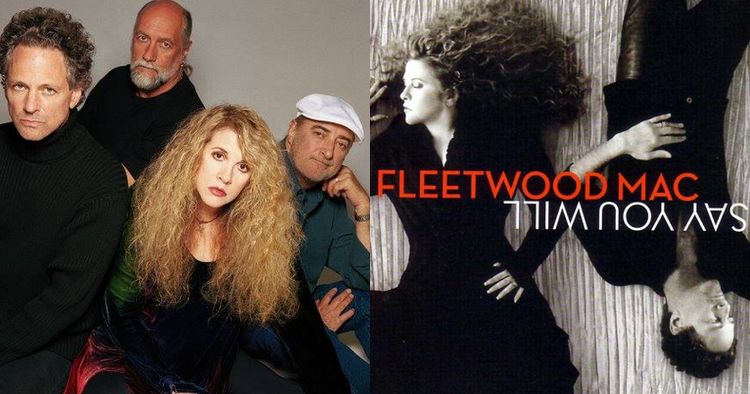
    Fleetwood Mac Say You Will
    (Neil Preston)

    Buckingham, ever the most experimental member of the outfit, takes his brief to new extremes on several strange and surprisingly powerful excursions into heavy, prog-rock territory. “Murrow Turning over in His Grave” is a fire and brimstone protest song: “Would you feel the ooze as your brain drains out/From the pneumatic drills and sharpened knives?/Blood in the sky/Are you dead or alive?” And on a gothic-rock extravaganza called “Come” he piles into a long, squealing guitar solo while Fleetwood Mac’s snare drum explodes like a fusillade of cannon shots.

    But however far out on a limb Buckingham takes them, Nicks is always on hand to guide the group gently but firmly back to it core, soft-rock sound. Her willowly, siren voice rises above the acoustic riffing of “Illume” — a dark if predictably vague response to 9/11 — and brings a worldly-wisdom to bear on the bittersweet lovers’ tale of “Thrown Down.” “I am older now, but I still remember,” she sings on “Smile at You,” her weathered tone soaring over a wall of ghostly, wailing harmonies.

    The album ends with two farewell songs — first Buckingham’s “Say Goodbye” and then Nicks’s “Goodbye Baby,” the eternal rivals divvying up the honours as meticulously as children claiming their fair share of going-home gifts at the end of the party. “There’s blood and guts and disagreements still to this day,” Fleetwood said recently, “But that’s what makes it mean a shit.” And so another of rock’s epochal groups enters its twilight years with a renewed mixture of pragmatism and passion which may come as a surprise to even their most ardent fans.

    David Sinclair / Word (Issue 4) / June 2003

  • Filter Albums: Fleetwood Mac – Say You Will

    Filter Albums: Fleetwood Mac – Say You Will

    Fleetwood Mac Say You Will (2003)Their first new material since 1987’s Tango in the Night. Sheryl Crow guests.

    **** (Four stars)

    With the pomp of Dallas, the longevity of Coronation Street, and the incestuous bent of EastEnders, Fleetwood Mac remain rock’s greatest soap opera. This latest instalment is something of a Buckingham-Nicks spin-off, the departure of Christine McVie meaning fewer keyboards and far more guitars.

    In terms of man-hours spent, it’s predominately Lindsey Buckingham’s baby, his protracted studio beavering going back at least six years, and now exhuming a number of songs originally slated for a solo album. When factors too complex to probe here made the Mac viable again, Buckingham, Mick Fleetwood and John McVie then began working on old and new songs of Stevie Nicks‘, and Stevie sang on Lindsey’s stuff. Reprise staff dreamt of Christmas bonuses, and the Mac’s various managers thrashed out the percentages. One suspects that the precision of Nicks and Buckingham’s nine songs apiece tally is not a mere happenstance.

    Enough already with the cynicism, though, because Say You Will is anything but a half-baked cash-in. Digesting its 18 tracks might be a python-swallows-gazelle task, but having done so, you’ll recognise a meticulously-honed blend of strong pop songs and Buckingham-led envelope-pushing. The title track, “Steal Your Heart Away and “What the World Coming To” are harmony-rich gems which sound chart-bound, while Nicks’ 9/11 response, “Illume,” and Buckingham’s US media critique, “Murrow Turning Over in His Grave,” lend edge and weight. Nicks’ lyrics and phrasing on the former are particularly strong, transforming what might otherwise have been a decent groove track into something special.

    Nicks has said, incidentally, that “Thrown Down” is about former beau Lindsey Buckingham, and it’s probably no accident that several other lyrics on SYW could be interpreted as further musings on the pair’s tempestuous, long-since-over romance. A crafty way of boosting this soap opera’s ratings, perhaps, but the music speaks for itself.

    Stevie Nicks and Lindsey Buckingham talk to James McNair. Separately.

    Can you and Lindsey talk about your relationship more openly now?

    SN: “You want the truth? We don’t talk a lot about our past. It’s like: do we need to go there? It’s just upsetting for both of us. I think we try to live above that and realise it was a long time ago and there’s nothing we can do to fix it. And it hasn’t turned out so bad, has it? We have really good, balanced lives now, and we’re still able to make music together. Apart from being married and having our own family, what more could Lindsey and I have asked for?”

    Do fans still tend to assume that relationship-dissecting lyrics you’ve written are about Stevie?

    LB: “Probably. And some of Stevie’s may be about me. Why ‘may be’? Because it’s not for me to say, even if I suspect some of them are. There are songs Stevie has written all throughout our relationship which I assumed were about me, then discovered that they weren’t, or that they were hybrids [laughs]. I can be as confused about that stuff as the fans, believe me.”

    James McNair / MOJO (Issue 114) / May 2003

  • Buckingham gets back into 'that thing' of Fleetwood Mac

    Lindsey Buckingham started working more than six years ago on the new Fleetwood Mac album, Say You Will, that hits stores today. He just didn’t know it at the time.

    Buckingham originally thought he was making another solo album when he started recording with former band mates Mick Fleetwood on drums and John McVie on bass for the first time since he left the group in 1986.

    “At that point, some sort of light bulb went off somewhere,” Buckingham said, “in Mick’s head or Warner Bros.’ Probably everywhere, unbeknownst to me. People started saying ‘We got John, Mick and Lindsey in the studio maybe.’ ”

    The band did reunite for a 1997 live greatest-hits album, The Dance, and sold-out tour, but Buckingham went back to his solo album. “The live album and the tour that followed was basically the result of a kind of an intervention that we had on me to sort of say ‘You’ve got to put your album down and do this,’ ” said Buckingham, a notorious obsessive who has spent years sealed away recording albums.

    When he did finish the solo album, the label wasn’t all that enthusiastic. “When we got off The Dance and I got finished with it maybe a year after that, and took it to Warners, they had been bought out by AOL and they were sort of on their way out as a regime. (Warner Chairman) Russ Thyret didn’t like my stuff anyway. It was like, well, geez. And Mick and I decided to start cutting some tracks of Stevie’s and it just sort of morphed into that thing.”

    “That thing,” of course, is what the Warner publicity campaign is calling the first new Fleetwood Mac studio album since the 1986 multiplatinum Tango in the Night, conveniently omitting two entirely forgettable, far less successful albums released under the franchise name with different lineups in the interim. But Warner is right in spirit — Say You Will is the second coming of the ’70s supergroup, even without keyboardist-vocalist Christine McVie, a triumphant return to form for a group that has been all but washed up for the better part of 20 years.

    “We rented a house over on the west side (of Los Angeles) and we moved all of my gear over there,” Buckingham said on the phone before a rehearsal for a tour that starts May 7 (July 8 at the HP Pavilion in San Jose). “I started engineering. Probably 95 percent of the time spent in this house was really spent working on Stevie (Nicks) ’cause my stuff was pretty much completed and the other 5 percent was just opening up my tracks, recalling my mixes and getting her voices on them.”

    The 76-minute CD — at one point in the session, band members pondered a two-CD set — rekindles the trademark sound with magician’s ease, simultaneously recalling such varied past efforts as Rumours, Tusk and Tango in the Night. “Certainly on the album, you do have things that fall in the category of being very familiar or very Fleetwood Mac,” said Buckingham. “Then you have things like ‘Come’ or ‘Red Rover’ or ‘Murrow Turning Over in His Grave,’ which, in many ways, are more adventuresome than anything we’ve ever done.”

    Buckingham and Fleetwood Mac apparently need each other in important ways.

    Not only has the group failed to produce any memorable records since Buckingham left, but Buckingham has spent countless thousands of hours crafting brilliant solo albums that are appreciated by no more than a slender handful of big Mac’s audience. After the current project changed from a Buckingham solo album to a new Fleetwood Mac record, he noticed a different attitude at the label.

    “I was always seen as the troublemaker,” he said, “as someone who would shake up the status quo of what was a good thing. I was really trying to be honest to what I thought was important, which was to do your work, look into things that help you to grow. To think long term and to do it for yourself. And not run one thing into the ground because that’s what sells. There’s always been a kind of wariness between myself and the record company and vice versa and none of that helps in terms of getting the machine behind you.”

    Without Christine McVie, the songwriting and vocals come down to Buckingham and Nicks, who recorded an album as Buckingham Nicks before joining Fleetwood Mac. They first met when Buckingham attended Menlo Atherton High School and they began working together seriously when they were at College of San Mateo. At this point, almost 40 years later, they blend like the seasoned collaborators they are.

    “It’s that inexplicable thing that we’ve always had,” he said.

    “There’s a song on there called ‘Thrown Down’ that I think she tried about three different times with three different producers and never made it anywhere. It was supposed to go on a solo album. It was just obvious to me it needed a guitar riff in the chorus. It was a fairly simple thing, for some reason. There seems to be an understanding between us as to what to do.”

    Buckingham talked about “reconciling” the styles of recordings he used with Rumours, the band’s 1977 release that still ranks among the best-selling albums of all time, and Tusk, a 1979 double-record set that was a stark departure from the band’s sunny trademark sound.

    “If you go back to Tusk, ” he said, “that was an album where I was trying a certain approach, you might call more of a painting approach, where I was sort of working on my own in a studio with a machine and kind of allowing things to happen. It was kind of a subconscious approach, one-on-one with the canvas, as opposed to working with the group, which is more verbal and political, more like moviemaking, probably. I had to lobby to get that album made the way it was made. Everyone was quite happy with how it turned out. In fact, Mick would tell you now it’s his favorite album, as it is mine. But at the same time, when it did not sell 16 million albums, a dictum kind of came down from the group that we’re not going to do that anymore.” Buckingham, 55, is recently married, raising a son, 4, and daughter, 2.

    For someone who once groused that he would rather belong to the Clash, Buckingham has more than made his peace with Fleetwood Mac at this point.

    “The subtext of all of this is really that we are here,” Buckingham said, “and, in many ways, are better than ever, maybe breaking the mold a little bit.

    I know there certainly are enough ’80s Boomer acts still making music. But the fact is that we are here and still caring so much about it and, in many ways, doing the best work we’ve ever done at a point in our lives where, you know, the cliche of rock ‘n’ roll being: By the time you’re 40, you’re either burned out or tapped out. It feels very fresh and very new, and still solid. The history, it’s deep. And we’re just thrilled to be here.”

    Joel Selvin / San Francisco Chronicle / Tuesday, April 15, 2003

  • 'Will' power

    Billboard
    Monday, April 14, 2003

    On “Say You Will,” due this week from Reprise, Lindsey Buckingham and Stevie Nicks have collaborated together on their first Fleetwood Mac studio album since 1987’s “Tango in the Night.” Drummer Mick Fleetwood and bassist John McVie are both on board as well, but Christine McVie appears on just one of the set’s 18 tunes and will not be touring with Fleetwood Mac this summer.

    Luckily, Nicks penned the set’s sunny title track, which is catchy and destined to be a radio hit. Buckingham’s meaty, bass-heavy stomper “Murrow Turning Over in His Grave” is another highlight, while the driving rocker “Running Through the Garden” showcase’s Nicks’ passionate vocals. The single “Peacekeeper” is No. 15 on Billboard’s Adult Contemporary chart this week.

    “The whole energy in Fleetwood Mac right now is incredible,” Fleetwood says. “Our story is a really happy one at the moment. We’ve pushed some envelopes with this new album. We’ve made an album that we love, and we’re not frightened or insecure about who we are.”

    The group’s first tour since 1997 will kick off May 7 in Columbus, Ohio.

  • Dysfunction doesn't fluster Fleetwood Mac

    Dysfunction doesn't fluster Fleetwood Mac

    Fleetwood Mac Say You Will (2003)

    By George Varga
    San Diego Union Tribune
    Sunday, April 6, 2003

    LOS ANGELES – If personal and creative tension between band members is essential to musical success in rock ‘n’ roll, Fleetwood Mac’s new album, “Say You Will,” is already a winner.

    “It hasn’t been an easy road,” said singer-guitarist Lindsey Buckingham, who produced or co-produced all 18 songs on the album. “It had some fork-in-the-road moments, and it had some very profound bonding moments.

    “Near the end it had some quite confrontational – and very pleasant – moments.”

    Due out April 15, the meticulously crafted collection is the first new studio album by Buckingham, singer Stevie Nicks, drummer Mick Fleetwood and bassist John McVie since 1986’s “Tango in the Night.”

    It is also only the group’s second album since 1970’s “Kiln House” that does not prominently feature singer-keyboardist Chistine McVie, whose songwriting credits include such Fleetwood Mac favorites as “Don’t Stop,” “You Make Loving Fun” and “Say You Love Me.”

    She quit after completing the enormously lucrative first leg of the quintet’s 1997 reunion tour, which then ground to a halt. Her departure came 10 years after singer-guitarist Buckingham had quit to pursue a solo career, over the heated objections of Nicks, Fleetwood and the two McVies, who were divorced in 1976 (a year after Buckingham and Nicks joined the band).

    “The Fleetwood Mac world certainly can be dysfunctional at times,” Fleetwood said, with classic British understatement. “But having been in this band for what seems to me forever – since 1967 – this is one moment in time that I think the band has done something quite exceptional.”

    Last month, on a day that – fittingly – was sunny one moment, cloudy the next, Buckingham, 55, Nicks, 54, and Fleetwood, 55, discussed their band’s tumultuous past and (for now) relatively peaceful present in separate interviews.

    Nicks spoke at her elegant, two-level home overlooking the ocean in Pacific Palisades. Buckingham (her boyfriend until the mid-1970s) and Fleetwood (who had an affair with Nicks that same decade) took turns chatting in a luxury trailer in Culver City.

    The trailer was adjacent to a massive sound stage, where Fleetwood Mac was rehearsing for its upcoming tour. At least for now, the three-month trek (which may be extended) skips San Diego in favor of a July 16 show at the Arrowhead Pond of Anaheim.

    Nicks and Fleetwood agreed that, in the years since the band achieved superstardom in the mid-’70s, its fortunes have ebbed and flowed depending on Buckingham’s degree of commitment.

    Buckingham, conversely, downplayed his importance to Fleetwood Mac, whose 1995 album without him and Christine McVie, “Time,” was such a commercial and artistic flop that Fleetwood and John McVie temporarily disbanded the group.

    “I don’t think the weight is so much on me,” Buckingham said matter-of-factly. “And I do think this thing is bigger than all of us.”

    That opinion was strongly disputed by Nicks, his former paramour.

    “Fleetwood Mac never would have broken up if it had been up to me, Mick, John or Christine. So this is all Lindsey’s ballpark,” said Nicks, as she curled up in front of the fireplace in her living room, filled with state-of-the-art workout equipment.

    “Lindsey either wants to be in Fleetwood Mac, or he doesn’t,” she stressed. “So he decided he wanted to do it again. And when he decides he wants to do it again, we all either say ‘No,’ or we say ‘Yes.’ Christine said ‘No,’ and the rest of us said ‘Yes, we’ll do it, we’ll give it one more run.’ And we all felt that we could do another great album, or we wouldn’t have done it.”

    In fact, Christine McVie is featured on “Say You Will’s” title track (written by Nicks as an homage to McVie) and on the Buckingham-penned song “Bleed to Love Her,” both of which date back to the band’s 1997 reunion tour. The majority of the new album, however, was recorded over the last 18 months in Los Angeles.

    With or without Christine McVie, this new album is the harmonious-sounding result of some of the same friction that’s fueled the group since 1977. It was then that “Rumours,” an album made in the wake of the McVies’ divorce and the Buckingham/Nicks split, made Fleetwood Mac one of the best-selling rock bands ever.

    “Say You Will,” while unlikely to match the success of the 17-million-plus-selling “Rumours,” has some of Buckingham and Nicks’ best work in years. It also boasts several likely hit singles, including the just-released “Peacekeeper,” although the 18-song album would be far stronger had it been trimmed by a third.

    “This was going to be a double album,” said Buckingham, who is dismayed that five songs had to be cut to contain “Say You Will” to one CD.

    “We ended up – in the process of the confrontations we were having about the (songs’) running order – pulling back and making it an aggressive single CD.”

    Fleetwood, who has headed the band through countless lineup changes over the decades, sounded fatherly when he weighed in on the album’s length.

    “Lindsey’s mind works on what’s right for the art, and I’m not devoid of that,” Fleetwood said. “But at some point I will be at least practical.”

    Buckingham is clearly proud of what he brought to “Say You Will.” But he sounded peeved that, while the rest of the band went to Hawaii on vacation, he had to remain behind to complete mixing and sequencing the album.

    “Well, somebody had to finish the record!” he said. “So that (process) went through a whole series of political spasms and not-very-pleasant phone conversations. But we got there.”

    The album showcases the most fluid and biting guitar work of Buckingham’s career. It also features nine songs he wrote or co-wrote, and nine that Nicks wrote or co-wrote, although the two do not share any of the co-writing credits.

    But Buckingham didn’t hesitate to express his disappointment that his work had yet to be praised by Nicks.

    “I know she must be thrilled with the album, on one level,” he said. “And yet, she’s never said anything to me, like ‘Nice job.’ That’s just been hard for us. So, in that sense, in the way that I’m almost disgustingly warm and fuzzy, she’s probably slightly defiant. But she’s great. I think all she needs to do is find her rhythm.”

    Her cosmic, hippie-dippie image to the contrary, Nicks was perfectly grounded and in sync as she spoke at her home.

    “I’m my own worst critic,” she said. “But I think my material on this album is some of my best material ever. And I think that Lindsay’s material is his best material ever. So I feel that whatever it was that made us reform, there was a real reason for it. And maybe it was all this material that needed to come out.”

    Buckingham regards Christine McVie’s departure as an “opportunity,” the next phase of the band’s evolution. Nicks agreed, if only to a degree.

    “The good news is that, without Chris, you take out the piano influence, since none of the rest of us play piano,” she said.

    “Since she’s gone and she doesn’t want to be here, and we have certainly done everything we can imagine to talk her into coming back, we have to accept that and move on. So it’s just the four of us. It’s going to be more guitar-oriented, it’s going to be more Ginger Baker and Eric Clapton and whoever the other guy (Jack Bruce) was (in Cream, rock’s proto-power-trio in the 1960s). . . .

    “The bad news is that I miss her, terribly. There’s not a day that I don’t think, ‘Where is she?’ It’s more about the friendship and her humor, and her funny, funny, stupid English jokes and how she could make everything lighten up with a flick of her personality. She was a joy to be around. And she was my best friend. So as much as I think that everyone else would like to hear me say, ‘Oh, it’s much better (now),’ no, I can’t say that. Because I miss her so much.”

    Ever the diplomat, Fleetwood carefully cast Christine McVie’s departure in a pragmatic light.

    “I think it’s just a change, and God knows we’ve changed as a band,” said the balding, white-haired drummer. “It’s allowed a whole new chapter of Fleetwood Mac, musically, to take place.”

    That new chapter should appeal to veteran fans, who made the band’s 1997 reunion one of the biggest-grossing tours of the 1990s, even without an album of new material. And Fleetwood Mac’s influence continues to be felt through the work of such admirers as the Dixie Chicks, who scored a major hit last year with their version of the Mac chestnut “Landslide.”

    The key questions now are whether or not Fleetwood Mac can draw a new generation of fans, especially if pop radio shuns its new album and whether the group’s appeal will be limited to nostalgia-hungry veteran fans, and if so, does it matter?

    “I think it’s always important, but it’s certainly not a tragedy if we don’t (reach new listeners),” said Fleetwood, the father of 1-year-old twin girls and, from a previous marriage, two daughters in their early 30s. “If you really want to know my opinion, I think this album is going to be huge. And I think it’s going to mutate into something that not even we can imagine.”

    “You know what?” Nicks asked. “I think that Fleetwood Mac’s fans’ children love Fleetwood Mac. I do. And that is what I seem to get through all my fan mail. Everywhere I go, really young kids come up to me.”

    She laughed.

    “If I had children, of course my children would have listened to exactly what I wanted to listen to for the last 20 years,” Nicks added with a grin. “I can’t help but think that people will love this record. But who knows? It could just tank completely.”

    Buckingham, the father of a 21/2-year-old daughter and a 41/2 -year-old son, is especially eager to attract younger fans. Accordingly, “Come,” one of his songs on “Say You Will,” is delivered with a musical and lyrical ferocity that should impress even the most hardcore, young industrial-rock fans.

    “It’s not a matter of playing down, but you can’t play to the age group that you think is your traditional buyer,” he noted. “Nor can you be something you’re not. We’re just trying to do what we think is interesting, and to be ourselves, but still push the envelope.”

    And should the members of this edition of Fleetwood Mac decide to go their own ways, will honcho Fleetwood put together a new version of the band that has been his life for nearly 40 years? Don’t count on it.

    “I would venture to say that that would just not be on the cards. This is it,” he declared with finality. “This is it for how I see this. And if this can work and (we can) be happy, my hope would be to go forward. That’s how I’m approaching it.”

  • Fleetwood Mac attack

    By Carla Hay
    Billboard
    Saturday, April 5, 2003

    Fleetwood Mac has joined forces with NBC for a major media campaign centered around the band’s new Reprise album, “Say You Will,” due April 15. Last month, the band offered an exclusive preview of the album’s first single, “Peacekeeper,” on NBC’s show “Third Watch.” The week of April 14, the band will be featured daily on NBC’s weekday morning show “Today.” On April 18, the band will perform on “Today” and will be profiled on NBC’s news magazine “Dateline.”

    “Say You Will” is Fleetwood Mac’s first studio album of new material with Stevie Nicks and Lindsey Buckingham since 1987’s “Tango in the Night,” which featured the top-10 Billboard Hot 100 hits “Big Love” (No. 5) and “Little Lies” (No. 7).

    Guests on the album include former Fleetwood Mac member Christine McVie (who is on an indefinite hiatus from the band) and Sheryl Crow. The set features a Buckingham-penned song, “Bleed To Love Her,” which previously appeared on Fleetwood Mac’s 1997 live album “The Dance.”

    As previously reported, the group will kick off a North American tour May 7 in Columbus, Ohio. Presale tickets for fan club members begin tomorrow (March 13); tickets go on sale to the general public beginning Saturday. For more information, visit Fleetwood Mac’s official Web site.

    Here is the complete track listing for “Say You Will”:

    * “What’s the World Coming To”
    * “Murrow Turning Over in His Grave”
    * “Illume (9/11)”
    * “Throw Down”
    * “Miranda”
    * “Red Rover”
    * “Say You Will”
    * “Peacekeeper”
    * “Come”
    * “Smile at You”
    * “Running Through the Garden”
    * “Silver Girl”
    * “Steal Your Heart Away”
    * “Bleed To Love Her”
    * “Everybody Finds Out”
    * ‘Destiny Rules”
    * “Say Goodbye”
    * “Goodbye Baby”

  • The eternal return

    Once again, Lindsey Buckingham gets pulled back into Fleetwood Mac

    It’s fair to say that Fleetwood Mac probably would never have achieved such mega success had it not been for Lindsey Buckingham. Not to marginalize guitarists Peter Green, Jeremy Spencer, or Bob Welch-all of whom contributed immensely to making Fleetwood Mac one of the most progressive blues-rock-pop bands of the ’60s and early ’70s — but it was Lindsey Buckingham’s unique guitar style and savvy arranging, producing,and songwriting skills that guided the band to the top of the charts in the mid 1970s with Fleetwood Mac and Rumours.

    Born in Palo Alto,California, in 1949, Buckingham was inspired at an early age by the sounds of Elvis Presley and other ’50’s-era rock-and-rollers. “I had a brother who was seven years older, and when he started bringing those records home, I got very interested in trying to lay the songs,” explains Buckingham. “I eventually got a 3/4-sized guitar, but I never took any lessons. I just played to the records, and used a chord book to figure out how the songs went. Listening to Scotty Moore eventually led me to Travis picking and other folk styles, and it just went from there.”

    Buckingham’s first group was the Fritz Rabyne Memorial Band, which he co-founded with several friends-one of whom was singer Stevie Nicks. The group plied to San Francisco scene for a few years (with Buckingham on bass), and then broke up in 1971. Now a duo, Buckingham and Nicks relocated to Los Angeles, landed a record deal, and released Buckingham Nicks in 1973. After drummer/bandleader Mick Fleetwood heard the album, he invited them to join Fleetwood Mac.

    Buckingham, Nicks and keyboardist Christine McVie subsequently churned out a string of hits that made fortunes for the band and its record label. Despite their storied personal difficulties during the making of Rumours, the band stayed the course, releasing Tusk in 1979 and Mirage in 1982. However, Buckingham was also pursuing a solo career — having released Law & Order in 1981 and Go Insane in 1984 — and he left the group in 1987 after recording Tango in The Night.

    But even after the release of his third solo album, Out Of The Cradle in 1992, it still wasn’t over for Buckingham and Fleetwood Mac. In 1996, the band reunited to tour and film The Dance — a live DVD that featured the classic lineup performing its classic songs. Following the departure of Christine McVie after The Dance tour, Buckingham went back to work on what was supposed to be his fourth solo album. But that project would eventually turn into a new Fleetwood Mac double album to be released early in 2003.

    Or would it? At press time, Warner Brothers was still debating whether to release a single or double CD set, and the album title and final song sequence was undecided. So here is the story of a work still in progress-one with a wealth of new songs by Buckingham and Nicks, and a huge dose of Buckingham’s wickedly expressive finger-style playing.

    How did you solo album turn into a Fleetwood Mac production?

    I started working on this record after coming off the road for a small tour in support of Out Of The Cradle. One day I ran into Mick Fleetwood, who I hadn’t seen in quite a while, and we started talking about working together. At the same time, Rob Cavallo — who was producing Green Day at the time — became interested in working with me. So the three of us just started cutting tracks. I took most of the songs back to my house to finish them, and while that was happening — as has occurred a few times in the past-the gravity of Fleetwood Mac just sucked me in.

    At that time, there was a big push to do The Dance tour, so I put all my new stuff on the shelf throughout 1996. After the tour, I went back in and finished what was going to be my next solo album. This was about the time that Warner Brothers was preparing to change a lot of staff, though, and I was a little worried that my record would get buried. I felt strongly that it was the best solo thing I had done, so I thought, “Well, I’ll just wait.” In the meantime, Stevie was around, and the whole idea of getting her in the picture came about. I wasn’t sure that I was going to use my stuff for a Fleetwood Mac album, but we just decided to start cutting some of Stevie’s songs while I waited for for the new regime at Warner to come in. From there, the whole project morphed into as Fleetwood Mac thing.

    But without Christine McVie.

    Yeah. At the end of the 40 or so dates of The Dance tour, Christine announced she didn’t want to go out on the road anymore. I wasn’t completely unhappy with her decision because I had my solo stuff to get back to.

    How did her absence affect the sessions for this new album?

    The band had to explore new creative options because Christine wasn’t there. For example, we were forced to play differently because, suddenly, we were a three piece. Her absence also forced Stevie and I to establish a different dynamic with each other, and, ironically, it’s a bit more like Buckingham Nicks. But I think that working through Christine’s departure is one of the reasons this album sounds as fresh as it does.

    Did it make a difference that your songs had been written specifically for a solo album?

    I don’t know if the songs would have turned out any different had I known I was going to use them for a Fleetwood Mac album — although the process in which they were brought along would have changed. When you’re working with a band, a communal sensibility influences things, and the songs that make it are the ones that everyone think are appropriate “band” songs. Obviously, that’s not the case if I’m going off in a more esoteric direction on my own.

    Which process do you prefer?

    Well, there’s an analogy that working with a band is like making movies, and working alone is like painting. I’ve spent many years alone in my garage experiencing the contemplative aspects of songwriting, and I think that has contributed positively to my ability to write songs and make records.

    When you’re writing a song, do you typically start with a guitar part?

    Yes. I’ve always admired Stevie for her ability to have the vocal melody be the center of the song. In theory, that’s how it should be. But the guitar is always the center of my songs, and writing is always a case of wondering, “What do I put over that?”

    The great thing about Stevie is that she really isn’t a musician, so 95 percent of her psyche is driving the melody. As a guitarist, I often find myself defining a guitar part before I even have a melody. There’s nothing wrong with that, but it can be more problematic when you’re trying to develop a song idea.

    At one time, you and Stevie and Christine were masters of turning personal difficulties into hit songs. Is the ability to reflect on what’s happening around you still a factor in your songwriting?

    I don’t really think of myself as a commentator of anything. I just try to find a lyric that has some truth, grace, and mystery. Hopefully, it will bridge the line between something personal and something that’s about the world in a broader sense.

    On Rumours — which was probably the primary example of our lives laid bare — I don’t think we were aware of what we were doing. Our situation was unique because two couples were breaking up while making a record, and the personal difficulties were fueling everything.

    You were playing a Telecaster before you joined Fleetwood Mac, and then you started using a Les Paul. Was there any reason for the switch?

    The band wanted me to play a humbucker guitar because Mick tuned his drums fairly low and Christine’s keyboard sounds were kind of Wurlitzer-like and Rhodes-y. All that lower midrange stuff tended to make the Telecaster sound really scratchy and thin.

    I did use the Telecaster onstage before Fleetwood Mac was released. Those weren’t big shows, but Mick was very adamant that we get out there and get some chops as a band. So there was a certain amount of obscurity working in our favour in terms of being able to play around and make some mistakes. I guess using the Tele live was one of them.

    Were there any other things you had to change to fit in with the band?

    Yes — it was quite a lesson in adaptation. I did everything from switching my guitar to become a less present as a player in order to do the right thing for the band as a whole. They even tried to get me to use a pick!

    What were you using for distortion when you first joined Fleetwood Mac?

    It was a old Sony 2-track tape machine that I’d rigged up. The deck had input and output gain controls, and you could overdrive one gain stage with the other. It was solid-state sounding, but it worked.

    I bought the deck when I first got interested in recording, and had read about Les Paul doing his sound-on-sound thing. I cut my teeth on recording and overdubbing with that machine. It eventually broke down, but the fuzz part still worked, so I plugged into it for my lead tone.

    You are the most noted use of the Turner Model I. How did you discover that guitar?

    Rick Turner had worked for Alembic for a long time, and the guitars they made were the equivalent of the basses the John [McVie, Fleetwood Mac bassist] still has. There were so much stuff on those instruments-parametric EQ and all this other cleverness. Anyway, Rick would ask me to try these different Alembic guitars, and they were always big and heavy with dense, exotic woods and brass hardware. They felt very sterile to me, and I finally said to him, “Why don’t you make me something that’s a cross between what you do and a Les Paul.”

    One day, during the sessions for Tusk, Rick showed up with the Model I. It was more about finding the ideal stage guitar, because as much as the Les Paul was fitting the bill in a fairly good way, it wasn’t giving my picking a fare shake. The Turner sounded slightly ore percussive and articulate-somewhere between a Les Paul and an acoustic guitar-and the tone worked better with my fingerstyle playing. I even used to put a set of .012-.052 flatwounds on it, but now I’m using a .010-.046 roundwound set.

    I’ve noticed you sometimes rotate the pickup on your Turner so that the bass side is closer to the bridge.

    That’s the sweet spot for me. It delivers a little more definition on the low end-which helps me cut through the band-and having the treble side of the pickup closer to the neck sweetens the top strings.

    Do you still use single-coil guitars in the studio?

    Yes. I use the Turner for lead playing and chunky rhythm parts in the studio, but a Strat or a Tele works better when I’m trying to orchestrate guitar parts, and I need something that’s voiced more sublimely.

    Who was your main lead guitar influence?

    I can’t say it was one person. I used to love Led Zeppelin, but I never sat around trying to learn Jimmy Page licks. In terms of developing a sense of melody, I was helped along by Dave Mason’s Alone Together -a wonderful album with a very pretty kind of lead-guitar style. But I never thought of myself as someone who was going to go out there and burn it up. In fact, the lead stuff came very late for me.

    How has technology influenced the way you make records?

    It hasn’t. I still have a traditional console — it’s not even computerized-and I still record to tape. I would like to change the way I record, though, because I now wish I had some of the editing capabilities that allow you to do things quicker.

    But you did use a Roland VG-8 to record much of the album. Were any conventional amps used in the studio?

    Well, you’re right about that level of technology-we hardly used any amplifiers. Although for Gift Of Screws, we put a bunch of amps in different rooms, and mixed and matched the sounds until we got what we wanted. The amps included a Fender Bassman and a Vox AC30.

    You get a very clearly defined sound on both your nylon — and steel — string acoustics. Do you record them with a mic or a pickup, or both?

    A lot of times, I’m running direct with a pickup-although I’ll sometimes mic the guitar to capture a little more air in the acoustic sound.

    When you layer acoustic sounds, you often seem to include your Dobro.

    Yeah, that same riff I’ve been playing for years! The Dobro is tuned to dropped D. I probably got that from listening to Stephen Stills in the late 60’s.

    You flail the strings aggressively with your right hand, yet your sound is very articulate and precise. Can you give us some insight into your technique?

    Flailing-and bit of frailing-pretty much describes it. I don’t think about it much because I’ve never had any formal training. I never sat around and practiced scales, and I never took any lessons. I’m still very limited in some ways.

    Is it that guitar playing comes so natural to you that you tend to focus more on the songs and less on the instrument?
    Even when I was eight years old, the most important thing was learning to play and sing that Elvis tune. For me, it as always been about the music and the songs, and how to make the big picture as interesting as possible.

    Tone Toys 

    “We got a loud, clean stage sound, and we used tube amps and EV speakers,” says Buckingham’s long-time guitar tech, Ray Lindsey. “Lindsey’s fingerstyle playing creates huge dynamics and lots of low-end, and we want to be able to keep the sound clean and tight so that when he goes for a solo, it really stands out.

    “The Boss OD-1 has always suited Lindsey for his distortion tone. It adds sustain, but it still allows him to get a pretty clean lead sound. We also split his guitar signal before the amp so that the front-of-house guy can add some of the direct sound to the mix. This helps overcome the mushiness of the room, and it also adds attack and definition to the guitar sound.

    “Lindsey prefers a heavier, more industrial tone onstage, and for The Dance we used Mesa/Boogie Dual rectifiers set up for the cleanest possible sound. They did the job, but I still think we could take it a step further. We just wanted a huge clean tone, but it’s hard to find in the Dual Rectifier because there are so many overdrives stages that you have to neutralize to get there. We used custom cabinets, which were closed-back on the bottom and open-back on top. I think that setup worked okay for The Dance video because of the smaller stage, but when we got to the arenas it couldn’t quite go to the next level.

    “Lindsey used a Roland VG-8 extensively for the new album. I’ve experimented with a few different modelling amps, and the VG-8 seems more true in its sampled sounds. It also has less bells and whistles to deal with, and that allows us to get to the music faster.” — AT

    Buckingham’s Licks

    Although the song selection and running order of the new Fleetwood Mac album was up in the air as we went to press, I was treated to a special preview of the planned two CD release in the Warner Brothers offices last December. Later on, Buckingham graciously detailed the 6-string highlights of some of his favorite songs. We can only hope that the final version of the album lets you hear these gems.”— AT

    I Am Waiting. “The straight sound is a Baby Taylor with gut strings,” says Buckingham. “Then I played the same part through a very ethereal patch on the Roland VG-8. I like the idea of mixing different textures with a single guitar part.”

    Gift of Screws. “I don’t think I’ve ever done this on a record before, But I doubled my lead part with my voice on this song-just like George Benson. It’s an interesting device, and I did a bit more of it on the song “Miranda.”

    Thrown Down. “It sounds like I used a high-strung guitar here, but I’ve also been known to do an old Les Paul trick to re-voice my guitar parts. For example, I’ll track a part with the tape machine slowed down a half step, and the part will sound sweeter and more “miniature” when the deck is run at normal speed. You have to be careful not to slow down the machine too much, though, because the guitar ca sound wimpy. I also did this trick on the chorus riff, which was tripled with little speed tweaks on either side of the correct pitch.”

    Not Make Believe. “The shimmering tones are courtesy of a doubled part and the speed-tweak trick. What you’re hearing is ‘natural’ phasing.”

    Bleed To Love Her. “The backwards guitar is my Strat through a Lexicon delay, and manipulated with a volume pedal.”

    Say Goodbye. “This song was written quite a long time ago, after I had left the band. I don’t know if I was going for anything in particular, but I was in a place where I could feel compassionate, understanding, and nonjudgmental about the other people in the band, and about everything that had happened. The lyric was really important to me, and the fingerpicking part makes it a really nice guitar piece.”

    Red Rover. “The speed and aggressiveness in my fingerpicking is a big part of what I have to offer these days. Here, the very percussive, fingerpicked part was doubled, and then I slowed down the tape machine and bounced the double to another track. This allowed me to control the doubled part with a fader, and I moved the fader back and forth in time with the music. It almost sounds like some of that gating stuff they did in the ’80s — that on-off kind of thing — except this method is more organic. My idea was to create some negative space to take the place of the drums, and I had to slow the tape machine way down to get the rhythmic manipulations as precise as possible. It’s all about being in the pocket.”

    Murrow Turning Over In His Grave. “The very strange-sounding distortion part is based around a cluster of atonal vocals. You get five, six, or seven different tones together that are out of tune with each other, and it just becomes this arrgh kind of sound. I think there might be some slide in there, too. This song has elements of something quite traditional and recognizable in an almost generic sort of way, yet it departs from that at the chorus when you’re suddenly into this weird Brian Wilson/Yardbirds acid thing. I would never want to do something that was generic all the way through.”

    Art Thompson / Guitar Player (Issue 399, Vol. 37, No.4) /April 2003
  • Another Mac attack

    By David Giammarco
    The Globe and Mail (Canada)
    Sunday, March 30, 2003

    The Santa Ana winds are blowing in from the desert, and from Stage 9 at Culver City Studios, the mystically melodic strains of Dreams drifts onto the warm afternoon breeze. “Now here I go again, I see the crystal visions,” swirls the unmistakable raspy vocals of rock’s gypsy priestess, Stevie Nicks. And for a moment it sounds … it feels … like summer, 1977.

    That year, Fleetwood Mac’s album Rumours seized the airwaves, volleying a stream of superbly crafted hits to the top of the charts and unspooling an irresistible — inescapable — soundtrack for many people’s lives.

    But alas, this is not a dream. It’s spring, 2003, and the famed members of Fleetwood Mac — the reigning dysfunctional family of 1970s rock royalty — are hunkered down in this cavernous sound stage, rehearsing classic tunes and rehashing classic tensions that originally tore the supergroup apart amidst epic indulgences during their hedonistic heyday. Stevie Nicks, guitarist Lindsey Buckingham, bassist John McVie, and percussionist Mick Fleetwood have reunited for a much-anticipated concert tour — only the second such occurrence in 21 years — all in support of an equally remarkable feat: the “classic” Mac’s first studio album in 16 years.

    Say You Will — due for release April 15 — is 18 tracks of exuberant melodies and alluring lyrics, brazenly fused with an instrumental aggression recalling the sprawling innovation of the band’s 1979 double-album Tusk.

    But while the sound is vintage Fleetwood Mac, the substances fuelling it are not.

    In the 1970s and 1980s, copious amounts of cocaine and cognac stoked their frequently stormy sessions. These days, Mick Fleetwood still carries around a plastic baggie, but it’s full of trail mix.

    These last crucial weeks of preparation before the tour launch finds Nicks fretting — needlessly, it seems — over the road-readiness of the band.

    “We just literally finished this record, and now we’re trying to quickly flip over from recording mode into touring mode in a very compressed period of time,” sighs Nicks, explaining that even some of the most renowned Fleetwood Mac tunes need to be relearned for the tour. “Not for me, because I never stopped doing a song like Dreams over the last 2,500 years,” she grins, “but Fleetwood Mac hasn’t done Dreams since 1997, and that was only briefly for three months on “The Dance” tour.

    “Most of these songs I’ve done on every single one of my tours since I started my solo career in 1982. I’ve never stopped touring, whereas Lindsey and everyone else haven’t played in front of audiences since 1997 … I think they’re much more nervous about the old stuff than I am.”

    Buckingham, however, doesn’t seem to be sweating it. Rather, the consummate musician is still ruminating the “epic effort” of birthing a new Fleetwood Mac album, something no one — least of all himself — imagined happening after his acrimonious departure following 1987’s Tango in the Night. “After leaving the band, I was really able to push the envelope on my own … so that this coming together really started to make sense in terms of what I could give back,” reflects Buckingham, 53, who also engineered and produced Say You Will. But somehow this wouldn’t be a true Fleetwood Mac reunion without some expected unease between Buckingham and ex-paramour Nicks.

    “I think Stevie is seeing part of this record through some dark colours right now,” hints Buckingham later in the afternoon, “only because towards the end we had some conflicts about running order and some other things, and she hasn’t quite been able to come out the other end and say, ‘Wow, this is really something!’

    “I think it’s hard for her to feel the catharsis that I’m feeling, and that Mick is feeling … it’s been hard for her to turn and say, ‘Gee, nice job, Lindsey — thanks for working on my songs for an entire year.’ But having said that, which really only speaks of maybe how difficult it got near the end, the whole thing was pretty great.”

    A perplexed smile then spreads across Buckingham’s face. “I must admit,” he says, shaking his head, “there did seem to be a weird sense of destiny to all of this.”

    To fully understand rock n’ roll’s sudsiest, longest-running soap opera, you must rewind through Fleetwood Mac’s private — but mostly musically documented — record of inner-group marriages, divorces, affairs, animosities, band defections, drug abuse and alcoholism, back to 1967. That’s when Fleetwood and McVie first formed — alongside guitarists Peter Green and Jeremy Spencer — what was originally a British blues band that gained fame for their hits such as Albatross and Black Magic Woman (which would be re-recorded in 1971 by Carlos Santana to greater success in the U.S.).

    By then, however, the first of many odd occurrences began afflicting Fleetwood Mac: In 1970, Green descended into madness after a bad acid trip and left to become a roving religious zealot, while shortly thereafter, Spencer mysteriously disappeared into the Children of God cult. Keyboardist Christine Perfect then joined the band, becoming McVie’s wife and infusing their sound with a more pop sensibility. A string of temporary musicians would come and go (including one fired after an affair with Mick Fleetwood’s wife) until Fleetwood, having transplanted the band to Los Angeles in 1974, stumbled upon a record by little-known California folk-rock duo Lindsey Buckingham and Stevie Nicks. He soon invited the romantically linked pair to join the band, andthen everything coalesced for Fleetwood Mac.

    The new lineup’s eponymous 1975 album featured a rejuvenated direction into a winsome rock, pop and blues blend that yielded Top 20 singles Over My Head, Say You Love Me, Landslide and, what would become Nicks’s signature song, the bewitching Rhiannon. The album soared to No. 1 and sold over five million copies, but that unexpected triumph would be dwarfed by the monster lurking just around the corner.

    In 1976, Mick Fleetwood marshalled the troops up the California coast to Sausalito, where over the course of a year-long stint at the Record Plant, the blood and guts of their romantic meltdowns spilled into the recording studio. John and Christine McVie divorced, Buckingham and Nicks split and Fleetwood separated from his wife.

    “Usually when you have a bad breakup, you aren’t still locked up together all day,” says Nicks, dressed in her trademark Dickensian attire of wispy lace and flowing chiffon. “It was so intense every day, so heavy … it was like being in the army. I was never as exhausted in my whole life as when we were doing that album.” That album was, of course, Rumours, named by McVie as a nod to the scandals surrounding the band, which arrived like a hurricane in February, 1977, to spend 31 weeks at No. 1.

    To date, Rumours has sold over 30 million copies worldwide, making it the second biggest-selling album of all time. Ironically, that made the path between then and now an even rockier road for Fleetwood Mac, faced with having to match that mammoth success. The band was next spurred on largely by Buckingham in 1979 to record a complete about face: the wildly experimental double album Tusk. But despite selling millions of copies, Tusk was deemed a commercial failure.

    Virtually imprisoned by near-mythic expectations and vastly deteriorating relations, the band still soldiered on throughout the decade to record two more albums: 1982’s Mirage and 1987’s Tango in the Night. By then, however, both Nicks and Buckingham had branched out into successful solo careers, and the band slowly eroded despite Fleetwood’s best efforts to keep everyone together. “Sometimes I wish I played another instrument, but I’m a drummer, so I inherently need to have a band to play with and I’m relatively useless without that,” explains Fleetwood with a shrug. ” I was always playing the mediator and trying to make things work and keep everyone happy — at a great cost to my private life, my marriage, my time with my children.”

    Neatly attired in a crisp white shirt, jeans and with now short gray hair, Fleetwood looks far more distinguished than in his “eccentric Keith Moon days” and he partially blames himself for the disintegration of his beloved band. “During the ‘crazy’ times towards the end of the eighties, my life was so involved in alcohol and drugs and just having a good time, that my managerial skills were completely blunted out,” he admits.

    “Stevie and Lindsey both know that I’m not a maniac any more,” adds Fleetwood with a laugh. “That feels good.”

    The undeniable propellant of Fleetwood Mac has always been the potent chemistry between Buckingham and Nicks — often taking the form of vicious lyrical battles — as when Buckingham jabs in Go Your Own Way: “Packing up, shacking up is all you want to do.” Though they each have indeed gone their own way personally (Buckingham is recently married with two young children), it’s apparent there still exists some unresolved heartache for the pair, who have known each other since high school. “It’s a curse,” Nicks admits quite candidly. “And if I really was a witch, you know that’s the first thing that I would make stop. But there’s been nothing I could ever do to fix that.”

    “Yeah, I’m sure Stevie and I still have a few conversations to have,” concedes Buckingham, who also figures those old demons probably helped spark the vitality heard on Say You Will. “There was certainly a period of time during the making of this album where it felt like we were really going at it through the music. You can really feel the energy between us … I don’t think that’s ever going to go away.”

    How such tensions could produce such exquisite harmonies remains one of the most enduring — and endearing — enigmas surrounding Fleetwood Mac. “People say that to me all the time,” admits Nicks with a smile. “They’ll say stuff like, ‘I’m sorry that you guys had to be so miserable and suffer so much, but we’re really glad that you did because otherwise, we wouldn’t have these songs.’ So it’s all been a real Catch-22 situation.”

    Though Buckingham feels Say You Will represents the “healing” of Fleetwood Mac, there is one valuable link missing: Christine McVie. The elegant songbird opted out of the rock ‘n’ roll lifestyle after briefly tasting it again on “The Dance” tour in 1997, and the band decided that she couldn’t do the record if not prepared to tour. In hindsight, Buckingham feels it was maybe for the best.

    “One of the things that made this album as strong as it is, oddly enough, is the fact that Christine was absent,” he says. “Because on a musical level, you have more room for Mick, John and myself to manoeuvre. And on an emotional level, the absence of Christine gave John an opportunity to be a little more down in himself, a little grittier, and not so on his guard. Because the occasional button might have gotten pushed being around Christine.”

    What originally started off as Buckingham’s fourth solo album, Say You Will evolved into a Mac reunion when a regime change at Warner Brothers forced Buckingham to reconsider releasing his project amidst the corporate uncertainties. While waiting for the dust to settle, Buckingham invited Fleetwood and McVie to help lay down some tracks, and from there, “the gravity of Fleetwood Mac just sucked me in,” he smiles. “It was just like old times.”

    Once Nicks became involved, Buckingham had already rented a house in Bel Air to record, which he says further helped to provide a revived communal spirit for the band. And according to Fleetwood, the experience helped erase some of their painful past. “It was very different,” he laughs. “I mean, there was no drug abuse, no alcohol abuse, no romances falling apart, no midnight creeping from door-to-door and sleeping with each other … we’re all very different people now.”