Tag: Mirage

  • UPDATE: Mirage 5.1 surround mix slated for June release

    UPDATE: Mirage 5.1 surround mix slated for June release

    UPDATE: The Mirage reissue has been delayed to September 23.

    UPDATE: The 5.1. surround sound mix of Fleetwood Mac’s 1982 album Mirage is slated for June release, according to a new report. No other details were given.

    Original post from April 4, 2016

    Ken Caillat hints at possible Mirage reissue

    On Saturday, Fleetwood Mac producer Ken Caillat (Rumours, Tusk, Mirage) raised fan hopes of a possible Mirage reissue when he posted on his Facebook page about the 5.1 surround sound mix of Mirage “sounding so fantastic” (see his Facebook post below). Despite piquing fan curiosity, Ken didn’t elaborate on whether the 5.1 mix would be released in the near future or if an expanded edition of Mirage was even in the works. But his post certainly generated social media buzz among diehard fans.

    Fleetwood Mac’s 13th studio album Mirage was released on June 29, 1982. On August 7, the album reached No. 1 on the Billboard Hot 200 Albums chart, remaining in the top position for five weeks through the week of September 4. The album’s lead single “Hold Me” was the band’s first Top 10 single since “Sara” (No. 7) from Tusk (1979), reaching No. 4 during the summer of 1982. The album’s momentum continued with the release of the next two singles “Gypsy” (No. 12) and “Love in Store” (No. 22). Heavy MTV rotation of the music videos for “Hold Me” and “Gypsy” contributed to the album’s popularity.

    In 1983, Fleetwood Mac received two American Music Awards nominations for Best Pop/Rock Group and Best Pop/Rock Album. In 1984, the RIAA certified Mirage double platinum for the shipment of two million units to retailers.

    Facebook post


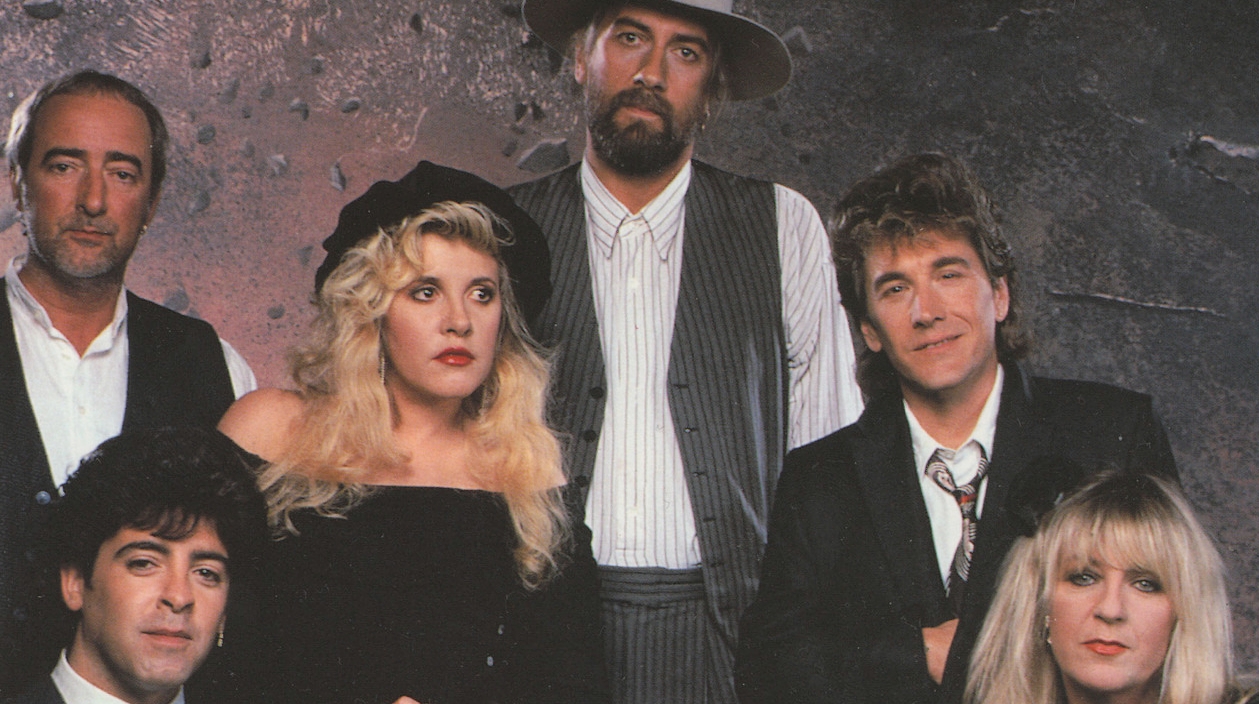
    Fleetwood Mac
    David Montgomery / Getty Images

    1982-fm

    1982-gypsy-video-screen-cap

  • VINTAGE VIDEO: ‘Sisters of the Moon’

    VINTAGE VIDEO: ‘Sisters of the Moon’

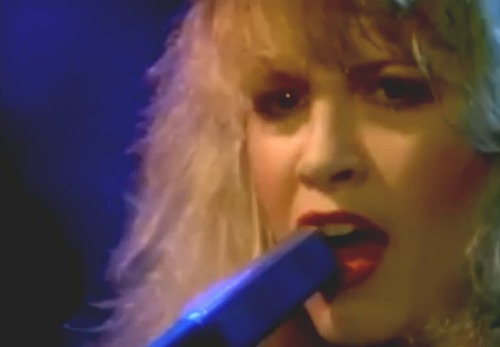
    “Sisters of the Moon” from Fleetwood Mac’s 1982 concert at the Los Angeles Forum is an essential performance by most longtime fans’ standards. “Intense silence” as she walks onto the stage, Stevie channels the spookier elements of “Rhiannon” and “Gold Dust Woman.” With her blond locks teased forward and black chiffon pulled over her head, she transforms from fragile gypsy beggar to high-octane rock and roll ballerina. It’s always sheer excitement to see Stevie so engaged and impassioned in tour-de-force rock mode, but the rest of the band seem to be having a great time, as well. With Lindsey rocking a verse, Christine head-banging at her keyboards, bug-eyed Mick fixated on Stevie’s curious movements, and even the normally-stoic John swinging his bass around a few times, “Sisters of the Moon” remains an unforgettable band moment in the Fleetwood Mac live catalog. It’s been more than 30 years since Fleetwood Mac performed the song in concert, but the anticipation has been building ever Stevie revealed on Thursday at SXSW that a resurrection is approaching on April 4…just in time for Easter. Perfect!

  • Fleetwood Mac keeps truckin’

    Fleetwood Mac keeps truckin’

    Buckingham goes his own way as the band takes to the road

    FLEETWOOD MAC KNOWS how risky it can be for a hit rock band to confront a live audience with the unfamiliar.

    The group received an object lesson in the dicey nature of novelty about 10 years ago in Kansas City, co-founder Mick Fleetwood recalled in a phone interview last month.

    “We went out and played material that nobody had ever heard, and we just died. We just weren’t drawing on enough stuff that people knew. We weren’t booed off, but we realized something wasn’t going as well as it normally did. We hung ourselves in public.”

    The new songs that were duds in concert turned up soon afterward on an album called Rumours, where, given the chance to seep in, they went over well enough. That 1977 album became one of the all-time blockbusters, with sales approaching 20 million.

    Most of the songs Fleetwood Mac plays on the tour that brings it to the Civic Center Sunday night will be familiar to its fans. Even so, the group’s first tour since 1982 is full of the risk of novelty. The songs may be standards, but this is a radically changed Fleetwood Mac.

    Over the summer, shortly after the release of Tango In The Night, the best Fleetwood Mac album since Rumours, key member Lindsey Buckingham announced he was finished with the band. Although Fleetwood Mac had two other popular singers and songwriters in Christine McVie and Stevie Nicks, Buckingham had figured most prominently in the group’s success over the past 12 years. More than a guitarist or a lead male voice, he was an important shaper of Fleetwood Mac’s high-gloss studio sound. Buckingham was the main architect of Tango In The Night, an album that’s as impressive for the crispness and splendor of its sound as for its generally strong songwriting. Tango was recorded in a studio Buckingham had built in his Los Angeles home. When the other members of Fleetwood Mac began planning to tour, the guitarist announced that home was where he was going to stay.

    Lindsey ‘simply doesn’t want to’

    “I understand why Lindsey’s not doing the tour – because he simply doesn’t want to do it,” Fleetwood said. “I can think of nothing more horrible than ‘doing it for the company store because I’ve got to do it.’ ”

    When Buckingham joined with Nicks in 1975, Fleetwood Mac was well practiced at breaking in new personnel. The band started in 1967 as a British blues-rock group centered around alumni of John Mayall’s Bluesbreakers. By the time Buckingham joined, drummer Fleetwood and bassist John McVie already had gone through six guitarists in a line stretching back to Peter Green, the band’s original leader.

    Fleetwood said there never was any question about carrying on with the band after Buckingham quit to pursue a solo career.

    “I just didn’t feel like rolling over and dying. People that know about us realize the band doesn’t easily disappear.” At Fleetwood’s suggestion, the band started tour rehearsals with Billy Burnette, a guitarist, singer and songwriter who had recorded on his own and with Fleetwood’s side-project, Mick Fleetwood’s Zoo. Enlisted for the lead guitarist role was Rick Vito, a veteran session player who most recently had toured with Bob Seger.

    “Billy was not a stranger to anyone in the band. He’d written with Christine and done demo stuff with Stevie. We went into the first day of playing just to see what was happening. I just had a strong intuition that everyone would like it.”

    With the personnel change, said Fleetwood, came a commitment to be more of a cohesive, ongoing unit than the loose aggregation of individual careerists that Fleetwood Mac had become. During the ’80s, Nicks emerged as a headliner with three hit solo albums, and all the other Mac members except John McVie released records of their own. Every few years, between solo projects and coping with such publicized personal problems as Christine McVie’s troubled romance with Beach Boy Dennis Wilson, Fleetwood’s bankruptcy and Nicks’ treatment at the Betty Ford Center for substance abuse, Fleetwood Mac’s members would get around to recording together.

    “All ’round there’s a new philosophy about what we’re doing and what we hope to be doing,” Fleetwood said. “It has to be a little more definite in terms of ‘Are you really in the band called Fleetwood Mac, or are you in it just every five years?’ Stevie volunteered what she wanted to do – which was to put all her energy into the band for quite some time.”

    When Fleetwood Mac starts work on its next album after the current tour, the labor will be shared more evenly than it was with Buckingham overseeing the recording sessions as co-producer, Fleetwood said.

    “When somebody is as talented as Lindsey most certainly is, and you give somebody the range to do that, you can find yourself a little bit looking on rather than participating. But the nucleus of the band is still very much there. It’s not as if we’ve lost an arm and a leg.”

    For diehard fans

    On tour, Fleetwood Mac will move into its post-Buckingham period by “pretty much steering clear of Lindsey’s material. I would hate to ask the two guys to come in and sing that – that’s not a cool thing to do.” In addition to songs by Nicks and Christine McVie and Buckingham’s Go Your Own Way, which Fleetwood described as “more a band-oriented song,” the show will include some blues-based material, “stuff from way back when the band first started. I don’t think people will be real familiar with it, except real diehard Fleetwood Mac fans.”

    Risky, perhaps – but Fleetwood Mac, a band known for coping with changes as well as any other major rock group, has arrived once more at a point in its history where it can’t avoid taking risks.

    Fleetwood Mac plays Sunday night at the Civic Center. The Cruzados open the show at 7:30. Tickets cost $17.50.

    Mike Boehm / Providence Journal (RI) / October 30, 1987

  • Fleetwood Mac: Mirage

    Fleetwood Mac: Mirage

    ROCK/POP

    Fleetwood Mac: Mirage. 23607-1. The pleasures of this album are in its smooth, understated style and its fresh, uncomplicated melodies. It’s a distinctive flavor that’s been the group’s signature since the mid-70s, when Lindsey Buckingham and Stevie Nicks joined on. Although easily recognized, Fleetwood Mac is always welcome just the same, like the familiar tartness of an early fall apple. The group took a brief sojourn in the land of Tusk three years ago, in an album that surprised and confused some Fleetwood Mac fans. Nonetheless, the different-sounding title song, played with the University of Southern California Marching Band, washed refreshingly over a music scene dominated by soggy pop, hard rockers, and disco. Mirage, on the other hand, is more in style with their Fleetwood Mac and Rumours albums, and includes the hit song “Hold Me,” written by Christine McVie and Robbie Patton. It charms as only Fleetwood Mac can. The group is at their best on a tune like “That’s Alright,” written by Stevie Nicks, where the music flows casually yet smoothly, and the feeling is that the group got together only because they felt like making some music.

    David Hugh Smith / Christian Science Monitor / December 9, 1982

  • Lucky Fleetwood Mac fan jet sets

    Lucky Fleetwood Mac fan jet sets

    For Randy Lane, an out-of-work laborer in Toledo, Ohio, one day had passed much like another since he was laid off last February. But all that changed a few weeks back when a sleek black limo pulled into the blue-collar neighborhood where Lane, 24, lives with his parents. Accompanied by his fiancée, Debbie Canning, and two friends, Lane piled into the limo and embarked on a whirlwind junket that would have left even the most jaded of groupies gasping.

    It all started when Lane entered the “One Night Stand” with Fleetwood Mac contest sponsored by MTV, a nationwide cable channel that airs video rock music 24 hours a day. Lane’s winning entry was one of more than 200,000 received. With MTV picking up the tab, Lane and his three friends (two of whom had never flown before) were whisked by Learjet from Toledo to Phoenix. There another limo transported the star-struck quartet to the Compton Terrace Amphitheatre, where they dined at fresco with the band and made very small talk. (“Did you have a good trip?” “I really love your music”) Most notably, Randy and John McVie discussed sailing while Lane’s buddy, beer lover D.J. Cousino, swapped suds talk with Mick Fleetwood, who introduced a delighted D.J. to the pleasures of Foster’s Lager.

    Lane and his pals were then treated to two hours of vintage Mac, the high point coming when Lindsey Buckingham dedicated “Hold Me” to “our good friends, Randy and Debbie.” After some quick postconcert farewells, it was back to the Learjet—and almost four hours later, Toledo. Nineteen hours after it began, the magical mystery tour was over.

    After getting some sleep, Lane stopped in at his favorite hangout, Jim Dandy’s, and, between games of foosball, reflected on his good fortune. “That,” he said of the postage stamp on his winning entry, “was the best 20 cents ever spent.”

    PHOTO (COLOR):Randy Lane had planned to propose to girlfriend Debbie Canning on the Learjet (left), but he jumped the gun. So Debbie—who accepted—settled for a re-enactment. Backstage in Phoenix, Lane enjoyed a preconcert chat with mighty Mac’s members: (from left) Lindsey Buckingham, Stevie Nicks, Christine McVie, John McVie and Mick Fleetwood.
    PHOTO (COLOR):[See caption above.] PHOTO (COLOR):While Randy and Debbie lived it up, pal D.J. Cousino (left) affected the detached look of a longtime limo rider.

    People (Vol. 18 Issue 16, p32. 1p.) / October 18, 1982

  • Stevie Nicks recovering from the flu

    Stevie Nicks recovering from the flu

    Stevie Nicks, vocalist with Fleetwood Mac and one of rock music’s top sex symbols, is recuperating from a bout with the flu at her parent’s home in Phoenix, a spokesman said Thursday.

    Miss Nicks’ illness earlier forced the band, whose current hit album Mirage led the pop charts for several weeks and is now ranked No. 2, to postpone concerts in Los Angeles and Oakland, Calif.

    “Stevie’s got a slight case of the flu,” Larry Solters, the singer’s spokesman at Frontline Management, said. “She is currently recuperating at her parent’s home. It is not a serious illness.”

    “The band hopes to go back to work very soon,” Bob Gibson, a spokesman for the group, said, “but of course it depends on her health.”

    He said the singer was expected to perform with the band in Memphis, Tenn., next Tuesday. The group’s Oakland concert has been rescheduled for Oct. 20, he said, and the Los Angeles dates for Oct. 21-22.

    Miss Nicks got her start in rock music in the early 1970s, when she performed with the band Fritz in the San Francisco Bay Area. She then formed a duet with singer-guitarist Lindsey Buckingham, and they both joined Fleetwood Mac in 1975.

    The group’s most recent concert tour included the top billing on the final day of the Labor Day weekend US Festival near San Bernardino, Calif.

    UPI News / October 7, 1982

  • Fleetwood Mac whips troubles, working chemistry aids band

    Fleetwood Mac whips troubles, working chemistry aids band

    Mick Fleetwood was in a hurry.

    He was at the tail-end of a full afternoon of phone interviews with the press, one more rehearsal was scheduled and there were the usual business matters to be completed — all in preparation for Fleetwood Mac’s 1982 American tour.

    The group performs in the Myriad at 8 p.m. Sunday.

    “I’ve got a doctor’s appointment in a few minutes,” came the drummer’s remarkably unhurried, British-accented apology over the crackling phone line.

    “I’ve got hypoglycemia. Gotta get the old sugar count checked out before we go on the road.”

    The tour was set to begin in two days at the time of our brief chat, and Fleetwood Mac’s new album, Mirage, was already sitting at No. 1 on the national charts.

    “It’s doin’ great,” Fleetwood said happily. “We’re very happy with this album because it feels, we think, a lot more integrated, more of a band effort, than the last one did.”

    The group’s previous LP, Tusk, was an ambitious double-record package which, Fleetwood admitted, had a more “segregated” feel to it. The album seemed to be a collection of solo performances by the group’s three songwriters — Stevie Nicks, Christine McVie and especially Lindsey Buckingham.

    “There was a lot of experimental stuff done on that album,” Fleetwood reflected. “But had it been a single album I don’t think people would’ve been half as overly-aware of that particular aspect of it.

    “We suffered a little because of that. People felt we were doing things differently.

    “When you’ve got a double album, obviously the styles of all the individual songwriters — which are very different as I’m sure you’re aware — are more apparent.

    “You became much more aware of which songs were Stevie’s, which ones were Christine’s. And Lindsey, well, he had the bulk of the songs. I think eight or nine.”

    On several of Buckingham’s Tusk contributions, the lead guitarist played all of the instruments on the tracks.

    “None of that went on on this album (Mirage),” Fleetwood said.

    “We have a working chemistry in this band. We became aware of just using that.”

    Fleetwood formed the first incarnation of Fleetwood Mac in 1967 in England with fellow John Mayall alumni John McVie (bass) and Peter Green (guitar/vocals). They also had support of guitarist/vocalist Jeremy Spencer.

    Through the years, the band has gone through numerous reincarnations, and the lengthy list of former members includes Green, Spencer, Danny Kirwan, Dave Walker, Bob Weston and Bob Welch.

    Beginning as a band heavily steeped in American blues, the ever-changing Fleetwood Mac began to move more into contemporary and progressive styles of rock ‘n’ roll.

    But while they garnered a devoted cult following, the group never attained more than modest commercial success.

    Through a long process of trial and error, Fleetwood finally developed a winning formula, first with the addition of John’s wife, Christine, on vocals and keyboards and finally with a little-known songwriting and performing duo, Americans Lindsey Buckingham and Stevie Nicks.

    In 1975, Fleetwood Mac, the first album with this new lineup, went platinum and yielded three hits, “Over My Head,” “Rhiannon” and “Say You Love Me.”

    Buckingham’s distinctive and unusual acoustic and electric guitar stylizations, coupled with the perfect blend of the three singers’ voices and imaginative songwriting talents, created a brand new Fleetwood Mac sound.

    But just when things were finally beginning to look rosy came the much publicized break-up of John and Christine and the long-standing relationship of Stevie and Lindsey.

    It was a traumatic time for the band and for Fleetwood in particular, who was charged with holding together a band made up of ex-lovers and ex-spouses.

    “None of the old battle scars still exists,” he recalls now. “That’s long since gone. That was all able to be coped with, which wasn’t easy.”

    Someone in the background reminded Fleetwood of his doctor’s appointment just when he was beginning to warm to the subject of his own work, but he allowed one last question: What kind of show can the fans expect this time around?

    “Well, we don’t believe in flash-pots, y’know,” he chuckled. “Just basically, we’ll get up and do a two and a half hour show, some old stuff and then a chunk of the new album — just going for it.”

    Gene Triplett / The Daily Oklahoman / September 23, 1982

  • Pop music’s heyday said to be waning amid falling sales

    Pop music’s worst business summer in recent years is drawing to a close, and some insiders in the music industry are saying that an era appears to be ending.

    Summer concert revenues are down drastically from previous years, pop record sales are a fraction of what they were in the 1970’s, and music industry executives are increasingly concerned that young people are taping albums rather than buying them and spending their money on video games rather than on records and concert tickets.

    CBS Records announced yesterday that it was discharging 300 employees — 15 percent of its professional staff -including several vice presidents, and reducing its regional branch offices from 20 to 10.

    Robert Altschuler, the company’s vice president of press and public affairs, attributed the dismissals and branch reorganization to “current and projected market conditions.”

    ‘Real Bottoming-Out’

    Another insider in the record business said that there had been “an almost complete lack of business, a real bottoming-out.” The CBS action is the latest and most severe cutback in a wave that has swept the industry and is expected to continue at other companies.

    Ironically, many of rock’s top artists and most rock critics feel that artistically the music is stronger and fresher than it has been in a long time. A number of established artists have just made their best albums in years, and the big-city rock-club circuit has been launching a succession of new bands. But these bands have been spectacularly unsuccessful in attracting audiences.

    Ever since the beginning of the 1970’s, when pop music surpassed motion pictures as America’s biggest-grossing entertainment medium, summer has meant big outdoor concerts, big cross-country tours by rock’s most popular bands and a full schedule at such rock concert halls as the Asbury Park (N.J.) Convention Hall and the Palladium in New York.

    The biggest groups used to time their album releases to the beginning of summer vacation, hoping to come up with one of those magical summer hits that blasts from every radio and sells like hotcakes from June through September. As soon as those summer albums hit the stores, the groups would hit the road, where the immense seating capacity of outdoor stadiums and summer rock festivals virtually guaranteed that they would “clean up.”

    But those days are over. “Of 14 shows at the Asbury Park Convention Hall this summer, only four made money,” John Scher, New Jersey’s major rock-concert promoter, said. “Five years ago we would have called it a bad summer if we’d had three or four unprofitable shows. We also used to put on two or three big outdoor shows every year in Giants Stadium; now we’re doing one or two of those shows every one or two years.

    “The only groups that can fill a Giants Stadium now are a small handful of very, very big acts — the Rolling Stones, the Who and Bruce Springsteen.”

    Dropoff in Sales

    “It’s the 1980’s, and the cream is definitely off the top of the business,” said Irving Azoff, manager of some of the biggest rock stars. Back in the 70’s, five of Mr. Azoff’s clients, the Eagles, sold 15 million copies of their “Hotel California” album and broke attendance records across the country. He also manages members of Fleetwood Mac, whose Rumours album almost matched the Eagles’ sales.

    Now the Eagles have disbanded, and the band’s members are pursuing solo careers, with varying degrees of success. Fleetwood Mac has another No. 1 album, Mirage, but sales are in such a slump that it is unlikely to achieve more than a fraction of the sales of Rumours. While the group is going on the road this month, it will not be raking in the money at stadium concerts and outdoor festivals.

    Fleetwood Mac only had offers to do two outdoor shows in the whole country,” according to Mr. Azoff. “One was in a town that doesn’t have a large indoor arena; the other was the Us Festival, which is scheduled to take place Labor Day weekend in San Bernardino County in California and is going to be the summer’s only really big festival. There’s a very good reason why groups like Fleetwood Mac aren’t doing more stadium shows — the kids aren’t buying tickets.”

    Charts Are Not a Guarantee

    The kids are not buying records, either. As recently as the mid-70’s, the record industry was still enjoying the phenomenal spiraling growth that had carried it through the previous 15 years, when record sales doubled six times. Income from sales last year came to $3.6 billion, but the handwriting was on the wall; the industry shipped 55 million fewer albums and singles than in 1980.

    Performance on the best-seller charts no longer means huge sales. CBS undertook its cutback in spite of the fact that 24 of its albums are in the top 100.

    “Most of the executive-level record-company employees I know are being optimistic in public,” a CBS employee said recently, “talking about weathering a temporary downswing and learning to live with more modest expectations. But in private they’re talking Doomsday.”

    The popular-music industry has singled out several villains to blame for its present ills. The record industry’s No. 1 villain is home-taping – the youngster with the cassette recorder who tapes a friend’s album or tapes the album’s best songs off the radio rather than buy the album.

    Lobbying for Royalties

    Stan Gortikov, president of the Recording Industry Association of America, charges that “last year our industry sold the equivalent of about 475 million albums.” “But at the same time,” he added, “about 455 million albums were home-taped.”

    His figures, he said, were based on an elaborate survey financed and conducted by Warner Bros. Records in 1980. Record-industry leaders are lobbying for national legislation that would require manufacturers and importers of blank cassettes and cassette recorders to pay royalties to the record companies and artists who are ostensibly losing income because of taping. If the legislation were enacted, the cassette manufacturers and importers could probably be expected to pass their increased costs on to consumers.

    Another likely villain is the sweeping popularity of video games. “I go down to the Asbury Park boardwalk now and see all these kids putting $5 or $10 worth of quarters into a video game,” Mr. Scher said. “There are hundreds and hundreds of those games along the boardwalk now, and there’s no doubt in my mind that an awful lot of kids who would have spent that money on records or concert tickets a couple of years ago are now spending it in the game arcades.

    “Add to that the unprecedented number of popular youth-oriented movies that are showing this summer, and it adds up to a lot of competition for pop music.”

    Lack of Promotion

    No clear-cut connection can be proved, but most youngsters have limited allowances, and as revenues from video games continue to soar, revenues from record and concert sales plummet.

    Then there is radio. CBS, Warner’s and the other major record companies have not been falling over one another to record and promote fresh young performers who might capture the imagination of record buyers and help reverse the slump. The new groups that do manage to win recording contracts get very little air play. Album-oriented rock stations, called AOR, have become entrenched and conservative, resistant to new sounds and new faces.

    “Half the groups you hear on AOR these days are dead,” said Rick Carroll, program director at Los Angeles’s KROQ, one of the few successful FM rock stations that consistently play new bands and new music.

    “Radio stinks,” Mr. Azoff said. “The stations are making a lot of money, but they just aren’t taking chances.” The song that gets the most air play and the most requests at FM rock stations nowadays is “Stairway to Heaven,” a track from a 1971 album by the defunct Led Zeppelin.

    Rampant Standardization

    In recent months, some of the leading AOR stations — WMET-FM in Chicago, WCOZ-FM in Boston and WLLZ-FM in Detroit — have seen their audience-popularity ratings tumble by as much as two-thirds. These and most other AOR stations maintain strict and very limited lists of what records disk jockeys are allowed to play, and in many cases the contents of the playlists are determined by successful programming consultants.

    Even Lee Abrams, the most successful consultant — his Superstars format is heard on 80 AOR stations — concedes that the standardization has gotten out of hand. “Consultants have taken away the spontaneity and magic of AOR,” he added.

    The ratings success in Los Angeles of KROQ, which is rapidly closing in on the city’s entrenched AOR heavyweights, KMET-FM and KLOS-FM, has given supporters of new rock some cause for optimism. Most new-wavers are convinced that their music would inject enough freshness and sparkle into radio to reverse the listener desertions that are plaguing more and more of the conservative, rigidly formatted AOR giants.

    New-Wave Arena Fare

    The way things are going in the rock-concert business suggests that this could be true. The promoters of an Aug. 21 concert at the John F. Kennedy Stadium in Philadelphia, one of the summer’s handful of big outdoor shows, beefed up a bill topped by the venerable British progressive band Genesis with two new-wave favorites, Elvis Costello and Blondie, rather than with standard arena-rock fare.

    The country’s leading rock promoter, Bill Graham, is leaning heavily toward new-wave groups in booking for the Us Festival, which is scheduled to include an elaborate computer and video fair and is the only really ambitious outdoor festival of the season.

    Groups that have agreed to perform include the Police, the Talking Heads, the English Beat and the B-52’s as well as the more established and conservative Fleetwood Mac, Santana and Jackson Browne.

    Many insiders feel that the record industry’s ills boil down to a simple lack of consumer interest and that most of the music that CBS, Warner’s and the other big labels have been recording and releasing in recent years has not been engaging.

    Problem of Boredom

    Rock critics tend to agree; albums made by young groups with strong local followings and released by small independent labels have placed at or near the top of most critics’ annual 10-best-albums lists. Some of the small labels that have been releasing consistently vital music are Sugarhill of Englewood, N.J., which has popularized rap records, a black, inner-city phenomenon, and the punk-oriented Slash label, which built the popular Los Angeles club bands X and the Blasters into nationally known acts.

    The critics feel that many of the rock fans who seem bored with the latest superstar product would take to the music of the younger performers if the fans were exposed to it. But AOR stations do not play the new material, and only record stores that sell imports and independent releases to a relatively small and discriminating audience stock it.

    Some established artists whose records do get played on radio and sold in the major chain stores feel threatened by the new wave of youngsters. But a surprising number of stars agree with the newwavers and critics that AOR radio is boring and that the major record companies are not signing enough younger performers.

    In recent conversations, Rod Stewart, Mick Jagger of the Rolling Stones and Peter Wolf of the J. Geils Band criticized radio and the major labels for playing it safe and praised a number of younger bands and independent record companies for taking chances.

    ‘Hard to Keep Up With Them’

    “Anybody who thinks this is a lousy period for music just isn’t listening,” Mr. Wolf said. “Every city has good bands playing original songs and clubs where they can play, which is something you didn’t see back in the early and middle 1970’s. There are so many new bands coming up with fresh ideas and playing with the kind of fire that rock-and-roll is supposed to have that it’s hard to keep up with them.

    “We all listen to all the new music we can get our hands on, and we pay particularly close attention to college radio stations, which are the only stations consistently playing the new, adventurous stuff. Fortunately, we live in Boston, where there’s great college radio. People out there in Middle America don’t get a chance to hear much new stuff, if any. No wonder they’re not listening to the radio or going to as many concerts or buying as many records as they used to.”

    If so many insiders agree on the causes and dimensions of the crisis, why is not more being done to combat it? “Our business just isn’t reacting,” Mr. Azoff said. “Actually, the big companies have reacted by cutting back, trimming their staffs and their budgets. I think there’s going to be more of that.

    “And, of course, that means it will take even longer for the industry to get healthy again, because what’s going to be cut first? Who’s going to suffer?

    “The new acts, the future of the industry.”

    Robert Palmer / New York Times / August 14, 1982

  • THE POP LIFE: Fleetwood Mac – Mirage

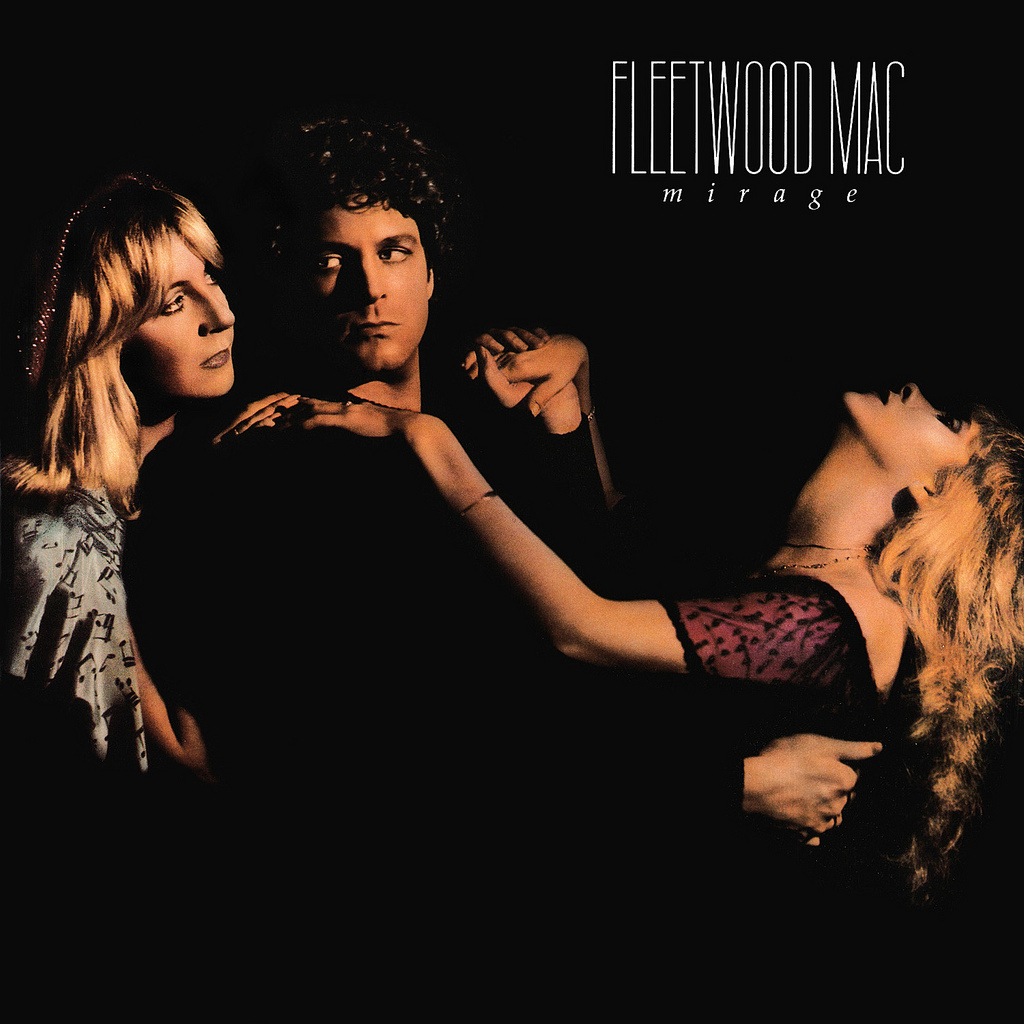
    Fleetwood Mac Mirage cover 1982FLEETWOOD MAC’S Mirage (Warner Bros.) has already climbed to the top of the album best-seller charts, just a few weeks after its release. It sounds as if it could repeat the phenomenal commercial success of Rumours, which made the present Fleetwood Mac lineup into a supergroup several years ago and went on to become one of the best-selling pop-rock albums of all time.

    It also sounds a lot like a tinkly, trebly musical wind-up toy. The group’s experienced rhythm section and founders, Mick Fleetwood (drums) and John McVie (bass), lock into step so perfectly that they seem to go puttering along on their own momentum. And the dabs of glockenspiel, vibraphone and chiming guitars and stacks of sighing vocal harmonies float so ethereally that one has to remind oneself that there originally was a human agency behind them.

    Yet human agencies are precisely what separates Fleetwood Mac from its competition. Lindsey Buckingham, one of the group’s three singer-songwriters and the album’s chief producer, has always had a quirky voice (high-pitched, like so much of the rest of Mirage), and a quirkier knack for worshiping and subverting pop conventions at the same time. Stevie Nicks, whose voice is so trebly it can sound positively adenoidal, has a penchant for soft-focus, quasi-mystical hippie-airhead imagery that’s certainly individual, if not very deep, and Christine McVie, the most mature and consistently satisfying of the band’s frontpersons, brings a simple, bluesy elegance to everything she writes and sings.

    That puttering rhythm section has personality, too; closer listening reveals its tick-tock patterns to be the fruits of a seasoned, tersely eloquent ensemble style that recalls, if only distantly, Fleetwood Mac’s roots in the British blues revival of the 1960’s.

    Couple of Former Couples

    The ostensible subject of most Fleetwood Mac songs is the romantic entanglements and disentanglements of the group’s five members. The bassist John and singer-keyboard player Christine McVie used to be married but aren’t anymore, and Lindsey Buckingham and Stevie Nicks were a couple whose romance hit the skids after they joined Fleetwood Mac and hit the big-time. Most of the 12 new songs on Mirage relate to these romantic ups and downs in one way or another, but increasingly the band’s real subject seems to be pop music itself, and particularly the way pop music sounds.

    Mr. Buckingham’s corny lyrics for his “Book of Love” take a back seat to his ravishing vocal harmonies, which constitute an overt homage to the Beach Boys’ Brian Wilson. There are so many Stevie Nicks vocals overdubbed on her “That’s Alright” that the somewhat unfocused words seem to evaporate like smoke; the song’s feeling of loss is communicated more by the singer’s inflections than by anything she says. Only in Christine McVie’s “Love in Store” and “Hold Me” do the simple emotions expressed in the words and the artful arching simplicity of the melodies and arrangements successfully complement each other.

    But these are quibbles. The wind-up-toy sound of Mirage clearly has seduced the nation’s pop listeners. Like this summer’s most successful movies, the album is pure escapist entertainment. But the music has been so cleverly crafted, and polished to such a mesmerizing high-gloss sheen, that by the time one notices that nothing much is being said, it’s too late.

    Robert Palmer / New York Times (Late Edition) / August 11, 1982

  • Fleetwood Mac: Mirage

    Fleetwood Mac: Mirage

    1982-mirage-album-coverFORMULA, BEATS-per-minute, ahhh. Fleetwood Mac really do have a lot of honour for folks with such a pile of cash. Coming after this line-up’s eponymous breakthrough platter and the sullen beauty of Rumours, the double Tusk was a brave but shrewd sidestep; people who milk and milk and milk one day find that their tits have fallen off. So not FM (thost apt initials!), the general usefulness of their extravagances forgiving, perhaps, the economically appropriate live double sloggo.

    Now, Mirage may bear superficial resemblance to Rumours, but in actuality it’s far more UP, the lightweight feel locking with the title; it’s Parallel Lines (of what?) for Beverly Hills.

    The cover photo, by George Hurrell, seems set to portray Lindsey Buckingham as sex-object supreme with Stevie and Christine fawning over him, while like a good Cheap Trick album the two dodgy geezers are consigned to the back. Like ABC, the Mac are still concerned with love: lost, tossed, reborn…Love in all its aspects. That many of the tunes cannot be called to mind after several plays is, for once, not a minus. It’s the ringing, flighty nature of the creatures, all harmonies and gossamer backing, that maketh the magic.

    As always, Christine McVie is still perfect (geddit?), offering two of the best in the miraculous, meticulous cirrus hymn to a Beach Boy “Only Over You” and side two’s ecstatic, catchy rave-up of slinky repetition, “Hold Me.” And yes, Stevie Nicks is still in fairyland and it’s still fine by me, especially when on “Gypsy” she comes up with the amazing line “So I’m back, to the velvet underground”.

    Of course, too, all would not be right in the garden if weird Lindsey Buckingham wasn’t still putting broken glass in the pate sandwiches: “Empire State” is tetchy, odd-rock about lusting after NYC instead of LA, the guitar as idiosyncratic as ever, as it is on his frantically compelling flare-up “Eyes Of The World.” Just to prove he’s a nice guy he also contributes “Book Of Love” and “Oh Diane,” the latter being positively, perversely Bobby Vintonesque in its unashamed schoolboy schlockiness.

    Fleetwood and McVie the male are perhaps consigned to the valley of the back cover for a reason: They contribute nothing to Mirage (except, of course, their not inconsiderable performing talents). Still, they look mighty pissed-off over there. “Wish You Were Here” sings Christine at the end of the record. Mirage is sooo good…

    Let’s start a Rumour.

    Sandy Robertson / Sounds / July 17, 1982