Tag: review

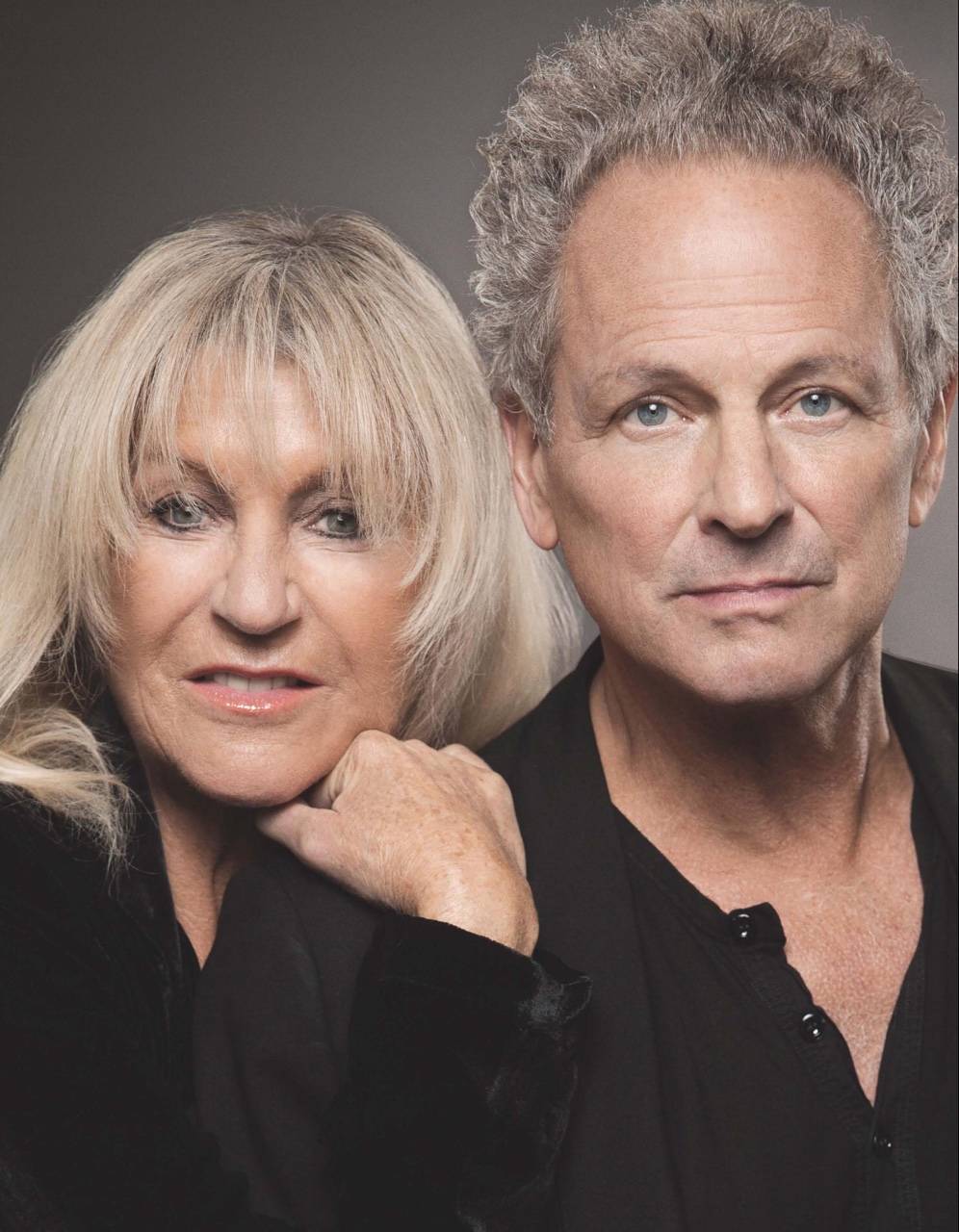
  • REVIEW: Lindsey Buckingham / Christine McVie

    REVIEW: Lindsey Buckingham / Christine McVie

    Fleetwood Mac – Stevie Nicks = Buckingham/Mcvie. Typical Fleetwood Mac math, yet somehow it adds up to a pretty-good album.

    Lindsey Buckingham, Christine McVieOver past few decades, a couple of would-be Lindsey Buckingham albums have been co-opted into Fleetwood Mac albums. Tango in the Night (1987) and Say You Will (2003) both began as Buckingham solo projects, but fate, not to mention the record company, intervened. This time, though, things have worked out the other way around, sort of.

    Since Christine McVie rejoined Fleetwood Mac in 2014 after a 16-year absence, the band have talked excitedly about a new era and a new album, and have been recording new material. All of them except Stevie Nicks that is. Nicks has been doing Fleetwood Mac and solo tours but apparently, has little interest in recording.

    Apparently, the rest of the band got tired of waiting for her. Lindsey Buckingham / Christine McVie also features the Mick Fleetwood/John McVie rhythm section. So that’s four-fifths of Fleetwood Mac. Though Buckingham and McVie have claimed their album was not intended as a Fleetwood Mac record, that’s only because Nicks precluded the idea. It is safe to say that any new Fleetwood Mac album would have featured much of the material on Lindsey Buckingham / Christine McVie. All this makes it difficult to listen to Lindsey Buckingham / Christine McVie without thinking of it as a companion piece to Say You Will, which featured all involved save McVie.

    Even after all these years, it’s never simple with Fleetwood Mac.

    Still, Lindsey Buckingham / Christine McVie commands some attention in its own right. McVie has not released anything since her 2004 solo album. Save a low-key Mac EP, Buckingham has not been heard from since 2011. Do the pair, who between them have written some of the most enduring radio hits of the last 40 years, still have it? Do they, at their ages (Buckingham is 67; McVie turns 74 this year), have anything new to say, and can they still sing, even?

    This is a “duet” album, which is not to be mistaken for a “duets album”. Each of the ten songs alternates between a Buckingham vocal and a McVie vocal. There are no duets. Not surprisingly, Buckingham fairly dominates affairs, writing or co-writing nearly all the tracks and co-producing with Mitchell Froom. The sound is crisp, clean, and slightly DIY, in the manner of Buckingham’s last several solo albums.

    And the songs?

    Buckingham still has it, because he never really lost it. He still has a way with an incisive-yet-catchy, quirky-yet-charismatic melody and arrangement. He is more straightforward here than on his solo releases, keeping his trademark fingerpicking filigree at a minimum and his eccentricities in check. His “Sleeping Around the Corner”, a years-old, remodeled solo outtake, has one of those classic, giddy choruses he is so good at, and it would be a great opener on any album. Single “In My World” is nearly as good, with Fleetwood and John McVie laying down their trademark, rock-solid, less-is-more groove. In fact, one of Lindsey Buckingham/Christine McVie ‘s true pleasures is Fleetwood’s drumming, deft as ever.

    “Love Is Here to Stay” is a breezy, fingerpicked ray of sunlight. All the effortless “Lay Down For Free” is missing is some Nicks harmonies. “On With the Show” seems to address her absence, with Buckingham proclaiming, “I will stand with my band / There’ll come a day / When we all feel the same.”

    As for McVie, well, her method has not changed much, either. She still deals in sweet, guileless romance. She has lost something, though. Time has taken a substantial toll on both singers’ voices, but McVie seems to struggle just to sound like herself. More importantly, often there is not enough of a pure pop rush to make up for her simplistic lyrics and phrasing. “Red Sun” gets some good vibes out of her familiar rolling piano sound, and the hard-boogying “Too Far Gone” just barely manages to avoid being an embarrassment. Only the beautifully stark piano ballad “Game of Pretend” stands on its own without the production propping it up.

    A curious album to be sure, Lindsey Buckingham/Christine McVie could just as well have been released as two separate EPs. In particular, it is difficult to hear McVie in the Buckingham-fronted songs. Still, in the end, an almost-Fleetwood Mac album turns out to be a pretty good Fleetwood Mac album, especially this late in the game.

    LINDSEY BUCKINGHAM / CHRISTINE MCVIE
    Rating: 6/10

    John Bergstrom / Pop Matters / Wednesday, July 12, 2017
  • REVIEW: Lindsey Buckingham / Christine McVie

    REVIEW: Lindsey Buckingham / Christine McVie

    Lindsey Buckingham, Christine McVieAlbum review: Lindsey Buckingham/Christine McVie is an engaging side project for Fleetwood Mac members.

    Lindsey Buckingham / Christine McVie
    Lindsey Buckingham and Christine McVie
    Atlantic
    ***1/2 (Three and a half stars)

    The sessions that eventually spawned this album might well have heralded the return of Fleetwood Mac – indeed, Mick Fleetwood and John McVie contribute throughout here – but when Stevie Nicks stalled on her involvement, the songs instead became an engaging side project for Lindsey Buckingham and Christine McVie.

    The mood throughout is part sun-dappled Californian sunshine and part crisp English winter, and McVie – who by her own admission turned her back on music for much of her 16-year break from touring and recording – is the undoubted star.

    “Carnival Begin,” which closes the album, finds McVie brooding over a “new merry-go-round”, a transparent reference to returning to the recording fold.

    “Game of Pretend,” another McVie composition, considers the complex world of relationships, a key Fleetwood Mac battleground over the decades. Buckingham shines, too, particularly on the radio-friendly “In My World,” “Sleeping Around the Corner,” and “On With the Show.” Throughout, there is a clarity of thought and sound that rolls back the years.

    Nick March / The National (Middle East) / Monday, June 12, 2017

  • REVIEW: Lindsey Buckingham/Christine McVie – strange and beautiful

    REVIEW: Lindsey Buckingham/Christine McVie – strange and beautiful

    Fleetwood Mac’s last masterpiece, Tango in the Night, relied heavily on Buckingham/McVie compositions, with the group’s third great songwriter, Stevie Nicks, generally absent. Now that McVie and Buckingham are back together in the touring Mac band for the first time since 1997, they’ve reunited in the studio for this succinct collection of gentle pop-rockers, familiar yet far more strange and beautiful than 2013’s brittle Fleetwood Mac EP.

    Buckingham’s spidery guitar shivers through “Love Is Here to Stay” and slays the solo on “Carnival Begin,” while McVie’s undimmed gift for melody illuminates every song.

    https://www.youtube.com/watch?v=2CCTkkaPnlg

    Lindsey Buckingham and Christine McVie
    (East West)

    **** (4 / 5 stars)

    Damien Morris / The Guardian (UK) / Sunday, 11 June 2017

  • REVIEW: Lindsey Buckingham and Christine McVie’s strange, surprising collaboration

    REVIEW: Lindsey Buckingham and Christine McVie’s strange, surprising collaboration

    Our take on the unexpected full-length team-up between the two Fleetwood Mac songwriters


    Lindsey Buckingham, Christine McVieWell, here’s an album nobody thought would happen – the first-ever collabo from Lindsey Buckingham and Christine McVie. It’s full of surprises, considering we’ve all spent years already listening in on both their private worlds. But these two Fleetwood Mac legends have their own kinky chemistry. When McVie jumped back in the game for the Mac’s last tour, the songbird regained her hunger to write. And Buckingham remains one of the all-time great rock & roll crackpots, from his obsessively precise guitar to his seething vocals. They bring out something impressively nasty in each other, trading off songs in the mode of 1982’s Mirage – California sunshine on the surface, but with a heart of darkness.
    So we’ve made it to the second paragraph of this review without mentioning any other members of Fleetwood Mac. That’s an achievement, right? We should feel good about that. So now let’s discuss how weird it feels that a certain pair of platform boots was not twirling on the studio floor while this album was being made. Stevie Nicks is the unspoken presence on this album, the lightning you can hear not striking. There’s something strange about hearing Lindsey and Christine team up without her, but that just enhances the album’s strange impact. This would have been the next Mac album, except Stevie didn’t want in. It sounds like that might have fired up her Mac-mates’ competitive edge – but for whatever reason, these are the toughest songs Buckingham or McVie have sung in years.

    “In My World” is the treasure here – Lindsey digs into his favorite topic, demented love, murmuring a thorny melody and reprising the male/female sex grunts from “Big Love.” In gems like “Sleeping Around the Corner” and the finger-picking “Love Is Here to Stay,” he’s on top of his game, with all the negative mojo he displayed in Tusk or his solo classic Go Insane. McVie is usually the optimistic one, but she seizes the opportunity to go dark in “Red Sun.” And what a rhythm section – Mick Fleetwood and John McVie, cooking up the instantly recognizable groove no other band has found a way to duplicate. Everything about this album is a little off-kilter, right down to the way the title echoes the pre-Mac Buckingham Nicks. But if this had turned out to be a proper Fleetwood Mac reunion album, that would’ve felt like a happy ending – and who wants happy endings from these guys? Instead, it’s another memorable chapter in rock’s longest-running soap opera, with both Lindsey and Christine thriving on the dysfunctional vibes.

    Rob Sheffield / Rolling Stone / June 7, 2017

  • REVIEW: Fleetwood Mac – Mirage (Deluxe Edition)

    REVIEW: Fleetwood Mac – Mirage (Deluxe Edition)

    If ever there was a case of the media building up and then knocking down a band, it was the one involving Fleetwood Mac in the late-’70s and early-’80s. The critics cheered when the group—newly energized by the addition of Lindsey Buckingham and Stevie Nicks—delivered its chart-topping eponymous album in 1975 and the even better Rumours a year later.

    But many of those same critics spoke less kindly of the follow-up to Rumours, 1979’s Tusk. According to them, it eschewed commercialism in favor of self-indulgent experimentation, though major experimentation was in fact largely limited to the excellent title cut. Then, when the group reverted to fully accessible form on its next studio album, 1982’s Mirage, reviewers griped that the band was going backwards; never mind that this radio-friendly LP delivered exactly what the critics claimed was missing in its predecessor.

    Well, as I noted last year, Tusk ranks among the most underrated albums of the rock era. But Mirage—which Fleetwood Mac’s members recorded in France after pursuing solo projects—is arguably even more underrated. …

    Read the full review at The Morton Report

    Jeff Burger / The Morton Report / Monday, September 26, 2016


  • Tusk expands

    New box set expands, reveals Fleetwood Mac’s enigmatic opus

    When the five members of Fleetwood Mac reconvened in the studio in 1978 to record the follow-up to their massively successful/decade-defining/inescapable disc Rumours, it would have been painfully easy to simply spit out Rumours II.

    Instead, they took 13 months and spent a then-unprecedented $1 million-plus to birth Tusk, a double album of 20 songs spanning 72 minutes. The effort defied expectations, confounded some fans, sold “only” 4 million units, and produced only two singles resembling hits: the tribal-sounding title track (recorded with the 112-piece University of Southern California Trojan Marching Band), and Stevie Nicks’ ethereal “Sara.”

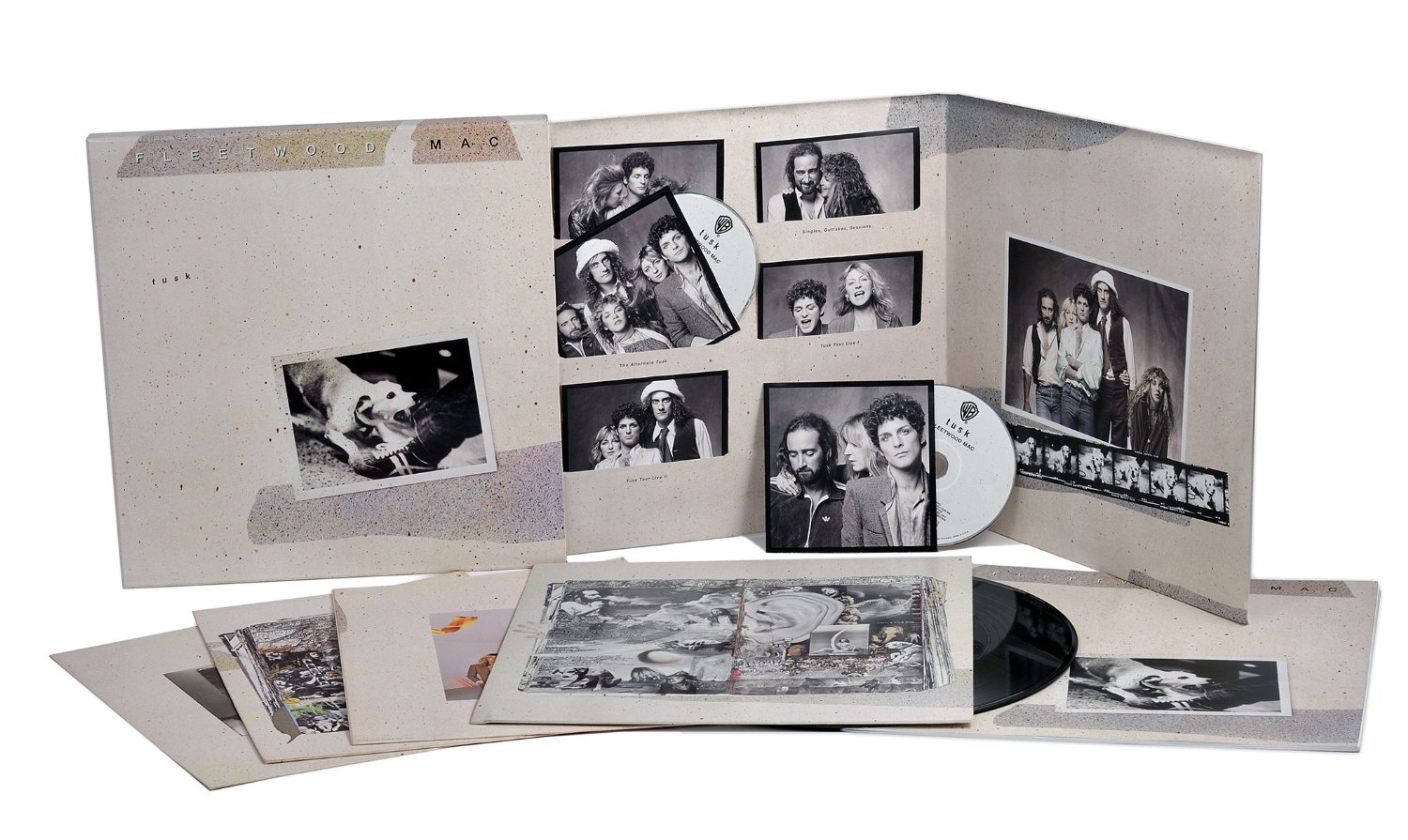
    However, a funny thing happened with Tusk in the ensuing 35 years. Its standing among both Mac fans and musicians has skyrocketed, as has respect for the wildly diverse songs and experimentation. Now, Rhino/Warner Brothers has released Tusk: The Deluxe Edition. The 5-CD/2-LP/1-DVD set includes the original album remastered, a bevy of outtakes and alternate takes, and plenty of live material from the ensuing tour.

    In the booklet of liner notes and rare photos, Jim Irvin celebrates the potpourri grab bag of music, spearheaded by Lindsey Buckingham’s newfound infatuation with the sounds of punk and New Wave music, and a desire to not repeat the same old formula. He would even adopt an entirely new look for the photos shoots and tour of closely cropped hair, suits, and…uh…heavy makeup.

    “Listening to Tusk is like walking around a ridiculously eclectic art gallery curated by someone who’s keeping their aesthetic a secret,” Irvin offers. “And old master next to an abstract, a kinetic sculpture next to a watercolour. It makes no sense at first.”

    Though, contrary to the established Rock History Narrative of him fighting for the change alone, both Nicks and Mick Fleetwood and not just Buckingham were also eager to shake things up, according to their own comments today.

    And what of the effect as a whole? Buckingham certainly brings an un-Mac-like tension, nervous energy, and biting sarcasm to efforts like the deranged square-dance sound of “The Ledge,” the punkish “What Makes You Think You’re the One,” the biting “Not That Funny,” and the “rockabilly on acid” of “That’s Enough For Me.”

    Stevie Nicks, always given something of a short shrift in terms of songwriting since she doesn’t play an instrument (not counting the tambourine), offers some of her finest work in the longing “Storms,” an upbeat “Angel,” elegiac “Beautiful Child,” and mysterious “Sisters of the Moon,” which surprisingly resurfaced on the set list for the Mac’s recent reunion tours.

    Only Christine McVie’s contributions seem slight and listless — both lyrically and musically — save for some soft-and-gentle work on her usual romantic balladry in “Over and Over” and “Brown Eyes.”

    Tusk‘s recording period saw Christine’s involvement with both Grant Curry (the band’s lighting director) and Beach Boy Dennis Wilson, while Buckingham fell into an intense involvement with record-company exec/former model Carol Ann Harris (who later wrote a not-that-flattering book about the relationship, Storms).

    The shocker, fans later found out, was the news of Nicks and Fleetwood’s brief-but-intense involvement. It led to Fleetwood’s divorce from Jenny Boyd…who had previously had an affair with previous lineup guitarist Bob Weston…and was the sister of Rock’s Greatest Muse, Pattie Boyd, who sent both George Harrison and Eric Clapton into romantic bliss and yearning, poured out on vinyl.

    And when Nicks and Fleetwood’s involvement ended, Nicks’ best friend, Sara Recor (partial inspiration for the song), took up with Fleetwood without either bothering to tell Nicks about it, which crushed her (are you following all of this?).

    Thus, Nicks admits today that a number of her songs are about Fleetwood, and it’s not hard to interpret many of hers and Buckingham’s lyrics as continued musical snipes and judgments on their relationship.

    Of the demos and alternate versions, there’s some very interesting development chronicled in the songs “I Know I’m Not Wrong” and “Tusk” as Buckingham — like he did with much of the material — tinkered with them in his own studio extensively before bringing them to the band. It was a way of songwriting that gave him more control, but which the band agreed to abandon after Tusk.

    And on the live discs, listeners will find a band surprisingly willing to take risks with tempos and delivery onstage with material recorded in studio. And that includes tunes from their previous two records, Fleetwood Mac and Rumours.

    So, while the hefty Deluxe Edition of Tusk may be for Mac Addicts only (and those with record players), less expensive options included a 3-CD Expanded Edition and a 1-CD Remastered effort.

    In either case, for what attention and sometimes derision it received on release, Tusk is the one effort in the band’s discography whose standing has improved with time. Oh, and the meaning the title? It was Fleetwood’s slang term for a penis. You’re welcome for that.

    Bob Ruggiero / Houston Press / Monday, December 28, 2015

  • REVIEW: Tusk (Deluxe Edition)

    REVIEW: Tusk (Deluxe Edition)

    Tusk (Deluxe Edition) Fleetwood Mac Rhino

    **** 1/2 (four-and-a-1/2 stars out of five)

    The Mac’s wild, punk-y follow-up to Rumours hits just as hard 36 years later, especially on this extras-packed reissue.

    While the music scenes of England, New York City and scattered bohemian enclaves the world over embraced punk’s do-it-yourself radicalization in the late Seventies, nearly every superstar of sunny southern California kept on making smooth and glossy soft rock as if Joey Ramone and Johnny Rotten had never happened. This didn’t comfort Lindsey Buckingham. The pressure to follow Fleetwood Mac’s astronomically successful 1977 LP, Rumours, with a follow-up just like it drove the singer-guitarist to turn to Talking Heads, Elvis Costello and other upstarts for inspiration and liberation.

    And so he began what became 1979’s famously experimental and eclectic double-disc, Tusk, at home with the deliberate goal of shaking things up. While Buckingham crafted his unconventional solo recordings, the Mac had Studio D at L.A.’s Village Recorder built to their specifications, where they added to his songs and recorded their own with results that veered from demo-quality rockabilly to exacting balladry. Both capitalized on the freedom that came with their success: Because drummer Mick Fleetwood himself managed the band, absolutely no one but the musicians and their near-exclusive producer-engineers Richard Dashut and Ken Caillat had any input. Tusk may have been the first album to cost a million dollars, but much of it was in spirit and practice nearly as DIY as the era’s New Wave.

    Sequenced for maximum disruptive effect, Tusk alternately reassures and startles: Christine McVie’s placid lullaby “One More Time (Over & Over)” opens the album with a soothing dose of musical morphine, but gets followed by the wake-up call of Buckingham’s anxious “The Ledge,” the album’s most punk-influenced track. As confirmed in the interviews that accompany this deluxe five-CD/two-LP/one-DVD box set edition, much of Tusk – like its predecessor – is a Rashomon-esque account of life within the band as seen through the sharply contrasting viewpoints of their three songwriters. One of Stevie Nicks’s most delicate and downhearted songs, “Storms,” wallows in the guilt over her affair with then-married Fleetwood, and the subsequent karmic payback she endured when her best friend secretly moved into his house. Buckingham’s confrontational “Not That Funny” addresses Nicks, by then his ex, whom he saw as getting caught up in celebrity culture. It’s this candid quality that makes Tusk so contemporary even decades later.

    Tusk’s one-of-a-kind combo of punky verisimilitude and surreal opulence drives one point home harder than ever: No other band could’ve recorded this album.

    That forthrightness gets magnified exponentially by the deluxe edition’s supplemental discs. One of them, “The Alternate Tusk,” presents the entire album via divergent versions of every song, including an early, piano-led rendition of Nicks’s “Sara” that lingers for nearly nine minutes; and Buckingham’s languid “That’s All for Everyone,” here featuring entirely different lyrics. Another disc, “Singles, Outtakes, Sessions,” demonstrates through multiple editions of some tracks like Buckingham’s “I Know I’m Not Wrong” – the first song recorded for the album, but the last one to be definitively completed – how the album evolved during Tusk’s year-long creation. The version of “Save Me a Place” on this disc lacks the weeping bluegrass harmonies that define the released take, but Buckingham’s vocal here is even more pained. Two discs of “Tusk Tour Live” serve as a considerably longer and looser alternate edition of the band’s 1980 live album, which chronicled that same world trek. And the set’s audio DVD provides a new 5.1 surround sound mix by Caillat that maximizes the album’s one-of-a-kind combo of punky verisimilitude and surreal opulence, and drives one point home harder than ever: No other band could’ve recorded Tusk.

    Barry Walters / Rolling Stone / Tuesday, December 22, 2015

  • Fleetwood Mac Tusk (Deluxe Edition)

    Tusk Deluxe EditionAfter all of the mythologising — the most expensive rock album ever produced; a staggering commercial failure; a Lindsey Buckingham vanity project with the Fleetwood Mac name attached; what happens when too much money meets too much blow — Tusk remains a singular oddity in Fleetwood Mac’s oeuvre. By the time its recording commenced in June 1978, the band were in the stratosphere of commercial success: their previous album, Rumours, had shipped millions of copies and was on its way to becoming one of the best selling albums of all time. Yet the music that had inspired Buckingham during his respite from the gruelling Rumours tour was the opposite of commercial: the debut albums from The Clash and Talking Heads, both recorded on the cheap. As Rob Trucks recounts in his 33⅓ entry on the album, Tusk began its life as an ultimatum from Buckingham to band leader Mick Fleetwood: Buckingham had new songs he was going to record. In response, Fleetwood shot back another ultimatum: Buckingham was either in the band or out of it. The stage was set for a collision: between the moneyed, high-gloss world the band inhabited and the scrappy upstarts who were shaking that world’s foundations; between Buckingham’s musical ambitions and Fleetwood’s determination that Fleetwood Mac stick together as a band.

    Tusk, therefore, is riven through with contradictions. It contains some of the band’s glossiest work, of the sort that would have made the executives at Warner hopeful that Tusk could function as Rumours Redux: the gorgeous “Sara,” Stevie Nicks’s aching paean of love and loss; Christine McVie’s rock burner “Think About Me,” complete with acid lyrics that would fuel further speculation about the band’s private lives; the lapidary “Storms,” featuring Nicks at her most pitilessly introspective. Yet these songs find themselves nestled between Buckingham’s off-kilter, deliberately lo-fi ditties: deliberately truncated songs (none longer than 3:32) with unusual, unresolved melodies, in which Buckingham affects a falsetto and Fleetwood sounds as though he were drumming with a set of cardboard boxes. You’d be hard-pressed to call these numbers “punk” per se — they thrum through with Buckingham’s interest in folk and blues traditions, and they were after all recorded at phenomenal expense — but they preserve punk rock’s affinity for simplicity and concision. In many ways they sound like exactly what they are: punk rock reflected back through the funhouse mirror of a platinum-selling band with a well-documented cocaine problem, a limitless recording budget, and a background in blues.

    It’s no secret that Tusk performed poorly on its release, shipping a mere two million copies in its first few months of existence compared to the over ten million copies that Rumours shifted. Just who the fault can be pinned on remains the subject of some debate. Did Tusk‘s commerical failure, as Warner’s executives insisted, derive from Buckingham’s outré songwriting? Was it, as Mick Fleetwood argued, because the album was prematurely leaked to the RKO radio network, who proceeded to play it in order, much to the delight of home tapers? In the long view, such considerations are immaterial: given the album’s strange afterlives — including a start-to-finish cover version by Camper Van Beethoven and becoming a formative influence on Carl Newman’s work with The New Pornographers — it seems that Tusk has ultimately vindicated itself.

    The latest remaster and reissue of the album — the third such intervention to have happened since the 1980s — is about as comprehensive as anyone could hope for. In addition to the original album, which has been given a crisp buff and polish (albeit one that could have preserved a little more of the original release’s dynamic range), and a second disc of single versions and demos (many of which originally appeared on the 2004 remaster/reissue), it also includes a start-to-finish version of Tusk in hitherto unreleased alternate takes and two discs of live material from the band’s 1979-1980 Tusk tour. Mac anoraks will find that the second disc’s collection of successive demos — which map out the progression of both “I Know I’m Not Wrong” and the title track from their early incarnations through to near-finished versions — illuminates the band’s creative processes.

    Perhaps more interesting is the third disc, sequenced from unreleased alternate versions: while many songs sound essentially like rough-hewn versions of what would appear on the final release, it’s worth listening to just for the lengthy version of “Sara,” in which Nicks elaborates on the song’s themes in an extended outro. The live material on discs four and five is perhaps less essential: much of it is actually from prior albums rather than Tusk, and perhaps inadvertently demonstrates the cold shoulder with which the public received the album. (When Christine McVie introduces “Over & Over” to a crowd at St. Louis by informing them that it’s from the new album, the reception is rather more muted than the ecstatic cheers that greet the version of “Dreams” recorded at Wembley on the same tour.) Perhaps most interesting about these discs is the valiant attempt by the band to fit Buckingham’s Tusk songs into the stadium-rock mode: “Not That Funny” shifts into bombast, with Fleetwood hammering the kit and Buckingham belting out his lines, and Buckingham shreds out a solo that wouldn’t have been out of place on Rumours at the conclusion of “What Makes You Think You’re The One.”

    These efforts to make Tusk‘s material appeal to the band’s demographic demonstrate just how much it began its life as an album out of time, an artifact that could not have been produced at any other juncture in history but one that, equally, sounded completely ill-at-ease in the cultural moment that produced it. Perhaps fittingly, time has been kind to Tusk, and the album doesn’t require the ultra-deluxe treatment to make a compelling case for its relevance — those two LP’s worth of creative tension, that juxtaposition of the rough and the smooth, are worth returning to with or without the context provided by this reissue.

    (Editor’s note: This article was edited for spelling and grammar. You can read the original article here.)

    Chad Parkhill / The Quietus / Wednesday, December 16, 2015

  • ALBUM REVIEW: Tusk Deluxe

    ALBUM REVIEW: Tusk Deluxe

    Tusk Deluxe EditionHad Fleetwood Mac played it safe after Rumours, they probably could have made another gajillion-selling album. Instead, they handed the reins to singer and guitarist Lindsey Buckingham and allowed him to steer the follow-up to one of the 20th century’s biggest LPs to wherever he wanted (with a few detours along the way).

    The result was 1979’s double-LP Tusk, a much-delayed, over-budget and sprawling masterwork that often played out like Fleetwood Mac’s version of the Beatles’ White Album: three distinct singer-songwriters hashing out their solo compositions while the rest of the group played backing band. And it was, if you believed what you read at the time, a total bomb.

    But 36 years later, Tusk stands as one of rock’s most underrated and rewarding albums, a complex and layer-revealing work that offers new perspectives and treasures with each listen. A new five-disc Deluxe Edition doesn’t so much give fresh insight to the record as it provides a behind-the-scenes peek at its formation and development, as well as the occasional struggles the band endured during its long and difficult birth.

    The original two-LP set is expanded with discs of single remixes, outtakes, session leftovers, live cuts from the 1979-80 tour in support of the album and the entire record made up of mostly previously unreleased versions of the 20 songs. It’s as often fascinating as it is repetitive: Even for an album built on textures and detailed studio assembling, multiple takes on the title track and “I Know I’m Not Wrong” begin to get tedious after the fourth pass.

    Still, alternate versions of “Over & Over” (the ambiance-soaked Christine McVie ballad that opens the album), “The Ledge,” “That’s All for Everyone” and “Brown Eyes” (with early member Peter Green prominently sitting in) show just how meticulous the recordings were … and just how much the band was slowly unraveling. Buckingham is clearly in control here, injecting flashes of weirdness and brilliance into the project. Stevie Nicks‘ contributions tend to be the least affected by his mad-scientist tinkering, but even they go deeper than Rumours‘ most intricate tracks.

    Tusk: Deluxe Edition doesn’t show us much in the way of how skeletal demos evolved into multi-layered art pieces, though — it’s not that kind of box. If anything, it leads us to believe that most of these songs were fully structured by the time Fleetwood Mac began recording. And radio mixes of “Think About Me” and “Not That Funny” prove that even after the LP’s release, some cuts took on even newer forms.

    It’s a lot to get through — more than 80 songs in all — and parts of it seem like padding (the live tracks, mostly from 1975’s self-titled album, Rumours and Tusk, sound diluted without their studio adornments). But the original album is worth diving into again, if only to revisit one of the era’s most undervalued works, a bold record made by a superstar band willing to risk its place at the top for its art.

    Michael Gallucci / Ultimate Classic Rock / Thursday, December 3, 2015

  • VIDEOS 11/22: Leg 4 ends in Auckland

    VIDEOS 11/22: Leg 4 ends in Auckland

    Fleetwood Mac has completed four legs of the On With the Show Tour, performing 120 shows! The band wrapped up the New Zealand leg of the tour on Sunday night with a final performance at Mt Smart Stadium in Penrose, a suburb of Auckland. Unlike the previous night, showers subsided enough for fans to enjoy the show comfortably without having to wear their ponchos.

    Angus and Julia Stone were the support act. Since the beginning of the tour, the Australian duo has posted pictures from their touing experience on Twitter.

    Angus and Julia Stone
    (Photo: @angusjuliastone)

    Jump to: Videos | Live Tweets | Set List

    Live Tweets


    https://twitter.com/phatphillynz/status/668365849909051392


    https://twitter.com/phatphillynz/status/668337367787241472
    https://twitter.com/AndrewKayNZ/status/668336710560845826


    https://twitter.com/MarkGarrison1/status/668317590784110592
    https://twitter.com/AndrewKayNZ/status/668315662633140224
    https://twitter.com/JessVKnipping/status/668307479197913088

    Videos

    Thanks to Craig Beardsley, David Marx, MorganGKelly, msnod3, Robs Music Videos, Greg Shepard, Jackson Whitham, and r Wong for capturing and sharing this footage!

    COMPILATION: You Make Loving Fun / Everywhere / Say You Love Me / Sara / Gypsy / Littles Lies/ Go Your Own Way / Songbird (Greg Shepard)

    COMPILATION: Second Hand News / Dreams / Rhiannon / Everywhere / Tusk / Say You Love Me / Landslide / Never Going Back Again / Think about Me / Gypsy speech / Gypsy / Go Your Own Way / World Turning / Don’t Stop / Silver Springs / Songbird / Mick’s speech (MorganGKelly)
    https://www.youtube.com/watch?v=2h31mzFfVJw

    The Chain (David Marx)
    [jwplayer mediaid=”226428″]

    The Chain – partial (msnod3)

    You Make Loving Fun (msnod3)

    Dreams – short clip (Craig Beardsley)

    Dreams (msnod3)

    Rhiannon (msnod3)

    Rhiannon (Mike Devery)

    Everywhere (David Marx)
    [jwplayer mediaid=”226427″]

    Everywhere (msnod3)

    Tusk (msnod3)

    Big Love (Greg Shepard)
    https://www.youtube.com/watch?v=N4rsK5UhCUs

    Big Love (msnod3)

    Landslide (msnod3)

    Landslide (r Wong)

    Gypsy – intro (Mike Devery)

    Little Lies (msnod3)

    Gold Dust Woman – partial (msnod3)

    I’m So Afraid (Robs Music Videos)

    Go Your Own Way (msnod3)

    Go Your Own Way (Jackson Whitham)

    Set List

    1. The Chain
    2. You Make Loving Fun
    3. Dreams
    4. Second Hand News
    5. Rhiannon
    6. Everywhere
    7. Bleed to Love Her (replaces I Know I’m Not Wrong)
    8. Tusk
    9. Sara (replaces Sisters of the Moon)
    10. Say You Love Me
    11. Big Love
    12. Landslide
    13. Never Going Back Again
    14. Think About Me (replaces Over My Head)
    15. Gypsy
    16. Little Lies
    17. Gold Dust Woman
    18. I’m So Afraid
    19. Go Your Own Way
    20. World Turning (encore 1)
    21. Don’t Stop
    22. Silver Springs
    23. Songbird (encore 2)