
World Split Open
Elizabeth Bergman and Simon Morrison (special to Stevie Nicks Info)
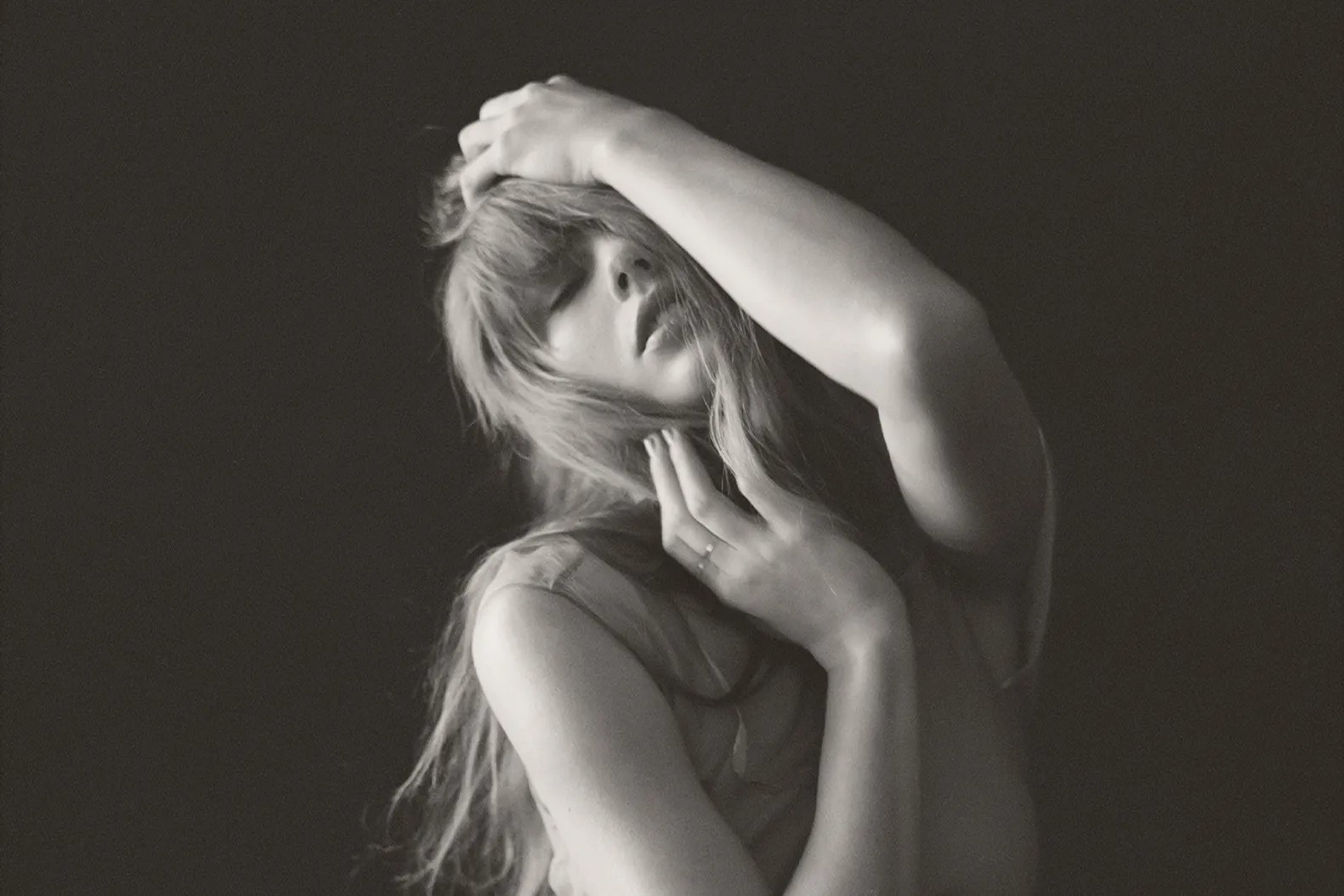
On April 19, Taylor Swift surprised her fans by dropping a double album, The Tortured Poets Department: The Anthology, with 31 new songs. She announced its release at the Grammy’s, after winning Album of the Year for Midnights, and flashed a peace sign that we now recognize as the number two—the hint pointing to a double album. Long known for embedding easter eggs in videos and interviews while dabbling in numerology (31 is 13 backwards), on TTPD Swift now layers in more complex historical allusions with personal as well as cultural significance. Consider “Clara Bow,” the last track on the first half of the album, which does more than name-drop Stevie Nicks in 1975 or Swift’s rumored relationship with Matty Healy, front man of the band the 1975.
Swift’s “Clara Bow,” about the silent film actor, nods to Stevie Nicks’s song “Mabel Normand,” about another tragic film star of Bow’s era. So down the rabbit hole we go into the world of Taylorology: the study of Taylor Swift’s music.
Even Taylorology has an antecedent in the study of the mysterious death of the silent film director William Desmond Taylor. This is the original Taylorology, focused on the silent-film actress Mabel Normand. She is to Stevie Nicks what Clara Bow is to Taylor Swift: a perfect mess of contradictions and ultimate f-you (an invective repeated most often on Swift’s song “Down Bad”) to the patriarchal culture industry.
Normand played the clown and put on faux aristocratic airs but also had an introverted, melancholic side. To make up for her limited education, she steeped herself in Henri Bergson, Sigmund Freud, and Oscar Wilde. (Likewise Nicks and Swift have immersed themselves in literature beyond any formal schooling.) Described, condescendingly, as “a frisky colt that knew no bridle,” she moved to the West Coast to work at Keystone Studios in Echo Park, Los Angeles in 1912. Cinema hardly yet existed, but Normand made dozens of eight- and fifteen-minute-long slapstick comedies, diving off cliffs and being tied to the tracks. Her on-screen partners included Charlie Chaplin and Roscoe “Fatty” Arbuckle.
She showed greater emotional and psychological breadth in the feature films of later years but was never taken seriously. Like Mary Pickford, Normand demonstrated an uncommon ambition and suffered for her art, often at the hands of men in power. Comedy was her tragedy. Producer, director, and studio head Mack Sennett proposed to her while cheating on her; she almost died when a romantic rival bashed her on the head with a vase. William Taylor loved Mabel Normand more chivalrously, even keeping a picture of her with him in a locket, and she was the last person to see him alive. Legend has Taylor pledging to go after Normand’s suppliers (she is rumored to have been addicted to cocaine), and it is thought, though disputed, that dealers put a contract on his life.
On “Mabel Normand,” Nicks’s singing has attack, conviction, and focus. It critiques; it denounces. With the tired-of-it-all edginess (the likes of which Swift “never had,” according to “Clara Bow”), it’s still somehow free and easy. “Mabel Normand” is also sympathetic and circumspect, wandering through the words without an overt tune. “Strange things do follow when you love someone,” Nicks sings, “So you put that someone in exile,” a place Swifties will recognize from Folklore. The song stops with a poignant, “ so beautiful.”
As fans of Nicks and Swifts already know, Nicks wrote a poem for The Tortured Poets Department, dated August 13, 2023, and Swift mentions Nicks in “Clara Bow.” “You look like Stevie Nicks/In ’75, the hair the lips/Crowd goes wild at her fingertips.” Those who have seen the Eras Tour in person or on screen will recall the opening of the show, which finds Swift pointing her finger to fans in the stadium, marveling at her ability to elicit their cheers. “You’re making me feel powerful,” she comments, “like a man.”
Men are the problem, in love and in the studio. Women have had to fight for their voices to be heard. Mabel Normand and Clara Bow [silent film something]. As has the writing of Sylvia Plath, Anne Sexton, Leslie Jameson, and Stevie Nicks, Swift’s songs have been derided as “self-indulgent,” “diaristic,” in need of more intervention by (presumably) male editors. At the peak of her career, Normand seemed to be calling the shots, heading her own studio and production company, but she succumbed to tuberculosis at age 36. Bow, the original “it girl” (so-called for her role in the 1927 film It), struggled with mental illness. “All the time the flapper is laughing and dancing, there’s a feeling of tragedy underneath,” Bow once remarked—a sentiment Nicks and Swift have both captured in their songs.
The feminist poet Muriel Rukeyser once asked, “What would happen if one woman told the truth about her life?” Then answered, “The world would split open.” What’s inside lies the truth of Mabel Normand, Clara Bow, Stevie Nicks, and Taylor Swift as women artists who must keep their “promise to be dazzling” in industries that embrace female talent on stage and screen while men still mostly call the shots. As Nicks and Swift both know, “when your girlish glow flickers just so /… they let you know / It’s hell on earth to be heavenly / Them’s the breaks, they don’t come gently.”
Dr. Elizabeth Bergman is an award-winning scholar of U.S. history and an experienced educator who served on the faculty at UT-Austin and Princeton before choosing to move into secondary education.
She received her B.A. from Columbia (magna cum laude) and Ph.D. from Yale (with distinction), earned tenure at UT-Austin, and was recruited to Princeton, where she taught for 10 years. Her books and articles on U.S. cultural history have garnered multiple national awards, and she now inspires students at Geffen Academy to adopt a “scholarly mindset” (beyond “growth mindset”) that embraces complexity, honors diverse perspectives, and approaches history not as a debate but a dialogue that demands deep listening.
Simon Morrison specializes in 20th-century music, particularly Russian, Soviet, and French music, with special interests in dance, cinema, aesthetics, and historically informed performance based on primary sources. He has conducted archival research in St. Petersburg, Stockholm, Paris, London, New York, Washington DC, Copenhagen, and (most extensively) in Moscow. He has traveled to Tel Aviv, Beijing, Hong Kong, Montreal, Moscow, Copenhagen, and Bangkok to give invited lectures and graduate seminars, and divides his time between Princeton and Los Angeles.
Morrison is the author of Mirror in the Sky: The Life and Music of Stevie Nicks (California, 2022), Russian Opera and the Symbolist Movement (California, 2002, 2019), The Love and Wars of Lina Prokofiev (Houghton, 2013), and The People’s Artist: Prokofiev’s Soviet Years (Oxford, 2009) as well as editor of Prokofiev and His World (Princeton, 2008) and, with Klara Moricz, Funeral Games: In Honor of Arthur Vincent Lourié (Oxford, 2014).
Professor Morrison maintains a profile as a public intellectual by continuing to write books and feature articles, giving interviews and lectures in his areas of expertise, as well as assisting in ballet and theatre productions.