Category: Articles

  • Stevie Nicks, feminism, and becoming women in full

    Stevie Nicks, feminism, and becoming women in full

    Every one of us, man or woman, admires those who scrap convention and chart their own course. More than this, there are forty years of the feminist movement to consider. Have they served women’s souls? Have they given women hope

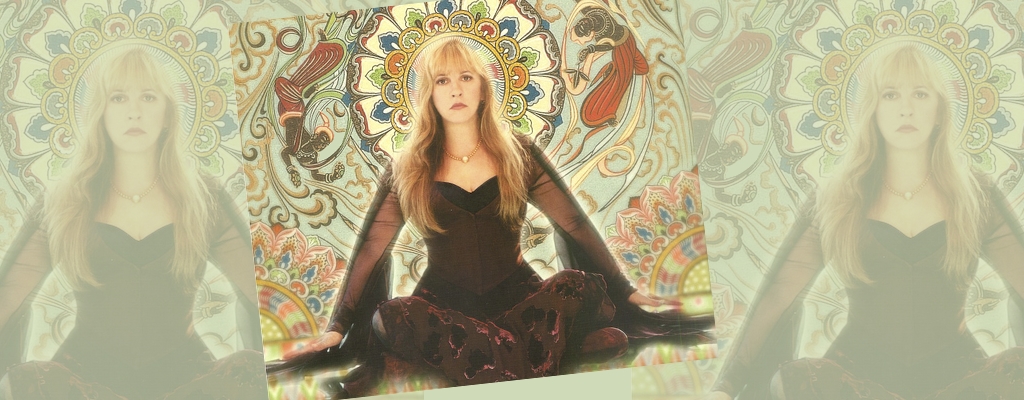
    There is comfort in the lusciousness of Stevie Nicks‘ voice, her intricate lyrics. The arrangement of each song constructs the perfect ride for each soul. For forty years, she has lived life on her own terms. As witnesses to her creative success, personal triumphs, and tribulations, we all have an image of her in mind. The alabaster skin, the honey-colored hair of a siren, her penetrating gaze eats the camera’s lens.

    There is nothing saccharin about her. Two generations of women have come into being since she inked her first record deal in 1972 as a part of the duo Buckingham Nicks. Her voice, intonation, and presence are as captivating as one might expect upon seeing a goddess of American music.

    All of my life, Nicks has been a part of the emotional soundtrack in my home. As a girl, I danced in the kitchen with my mother. Today, I do the same with my sixteen-year-old daughter. As an advocate for women’s equality and ending gender-based violence, I am always encouraging survivors to find creative outlets and find solace in the artistry of others. Music and art are a universal language. Thousands of strangers, in venues large and small, gather together every night across the world.

    image
    (Michael Collins)

    This universality holds power.

    In Virginia Beach, Nicks took the stage last Saturday evening. Her manager and production staff have everything oiled to a smooth and easy pace pre-show. It felt a little like being in the safety of a womb. They were gracious and as poised as cats on a ledge. Knowing she will knock your socks off reminds you of true feminine power. Timed to perfection, I was whisked away to the media platform as I thought of this legendary woman behind the stage doors. I wondered how many survivors of violence or trauma were invisible among the thousands of fans. How many broken hearts were healed whilst spinning “Edge of Seventeen (Just Like the White Winged Dove)” or “Landslide” on the original vinyl. Or how many times she appears on an iPod playlist reserved for the times when only Stevie will do.

    Living life out loud, without regrets, but with kindness, passion, ambition and purpose is a gift. Every one of us, man or woman, admires those who scrap convention and chart their own course. More than this, there are forty years of the feminist movement to consider. Have they served women’s souls? Have they given women hope? Or changed the world into a more hospitable place? Are feminists welcoming new ideas and voices into the fold? Or are they trading the oppression of men for oppression by other women, who call you a gender traitor if you disagree with them at all? Are we closer to love and faithful understanding of the human condition?

    Perhaps. Women in Congo have yet to see this freedom. Women in Saudi Arabia are not allowed to drive. Women across Afghanistan live in fear of acid attacks, honor killings. Women in Somalia and many other countries are tortured by female genital mutilation. Education is denied to so many women and girls, across every continent. Suffering is immense.

    As a woman, as a survivor of gender-based violence, as a daughter, and especially as a mother, freedom and justice are as important as oxygen to me. Freedom of expression is particularly crucial. Stevie Nicks walks that walk. Her life is marked by great love, more than anything. Profound successes, painful lessons, struggles, and a will to define her own existence are shared freely. The sacrifices are too. The plaintive cry we have all felt in one moment or another is right there, ripened fruit of an American woman’s existence.

    Her relevance is made possible by her timelessness. An unfinished song she began writing in the 1970s about her experiences with Lindsey Buckingham, was given new life after she saw New Moon, the second film in the Twilight saga. “Moonlight, A Vampire’s Dream” is exquisitely written and arranged. “Secret Love,” the first single off her latest album, is mature and complex. It was originally written in 1976 for Fleetwood Mac‘s blockbuster album Rumours but did not make the final tracklist.

    Nicks embodies that which I love most about being a woman from the United States. We enjoy a freedom from fear, even when we have survived devastating trauma. The specter of justice is palpable. Healing is not only possible but likely. The ability to not be defined by crisis is real here. The ability to find love, construct a life on our own terms is an everyday occurrence.

    Feminists and advocates often get caught up in decades-old arguments and refuse to take the wins and celebrate them. We have achieved much in forty years. And yes, there are more tasks ahead. Finding joy in our craft, as Nicks’ career demonstrates, requires faith in self and limitless dedication and energy. The women and girls we advocate for, here at home and abroad, should see the celebrations on the near-horizon for each triumph.

    Elizabeth Blackney / Huffington Post / July 19, 2012

  • Stevie Nicks, feminism, and becoming women in full

    Every one of us, man or woman, admires those who scrap convention and chart their own course. More than this, there are forty years of the feminist movement to consider. Have they served women’s souls? Have they given women hope

    There is comfort in the lusciousness of Stevie Nicks‘ voice, her intricate lyrics. The arrangement of each song constructs the perfect ride for each soul. For forty years, she has lived life on her own terms. As witnesses to her creative success, personal triumphs, and tribulations, we all have an image of her in mind. The alabaster skin, the honey-colored hair of a siren, her penetrating gaze eats the camera’s lens.

    There is nothing saccharin about her. Two generations of women have come into being since she inked her first record deal in 1972 as a part of the duo Buckingham Nicks. Her voice, intonation, and presence are as captivating as one might expect upon seeing a goddess of American music.

    All of my life, Nicks has been a part of the emotional soundtrack in my home. As a girl, I danced in the kitchen with my mother. Today, I do the same with my sixteen-year-old daughter. As an advocate for women’s equality and ending gender-based violence, I am always encouraging survivors to find creative outlets and find solace in the artistry of others. Music and art are a universal language. Thousands of strangers, in venues large and small, gather together every night across the world.

    This universality holds power.

    In Virginia Beach, Nicks took the stage last Saturday evening. Her manager and production staff have everything oiled to a smooth and easy pace pre-show. It felt a little like being in the safety of a womb. They were gracious and as poised as cats on a ledge. Knowing she will knock your socks off reminds you of true feminine power. Timed to perfection, I was whisked away to the media platform as I thought of this legendary woman behind the stage doors. I wondered how many survivors of violence or trauma were invisible among the thousands of fans. How many broken hearts were healed whilst spinning “Edge of Seventeen (Just Like the White Winged Dove)” or “Landslide” on the original vinyl. Or how many times she appears on an iPod playlist reserved for the times when only Stevie will do.

    Living life out loud, without regrets, but with kindness, passion, ambition and purpose is a gift. Every one of us, man or woman, admires those who scrap convention and chart their own course. More than this, there are forty years of the feminist movement to consider. Have they served women’s souls? Have they given women hope? Or changed the world into a more hospitable place? Are feminists welcoming new ideas and voices into the fold? Or are they trading the oppression of men for oppression by other women, who call you a gender traitor if you disagree with them at all? Are we closer to love and faithful understanding of the human condition?

    Perhaps. Women in Congo have yet to see this freedom. Women in Saudi Arabia are not allowed to drive. Women across Afghanistan live in fear of acid attacks, honor killings. Women in Somalia and many other countries are tortured by female genital mutilation. Education is denied to so many women and girls, across every continent. Suffering is immense.

    As a woman, as a survivor of gender-based violence, as a daughter, and especially as a mother, freedom and justice are as important as oxygen to me. Freedom of expression is particularly crucial. Stevie Nicks walks that walk. Her life is marked by great love, more than anything. Profound successes, painful lessons, struggles, and a will to define her own existence are shared freely. The sacrifices are too. The plaintive cry we have all felt in one moment or another is right there, ripened fruit of an American woman’s existence.

    Her relevance is made possible by her timelessness. An unfinished song she began writing in the 1970s about her experiences with Lindsey Buckingham, was given new life after she saw New Moon, the second film in the Twilight saga. “Moonlight, A Vampire’s Dream” is exquisitely written and arranged. “Secret Love,” the first single off her latest album, is mature and complex. It was originally written in 1976 for Fleetwood Mac’s blockbuster album Rumours but did not make the final tracklist.

    Nicks embodies that which I love most about being a woman from the United States. We enjoy a freedom from fear, even when we have survived devastating trauma. The specter of justice is palpable. Healing is not only possible but likely. The ability to not be defined by crisis is real here. The ability to find love, construct a life on our own terms is an everyday occurrence.

    Feminists and advocates often get caught up in decades-old arguments and refuse to take the wins and celebrate them. We have achieved much in forty years. And yes, there are more tasks ahead. Finding joy in our craft, as Nicks’ career demonstrates, requires faith in self and limitless dedication and energy. The women and girls we advocate for, here at home and abroad, should see the celebrations on the near-horizon for each triumph.

    Elizabeth Blackney / Huffington Post / July 19, 2012

  • Stevie Nicks on inspiration, collaboration, and her new dreams

    Stevie Nicks on inspiration, collaboration, and her new dreams

    Since Stephanie Nicks became “Stevie” in 1973, the ethereal songstress has recorded 18 albums, been nominated for 17 Grammys, and had one of the music industry’s most notorious love affairs — with fellow Fleetwood Mac member, Lindsey Buckingham. Yet Nicks’ latest album, In Your Dreams, released in May, marks the first time the singer/songwriter has worked with a collaborator in the songwriting process (even in Fleetwood Mac, Nicks and Buckingham wrote separately). Working closely with Dave Stewart of The Eurythmics, Nicks has produced some of her most compelling work since Bella Donna; she seldom sings as vulnerably, and her voice still has the haunting rasp that’s classic Stevie. So I was disappointed when her tour was canceled, due to pneumonia, just several days before her live show in New York. Still, Nicks spoke to Riff City from her Los Angeles home, where she recorded In Your Dreams. Her smoky contralto was instantly recognizable — and in no need of auto-tune — as she offered her thoughts on the creative process, the new LP, and why she doesn’t plan to retire anytime soon.

    Riff City: Congratulations on your album. It’s beautiful.

    Stevie Nicks: Thank you.

    RC: I was disappointed that you canceled your East Coast tour. Tell me, Do you still enjoy touring?

    SN: If I didn’t enjoy it, I wouldn’t do it. I would be insane if I was stuck in Las Vegas for two and a half years, doing a show in a hotel. That would be my nightmare. You go [on tour] and sometimes you end up two days and sometimes three days, in an out-of-the-way city you’d never imagine you’d be in, and then you come back! I’ve been touring since 1975. We do the show, we change, we take our makeup off, I get my purse, and we go to the airport and get on a plane and fly to the next city, and then we wake up in that next city. I like to just get there because I stay up late anyway. I don’t go to bed until three or four. Now, is it tiresome? Is it tiring? Yes. If I stopped touring would I be totally bored? Probably.

    RC: What was the longest period of time you spent not touring?

    SN: This year. We got off the road from 83 shows with Fleetwood Mac. The last show was December 21st in New Zealand. I started my record in February 2010 and finished in December. So I was home in my house for almost a year, but we were working almost seven days a week. It was really exciting; we turned the whole two-story house into a recording studio, which is a room within a room with bad air and no windows. I don’t really lie around very much because I never have. And when I have nothing to do, I feel creepy. I’m happy to be working. I think when you don’t work, when you retire, you just get small.

    RC: Can you tell me about your process, when writing new music and when you were working on this album?

    SN: You can be walking down the street, and see someone that catches your eye, and say, “Gosh! That was a gorgeous man,” and something touches you, and you might go home and write a poem about that, you know?

    RC: I do now.

    SN: Or you go to Italy, which I did on the Fleetwood Mac tour. I was there for four weeks, and I wrote the song “Italian Summer,” and it sounds like I wrote it about a big love affair, but I didn’t. I wrote it about Italy, walking around on the cobblestone streets and feeling free and feeling safe. So you can be inspired by anything. If you happen to be in a crummy hotel room, which I actually never am… I’m usually in beautiful hotel rooms! So you go back to your beautiful hotel room and write a great poem, and maybe there’s a piano and you can put it to music. Or, you can be in your house, or in a car, driving to San Diego for two hours and think of something and get paper and pencil. People who schedule writing dates and say, ”Okay I’m going to sit down and write with this person from 2 to 3 and then 4 to 6, and then I’ll have dinner and work from 9 until…” Well, I just could never do that.

    JP: Why is that?

    SN: I probably wouldn’t be inspired under pressure. I would just sit there and stare at people and say, “This isn’t really working for me.”

    RC: But what about when you were working on this album? Weren’t you collaborating?

    SN: I started working from the very beginning with Dave Stewart. He and I sat down and wrote songs together, which is something I have never done. Not with Lindsey, not with anybody. I think it’s because Dave is the kind of guy that has no ego and could read a face. So when we would start working on something and if I didn’t like something, he could see it in my eyes, before I even realized it. And we would say “Okay, let’s start again!” So the first day, he came up here, and we wrote a song and my world changed. I really understood why Lennon and McCartney wrote together when they really didn’t have to or why Roger and Hammerstein wrote together… You bring something to the table, they bring something to the table. You can spend a year and a half or two years trying to write a song. You can sit at the piano and suffer away and cry and you know, go through your booklets of poetry for days and never come up with anything. With Dave, we were on a roll and the album came very fast. Dave has lots of chords, I have lots and lots of poetry. However, Lindsey has lots and lots of chords, and I have lots of poetry, but we never wrote songs together! Dave has chords, I have poetry, and we wrote seven songs in not quite three months which is major.

    RC: Has Lindsey been supportive?

    Lindsey came and played at the end of the record and totally helped me do one song… We were just stumped on how to make it sound like my demo and I said, “Dave, I think we should call Lindsey.” And Lindsey came up for two days and it came out amazing. It was a very good moment, and it took us back to Buckingham-Nicks and 1973, and what we did as the two of us and how we got this whole ball rolling.

    RC: What do you think about newer musicians and digital tools like autotune?

    SN: You’re not going to be able to take it on stage. If you’re going to be a touring band, you have to be very careful you know. If you can really sing on your record and then you go out and play live and can’t sing, then you’re in a lot of trouble. The way you used to make it, you get paid nothing and you’re starving and you play little tiny gigs and learn your craft. And now people don’t really sing and they don’t really tour. I think it’s sad and it’s unfortunate for the music industry. In 20 years, there’s not going to be another Fleetwood Mac or Led Zeppelin because they don’t have time to develop.

    Riff City (Thirteen Media with Impact) / June 29, 2011 

  • Stevie Nicks: ‘Love is fleeting for me…in my life as a travelling woman’

    Stevie Nicks: ‘Love is fleeting for me…in my life as a travelling woman’

    On the eve of her first solo album release in 10 years, the Fleetwood Mac songstress talks to Simon Price

    It’s a summer evening in a classy London hotel.

    The first thing you notice entering the suite Stevie Nicks calls home ahead of her first British solo show in two decades is a scattering of large, lit, white candles. It’s daytime, but in terms of ambience, they speak volumes. Because if Stevie Nicks, poet-sorceress of the popular imagination, is ever off-duty, she won’t let it show.

    From a young age, Stephanie Lynn Nicks was a dreamer. Even when working as a waitress or a cleaner in Hollywood to fund the failed debut album she recorded with her lover Lindsey Buckingham in 1973, Nicks was already imagining herself a romantic gypsy princess. This persona took flight in 1975 when the Buckingham-Nicks duo were recruited into Fleetwood Mac, transforming the washed-up British blues band’s fortunes. Despite legendary narcotic excesses and mind-boggling inter-band relationships, Fleetwood Mac reached unimaginable heights with the sensual, scarf-swirling singer Nicks as their talisman. Their 1977 record Rumours remains one of the top 10 biggest-selling albums of all time. And, as she launched a parallel solo career in the Eighties, Nicks never left magic and mystique behind.

    Today, all the accessories you’d expect are present: the crescent moon pendant, the lacy black blouse, the ankle-snapping stiletto boots (a habit adopted so she wouldn’t look so tiny sharing a stage with the giant Mick Fleetwood), and, on the third finger of each hand, a ring encrusted with dazzling diamonds. At 63, she remains a rare beauty: that silky blonde hair, those sultry eyelids, and those flared nostrils into which she once joked that she’d shovelled “so much cocaine you could put a big gold ring through my septum”. Sometimes she’ll speak a syllable which flutters into the honeyed vibrato you’ve heard on “Sara”, “Seven Wonders”, “Rooms on Fire” or “Dreams”. When you meet Stevie Nicks, she doesn’t disappoint.

    Curling into an armchair draped with a sheepskin rug, she begins to explain why her new album, In Your Dreams, comes 10 years after her last. In 2005, she spent a long, difficult day at the Walter Reed Army Medical Center in Washington DC, to which badly injured soldiers from the conflicts in Iraq and Afghanistan are invalided. Her eyes well up at the memory. “I can honestly say I walked in there, Stevie Nicks, a rock’n’roll star, without a care in the world. And I walked out of there a mother. With a whole lotta children.”

    Ever since, Stevie’s been a frequent visitor to army hospitals, a rock’n’roll Florence Nightingale, giving autographed iPod Nanos to patients loaded up with songs she chose herself. The experience inspired a song on the new album, “Soldier’s Angel”, whose royalties will go to the Walter Reed rehabilitation centre. She carries a British Legion poppy in her handbag to honour the British fallen, too. She’s very clear that supporting wounded soldiers does not imply an endorsement of the invasions of Iraq and Afghanistan. “It does not! You take them cake and iPods, and you sit on the end of their beds while they tell you their story. You’re not going there to say ‘I don’t believe in this war!’”

    Another recurring theme on In Your Dreams is the idea of love as fleeting. “Certainly it is for me, in my life as a travelling woman who is never anywhere for long, and will be gone the morning after the big show. There’s a line on “In Your Dreams” that goes ‘I’m always in and out of your light’, and to lovers, ex-lovers, people we used to love, people we don’t even love anymore, I’m saying ‘You’ll never be rid of me, I’m right down the middle of all your dreams’.”

    Without any prompting, Nicks brings up Buckingham, whom she met as 16-year-old at school in California and stayed with for 11 years.

    “It’s like Lindsey and me: no matter how many children or grandchildren you have, Lindsey, I’m always gonna be there. Lindsey has these three marvellous children, and that has given him unconditional love, which is what he always wanted. I couldn’t give him that. But I know a lot of Lindsey’s songs are about me, because a lot of my songs are about him. I call us ‘our Miserable Muses’. In a band like Fleetwood Mac, you have arguments, and it makes for great art.”

    She’s warming to her theme, the slightest smile playing about her lips. “So is he sorry that our relationship broke up in 1976? Yes. And if he had to do it all over, would he not move to LA, and maybe try to find our record deal in San Francisco? Yes. Because we both believe that we might still be together. Probably not, but it’s possible …. When we’re together, and people see the two of us walking towards them, we are a force of nature. Absolutely.”

    The first Fleetwood Mac song I ever heard was “Tusk”, the berserk tribal majorette march which was the title track of their notoriously deranged 1979 double album, the making of which Nicks remembers as “13 months of hell”. When asked for her memories, she doesn’t hold back.

    “Well, here’s a big one for ya. I had started to see Mick Fleetwood romantically. I had a very dear friend whose name was Sara [Recor] who just went after Mick. And they fell in love, and the next thing, Sara’s husband is calling me to say ‘Sara moved in with Mick this morning. And I just thought you might wanna know.’ That was three months into a 13-month album. So I lost Mick, which honestly wasn’t that big of a deal because that was a rocky relationship. But losing my friend Sara? That was a huge blow. Sara was banished from the studio by the rest of the band … No one was speaking, and I wouldn’t even look directly at Mick. That went on for months. And it was great fodder for writing! The songs poured out of us.”

    Her early solo career brought the prospect of another potentially combustible relationship. It’s rumoured that the keyboards on her 1983 single “Stand Back” were played uncredited by Prince. “I wrote ‘Stand Back’ based on ‘Little Red Corvette’, and if you actually listen, you’ll hear it. He’s a little magical being, a real god-creation. In the Eighties, he kinda wanted to have a relationship, and I just wanted to write. And I knew that if we had a relationship, we wouldn’t write.”

    There’s a persistent rumour that Lindsay Lohan has plans for a Nicks biopic. At the mention of Lohan’s name, Nicks snaps. “Oh please! She’s in the slammer. She’s not gonna be doing anything except hang out at the morgue or go straight to the big house! You know what? I wish for her to straighten herself out and become a really great actress. People say, ‘Do you wanna talk to her?’ and I say ‘No’, because you can’t talk to drug addicts. People said that to me too, and I didn’t really listen.”

    Stevie knows whereof she speaks; she underwent rehab in the Eighties for cocaine addiction, and then in the Nineties for Klonopin dependency.

    We return to the defining relationship of Stevie’s life. During every Fleetwood Mac concert, there’s a poignant moment when she and Lindsey Buckingham slow-dance around the stage. Does she have any idea what that does to their fans?

    “It kills them! It’s the fairytale happening. Of course, they love seeing that connection. It’s Beauty and the Beast. And who is the beauty and who is the beast? Am I the beast, and Lindsey the beauty? It’s quite possible.”

    Two beauties, perhaps?

    “Two beasts,” she replies under her breath.

    Stevie Nicks plays Hard Rock Calling in Hyde Park, London, tonight, as a special guest of Rod Stewart. ‘In Your Dreams’ is released tomorrow on Warner Bros

    Simon Price / Independent / June 26, 2011

  • Musician Stevie Nicks encourages more support for US troops and wounded veterans

    Musician Stevie Nicks encourages more support for US troops and wounded veterans

    During my time stationed at Walter Reed working as a nurse with wounded soldiers, many visitors passed through the doorways of Ward 57. One visitor, in particular, that impressed me the most was Stevie Nicks.

    Stevie Nicks’ visits were lengthy and were never rushed. She genuinely took the time out of her day to spend it with our nation’s wounded soldiers. During her visits, she would distribute iPods filled with music she personally helped to pick out for our troops along with other items to help entertain and increase the morale of the patients during their lengthy recovery and rehabilitation time. The visits were very personal and did not involve the entourage of photographers and press personnel some other celebrities have accompanied them on their visits. They were more one-on-one visitations as if she was an old friend stopping by, saying hello.

    Recently Stevie Nicks released the song titled “Soldiers Angel” on her latest album In Your Dreams. Stevie Nicks states it started when one Sunday in 2005. She spent eight hours in the Bethesda Naval hospital with wounded soldiers when medical crews suddenly began rushing in a group of seriously wounded troops.

    “There were 20 beds down on side and doctors and nurses everywhere, and tanks and family members,” she recalled. “I realized that I had walked in a hospital a rock ‘n’ roll star with not a care in the world, and I was driving away from this hospital a soldier’s mother.

    “I went back to my motel and wrote the poem…. it took me four years to put it to music,” she said. “I’ve now given that poem out to hundreds and hundreds of soldiers and their families, their sisters, brothers, moms, dads, grandmothers, nieces, godchildren, everybody. I always told them one day it would be a song.”

    We would like to take a moment to recognize Stevie Nicks and her continuous dedication to our wounded soldiers.

    Thank you, Stevie Nicks.

    SSG (RET) Scott Cameron
    Co-Founder, Operation Ward 57

    Special thank you goes out to AP Press for quotes from an interview with Stevie Nicks discussing her experiences and album release.

    Scott Cameron / Co-Founder, Operation Ward 57 / 2011

  • Still dressing for Stevie

    Still dressing for Stevie

    STEVIE NICKS is the consummate tease. Fanning out her arms, which are veiled, as always, in chiffon, she seems about to fold her audience into an embrace. Yet when she turns away, raising those arms in a priestess-like gesture, that fabric acts as a curtain, shielding her from prying eyes.

    Her audience last month at Madison Square Garden, where Ms. Nicks sang with Fleetwood Mac, was clearly seduced by her come-hither/keep-back performance. Aging hippies and youthful rockers swayed and twirled in the aisles, their faces upturned to watch her shake her tambourine.

    Her stylistic persona is as rock steady as her sound. Part healer, part sorceress, at 60 she is still working the gossamer tunics and shawls that have influenced two generations of Stevie acolytes, and given her performances the feel of a Wiccan ritual. Now, as if timed to the vernal equinox, Ms. Nicks has resurfaced with two new DVDs and a three-month concert tour. As might be expected, troupes of leather-and-lace-clad Stevie clones are popping up like crocuses.

    They love her music, of course. “But time makes you bolder/Children get older/I’m getting older, too,” lines from the ballad “Landslide,” which she wrote at 26, can bring tears to their eyes. But they are besotted with Ms. Nicks herself. Never mind that the rock star is no sylph. She is the anti-Madonna — fragile and ethereal — and as constant as the tides.

    “She does her own, thing, always has done,” said Lily Donaldson, the celebrity model who attended the concert last month. “I love her music and her look, that whole flowing thing.”

    Anna Sui, who dedicated an entire collection to Ms. Nicks in the late ’90s and turns out Stevie-inspired handkerchief hems almost every season, admires her consistency. “She’s the iconic California woman,” Ms. Sui observed. “Everyone has their version of her.”

    These days Ms. Nicks is the inspiration for Web sites like gypsymoon.com, which offers Nicks-style top hats and shawls; and enchantedmirror.com, which sells tambourines, fringed shawls and a musky fragrance in homage to the singer. In February, Jill Stuart paraded Nicksian feathers, leather and lace on her fashion runway.

    Variations on her costumes were precursors, Ms. Nicks will tell you, of “that grungy girl who wears the little ballerina dresses and big buccaneer boots.”

    She will also tell you that the West Coast Ophelia look, all ruffles and belled sleeves, is the product of canny self-packaging.

    “I needed a uniform,” she recalled, one that would counteract the stage fright she encountered in the mid-’70s, when she first began touring with Fleetwood Mac. At the time, her brief to Margi Kent, who still designs much of her wardrobe, was to create “something urchinlike out of Great Expectations or A Tale of Two Cities, ” a chiffonlike, raggedy skirt that would still look beautiful with black velvet platform boots.

    “We came up with the outfit: a Jantzen leotard, a little chiffon wrap blouse, a couple of little short jackets, two skirts and boots,” Ms. Nicks said as she reminisced in her suite at the Waldorf Towers last week. “That gave us our edge.”

    And an effective disguise. “I’ll be very, very sexy under 18 pounds of chiffon and lace and velvet,” Ms. Nicks promised herself as a teenager. “And nobody will know who I really am.”

    Today she remains a woman under wraps, her legend as carefully tended as her wardrobe, which she stores in her home in Los Angeles. That legend encompasses the shaky vicissitudes of her romantic life — fans still speculate about the nature of her relationship with Lindsey Buckingham, Fleetwood Mac’s guitarist and her long-ago lover — and her risen-from-the-ashes saga of drug abuse and rehabilitation.

    She is slow to detail the ravages of cocaine, which caused her voice to falter and her weight to fluctuate wildly over the years. But she does vow heatedly, “I will never do another line.”

    Wed briefly in 1983 to Kim Anderson, the widower of a close friend, she has never remarried. “I didn’t want to be held down by a relationship,” she said, elaborating only that she was simply not equipped for the responsibilities of family life.

    Her assiduously cultivated mysteriousness helps to keep her alive in the minds of fans. Yet at times she can appear guileless. Leaning in confidentially, she bemoaned the state of her arms. “They’ll never be what they were.” To tone them, she flexed a few times too many on her Power Plate machine, tearing a ligament. “When I’m pulling up my tights, I’m like dying,” she said.

    She was limber enough, though, to lay out on the carpet three variations of her favorite stage turnout: a cutaway jacket, a ruched and ruffled dress and chunky boots. Missing was the airy shawl that is part of her concert uniform.

    “A shawl is a great prop,” said the star, who is 5-foot-1. “It makes for big gestures.” Spreading her arms and whirling like a gyroscope, she added, “If you want to be seen at the back of that arena, you have to have very big movements.”

    Her reach extends to Hollywood as well. Lindsay Lohan hopes to buy the rights to her life story and to play her on film. Unmoved, Ms. Nicks responded: “Over my dead body. She needs to stop doing drugs and get a grip. Then maybe we’ll talk.”

    That candor endears her to fans, who evidently equate it with authenticity. “She’s not a trend or a fad,” said Nicholas Kalinoski, 30, the creative director of a fashion house in New York. “She’s an original, and people follow an original.”

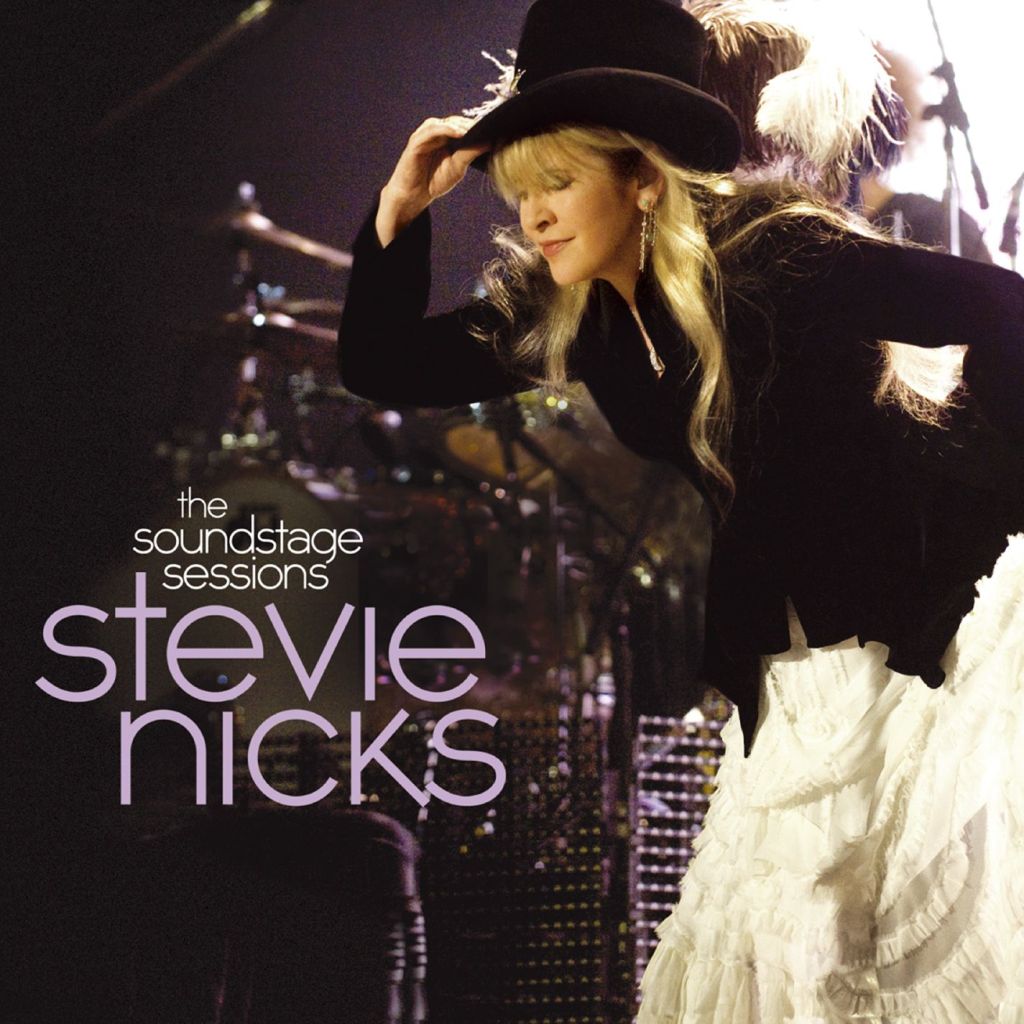
    Standing in line behind him at Barnes & Noble in Union Square last week, Johanna Ramos, 21, waited stoically for Ms. Nicks to sign her DVDs, Live in Chicago and The Soundstage Sessions. “She looks like a sorceress,” Ms. Ramos said, “like someone powerful who owns the stage.”

    Indeed, with her back to the audience, Ms. Nicks projects the fervor of a tent revivalist. “There are times when she stands completely still, and then she’ll just put one hand up,” said Chi Chi Valenti, the founder of Night of a Thousand Stevies, an annual Nicks-inspired costume bash. “Especially with the backlighting, she almost looks like a religious statue.”

    Some 1,000 people lined up to greet Ms. Nicks in Union Square, bringing offerings of handmade greeting cards and amulets. There were boys in Nicksian top hats and urbane-looking women in black chiffon and crescent moon pendants.

    “You are my mentor and my inspiration, and I’ve loved you all my life,” one long-haired admirer in her 40s said. Ms. Nicks took her hand. Another, in her 20s, glided forward in a wheelchair, and Ms. Nicks squeezed hers as well, just as she did when a girl, 17, told her that she had given her the strength to stop using cocaine.

    Looking on, Liz Rosenberg, Ms. Nicks’s longtime publicist, was having none of it. “Stevie is the new kabbalah,” she joked. Then she urged her to step up the pace.

    (Photo caption: FOCAL POINT Stevie Nicks at signing event. Photo by Michelle V. Agins/The New York Times)

    Ruth La Ferla / New York Times / April 8, 2009

  • Stevie Nicks: How I Look Fabulous at 60

    Stevie Nicks: How I Look Fabulous at 60

    Stevie Nicks is 60 but she still feels like she’s on the “edge of 17,” thanks to super-efficient Power Plate workouts that have whipped her into incredible shape.

    “When I gained my 30 lbs., it was because I went on tranquilizers for eight years,” Nicks told PEOPLE Monday, the day before her new CD, The Soundstage Sessions, and Live in Chicago DVD hit stores. “I don’t blame myself for that.”

    The secret to staying slim is finding a healthy weight you can maintain, says the “Rhiannon” chanteuse, who is now a sleek size 8 and is touring with Fleetwood Mac for the first time in five years. “You don’t have to weigh 105 lbs. Weigh 125 lbs. and stay there.”

    The singer adds that had she not been on tranquilizers in the ’80s, “I would have stayed at 125 pounds from 1985 and [later on] probably would have weighed about 130 pounds. That would have been way better than fighting to get back to 130 lbs. from 175 lbs.”

    Short, efficient workouts on the Power Plate every other day have helped her keep the weight off. “I do it every other day for 13 minutes,” says Nicks of the Power Plate, a machine with a vibrating platform that revs up workouts by forcing users to contract and release their muscles up to 50 times per second to maintain balance. “You can’t get results faster than that.”

    Her other secret to looking so young? “I take good care of my skin,” she says. “I never go to bed in makeup. I haven’t laid out in the sun since I was 28. While everyone else is out there burning up, I’m walking around going, ‘When I do look 60, you will all look 100. Enjoy it now because you aren’t going to be happy when I look young enough to get a date and you don’t.’ I’ll still be going out when I’m 75. Everybody else will be in the rest home!”

    K.C. Baker / People / March 31, 2009

  • CHART BEAT: Bootylicious

    CHART BEAT: Bootylicious

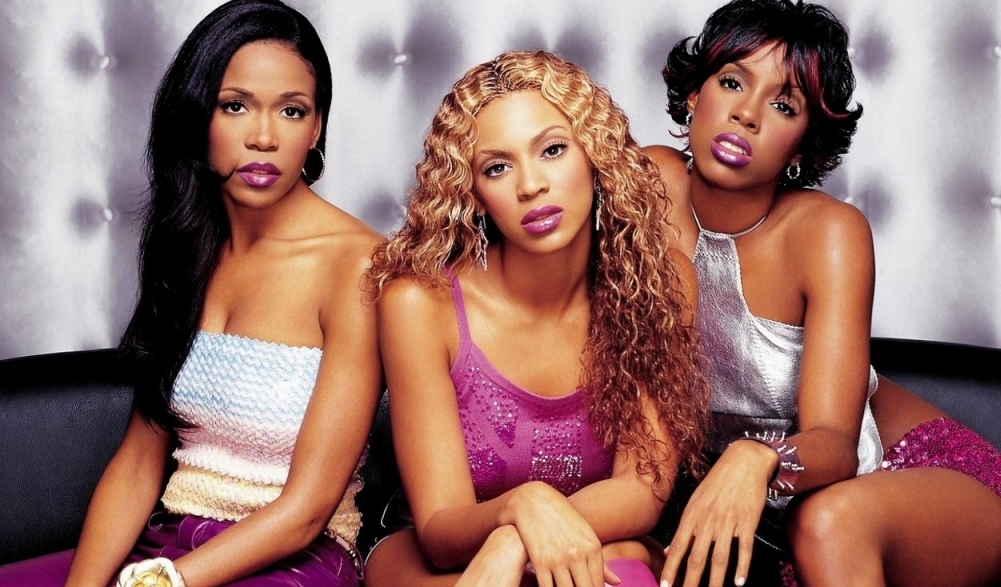
    Stevie Nicks appeared in Destiny Child's video for "Bootylicious."
    Stevie Nicks appeared in Destiny Child’s video for “Bootylicious.”

    SUPREME ACHIEVEMENT:  Only three girl groups in the history of The Billboard Hot 100 have been No. 1 for more than five cumulative weeks. The leader of the pack is the Supremes, with a total of 22 weeks. Close behind is TLC, with 18 weeks. This issue, Destiny’s Child is within striking distance of TLC, as “Bootylicious” (Columbia) remains at No. 1 for a second week, giving the act an aggregate total of 17 weeks at the summit. The Supremes’ total comes from 12 different chart champs, spread over five years, four months, and two weeks. TLC reached its total with only four singles and in a slightly faster time frame: four years, eight months, and one week.

    Destiny’s Child also needed four No. 1 singles to achieve its total: “Bills, Bills, Bills” (one week), “Say My Name” (three), “Independent Women Part I” (11), and “Bootylicious” (two to date). But the act pulled this off in record time–a mere two years and three weeks.

    THE WRITE STUFF:  Chart Beat reader David Brunot of Guys Mills, Pa., wrote to ask where Stevie Nicks ranks among songwriters with the longest span of No. 1 songs, given that Destiny’s Child’s “Bootylicious” samples her “Edge of Seventeen.” A few months ago, Nicks would have been in eighth place. But the rankings have since changed dramatically: This year, four contenders entered the top 10 for the first time. That means Nicks, with 24 years, one month, and three weeks between Fleetwood Mac’s “Dreams” and “Bootylicious,” is in 12th place. The record was set a few weeks ago by Bob Crewe, with 38 years, six months, and two weeks between the 4 Seasons’ “Big Girls Don’t Cry” and Christina Aguilera, Lil Kim, Mya & Pink’s “Lady Marmalade.” Crewe sent previous record-holder Chip Taylor into second place, with 34 years and eight months between the Troggs’ “Wild Thing” and Shaggy Featuring Rayvon’s “Angel.”

    In third place are Luigi Creatore, Hugo Peretti, and George David Weiss, with 31 years, eight months, and three weeks between the Tokens’ “The Lion Sleeps Tonight” and UB40’s “Can’t Help Falling in Love.” Newly positioned in fourth place are Ahmet Ertegun and Eddie Curtis, with 27 years, two months, and two weeks between Steve Miller Band’s “The Joker” and Shaggy’s “Angel.”

    Also ahead of Nicks are Kenny Nolan (26 years, three months, one week), Cameron Lewis and Arthur Wright (25 years, six months), Brian Holland (25 years, five months, three weeks), Elton John and Bernie Taupin (24 years, 11 months, one week), Gerry Goffin (24 years, nine months), Lamont Dozier (24 years, five months, two weeks), and Bill Withers (24 years, five months).

    DIAMOND LIFE:  Neil Diamond’s first chart album of the new millennium is his highest-debuting of all time. Three Chord Opera (Columbia) enters The Billboard 200 at No. 15, topping the 1993 No. 28 debut of Up on the Roof-Songs From the Brill Building.

    Fred Bronson / Billboard / August 11, 2001

  • Q&A: Stevie Nicks

    Q&A: Stevie Nicks

    A fog is pouring over the Pacific Coast Highway toward Stevie Nicks’ Southern California home, but the singer’s mood could hardly be brighter. The Fleetwood Mac alumna’s Trouble in Shangri-La has just entered the Billboard 200 at an impressive Number Five. Sheryl Crow, who co-produced five tracks, joined Nicks on the album, as did Macy Gray, Sarah McLachlan and Dixie Chick Natalie Maines. Nicks is also recovering from drug addiction— her latest was to the tranquilizer Klonopin. More recently, she’s come back from shooting her part in Destiny’s Child’s video for “Bootylicious,” which samples the Nicks classic “Edge of Seventeen.” “The wild thing is we’re together at, like, Number One and Number Five, and, of course, there’s about a 5,000-year age difference,” Nicks says with a sunny laugh.

    RS: Do you feel you’ve become a sort of Mother Superior for women in music?

    I do. I do. And it’s a nice feeling — I certainly would have never gone out looking for that, but it seems to be coming to me. I guess these are just all my lost children coming back into my arms.

    RS: What do you think of how women in music sell their sexuality these days?

    I definitely used my sexuality in a certain way. I kind of draped it all in chiffon and soft lights and suede boots. Everybody now is just much more blatant  Personally, I think that being a little more mysterious works better, and it lasts longer. You should be very careful that you don’t build everything you have around how cute you are or how sexy you are, because, unfortunately, no matter how cute you are or how sexy you are, in fifteen years, that won’t be the most important part of your music. I knew that in my twenties. And I prepared for that.

    RS: Do players really only love you when they’re playing?

    That’s just about groupies and rock stars and what happens out there on the road. It really doesn’t happen out there on the road to women. It didn’t really happen to me, but I saw it happening all around me.

    RS: I hear you’re into doing Pilates these days. Has Pilates replaced Klonopin for you?

    No, nothing replaces Klonopin. I’m not addicted to working out. I enjoy it, and I am doing it now not because I want to be thin but because I want to be healthy in twenty years.

    RS: With all that you’ve lived through, are you surprised you’re still alive?

    I am amazed. I feel very lucky. If I had not caught that Klonopin thing, I am absolutely sure I would have been dead in a year — no doubt in my mind. I feel really lucky that somebody tapped me on the shoulder — some little spirit — and said, You know what? You better go to a hospital right now and get better.

    RS: Did drugs ever erode your love for music?

    The Klonopin eroded my love for everything. Klonopin is a tranquilizer. So between Klonopin for the calm and some Prozac for the wellness feeling, you are never inspired. That’s what it does.

    RS: Did you sense that this album was going to turn things around for you?

    Well, I knew that this record would either make me or break me. I figured if I could do an album that the world loved after being addicted to that Klonopin stuff for eight years, and just having that be such a black hole, that I would be back on my way. That’s kind of how I feel. And the Fleetwood Mac reunion just slipped in there. I didn’t ever think that Fleetwood Mac would get back together. On that tour, I really regained my power, so when I came home from the Fleetwood Mac tour, I was really ready to finish this record.

    RS: Even though Christine McVie has now retired from the group, is it safe to say there is a future for Fleetwood Mac?

    Totally. Lindsey [Buckingham] and I and Mick [Fleetwood] and John [McVie], we are going to do this. Christine is OK. She has set us free and let us go. And she wants us to do this if we want to. And so we are going to do it. As soon as I get done with this [Shangri-La tour], and Lindsey is finished doing whatever he does in the next year, we’ll be done and we’ll come together, and we’ll do a record. And there’s a possibility that Sheryl could be a little involved in that.

    RS: As someone who lived through the ultimate rock & roll interoffice romance, do you have any advice for us on the subject?

    It doesn’t work. It just doesn’t, because when all the business and everything else is blended, you don’t have any space for anything.

    RS: On the other hand, you’ve had some fascinating men in your life — Lindsey Buckingham, Don Henley, Jimmy Iovine.

    They are all still my really good friends today. I just talked to Don Henley an hour and a half ago. We just did an incredible benefit for MS (Multiple Sclerosis) in Dallas two weeks ago. All the men who were in my life I’m friends with now, and it’s really nice. I chose to not be married. I chose to be single. I have a lot of fun this way. I can do anything I want, go anywhere I want, be with anybody I want, and I’m not angering anybody. Nobody is ever upset with me.

    RS: It must be intimidating to ask you out. It’s like asking out Cinderella.

    I would think it would be very intimidating for people. That’s probably why most people don’t, you know, because they’re scared [laughs]. I figure if there’s a soul mate for me out there somewhere, I’ll find him. He’ll find me.

    RS: Is the secret to your success that you really are a witch after all?

    I’m not a witch.

    RS: Not even a good witch, Stevie?

    I just like Halloween, and I thought that blondes look skinnier in black. That was my whole idea for that whole thing — a long, cool woman in a black dress, right?

    David Wild / Rolling Stone / July 5, 2001

  • SONG: Stevie Nicks – Rock a Little

    SONG: Stevie Nicks – Rock a Little

    Unlike her former running mate Lindsey Buckingham, Nicks has played it pretty safe in her records apart from Fleetwood Mac. This album is not as gripping as her previous efforts, Bella Donna and The Wild Heart, but it has greater variety. Nicks hasn’t abandoned commercial pop-rock as songs such as “Talk to Me” and “The Nightmare” attest. “I Can’t Wait” and “Sister Honey” have her experimenting with hard-edged dance rhythms that use electronic percussion. In the slower songs her voice, with its strange shadings and quavering nasality, can be irksome. On “I Sing for the Things,” she sounds like a bizarre cross between Edith Piaf and Elmer Fudd. But Nicks is too smooth a pro to allow her vocal idiosyncrasies to mar the whole record. She employs talented sidemen such as guitarists Waddy Wachtel, Les Dudek and Michael Landau. Nicks herself rocks a little, and she explores some other tempos with equal polish. (Modern/Atco)

    PHOTO (COLOR): Stevie Nicks: Rocking out on a not-too-long limb

    David Hiltbrand, Ralph Novak and Eric Levin / People (Vol. 25 Issue 2, p20. 2p. / January 13, 1986,