 Fleetwood Mac’s Extended Play (EP), previously available exclusively on iTunes, is now available for purchase on Amazon. The digital EP is $3.96 for all four songs.
Preview the songs:
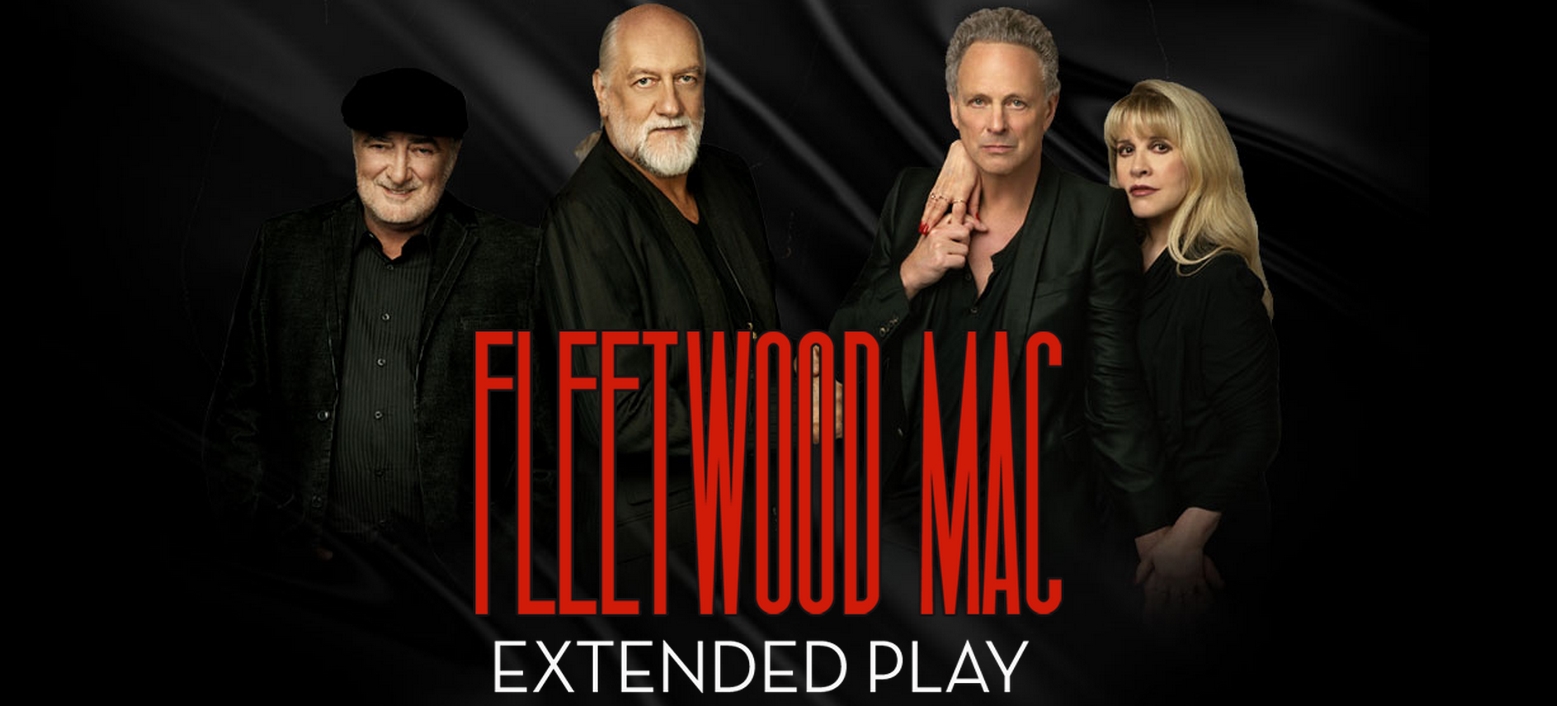
Fleetwood Mac: Extended Play (Self-released)
Rolling Stone rating: *** (3 stars out of 5)
“We fall to Earth together/The crowd calling out for more,” goes a couplet on this four-track EP by the remaining Macs (Christine McVie sits out). Note to band: That doesn’t mean y’all have to answer. But if their first release of new music in a decade isn’t replacing any classics, the voices of Lindsey Buckingham and Stevie Nicks can still bring chills. The gem is “Without You,” a breezy Nicks-written folk rocker from the couple’s pre-Mac project Buckingham Nicks: Largely acoustic, with twined harmonies, its chords twist and resolve like a sun-dappled mobile on a breezy day. And we confess: Hearing the ex-lovers put words in each other’s mouths remains as fascinating as ever.
Will Hermes / Rolling Stone / Tuesday, May 7, 2013
Fleetwood Mac’s announcement that it was making an EP was surprising: The group hadn’t released new music since 2003’s underrated Say You Will, and its current arena tour seemed more like another back-catalog cash-grab than a chance to road-test new material. Likewise, the band hasn’t done much publicity behind the new music, keeping the release date secret and only playing two of the new songs live. But there’s no reason for Lindsey Buckingham and company to be coy: Extended Play’s opener, “Sad Angel,” is everything a fan could want from latter-day Mac. With frenetic guitar from Buckingham, expert harmony from Stevie Nicks, and a chorus that’s catchy as hell, the song is a great reminder of how well these folks can craft pop music. Buckingham has been making quality albums on his own for this past decade, but he’s livelier than ever on “Sad Angel,” drawing parallels between the bombast of war and rock music. Even Mick Fleetwood’s drumming is more energetic than it’s been since the ’80s. If Fleetwood Mac has more tracks like this in them, here’s hoping another album surfaces soon.
Noah Cruickshank / A.V. Club / Monday, May 6, 2013
 Fleetwood Mac Extended Play (iTunes)
In the decade since Fleetwood Mac released 2003’s Say You Will, a new surge of interest in the group’s distinctive pop style has taken hold in the modern pop, alternative and country communities. Recent music by artists as diverse as Cut Copy, Lady Antebellum, Vampire Weekend, Haim, Daft Punk, John Mayer and Little Big Town was inspired by the warmth and harmonic richness of Fleetwood Mac’s Lindsey Buckingham/Stevie Nicks era, and last year’s tribute album, Just Tell Me That You Want Me, offered persuasive testimony to the band’s enduring influence.
 But for all the enthusiasm those acts show for Fleetwood Mac’s pop shimmer, most would balk at walking a mile in their shoes, and continued tension within the band is a key reason why they only mustered four tracks for Extended Play, Fleetwood Mac’s first new material since 2003. But this concise burst of fresh songs, mostly co-produced by Buckingham and Mitchell Froom (Crowded House), says more about what it really means to be part of Fleetwood Mac than anything since Rumours and Tusk. Buckingham takes it on directly with “Sad Angel,” which addresses the challenge of getting Nicks on board with new Mac material while the fans are “calling out for more.” Even the inclusion of “Without You,” an unreleased Buckingham Nicks song, underlines the continued tension — putting the song on Extended Play was a compromise after Nicks and Buckingham could not agree on how to handle the 40th anniversary of the Buckingham Nicks album.
News OK / Friday, May 3, 2013
Fleetwood Mac, Extended Play (LMJS Productions) * * * 1/2
Fleetwood Mac’s first new music since 2003’s Say You Will is short on Stevie Nicks, who resisted recording a full album with the group. The resulting four-track EP, released to iTunes as a digital download, makes you wish for more on the strength of Lindsey Buckingham’s three new songs.
Nicks contributes the folksy “Without You,” a reject from the 1973 sessions for the Buckingham Nicks LP. The pair harmonize over Buckingham’s tinny acoustic strumming. Meh.
Much better: Buckingham’s fresh songs in which he returns to writing crisp, accessible, engaging California pop/rock, like the infectiously melodic and rhythmically driving “Sad Angel” and the breezy “Miss Fantasy,” a piquant taste of Mirage-era Mac that makes great use of the famed rhythm section of Mick Fleetwood and John McVie.
His stark solo piano ballad, “It Takes Time” — imagine Christine McVie’s “Songbird” as its closest cousin — intrigues the most because it’s unlike anything the guitarist has released.
Howard Cohen / Miami Herald / Friday, May 3, 2013
The four songs on the new Fleetwood Mac EP — which the legendary pop-rock outfit put up for sale on iTunes on Tuesday morning with little advance warning — arrive steeped in echoes of the past, in at least one case quite literally: “Without You,” a strummy acoustic number overlaid with harmony vocals by Lindsey Buckingham and Stevie Nicks, reportedly dates back to sessions for the two singers’ 1973 album as a long-haired vocal duo deeply opposed to shirts.
But the other tunes on Extended Play, newly composed by Buckingham and co-produced by him and L.A. studio pro Mitchell Froom, feel no less rooted in earlier iterations of this on-again/off-again institution.
“Miss Fantasy” has some of the folky back-porch guitar action of “Never Going Back Again,” while the stripped-down “It Takes Time” could be Buckingham’s version of Christine McVie’s big piano ballad, “Songbird.” And opener “Sad Angel,” which you can hear below, shimmers with the glossy textures of 1987’s Tango in the Night. (Incidentally, if you want to get a sense of Fleetwood Mac’s enduring influence on synthed-up young rock acts like Phoenix, go straight to Tango — it looms larger these days than the vaunted Rumours does.)
Nothing about this self-reference surprises, of course, especially given that Fleetwood Mac is in the midst of a giant arena tour that will bring the band to the Hollywood Bowl on May 25 and Anaheim’s Honda Center on May 28. Old hits are what the members are playing onstage — “Don’t Stop,” “Dreams,” “Go Your Own Way,” “Silver Springs” — so old hits are what the members are hearing in their heads.
And yet Extended Play — Fleetwood Mac’s first studio output since Say You Will in 2003 — doesn’t sound stale or overworked; indeed, the songs have an impressive crispness (after only a handful of spins, anyway) that makes their familiarity seem less like evidence of a tapped creative supply than like proof that this is simply the kind of music Fleetwood Mac writes.
“I remember you,” Buckingham sings over and over again near the end of “Miss Fantasy,” and he might be addressing his own melody. But it’s a good one. You’ll remember it too.
Mikael Wood / Los Angeles Times / Wednesday, May 1, 2013

Mick Fleetwood clearly gets the question all the time.
And he completely gets the question.
How can the majority of Fleetwood Mac’s most famous lineup — drummer Fleetwood, bassist John McVie, singer/songwriter/guitarist Lindsey Buckingham and singer/songwriter Stevie Nicks — still be making music together after all these famously tumultuous years?
Well, he said with a laugh, it’s still a bit of a shock for him, too.
“I think you have to concede that. … You know, (it) used to be years and years and years ago still quite painful, in many ways, and all the well-worn stories of survival — emotional survival — through all of that, I won’t say they’re boring because even to us, we look at that and go like ‘How the *** DID we get through all that?’” Fleetwood said in a phone interview from Los Angeles before the April 4 launch of the band’s North American tour.
“You just have to really attribute it to a form of perverse devotion for sure to the music and what we were able to do. We were really lucky to be able to be doing it. I think we all realized that.”
The Rock and Roll Hall of Famers are bringing their “Fleetwood Mac Live 2013” trek to the BOK Center on Wednesday night. The legendary band previously played the Tulsa venue the last time it hit the road together, on 2009’s sold-out “Unleashed Tour.”
The longtime bandmates have reunited on the road to mark the 35th anniversary reissue of their most iconic album, Rumours, but they’re also celebrating the release of new music. On Tuesday, the band dropped on iTunes a four-track EP appropriately titled Extended Play.
It’s practically impossible to think of Rumours without thinking of the interpersonal havoc that birthed it: McVie and his wife, Christine McVie, the band’s now-retired singer/songwriter/pianist, filed for divorce, while Buckingham and Nicks broke off their long-term romance. Fleetwood and his wife divorced, too, and he and Nicks had an affair.
Despite the turmoil, Fleetwood said the band concentrated on making the album a “complete piece of work” rather than just a collection of random tracks. Because the turmoil informed the songwriting, Rumours became one of the most popular and acclaimed records in rock history, winning the Grammy for Album of the Year and selling more than 40 million copies worldwide since its 1977 debut.
“I think the songs, the vocal delivery on the album and the approach with the harmonies and stuff was something for sure fresh and maybe somewhat ‘wow, not (another) band sounds like that.’ So we were blessed with all that stuff. And then I think the songs were great, and they were pop-driven songs, but they weren’t stupid and they weren’t corny. But they were really accessible,” Fleetwood said.
“Then you had this bunch … that started telling their own story literally through those songs and then as that unfolded, it became part and parcel outside of the music, this mythological story of this impossible situation these people had found themselves in. I think the whole putting together of all those components became something that people identified with and in many ways were attracted to it, probably because they felt similar themselves very often, that they were just a bit of an emotional mess,” he added.
“We’re all in our 60s now, and people still talk about this human condition calling card which was ‘Rumours.’”
With the bustling solo careers Nicks and Buckingham have carved out, the native Englishman said creating new Fleetwood Mac music has been a challenge. Plus, the drummer, 65, who now lives on Maui, opened Fleetwood’s On Front Street restaurant last year and continues to make music with his Mick Fleetwood Blues Band, which recently played a special show featuring Christine McVie and Aerosmith’s Steven Tyler on the island he calls home.
Tuesday’s EP release marked the band’s first new music debut in a decade. Fleetwood, John McVie and Buckingham assembled several months ago in L.A. and recorded about nine “really fresh and vibrant” songs they hoped would be the starting point for a new album from the group. Nicks was busy with her own tour and then her mother’s death, but before the quartet hit the road, she added her vocals to a few tracks and recorded “Without You,” a previously unreleased song from her pre-Fleetwood Mac days with Buckingham Nicks.
Along with “Without You,” the digital EP features the poppy tracks “Sad Angel” and “Miss Fantasy” and the wistful piano ballad “It Takes Time.” Hopefully, the EP will herald the coming of a full-length follow-up to 2003’s Say You Will, Fleetwood said.
“We’re musicians at work, and now we have the grace just to say ‘When this is right, we’ll do it.’ Stevie’s ready to do it and wants to do it, and off we go. And we’ll be wrapped around each other for the better part of probably 18 months, you know, working all over the world.”
Despite the band’s turbulent history, Fleetwood said the quartet was instantly in harmony when they came together for rehearsals.
“It’s just like it could have been like three days ago, and it’s actually maybe four years ago that we all were on the road,” he said.
“It’s like opening up a time capsule that is very familiar, and then we literally just plug in and ‘let’s go’ and it’s all intact.”
Brandy McDonnell / News OK / Wednesday, May 1, 2013
 Mick Fleetwood on Fleetwood Mac: ‘It Would Make A Great Play’
Not long ago, the idea of Fleetwood Mac ever touring again seemed far-fetched at best. But as of this spring, not only is the band back on the road — according to drummer and founder Mick Fleetwood, they’re having an easier time filling seats than in the past.
“We seem to have a band of angels up there organizing what we do down here. … I don’t know; maybe people think we’re never gonna do this again, or we’re all gonna drop dead or something,” Fleetwood says. “But on a positive note, I think it’s indicative of Fleetwood Mac’s extremely interesting story — that just when you think it’s sort of going into a ditch, it comes out the other side.”
This week, Fleetwood Mac unveiled another surprise: a four-song EP of brand-new music, released digitally via iTunes and simply called Extended Play. Mick Fleetwood spoke with NPR’s David Greene about the band’s uncommon staying power. Hear the radio version on Morning Edition tomorrow (the audio will then be archived at the link on this page).
There have been drugs; there have been relationship ups and downs in the band. Does that mean you almost have to come to the edge, and then kind of come back from the edge to keep doing what you’re doing? Is that necessary?
God knows I don’t know whether it’s necessary, but the fact is it happened. And without getting artsy-fartsy or therapeutic, the reality is you have to take responsibility — not only as a person within the group of people, but then you look at it as a collective, which is the band known as Fleetwood Mac. And we have.
A lot of your fans, I think, see you still out there — after all the roller-coaster and the soap opera — and a lot of fans are like, “Wow. Fleetwood Mac, through all the changes, all the years, different faces — they’re still here.” Are you surprised that you’re still here as well?
[Laughing] Hmm … no. I’m not. I think what I have to confess to is that I had nothing else to do apart from keep this band going. So I’m sort of not surprised.It sounds like you’re almost a prisoner to the band and the idea.
Well, that’s an interesting phrase. And in truth, just as of late — the last few years, really — I’ve had to work at just not being this creature that almost gets obsessed: “It’s gotta continue,” and “What if … ?” And I’ve truly done pretty good at letting go. And it’s truly appropriate: We’ve done way too much, all of us, to be herded into my world of, “At all costs, Fleetwood Mac.”
So now, what you see is really pretty much a version of a bunch of people that happen to want to do something. And they haven’t been coerced or crafted, or sold their soul to the company store. … All of that stuff is gone. Which makes this, again, a really, really clear vision of what we’re doing. And I can’t think of any other band that I know that has gone through the arc of all of these [changes], even before Stevie and Lindsey. It would make a great play, and I hope one day that we somehow do that.
And of course, you’ve played a role in the play. You’ve had the struggles that we all know about with drug addiction; there was a relationship with you and Stevie Nicks that a lot of people read about. Is there a song from Fleetwood Mac that you feel like kind of captures your role in the whole play?
I’d say “The Chain.” [That song’s message should] be written on my grave: “That’s what he did. He half-killed himself keeping this bunch together.”
Are you playing that song out on the tour right now?
Yeah. It’s one of the songs, I think, that if we didn’t play, we’d be lined up and shot.
You told my colleague Scott Simon, about four years ago, that you actually realized that the audience wanted the old ones. You were actually happy to report that you had no new songs to play, because you wanted to spare your audience — let them enjoy the oldies.
Well, that’s true. People love to hear things that they tell their own stories to. Creative stuff that comes from the artist very quickly becomes the property, as it should, [of the audience] — to be reinterpreted and create a backdrop for parts of their lives.
Have you seen a change in the audience over the years?
Absolutely. There’s retrospection involved, I’m sure. … The lovely thing is, we truly are blessed with huge amounts of young people that are totally getting what we’re doing. And that’s why these new songs are hugely important. Lindsey would be the main flag-waver as to being really excited about the thought that we’re not treading water, and that we are creative.
He’s pushing for new material.
Yeah, and I think that’s his epitaph, or would be. Stevie’s is a bit of everything, including the blessing of truly and naturally being just so … well, talented for sure; we know that. But she has a magic mantle that is very profound, and it comes only once in a while to certain performers, and she is one of them for sure.
That’s her epitaph. Yours is, “Let’s keep the band together,” and Lindsey’s is, “Let’s continue being creative.”
We’ve all had functions in Fleetwood Mac. And because of that, I think, it’s not a stretch to [say] that’s probably why we’ve survived all this.
One of the songs on the new EP, “Miss Fantasy,” strikes me as something that could have been on Rumours in 1977; it’s very much your sound from the ’70s.
Whatever that is [laughs]. I think it’s fair to say that that album has become tonally timeless.
It feels like you’re not trying to break into some new sound in this new day. You’re carrying on a tradition that you feel good about.
It’s the band. The Stones did their Beatle thing, and they go, “Eh, we’re The Rolling Stones. Let’s just leave this alone.” That’s who they are, so whatever they do, you know it’s them — and they’re comfortable with it, and they’re really good at it. … So I take that as a huge compliment, what you’re saying.
Stevie Nicks has said that she hasn’t spent much time on the Internet, doesn’t have a laptop. She’s sort of said, “I guess we need to put songs out on this thing called iTunes.” You don’t seem like a band that’s embracing all sorts of new technologies. You seem like you’re kind of doing it the old way.
We know that this is really something we’ve never done — put out something on iTunes. And we’re going, “Well, we don’t have a completed album.” And maybe we’ll find out that people really, actually, seriously want us to do that. And if not, then this has been fun.
You said that you thought a lot of people might be coming out to your concerts right now because they’re worried this might be the end; they want to say goodbye. Is that a possibility?
No, I think it’s incredibly vibrant, the lifeblood of Fleetwood Mac. So you can pull that one out of your psyche.
This is not a farewell tour. Not even close.
No. We’re just bowled over that something is showing itself in this funny, mysterious way — hence me talking about this bunch of angels up there, organizing what we do. I’m thinking they’re very busy planning something into the future for Fleetwood Mac.
Listen to the interview on Morning Edition from NPR
NPR / Tuesday, April 30, 2013
Official Ultimate Classic Rock rating: 7 out of 10
Earlier today (April 30), Fleetwood Mac released a four-song EP, Extended Play, their first new studio material since 2003′s Say You Will. While the EP is available for purchase exclusively at iTunes, you can stream the lead track and first single, “Sad Angel,” below.
Written by Lindsey Buckingham, “Sad Angel” opens with some typically kinetic, percussive Buckingham rhythm guitar before his vocals come in, and joined later by the whole band. The rhythm section of John McVie and Mick Fleetwood chug along in typical no-nonsense, muscular fashion, with some keyboards and a few layers of guitars to fill it out.
Even though she sings in tandem with Buckingham for all but the opening 15 seconds, Stevie Nicks is largely invisible. She takes her lines well and the two still blend together very well, but there’s little of her trademark personality on display. Maybe that’s a little harsh, but for a band that has traded so frequently on the duo’s history together, “Sad Angel” doesn’t offer much in the way of tension between its two lead singers.
Not that that’s a bad thing, of course. Throughout the run-up to the release of ‘Extended Play,’ we’ve heard about how those past issues are behind them — note how they’re posed in the press photo above — so what better way to prove it than with a nice, poppy song that is, lyrically, light years removed from their famously autobiographical work.
Or is it? The ambiguous lyrics could be Buckingham acknowledging that he and Nicks need each other, and are never better than when they’re together. “We fall to Earth together / The crowd calling out for more / Hello, hello sad angel / Have you come to fight the war?” they sing in the chorus. It’s hard to tell, because we usually associate Nicks with gypsies or witches, not angels.
If “Sad Angel” is about her, then it’s a nice peace offering as the two of them prepare to write the newest chapter in their incredibly long history together. If not, then it’s still a welcome return to form for one of rock’s most enduring bands.
Dave Lifton / Ultimate Classic Rock / Tuesday, April 30, 2013
Fleetwood Mac, which put out a new EP today, was one of the few music choices my parents and I could agree on. I would scream along with the rocking chorus of “The Chain” on the way to school and dance around the house to “Little Lies.” Since then, my appreciation for the band—from Lindsey Buckingham’s virtuosic guitar playing to the group’s layered harmonies—has grown more sophisticated, but the songs still pack the simple, emotional wallop they did for me 15 years ago.
Alternately credited with and cursed for creating “adult contemporary,” the members of Fleetwood Mac are almost as famous for their personal drama as for their classic songs. Originally, though, Fleetwood Mac was a simple British blues band, formed in 1967 by guitarist Peter Green and named after drummer Mick Fleetwood and bassist John McVie. This lineup, with a few additions, put out three albums, which did well in the U.K., but received little attention stateside. (One of the singles from that era, “Black Magic Woman,” became a major hit for Santana.) In 1970, Green left the band after suffering from a mental breakdown (he was later diagnosed as schizophrenic). A year later Christine McVie, John’s new wife, officially joined. A keyboardist who wrote her own music, Christine increasingly came to shape the band’s sound. Mick and the McVies stuck together through the early ’70s and more personnel changes—one of their guitarists joined the Children of God and another had an affair with Fleetwood’s wife—as they tried to replicate their British success in the U.S.
They didn’t have much luck until 1974, when Mick recruited the American folk duo Buckingham Nicks. For their first album together, this new version of Fleetwood Mac combined Christine’s songs with some that Lindsey and Stevie had already written. The eponymous result finally brought the band the American popularity they’d been looking for, selling five million copies and reaching No. 1 on the charts. It had four hit singles, including McVie’s poppy “Say You Love Me” and Nicks’ haunting “Rhiannon,” which highlighted her wild performance style.
Success also brought trouble, as it does. The band’s two couples began to unravel—as did Mick Fleetwood’s marriage to model Jenny Boyd—just as they returned to the studio. And so the musical legend of Rumours was born: The album is made up of songs that Christine, Lindsey, and Stevie wrote about their dissolving relationships. The most famous of these are Buckingham and Nicks’ dueling takes on their doomed love, her ethereal “Dreams” and his aggressive “Go Your Own Way.” But at the heart of the album is the only song all five of the band members ever collaborated on, “The Chain,” which emphasizes their commitment to carrying on as a group despite their personal disagreements.
After the massive sales of Rumours, the studio invested heavily in the band’s follow-up. But Buckingham was determined not to repeat himself and began experimenting with different recording techniques (including, for instance, laying on a tile floor as he sang into the microphone). Meanwhile, Stevie had embarked on a secret affair with Mick—which ended, much to her chagrin, when he left her for her best friend. Eighteen months and the largest recording budget of all time produced the messy Tusk. The album sold about a quarter of the copies its predecessor did, but the unnerving title track, which features the USC marching band, balances Buckingham’s desire for punky weirdness and the rest of the band’s gift for grandeur.
The band put out two albums in the ’80s: 1982’s Mirage—which was largely overshadowed by Nicks’ solo release Belladonna—and 1987’s Tango in the Night. Tango was troubled; the band’s lifestyle remained extravagant and Nicks had abandoned coke for Klonopin, which made her spacey and unreliable. Buckingham and McVie, who had a hit with my old favorite, “Little Lies,” took over most of the songwriting duties, but Nicks, with the help of Sandy Stewart, still managed to contribute one great song, the cheerful “Seven Wonders.”
After another blow-up with Nicks, Buckingham left the band right before the Tango in the Night tour. The split wasn’t permanent, but the band never really recovered; in 1997, Christine McVie permanently retired from Fleetwood Mac. The remaining foursome has toured sporadically since then. Their 2003 album, Say You Will, was fairly successful, but failed to live up to their earlier work.
The new EP is the band’s first new material since then. The best of its tracks, “Sad Angel,” hearkens back to the catchy pop-rock of Rumours, rather than the smoothed-out sound of their more recent stuff. Perhaps they’ve rediscovered the knack they used to have for transmuting a troubled dynamic into powerful songs, though it’s hard to tell on the basis of just three new songs, all by Buckingham. (The fourth track, “Without You,” is an old Buckingham Nicks tune.) However it turns out, I’ll always have “The Chain.” And if you’ve never given the band much thought, you’ll find 10 tracks to get you started below, both as a Spotify playlist and on YouTube and Amazon. Enjoy.
“Rhiannon” from Fleetwood Mac (1975)
“The Chain” from Rumours (1977)
“Black Magic Woman” from The Pious Bird of Good Omen (1969)
“Seven Wonders” from Tango in the Night (1987)
“Tusk” from Tusk (1979)
“Dreams” from Rumours (1977)
“Second Hand News” from Rumours (1977)
“Say You Love Me” from Fleetwood Mac (1975)
“Little Lies” from Tango in the Night (1987)
“Go Your Own Way” from Rumours (1977)
Alex Heimbach / The Slate / Tuesday, April 30, 2013