Category: In Your Dreams (2011)

  • Gold Dust Woman: Q&A with Stevie Nicks

    Gold Dust Woman: Q&A with Stevie Nicks

    When Stevie Nicks started her musical and romantic relationship with Lindsey Buckingham, both were still in high school. By the time the romance ended, the folk-pop duo were in one of the world’s hottest bands, which also contained another splitting couple, John and Christine McVie, as well as drummer Mick Fleetwood, who also was in the throes of divorce. Their tangled, cocaine-addled lives—and Nicks’ affair with Fleetwood—would become fodder for 1977’s Rumours, one of the best-selling albums of all time. In the years since, Fleetwood Mac’s members would go their own ways, only to come together again periodically. But of all their solo careers, Nicks’ has been the most successful.

    Her string of hits, with and without Fleetwood Mac, represents one of pop music’s most beloved canons: the list includes “Rhiannon,” “Landslide,” “Dreams” (a favorite topic), “Edge of Seventeen,” “Leather and Lace” (a duet with one-time lover Don Henley), “Stand Back” and, with Tom Petty, “Stop Draggin’ My Heart Around.” Her gypsy/witchy-woman look—Victorian-inspired gowns, high-heeled boots, leather and lace, silk and satin, romantic hats over long, blonde hair, all shown off with frequent stage twirls—set a tone in the ‘70s from which she hasn’t wavered to this day. Her songwriting methods hadn’t changed much, either, till she called Dave Stewart and asked him if he’d like to produce her first solo album in 10 years. Released in May, In Your Dreams contains the first song collaborations she’s ever done with another writer while sitting in the same room, raw and open to anything.

    Their output, it turns out, is remarkably strong. This time, she’s inspired by soldiers, angels, vampires, New Orleans, Edgar Allen Poe and, of course, romantic notions—past, present and future. (Both Buckingham and Fleetwood are on the album, along with guitarist Waddy Wachtel, with whom she’d also reportedly been linked at one time.) Sometime writing partner Mike Campbell also participated. In a wide-ranging conversation, Nicks discusses her unusual methodology.

    You’ve written some of the most enduring songs in the pop-rock lexicon. I’m sure you’re very proud of that. How about if we start with Buckingham Nicks? “Frozen Love” was the biggest song that you two were known for as a team. Did you write that together?

    No, I wrote it. Lindsey and I did not ever write a song together. The only—strangely enough—time I’ve ever written a song with anybody is Dave Stewart.

    Wow!

    I mean anybody in the same room. I do write with [Heartbreaker] Michael Campbell, but he sends me a CD that has three or four tracks on it, so he’s not sitting there. That’s very different, because if you don’t like it you can like wait three days and call and say, “You know, I just didn’t see anything/hear anything right now, but I’ll revisit it.” So you can kind of get out of it without hurting anybody’s feelings. That’s a problem with writing songs with people—you can really end up hurting peoples’ feelings, because if you don’t like it, you either get stuck with something you don’t like or you’re honest and you tell them you don’t like it, and, it takes a very special team to be able to write together without that ego thing happening. So Lindsey and I never wrote. He would leave guitars all over our little house and they’d all be tuned in different tunings and God knows what. He’d be gone, I’d write a song, I’d record it on a cassette, and then I’d put the cassette by the coffee pot and say, “Here’s a new song, you can produce it, but don’t change it.” Strict orders. “Don’t change it, don’t change the words, don’t change the melody. Just do your magic thing, but don’t change it.”

    Did you ever overcome that feeling that once it was done, nobody could touch it?

    No. Very superstitious.

    How does that translate into your songwriting? When it’s done, it’s done?

    It’s done—pretty much. Sometimes when I write a song, I’ll just write the first two verses and the chorus, and in my head I know I still have to write another verse, and maybe I’ll do that down the line a couple weeks later or maybe even a month or two later, but it’s very set in stone because—I always have a tape recorder going, and usually the first time, if I’m singing [sings] “Now there you go again, you say you want your freedom /who am I to keep you down?”—I’m not changing that. And I know it. The second it comes out of my mouth, I’m like “Oh, that was good.” So I have a little overhead lightbulb thing that goes off, so then I’m never going to go back and change that even though a good example is Don Henley—I was going out with Don Henley when I was writing “Dreams,” and it says [sings], “When the rain washes you clean, you’ll know.” Well, he didn’t like that [sings]“washes you” [accent on “es”], and he wanted me to go, “When the rain washes you clean” [accent on “wash”]. And I’m like, “No, I don’t like it.” [laughs] And he’s like, “Well, wash-ES doesn’t sound good,” and I’m like, “Well, wash-ES is the way it’s gonna be.” So then you start getting into that with somebody, and we’re talking an ego [of] a fantastic songwriter here. So I’m arguing with Don Henley over this, you know? That’s why I really stayed away from writing songs with other people.

    Especially men, I guess.

    Well, yeah, and but then if you slip it over to women, then of course women are more sensitive. So then you’re really actually going to hurt somebody’s feelings. It didn’t hurt Don’s feelings that I didn’t like his idea. I think he just—he was like, way more famous than me, you know, Don Henley and the Eagles—so I think he probably just thought, “Well, you’re an idiot.” And just left it at that because certainly, me not liking the word “washes” is not going to wreck Don Henley’s confidence. But at the same time, it was a little thorn there for a moment.

    It’s interesting that you say, “He was way more famous than me.” In retrospect—and it’s so strange to ask a question like this: “Do you guys ever sit there and consider who is more famous?”—but honestly, as time has gone by, wouldn’t you say it’s pretty much equaled out?

    Well, maybe. But then, that was—well, when was “Dreams”? Was “Dreams” on the first or second record; I can never remember—whatever, when Lindsey and I drove to Los Angeles in 1971, “Witchy Woman” was on the radio, “One of These Nights” was on the radio, and we were totally inspired by them and by their amazing harmonies and amazing song craftsmanship. So in my little mind, this was two years—1976 is when it was, because that’s when I went out with Don—so in my mind, they had been famous for a good solid five, six years longer than we had been famous. So I was listening to the Eagles long before I even knew if we’d make it or not. There’s bands that are famous—well it’s generations —five years before us, and then us, and there’s the five-years-after-us generation, and then there’s even older than that, which would be Eric Clapton and his generation, a little bit older than the Eagles generation. So that’s actually like a two-year-older generation, so each one of those generations brought up these amazing bands, so I, Stevie Nicks, would open for the Eagles in a second because they’re awesome and they were my big inspiration. It’s why I was able to go out on the road just now and feel very good about opening for Rod Stewart, because Rod Stewart [is] awesome; one of my big influences.

    I was gonna ask you how that tour went.

    It went great. He’s trippy, he’s charming. I’m used to English people so I’m very comfortable with the English people. They are very witty and very funny and charming. You can’t not like Rod Stewart because he’s darling, and he was very good to me and he gave me a chance to take my new album around the United States and do 18 arena gigs, which, by myself, I could not command. I can’t play the arenas that Rod Stewart and Fleetwood Mac play. So taking me with him, he allowed me to be able to go play my single and say a few little words about my record in 18 huge cities, in 18 huge venues. He gave me a wonderful platform for that. On the last night I said to him, “If this record really does well Rod, I’m going to be sending you a cashmere blanket.” He really helped me in giving me that platform.

    Did it feel like there was a particular age group in the audience or were you reaching new fans as well?

    In Rod’s show?

    Yeah.

    Well, I’m starting to really be aware that there are children out there, I mean there’s kids, there’s 14-year-olds and 15-year-olds and 12-year-olds and 18-year-olds and 25-year-olds and 32-year-olds. It’s pretty much going across the board now, which is great. And it’s the same with Fleetwood Mac. When Fleetwood Mac first reconvened in 1998 for The Dance after not playing since 1987, since Tango in the Night, there were mostly people that were our age, a lot of people who looked definitely older, and Lindsey said, “Where are the younger people?” I said “Lindsey, give it a chance here, these are all the people that are our fans, and their children will come along with them and so will their grandchildren, by the way, so just give it two weeks,” and in fact that’s exactly what happened. Within weeks, there was like, super young people there, and it’s because we had great, serious fans, original fans in 1975-’76, ’77, ’78, and their children have grown up with us, and their children. Lindsey and I were 27 and 28 when we joined Fleetwood Mac—we had fans for those first two records that were probably, 50? Twenty-two years older than us? So think about that now. We’re 63 and 62. So if they’re still alive, we have fans in their 80s! [laughs]

    That’s what’s so cool about rock ‘n’ roll. When I was growing up, which was when you were coming out with Buckingham Nicks and Fleetwood Mac was out, the last thing you would ever do was go to a show with you parents. You didn’t even want them to consider liking your music.

    Right, but now it’s pretty different. I mean, I think that they might go in different cars and be at the same concert and not hang out that much, but they’re both there.

    If they’re lucky, their parents even bought them the ticket.

    So let’s get back to the craft of songwriting I’m amazed that they come out, from what you’re saying, fully formed almost. Do you sit down and start to write and have to plan it? Or do you just go with inspiration whenever?

    Mostly, I write poems. And my poems come directly out of my journals. On the righthand side of my big, leather-bound journals, I write prose, which is basically what happened today.  If nothing good or spectacular happened, I don’t write. But I just got back from London; I did Hard Rock Calling for like 50,000, 60, 000 people, so of course I’m going to write about that. So out of that, whatever I wrote about, if I see something that looks like a song, then I’ll go to the lefthand page, which I never write on except for poetry. And I’ll pull a poem straight out of that, so I might write a song about the experience of Hard Rock Calling—not that I am; that’s just a good example of something that was really fun and really exciting, and there were so many people there and I had been in London for three weeks, so I was really feeling very English—so I might pull a poem out of there and call it “Hard Rock Calling.” And then what I do—it’s a full-on, formal poem—let’s see, let’s compare it to the full-on formal poem of, say, “Soldier’s Angel,” which is a poem that has existed since 2005, five formal verses. Then I go to the piano, and I sit there and I stare at the words and I start playing. And just like in that little bit of “Dreams” I sang for you, all of the sudden I’ll just go [sings]“I am a soldier’s angel in the eyes of a soldier/ in the eyes of a soldier I am a soldier’s mother,” and then I’m on a roll, and the whole song just comes … it usually takes 20 minutes.

    I’m sure there are a lot of other writers who would be insanely jealous to know it’s so easy for you.

    They are, because anybody who knows me knows that’s how I write. I had a great experience when I was writing “For What It’s Worth.” I had gone to Hawaii for two weeks and my niece Jessi, who’s 19, came over, and I had some tracks from Mike and I had listened to them a couple months before didn’t hear anything, but I said, “I’m gonna revisit those tracks.” And there were, like, 10 tracks, and I hit track seven and I went, “oh my …” and I just started—I didn’t even have a formal poem—which doesn’t often happen. There’s this little train bell at the beginning and I started thinking about my granddad and how my grandfather rode the rails in the ‘40s and was a songwriter and played gigs all over the United States. And I just started singing along, and I was running around the room at the same time looking for paper and pencil and yelling at my assistant to get some kind of recording device. And all we have is a camera, so we immediately put the camera on video and we were able to record it. And then Jessi came in and I said, “Do you want to hear this?” I just sang it to her and at the end she said—and she’d lived with me, her parents [brother Chris and sister-in-law/backup singer Lori Nicks] have lived with me off-and-on for years—and she just said, “Oh, Aunt Stevie, that is so awesome.” Because it was the first time in the whole 19 years that she had known me that she actually saw the process and saw a brand new song happen; the second time I sang it, I sang it for her. And she was like, “How did you do that?” and I’m like, “I don’t know, Jess. It’s my little special gift from God.” That’s how I look at it.

    A lot of artists have said it’s just like channeling. So you always come up with the music after? Unless somebody like Mike offers some to you?

    Pretty much.

    How about with you and Dave, did you just trade verses, lyrics?

    No, what we did was, I called him in January 2010 and asked him if he wanted to produce this record that I had decided to do after 10 years. And that day I sent him 40 pages of poetry, never really expecting him to read all of it, but he did. We had my living room set up with a Pro Tools rig, so I’m sitting on my couch, he’s sitting across from me in front of the fireplace. He puts his guitar on and he takes one of the poems out of the binder that I had sent him, and he said, “I like this poem. Let’s do this one.” And I’m like a deer in headlights at this point because I want to say to him, “I don’t really write songs with people.” But I didn’t because something in me said, “Don’t say that. Just sit there and see what he is gonna do.” And he just started playing guitar, playing kind of a cool thing, and I’m staring at him like, I’m still the deer, you know, and he looks and me and he goes, “Well, sing.” And I’m like, dying, and I start reciting the poem in a sing-songy sort of way. That’s actually the third to the last song on the record, it’s called “You May Be The One.” [Sings]“You may be the one, but you’ll never be the one, you may be my love, but you’ll never be my love,” So that’s how it started, and 20 minutes later, we had a really good song and it was recorded.

    And I went to myself, “OK, I now understand why people write together. I understand why John Lennon and Paul McCartney wrote together when they didn’t have to, because they were great on their own. [It’s] because of what just happened between me and Dave.” Because there were no egos; he can read me like a book. He could tell if he played a chord I didn’t like. I didn’t say, “Stop, I hate that chord.” I think that my face probably twisted up, so he was reading my face as we went, and if I seemed to falter, he would go to another chord. So we never even stopped, it just went all the way through, almost as if I was writing it myself.

    I wrote all the lyrics on the whole record except for the chorus of “Everybody Loves You,” and that’s the first song that he sent me the night that I called him. It had the chorus, which said [sings], “Everybody loves you but you’re so alone, no one really knows you, but I’m the only one.” He said, “Write the verses to that.” And I said, “OK.” But that’s not like getting a track with no vocals. He had set the song up with that chorus, so then I had to build a story around those four lines, which was great—it was a challenge. And I immediately took it like he was writing that about Annie Lennox, because that sounded like a person from a duo writing a song about the other person in the duo. And what Dave and I had that was great was that we’d both been in really famous duos, so the whole time we were making this record, I feel like Lindsey and Annie were floating around in the room. Because a lot of the stuff that we both wrote seemed to be directed to our years as famous people in duos.

    Have you ever talked to Lindsey about that?

    Well, he’s very aware. And the words to “Everybody Loves You” came from a poem that’s pretty old, like maybe 12 years old, that was definitely written about him. Where it says, “No one else can play that part. No voice of a stranger could play that part/It broke my heart,” that’s pretty much all about Lindsey. I took Dave’s lead on that because I knew that this was about being in a duo, because being in a duo’s very different than being in a band, especially a man and woman. There haven’t been many famous duos, not that many men-and-women duos, that really lasted.

    True, and the ones there are, generally they are romantically linked.

    Lindsey and I were broken up at the end of 1976, so we were no longer a “duo” even within Fleetwood Mac, because we were no longer romantically linked. So you can be romantically linked and be a duo, or be in a band and that falls apart, and you can still stay in the band if you make the choice that you’re not gonna quit. And your reaction to that is like, “You quit, I’m not quitting. I’m not leaving Fleetwood Mac because we’re not getting along. You leave.” So nobody’s leaving.

    Was it stubbornness or resiliency?

    I think it was both, definitely. And it was all of us knowing that we had a good thing. And that none of us were gonna break that up over a personal relationship.

    That’s part of what’s amazing about your story—you all understood that the strength of the band outweighed all of the drama that was going on. Looking back on it with 20/20 hindsight, would you have changed any of it?

    No. I think it was fated. It was totally destiny that the guy who found Lindsey and I in San Francisco and who produced Buckingham-Nicks and the first Fleetwood Mac record would play “Frozen Love” for Mick Fleetwood. He knew that Mick was looking for a studio; he wasn’t that schooled in the fact that Mick was also looking for a guitar player because Bob Welch was getting ready to leave. Mick [was] searching for somebody to replace him if he did, so when Keith Olsen played “Frozen Love” for him, he definitely heard strains of Peter Green and all the other famous guitar players who had been in Fleetwood Mac for the five years before that. So the fact that that happened out of nowhere—that this big tall guy would come in and Keith Olsen would play him a song off a Buckingham-Nicks record that never really went anywhere, that two years before had opened to critical acclaim and then was dropped like a rock by Polydor—what are the chances of that? One in 20 million?

    I wanted to ask you a little bit about how you restored your voice, because there was a period of time when it went away or faltered, and now you sound so great. Can you give me a little bit on that?

    Sure. Well, I study with a vocal coach, a really great vocal coach who goes on the road with me. If I’m going on at 8 o’clock, I have to be done with my vocal lesson at 5, three hours before I sing. So at, like, 2:30 to 3, I work with Steve—his name is Steve Real—I work with him from 2:30 to 3 and then I work with him from 4 to 4:30 so that I’m done by 5. I do that absolutely rigidly before every single show. And if for some reason he’s not there—and he’s almost always there—if he’s not there, then I have a tape that is exactly what we do. It’s not as good as having him in person because he’s like the voice doctor, he can hear things in your voice that you don’t really hear, and he’ll be able to say, “You’re having a little trouble.” Like where I’m talking right now, sometimes that’s where the problem is, because I talk so much. So that’s what I’ve been doing since 1997, and he’s amazing, and he said to me, “If you want to sing into your 70s like opera singers do, then this is what we have to do.” And of course, in the beginning I was really reticent. I’m thinking, “That’s like going to the gym, that’s a big commitment,” or let’s put it this way: “I could be going to the gym.” That’s an hour commitment and I won’t be able to, because I’ll be spending an hour with you every single day before I go onstage. “how I realized that it worked was in 1997, for The Dance, we were in rehearsal and we were doing a dress rehearsal, and we’d invited like 500 people, and I was sick and I was this close to canceling it on that day, and my friend Liza said, “I have a great vocal coach. Can he come over and spend a half-hour with you?” And I said, “Oh, I’m so sure that this guy isn’t going to be able to do anything that’s going to be able to make me sing tonight. I am sick.” And she said, “Just give it a chance, Stevie.” So he came over about 3 in the afternoon and I hobbled downstairs to the living room and we sat at the piano, and for 30 minutes, he just ran me through some very interesting little scales. And he was very sweet and I liked him very much, and then he went home and I thought, “I’m going back to bed for two hours, so I won’t cancel it yet.” And I walked on that stage and sang pretty damn great considering how sick I was, and at that moment I said, “I will never go onstage without doing that workout again—ever—because I will never have another bad night if I do this, and I commit to this. I will never have another bad night no matter what—if I’m sick or if I’m having allergies or whatever happens to people that sing—sinus infection, whatever. I will still be able to sing and be able to sing pretty damn good no matter what if I do my 40 minutes with Steve.” And I have done it absolutely, determinedly, ever since.

    Do you use any potions or anything like that on top of it?

    No. Potions don’t work.

    I meant like tea, honey …

    No. Honey is acidic, for me. You can drink all the tea in the world, and I drink all the tea in the world, you can sip on olive oil, you can do tons of things that really don’t actually have one thing to do with the actual studying with a voice coach. Because when you study with a voice coach, what you’ll do is [demonstrates vocal exercise] and what you’re doing is, you’re vibrating the gunk off of your cords, because literally, you create a vibration. So anything that is on your vocal cords will vibrate right off. You can’t do that with tea. So it is worth it for any singer—and you don’t have to have your vocal coach come with you everywhere you go—what you do is, you go in and you do like two or three lessons with them and they’ll make you a tape. If it’s a good person, they’ll make you a tape, and then you use that. If you’re just playing in a little band and you do three gigs a week, you do your little tape a few hours before you go on and you’ll never have vocal problems; you’ll never get nodes, you’ll never get the nodule things, you’ll never have to have surgery. It’s like a gift. And if somebody had told me that in the first 15 years of Fleetwood Mac, man.

    Is there was anything you want to mention about the new album, any song in particular you want to talk about? You have some of the great usual suspects that you’ve hung around with for years on there; did you ever at any point have them all together at the same time?

    We did … we had Waddy, we had Mike … mostly it was me and Dave and the girls, Lori and [backup singer] Sharon [Celani], at my house. We did the record at my house, which was just fantastic. It was like a happening in San Francisco in 1968 or ’69. We only went into a big studio for two weeks to do the drum track. We started in January and we finished it Dec. 1. It was the best year of my life. I am probably more proud of this record than anything I’ve ever done. I am more proud of these songs than anything I’ve ever done—seven of them were written with Dave—and I think that caused the record to be diversified in a way that I could’ve never done by myself. Because you’re bringing another spirit in, and his spirit is great, and it’s all-knowing, and he has such a command of music, that to be working and writing with somebody like him was an adventure for me every second of every day.

    He would come Mondays, Wednesdays and Fridays, and then on Tuesdays and Thursdays and Saturdays and Sundays, the girls and I would work on our harmonies and on all our parts so that when Dave would come back, we’d have all the singing parts worked out to the song that we had just written two days before.

    We were moving fast and because of that, it was never a dull moment. It was just a lot of laughter. We made dinners for 10 or 12 every night in my dining room and we sat and talked about music and politics and the world, and it was the dream album to make.

    Every day when I would get up, I would just be going, “Today is going to be another amazing new song.” And whether it became “Moonlight” or “New Orleans” or “Cheaper Than Free,” which I personally think —I look at Dave sometimes and say, “This song, ‘Cheaper Than Free,’ may be the best song either of us ever writes,” because it’s such a precious song—I’m just very proud of it. This has been a big thing for me, to make a record that I think is this good at my age.

    And out of that—the diversification of “Secret Love” to “Soldier’s Angel” to “New Orleans” to “Ghosts Are Gone” to “Wide Sargasso Sea” to “You May Be The One”—I think of these songs and they’re all so different, and that’s what I love. My guitar player and musical director, Waddy Wachtel, always says, “In a way, since you only know six chords, you kind of just write one song.” And just after I kick him for saying that I say, “Well you’re right, actually.” So this allowed me to go places with my voice and with my creativity that I couldn’t go because I don’t know a thousand chords. I really do only know six or seven guitar chords and I never took piano lessons, so what I do on the piano is very much, the right hand never moves and the bottom hand moves bass notes, and that’s how I play. Which totally works for me, don’t get me wrong, it’s worked very well for me my whole life, but I’m really flying by the seat of my pants a lot of the time. And to have somebody like Dave, who just enjoys my life, enjoys my friends, enjoys the way I live, enjoys my hippie flowy things on the lamps and the candles and all that, he enjoys all that, he embraced all that, it really was like going back in time to when, like, Led Zeppelin made records at the Grange or that kind of situation. Every day when I would get up, I would just be going, “Today is going to be another amazing new song.” And whether it became “Moonlight” or “New Orleans” or “Cheaper Than Free,” which I personally think—I look at Dave sometimes and say, “This song, ‘Cheaper Than Free,’ may be the best song either of us ever writes,” because it’s such a precious song —I’m just very proud of it. This has been a big thing for me, to make a record that I think is this good at my age.

    Lynne Margolis / American Songwriter / Thursday, September 1, 2011

  • Nicks makes ‘Dreams’ come true

    Nicks makes ‘Dreams’ come true

    Stevie Nicks didn’t intend to take a decade between solo albums.

    Nicks, 63, was ready to start work on a solo set in 2005 after touring with Fleetwood Mac.

    “I was definitely ready to do a record,” Nicks recalls, “but the powers that be, the people that surrounded me, pretty much said, ‘Don’t bother. It’s not a good time. The music business is in a terrible place. There’s no money, and the Internet piracy is taking over.’

    “I didn’t know what to say, because I’m not a computer person and I don’t have a computer and I don’t Facebook or whatever. So I just said, ‘OK.’ If I hadn’t been so exhausted from 135 shows, I might have fought back on that a little, but I just didn’t.”

    The wait may have been worthwhile, however. Making the new In Your Dreams with producer Dave Stewart (along with Glen Ballard) was “the best year of my life,” Nicks says, comparing the album to Fleetwood Mac’s biggest seller: “It’s my own little Rumours.”

    The follow-up to 2001’s Trouble in Shangri-La, the 13-track set was recorded at a house Nicks owns in Los Angeles, and though she has mostly written alone in the past, Nicks collaborated with Stewart on seven of In Your Dreams songs.

    “We wrote the song ‘You May Be the One,’ and my eyes instantly opened and I understood why Paul McCartney and John Lennon wrote together — because they each had something the other didn’t have,” explains Nicks, who gave Stewart a binder of 40 poems before they started working together. “And with Dave and me, he had thousands of chords and this amazing musical knowledge, and I had thousands of pages of poetry — and I know six chords. It was like an amazing little meeting of the minds, and I immediately went, ‘Well this is just great!’”

    Some of the songs on In Your Dreams date back a ways in Nicks’ life, including the first single, “Secret Love,” which she wrote in 1975 about a love affair, and “Moonlight,” which she also started in the mid-’70s but finished after seeing the film Twilight: New Moon in 2009.

    Other collaborators on the album include guitarist Waddy Wachtel, Mike Campbell of Tom Petty and the Heartbreakers and Mick Fleetwood of Fleetwood Mac.

    Another Mac bandmate, Lindsey Buckingham — her former boyfriend and collaborator in the pre-Mac duo Buckingham Nicks — performed on and helped her finish “Soldiers Angel,” which she says “is truly my most sacred and revered song.”

    “We recorded it live and did some harmonies, and then he did some little lead guitar things and it was perfect,” Nicks says. “There’s no other players, just me and him. Not only did we create something that’s probably as Buckingham Nicks as we have been since 1973, but … I think that song really brought Lindsey and I back together. He said to me as he was leaving on that second day, ‘I feel like we’re closer than we’ve been in 30 years.’ It certainly opens a lot of doors.”

    When she’ll go through them remains to be seen, however. She and Stewart filmed the In Your Dreams sessions; the footage appears in the “Secret Love” video and will be used in other ways down the line, and Nicks hopes “to go all over the world with this record.”

    She adds that touring with Rod Stewart, as she did earlier this year, “might end up being done again because it did go very well.”

    And Nicks predicts Fleetwood Mac isn’t done, though the group will have to wait for her and In Your Dreams, as well as Buckingham and his forthcoming album, “Seeds We Sow,” which is due Sept. 6 and which Nicks says is “really my favorite thing he’s ever done — and I wish he had saved all these amazing songs for Fleetwood Mac.”

    “When [In Your Dreams] runs out of gas, as all records eventually do, then possibly Fleetwood Mac will regroup and do another thing — whether it’s a record or a tour, I don’t know,” Nicks says. “Or maybe Lindsey and I will go off and rent a house in Wales and do a Buckingham Nicks album. I have no idea, but I do know the music will continue.”

    Gary Graff / Billboard / August 21, 2011

  • Living the dream

    Living the dream

    Stevie Nicks’ passion for performing still burns strong.

    Into her sixth decade as a performer, Stevie Nicks continues to hypnotise and delight fans around the world with her husky voice.

    With the release of her seventh solo album, In Your Dreams, and an upcoming Australian tour, you’d think performing would be old hat for the 63-year-old, but that couldn’t be further from the truth.

    “I get nervous from time to time, but I’ve found ways to curb my nerves,” Stevie tells Woman’s Day. “I smile with my eyes and look at the other performers and try to remember how special these moments are.” It is the “live experience” that drives artists such as herself, and it is a crucial bonding exercise for fans in the digital age.

    “It’s hard to make it in the music business now,” says Stevie, who released her first solo album in 1981. “It’s much harder, simply because of two words — internet piracy.”

    In 1983 Stevie dated a man she “adored” who introduced her to computer recording. “I didn’t know whether to be thrilled about that or not,” she remembers, adding she realised what the future held for singers when he dumped her to spend time with his music machine.

    “I wrote in my diary at home, ‘If this is what computers can do, replace me and be more fun to spend time with than me…’ I knew from that moment on they were going to change the world.”

    But she believes no technology can surpass the power of live performances, and hopes to bring once-in-a-lifetime moments to Australian audiences when she tours in November.

    “It’s something to remember when we are gone and all the children have is this weird virtual world that they have created,” she says.

    Lucy Chesterton / Woman’s Day (Australia) / July 18, 2011
    © 2011 Athena Information Solutions Pvt. Ltd. Woman’s Day

  • Stevie Nicks on inspiration, collaboration, and her new dreams

    Stevie Nicks on inspiration, collaboration, and her new dreams

    Since Stephanie Nicks became “Stevie” in 1973, the ethereal songstress has recorded 18 albums, been nominated for 17 Grammys, and had one of the music industry’s most notorious love affairs — with fellow Fleetwood Mac member, Lindsey Buckingham. Yet Nicks’ latest album, In Your Dreams, released in May, marks the first time the singer/songwriter has worked with a collaborator in the songwriting process (even in Fleetwood Mac, Nicks and Buckingham wrote separately). Working closely with Dave Stewart of The Eurythmics, Nicks has produced some of her most compelling work since Bella Donna; she seldom sings as vulnerably, and her voice still has the haunting rasp that’s classic Stevie. So I was disappointed when her tour was canceled, due to pneumonia, just several days before her live show in New York. Still, Nicks spoke to Riff City from her Los Angeles home, where she recorded In Your Dreams. Her smoky contralto was instantly recognizable — and in no need of auto-tune — as she offered her thoughts on the creative process, the new LP, and why she doesn’t plan to retire anytime soon.

    Riff City: Congratulations on your album. It’s beautiful.

    Stevie Nicks: Thank you.

    RC: I was disappointed that you canceled your East Coast tour. Tell me, Do you still enjoy touring?

    SN: If I didn’t enjoy it, I wouldn’t do it. I would be insane if I was stuck in Las Vegas for two and a half years, doing a show in a hotel. That would be my nightmare. You go [on tour] and sometimes you end up two days and sometimes three days, in an out-of-the-way city you’d never imagine you’d be in, and then you come back! I’ve been touring since 1975. We do the show, we change, we take our makeup off, I get my purse, and we go to the airport and get on a plane and fly to the next city, and then we wake up in that next city. I like to just get there because I stay up late anyway. I don’t go to bed until three or four. Now, is it tiresome? Is it tiring? Yes. If I stopped touring would I be totally bored? Probably.

    RC: What was the longest period of time you spent not touring?

    SN: This year. We got off the road from 83 shows with Fleetwood Mac. The last show was December 21st in New Zealand. I started my record in February 2010 and finished in December. So I was home in my house for almost a year, but we were working almost seven days a week. It was really exciting; we turned the whole two-story house into a recording studio, which is a room within a room with bad air and no windows. I don’t really lie around very much because I never have. And when I have nothing to do, I feel creepy. I’m happy to be working. I think when you don’t work, when you retire, you just get small.

    RC: Can you tell me about your process, when writing new music and when you were working on this album?

    SN: You can be walking down the street, and see someone that catches your eye, and say, “Gosh! That was a gorgeous man,” and something touches you, and you might go home and write a poem about that, you know?

    RC: I do now.

    SN: Or you go to Italy, which I did on the Fleetwood Mac tour. I was there for four weeks, and I wrote the song “Italian Summer,” and it sounds like I wrote it about a big love affair, but I didn’t. I wrote it about Italy, walking around on the cobblestone streets and feeling free and feeling safe. So you can be inspired by anything. If you happen to be in a crummy hotel room, which I actually never am… I’m usually in beautiful hotel rooms! So you go back to your beautiful hotel room and write a great poem, and maybe there’s a piano and you can put it to music. Or, you can be in your house, or in a car, driving to San Diego for two hours and think of something and get paper and pencil. People who schedule writing dates and say, ”Okay I’m going to sit down and write with this person from 2 to 3 and then 4 to 6, and then I’ll have dinner and work from 9 until…” Well, I just could never do that.

    JP: Why is that?

    SN: I probably wouldn’t be inspired under pressure. I would just sit there and stare at people and say, “This isn’t really working for me.”

    RC: But what about when you were working on this album? Weren’t you collaborating?

    SN: I started working from the very beginning with Dave Stewart. He and I sat down and wrote songs together, which is something I have never done. Not with Lindsey, not with anybody. I think it’s because Dave is the kind of guy that has no ego and could read a face. So when we would start working on something and if I didn’t like something, he could see it in my eyes, before I even realized it. And we would say “Okay, let’s start again!” So the first day, he came up here, and we wrote a song and my world changed. I really understood why Lennon and McCartney wrote together when they really didn’t have to or why Roger and Hammerstein wrote together… You bring something to the table, they bring something to the table. You can spend a year and a half or two years trying to write a song. You can sit at the piano and suffer away and cry and you know, go through your booklets of poetry for days and never come up with anything. With Dave, we were on a roll and the album came very fast. Dave has lots of chords, I have lots and lots of poetry. However, Lindsey has lots and lots of chords, and I have lots of poetry, but we never wrote songs together! Dave has chords, I have poetry, and we wrote seven songs in not quite three months which is major.

    RC: Has Lindsey been supportive?

    Lindsey came and played at the end of the record and totally helped me do one song… We were just stumped on how to make it sound like my demo and I said, “Dave, I think we should call Lindsey.” And Lindsey came up for two days and it came out amazing. It was a very good moment, and it took us back to Buckingham-Nicks and 1973, and what we did as the two of us and how we got this whole ball rolling.

    RC: What do you think about newer musicians and digital tools like autotune?

    SN: You’re not going to be able to take it on stage. If you’re going to be a touring band, you have to be very careful you know. If you can really sing on your record and then you go out and play live and can’t sing, then you’re in a lot of trouble. The way you used to make it, you get paid nothing and you’re starving and you play little tiny gigs and learn your craft. And now people don’t really sing and they don’t really tour. I think it’s sad and it’s unfortunate for the music industry. In 20 years, there’s not going to be another Fleetwood Mac or Led Zeppelin because they don’t have time to develop.

    Riff City (Thirteen Media with Impact) / June 29, 2011 

  • Stevie Nicks: ‘Love is fleeting for me…in my life as a travelling woman’

    Stevie Nicks: ‘Love is fleeting for me…in my life as a travelling woman’

    On the eve of her first solo album release in 10 years, the Fleetwood Mac songstress talks to Simon Price

    It’s a summer evening in a classy London hotel.

    The first thing you notice entering the suite Stevie Nicks calls home ahead of her first British solo show in two decades is a scattering of large, lit, white candles. It’s daytime, but in terms of ambience, they speak volumes. Because if Stevie Nicks, poet-sorceress of the popular imagination, is ever off-duty, she won’t let it show.

    From a young age, Stephanie Lynn Nicks was a dreamer. Even when working as a waitress or a cleaner in Hollywood to fund the failed debut album she recorded with her lover Lindsey Buckingham in 1973, Nicks was already imagining herself a romantic gypsy princess. This persona took flight in 1975 when the Buckingham-Nicks duo were recruited into Fleetwood Mac, transforming the washed-up British blues band’s fortunes. Despite legendary narcotic excesses and mind-boggling inter-band relationships, Fleetwood Mac reached unimaginable heights with the sensual, scarf-swirling singer Nicks as their talisman. Their 1977 record Rumours remains one of the top 10 biggest-selling albums of all time. And, as she launched a parallel solo career in the Eighties, Nicks never left magic and mystique behind.

    Today, all the accessories you’d expect are present: the crescent moon pendant, the lacy black blouse, the ankle-snapping stiletto boots (a habit adopted so she wouldn’t look so tiny sharing a stage with the giant Mick Fleetwood), and, on the third finger of each hand, a ring encrusted with dazzling diamonds. At 63, she remains a rare beauty: that silky blonde hair, those sultry eyelids, and those flared nostrils into which she once joked that she’d shovelled “so much cocaine you could put a big gold ring through my septum”. Sometimes she’ll speak a syllable which flutters into the honeyed vibrato you’ve heard on “Sara”, “Seven Wonders”, “Rooms on Fire” or “Dreams”. When you meet Stevie Nicks, she doesn’t disappoint.

    Curling into an armchair draped with a sheepskin rug, she begins to explain why her new album, In Your Dreams, comes 10 years after her last. In 2005, she spent a long, difficult day at the Walter Reed Army Medical Center in Washington DC, to which badly injured soldiers from the conflicts in Iraq and Afghanistan are invalided. Her eyes well up at the memory. “I can honestly say I walked in there, Stevie Nicks, a rock’n’roll star, without a care in the world. And I walked out of there a mother. With a whole lotta children.”

    Ever since, Stevie’s been a frequent visitor to army hospitals, a rock’n’roll Florence Nightingale, giving autographed iPod Nanos to patients loaded up with songs she chose herself. The experience inspired a song on the new album, “Soldier’s Angel”, whose royalties will go to the Walter Reed rehabilitation centre. She carries a British Legion poppy in her handbag to honour the British fallen, too. She’s very clear that supporting wounded soldiers does not imply an endorsement of the invasions of Iraq and Afghanistan. “It does not! You take them cake and iPods, and you sit on the end of their beds while they tell you their story. You’re not going there to say ‘I don’t believe in this war!’”

    Another recurring theme on In Your Dreams is the idea of love as fleeting. “Certainly it is for me, in my life as a travelling woman who is never anywhere for long, and will be gone the morning after the big show. There’s a line on “In Your Dreams” that goes ‘I’m always in and out of your light’, and to lovers, ex-lovers, people we used to love, people we don’t even love anymore, I’m saying ‘You’ll never be rid of me, I’m right down the middle of all your dreams’.”

    Without any prompting, Nicks brings up Buckingham, whom she met as 16-year-old at school in California and stayed with for 11 years.

    “It’s like Lindsey and me: no matter how many children or grandchildren you have, Lindsey, I’m always gonna be there. Lindsey has these three marvellous children, and that has given him unconditional love, which is what he always wanted. I couldn’t give him that. But I know a lot of Lindsey’s songs are about me, because a lot of my songs are about him. I call us ‘our Miserable Muses’. In a band like Fleetwood Mac, you have arguments, and it makes for great art.”

    She’s warming to her theme, the slightest smile playing about her lips. “So is he sorry that our relationship broke up in 1976? Yes. And if he had to do it all over, would he not move to LA, and maybe try to find our record deal in San Francisco? Yes. Because we both believe that we might still be together. Probably not, but it’s possible …. When we’re together, and people see the two of us walking towards them, we are a force of nature. Absolutely.”

    The first Fleetwood Mac song I ever heard was “Tusk”, the berserk tribal majorette march which was the title track of their notoriously deranged 1979 double album, the making of which Nicks remembers as “13 months of hell”. When asked for her memories, she doesn’t hold back.

    “Well, here’s a big one for ya. I had started to see Mick Fleetwood romantically. I had a very dear friend whose name was Sara [Recor] who just went after Mick. And they fell in love, and the next thing, Sara’s husband is calling me to say ‘Sara moved in with Mick this morning. And I just thought you might wanna know.’ That was three months into a 13-month album. So I lost Mick, which honestly wasn’t that big of a deal because that was a rocky relationship. But losing my friend Sara? That was a huge blow. Sara was banished from the studio by the rest of the band … No one was speaking, and I wouldn’t even look directly at Mick. That went on for months. And it was great fodder for writing! The songs poured out of us.”

    Her early solo career brought the prospect of another potentially combustible relationship. It’s rumoured that the keyboards on her 1983 single “Stand Back” were played uncredited by Prince. “I wrote ‘Stand Back’ based on ‘Little Red Corvette’, and if you actually listen, you’ll hear it. He’s a little magical being, a real god-creation. In the Eighties, he kinda wanted to have a relationship, and I just wanted to write. And I knew that if we had a relationship, we wouldn’t write.”

    There’s a persistent rumour that Lindsay Lohan has plans for a Nicks biopic. At the mention of Lohan’s name, Nicks snaps. “Oh please! She’s in the slammer. She’s not gonna be doing anything except hang out at the morgue or go straight to the big house! You know what? I wish for her to straighten herself out and become a really great actress. People say, ‘Do you wanna talk to her?’ and I say ‘No’, because you can’t talk to drug addicts. People said that to me too, and I didn’t really listen.”

    Stevie knows whereof she speaks; she underwent rehab in the Eighties for cocaine addiction, and then in the Nineties for Klonopin dependency.

    We return to the defining relationship of Stevie’s life. During every Fleetwood Mac concert, there’s a poignant moment when she and Lindsey Buckingham slow-dance around the stage. Does she have any idea what that does to their fans?

    “It kills them! It’s the fairytale happening. Of course, they love seeing that connection. It’s Beauty and the Beast. And who is the beauty and who is the beast? Am I the beast, and Lindsey the beauty? It’s quite possible.”

    Two beauties, perhaps?

    “Two beasts,” she replies under her breath.

    Stevie Nicks plays Hard Rock Calling in Hyde Park, London, tonight, as a special guest of Rod Stewart. ‘In Your Dreams’ is released tomorrow on Warner Bros

    Simon Price / Independent / June 26, 2011

  • Music city magic

    Music city magic

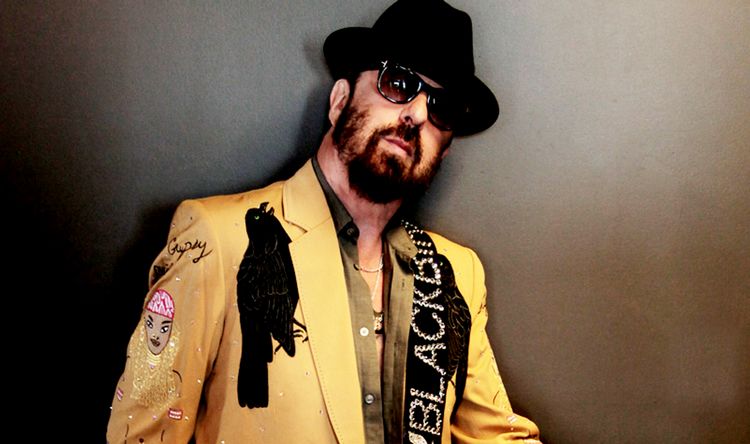
    Blackbird Diaries cover
    Dave Stewart’s The Blackbird Diaries is due out Aug 23.

    Dave Stewart spends a week in Nashville and delivers a gem.

    From his legendary work with Eurythmics to his recent collaboration with Stevie Nicks on her latest album, In Your Dreams, Dave Stewart has had a reputation for capturing magic in the studio. He does it again on his new album, The Blackbird Diaries, due Aug. 23 on Weapons of Mass Entertainment/Surfdog Records/Razor & Tie.

    Recorded in Nashville at John and Martina McBride’s Blackbird Studio, Stewart’s 12-song set features guest appearances by Nicks, Martina McBride, Colbie Callait and the Secret Sisters. The Grammy Award-winning veteran British artist/writer/producer decided to record his new project in Nashville after visiting the McBrides.

    “I ended up just falling in love with the whole idea of Nashville and the whole idea of recording there,” says Stewart, 58. “Two weeks after I met John and Martina, I flew back and started recording the album, but I forgot that I didn’t have any songs, so I had to write them all on the spot.”

    The album was recorded in less than a week. “It was five days and nights, but the nights were mostly drinking vodka,” he says. “There wasn’t a lot of recording going on.”

    Stewart credits John McBride, who mixed the album, with helping him assemble a stellar band of studio musicians, including guitarist Tom Bukovac, drummer Chad Cromwell, bassist Michael Rhodes, steel guitarist Dan Dugmore and Mike Rojas on piano.

    “I felt at home and people just accepted me as somebody who was one of them,” says Stewart, who during his 30-year career has worked with Mick Jagger, Bono, B.B. King, Tom Petty and many others. “I know people who have gone to Nashville to make albums and come with some idea of making a country album, but I didn’t go with any idea of that in my head. I just came because I was drawn towards it, and while I was writing songs on the spot, I just let it happen. It’s got this weird mixture, like an Englishman landing in a country, blues and rock atmosphere, but it has kind of a quirky side to it too.”

    “Cheaper Than Free,” his duet with Nicks, is included on both their albums and was inspired by a comment from actress Reese Witherspoon.

    Stevie Nicks Reese Witherspoon“Reese Witherspoon was in the studio watching me and Stevie record, and when I said I was coming to Nashville for the first time she said, ‘Oh, you can stay in my condo,’ “Stewart recalls. “Stevie said, ‘Yeah, that would be cheap,’ and Reese said, ‘What’s cheaper than free?’ I turned around and said, ‘Hey, that’s a great song,’ and Stevie and I wrote it.”

    Stewart says closing track “Country Wine,” featuring the Secret Sisters, was inspired by his Nashville experience. As he was finishing the album, he realized he hadn’t written a country song. “I couldn’t believe I’d been in Nashville with all these great country players and didn’t write one country song, so 15 minutes later I came out with ‘Country Wine,’ “he says. “This is how Nashville made me feel. We all sang it and played it live together and that was the end of the album. It’s like a sweet little end to the story.”

    Fans who visit his website, DaveStewart.com, can view the trailer for an upcoming film based on “The Blackbird Diaries.” The clip features Joss Stone and Diane Birch. “We’ve been using this video to supplement our online press and marketing initiatives, as it’s a fantastic introduction to the album,” Razor & Tie product manager Matthew Amoroso says. “It gives an interesting look into Dave’s world of songwriting–not to mention it’s fun to watch Dave, Joss and Diane Birch cut their acting teeth.”

    In addition to “Diaries” and co-writing and producing Nicks’ album, Stewart co-wrote and co-produced Stone’s latest record. He has also written a musical adaptation of the 1990 Patrick Swayze/Demi Moore/Whoopi Goldberg film “Ghost” with writer/producer Glen Ballard.

    “That’s been a very big success in Manchester [England] and now it’s moving to the West End of London to open in June,” Stewart says. “I’m flying over for the premiere. I think next fall probably is the time it will open on Broadway.”

    In the meantime, Stewart is busy promoting Diaries with media appearances stateside. The album, Amoroso says, “will find a home with a wide demographic of listeners. Whether it’s older fans of Dave’s previous work with the Eurythmics to younger fans just discovering classic artists like Tom Petty, Dire Straits, Warren Zevon and Bob Dylan, anyone with an ear for well-written rock’n’roll will love this album.”

    Deborah Evans Price / Billboard / June 11, 2011

  • Money Q&A with Stevie Nicks

    Money Q&A with Stevie Nicks

    With the band Fleetwood Mac, Stevie Nicks wrote and sang a slew of memorable hits, including “Rhiannon,” “Dreams” and “Landslide.” She and the band also helped provide rock ‘n’ roll with one of its most interesting soap operas as band members married, divorced, hooked up and broke up — all with each other. They fed off the drama, turning the romantic turmoil into myriad hits. Now, Nicks has released her first solo CD in 10 years, In Your Dreams, featuring her usual brand of emotive, heart-on-her-sleeve poetry.

    In your early days, you waited tables to support your then-boyfriend Lindsey Buckingham, didn’t you?

    Somebody needed to work, and it certainly wasn’t going to be him. I think he telemarketed for one day. I worked at the Copper Penny. I cleaned Keith Olsen’s house twice a week. (Olsen is a music producer who produced Fleetwood Mac.) I didn’t have a problem making the money to support Lindsey and I and the rest of our friends who were making music at the house every day, because none of them could possibly have a real job.

    Lindsey would go, “How come you’re so happy when you come home from your waitress job?” And I would go, “Because I got to be out there with real people, and I made really good money that’s paying for our house, our car and our food.”

    Fleetwood Mac was known for a serious rock-star lifestyle. What did you most like spending money on?

    I enjoyed not being poor, because we were so poor for five years that we made a pact to never, ever look in a store window. So when we went to work for Fleetwood Mac and started getting $200 a week apiece — and then, four weeks later, $400 a week apiece — we were fascinated. We hadn’t spent money in so long that we didn’t know what to spend it on.

    It took a while to get to the point where I walked into that Jaguar place on Sunset Boulevard, and this lady said, “You can’t buy a Jaguar.” I went in with three of my friends, and she said, “You guys are, like, secretaries.” I said, “No, we’re not. I want that red Jaguar and I want it now!” I handed my business manager to her and he said, “You should sell her the car, because she can afford it.” And I drove that car out of there.

    Now that you live a calmer, more sane life, do you still like to spend extravagantly or are you more frugal?

    I’m more careful now in this world of financial stress. But I’m a rock star, so I still live like one, and I enjoy it. I’m not married and I don’t have kids. I have a little Chinese crested Yorkie, and she has beautiful cashmere sweaters, and that’s my biggest (expense). (If) she wants diamonds, I’m getting them.

    By Larry Getlen / Bankrate.com / June 7, 2011


  • Stevie Nicks: In Your Dreams

    Stevie Nicks: In Your Dreams

    Stevie Nicks - In Your Dreams (2011)STEVIE NICKS In Your Dreams
    Producers: various
    Reprise Records
    Release Date: May 3

    Stevie Nicks has grown anything but rusty in the 10 years since her last solo studio album, Trouble in Shangri-La. In fact, the interim–marked by a Fleetwood Mac set and some touring—even appears to have been restorative upon listening to Nicks’ newest release, “In Your Dreams,” Produced in large part by the Eurythmics’ Dave Stewart, the album finds her in nothing less than prime form, drawing rich character studies and essaying on the deep rigors of relationships in clear, plain-spoken fashion, Stewart co-wrote seven of the 13 songs, sings on two and pushed Nicks in some new directions, such as the blues on “Soldier’s Angel” (with Lindsey Buckingham). She rocks it up on the title track and “Ghosts Are Gone,” while Stewart fuses a stringladen, post-Beatles ambience into “Everybody Loves You,” “Italian Summer” and the lengthy Edgar Allan Poe adaptation “Annabel Lee.” And tracks like the single “Secret Love,” “For What It’s Worth” and “New Orleans” are strong enough to stand alongside Nicks’ best work, both solo and with Fleetwood Mac.—GG

    Gary Graff / Billboard (p30) / May 14, 2011
    © 2011 e5 Global Media, LLC

  • REVIEW: In Your Dreams

    Stevie gives her moonstruck songs a modern sheen on stellar comeback album

    Stevie Nicks ***½
    In Your Dreams (Reprise)

    Stevie Nicks built her legend on the California-Babylon chronicles she perfected in the Seventies with Fleetwood Mac, and in the Eighties on underrated solo gems like The Other Side of the Mirror. But she still has that eternal edge-of-17 tremor in her voice. The gypsy queen is in royal form on In Your Dreams — it’s not just her first album in 10 years, it’s her finest collection of songs since the Eighties.

    In Your Dreams has the high-gloss L.A. production of her collaborators, Glen Ballard and Eurythmics’ Dave Stewart. But the material is Nicks in platform-soled hyper-romantic mode, with her voice in surprisingly supple shape. “Secret Love” is an oldie she wrote in 1976 — who knew she was still keeping secrets from her Rumours days? It seems to be about one of her rock-star beaus, although she coyly maintains she can’t remember which one. Yet it isn’t even one of the better tracks on In Your Dreams. The over-the-top seduction ballad “Italian Summer” could be her answer to the Stones’ “Wild Horses.” It climaxes in a very Stevie credo: “Love was everywhere/You just had to fall.”

    Nicks finds storytelling inspiration everywhere, from the Twilight series (“Moonlight [A Vampire’s Dream]”) to Jean Rhys (“Wide Sargasso Sea”). But the real showstopper here is the Edgar Allan Poe tribute “Annabel Lee,” a fan fave that’s been kicking around on bootlegs since the Nineties. It’s a six-minute meditation on love and death with echoes of the Fleetwood Mac classic “Dreams.” Poe’s key line — “The moon never beams without bringing me dreams” — might have been written in 1849, but it was clearly meant for Stevie Nicks to sing.

    Key Tracks: “Annabel Lee” “Italian Summer,” “Secret Love”

    In Your Dreams is Nicks’ first album in a decade.

    Rob Sheffield / Billboard / May 12, 2011

  • Stevie performs ‘Secret Love’ on Ellen show

    Stevie performs ‘Secret Love’ on Ellen show

    On Tuesday, Stevie Nicks appeared on the Ellen DeGeneres Show to promote her first solo album in 10 years, In Your Dreams. Stevie performed the album’s first single “Secret Love” to an adoringly supportive crowd. After the performance, Ellen approached Stevie with a plastic face shield and revealed to the audience that Stevie had just performed with pneumonia.

    “[It’s] amazing that she’s here with pneumonia! She could have cancelled,” Ellen told the audience, before congratulating Stevie for receiving critical praise of In Your Dreams. “There’s not one bad review. Congratulations on the great reviews, and it’s about time. We’ve been waiting a long time for this.”