Category: Jenny Boyd

  • Jenny Boyd reflects on Mick Fleetwood, Stevie Nicks, Rumours

    Jenny Boyd reflects on Mick Fleetwood, Stevie Nicks, Rumours

    Mick Fleetwood‘s ex-wife Jenny Boyd recently talked to Fox News about Mick Fleetwood, Stevie Nicks, and her experiences with the rock and rock elite in her latest book Jenny Juniper: A Journey Beyond the Muse (Urbane Publications).

    Here are excerpts from the interview relevant to Fleetwood Mac:

    You met Mick Fleetwood at age 15. What made him different?

    I would say I was 16. I didn’t go out with him until about a year later because I felt my best friend had a big crush on him. But when we started to go out, there was something about him that felt in some ways familiar, right from the beginning.

    We were both unbearably shy and horribly shy with each other. But we could both sense this energy between us. I remember when he first held my hand. You just felt that energy, that coolness. And of course, we came from similar backgrounds. There was definitely a sense that we understood each other right from the start.

    You got to witness music history when Fleetwood Mac’s Rumours was being created. At any point, did you ever think the album was going to completely change music?

    No, I didn’t. I didn’t think far ahead. But you certainly felt that magic during rehearsal, like something was happening. Their harmonies reminded me when The Beatles first came on the scene. Their harmonies seemed to be the thing that was so catchy and attractive. You could just tell that something special was going on.

    For Mick Fleetwood, the band came first. How did you cope with that as a wife and mother? There must have been a sense of loneliness for you while trying to keep the home life together.

    Absolutely. There was a lot of loneliness. I would hang out with them in the studio and have a drink with them. But there was loneliness because I felt like I was bringing our children up alone. [Mick] spent his time in the studio. They weren’t coming home at night because they were recording and it had gone on further than expected.

    And they were under a lot of pressure. The music was either his wife or his mistress. I’m not sure which one it was. But in some ways, I understood it. It was an exciting time for them and the music was wonderful. But for me, deep down, being the mother of two small children, it was a lonely place. I didn’t know anybody else from our little crowd who had children.

    You have said nothing but wonderful things about Stevie Nicks. How did you get to that point?

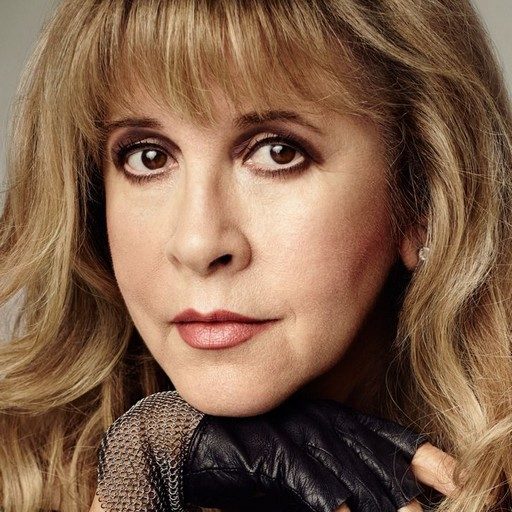
    Stevie Nicks
    (Hulton Archive/Getty Images)

    Well you know, that went on all those years ago. I remember a few years ago, I was in Paris. I was standing on the side of the stage and just watching [the band perform]. I just thought, “Gosh, we had been through such an extraordinary time together over the years. And we all somehow survived it.”

    I think it’s more a feeling of, I understood. She was obviously very pretty. And if you’re creating with somebody and constantly on the road, constantly singing together and just experiencing this euphoria up on the stage — there was bound to be an attraction.

    Yes, it was devastating. But after all these years, it’s all water under the bridge. Mick and I are great friends. We are parents and grandparents. We have a love. And I think we all kind of have a love for each other because we’ve all experienced such extraordinary times together.

    She did apologize years later. I remember she looked at me and said, “I’m really sorry. I don’t know why I haven’t said it before. But it was one of those things that happened. I said, “I forgave you years ago, but I appreciate you saying this.” There were no bad vibes or anything. And crazy things happen all the time, like Mick and I getting divorced and then seeing each other. It got to the point where we would say, “Oh that’s right, we’re divorced.” *Laughs*. And then we remarried. The whole thing was just surreal.

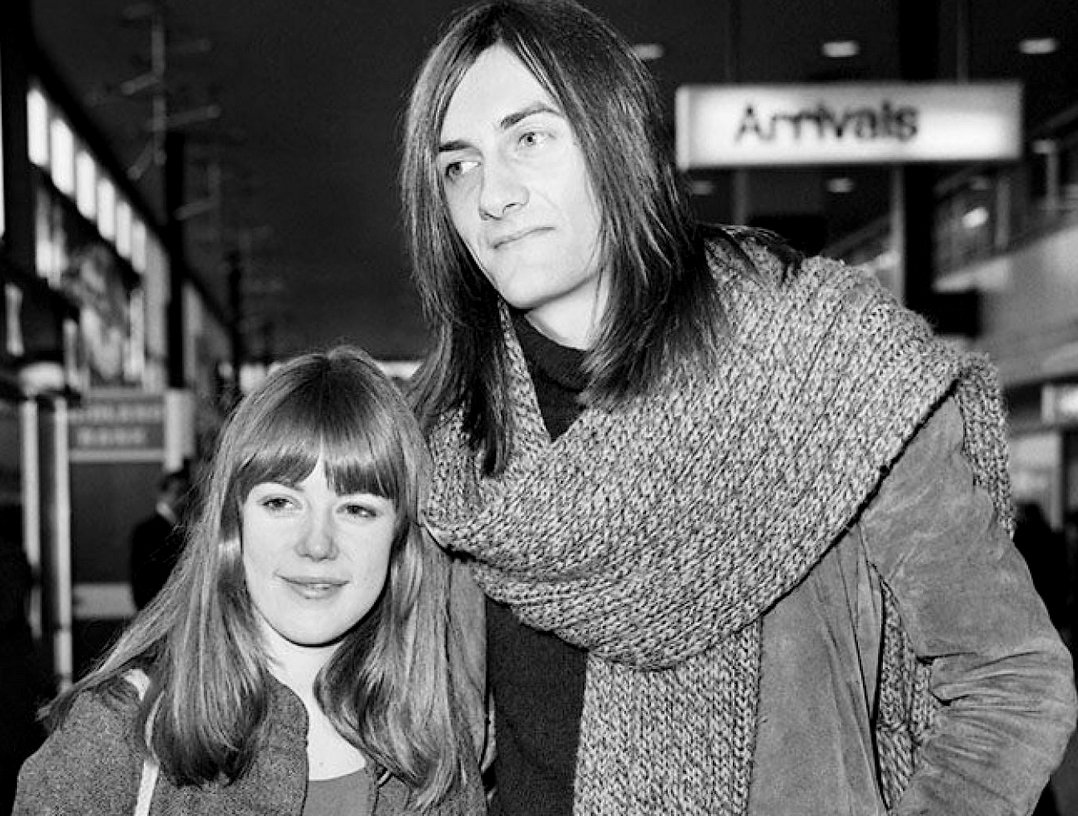
    Jenny Boyd, Mick Fleetwood
    (Paul Archuleta/Film Magic/Getty Images)

    Not many people can say they’ve married their significant other twice. Do you have any regrets?

    Do I regret marrying him twice? No. I still wanted it to work. I really, really wanted us to be together. Always. I never wanted to get divorced. I wanted to be together for our children. And it was so hard, you know. It was like hitting my head against the wall, but I’d come back for me.

    And I kept hoping, obviously in a very naive way, that it’ll be better. It will work this time. I kept hoping that it would work until finally, I realized that was it. And I think we were bad for each other in that way because I believe he really wanted it to work, too. There was this thing where we just couldn’t let go of each other, but it was so difficult to live together.

    Read the full interview.

  • It's Not Only Rock 'n' Roll, Part 3

    It's Not Only Rock 'n' Roll, Part 3

    1985-ral-outtakeHere is another excerpt from It’s Not Only Rock ‘n’ Roll: Iconic Musicians Reveal the Source of Their Creativity by Jenny Boyd with Holly George-Warren.

    Chemicals and Creativity

    Stevie Nicks described how in the past she used drugs and alcohol to assuage her fears of performing. She, like Eric [Clapton], has found that once onstage she can rid herself of fright simply through performance.

    “In the beginning [stimulants] made you brave. You’re scared to walk onstage in front of a bunch of people. Last night [performing at a club] in front of only 200 people, my knees were knocking together. I was holding onto the microphone and my hand was shaking because I was so nervous. The old days to get away from that you have a drink, or whatever anybody does, and you got brave and so you don’t have to experience that terrible fear. I get terrible stage fright where I’m very, very nervous. The last 10 minutes before I go on, my hands are really shaking to the point of having a lot of trouble working with my makeup or anything. It hits me about 15 minutes before we go on. I’m almost sick to my stomach and it’s difficult for me. It used to be that you’d have a shot of vodka and tonic and you’d calm down.

    “[But] the second I’m onstage [I realize that] I’m not nervous anymore. I think I’m going to be, I think I’m going to be nervous all the way through the song, but I’m not. The second I walk out, and the second I start to sing, it just goes away, and I’m totally confident. I know now that once I’m out there, I’m fine. That’s probably why in the old days people did start doing drugs and stuff because they were simply afraid. Then that becomes a habit; you think you absolutely can’t do it without it.

    “A lot of use realize we’re really lucky to be alive. The ones of us who did make it pretty much cherish the fact that we are alive. You have to learn if you can’t depend on yourself without [chemicals], you might as well stop doing it and go do something else, because it isn’t worth dying for.”

    In the past Stevie used chemicals not only to get through performances, she said, but as a crutch for writing. “As far as being creative, [chemicals], made you feel that you were braver, so you were more likely to say more, to write down more, to give away more of the secret or to maybe say too much, and that’s the vicious cycle of drugs and alcohol. You think it’s making you better and in the long run it’s not. It’s taking away the actual essence of what you started out to do.”

    Stevie also spoke of her difficulties adapting to a creative life without drugs. “It’s hard to adjust back; it’s hard for everybody. Some people have and some haven’t, and I wonder sometimes who will be the ones… I know we will lose a few more and I think, thank God, it’s not going to be me. Because I’m definitely going to be sitting in my rocking chair on my porch somewhere when I’m 80 years old, and I’m not going to be one of those people who they have a TV special on, and people sit around and cry. But it is difficult, and probably will always be difficult to accept this whole life in a different way. Because for so long it was lived under that dream cloud, dream child world of different kinds of drugs.”

  • It's Not Only Rock 'n' Roll, Part 2

    It's Not Only Rock 'n' Roll, Part 2

    (Buckingham Archives)
    (Buckingham Archives)

    Here is another excerpt from Jenny Boyd’s new book, It’s Not Only Rock ‘n’ Roll: Iconic Musicians Reveal the Source of Their Creativity. The following passages describe how Lindsey Buckingham and Christine McVie became interested in music.

    “…songwriter, singer and guitarist Lindsey Buckingham got positive signals from his family to follow his heart: “In general, my parents were supportive of everything; they were supportive of me as a person. When I first started playing music at age six, I didn’t take lessons; I just learned to play by ear and by listening to my brother’s records. It was a hobby, something ingrained in me at a very young age, so the guitar has always been there. I never felt like I had to sit down and learn to play the guitar. It was something that excited me, that animated me; that charged me up. It meant a great deal to me. I would just play along to songs and learn chords, and my style just sort of evolved. I don’t think my mother was of a mind that music would be something that I should pursue professionally. I think she knew the entertainment business was a rough one, and that there was a lot of pitfalls and a heavy lack of stability. So she didn’t encourage me to seek that out, but she certainly encouraged me to play.”

    (University of Salford Collection)
    (University of Salford Collection)

    Music was an essential part of her childhood, recalled songwriter, singer and pianist Christine McVie: “There was always a piano in the house, and I started playing it when I was about five years old. My dad wanted both my brother, John, and me to play. His father had played the organ in Westminster Abbey, but when he died, Dad had to become chief breadwinner. He had wanted to go to college to pursue his musical studies, but he couldn’t. Instead, he had to get a job playing in the orchestra pits during pantomimes and things like that. Later on he finished his studies and became a music teacher. I learned to play the cello at school when I was 11, and my dad also used to give me lessons. Our family had a string quartet playing in the house at Christmas time: my dad and John on violin, my mum on viola, and me on cello. It was fun.”

  • It's Not Only Rock 'n' Roll, Part 1

    It's Not Only Rock 'n' Roll, Part 1

    1966-menlo-atherton

    Jenny Boyd, the ex-wife of drummer Mick Fleetwood, has written It’s Not Only Rock ‘n’ Roll: Iconic musicians reveal the source of their creativity. Boyd writes extensively about Fleetwood Mac, based on several hours of interviews with each band member. Excerpts from the book appear below.

    Boyd’s book is available now through Amazon.com UK. The title will be released in the U.S. on April 1, 2014.

    Early years

    Singer and songwriter Stevie Nicks was encouraged musically by her parents, but her ultimate inspiration was her grandfather, whose songwriting ability greatly influenced her. She fondly recalled her early years: “My mom said that I started singing when I was very young. They always had music going for me because I seemed to have such a love for it. Even as a baby in a crib, I wanted music. My dad’s father was a country and western singer, so he brought music into my life as soon as I was able to understand music at all. I was singing duets with my grandfather when I was four. My grandfather rode the railway trains across the country and played in different places. He played harmonica, fiddle and guitar. He wasn’t a great musician, but he was a really good songwriter. I’m kind of the same way. I consider myself a good songwriter, but I don’t consider myself a very good musician.”

    As I listened to the various stories of how these musicians struggled to succeed in their careers, I was struck by the amount of courage and determination necessary to surmount the uncertainties. I remember when Fleetwood Mac first met Stevie Nicks and Lindsey Buckingham. Although the two had recorded an album together, they were still struggling to make ends meet. Stevie was waitressing long hours to cover her expenses as a musician. In our interview, she recalled those tough times, along with the obsession she had to be a musician: “I wrote my first song on my sixteenth birthday. I finished that song hysterically crying, and I was hooked. From that day forward when I was in my room playing my guitar, nobody would come in without knocking, nobody disturbed me. My parents were very supportive and wouldn’t let anyone disturb me until I came out. They’d even let me miss dinner if necessary, it was that important. They could hear that I was working, at 16 years old, and they would leave me alone. I started singing in assemblies at school and in folk groups. I sang whenever I could, for whatever I could possibly find to do; if it had anything to do with singing or music I did it.

    “There were times when I was between 20 and 27 – before I joined Fleetwood Mac – that my dad would say, ‘How long are you going to do this? You have no money, you’re not happy, you work constantly, you work at restaurants, you clean houses, you get sick very easily, you’re living in Los Angeles, you don’t have any friends, why are you doing this?’ And I would just say, ‘Because it’s just what I came here to do.’”