One of the “rules” of growing up is to leave behind childhood fantasies of spirits, fairy princesses and the like — unless you build a career on mystical appeal, as has singer-songwriter Stevie Nicks.
Throughout her 15-year career, Nicks, 35, has held on to the fantasies of her youth and made them part of her music. She’ll share those fairy tales with South Florida Saturday at the Hollywood Sportatorium, a stop on her current U.S. tour with singer-guitarist Joe Walsh.
After “Rhiannon,” her first hit composition as a member of Fleetwood Mac, Nicks was nicknamed the “Welsh Witch” after the character in the song. On the cover of her first solo album, Bella Donna, she is surrounded by mystical objects — a tambourine, a crystal ball. On her new album, The Wild Heart, she is draped in a velvet cape, her hands folded in the gesture of a sorceress casting a spell. In interviews, she speaks of dreams and visions that have guided her career and life.
“I love the mysterious, the fantastic,” Nicks told Rolling Stone magazine. “I like to look at things otherworldly and say, ‘I wonder what goes on there?’ I think I was a monk in another life…”
After four years of writing music and recording demonstration tapes with then-boyfriend Lindsey Buckingham, the couple was accepted without audition as members of the already successful Fleetwood Mac in 1974. Within three months, the new Mac was on the road with Nicks as its “front man,” a gravelly voiced petite blond in lacy dresses.
Three Fleetwood Mac albums released from 1975 to 1979 contained hit Nicks compositions — “Rhiannon,” “Dreams” and “Sara.” But being part of a group made Nicks wary of losing her identity, so in 1981 she released her first solo album, Bella Donna, which sold 3 million copies and is still on Billboard’s Top LP chart after 116 weeks.
“The album was my finding out if I could still do something on my own,” Nicks said. “You start to doubt yourself after seven years with Fleetwood Mac…”
After the release of Bella Donna and a duet with Tom Petty, “Stop Draggin’ My Heart Around,” Nicks embarked on her first solo tour, of the Southwestern United States. Her second successful solo album, The Wild Heart, was released four months ago. Two songs from the new album have become hits — “Stand Back” and “If Anyone Falls.”
Nicks’ life indeed reads like a fairy tale — with a new husband, a self-designed dream house in the hills near Los Angeles, her first extensive American solo tour and, of course, the popularity of her music, which she calls the mirror of her “wild heart.”
STEVIE NICKS and JOE WALSH perform at 8 p.m. Saturday at the Hollywood Sportatorium, Hollywood. Tickets are $13.75 plus $1 service charge at BASS outlets. Call 653-0450, 428-0917.
Linda R. Thornton / The Miami Herald / November 4, 1983
Stevie Nicks has always been two performers. At times, she is the Gothic figure of tragedy, the enigmatic witch of “Rhiannon” who swirls her diaphanous black and white capes as she dances an ancient ballet — her mystery heightened by her infamous exits while in concert with Fleetwood Mac.
Equally well, she plays the victim of love, the woman of “Dreams” who always wrongly trusts her man. Wrapping her arms around her lacey lingerie gowns, she confronts her audience with a blinkless stare while crooning “Stop Draggin’ My Heart Around,” or any other of her love-hurts songs, with a throaty voice that has no match for pure sensuality. In either role, she projects vulnerability. In the past that image was a reflection of her career. Although recognized by the public as an equal member among a superstar group, she felt like “the one who was left out a little, the baby sister” never quite taken seriously by her fellow band members or other artists.
But a transformation in Stevie Nicks has happened. The pouty look has been replaced with a smile, the self-doubts by a new self-confidence. With good reason. Her first solo album, Bella Donna, topped the charts just weeks after its release and garnered critical praise. Nicks’ latest and followup LP, The Wild Heart, is following the same path, with her hit single “Stand Back.” Nicks took time to speak with ROCK just prior to her tour to promote The Wild Heart. She reflected on her long-felt need for recognition as a soloist, her desire to expand musically into, surprisingly, country music, and the mystique that surrounds her. Above all else, she was intent in conveying that the “baby sister” of Fleetwood Mac is all grown up now. She wants it known now that Fleetwood Mac is no longer of paramount importance in her career. She’s not determined to leave, but she’s not willing to sacrifice as much anymore.
How does The Wild Heart differ from Bella Donna, in your estimation?
It’s like Bella Donna‘s heart is wild all of a sudden. It has that James Dean/Natalie Wood feeling to it. It’s just Bella Donna a little more reckless. She’s just more sure of herself now, so she’s taking a few more chances. I’m very pleased with the album because there are no holds barred on it. It’s real strong and emotional.
After the phenomenal success of Bella Donna were you intimidated to go back into the studio?
I’m never intimidated to go on and do something else because what I do today doesn’t depend on what I did last week. I write songs and sing them because that’s the thing in the world that I love most.
Is there any particular track on this LP which you are particularly proud of?
“Sable in Blond” is my serious statement on The Wild Heart. It fits into a particular group of my songs; “Rhiannon,” “Beautiful Child” and “Sara.” It reflects the mood I was in when I moved into my new house last year. It was a time when I was learning how to live with myself. “Sable in Blond” meant to learn how to be a stranger, to learn to be with yourself, to learn to be one color. In the legend of Excalibur, the sword is there for protection, but you don’t call upon it unless it’s absolutely necessary. During that period in my life, I was learning how not to call on the sword.
Are you as intrigued with mysticism as the public has been lead to believe?
Not really. Everybody else [the press] made it into mysticism. I loved that mystical kind of dancing and that eventually carried over into my singing. I guess I’m just a dancing fool (laughs).
It seems to be a pretty well-kept secret that Prince played synthesizer on “Stand Back.” How did that come about?
I called him up one day while he was filming a video and I asked him to come down and listen to a song. I didn’t think he’d show up because he was so busy, but he did. As I was playing the song, he walked over to the synthesizer and began to play this amazing part with only two fingers. So we recorded it in the middle of the night, and it turned out great. It’s my favorite cut on the album.
You once felt that you hadn’t received the recognition you had long hoped for from your peers. Do you feel respected as a songwriter?
Pretty much. I’ve written down songs on a thousand pieces of paper for the last 10 years and thought, ‘If only they would respect me as a songwriter,’ That’s all I ever really wanted. Performing and singing was a wonderful addition, but the thing I wanted most — especially from Mac — was them to say to me ‘You’re a pretty good songwriter.’ It took them a long time to realize that I wasn’t kidding around, that I’m very serious about my writing. It mattered to me what they thought and that they realized that I was striving toward a certain excellence. They had that excellence, but I had to strive a little harder for it and make them believe that I really cared that much.
What is the status of Fleetwood Mac from your viewpoint? Will the group continue on as we know it?
It’ll all just depend on how understanding everybody is to everyone else’s needs. If everyone is thoughtful, understanding, sweet and kind, then the band could go on forever. If everyone isn’t, then that could cause a big problem. We’ve suffered through a long love affair and whatever our hearts tell us, that’s what we’ll do.
Where do you fit into Fleetwood Mac?
My relationship with Fleetwood Mac will never change. I will always be the baby sister, the one that is left out a little bit. My solo work allows me not to feel bad about it and enjoy them (Mac) for what they are, instead of worrying about not being included enough. That’s what I used to get upset about. They were not even close to using my full potential. But now I know I have something else to go to.
Did the success of Bella Donna satisfy your expectations toward a solo career?
I was really kind of stunned. I never let myself believe that the best thing is going to happen. I just sort of let myself be very surprised if it does, but I don’t expect it. So I didn’t expect anything from Bella Donna. I just did the best I could and finished it. I had a wonderful time doing it. It was over in two and one-half months, like a flash. I didn’t expect it to be the greatest record in the world or not the greatest. I just expected it to be what I could do. She flew out of the record stores without me. And it was very much out of my hands. There’s nothing I can do to change it now. I’m having to get used to the fact that it isn’t just mine anymore.
Are you saying you wish that the album wouldn’t have been so successful and that your songs would have remained basically unknown?
All those songs I did over a long period of time. They’re now out in the world, and everybody’s hearing songs that I’ve been listening to for five, six, seven years. Don’t misunderstand me. It’s not that I’m not happy about this. I am. I’m just sort of adjusting to it slowly. It bothers me a little bit just because it [the songs] has been a part of me and it has been very private. But to get people to listen, you have to put it out there and explain a little of it. And it’s nerve-wracking and difficult sometimes. I think people wonder why I’m not seriously jumping up and down. It’s because I’m not sure how to deal with it. I’ve never really been alone before doing something. I’ve never had no one else to fall on. I’ve never had to do all the interviews myself. I could get crazy about it. The excitement is so strong that. . . it just makes me nervous.
You seem to imply that there is an emotional strain working apart from Fleetwood Mac.
Yes, but at the same time it makes you feel more independent. I am more independent now. I did the albums because I wanted to make sure that I could still do something for myself.
Will it be hard to go back and work with a group now that you’ve cut another album on your own?
It will only be difficult in that I’ll get to do three songs instead of 10, and I’ll be working less time. It’s not enough for me. That’s the problem. I write so much that I just get terribly backlogged all the time. And for me to work on an album that takes a long time like a Fleetwood Mac album and then have only three songs on it is frustrating. I don’t spend too much time working [in the studio with Fleetwood Mac]. I sit a lot. I spent no time sitting on The Wild Heart. I mean I was on my feet the whole time. It’s going to be hard for me to sit becase [in that situation] I’m not one of the players and that puts me on the other side of the mirror; alone, with them out in the studio. It’s very lonely.
How did the two duets on Bella Donna (“Leather and Lace” with Don Henley, “Stop Draggin’ My Heart Around” with Tom Petty) come about?
I just love singing with people and they know it. So when people call me up they know I’ll come down ’cause I just love to sing duets. That’s how the duets come about. “Leather and Lace” I wrote for Waylon Jennings and Jessi Colter who were going to do an album five years ago. Waylon had asked me to write a song called “Leather and Lace” and I spent a long time on it. I tried to give it a little bit of Waylon, a little bit of Jessi and a little bit of what I knew it was like to be in show business, what it was like to work with your husband or your old man. But they (Jennings and Colter) broke up, and Waylon decided he was going to do it alone. But I said no, because I had put a lot of time into the psychology of the song and felt it was a mistake to do it alone. It’s a wonderful song. So when Bella Donna came out, there was no reason for it not to be done just because Waylon and Jessi broke up. But I did want everyone to know I wrote the song for them. I didn’t write it for myself.
When did you originally decide to embark on a solo career?
I decided to do Bella Donna when I came off the road with Fleetwood Mac at the end of the Tusk tour. I was really in terrible shape. I was so tired and sung out. I was so “Landslide-ed” out and so “Rhiannon-ed” out that I thought if I had to stand on stage for two and one-half hours and do that set one more time I was going to go nuts. The idea to do a solo album came when I was going out with Paul Fishkin [co-owner of Modern Records] about four years ago. We jut sat down one night and decided that it would be wonderful to start a record company that really cared about the artists and had high morals and principles and was special. And he did it. He moved the ferris wheel and started Modern. It was very difficult for both of us. Everybody was angry at us. But we really felt that it was important that we go ahead and do it no matter what.
Several of the songs on your LPs seem to have a country flavor to them. Is that a fair assessment?
Yes. I had a country grandfather and I write a lot of country songs. But nobody knows it. When I give a song to Fleetwood Mac they kind of take it apart and put it back together. So if it was country, it’s not country anymore. You wouldn’t ever hear the country in it. I don’t mind it but if I really don’t like it I tell them. I let a lot of songs be done in a way that I really wouldn’t do them but, because it makes everybody else happy, I go along. I figure it’s not going to make my song any better to have them play it the way I want it and have them play it terribly.
From what you’re saying, it seems that Iovine plays a key factor in pulling an album together.
Yes. he has an intense way of making us mad enough without making us angry or furious. By doing that he made you feel like, ‘OK, I’ll show you.’ And he got the most incredible performances out of everybody. For instance, once he was right in the middle of the room while we were recording. He had his headphones on and all of a sudden he turned the beat of the song around. He started looking up at Russ Kunkel and motioned him to change the tempo. And I’m watching Russ start to play what Jimmy’s saying and I’m blown away. My eyes can’t believe that they’re seeing this little guy (Iovine) bouncing around the room looking like some kind of little elf, telling all these intense, famous guys what to do. And they’re following his every move. It’s incredible.
The chemistry seemed to be perfect from what you’re saying.
The right people in the right room together. . . You have to look good with Russ, Waddy (Watchel), Roy (Bittan) and Michael (Campbell) of the Heartbreakers. With Tom Petty and Don Felder out there you’re certainly not going to stand up there and be terrible. You’re going to do the very best you can from the first time you sing. Even the worst vocal is going to be great. Also, you’re so proud, that you don’t want to look like a jerk in front of all these guys!
Any plans for another album?
I feel real content because I got 10 songs out. Now I don’t have to worry about those anymore. Now I can go on to the next 10. I’d be recording all year ’round if I could. I wrote a song night before last. I’ve written two songs in the last month. I have two from the album that didn’t make it because there wasn’t enough room. I have three or four old ones I still want to do. That’s not counting the songs that I’ll write in the next couple of months. As long as I know I can every once in a while go in and knock out 10 songs I won’t be a nervous wreck. That little bit of an outlet makes it okay.
The melodies of some of the songs on the new album are reminiscent of your past work. . .
My songs are really just continuations of every song. I can sit down and play you a medley of “Dreams,” “Sara,” “Outside the Rain,” “How Still My Love” and “Edge of Seventeen” and they’re all little pieces. Those are the only chords I know. I like all my melodies and the simplicity in which I write. So, I really don’t try to change that much. I don’t sit around saying, ‘Oh, that sounds too much like “Dreams.”‘ If I like it, I don’t care if it sounds like “Dreams” or not. I just try to make it better.
Do you have any idea who your audience is?
I don’t have any idea who buys my albums. I don’t have any idea who The Wild Heart‘s audience is. I truly believe that the energy, the magic that surrounds a project like this is very important. It’s as important as the music, as important as the songs.
How did you come to choose the backup artists for The Wild Heart?
Jimmy [Iovine, Nicks’ producer] seems to always pick out the perfect people. He lets me work with the two women that I want to sing with; we’ve been singing together for five and one-half years. We could sing every song a capella because we’d been practicing for so long. We practice with the demos which is like practicing together. So even if Lori Perry would be in Dallas and Sharon Celani would be in Los Angeles and I’d be in New York, we’d be practicing to the same group of 40 songs. I always wanted to do a thing with two girls where we would sing and be like a girls’ Commodores. I wanted to have background vocals sound like they were answering back and forth. After a while Jimmy would say that we couldn’t do this or that. He’d say, ‘Stevie, shut up and quit protecting them. Just back off and let me work with them.’ It was a constant learning process.
Vicky Greenleaf and Stan Hyman / ROCK / October 1983
Houston, Texas — It had been building toward this all day. First, Stevie Nicks’ personal assistant and then her road manager had issued the warning: Don’t ask Stevie about her personal life, or else.
Now the lady herself was making it perfectly clear. If I strayed into that sanctified area, that would be it. She would walk out of the sitting room in her Houston hotel suite. And I would be left staring into the dismayed faces of assorted band members and friends.
As a prelude to Stevie’s Compton Terrace show next Sunday, photographer Sean Brady and I had flown 1,000 miles and waited a day for this meeting. Already a request to photograph during the interview had been turned down. The pact had to be made.
Besides, in a way, this emotional start to the interview cleared the air. I had accepted all along that Stevie had a right to answer “no comment” to any given question. What was contested was my right to ask the question. Here, unmistakably, was a “no comment” issued before I had even had a chance to ask the question.
“No one knows how I feel, what I say, unless you read between my lines,” Stevie confides in her current single “Stand Back.” Interviews can be the same way. Most of us prize privacy. However, a songwriter who makes a living translating personal experiences into public works of art has to live with ill-defined boundaries.
Reading between the lines written by this part Joan of Arc/part Alice in Wonderland is indeed a tricky business. Just as a symbol might lose its potency if analyzed, so Stevie Nicks seems to function best when harsh realities are cloaked in the wings of white doves and other favored images.
This perspective is brutally at odds with the needs of interviewers, but evidently exercises a mesmeric influence on some of her fans. (Just read the personal columns of the New Times, for instance, to appreciate the impact of Nicks songs like “Bella Donna” or “Rhiannon.”
Make no mistake, her mystical, authoritative persona has considerable power and flexibility. Thus, she can elevate her friend Robin Anderson, who died of leukemia, to the status of sage and martyr, while Robin’s widower, whom Stevie subsequently married, suddenly becomes a non-subject as media stories circulate about the marriage’s apparent difficulties.
After putting her personal life out of bounds, Stevie continued our Houston encounter by disowning a recent segment on TV’s Entertainment Tonight show in which she appeared to be mourning the end of that marriage. Generic comments about the difficulty of maintaining a rock ‘n’ roll marriage were misapplied to her own situation, she said.
If Stevie presents a more hard-bitten face to the world nowadays, it is no wonder. She acknowledges the change. In fact, as she talked about it, her voice trembled slightly. As I recall, that was the only falter in an otherwise obdurate stance.
“Well,” she began, “if I continue to be the same mealy-mouthed little person that I have been up until now I will never get anywhere in this world and I will have nothing. So a little bit of me is a little tiny bit harder. It has to be for me to survive in this world. Everybody else makes it that way for me.”
Presumably, most performers go into a benefit concert with some kind of commitment. Stevie’s conviction toward the September 25 fund-raiser for The City of Hope and The American Heart Association goes beyond that. Her family has a history of heart disease, while The City of Hope nursed Robin through her final months.
“It’s the only friendship that I’ve ever had or…well, I’m not going to say ever will have,” Nicks said wistfully. “We just started out together at 15 years old. She kind of walked me through life. And, as I questioned would there be life after Fleetwood Mac, I certainly questioned would there be life after Robin. Then I found that there is life after Robin, except that it’s not the same, not near as special. There’s a spirit gone, and that’s why I’m really dedicated to this leukemia (benefit). That’s why I will do anything I have to do to make as much money to get rid of this disease as I can because I would really never want anyone to experience losing someone as beautiful as her in this horrible way.”
Can you be more specific about what she contributed to your life?
“She taught me how to sing. She taught me how to use my voice. She made very sure before she left this planet that I was all right, that my voice was all right. I don’t have problems with my voice now, but I did and it took us years to fix it. Robin was one of those people (who) when she walked in the room everybody looked. She was breathtaking, and that’s why it’s so wild that she could possibly have died. It just doesn’t make any sense at all.”
The discovery that Robin was dying of leukemia was sudden, Nicks recalls. Robin called on a Wednesday, early last year, to say she was sick. Two days later she called back to say she had been given two months to live. With help from The City of Hope, a Duarte, California, institute specializing in catastrophic diseases, she eventually stretched out her life for a year.
Ironically, while Robin’s reaction to the news was that it would give her time to do some writing, Stevie used it as a catalyst for drawing and painting. “I needed to find some way of being there with her, even though I couldn’t be there. And I just sat down one day. (Producer) Jimmy Iovine went out and bought some stupid little kindergarten paints and some paper, and I started drawing this pyramid which ended up to be the first painting that I did. I would go back into a burning building to get my paintings.”
When the benefit concert was first announced, Nicks was also asked about her then unreleased album, The Wild Heart. She called it her masterpiece, and it is not hard to see the appeal for her of this metaphor for unbridled emotion helpless on the tide of destiny. Don’t blame it on me, baby/Blame it on my wild heart.
Not all reviewers have been so kind, some making unfavorable comparisons with the album’s predecessor, her first solo album, Bella Donna. Rolling Stone reviewer Christopher Connelly attacked The Wild Heart‘s “incoherent ramblings.”
“It’s Bella Donna grown up,” Nicks still insists. She says she doesn’t read reviews. Someone must do it for her though, because she knew enough about Connelly’s review to mention it by name. “I don’t care,” she continued. “I just care about the kids, and they like it, and I like them and they like me. (Reviews) put me through a lot of grief. I mean, I don’t forget it for weeks. I don’t like to see scary movies, either, because I walk around with them for weeks.”
Band members and friends drifted casually into the room in ones and twos, as Stevie huddled into her chair and dutifully addressed the questions. What does The Wild Heart album represent to her? Is there an overall feel?
“Freedom,” she promptly replied. “It sets me free. It sets me free from Fleetwood Mac. It sets me free from Stevie Nicks. It sets me free from the person who drives me. You always have to please somebody. It is letting me go. I’m all right. This is two records now. So the first record wasn’t just a fluke accident. And I can go and write and dance and do children’s stories and do whatever I want now and no one is going to be saying to me: ‘You still aren’t a proven solo artist.’”
Even though her songs may not be made public in the same order they were written, she says her albums represent personal eras. Bella Donna, for instance, has associations with Scottsdale, where she lived when she was writing several of the songs on that album. Eventually, she had to sell her house because, quite simply, she couldn’t spend enough time there. Now she rents a house in Los Angeles and lives the life of the road.
“Every song I write is a story of my life. If I approach writing at all, that’s how I approach it. As I write down each new experience, I get better at telling a story. All of my songs are in eras, where I’ll write three or four songs in a four-month period and they’re definitely their own thing. Then I’ll dance or I’ll draw or I’ll do something else for a month or two. Then I’ll come back and get an idea for a song and that will be off on a whole new three- or four-month period. I’m already thinking about the next album. We’re already about seven songs into it. And it’s very different from Wild Heart.
“It’s called “Rock ‘n’ Roll”. I wrote this song about three years ago. I lived on the beach, and this song is about the fact that the beach was always shaking and I always thought it was an earthquake. So I had to learn to know not to pack my bags and run out the back.
“It’s real rock ‘n’ roll, and was written before Wild Heart. It was really written right along with Bella Donna. But I knew the second I wrote “Rock ‘n’ Roll” that it would be the next record after Wild Heart.
What are your options now? Sooner or later will you say goodbye to rock ‘n’ roll?
“That’s probably why I’m working on this painting and my book (of children’s stories). I think what I’ll do is I’ll gracefully slip out of it and nobody will really know.”
Is there anything Fleetwood Mac can give you now that you don’t have as a soloist?
“A headache.”
Stevie’s whispered remark quickly turns into a laugh.
“I love them so much they drive me crazy. Eight years together — you can’t rip that out of your heart. There’s no way. It’s a part of you.”
Apparently, Fleetwood Mac exists without really trying. Whatever is in store for the group lies way beyond Stevie Nicks’ current tour.
Is there a competitive element between the members of Fleetwood Mac?
“I don’t think there’s ever been a competitive element between any members except for Lindsey (Buckingham) and me, and that started way before Fleetwood Mac and goes right on to this day and will go on till we die. That’s just the way we are — Mr. and Mrs. Intense.”
Your own family has a history of heart disease. Does that frighten you?
“No, because I have a prolapsed heart valve, too, just like my mom and (brother) Christopher. My heart just pounds away all the time, and I figure it’s just going to do what it does. I’m the same as my dad: If I have to worry about that there’s no reason for me to be here. So I don’t. I try to take good care of myself. I’m really having to change my life, and I am doing it and loving it, because for the first time in my whole life I have actually said I’m going to exercise. I feel younger than I have ever felt. So I’m really excited.
The previous night Stevie had generated some of that excitement at Houston’s circa-20,000 seat Summit arena. The transition from Fleetwood Mac to solo status has brought a corresponding increase in presence. She alone is overseer to the chemistry on stage. Now, as before, her magic depends as much on atmosphere as physical stimulation.
One is drawn in by those half-understood images and expressions of mourning, defiance and fatalism. She is a character actress who, in her only role, finds insight through suffering.
At her side, guitarist Waddy Wachtel’s bold fills and animated bounds provided necessary fire. Bassist Jerry Seay (formerly of Mother’s Finest) seemed a little intimidated by this partnership, while on the platform behind them much of the musical ballast came from Roy Bittan, piano; Liberty DeVito, drums; Benmont Tench, keyboards, and Bobbye Hall, percussion.
Nicks interacted closely with her backing singers, Lori Perry, Sharon Celani, and Carol Brooks. She seemed relieved to have that female presence there.
Romantic clothes — long dress and shawl — were the expected Nicks apparel. Not anticipated was Stevie’s drift away from the ephemeral ballet steps of previous tours toward bolder choreography. There was much stamping of the feet and frenetic head shaking.
In Houston, as at Compton Terrace, Joe Walsh was on the bill, too. He provided an interesting contrast: abrasive rock and devil-may-care attitude. If Walsh offers himself as a presidential candidate, don’t be surprised.
Stevie Nicks: The Wild Heart. (Modern/Atco Records 7 90084-1.) It’s Stevie Nicks’s second solo album away from Fleetwood Mac. How’s she doing? Not too shabbily, judging from this effort, but her music is in need of more outside help. Though the song patterns (she wrote or co-wrote all but one of the songs) and vocal styling become a bit tiring if this record is listened to in toto, this is an engaging set of love ballads. The duet with Tom Petty and his Heartbreakers for the Petty-written “I Will Run to You” was a welcome change, though hardly a break from the generally somber tone of so many of the cuts. Petty & Heartbreakers’s spare guitar plucking and hoarse-sounding vocals become somewhat the centerpiece of the disc, coming, if you will, in the middle of the set (the second song on the flip side) and breaking with the somewhat similar musical patterns of the rest of the music. (Many of the songs sounded as if written to showcase Ms. Nicks’s sometimes thin-sounding voice.) There’s some rousing material here – like ”Enchanted” -but not enough musical imagination. Still, for Nicks fans -and others who enjoy listening to the Fleetwood Mac school of music -this one should satisfy.
David Hugh Smith / Christian Science Monitor / September 1, 1983
Once upon a time, there lived a golden-haired princess named Stephanie. She grew up with dolls and toys and all the worldly things which make little girls happy. But Stephanie wanted more from life. In her mind, she saw crystal visions of a mystical world filled with gypsies, angels, good witches and white-winged doves. But try as she might, she couldn’t fulfill her dreams.
Then one day, her fairy godfather, who lived in the enchanted world of Fleetwood, heard her melodic musings. He asked her to join him in a quest to discover musical adventures unknown. During their journey, they encountered enticing rumours and entangling chains. They saw silly penguins and mysterious tusks. Soon, everything Stephanie found turned to gold and she became the queen of rock & roll. Now, at last, she is contented.
PS — She expects to live happily ever after.
(Photo: Arizona Living)
When Stephanie Lynn Nicks was born at Good Samaritan Hospital in Phoenix on May 26, 1948, rock & roll was only a gleam in Bill Haley’s eye. It would be another eighteen years before Elvis Presley checked into Heartbreak Hotel and help create the kingdom which little “Stevie” would one day conquer. In some ways, her story is a dream-come-true fantasy. But her seemingly fairy-tale journey was also fraught with nightmarish interludes.
When Stevie was born, her father, Jess, was about to begin his own conquest — climbing the ladder in the corporate world. He eventually would become president of the Lucky Lager Brewing Co. of San Francisco, chairman and president of Armour & Co. as well as executive vice president of the Greyhound Corp.
Jess’ ambitions steered the family through a non-stop meandering trek around the country. Though Stevie actually lived in Arizona for less than a year, she still calls it home.
“She always felt that she was an Arizonan,” her father said. “We never really stayed in one place long enough for her to feel that she became a Californian, let’s say, or a Utahan or a Texan. And I was born in Phoenix and her mother was born in Busbee, so her roots have always been tied closely to this state.”
Another Arizona connection was Jess’ father, A.J., a country & western musician who tried, but failed, to hit the big time. “When she was about four or five years old, her granddad made her a tiny little guitar,” said Jess. “From that point forward, she shoed an aptitude and a desire to be involved in music. We gave her lessons, mainly on the guitar, and when she was old enough, we bought her a very good classical guitar. She was always extroverted. She loved to perform, loved to sing and loved to write songs.”
Do you always trust your first initial feeling?
— “Crystal”, 1973
When the family lived in San Francisco, Stevie met Lindsey Buckingham. “Lindsey was a senior in high school with my daughter and they joined the same band,” Jess remembered. “Shortly thereafter, Lindsey’s father died and we sort of took him in as a kind of stepson. He was at the house all the time.”
Recalled Stevie, “When I first met him, he was going with somebody and so was I, but I fell totally in love with him. I was captivated.”
(Photo: Arizona Living)
Their friendship led to a partnership, both personally and professionally, after their band, Fritz, split up. Performing in California as a duo, they landed a deal with Polydor Records in 1973 to record an album.
Titled Buckingham Nicks, the record was a mix of lyrical ballads and mid-tempo rockers, all but one penned by Lindsey and Stevie. “Crystal” was a particular standout. Though Stevie wrote it, Lindsey sang it — a rare occurrence. “He truly does a better job on it,” she said. “That song was a lot about my father and grandfather.”
The album was dedicated to “A.J. Nicks, the grandfather of country music.”
“I’m doing what he always wanted to do,” said Stevie. “He was an eccentric show business person and didn’t quite make it. He didn’t have a vehicle to do this; he was married and had a family — what could he do? I think it was destroying him (not to be successful) because it’s what he always wanted to do.”
The album’s cover was striking: a black-and-white waist-up photograph of the couple, nude, with shadows in appropriate places. The production was polished and the songs surprisingly strong for a first effort, but the album was not a success. It did garner sporadic radio airplay in some areas, however, including Phoenix. But Buckingham and Nicks were not yet stars.
Meanwhile, Stevie’s parents were growing concerned. “She studed speech in college and we had really hoped that she would give up the music scene and become a teacher,” said Jess. “We were supportive of her, though, all during her early days (as a performer) when things were difficult for her. We supported her, not only from an enthusiasm standpoint, but from a financial standpoint.”
Though treading water, Stevie refused to give up. “I was really dedicated,” she said, “and I thought I’d be a better music person. I think I would have been a very good teacher, too, but music was my life. Why should I quit to become a teacher? There are a million teachers; I wanted to be a rock & roller.”
I’ve been afraid of changing ’cause I built my life around you /
But time made you bolder even children get older / And I’m getting older too — “Landslide,” 1974
In March 1974, Jess experiences chest pains and checked into the Mayo Clinic in Rochester, Minn. He had been taking up to 20 nitroglycerin tablets a day to combat angina, but tests showed the blood flow to his heart was severely constricted. Fearing he would not survive a flight back to Phoenix, doctors immediately operated to prevent a possible heart attack.
Six weeks later, Jess returned to work, but the pains also returned, so he retired. He was 49.
About this time, Stevie wrote “Landslide,” Jess’ favorite song by his daughter. “The words are meant to portray the relationship between a parent and child,” he said, his voice breaking with emotion. “She wrote that song because she was fearful of my dying.”
“I was also trying to make some decisions,” Stevie said. “You know, “If you see my reflection in the snow-covered hills…” I was trying to figure out what I was going to do. I wasn’t making it big in the music business. I was confused. He told me I should set a goal and give it about six months, and I kind of agreed with him… Though I might have quit working at the performing end of it, I always thought I’d make it as a songwriter. I would never have quit working toward that. Either I would make it or die trying.”
All your life you’ve never seen a woman (so) taken by the wind — “Rhiannon,” 1975
Stevie and Lindsey were finally “discovered” in a fashion which rivals the old Lana-Turner-in-a-drug-store story for its unlikeliness.
Mick Fleetwood, leader of the veteran English band Fleetwood Mac, was in California scouting for a studio in which to record the band’s next album. Fleetwood Mac started as a blues band nine years earlier, but after 10 albums and many personnel changes, “superstar” status continued to elude the group, though they were critics’ favorites and perhaps the best-liked “second-on-the-bill” band around.
During his search, Fleetwood listened to an album recorded at one studio under consideration. The album was Buckingham Nicks. He was impressed with the performance as well as the production. Forgetting the customary live audition, Fleetwood asked the duo to join the group. They readily accepted.
Ten days later, recording began for the album, which would be titled simply Fleetwood Mac. When it was released in July 1975, sales started slowly but steadily gained momentum. Early advertisements touting the new Mac line-up confused Stevie with Lindsey. (Stevie’s gotta be the guy and Lindsey’s the girl, right?) But their confusion soon dissipated. By the following summer, Fleetwood Mac had become the biggest-selling album to date for Warner Brothers Records.
It included three Buckingham compositions and three by Nicks — an updated version of “Crystal” (again sung by Lindsey), “Landslide” and the landmark “Rhiannon,” a haunting tale of an 18th century Welsh witch. The latter became on of the album’s three smash singles and introduced Stevie Nicks to most of the world.
In concert, the song became a showcase for the lithe fairy as she whirled around the stage in a flowing black chiffon dress, casting a spell over enraptured audiences. An image was born
Now here I go again I see the crystal visions / I keep my visions to myself — “Dreams,” 1977
While the first album continued to sell, and as the group struggled to produce a worthy follow-up, Stevie and Lindsey separated. When Fritz broke up, the couple’s personal relationship flourished. This time, the lovers split when the band flourished.
As awkward as the working situation was (the band’s other couple, John and Christine McVie, had also separated), the interplay between musicians never sounded better.
The result: the awesome Rumours — an album whose impact must still send chills down the spines of industry executives. Released in February 1977, it was an instant smash, staying more than six months at the No. 1 spot on the national sales chart on its way to becoming the biggest-selling single-album in rock history. It spawned an unprecedented four Top 10 singles, including Stevie’s mesmerizing chart-topper “Dreams.” The album generally earned dazzling reviews: critics and record-buyers were in rare agreement.
Not included on the album was “Silver Springs,” regarded by some as one of Stevie’s most memorable compositions. Somehow, it was tucked away on the B-side of a single and didn’t receive the exposure it deserved. A few years later though, Stevie’s mother, Barbara, remembered the song when she named her Scottsdale antique shop The Silver Springs Emporium.
Rock on, gold dust woman / Take your silver spoon and dig your gave — “Gold Dust Woman,” 1977
In the years that followed, the hits kept coming. Fleetwood Mac became rock’s most popular act — the group even received a star on Hollywood’s Walk of Fame. Stevie continued to cultivate her mystical, ethereal persona with songs like “Gypsy” and “Sisters of the Moon,” and proved to be a sensitive songstress who could also rock out with the best.
In 1980, she produced her first solo album, Bella Donna. It was “once again,” dedicated to my grandfather and all his children.” It quickly became No. 1 and produced four hit singles. By then, she was hailed as “the queen of rock & roll.”
To outsiders, such huge success provokes images of inflated egos and hedonistic excesses: wild parties, constant drugs; your basic Life in the Fast Lane. Were her parents worried?
“No, not really,” said Jess. “Stevie was a very good child. I remember when she was a college sophomore — 20 years old. She was going to a movie and her mother said, ‘Now, Stevie, by golly, honey, it’s a school night. You’d better be home my midnight.’ The next day, Stevie told me, ‘Daddy, I had to get up in the middle of the movie to be home in time, but I was here.’ She was just a good child and we never felt that she’d do anything wrong…and she’s always remained very stable.”
Stevie said she doesn’t remember the incident, “but if he said I did it, I’m sure I did because that was the law. They were very strict with me. They weren’t nearly as strict with Christopher (her younger brother who now heads her official fan club).”
How has Stevie’s success affected her parents? “Not one wit,” Jess said. “We don’t ever think about it much. We watch her success, of course, and stay very close to her…but we don’t really think about her as anything other than our little girl.”
Something in my heard died last night / It’s one more chip off an already broken heart. — “Wild Heart,” 1983
Stevie’s second solo album, The Wild Heart, was released a few months ago. It is dedicated to Robin. “She was my best friend since I was 15,” said Stevie, “and she was a definite guiding light in my life. She died of a horrible disease called leukemia. I still can’t believe it. I still cry. I still get hysterical.”
During her illness, Robin was helped by the City of Hope, a Los Angeles-based cancer institute. The charity is the beneficiary, along with the American Heart Association, of a fund-raising concert by Stevie Sept. 25 in Tempe (see opposite page).
Earlier this year, Stevie married Robin’s husband, Kim, and became stepmother to a baby boy named Matthew. Is the rock & roll life-style compatible with motherhood?
“It’s tough because I’m never home,” Stevie answered, “but Matthew is a very special baby. He’ll see this thing through and he’ll be fine. Matthew is here for a definite reason. He has his own little path to follow from here.”
“When Stevie passed 30 and had not gotten married,” Jess revealed, “I honestly did not think she ever would. When a woman goes that long being single, and particularly when she’s hugely successful, usually her career is so important that she won’t get married. So at 34, when she did get married, it was quite a shock to her mother and me
“We met Kim a number of times when he was married to Robin. He’s a very nice young man, but I can’t say we were overly pleased with the marriage. Frankly, we felt that Stevie was possibly marrying Kim out of love for Robin and a feeling that somebody had to be a mother to a new baby. And we felt it was too early for her to marry Kim; Robin had been dead only four or five months. But she has tremendous intestinal fortitude and when she makes up her mind to do something, nobody can change it.”
I’m not a child anymore / I’m tall enough to reach for the stars — “Beautiful Child,” 1979
Following the first six weeks of her nation-wide tour, Stevie Nicks returned to her California home for a couple of weeks’ rest before resuming her concert schedule. Like many rock performers, she sleeps by day and works by night. Our conversation took place by phone on her “first real day off” in some time. She was exhausted and was catching a cold, but made certain to be awake to answer the phone at the appointed hour. Excerpts are below.
You’re midway through your second solo tour. Is it easier this time around?
It’s probably getting more difficult. The “Bella Donna” tour was something like 11 concerts — that was fun and it went by really fast. This one is really fun, but every night I’ve become more aware that I’m singing every song. I’m very used to having a lot of songs off [touring with Fleetwood Mac] so I can fix my makeup, comb my hair, wipe my face and just touch up a little bit. And now I can’t. I’m in such a hurry that sometimes I run to the side of the stage and I’m not even sure what I’m running there for. So it’s a lot more work, physically.
I’m doing exercises every day and I’ve lost a lot of weight. I’m really sort of in training, because in order to not run out of energy three songs before the set is over, I have to stay in really good shape. In the long run, of course, it’s going to make me a much stronger person because it’s forcing me to take good care of myself. Otherwise I could never get through that two-hour set.
Your new album and single are both in the Top 5 — obviously record buyers like your new material. But some critics have not been as kind this time around. After so much success, do critics’ barbs still bother you?
I don’t even want to know about it. I don’t even want to bring it into my life. There’s no reason for it to hinder my creative state. Those people don’t matter to me. Those aren’t the people I write or sing for; I don’t care if they live or die. I just ignore them completely.
What did you listen to when you were growing up?
The Ronettes — that kind of girl singing group. And the Supremes, Beach Boys, Spinners — a lot of R & B.
What do you listen to these days?
I’ll have my favorites for a couple of weeks and then I’ll change. Right now, I’ve been listening to some of my friend Joe Walsh’s music — I’ve just come off the road with him. And I listen to Prince, and a couple of songs on the Flashdance album because that’s what I do my exercises to. That’s how I lost weight — dancing to “Maniac” 1,500 times a day.
What I do is make tapes of my favorite songs from different albums so I don’t have to be changing back and forth. I sort of make my own K-Tel “you pick the hits” cassette.
Music videos are big right now. What do you think about them?
I don’t like doing videos. It’s not impulsive. It’s doing something over and over and over again — and being told to do it over and over again…It focuses in on your performance — and also every little line on your face. I’m not a model; I don’t sing because of the way I look. I sing because I love the music. I don’t like my body being put under a microscope — that bothers me. Unfortunately, if you’re doing film, you have to do it. That’s why I’ll never be an actress.
Why did you sell your Scottsdale home?
Because I was never there. And you know what it’s like to air condition a big house there. I kept it for a long time and when I went there it was wonderful. I wrote “Bella Donna,” “Edge of Seventeen” and several of my most favorite songs in that living room. So it was very creative for me, going to Phoenix, but why have a beautiful home there when you have to be in Los Angeles all the time? And then I’d go home for one day and my parents would be kind of down if I didn’t come to see them, so it just didn’t work out very well.
What’s your favorite Stevie Nicks song?
Overall it’s hard to say because there have been a couple of favorites from different eras of my life. “Edge of Seventeen” definitely — that’s probably the closest to being my favorite. It was written about my uncle John having cancer and that was about the time of [the murder of] John Lennon, and it was right before we knew Robin was sick — the final “white-winged dove.” When it starts playing, my head turns around. “Sara” was my favorite — for that kind of song. “Sara” was, and is, the love of my life. There are different kinds of favorites. You have your miserable favorites and your happy favorites. I can’t just pick one.
When you became so successful so fast, did you think you might become a rock & roll casualty?
No. If I were to become a rock & roll casualty, I would have become one right at the beginning, because that’s when it’s the hardest. You get pretty calloused after awhile traveling on the road. You just can’t believe it.
Are you fairly certain, then, you’ll be a survivor?
Oh, I’m absolutely certain. The people that overdose and the people that kill themselves purposely don’t have anything else to do. I have my art, I have my writing, I have my book. I have too many other things to do besides sing and go on the road; that’s only one part of my life. So now at 35 years old — or let’s say 40, when I’ll say, ‘Oh I’m definitely too old to rock & roll because everyone else is 14 — I won’t have any reason to die.
The people who die become used to being famous. They’re used to having a lot of money, they’re used to traveling, they’re used to the adulation. Then all of a sudden when it’s over — and it’s over for everybody eventually — it’s like ‘Now what?’
I’m not like that. I spend my spare time — when I should be sleeping — in my bathroom drawing or writing on the typewriter. I don’t lack things to keep my creative juices going. In fact, I wish they’d dry up a little because then I’d get a little more sleep. As it is, I’m constantly obsessed with a new project. I’m already working on the next album; I’m about seven songs into it. So I have a reason to get up every day.
Rock & Roll Daddy
Jess Nicks
The mid-morning sun glared as Jess Nicks strolled across the grassy slopes of Compton Terrace, site of a benefit concert on Sept. 25 starring his daughter Stevie. He appeared content.
“The kids seem to like it here. They’re free to move about and throw their frisbees,” he explained, dodging an oncoming spray of water from a rotating sprinkler. “Oh, sometimes I leave them on all night,” he interjected. “You don’t lose as much to evaporation that way.”
This green, peaceful, amphitheater, carved into the desert between Phoenix and Tempe, is now the center of activity for the 58-year old refugee from the stress-filled world of Big Business. Following heart surgery in 1974, Nicks — one of the men responsible for bringing the Greyhound Corp to Phoenix — traded the corporate boardroom for a small office, shared with his brother Gene, on the second floor of an Old West-style building adjacent to the Legend City amusement park. His agenda is now occupied by big name rock & roll performers.
In his post-corporate life, Nicks has become active in the Arizona chapter of the American Heart Association, serving as a director and at one point, as chairman of the board. He has also organized special events for the group, including an annual charity gold tournament, held at Camelback Country Club for the past five years. And with a little help from his daughter and her friends, he became an occasional concert promoter, booking Fleetwood Mac into the Phoenix Civil Plaza for a 1975 fund-raiser, and two years later for an encore at the University of Arizona. The Tuscon show, which raised $260,000 for the Heart Association, drew the largest crowd ever to see a rock concert in Arizona — until the Stones rolled through Tempe two years ago.
Pleased with his success and becoming increasingly bored with early retirement, Nicks co-founded Compton Terrace in 1979. Its debut program was also a Heart Association fund-raiser — this time starring Arizona favorites Jerry Riopelle and John Stewart. Both performers were local stars, primarily because of the late William Edward Compton, legendary program directory at KDKB radio from 1971-1976. During his influential tenure on the Valley’s airwaves, Compton also introduced his listeners to then then-unknown duo of Stevie Nicks and Lindsey Buckingham.
Compton died in a 1977 car crash, but his name lives on — at the concert facility in Arizona and beyond the state in Jess Nicks’ company, Compton Terrace Concerts. Outside Arizona, Nicks has promoted acts like the Eagles and Boz Scaggs, as well as producing or co-producing every stop of this year’s tour for his daughter.
This month’s “Stevie Nicks and Friends” show at Compton Terrace is a fund-raiser for the American Heart Association and the City of Hope. It will also star Kenny Loggins, veteran of the 1977 Tuscon fund-raiser and vocal partner with Stevie on the 1978 hit “Whenever I Call You Friend.” Also featured will be Joe Walsh, known for his work with the James Gang (“Walk Away”), as a mid-season replacement with the Eagles (“Life in the Fast Lane”) and as a solo artist (“Rocky Mountain Way,” “Life’s Been Good”).
Unlike last April’s Frank Sinatra “benefit” concert in Phoenix — in which Ol’ Blue Eyes was paid a quarter of a million dollars to perform at a charity fund-raiser — Stevie, Loggins and Walsh will work gratis. “There shouldn’t be any expenses for us except transportation costs for the bands to come here and then go back to wherever they came from. That’s it. They will not be paid one single dime. And, all of our staff at Compton — our security people, our catering people, our production people — all are going to donate their time, so it will be a true benefit,” said Nicks.
The concert will (be) among the last the exisiting Compton Terrace. Salt River Project, whose headquarters are adjacent to the facility, recently bought the entire Legend City complex. (Nicks leases the property from the amusement park’s owners.) This season’s concerts will end in November, but Nicks is firmly committed to relocating in the area. He plans to retain the Compton Terrace name.
In a 1973 hit, Loggins complained, “Your mama don’t dance and your daddy don’t rock & roll.” But this daddy does rock & roll. Though his tastes are rooted in country music, Nicks has adapted.
“When we first started Compton Terrace, I’d go out during every show and listen to the bands for 30 minutes or so,” he recalled. “In the beginning I couldn’t even understand the words. Unless you’re a young person who has grown up with the rock scene, you have to more or less become educated in the rock music world. But now, over the four-and-a-half years we’ve been here, I’ve gotten to where I understand what they’re trying to do, and I’ve developed an appreciation for it.”
PHOENIX, Ariz. — For singer Stevie Nicks, her success as a songwriter could be attributed to her failing eyesight.
I definitely perceive the world differently than most people do,” said the most visible member of the rock group Fleetwood Mac, who was in Phoenix to promote a coming benefit concert and her second solo album, The Wild Heart.
I have really bad eyes, and I never wore glasses, you see,” Nicks explained. Then all of a sudden, I got contact lenses — soft ones which don’t make you see great but make you see better. Now I’m completely confused. I used to see nothing. Now I see sort of.
Everything is either a blur or it’s psychedelic or more acidlike. Streetlights sparkle, colors run together. But because I can’t see the world clearly, I look at it differently. I see it like in a dream.”
Most of her songs reflect a reverielike quality, as in “Gypsy,” Sara,” Rhiannon” or “Dreams.” And whether they’re for a Fleetwood Mac album or her own, all her efforts sell well — in the millions.
Her first solo LP, Bella Donna, was released in October 1981 and rose to the top of the pop charts. A 35-city tour through August coincides with The Wild Heart. The Modern Records album was No. 5 and climbing on the best-selling chart of July 30. Her single, “Stand Back,” was No. 13 and climbing on that date.
“The Wild Heart is wild,” Nicks said. It’s Bella Donna, only less fragile.
It’s me being stronger with who I am and what I have to say. I just sang what I wanted to and did it the way I wanted to, as crazy as it was. It’s my masterpiece as far as I’m concerned. It’s very much a story.”
An avid reader, Nicks based another of her new songs on author Jean Cocteau’s “Beauty and the Beast.”
It ends the album. It’s an orchestrated piece — a string arrangement -and it’s a beautiful, beautiful thing,” she said. It was at A&R Studios in New York City, where they do all the Dionne Warwick and Frank Sinatra things.
Neither Fleetwood Mac nor Stevie had ever used a string arrangement in their lives. So it was very strange to walk in to sing for these 30 little old men with their violin cases who had no idea what in the world I was doing there in a long black dress, with champagne.
These guys hadn’t done a session like that in 10 years. But for two hours they played this song, and it’s just beautiful. It’s very fairy tale.”
Tom Petty and Prince also contribute to The Wild Heart, but Nicks says she’ll shy away from such collaborations in the future.
It causes me a lot of grief to work with men who love to come in and sing on my albums because it’s cool,” she said, referring to Petty and ex-Eagles drummer Don Henley, who sang backup on the Bella Donna hits “Stop Draggin’ My Heart Around” and “Leather and Lace,” respectively.
“I’ll be out on the road, and everybody will be saying, ‘Oh, where’s Tom Petty?’ and ‘Oh, where’s Don Henley?’ It causes me a lot of arguments, and it gets to the point where I just want to do my own record and not hassle anyone.”
Stevie Nicks: The Wild Heart (Modern) — As with her first solo effort, Bella Donna, Stevie Nicks’ latest album combines cryptic and depthless lyrics with a reedy voice of both ethereal beauty and rock-hard coarseness that cuts through the adolescent junk she’s written.
Five of the 10 cuts on The Wild Heart album are particularly appealing: “If Anyone Falls,” “Enchanted,” “Stand Back,” “Wild Heart” and “Beauty and the Beast.”
“Enchanted” is a simple but captivating rock ‘n’ roller that benefits greatly (as does this whole album) from the fine guitar work of Waddy Wachtel. The fairy tale, “Beauty and the Beast,” is supposed to be Nicks’ favorite. The song she has penned by the same name is performed and arranged with a lyrical, other- worldly (her favorite place) quality. Fleetwood Mac’s priestess of the occult takes us to misty forests and castles spiraling into the sky with Beauty and the Beast.
Her duet with Tom Petty and the Heartbreakers, “I Will Run to You,” written by Petty, is a disappointment and a bore. Nevetheless, a good album by an intriguing singer. PICK
Seldom has Stevie Nicks been in better voice than on The Wild Heart. Her distinctive lower-range growl has broadened and strengthened considerably; it may not be a bluesmama instrument, but it carries some emotional oomph when it gets cranked up. The Wild Heart boasts one of the best producers in the business in Jimmy Iovine (reprising his yeoman board chores on Bella Donna), and at least two of rock & roll’s most valuable players, guitarist Waddy Wachtel and keyboardist Roy Bittan. And Nicks embarks on her second solo LP with some intriguing personal history to relate: she’s a married woman now, wedded to her best friend’s widower, stepmother to an infant daughter.
So the question is, how did it all turn out so badly? Let’s not mince words: much of The Wild Heart is an outright catastrophe, a one-two punch of cracked-cookie lyrics and stunningly pedestrian music. It’s hard to believe that the woman nominally responsible for such fine pieces of songcraft as “I Don’t Want to Know” or even “Edge of Seventeen” could have concocted the inchoate ramblings that pervade this record. Stanzas don’t hang together, and choruses verge on the utterly meaningless: “If anyone falls in love/Somewhere, twilight, dreamtime, somewhere/In the back of your mind/If anyone falls,” offers one particularly pellucid example in “If Anyone Falls.” “There is a gate/It can be guarded/Well, it is not heaven/It has a garden/So to the red rose goes the passion” begins the inexplicable “Gate and Garden.” Emotions flit through these songs like Hades’ shades–shapeless forms, unable to escape. In “Stand Back,” she sings, “No one knows/How I feel/What I say/Unless you read between my lines.” Well, whose fault is that?
The pro forma L.A. rock that accompanies – rather, encases – these sentiments only makes matters worse. It neither creates a structure that could codify Nicks’ wacked-out world nor enhances its ethereal, unfinished quality. Sandy Stewart lurches on her synthesizer as if it were Billy Swan’s organ, when she should be using the instrument to breathe life into Nicks’ phantasms with shimmering, spacey textures. The lockstep rigidity of the tracks blunts the idiosyncratic dash of Wachtel and Bittan and stomps on Nicks’ fragile visions. “Enchanted” could make a nifty Warren Zevon song musically, but behind Stevie’s tinkerbell tales and arrhythmic count-off, it sounds ludicrous. Only Mick Fleetwood’s deft drum accents on “Sable in Blond” bring any cohesion to The Wild Heart.
What went wrong? Part of the problem may have to do with Nicks’ oft-expressed love of fairy tales. Such stories may enchant us because of their distilled emotional quality: their ritualized time sequences (“…And on the seventh day”) and abstract kingdoms conjure up a richly romantic world, free of the mundanities of our own existence. But Nicks gets distracted by the archetypal trappings – doves, gardens, beasts with hearts o’gold–and misses the emotional core. As a result, her lyrics are awash in setting but curiously clumsy in matters of the heart. “Do I love you?” she asks in “Gate and Garden.” “Well, I always did.” Clunk. There’s no dance of souls here, nothing to lure us into caring. Nicks’ romances, as in “Beauty and the Beast,” are pure self-realization: “I never doubted your beauty/I’ve changed.”
It takes Tom Petty to coax Stevie out of the dusky bogs and bushy fens. His heart-tugging “I Will Run to You” may not have the angry fire of their Bella Donna duet, “Stop Draggin’ My Heart Around,” but it does snap side two to life. “I will run to you/Down whatever road you choose,” croon the pair in chilling harmony, and that straightforward sentence says more about love and experience than any of Nicks’ dizzy verse.
It’s simple to mug a mystic, and Nicks’ voyages into the ozone do make her an easy target. But mysticism doesn’t obviate the need for clarity, rigor, structure. In fact, it makes them all the more important, so that those of us who look askance at crystal visions can partake along with the true believers. And if her lyrics are going to have the open-ended quality they have here, Nicks needs eerie, on-the-edge music to complement them (the snaky grace of “Gold Dust Woman” comes to mind). Hers is a heady muse, and one hopes The Wild Heart will just be a brief slipup. Too bad no one told her early on, but as she sings in “Nightbird,” “Sometimes I am surrounded by too much love.”
Christopher Connelly / Rolling Stone (RS 399) / July 7, 1983
Stevie Nicks inhabits a world of sprites, gnomes, fairies and handsome princes. The songs she writes and sings all seem to be set in an evergreen glade where unicorns peep around trees and rainbows shade the sky.
To say that Nicks is a romantic is putting it mildly. She’s the Swinburne of rock, and her music is laden with the thick, melodramatic beauty that effective romanticism can convey.
Her detractors think she’s a flake, while many of her admirers seem to worship the platform boots she teeters upon. Nicks inspires strong feelings, which is one sure indication that she’s not a fake or a sham.
As one-fifth of the superstar group Fleetwood Mac, Nicks has often had her engaging spaciness held in check by the verve and pop-song discipline of the rest of the band. Anyone who has attended a Fleetwood Mac performance knows that Nicks is both essential to this group and totally disconnected from it.
Her cool, reedy voice complements the hot, dense guitar-and-drum sound of the band perfectly, but it often seems as if the band’s tales of difficult love affairs fly over Nicks’ head. In the midst of Fleetwood Mac’s realism, she twirls around the stage in wispy dresses and pulls at a stray lock of hair, listening to the voices in her head.
Two years ago Nicks released a solo album, Bella Donna, that surprised many people both for its resolute levelheadedness and its spectacular commercial success. Bella Donna sold millions of records and contained one of the strongest, angriest pop songs in years, “Stop Draggin’ My Heart Around,” a duet with rocker Tom Petty.
Now comes Nicks’ long-awaited second album, The Wild Heart (Modern), and it’s a very pleasurable, if more problematic, piece of work. Working again with producer Jimmy Iovine, Nicks has fashioned a dense, lustrous sound that is an apt metaphor for her lyrics. Sandy Stewart on synthesizer and Roy Bittan, pianist for Bruce Springsteen’s E Street Band, provide Nicks with icy sheets of keyboards that drench the music in the kind of splashy emotion the singer revels in.
By contrast, however, old-pro Los Angeles guitarists Waddy Wachtel and Toto’s Steve Lukather play terse, ringing melody lines that prevent the songs from becoming unduly sentimental. This tension between keyboards and guitars gives The Wild Heart the sort of stormy, crackling background that suits Nicks’ tales of dark romance -the musical equivalent of the misty, moody atmospherics of Wuthering Heights.
A recent review of The Wild Heart in Rolling Stone magazine condemned the album for the incoherence of its lyrics, but that’s silly. The whole point of Nicks’ act is that she has become completely addled by love, left gibbering about how her wild heart has been broken beyond repair.
To look for clear-eyed lucidity in her lyrics is as foolish as hoping to find feminist polemic in the words of Ozzy Ozbourne’s songs. It’s much more rewarding to listen to Nicks’ songs without pondering the lyric sheet that accompanies the album. That way, odd fragments of phrases float up out of the musical ether, and you are left free to appreciate her voice, which can sound hoarse and plaintive one moment, ethereal and commanding the next.
If the best songs on The Wild Heart are the tough-sounding ones — the snappish hit single Stand Back” and her duet with Tom Petty, I Will Run to You” — the album also builds to a logically grandiose climax, “Beauty and the Beast,” a seven-minute epic dedicated to the surreal Jean Cocteau film classic of the same name.
Backed by a 22-piece string section and featuring her most delirious vocals, “Beauty and the Beast” is a triumph of campy pop in its woozy, excessive, decadent fun.
Anyone who can plan an album as cagily as Nicks has overseen The Wild Heart isn’t the flibbertigibbet she likes to seem; she’s crazy like a fox.
Knight-Ridder News Service / Lexington Herald-Leader (KY) / July 5, 1983
The Wild Heart is Stevie Nicks‘ second solo album, the follow-up to her hugely successful debut Bella Donna (1981). It features the hit singles “Stand Back” and “If Anyone Falls” and notable collaborations with Prince (“Stand Back”), Tom Petty & The Heartbreakers (“I Will Run to You”), and singer-songwriter Sandy Stewart (“Nightbird”).
*The outtake “Garbo” appears as the b-side to “Stand Back.”
Background
After a brief tour to promote her massively successful debut solo album Bella Donna (1981), Stevie returned to Fleetwood Mac to began the recording sessions for the band’s thirteenth album Mirage (1982). During this time, Stevie was already in the process of gathering material for her second solo album, The Wild Heart.
Shortly after the Mirage tour ended in late 1982, Stevie began recording The Wild Heart. Themes of love, loss, and camaraderie characterized the songs of the recording sessions.
One was the first tracks to be recorded was “Wild Heart,” a song inspired by Heathcliff and Cathy’s relationship in Emily Bronte’s 1847 novel and 1938 film adaptation Wuthering Heights.
Stevie met singer-songwriter Sandy Stewart through producer Gordon Perry. The two collaborated on “If Anyone Falls,” “Nothing Ever Changes,” and “Nightbird,” forming a songwriting partnership that has continued to present day. (In the years to follow, Sandy would co-wrote “Seven Wonders,” “Maybe Love Will Change Your Mind,” and “Too Far from Texas” for Stevie, as well.)
Stevie enlisted the help of Tom Petty for the duet “I Will Run to You” and Prince for the hit single “Stand Back.”
CD Description
“The Wild Heart is a Stevie Nicks’s successor to Bella Donna, her 1981 solo debut, and it features some of the same cast that helped make Bella Donna a two million seller. Tom Petty, who dueted with Stevie on her first single, “Stop Draggin’ My Heart Around,” is back for “I Will Run to You,” this time with all of his Heartbreakers on hand as well. Other guest performers include pianist Roy Bittan (from Bruce Springsteen’s E Street Band), guitarists Waddy Wachtel, Steve Lukather (from Toto), and Don Felder (late of the Eagles), and drummer Chet McCracken (an ex-Doobie Brother) and Mick Fleetwood, a founding member of Fleetwood Mac.”
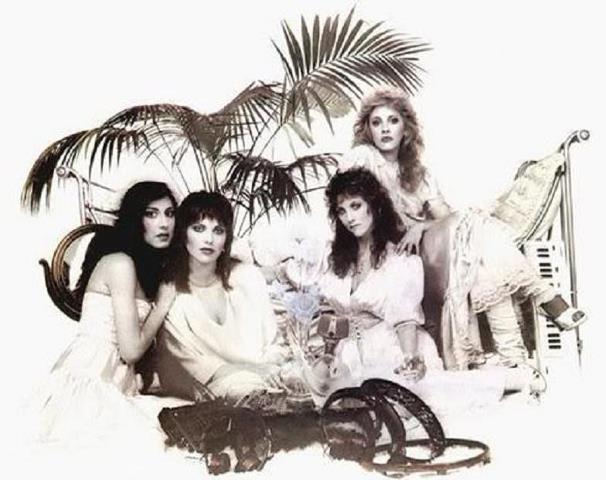
(L-R: Sharon Celani, Sandy Stewart, Lori Perry, Stevie Nicks)
Release
Modern Records released The Wild Heart on Friday, June 10, 1983. It debuted at No. 5 on the Billboard Hot 200 Albums chart (7/9/1983), spawning the Top 40 singles “Stand Back,” “If Anyone Falls,” and “Nightbird” (with Sandy Stewart).
With the album’s commercial and critical success, Stevie Nicks received a Grammy nomination for Best Rock Female Vocalist for “Stand Back” and an American Music Award nomination for Best Female Pop/Rock Artist in 1984.
Since its release, the RIAA has certified it double platinum for the shipment of two million copies to retailers.
In 2016, Rhino Records released the Deluxe Edition of The Wild Heart, which included the remastered album and a second disc with outtakes and alternate versions from The Wild Heart recording sessions.
2016 Deluxe Edition — Disc 2
Violet and Blue (from Against All Odds: Music from the Original Motion Picture Soundtrack)*
I Sing for the Things (Unreleased Version)
Sable on Blond (Alternate Version)
All the Beautiful Worlds (Unreleased Version)
Sorcerer (Unreleased Version)
Dial the Number (Unreleased Version)
Garbo (B-Side)
Are You Mine (Demo)
Wild Heart (Session)
*In 1985, the Against All Odds soundtrack received a Grammy Award nomination for Best Album of Original Score Written for a Motion Picture or a Television Special.
Charts
Stand Back
Billboard Chart
Peak
Pop Singles
5
Album Rock Tracks
2
Dance
12
If Anyone Falls
Billboard Chart
Peak
Pop Singles
14
Album Rock Tracks
8
Nightbird (Featuring Sandy Stewart)
Billboard Chart
Peak
Pop Singles
33
Adult Contemporary
39
Album Rock Tracks
32
I Will Run to You
Billboard Chart
Peak
Album Rock Tracks
35
Enchanted
Billboard Chart
Peak
Album Rock Tracks
12
Nothing Ever Changes
Billboard Chart
Peak
Album Rock Tracks
19
Promotional Videos
Stand Back
If Anyone Falls
Nightbird
News & Coverage
EnchantedJune 6, 1983–“Enchanted” is Track 4 on The Wild Heart (1983), Stevie Nicks’ second solo album. It follows “Gate and Garden” and… More
NightbirdJune 10, 1983–“Nightbird” is Track 5 on The Wild Heart (1983), Stevie Nicks’ second solo album. It follows “Enchanted” and precedes “Stand Back” in… More
If Anyone FallsJune 10, 1983–“If Anyone Falls” is Track 2 on The Wild Heart (1983), Stevie Nicks’ second solo album. It follows “Wild Heart” and precedes… More
Beauty and the BeastJune 10, 1983–“Beauty and the Beast” is Track 10 on The Wild Heart (1983), Stevie Nicks’ second solo album. It also appears on the… More
REVIEW: Stevie Nicks The Wild HeartJune 10, 1983–Stevie Nicks was following both her debut solo album, Bella Donna (1981), which had topped the charts, sold over a… More
Wild HeartJune 10, 1983–“Wild Heart” is Track 1 on The Wild Heart (1983), Stevie Nicks’ second solo album. It precedes “If Anyone Falls” in… More
Gate and GardenJune 10, 1983–“Gate and Garden” is Track 3 on The Wild Heart (1983), Stevie Nicks’ second solo album. It follows “If Anyone Falls” and… More
GarboJune 10, 1983–“Garbo” is a completed track by Stevie Nicks from The Wild Heart recording sessions (1982-1983). It first appeared as the… More
Nothing Ever ChangesJune 10, 1983–“Nothing Ever Changes” is Track 8 on The Wild Heart (1983), Stevie Nicks‘ second solo album. It follows “I Will Run… More
I Will Run to YouJune 10, 1983–“I Will Run to You” is Track 7 on The Wild Heart (1983), Stevie Nicks‘ second solo album. It follows “Stand Back” and… More
 Stevie Nicks has always been two performers. At times, she is the Gothic figure of tragedy, the enigmatic witch of “Rhiannon” who swirls her diaphanous black and white capes as she dances an ancient ballet — her mystery heightened by her infamous exits while in concert with Fleetwood Mac.


 Seldom has Stevie Nicks been in better voice than on The Wild Heart. Her distinctive lower-range growl has broadened and strengthened considerably; it may not be a bluesmama instrument, but it carries some emotional oomph when it gets cranked up. The Wild Heart boasts one of the best producers in the business in Jimmy Iovine (reprising his yeoman board chores on Bella Donna), and at least two of rock & roll’s most valuable players, guitarist Waddy Wachtel and keyboardist Roy Bittan. And Nicks embarks on her second solo LP with some intriguing personal history to relate: she’s a married woman now, wedded to her best friend’s widower, stepmother to an infant daughter.