Tag: Dave Stewart

  • In Your Dreams doc to be screened in selected theaters

    In Your Dreams doc to be screened in selected theaters

    In honor of her 2019 induction into the Rock and Roll Hall of Fame, Stevie Nicks’ 2012 documentary In Your Dreams, chronicling the recording of her acclaimed seventh solo album of the same name, will be screened in selected theaters starting in March. 

    Here is a partial list of theaters that will be screening In Your Dreams. Contact the theater(s) for more details.

    3/18 – Enzian – Maitland, FL

    3/18 & 3/20 – Santikos Entertainment

    3/19 & 3/26 – Luna Theater – Lowell, MA 

    3/20 – Cinepolis Rancho Santa Margarita – Rancho Santa Margarita, CA

    Use “Select Your Cinema” menu at bottom for all https://cinepolisusa.com/now-playing/details/Movie/HO00002575:

    • Cinepolis Del Mar – San Diego, CA
    • Cinepolis Luxury Cinemas Victory Park – Dallas, TX
    • Cinepolis Laguna Niguel – Laguna Niguel, CA
    • Cinepolis Dayton – Miamisburg, OH
    • Cinepolis Luxury Cinema Pacific Palisades – Pacific Palisades, CA
    • Cinepolis Westlake Village – Westlake Village, CA
    • Cinepolis Vista – Vista, CA
    • Cinepolis Jupiter – Julipter, FL
    • Cinepolis La Costa – Carlsbad, CA

    3/22 – ACME Screening Room – Lambertville, NJ

    3/22, 3/23, 3/24 – The Art Theatre – Long Beach, CA

    3/23, 3/24, 3/28, 3/29, 3/30, 3/31 – TSL Theater (Time & Space Limited Org) – Hudson, NY

    3/25 – GE Theater at Proctors – Schenedtady, NY

    3/26 – FTC (Fairfield Theater Co) – Fairfield, CT

    3/26 & 3/31 – IPIC Theaters  
         – IPIC Westwood – Los Angeles, CA
         – IPIC Scottsdale – Scottsdale, AZ
         – IPIC Pasadena – Pasadena, CA
         – IPIC Mizner Park – Boca Raton, FL
         – IPIC North Miami Beach – North Miami Beach, FL
         – IPIC Bolingbrook – Bolingbrook, IL
         – IPIC Pike & Rose – North Bethesda, MD
         – IPIC Hudson Lights – Fort Lee, NJ
         – IPIC Westchester – Dobbs Ferry, NY
         – IPIC Austin – Austin, TX
         – IPIC Fairview – Fairview, TX
         – IPIC Westheimer – Houston, TX
         – IPIC Redmond – Redmond, WA

    3/27 – Broadway Metro – Eugene, OR

    3/27 – Small Star Art House – York, PA 

    3/29 – Mystic Luxury Cinemas – Old Mystic, CT

    4/9 – Cinepolis Chelsea – New York, NY
    (Use “Select Your Cinema” menu at bottom: https://cinepolisusa.com/now-playing/details/Movie/HO00002575)

    4/11 – Frank Banko Alehouse Cinema – Bethlehem, PA

    5/12 – Sierra Theaters – Nevada City, NV

    IN YOUR DREAMS (2012)

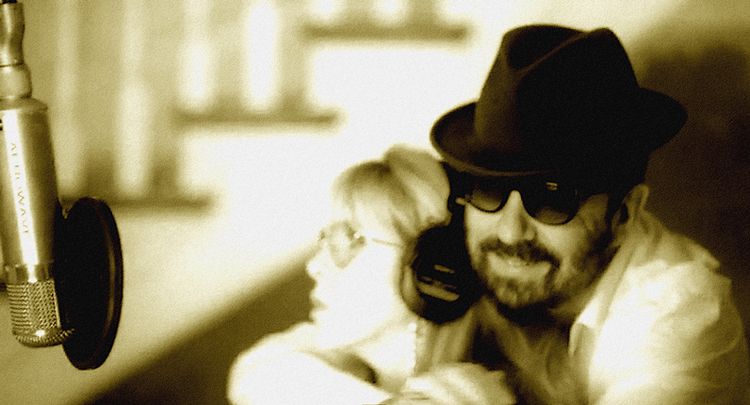
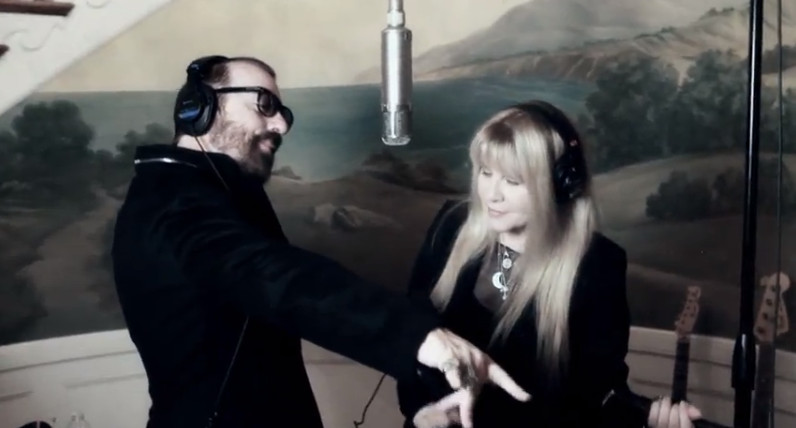
    In honor of Stevie Nick’s recent Rock and Roll Hall of Fame induction as a solo female artist, the inimitable Stevie Nicks has entranced millions of fans worldwide with her poetic lyrics, sultry singing and feather-and-lace style. In 2010 Nicks embarked on the recording of a new solo album, In Your Dreams, produced by former Eurythmics mastermind Dave Stewart. With cameras in tow, documentarian Stewart and diva Nicks set up shop in her home studio and reveal their collaborative creative process.
    (Rated NR, 1 hour 52 minutes)

    Thank you to Chuck Lovejoy for researching and sharing this information.

  • Legend, icon, storyteller

    Legend, icon, storyteller

    Stevie Nicks Talks About Empowering Women, Fleetwood Mac and her Next Tour

    Legend. Icon. Storyteller.

    “I have a super loud voice,” Stevie Nicks said with a laugh. The world is thankful for it. Her voice is necessary in times like these. The future is up in the air and Stevie Nicks has stepped up to the plate to be the heroine we all need. She is taking the show on the road and it will be unlike anything anyone has ever seen before. The 27-city tour starts on October 25th in Phoenix and will travel to places like Atlanta, Toronto, Chicago, Philadelphia, New York City and more. “The 24 Karat Gold Tour” is the next chapter in the mythical career of Stevie Nicks.

    In an exclusive interview with The Huffington Post, Nicks went into detail about what fans should look forward to when “The 24 Karat Gold Tour” comes to town. “I made a list. I went all the way back into my full catalog because the 24 Karat Gold record has a lot of songs. It also does encompass in many ways all the songs from all my solo records. So I’m having to pick. My list ended up to be 31 songs, it’s really ridiculous. I have an amazing opening act in The Pretenders. It cannot be a three hour set like I just finished doing with Fleetwood Mac and I asked, ‘But why?’ My musical director and lead guitarist asked if I cut down the set at all yet and I went, ‘Nope.’ So I said, ‘Just hand out the 31 songs to the band and tell them they don’t have to learn them all perfectly. They just have to be aware that we need to play these songs because sometimes the songs that you think are going to be the best aren’t and sometimes the songs that you think will never work end up being some of your favorite things,’” she told me. It was quite clear that Stevie Nicks created an adventurous and exciting air around her latest undertaking.

    Nicks acknowledged that she will have to revisit her classic hits before touching the new material. “Of course there are the songs that you have to do which are ‘Landslide’ and ‘Edge Of Seventeen.’ That’s fine. I love all those songs so I don’t care. I wish I could do all new songs but you can’t,” she chuckled. She continued, “I’m going to try to do some title songs. I’m going to make an effort to do an extremely difficult complex song called ‘Wild Heart’ which may totally go down in flames. The fact is I’m going to try because I always wanted to do it on stage. It’s a very complex and complicated song but I’m hoping it’s going to work. I’m going to do the songs ‘Bella Donna’, and ‘Rooms On Fire.’ I’m trying to represent every record. There’s a bunch of songs on 24 Karat Gold that haven’t been played by my band. We have to work through all the songs on 24 Karat Gold to see if they will work. If you miss one syllable you can be lost in the dark. There’s not even time to breathe. My musical director said ‘Oh my God. Call me when it’s over.’ I said, ‘Don’t worry it’s going to be okay. It’s all going to work out.’ He’s a nervous wreck. It’s going to be great because we are actually going to ‘represent’. That’s what people say today, right? This tour is a little bit about the glorious past up until now. These songs are not songs that were ever kicked off records,” Nicks told me. She then explained why the songs were never released. She said, “These are songs that were pulled off records by me because I didn’t like how they were recorded. Which means I didn’t like the production, I didn’t like the singing, I didn’t like the fact that it was made too much into a rock n roll song or not. These weren’t songs that I didn’t want to go out, these were just songs that weren’t right. I said ‘No, I’m not going to have a bad experience with this song’ so I pulled them. That’s where 24 Karat Gold came from.” What is old is new again. Fans have been salivating to see these buried treasures played live by the icon.

    You can never, ever get out of the line. You have to stay in the line because somebody will jump in there and take your place.

    When explaining the process of recording 24 Karat Gold, Nicks told me, “We started with sixteen songs when we went to Nashville. And it came down to fourteen or fifteen, maybe. I said to Dave Stewart who has all my demos, ‘How can we make a record of these songs and do it while I’m off from Fleetwood Mac, while Christine is moving back to LA, while we are getting her straightened out? How long would that take?’ Dave said, ‘2-5 and 6-10 and then you go home.’ He followed up by saying, ‘You need to be on time and everything will be charted. And you want these songs charted exactly the way they were on your demos. They will be exact. They won’t be arguing with you. These are the best of the best studio musicians and they play on all different kinds of records every single day.’ We had to be organized and we were. It was so great because I didn’t have to learn to sing any of these songs differently because they were exactly as I wrote them. And they loved them. We recorded live. I was in a booth looking at all of them. The drummer, another guitar player, we had three guitar players and it was all there and I could see everybody. It was like playing in a club. When we were done, we jumped on a plane and flew back to my house. It was really fun. We had another three weeks at my house and then it was done. And it was amazing because the only records made in that kind of time were Fleetwood Mac because we really didn’t have that much money. We had a record deal. It was well known but it wasn’t the time to be self-indulgent. And Bella Donna took three months with a month of rehearsal and a month before that of picking out the songs. Every other record we’ve ever done has taken at least a year. Rumors, all of the records. We have enough money where everyone goes ‘We can do whatever we want.’ And I think sometimes that really doesn’t work that well for you because you really don’t need to book every studio in the city to put five thousand overdubs on music that is already really good. You are trying really hard to use your time wisely. You get better stuff and it is a lot more fun getting the stuff that you do get.” Nicks has had a lot of fun throughout her career and doesn’t plan on stopping anytime soon. Just when you think you have seen it all, Nicks makes sure that you haven’t seen anything yet.

    Stevie Nicks - 24 Karat Gold Songs from the Vault“I’m not going out to promote this record to sell records because I know people don’t buy that many records now. I have a really good record, and I can go up on stage and do as many of the songs that I can get away with doing,” Nicks told me. She continued, “This will be a very theatrical show. We have a lot of great pictures. This is something I have not mentioned to anybody else. The guy who took the cover of Rumours, Fleetwood Mac and all of my covers, Herbert W. Worthington III, died last year and he left me everything. He left me every picture he ever took, all the way back to Jimi Hendrix, Buddy Guy and all the Fleetwood Mac stuff. All of the press photo sessions. I have an immense amount of amazing photographs taken by this great photographer who was a dear friend of mine that I can now use. When he was alive, he was like ‘You can have that one picture but it’s going to cost you $5,000.’ I would go ‘Herbie come on! Nobody is going to pay that much money! Are you crazy?’ It’s never been seen. So we have these photographs to use and to put up behind me. There’s a picture for every song. A picture tells a thousand stories so that’s really exciting too. I’m going to try to make the beautiful art book that he always wanted to make but never got the opportunity to do.” Stevie Nicks is all about making opportunities that were once not possible—including another Fleetwood Mac tour.

    “We will go out again. We will probably go out in another year and a half,” Nicks said while shaking her head. She followed up by saying, “We have to for Christine. Because she’s like ‘Oh my God. I just came back to the band after sixteen years and you are going to break up now?’ We can’t break up now. We gave Christine her 120 shows and she flew through them. She’s five years older than me and you would just never know it. She looks great. You’ll get to see that show. She will never let us off the hook for that.” Stevie Nicks made sure to not let the next generation off the hook when she spoke about what it takes to succeed in the world today.

    Stevie Nicks and Adele
    Backstage with Stevie Nicks and Adele

    “I think it’s very hard now. That does not mean that it can’t happen,” Nicks said endearingly. She continued, “Look, it happened for Adele. Adele is certainly someone who writes great songs and has an amazing voice. Why did it happen for Adele? It’s because the stars crossed exactly at the right time, who knows. Whatever it was she worked very hard at it. I think that’s the thing. You have to figure out a way, if you’re eighteen or moving out of your parents house because you have to figure out a way to play and also support yourself. If everybody is like how my parents were, oh boy, I went to college for five years. I stopped after five years and had three months left to graduate. I called my parents and I said ‘My boyfriend Lindsey and I are going to LA.’ They said ‘Well, that’s fine we totally believe in you and support your theory in what you’re doing.’ I said, ‘Mom, we have to go now. It’s now or never.’ She said, ‘Cool, however, we will be withdrawing all financial support.’ And I said ‘I know that and it’s okay. We are going and I will be okay.’ And it was okay. Lindsey and I went to LA in 1971 and we worked out butts off. I had lots and lots of jobs. We didn’t really play shows because Lindsey didn’t want to play covers. We could have made a thousand dollars a week if we did three days a week. I wouldn’t have had to be a cleaning lady, a maid, a waitress or any of that. But the fact is, is that it made me a well-rounded person to be able to do that. We never gave up. You just have to keep working. I watch all those shows like The Voice, the end of American Idol, America’s Got Talent. I watch them all because I think they are all really fun. I’m a musical person and I love to watch people sing. If that’s what Lindsey and I had to do, if it was now, I would be dragging him tooth and nail to do those shows. Because if that’s the only way you can get people to see you now, then go on those damn shows. If you don’t get on them this year, go home and get better and practice and go back and do it again next year. If this is what you want to do, you have to be absolutely organized. And devoted and determined and you can’t listen to anybody tell you what you can and cannot do. Nobody knows what you can do except you. You have to prove the world wrong, period. If you’re really good…And I think most people could actually say they are really good at something. I did. I would look in the mirror and would go ‘Lindsey and I are excellent singers and we don’t sound like anybody else. We can captivate an audience and we can write great songs. So I don’t care if I’m a waitress right now because I’m not going to be a waitress for very long.’ That’s the attitude you have to take.”

    Independence…I think that’s important when talking to kids, especially women. Assert your independence.

    Nicks continued to share words of wisdom for aspiring entertainers. “If you can’t have that work ethic about what you do, you might as well just try to go to school and learn to do something where you can get a job that you can get paid for. Rock and roll, music, acting, being a dancer. It’s all fleeting unless you never look away. You can never, ever get out of the line. You have to stay in the line because somebody will jump in there and take your place,” she said in all seriousness. Passionately, she exclaimed, “One thing I remembered when we first moved to LA—we played for people. A lot of people were like, ‘Yeah you guys are really good…But who are you? What are you? Are you rockabilly? Are you folk singers? Are you going to add members and become a rock n roll band? A country rock n roll band? Are one of you going to become a preacher? Are you going to be with the Everly Brothers?’ We would be like, ‘We don’t know. We just know that we are going to be really famous. And we are really good at what we do. We don’t put ourselves in any specific box. You can put us in a box and tell us what we are if you want and maybe we will believe you. But the fact is—what we know is—that we are really good.’”

    Nicks then proceeded to give career advice for young women in this day and age. “If this didn’t work out for me I would have probably been a disc jockey or maybe an editor. I would have done something that was really, really fun. If this didn’t pan out for me and I finally started thinking 10 years down the line ‘Well maybe this isn’t going to work,’ I would have done something else and continued to do music in my leisure time. There is something also to be said about that. I think I could have been a great disc jockey because I love music and I love talking and I love telling stories. I think I could have been great at doing something like that. I always had something like that in the back of my mind even when I was sixteen when I told my parents that I was going to be a singer-songwriter and that’s that. And my mom’s like ‘Well you are going to take short-handed typing. Because you are going to be able to be an independent woman. You are going to be able to stand in a room with really smart men and hold your own. You are never going to feel like you are behind while the whole room of men are going to look at you like some stupid girl.’ My mom was seriously independent and she always had a job. She wanted that for me from the very beginning. To have my independence. I think that’s important when talking to kids, especially women. Assert your independence. Christine and I knew that we would never be treated like second class citizens when standing in a room with Eric Clapton, Jimmy Page and Robert Plant. All of the famous men. If anybody ever treats us with anything but total respect we will just walk out and it is their loss. And that was implanted in my head by my mom long before I graduated from high school.” Mom always knows best. So does Stevie Nicks.

    Nicks hammered the point home by telling people to always put in their best effort and to never be afraid of being different. She said, “You could be a really good photographer but guess what? Your 5-year-old is a really good photographer. The bar has been set so high now with everything. I think I’m a good photographer. But then I see these little kids taking these pictures and they are phenomenal. So you have to go back and say ‘Well I’m going to be better than that. The bar is raised and I’m going to jump over that bar. I’m going to be a better photographer than all the 5-year-olds and all the 25-year-olds.’ The bar has been raised in everything because of this tech world we live in. I don’t have a computer. I don’t have an iPhone. I have a camera that takes really good pictures and I have a flip phone in case of a fire. That’s it. I don’t live in that world but I see everybody around me that lives in that world. Sometimes I feel like I am an alien. Everybody is sitting with a silver computer on their laps and crying because the Internet went down. That’s really how people are and I don’t live in that world. Maybe we should talk about kids being truly creative, who want to be a performer or a writer. They can’t live in that world. Get out of that world. Start writing by hand. Life is beautiful. Buy a notebook, take out a pen and write it out instead.” In true Stevie Nicks style, she had one last thing to say to everybody.

    “Whatever you do just don’t be sitting next to somebody and talk to them on your phone.”

    You can purchase tickets to “The 24 Karat Gold Tour” by clicking here.

    Kyle Stevens / Huffington Post / Monday, September 19, 2016

    Follow Kyle Stevens on Twitter: www.twitter.com/thekylestevens

  • Dave Stewart recalls his fling with Stevie Nicks

    Dave Stewart recalls his fling with Stevie Nicks

    Stevie Nicks & Dave Stewart

    Dave Stewart recalls his fling with Stevie Nicks — and how it led to a hit with Tom Petty

    In an exclusive excerpt from Sweet Dreams Are Made of This: A Life in Music, Dave Stewart’s scintillating memoir (Feb. 4, NAL), the former Eurythmics member recalls a wild night of love — and drugs — with Stevie Nicks (and the drama that followed)

    Memoir Excerpt:

    We continued touring America for the remainder of 1984. When Annie [Lennox] and I played the Wiltern Theatre in Los Angeles, the place was absolutely packed with half of the L.A. music industry and a host of famous ­musicians. There was hardly room for the general public. It was a wild show. There were a lot of ­musicians and ­singers backstage, and one of them was Stevie Nicks.

    Stevie was in my dressing room doorway, wearing a faux-fur coat just like the first time I met Annie. Underneath she wore a black lace dress and she had long, flowing hair. I didn’t know who she was, but there was something about her that I was instantly attracted to. Stevie remembers that I looked her straight in the eye and said, “I want to be your ­boyfriend.” Little did I know that the day before, [The Eagles’] Joe Walsh and Stevie had had a big fight and had broken up. She invited me back to her house for a party, and 10 minutes later, still in full sweaty leather stage gear, I was in the back of a limo with Stevie and her backing singers. When we got there it wasn’t really a party: just Stevie and her singers being very speedy, ­laughing and talking. The house seemed enormous to me, so I wandered around, and when I came back to the ­living room, they had all disappeared into a bathroom for what seemed like hours. Actually it was hours. At around three in the morning, I ended up saying to myself, “OK, I’m really tired now and I have no idea where I am or which hotel Annie and the band are staying in.”

    Dave Stewart and Stevie NicksI just went to bed in one of the four bedrooms upstairs. I woke up at about 5 a.m. to the sound of doors rustling open and in the half-light saw Stevie opening and closing closets, as if it was the middle of the afternoon. Obviously they were all still ­wide awake, aided, I imagine, by what we in England call “marching powder.” Stevie went back in the bathroom and about an hour later came out in a long Victorian ­nightdress and quietly slipped into the other side of the bed. Stevie is an incredibly talented, soulful and ­beautiful woman. There was a fair amount of what I’d call skirmishing that went on. I remember at one point actually falling backward out of bed onto the floor, which made us both laugh hysterically. Stevie recently told me that all she could see when she came out of the bathroom that night was a mound of black leather and chains on the floor and a wild head of hair poking out of the bed covers. I remember making love once, but she later told me we made love twice. And then she said, “I remember clearly because I was wide awake, wired on cocaine.” It was all very good-humored and sweet, but also romantic in a rock’n’roll kind of way.

    I was woken up at about 9:30 a.m. by Stevie saying I had to leave because someone might have been coming around to collect their clothes, and things could get tricky. I didn’t like the sound of “tricky,” so I phoned my management, found out where the band was ­staying and jumped in a cab.

    After San Francisco we had some time off, and I decided to go back to L.A. to see Stevie again. Jimmy Iovine, the great producer who went on to start Interscope Records in the early ’90s, had invited me to stay with him at his house, and this was where it got interesting. I had no idea of the complexity of the relationships among Jimmy, Stevie Nicks and Tom Petty at the time. But I was soon to find out more than I ever imagined.

    Jimmy had been living with Stevie in 1981 when he was producing her album Bella Donna, which was a huge success. Now he was working on her next album, except this time around they were not together. Stevie said later that it was because she was so addicted to drugs at that time.

    I played Jimmy the demo of “Don’t Come Around Here No More” [which Stewart co-wrote and co-produced], and he said, “Wow! This is going to be great. Let’s make it for Stevie’s album.”

    I jumped at the chance to work with Stevie, and we went right into the studio a few days later. When we started recording, Stevie was acting strangely and not really coming out of the bathroom much.

    There seemed to have been quite a bit of friction between them. I had no idea that it was because they had been living together and were now broken up. Finally, Stevie appeared with her lyric book and started to sing into the microphone.

    I was mesmerized until Jimmy said, “She’s ­reciting f–ing Shakespeare!” He did have a point; it was kind of Shakespearean and very odd. He was trying to get Stevie to change the lyrics. Stevie was upset and the discussion became very tense. He was saying, “Can you stop arguing with me in front of my friend David? You don’t really know him.” And she said, “Your friend? What are you talking about? We slept together the other night.” I turned white and stared at the floor, ­wondering what was coming next. Fortunately Stevie turned, walked out the door and left the studio.

    I thought Jimmy was going to ask, “What does that mean?” But he just said, “I know what we should do. We should get Tom Petty down here to finish writing the song with you. He’s great.”

    —Dave Stewart

    Dave Stewart Sweet Dreams Are Made of This Memoir

    This story originally appeared in the Feb. 6 issue of Billboard.

    Billboard / Saturday, February 6, 2016

  • Double dose of Stevie in February

    Get ready a double dose of Stevie in February!

    On Friday, February 5, Charles Kelley releases his first solo album The Driver, which features harmony vocals from Stevie on the Tom Petty cover “Southern Accent.”

    Listen to Charles Kelley’s cover of  ‘Southern Accents featuring Stevie Nicks now!

    Then on Tuesday, Feburary 9, Dave Stewart releases his first autobiography Sweet Dreams Are Made of This: A Life in Music, in which Dave describes meeting Stevie for the first time and recording Stevie’s 2011 album In Your Dreams. The autobiography includes several pictures, including a few with Stevie. Here is Stevie’s comment about Dave, which is printed on the back cover of the book:

    “In 2010, I spent an entire year with Dave making a record called In Your Dreams at my house in Los Angeles. It was the ‘best year of my life.’ But now, I really see what it meant to me; it meant everything. He allowed me to be my most creative self. He is my hero. The memories of those days still take my breath away. Thanks Dave. It was real….beautiful.”—Stevie Nicks

    Both releases are available for preorder now!

    Amazon: The Driver and Sweet Dreams Are Made of This: A Life in Music
    iTunes: The Driver

  • Stevie revisits ‘Don’t Come Around Here No More’ in Petty bio

    Stevie revisits ‘Don’t Come Around Here No More’ in Petty bio

    Tom Petty The Biography Warren Zanes November 10, 2015Tom Petty’s new biography Petty: The Biography will be released on Tuesday, November 10. Here is an exclusive excerpt from the book on the recording of Petty’s 1985 hit single “Don’t Come Around Here No More,” originally intended for Stevie Nicks to record for her third solo album Rock a Little.

    1985’s “Don’t Come Around Here No More” was a breakthrough smash for Petty, but it almost didn’t happen: He, co-writer/producer Dave Stewart of Eurythmics and co-producer Jimmy Iovine made it in a recording session for Stevie Nicks.

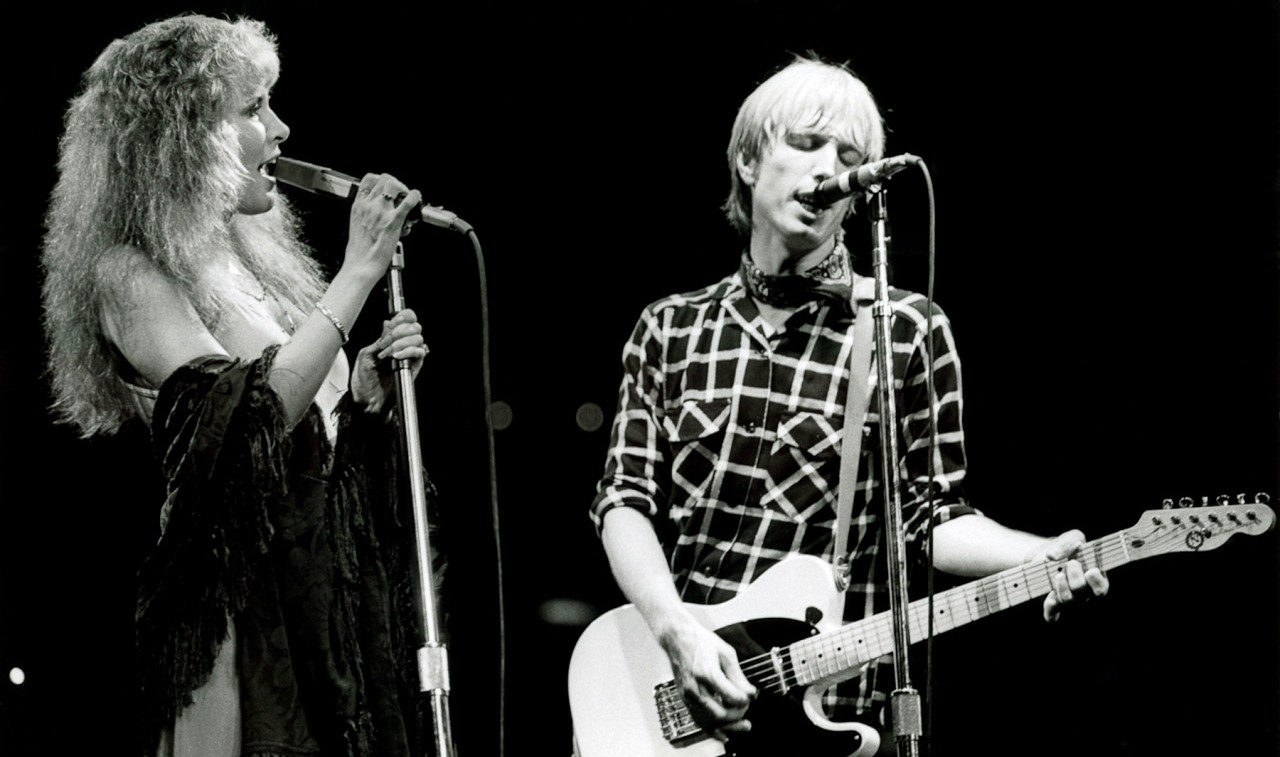
    “Tom had come down, and he liked what we were working on,” explains Nicks. “I was writing madly. I had my little book, and I was just writing, writing. Tom, Jimmy, and Dave were sort of talking. But it was five in the morning, and I was really tired. So I said, ‘I’m going to go. I’m leaving you guys, and I’ll be back tomorrow.’ I left, and when I got back the next day, at something like 3 p.m., the whole song was written. And not only was it written, it was spectacular. Dave was standing there saying to me, ‘Well, it’s terrific, and now you can go out…and you can sing it.’ Tom had done a great vocal, a great vocal. I just looked at them and said, ‘I’m going to top that? Really? I got up, thanked Dave, thanked Tom, fired Jimmy and left.”

  • Stevie Nicks, Dave Stewart team up for In Your Dreams movie

    Stevie Nicks, Dave Stewart team up for In Your Dreams movie

    (WENN)
    Dave Stewart and Stevie Nicks at the 20th Hamptons International Film Festival, Long Island, New York, Oct. 7, 2012. (WENN.com)

    By Jane Stevenson
    The Sun (Canada)
    Sunday, April 14, 2013 10:00 PM MDT

    Two rock icons, Fleetwood Mac’s Stevie Nicks and Dave Stewart of The Eurythmics, worked together on Nicks’ first album solo album in a decade, 2011’s In Your Dreams

    But their creative collaboration didn’t end there.

    There’s also a Stewart-directed 2013 behind-the-scenes documentary of the same name about making the record, co-produced by Glen Ballard, that will debut in Toronto Monday night. The film then moves across Canada over the next several weeks.

    “It’s a movie that Stevie Nicks’ fans love,” says Stewart, 60, from L.A.

    “Obviously, she’s been a bit of an enigma and very sort of mysterious and there’s an insight not only into her world and her home and how she works but inside her mind as well. How she works creatively and how she thinks. What’s good is that if you’re not a Stevie Nicks fan in particular and you watch it, you get kind of surprised at how kind of intense and focused she is working. Because I think a lot of the views or people’s opinions about artists during certain periods of their life is kind of spaced out, hippie like. And then you see Stevie at work in the film and you go, ‘Holy s—!’ She’s like a force of nature.”

    Turns out Stewart and Nicks met 30 years ago.

    The occasion was an Eurythmics show in Los Angeles and Nicks came backstage.

    “We got on really well,” says Stewart. “And I went back to stay in L.A. for a bit and we hung out and I was writing just experimental stuff with her and I ended up writing this song for her but then Tom Petty liked it and wanted to record it — Don’t Come Around Here No More — that’s why at the end (of the film, Stevie) says, ‘Hey, Dave, definitely come around here!’ Because it became this epic sort of song for Tom.”
    Stewart and Nicks regrouped again significantly in 2006 when Nicks appeared on a pilot for Stewart’s HBO music-themed interview show and they performed a 15-minute version of Rhiannon together.

    In the documentary, she reveals after that collaboration she knew she wanted Stewart to produce either her next solo album or a Fleetwood Mac record.

    “It all sort of organically turned into the record and the movie,” says Stewart.

    He says after recording the album with Nicks and shooting about 50 hours of footage — boiled down to one hour and 40 minutes on-screen — he learned two significant things about her.

    “Stevie’s incredibly generous. She’s always kept the same backing singers, the same friends… even the sounds guys and everybody. They’ve all stuck by her. They’re so loyal to her. And that’s an amazing thing that I discovered about Stevie of how deep that runs within her, this loyalty. And then all of the time and effort she puts into putting her lyrics together. Training herself in books and reading so much literature. She’s steeped in her job. She said it herself. She purposely decided not to have children because she just knew she couldn’t do both. It’s a massive decision.”

    In Your Dreams screenings in Canada:

    Toronto / TIFF Bell Lightbox (350 King St W) / April 15 (7 p.m and 7:30 p.m. with Stevie Nicks Q&A) and then April 16-18.
    Ottawa / Mayfair Theatre (1074 Bank St) / April 19 & 20
    Winnipeg / Winnipeg Cinema theque (100 Arthur St) / May 4 & 5
    Edmonton / Metro Cinema at the Garneau (8712 109th Street NW) May 14
    Calgary / Globe Cinema (617 8 Ave SW) / May 16
    Vancouver / Vancity Theatre (1181 Seymour St) / May 18
    Montreal/ Cinema du Parc (3575 Park Ave) / June 14-17

  • Stevie Nicks on In Your Dreams doc, Twilight-inspired song, Dave Grohl

    Stevie Nicks on In Your Dreams doc, Twilight-inspired song, Dave Grohl

    2011-0503-cheaper-than-free01

    Why she and Fleetwood Mac’s Lindsey Buckingham are getting along better than ever

    By Melinda Newman
    Hit Fix
    Monday, April 1, 2013 6:53 PM

    When Dave Stewart first suggested to Stevie Nicks that he film the making of her 2011 solo album, In Your Dreams, which he co-produced, her blunt reaction was “I think you’re nuts.”

    However, the Eurythmics co-founder convinced Nicks by simply reassuring her “If you don’t like it, we don’t use it.” And in the end, she not only liked it, but she saw the documentary as a way to extend the shelf life of the critically-acclaimed album, which debuted at No. 6 on the Billboard 200, but did not have the high-profile run Nicks hoped it would and fell off the charts after 16 weeks. (more…)

  • Gold Dust Woman: Q&A with Stevie Nicks

    Gold Dust Woman: Q&A with Stevie Nicks

    When Stevie Nicks started her musical and romantic relationship with Lindsey Buckingham, both were still in high school. By the time the romance ended, the folk-pop duo were in one of the world’s hottest bands, which also contained another splitting couple, John and Christine McVie, as well as drummer Mick Fleetwood, who also was in the throes of divorce. Their tangled, cocaine-addled lives—and Nicks’ affair with Fleetwood—would become fodder for 1977’s Rumours, one of the best-selling albums of all time. In the years since, Fleetwood Mac’s members would go their own ways, only to come together again periodically. But of all their solo careers, Nicks’ has been the most successful.

    Her string of hits, with and without Fleetwood Mac, represents one of pop music’s most beloved canons: the list includes “Rhiannon,” “Landslide,” “Dreams” (a favorite topic), “Edge of Seventeen,” “Leather and Lace” (a duet with one-time lover Don Henley), “Stand Back” and, with Tom Petty, “Stop Draggin’ My Heart Around.” Her gypsy/witchy-woman look—Victorian-inspired gowns, high-heeled boots, leather and lace, silk and satin, romantic hats over long, blonde hair, all shown off with frequent stage twirls—set a tone in the ‘70s from which she hasn’t wavered to this day. Her songwriting methods hadn’t changed much, either, till she called Dave Stewart and asked him if he’d like to produce her first solo album in 10 years. Released in May, In Your Dreams contains the first song collaborations she’s ever done with another writer while sitting in the same room, raw and open to anything.

    Their output, it turns out, is remarkably strong. This time, she’s inspired by soldiers, angels, vampires, New Orleans, Edgar Allen Poe and, of course, romantic notions—past, present and future. (Both Buckingham and Fleetwood are on the album, along with guitarist Waddy Wachtel, with whom she’d also reportedly been linked at one time.) Sometime writing partner Mike Campbell also participated. In a wide-ranging conversation, Nicks discusses her unusual methodology.

    You’ve written some of the most enduring songs in the pop-rock lexicon. I’m sure you’re very proud of that. How about if we start with Buckingham Nicks? “Frozen Love” was the biggest song that you two were known for as a team. Did you write that together?

    No, I wrote it. Lindsey and I did not ever write a song together. The only—strangely enough—time I’ve ever written a song with anybody is Dave Stewart.

    Wow!

    I mean anybody in the same room. I do write with [Heartbreaker] Michael Campbell, but he sends me a CD that has three or four tracks on it, so he’s not sitting there. That’s very different, because if you don’t like it you can like wait three days and call and say, “You know, I just didn’t see anything/hear anything right now, but I’ll revisit it.” So you can kind of get out of it without hurting anybody’s feelings. That’s a problem with writing songs with people—you can really end up hurting peoples’ feelings, because if you don’t like it, you either get stuck with something you don’t like or you’re honest and you tell them you don’t like it, and, it takes a very special team to be able to write together without that ego thing happening. So Lindsey and I never wrote. He would leave guitars all over our little house and they’d all be tuned in different tunings and God knows what. He’d be gone, I’d write a song, I’d record it on a cassette, and then I’d put the cassette by the coffee pot and say, “Here’s a new song, you can produce it, but don’t change it.” Strict orders. “Don’t change it, don’t change the words, don’t change the melody. Just do your magic thing, but don’t change it.”

    Did you ever overcome that feeling that once it was done, nobody could touch it?

    No. Very superstitious.

    How does that translate into your songwriting? When it’s done, it’s done?

    It’s done—pretty much. Sometimes when I write a song, I’ll just write the first two verses and the chorus, and in my head I know I still have to write another verse, and maybe I’ll do that down the line a couple weeks later or maybe even a month or two later, but it’s very set in stone because—I always have a tape recorder going, and usually the first time, if I’m singing [sings] “Now there you go again, you say you want your freedom /who am I to keep you down?”—I’m not changing that. And I know it. The second it comes out of my mouth, I’m like “Oh, that was good.” So I have a little overhead lightbulb thing that goes off, so then I’m never going to go back and change that even though a good example is Don Henley—I was going out with Don Henley when I was writing “Dreams,” and it says [sings], “When the rain washes you clean, you’ll know.” Well, he didn’t like that [sings]“washes you” [accent on “es”], and he wanted me to go, “When the rain washes you clean” [accent on “wash”]. And I’m like, “No, I don’t like it.” [laughs] And he’s like, “Well, wash-ES doesn’t sound good,” and I’m like, “Well, wash-ES is the way it’s gonna be.” So then you start getting into that with somebody, and we’re talking an ego [of] a fantastic songwriter here. So I’m arguing with Don Henley over this, you know? That’s why I really stayed away from writing songs with other people.

    Especially men, I guess.

    Well, yeah, and but then if you slip it over to women, then of course women are more sensitive. So then you’re really actually going to hurt somebody’s feelings. It didn’t hurt Don’s feelings that I didn’t like his idea. I think he just—he was like, way more famous than me, you know, Don Henley and the Eagles—so I think he probably just thought, “Well, you’re an idiot.” And just left it at that because certainly, me not liking the word “washes” is not going to wreck Don Henley’s confidence. But at the same time, it was a little thorn there for a moment.

    It’s interesting that you say, “He was way more famous than me.” In retrospect—and it’s so strange to ask a question like this: “Do you guys ever sit there and consider who is more famous?”—but honestly, as time has gone by, wouldn’t you say it’s pretty much equaled out?

    Well, maybe. But then, that was—well, when was “Dreams”? Was “Dreams” on the first or second record; I can never remember—whatever, when Lindsey and I drove to Los Angeles in 1971, “Witchy Woman” was on the radio, “One of These Nights” was on the radio, and we were totally inspired by them and by their amazing harmonies and amazing song craftsmanship. So in my little mind, this was two years—1976 is when it was, because that’s when I went out with Don—so in my mind, they had been famous for a good solid five, six years longer than we had been famous. So I was listening to the Eagles long before I even knew if we’d make it or not. There’s bands that are famous—well it’s generations —five years before us, and then us, and there’s the five-years-after-us generation, and then there’s even older than that, which would be Eric Clapton and his generation, a little bit older than the Eagles generation. So that’s actually like a two-year-older generation, so each one of those generations brought up these amazing bands, so I, Stevie Nicks, would open for the Eagles in a second because they’re awesome and they were my big inspiration. It’s why I was able to go out on the road just now and feel very good about opening for Rod Stewart, because Rod Stewart [is] awesome; one of my big influences.

    I was gonna ask you how that tour went.

    It went great. He’s trippy, he’s charming. I’m used to English people so I’m very comfortable with the English people. They are very witty and very funny and charming. You can’t not like Rod Stewart because he’s darling, and he was very good to me and he gave me a chance to take my new album around the United States and do 18 arena gigs, which, by myself, I could not command. I can’t play the arenas that Rod Stewart and Fleetwood Mac play. So taking me with him, he allowed me to be able to go play my single and say a few little words about my record in 18 huge cities, in 18 huge venues. He gave me a wonderful platform for that. On the last night I said to him, “If this record really does well Rod, I’m going to be sending you a cashmere blanket.” He really helped me in giving me that platform.

    Did it feel like there was a particular age group in the audience or were you reaching new fans as well?

    In Rod’s show?

    Yeah.

    Well, I’m starting to really be aware that there are children out there, I mean there’s kids, there’s 14-year-olds and 15-year-olds and 12-year-olds and 18-year-olds and 25-year-olds and 32-year-olds. It’s pretty much going across the board now, which is great. And it’s the same with Fleetwood Mac. When Fleetwood Mac first reconvened in 1998 for The Dance after not playing since 1987, since Tango in the Night, there were mostly people that were our age, a lot of people who looked definitely older, and Lindsey said, “Where are the younger people?” I said “Lindsey, give it a chance here, these are all the people that are our fans, and their children will come along with them and so will their grandchildren, by the way, so just give it two weeks,” and in fact that’s exactly what happened. Within weeks, there was like, super young people there, and it’s because we had great, serious fans, original fans in 1975-’76, ’77, ’78, and their children have grown up with us, and their children. Lindsey and I were 27 and 28 when we joined Fleetwood Mac—we had fans for those first two records that were probably, 50? Twenty-two years older than us? So think about that now. We’re 63 and 62. So if they’re still alive, we have fans in their 80s! [laughs]

    That’s what’s so cool about rock ‘n’ roll. When I was growing up, which was when you were coming out with Buckingham Nicks and Fleetwood Mac was out, the last thing you would ever do was go to a show with you parents. You didn’t even want them to consider liking your music.

    Right, but now it’s pretty different. I mean, I think that they might go in different cars and be at the same concert and not hang out that much, but they’re both there.

    If they’re lucky, their parents even bought them the ticket.

    So let’s get back to the craft of songwriting I’m amazed that they come out, from what you’re saying, fully formed almost. Do you sit down and start to write and have to plan it? Or do you just go with inspiration whenever?

    Mostly, I write poems. And my poems come directly out of my journals. On the righthand side of my big, leather-bound journals, I write prose, which is basically what happened today.  If nothing good or spectacular happened, I don’t write. But I just got back from London; I did Hard Rock Calling for like 50,000, 60, 000 people, so of course I’m going to write about that. So out of that, whatever I wrote about, if I see something that looks like a song, then I’ll go to the lefthand page, which I never write on except for poetry. And I’ll pull a poem straight out of that, so I might write a song about the experience of Hard Rock Calling—not that I am; that’s just a good example of something that was really fun and really exciting, and there were so many people there and I had been in London for three weeks, so I was really feeling very English—so I might pull a poem out of there and call it “Hard Rock Calling.” And then what I do—it’s a full-on, formal poem—let’s see, let’s compare it to the full-on formal poem of, say, “Soldier’s Angel,” which is a poem that has existed since 2005, five formal verses. Then I go to the piano, and I sit there and I stare at the words and I start playing. And just like in that little bit of “Dreams” I sang for you, all of the sudden I’ll just go [sings]“I am a soldier’s angel in the eyes of a soldier/ in the eyes of a soldier I am a soldier’s mother,” and then I’m on a roll, and the whole song just comes … it usually takes 20 minutes.

    I’m sure there are a lot of other writers who would be insanely jealous to know it’s so easy for you.

    They are, because anybody who knows me knows that’s how I write. I had a great experience when I was writing “For What It’s Worth.” I had gone to Hawaii for two weeks and my niece Jessi, who’s 19, came over, and I had some tracks from Mike and I had listened to them a couple months before didn’t hear anything, but I said, “I’m gonna revisit those tracks.” And there were, like, 10 tracks, and I hit track seven and I went, “oh my …” and I just started—I didn’t even have a formal poem—which doesn’t often happen. There’s this little train bell at the beginning and I started thinking about my granddad and how my grandfather rode the rails in the ‘40s and was a songwriter and played gigs all over the United States. And I just started singing along, and I was running around the room at the same time looking for paper and pencil and yelling at my assistant to get some kind of recording device. And all we have is a camera, so we immediately put the camera on video and we were able to record it. And then Jessi came in and I said, “Do you want to hear this?” I just sang it to her and at the end she said—and she’d lived with me, her parents [brother Chris and sister-in-law/backup singer Lori Nicks] have lived with me off-and-on for years—and she just said, “Oh, Aunt Stevie, that is so awesome.” Because it was the first time in the whole 19 years that she had known me that she actually saw the process and saw a brand new song happen; the second time I sang it, I sang it for her. And she was like, “How did you do that?” and I’m like, “I don’t know, Jess. It’s my little special gift from God.” That’s how I look at it.

    A lot of artists have said it’s just like channeling. So you always come up with the music after? Unless somebody like Mike offers some to you?

    Pretty much.

    How about with you and Dave, did you just trade verses, lyrics?

    No, what we did was, I called him in January 2010 and asked him if he wanted to produce this record that I had decided to do after 10 years. And that day I sent him 40 pages of poetry, never really expecting him to read all of it, but he did. We had my living room set up with a Pro Tools rig, so I’m sitting on my couch, he’s sitting across from me in front of the fireplace. He puts his guitar on and he takes one of the poems out of the binder that I had sent him, and he said, “I like this poem. Let’s do this one.” And I’m like a deer in headlights at this point because I want to say to him, “I don’t really write songs with people.” But I didn’t because something in me said, “Don’t say that. Just sit there and see what he is gonna do.” And he just started playing guitar, playing kind of a cool thing, and I’m staring at him like, I’m still the deer, you know, and he looks and me and he goes, “Well, sing.” And I’m like, dying, and I start reciting the poem in a sing-songy sort of way. That’s actually the third to the last song on the record, it’s called “You May Be The One.” [Sings]“You may be the one, but you’ll never be the one, you may be my love, but you’ll never be my love,” So that’s how it started, and 20 minutes later, we had a really good song and it was recorded.

    And I went to myself, “OK, I now understand why people write together. I understand why John Lennon and Paul McCartney wrote together when they didn’t have to, because they were great on their own. [It’s] because of what just happened between me and Dave.” Because there were no egos; he can read me like a book. He could tell if he played a chord I didn’t like. I didn’t say, “Stop, I hate that chord.” I think that my face probably twisted up, so he was reading my face as we went, and if I seemed to falter, he would go to another chord. So we never even stopped, it just went all the way through, almost as if I was writing it myself.

    I wrote all the lyrics on the whole record except for the chorus of “Everybody Loves You,” and that’s the first song that he sent me the night that I called him. It had the chorus, which said [sings], “Everybody loves you but you’re so alone, no one really knows you, but I’m the only one.” He said, “Write the verses to that.” And I said, “OK.” But that’s not like getting a track with no vocals. He had set the song up with that chorus, so then I had to build a story around those four lines, which was great—it was a challenge. And I immediately took it like he was writing that about Annie Lennox, because that sounded like a person from a duo writing a song about the other person in the duo. And what Dave and I had that was great was that we’d both been in really famous duos, so the whole time we were making this record, I feel like Lindsey and Annie were floating around in the room. Because a lot of the stuff that we both wrote seemed to be directed to our years as famous people in duos.

    Have you ever talked to Lindsey about that?

    Well, he’s very aware. And the words to “Everybody Loves You” came from a poem that’s pretty old, like maybe 12 years old, that was definitely written about him. Where it says, “No one else can play that part. No voice of a stranger could play that part/It broke my heart,” that’s pretty much all about Lindsey. I took Dave’s lead on that because I knew that this was about being in a duo, because being in a duo’s very different than being in a band, especially a man and woman. There haven’t been many famous duos, not that many men-and-women duos, that really lasted.

    True, and the ones there are, generally they are romantically linked.

    Lindsey and I were broken up at the end of 1976, so we were no longer a “duo” even within Fleetwood Mac, because we were no longer romantically linked. So you can be romantically linked and be a duo, or be in a band and that falls apart, and you can still stay in the band if you make the choice that you’re not gonna quit. And your reaction to that is like, “You quit, I’m not quitting. I’m not leaving Fleetwood Mac because we’re not getting along. You leave.” So nobody’s leaving.

    Was it stubbornness or resiliency?

    I think it was both, definitely. And it was all of us knowing that we had a good thing. And that none of us were gonna break that up over a personal relationship.

    That’s part of what’s amazing about your story—you all understood that the strength of the band outweighed all of the drama that was going on. Looking back on it with 20/20 hindsight, would you have changed any of it?

    No. I think it was fated. It was totally destiny that the guy who found Lindsey and I in San Francisco and who produced Buckingham-Nicks and the first Fleetwood Mac record would play “Frozen Love” for Mick Fleetwood. He knew that Mick was looking for a studio; he wasn’t that schooled in the fact that Mick was also looking for a guitar player because Bob Welch was getting ready to leave. Mick [was] searching for somebody to replace him if he did, so when Keith Olsen played “Frozen Love” for him, he definitely heard strains of Peter Green and all the other famous guitar players who had been in Fleetwood Mac for the five years before that. So the fact that that happened out of nowhere—that this big tall guy would come in and Keith Olsen would play him a song off a Buckingham-Nicks record that never really went anywhere, that two years before had opened to critical acclaim and then was dropped like a rock by Polydor—what are the chances of that? One in 20 million?

    I wanted to ask you a little bit about how you restored your voice, because there was a period of time when it went away or faltered, and now you sound so great. Can you give me a little bit on that?

    Sure. Well, I study with a vocal coach, a really great vocal coach who goes on the road with me. If I’m going on at 8 o’clock, I have to be done with my vocal lesson at 5, three hours before I sing. So at, like, 2:30 to 3, I work with Steve—his name is Steve Real—I work with him from 2:30 to 3 and then I work with him from 4 to 4:30 so that I’m done by 5. I do that absolutely rigidly before every single show. And if for some reason he’s not there—and he’s almost always there—if he’s not there, then I have a tape that is exactly what we do. It’s not as good as having him in person because he’s like the voice doctor, he can hear things in your voice that you don’t really hear, and he’ll be able to say, “You’re having a little trouble.” Like where I’m talking right now, sometimes that’s where the problem is, because I talk so much. So that’s what I’ve been doing since 1997, and he’s amazing, and he said to me, “If you want to sing into your 70s like opera singers do, then this is what we have to do.” And of course, in the beginning I was really reticent. I’m thinking, “That’s like going to the gym, that’s a big commitment,” or let’s put it this way: “I could be going to the gym.” That’s an hour commitment and I won’t be able to, because I’ll be spending an hour with you every single day before I go onstage. “how I realized that it worked was in 1997, for The Dance, we were in rehearsal and we were doing a dress rehearsal, and we’d invited like 500 people, and I was sick and I was this close to canceling it on that day, and my friend Liza said, “I have a great vocal coach. Can he come over and spend a half-hour with you?” And I said, “Oh, I’m so sure that this guy isn’t going to be able to do anything that’s going to be able to make me sing tonight. I am sick.” And she said, “Just give it a chance, Stevie.” So he came over about 3 in the afternoon and I hobbled downstairs to the living room and we sat at the piano, and for 30 minutes, he just ran me through some very interesting little scales. And he was very sweet and I liked him very much, and then he went home and I thought, “I’m going back to bed for two hours, so I won’t cancel it yet.” And I walked on that stage and sang pretty damn great considering how sick I was, and at that moment I said, “I will never go onstage without doing that workout again—ever—because I will never have another bad night if I do this, and I commit to this. I will never have another bad night no matter what—if I’m sick or if I’m having allergies or whatever happens to people that sing—sinus infection, whatever. I will still be able to sing and be able to sing pretty damn good no matter what if I do my 40 minutes with Steve.” And I have done it absolutely, determinedly, ever since.

    Do you use any potions or anything like that on top of it?

    No. Potions don’t work.

    I meant like tea, honey …

    No. Honey is acidic, for me. You can drink all the tea in the world, and I drink all the tea in the world, you can sip on olive oil, you can do tons of things that really don’t actually have one thing to do with the actual studying with a voice coach. Because when you study with a voice coach, what you’ll do is [demonstrates vocal exercise] and what you’re doing is, you’re vibrating the gunk off of your cords, because literally, you create a vibration. So anything that is on your vocal cords will vibrate right off. You can’t do that with tea. So it is worth it for any singer—and you don’t have to have your vocal coach come with you everywhere you go—what you do is, you go in and you do like two or three lessons with them and they’ll make you a tape. If it’s a good person, they’ll make you a tape, and then you use that. If you’re just playing in a little band and you do three gigs a week, you do your little tape a few hours before you go on and you’ll never have vocal problems; you’ll never get nodes, you’ll never get the nodule things, you’ll never have to have surgery. It’s like a gift. And if somebody had told me that in the first 15 years of Fleetwood Mac, man.

    Is there was anything you want to mention about the new album, any song in particular you want to talk about? You have some of the great usual suspects that you’ve hung around with for years on there; did you ever at any point have them all together at the same time?

    We did … we had Waddy, we had Mike … mostly it was me and Dave and the girls, Lori and [backup singer] Sharon [Celani], at my house. We did the record at my house, which was just fantastic. It was like a happening in San Francisco in 1968 or ’69. We only went into a big studio for two weeks to do the drum track. We started in January and we finished it Dec. 1. It was the best year of my life. I am probably more proud of this record than anything I’ve ever done. I am more proud of these songs than anything I’ve ever done—seven of them were written with Dave—and I think that caused the record to be diversified in a way that I could’ve never done by myself. Because you’re bringing another spirit in, and his spirit is great, and it’s all-knowing, and he has such a command of music, that to be working and writing with somebody like him was an adventure for me every second of every day.

    He would come Mondays, Wednesdays and Fridays, and then on Tuesdays and Thursdays and Saturdays and Sundays, the girls and I would work on our harmonies and on all our parts so that when Dave would come back, we’d have all the singing parts worked out to the song that we had just written two days before.

    We were moving fast and because of that, it was never a dull moment. It was just a lot of laughter. We made dinners for 10 or 12 every night in my dining room and we sat and talked about music and politics and the world, and it was the dream album to make.

    Every day when I would get up, I would just be going, “Today is going to be another amazing new song.” And whether it became “Moonlight” or “New Orleans” or “Cheaper Than Free,” which I personally think —I look at Dave sometimes and say, “This song, ‘Cheaper Than Free,’ may be the best song either of us ever writes,” because it’s such a precious song—I’m just very proud of it. This has been a big thing for me, to make a record that I think is this good at my age.

    And out of that—the diversification of “Secret Love” to “Soldier’s Angel” to “New Orleans” to “Ghosts Are Gone” to “Wide Sargasso Sea” to “You May Be The One”—I think of these songs and they’re all so different, and that’s what I love. My guitar player and musical director, Waddy Wachtel, always says, “In a way, since you only know six chords, you kind of just write one song.” And just after I kick him for saying that I say, “Well you’re right, actually.” So this allowed me to go places with my voice and with my creativity that I couldn’t go because I don’t know a thousand chords. I really do only know six or seven guitar chords and I never took piano lessons, so what I do on the piano is very much, the right hand never moves and the bottom hand moves bass notes, and that’s how I play. Which totally works for me, don’t get me wrong, it’s worked very well for me my whole life, but I’m really flying by the seat of my pants a lot of the time. And to have somebody like Dave, who just enjoys my life, enjoys my friends, enjoys the way I live, enjoys my hippie flowy things on the lamps and the candles and all that, he enjoys all that, he embraced all that, it really was like going back in time to when, like, Led Zeppelin made records at the Grange or that kind of situation. Every day when I would get up, I would just be going, “Today is going to be another amazing new song.” And whether it became “Moonlight” or “New Orleans” or “Cheaper Than Free,” which I personally think—I look at Dave sometimes and say, “This song, ‘Cheaper Than Free,’ may be the best song either of us ever writes,” because it’s such a precious song —I’m just very proud of it. This has been a big thing for me, to make a record that I think is this good at my age.

    Lynne Margolis / American Songwriter / Thursday, September 1, 2011

  • Wild ride

    Wild ride

    Blackbird Diaries coverDave Stewart: the blackbird diaries documents wild ride in Nashville.

    It’s an iconic group of albums that bear the name of a recording studio. The Beatles’ Abbey Road, Hendrix’s Electric Ladyland, and Elton John’s Honky Chateau are a few … and after his many decades of studio work, as half of Eurythmics, as solo artist, and as producer (Tom Petty, Aretha Franklin, Mick Jagger, Stevie Nicks, Joss Stone, etc.), there’s no question Dave Stewart understood the significance of calling his latest solo album The Blackbird Diaries.

    In the liner notes to this made-in-Nashville, eclectic, only slightly countrified rock record, Stewart describes first meeting Blackbird Studios owners John and Martina McBride, who treated him to a great night of hi-fi listening and high-end adult beverages in Studio D, where they would later record: “I remember being in a room with two-and-a-half thousand little sticks of wood pointing at me while Sgt. Pepper’s was coming at me in surround sound. John was serving vintage dessert wine and laughing … John McBride’s enthusiasm for music and recording was so infectious that I knew I had to record with him in that very studio.”

    Stewart proposed five days of cutting live in the studio: “… not trying to be country, just my own style, a little Dylanesque-meets-Leonard Cohen-meets-Tom Petty-meets-Lou Reed-meets-Johnny Cash-sounding kinda thing with my low vocals and some quirky Beatles-type chords and melodies thrown in.” He asked McBride to put together a band of musicians who would fit his complex sound.

    “I get an email from Dave that says, ‘I want to make my first solo album in forever, put a band together for me. Think Neil Young Harvest type feel, yet a bit more ethereal.’” says McBride. “I’m thinking, ‘Ethereal’–doesn’t that mean more reverb? I’m not sure, exactly.’”

    Enter the bandmembers: drummer Chad Cromwell (actually plays with Neil Young live); bass player Michael Rhodes (a consummate country sideman and versatile, melodic player); electric guitarist Tom Bukovac (Stewart: “Tom instinctively knows not only which of his 50 vintage guitars to pick up, but hones in on the exact tone within minutes”); pedal/lap steel guitarist Dan Dugmore (McBride: “There should be a law in Nashville that he needs to be on every recording session”); and keyboardist Mike Rojas (Stewart: “He plays a grand piano like he’s tickling under a baby’s chin”).

    Dave Stewart John McBrideBy phone from the office of his Weapons of Mass Entertainment business office in Southern California, Stewart says, “John helped pick certain musicians who were known for their amazing character of playing, but also because they could play improvising on the spot, and they also loved English music. It wasn’t just straightforward country players. Each one of them had a huge amount of musical knowledge. And they also had all of these amazing vintage amplifiers and guitars and things. It was kind of an instrument fest.”

    Stewart, who says he has been inspired by vintage instruments and gear since Kraftwerk producer Colin Plank turned him on to vintage synths in the 1980s, also calls McBride’s studio “Aladdin’s cave of amazing equipment: vintage instruments, vintage microphones, old valve amplifiers. And John is somebody who mixes live sound; I asked him to engineer the studio sessions because I wanted to have that feeling.”

    With an insane amount of instrument and recording technology at hand at Blackbird, an artist/ producer could spend endless hours belaboring sounds, but that is not how Dave Stewart rolls. During five days of basic tracking, he worked a “schedule” of songwriting in the late morning/early afternoon hours (either in his room or over coffee at the Pancake Pantry), tracking with the band from 2 to 7, and pouring vodka martinis for musicians, crew, and friends in the evening. (A tip from Dave: Coconut water cures a vodka hangover.)

    Dave Stewart

    McBride says that working at the pace of “Dave’s world” was liberating–all ideas were welcome, but nothing was “tweezed or overanalyzed.” But that doesn’t mean McBride didn’t put a lot of care into the recordings:

    “Technologywise, I went for the moon, as I like to do,” McBride says. “I wanted this to be real, not a bunch of manipulated, processed sounds. I also wanted to make a record that the band would be able to play live and have it kill.”

    McBride says that 95 percent of his miking/mic pre choices could have been made in 1970. He used loads of tube mic pre’s, because “Dave has a beautiful way of rounding things off, and analog distortion is beautiful. It sounds good to our ears, whereas digital distortion sounds like ass. I wanted to make sure that if we were going to overload a microphone or mic pre, there were tubes involved. Also, we recorded to Pro Tools at 96k so I wanted to frontload everything as analog as possible and as tubeand transformer-heavy as possible, so we could keep the warmth and the beauty and the love that I experience when I hear great recordings that have been made on tape.”

    Just a few of the details of his miking scheme include:

    Dave StewartGuitars: “You’ll love this,” McBride says. “On [each of the three guitarists], I used one microphone, an RCA BK5B, on each cabinet running through an RCA BA11A mic pre. That’s a ribbon mic going through the right mic pre with the matched impedance. Never once in the entire process of recording, overdubbing, and mixing did I ever put one touch of EQ or compression on any guitar. The guitars you hear are these guys plugging in and me hitting record. They sound incredible! We just had great players who have great tone, and we stayed out of the way.”
    McBride also notes that many of the guitars played on the album came from his studio’s collection, including a 1956 Strat, a ’55 tele, a 1949 Gibson SJ200 acoustic, and a 1937 Martin D28.

    Vocal miking: “I had a [Neumann] U47 [mic] on Dave with a V76 mic pre. I also had, at various times, a couple of EMI mastering EQs with a [EMI] Curve Bender, and that always seemed to work well. We also used a Pultec once or twice on Dave’s vocal, just for fun. His voice doesn’t need a lot of EQ by any means. And we were using a really over-the-top amount of compression on Dave’s vocal. I know it won’t say this in any instruction manual, but I ran Dave’s vocal into a [UREI] 1176 then into a Fairchild, then into an [Empirical Labs] Distressor, and then back. It’s a rarity that you would chain together those three compressors, but it worked. And if it’s unnatural, it’s not in a negative way. It’s just in your face.”

    Stewart also sang a couple of keeper vocals into a Shure SM7 in the main tracking room with the band: “On the song ‘Beast Called Fame,’ which has a big drum part–I mean loud drums, rockin’ guitars–he liked the vocal he did [in the room],” McBride says. “So I took all the 10k off the vocals, because the cymbals would have killed us all, and it still cut through in a beautiful way.”

    McBride also kept a couple of Neumann U47 vocal mics set up for guests, including his wife, Martina, who duets with Stewart on the track “All Messed Up on Love,” and The Secret Sisters, who added their harmonious backing vocals to a couple of tracks.

    Other vocal guests include Colbie Caillat on “Bulletproof Vest” and Stevie Nicks on “Cheaper Than Free,” a sweet love song that was co-written long-distance between Stewart in Nashville and Nicks in L.A.

    “I’m sitting there in the control room, and Dave and Stevie are on the phone together writing the song,” McBride recalls. “They’re writing the lyrics right there in front of us, and 10 minutes later, we’re recording [the band tracks]. The whole experience of being in Dave’s world was like that. It’s crazy, but it’s crazy in a great way.”

    Barbara Schultz  / Electronic Musician (p28) / August 2011

  • Music city magic

    Music city magic

    Blackbird Diaries cover
    Dave Stewart’s The Blackbird Diaries is due out Aug 23.

    Dave Stewart spends a week in Nashville and delivers a gem.

    From his legendary work with Eurythmics to his recent collaboration with Stevie Nicks on her latest album, In Your Dreams, Dave Stewart has had a reputation for capturing magic in the studio. He does it again on his new album, The Blackbird Diaries, due Aug. 23 on Weapons of Mass Entertainment/Surfdog Records/Razor & Tie.

    Recorded in Nashville at John and Martina McBride’s Blackbird Studio, Stewart’s 12-song set features guest appearances by Nicks, Martina McBride, Colbie Callait and the Secret Sisters. The Grammy Award-winning veteran British artist/writer/producer decided to record his new project in Nashville after visiting the McBrides.

    “I ended up just falling in love with the whole idea of Nashville and the whole idea of recording there,” says Stewart, 58. “Two weeks after I met John and Martina, I flew back and started recording the album, but I forgot that I didn’t have any songs, so I had to write them all on the spot.”

    The album was recorded in less than a week. “It was five days and nights, but the nights were mostly drinking vodka,” he says. “There wasn’t a lot of recording going on.”

    Stewart credits John McBride, who mixed the album, with helping him assemble a stellar band of studio musicians, including guitarist Tom Bukovac, drummer Chad Cromwell, bassist Michael Rhodes, steel guitarist Dan Dugmore and Mike Rojas on piano.

    “I felt at home and people just accepted me as somebody who was one of them,” says Stewart, who during his 30-year career has worked with Mick Jagger, Bono, B.B. King, Tom Petty and many others. “I know people who have gone to Nashville to make albums and come with some idea of making a country album, but I didn’t go with any idea of that in my head. I just came because I was drawn towards it, and while I was writing songs on the spot, I just let it happen. It’s got this weird mixture, like an Englishman landing in a country, blues and rock atmosphere, but it has kind of a quirky side to it too.”

    “Cheaper Than Free,” his duet with Nicks, is included on both their albums and was inspired by a comment from actress Reese Witherspoon.

    Stevie Nicks Reese Witherspoon“Reese Witherspoon was in the studio watching me and Stevie record, and when I said I was coming to Nashville for the first time she said, ‘Oh, you can stay in my condo,’ “Stewart recalls. “Stevie said, ‘Yeah, that would be cheap,’ and Reese said, ‘What’s cheaper than free?’ I turned around and said, ‘Hey, that’s a great song,’ and Stevie and I wrote it.”

    Stewart says closing track “Country Wine,” featuring the Secret Sisters, was inspired by his Nashville experience. As he was finishing the album, he realized he hadn’t written a country song. “I couldn’t believe I’d been in Nashville with all these great country players and didn’t write one country song, so 15 minutes later I came out with ‘Country Wine,’ “he says. “This is how Nashville made me feel. We all sang it and played it live together and that was the end of the album. It’s like a sweet little end to the story.”

    Fans who visit his website, DaveStewart.com, can view the trailer for an upcoming film based on “The Blackbird Diaries.” The clip features Joss Stone and Diane Birch. “We’ve been using this video to supplement our online press and marketing initiatives, as it’s a fantastic introduction to the album,” Razor & Tie product manager Matthew Amoroso says. “It gives an interesting look into Dave’s world of songwriting–not to mention it’s fun to watch Dave, Joss and Diane Birch cut their acting teeth.”

    In addition to “Diaries” and co-writing and producing Nicks’ album, Stewart co-wrote and co-produced Stone’s latest record. He has also written a musical adaptation of the 1990 Patrick Swayze/Demi Moore/Whoopi Goldberg film “Ghost” with writer/producer Glen Ballard.

    “That’s been a very big success in Manchester [England] and now it’s moving to the West End of London to open in June,” Stewart says. “I’m flying over for the premiere. I think next fall probably is the time it will open on Broadway.”

    In the meantime, Stewart is busy promoting Diaries with media appearances stateside. The album, Amoroso says, “will find a home with a wide demographic of listeners. Whether it’s older fans of Dave’s previous work with the Eurythmics to younger fans just discovering classic artists like Tom Petty, Dire Straits, Warren Zevon and Bob Dylan, anyone with an ear for well-written rock’n’roll will love this album.”

    Deborah Evans Price / Billboard / June 11, 2011