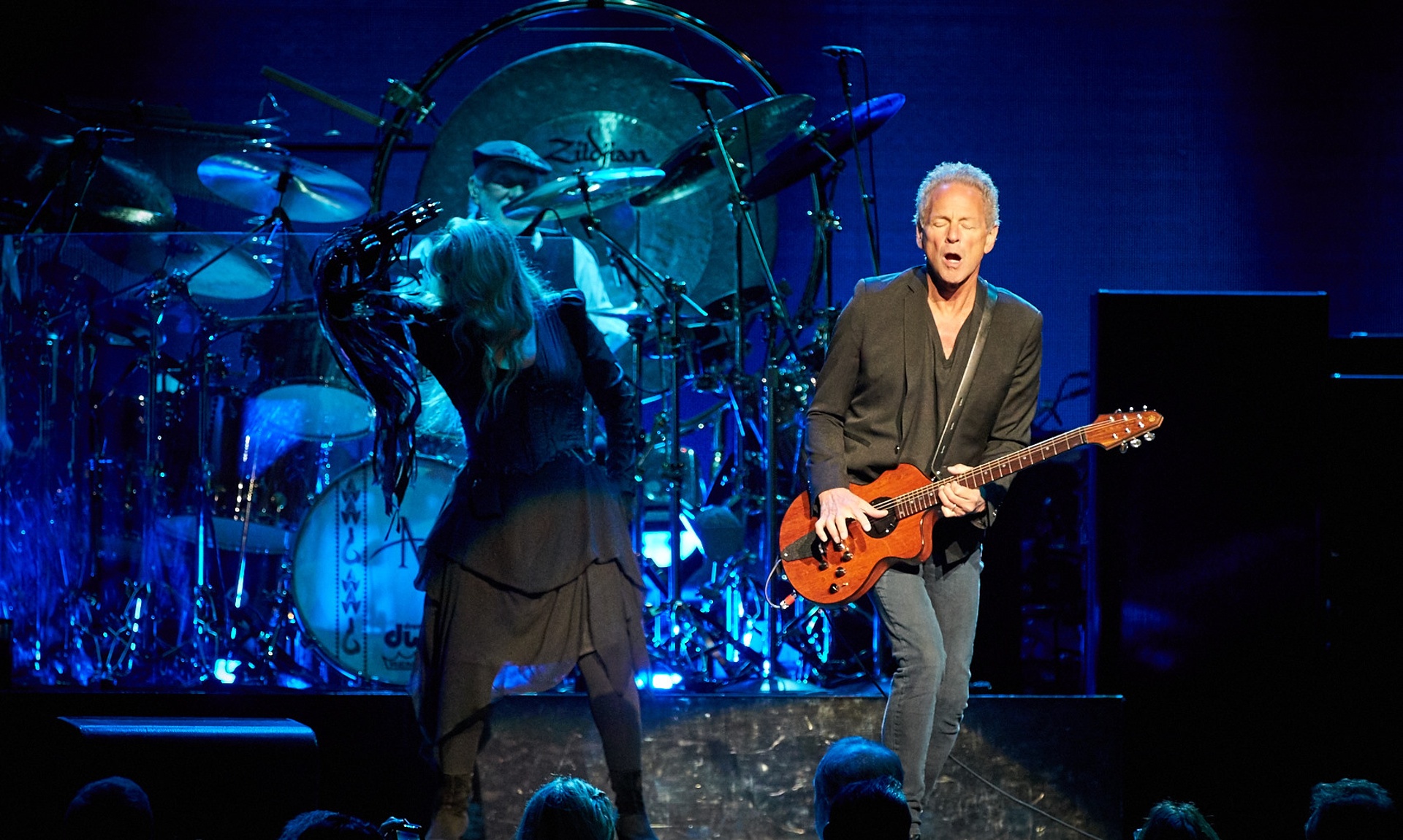
With the ‘Mac hangover still hanging thick in the southern air, it’s time for the lush reissue of 1979 epic Tusk.
Once the most expensive album ever made, this was their indulgent response to Rumours, the album which cemented the quintet’s status as titans of melodic West Coast rock.
While selling only fractionally as well, and marked by Lindsay Buckingham’s obsessive and sometimes inspired attention to sonic detail, this two-disc deluxe edition features five versions of the immaculate title track, tracking the evolution of one of their most intriguing pieces.
Fleetwood Mac. Tusk: Deluxe Edition. Warner Music.
Three and a half stars (out of five)
Single download: Tusk (April 6, 1979 USC Version)
For those who like: ’70s excess
John Hayden / Otago Times / Monday, December 21, 2015
Hilary Duff has covered Fleetwood Mac’s 1987 Top 10 hit “Little Lies” for her TV Land show Younger. In the interview posted below, Duff mentions that “Fleetwood Mac is seriously one of [her] favorite bands of all time.” Duff’s rendition transforms the song into dance pop and will be featured in the upcoming TV promos for the show.
Co-written by keyboardist Christine McVie, “Little Lies,” from Fleetwood Mac’s glossy pop album Tango in the Night, reached No. 4 on the Billboard Hot 100 back in August 1987. Fleetwood Mac revived the lost track onstage during its On With the Show Tour, with McVie’s return to the band.
The second season of Younger kicks off on January 13.
When Fleetwood Mac’s Tusk finally was unveiled to the masses back in 1979, it critically dropped like a white elephant. After releasing two of the best, almost flawless pop albums of the seventies — Rumours and Fleetwood Mac — folks expected the band’s formula of non-stop, potential singles to remain intact. Instead, Tusk had spread its sonic experimentation across two albums, its creative overlord, Lindsey Buckingham, having utilized virtually every studio toy at his disposal. Add to that USC’s marching band drumline-ing across the focus single/title track with servings of un-Mac-like musical performances and song lengths, and you get Buckingham’s musical vision/version of what a late-seventies album was supposed to be. Fleetwood Mad had arrived and considering the relationship breakdowns and band’s highly-publicized drug culture, it’s a miracle this previously-considered overthought, overwrought product made it to vinyl at all.
Fleetwood Mac’s shifting business and leadership dynamics and partner trade-ups shouldn’t have been surprising considering the musical institution’s member roster evolved following every few albums (remember Peter Green and Bob Welch?) and the inevitable shake-up cyclicly was due. All of this very public Mac stress delighted journalists who gleefully spread the word. Regardless, devoted fans still were hooked on the band that strutted siren Stevie Nicks and the sophisticated Christine McVie, and they would spend their last dollar for this sweet fix. So the album sold well though it did shock Macsters, and the returns (when stores want a refund for unsold product) were large since product shipments allegedly were as bloated as Tusk‘s track count and excesses. Then again, at the time, returns were a given and built into the business plan for virtually every album release.
Tusk is Fleetwood Mac’s middle child that demanded more attention and, until now, was very misunderstood.
As a single, the title track “Tusk” wasn’t a flop but it also wasn’t embraced like the usual, undeniable Mac release, possibly due to its cryptic poetry (“Why don’t you ask him what’s going on? Why don’t you ask him who’s the latest on his throne?”). The reality was that no matter how ambitious and applaudable the 45 was, it didn’t change music as we knew it; luckily Stevie Nicks’ “Sara” became the album Tusk‘s biggest hit and its saving grace. Unfortunately, “Think About Me” and “Sisters Of The Moon, the followup singles,” came off like second stringers, like Rumour‘s lightweight “I Don’t Want To Know.” Add to that Lindsey Buckingham’s creepy-ish “Not That Funny” and “The Ledge” and it was like the Fleetwood Mac we knew and loved had been euthanized.
With the release of the super-deluxe Tusk and its abundant, additional content — including a vinyl pressing — this head-scratcher of an album both gets its due and a thorough examination. Naturally, the remastered album sounds fuller than its original CD release and closer to the vinyl sonics, and the 5.1 surround mixes utilize instruments, vocals, and arrangement groupings previously denied this project. The crazy amount of work that went into Tusk‘s undertaking is uncovered further with a rarity disc that contains demos, outtakes, and remixes. There are also two live discs that put the emotionally and physically exhausted Fleetwood Mac’s fatigue front and center. What’s presented here may not be fantastic but it’s engaging, with performances of newbie compositions like “Sara” and older hits like the always dazzling “Landslide.” And the alternate Tusk disc comprised of alternate takes, is interesting, but Mac and the gang’s first go-round is definitive, even though this “what if?” is smartly assembled.
After this deluxe, historical analysis of Tusk and with so many decades following its initial release, it can be rationalized that it possibly was a commercial misstep but it also served a bigger purpose. Lindsey Buckingham’s genius has been outed through the years, project after project, and Tusk, obviously, was this mad scientist’s first true laboratory, so he should get a break for an experiment or two that went haywire. Stevie Nicks and Christine McVie’s lead vocals delighted on practically all of their songs, no problem there. Even former Mac-er Peter Green paid a visit to “Brown Eyes,” and to this day, everyone loves those USC marching band rascals, though not necessarily on a pop record heard every ten minutes on the radio. A big nod goes to the sound, expertly constructed by the project’s talented co-producers Richard Dashut and Ken Caillat (father of Colbie).
Not much more can be said about Tusk except that its opening song “Over And Over” got it right. Its message of sanity prevailing through adversity applied to this incarnation of the group…at least until they changed doctors a few years later (Doctor Who reference…anyone?). This version of the band–Lindsey Buckingham, Stevie Nicks, Christine McVie, John McVie and Mick Fleetwood — survived long enough to record the Mirage and Tango In The Night albums, whose creative heights may not have been achievable without Tusk. Put in another context, Tusk could be considered Fleetwood Mac’s middle child that demanded more attention and pretty much was, possibly until now, very misunderstood.
In its most popular incarnation — from the mid-1970s through the 1980s when Lindsey Buckingham and Stevie Nicks were in the group — Fleetwood Mac released five studio albums. The middle title from that sequence, the 1979 double album Tusk, was the least popular, and still gets the least amount of airplay.
After the blockbuster success of 1977’s Rumours, one of the biggest-selling albums in history, Buckingham decided the band’s next record could afford to take more chances. Tusk includes unusual song structures, jagged rhythms, and on the lead single and title track — which prominently features the USC Trojan marching band — the group is practically unrecognizable.
While not as commercially accessible as the pairs that came before and after it, Tusk is nonetheless one of the most rewarding items in Fleetwood Mac’s catalog. Fans who have come to appreciate it should be intrigued by the new deluxe edition of the album released this month. The set contains five CDs with the original remastered album, dozens of demos and alternate takes that show how its twenty songs developed, and live performances from the band’s 1979-80 tour.
Completing the package is the album in two additional formats, vinyl and a 5.1 mix DVD. A less expensive alternative is the 3-CD version, which includes only the remastered Tusk and related studio outtakes.
After all of the mythologising — the most expensive rock album ever produced; a staggering commercial failure; a Lindsey Buckingham vanity project with the Fleetwood Mac name attached; what happens when too much money meets too much blow — Tusk remains a singular oddity in Fleetwood Mac’s oeuvre. By the time its recording commenced in June 1978, the band were in the stratosphere of commercial success: their previous album, Rumours, had shipped millions of copies and was on its way to becoming one of the best selling albums of all time. Yet the music that had inspired Buckingham during his respite from the gruelling Rumours tour was the opposite of commercial: the debut albums from The Clash and Talking Heads, both recorded on the cheap. As Rob Trucks recounts in his 33⅓ entry on the album, Tusk began its life as an ultimatum from Buckingham to band leader Mick Fleetwood: Buckingham had new songs he was going to record. In response, Fleetwood shot back another ultimatum: Buckingham was either in the band or out of it. The stage was set for a collision: between the moneyed, high-gloss world the band inhabited and the scrappy upstarts who were shaking that world’s foundations; between Buckingham’s musical ambitions and Fleetwood’s determination that Fleetwood Mac stick together as a band.
Tusk, therefore, is riven through with contradictions. It contains some of the band’s glossiest work, of the sort that would have made the executives at Warner hopeful that Tusk could function as Rumours Redux: the gorgeous “Sara,” Stevie Nicks’s aching paean of love and loss; Christine McVie’s rock burner “Think About Me,” complete with acid lyrics that would fuel further speculation about the band’s private lives; the lapidary “Storms,” featuring Nicks at her most pitilessly introspective. Yet these songs find themselves nestled between Buckingham’s off-kilter, deliberately lo-fi ditties: deliberately truncated songs (none longer than 3:32) with unusual, unresolved melodies, in which Buckingham affects a falsetto and Fleetwood sounds as though he were drumming with a set of cardboard boxes. You’d be hard-pressed to call these numbers “punk” per se — they thrum through with Buckingham’s interest in folk and blues traditions, and they were after all recorded at phenomenal expense — but they preserve punk rock’s affinity for simplicity and concision. In many ways they sound like exactly what they are: punk rock reflected back through the funhouse mirror of a platinum-selling band with a well-documented cocaine problem, a limitless recording budget, and a background in blues.
It’s no secret that Tusk performed poorly on its release, shipping a mere two million copies in its first few months of existence compared to the over ten million copies that Rumours shifted. Just who the fault can be pinned on remains the subject of some debate. Did Tusk‘s commerical failure, as Warner’s executives insisted, derive from Buckingham’s outré songwriting? Was it, as Mick Fleetwood argued, because the album was prematurely leaked to the RKO radio network, who proceeded to play it in order, much to the delight of home tapers? In the long view, such considerations are immaterial: given the album’s strange afterlives — including a start-to-finish cover version by Camper Van Beethoven and becoming a formative influence on Carl Newman’s work with The New Pornographers — it seems that Tusk has ultimately vindicated itself.
The latest remaster and reissue of the album — the third such intervention to have happened since the 1980s — is about as comprehensive as anyone could hope for. In addition to the original album, which has been given a crisp buff and polish (albeit one that could have preserved a little more of the original release’s dynamic range), and a second disc of single versions and demos (many of which originally appeared on the 2004 remaster/reissue), it also includes a start-to-finish version of Tusk in hitherto unreleased alternate takes and two discs of live material from the band’s 1979-1980 Tusk tour. Mac anoraks will find that the second disc’s collection of successive demos — which map out the progression of both “I Know I’m Not Wrong” and the title track from their early incarnations through to near-finished versions — illuminates the band’s creative processes.
Perhaps more interesting is the third disc, sequenced from unreleased alternate versions: while many songs sound essentially like rough-hewn versions of what would appear on the final release, it’s worth listening to just for the lengthy version of “Sara,” in which Nicks elaborates on the song’s themes in an extended outro. The live material on discs four and five is perhaps less essential: much of it is actually from prior albums rather than Tusk, and perhaps inadvertently demonstrates the cold shoulder with which the public received the album. (When Christine McVie introduces “Over & Over” to a crowd at St. Louis by informing them that it’s from the new album, the reception is rather more muted than the ecstatic cheers that greet the version of “Dreams” recorded at Wembley on the same tour.) Perhaps most interesting about these discs is the valiant attempt by the band to fit Buckingham’s Tusk songs into the stadium-rock mode: “Not That Funny” shifts into bombast, with Fleetwood hammering the kit and Buckingham belting out his lines, and Buckingham shreds out a solo that wouldn’t have been out of place on Rumours at the conclusion of “What Makes You Think You’re The One.”
These efforts to make Tusk‘s material appeal to the band’s demographic demonstrate just how much it began its life as an album out of time, an artifact that could not have been produced at any other juncture in history but one that, equally, sounded completely ill-at-ease in the cultural moment that produced it. Perhaps fittingly, time has been kind to Tusk, and the album doesn’t require the ultra-deluxe treatment to make a compelling case for its relevance — those two LP’s worth of creative tension, that juxtaposition of the rough and the smooth, are worth returning to with or without the context provided by this reissue.
(Editor’s note: This article was edited for spelling and grammar. You can read the original article here.)
Chad Parkhill / The Quietus / Wednesday, December 16, 2015
Stevie Nicks, Lindsey Buckingham, and Mick Fleetwood discuss the songs from Tusk in liner notes of the new Deluxe and Expanded editions of Fleetwood Mac‘s 1979 album Tusk. While fans have long speculated about the meaning of the songs, namely ones penned by Stevie Nicks, the band has finally come clean about how their compositions came to be. Read on.
1. Over & Over
The opening track, the first of Christine’s six songs on the album, is played remarkably slow — a ballad with a backbeat.
Lindsey: “By the time we got to this we knew we had [an album] that was not by the book. When it came to the sequencing we felt this song had a certain familiarity to it, something that people were going to be able to latch onto on one level and yet set them up for some of the other, more untraditional things. Where this got untraditional was leaving it in a fairly raw state, not too glossy in the production.”
2. The Ledge
Lindsey kicks off his contributions with the least Rumours-like song of the lot. Many of the vocals were recorded while kneeling or lying on the floor.
Lindsey: “About as far from “Over & Over” as it’s possible to go. I was trying to find things that were off the radar. I took a guitar and turned it way down, in the range of the higher notes of a bass, not like a baritone guitar, where it’s correct, but where it’s actually a little incorrect — the strings are flopping around and sharping when you hit them. I wrote a little figure with that, threw some teenage influences at it with the drums. It becomes a bit surreal — you throw a bunch of vocals on top that are communal, messy, a little bit punky even.
I don’t think there’s anyone else on there but me. There were times when the band would augment, and there were times when, even if I took a song in with the intention of having them play, it wouldn’t necessarily stick. On this, that one guitar was covering everything. It was a concept piece on that level. There was nothing for John and Christine to do.
Lyrically, I didn’t really have anything to say other than what I could put together that sounded musical. There was probably something subconscious about the lyrics. You could say that about Rumours too. I don’t think anyone in the band was in touch with the fact that we might have been writing dialogues with each other. It took the audience to help define that for us. That probably holds true for songs on Tusk too.”
3. Think About Me
This steady boogie by Christine was a Top 20 hit in the U.S. when released as a single in a punchy, remixed version.
4. Save Me a Place
In complete contrast to “The Ledge,” this Lindsey’s tenderest song on the album, and one of his tenderest ever.
Lindsey: “Stevie and I had compartmentalized our emotions in order to [get through Rumours], lived in denial. Same with Christine and John. None of us had the luxury of distance to get closure. You get to Tusk and there’s a real aggressive attitude in a lot of the songs from me. But “Save Me a Place” is one where, late at night, you reflect on the vulnerability underneath that. It’s about a feeling that’s been laid off to one side and maybe not been fully dealt with, sadness and a sense of loss. There’s also a sense of loss for my youth and my upbringing, memories of that, which I loved so much, and how I saw that receding away.”
5. Sara
ABOUT: Mick Fleetwood, Don Henley, J.D. Souther, Sara Fleetwood, and other things
Stevie’s first song on the album began as a 16-minute home demo, condensed into a nine-minute studio version, further trimmed to a six-and-a-half minute album track and, later, a four-minute single edit, which was a Top 10 U.S. hit and the version used on subsequent CD editions of the album. [Editor’s note: A different edit of “Sara,” not the official single edit, was actually used for the first CD pressing of Tusk.] The nine-minute first take, mixed down for listening purposes but not intended for release, is sometimes referred to as the “cleaning lady version,” after the dialogue at the start. It is among the bonus material in this edition.
Lindsey: “Some of Stevie’s songs were hard to rein in. If you’re very lyric driven and not overly worried about time and structure, if it’s more freeform, which a lot of Stevie’s things can be, six or more minutes is not hard to get to. The nine-minute version of this was something we cut but probably never intended it to go out at that length.
I wasn’t delving into Stevie’s private life at the time, so I was never told what it was actually about. I always assumed it was addressed to her friend, who was Mick’s wife at the time.”
Stevie: “It was a 16-minute demo. My friend Sara was there when I wrote it. She kept the coffee going and kept the cassettes coming and made sure we didn’t run out of batteries, and it was a long, long night recording that demo. She was a great songwriter helper. Sara was the poet in my heart. She likes to think it was all written about her, but it really wasn’t. She’s in there, for sure, but it’s written about a lot of other things, too. Mick was the “great dark wing within the wings of a storm,” but when I was going with Mick I was hanging out with J.D. Souther and he kept saying, ‘You do know this relationship with Mick is never going to work, don’t you?’ And I said, ‘Well, when I get out of it, I’ll let you know.” And so there’s bits and pieces of him there talking to me.
I played it for J.D. and Don Henley and the both said, ‘You know what, it’s almost not too long. It’s good in its full 16 minuteness — it’s got all these great verses and it just kinda travels through the world of your relationships.’ They were really complimentary to me and these are two great songwriters. I knew I had to edit it down, but I found it hard to get below seven minutes. As simple and pretty as the song was, it turned into a magical, rhythmic, tribal thing with all those ‘oohs’ and ‘aahs.” It’s a fun song to sing.”
6. What Makes You Think You’re the One
This spirited Lindsey song is notable for the loud, enthusiastic drum track, which Mick made the most of when performed live.
Lindsey: “We cut this with just me on piano and Micks on drums, on opposite sides of the room. Aside from setting up the normal mics, we set up a cassette player, a boombox, in front of the drums and ran it into the desk. The mics in those devices have capacitors in them that act as really low-quality limiters, so you got this squash that’s really explosive, a real garage, trashy sound that you could only get that way. A good-quality limiter couldn’t replicate it. As soon as Mick heard that sound in his headphones he was, ‘Oh my god, I love this.’ It turned him into an animal. There’s not much else on there. I did some bass and guitar, but the center of that song is Mick’s drum work, one of my favorite drum performances by him. We talk about it to this day.”
7. Storms
About: Mick Fleetwood
A perfect example of the tastefulness and delicacy of Fleetwood Mac’s playing: everybody contributes just enough to one of Stevie’s most finely poised compositions.
Lindsey: “This album is a study in contrasts. It’s a very different mood from the previous song and a very strong song in terms of its form. It has its own folky, country thing going on. The recording speaks of it being cut fairly live. I love this song.”
Stevie: “Another tragedy. It has so many layers of telling the world what was happening to me without actually saying what was happening! It was really about Mick. That’s Stevie not happy with the way that relationship ended. That relationship destroyed Mick’s marriage to Jenny, who was the sweetest person in the world. So did we really think that we were going to come out of it unscathed? So then what happened to me, my best friend falling in love with him and moving into his house and neither of them telling me? It could not have been worse. Payback is a bitch. Bad karma all around. Here’s that song in a nutshell: Don’t break up other people’s marriages. It will never work and will haunt you for the rest of your miserable days.”
8. That’s All for Everyone
Echos of the Beach Boys with layered harmonies and a tempo like waves lapping the shoreline.
Lindsey: “This was influenced by Brian Wilson. What I love about him is not just his music but his choices. He gave me the courage to flout success, showed me that what you need to do as an artist is take risks and find new avenues.
It’s a wisp of a meaning at best, more of an atmosphere piece. I had the idea of being at a function with these people and having to go home, but on a less literal level I think it may also have been about deprogramming from the formulas you need to follow to buy what the corporate world is trying to sell you.”
9. Not That Funny
Lindsey’s sarcastic rocking with a distinctive, plangent guitar sound was extended into an eight-minute tour de force at subsequent live shows. A slightly remixed version was issued as a single in the U.K. but didn’t chart.
Lindsey: “This was directed at Stevie a little bit. There’s something we are still having to deal with as a band: ‘What’s important here? People thinking you’re cool or thinking you’re cool yourself?’ It’s more how you feel about yourself, isn’t it? This is a classic pitfall of the entertainment industry. It draws people to it who are looking for a Band-Aid to fix things that have happened in their lives. The celebrity culture we live in is a very Roman manifestation of something gone a little wrong with the value system. It doesn’t speak of substance; it only speaks of visibility. It’s about not buying into other people’s idea of you — that’s the important thing.
The guitar sound is just a Stratocaster; but I love using the VSO (Variable Sound Oscillation, or Varispeed, allows you to incrementally speed up or slow down a taper recorder). I just slow the machine down, come up with a picking part like that, double or triple it and tweak the VSO on either side so that it’s slightly out of tune, and the whole thing comes out with all this phasing.”
10. Sisters of the Moon
About: A bad mood
A lyrically enigmatic Stevie contribution, with a guitar solo by Lindsey that’s reminiscent of “The Chain,” this was a surprise addition to the set on the band’s spectacularly successful 2014/15 reunion tour.
Stevie: “I honestly don’t know what the hell this song is about. I’ve been singing it on tour for the last two and a half years, and every time I’m thinking, What the hell is that? I think it was me putting up an alter ego or something, the dark lady in the corner, and there’s a Gemini twin thing. It wasn’t a love song; it wasn’t written about a man, or anything precious. It was just about a feeling I might have had over a couple days, going inward in my gnarly trollness. Makes no sense. Perfect for this record!”
11. Angel
About: Mike Fleetwood
In a contemporary documentary, Stevie noted that this upbeat rock ‘n’ roll song somehow ended up with an eerie undertone.
Stevie: “A song about Mick. Not so much my love affair with him. I was always taken with his style, and in those days he would walk in the room and I would just look up. ‘I still look up when you walk in the room… I try not to reach out.’ It’s all about him and his crazy fob watch and his really beautiful clothes. He’s a very stylish individual and I was just this little California girl who’d never really known anybody like him.”
12. That’s Enough for Me
Lindsey’s breakneck rocker with country roots. Amazingly, the band sometimes played it even faster live. The song was initially known as “Out on the Road” — that title is visible in the handwriting incorporated into the inner-sleeves collages.
Lindsey: “Rockabilly on acid. An attempt to do something quite surreal, grounded in something recognizable. I was tapping into a general set of reference points on this album. But I never thought of it in terms of nostalgia. It was anti-nostalgia, if you will.”
13. Brown Eyes
Fleetwood Mac’s founder, Peter Green, makes an uncredited appearance on this song by Christine. His solo is just discernible on the fade out here but can be hear in its entirety on The Alternate Tusk.
Lindsey: I don’t remember Peter Green coming in, so I don’t think I made any judgement on whether to use it or not. Mick would ultimately have had the decision to use his playing or not. And it was Christine’s song to do with as she wished.
Mick: Peter was living in L.A. then and hanging out at my house a lot. He was still as he is now, changed, but he used to pop into the studio occasionally. I don’t know if he was that interested or not, but he did play on this song, which I love. Classic, slinky, killer stuff from Chris. The band’s playing really shines. I can’t recall why we only used Peter at the very end, but it’s great that he’s on here, because it’s Peter and it’s his band.
14. Never Make Me Cry
Short and sweet. A classic Christine McVie ballad.
Lindsey: “I think the others wanted to counter some of the my more manic moments with something a little more downbeat, so this is the kind of thing we ended up doing. This would have worked too with more of a beat, but I assume Christine saw it as a ‘Warm Ways’ kind of ballad.”
15. I Know I’m Not Wrong
The first and last song worked on in Studio D, it went through several iterations during the band’s year in the studio, as indicated by the density of the arrangement.
Lindsey: “This is a close relative to ‘Not That Funny’ and they share a lyric. ‘Here comes the night time/Looking for a little more.’ It’s a little joke — can you find the thread here? Like a repeating theme in a novel.”
16. Honey Hi
A Christine song with a markedly subdued arrangement, designed to never quite lift off. Its close cousin, “Never Forget,” brackets the mostly mellow fourth side of the vinyl album.
17. Beautiful Child
About: Derek Taylor
“This is one of my very favourite ballads. It’s so from the heart. It was written about an English man (Late Beatles road manager Derek Taylor) I was crazy about who was quite a bit older than me — another one of my doomed relationships. He used to read poetry out loud to me in his beautiful English voice, and I would sit at his feet, just mesmerized, and he would say, ‘You are a beautiful child,’ and I’d say, ‘I’m not a child anymore.’ He was married, so we stopped, because it was going to hurt a lot of people. The song is like a straight retelling of the last night of that relationship. Every time I sing it I’m transported back to the Beverly Hills Hotel and walking across the grounds to get a cab after saying goodbye.”
Lindsey’s experiment in embellishing a stately melody with multitracked drums.
Lindsey: “This was sparked by a Charlie Watts drum fill in ‘Sway’ on Stick Fingers. There are a couple of times where he does a kind of military press-roll across the beat, and I was in love with that moment. When I thought about the tempo of the song I was reminded of ‘Sway’ and that fill. It was a spirited idea that fit the song.”
19. Tusk
This is the first music from the album that the world heard when it was released as a single. It became a Top 10 hit in the U.S. and U.K., and versions of the main guitar and drum riff appear on soundcheck tapes—labeled simply “Stage riff”—from as far back as 1975.
Mick: “My dad had just passed away and I went to see my mum, who lived in the south of France, and it was all pretty crazy. The first night I was drinking like a fish and I got woken in the morning, with an outrageous hangover, by the local brass band playing outside my window—a thing they do every weekend in a lot of places in Europe. It was like the pied piper: the whole village, old fisherman, kids, people in wheelchairs, all following this band, going ‘round and ‘round the village. Just as I thought I’d get back to sleep, the band would march past again. In the end I thought, Fuck it, I’ll keep on drinking. So I sat on the veranda with my brandy at 8 o’clock in the morning and started to think, What a cool thing, involving everyone in the village, bringing people together, a celebration. That’s what we should do on that track. Who might be the best brass band in L.A.? The USC marching band was touted, and I sold the idea to the band. John was uncontactable, off sailing somewhere, when we got the chance to record and film the band, so we took a cardboard cutout of him to Dodger Stadium to be in the video.”
Lindsey: “On some level this song was the embodiment of the spirit of the album. Riffs were a big thing for me, and Mick was always one to pick up on the potential of that. Christine helped me on this with some chords. The drum track is a loop. We found a 15-second section we liked and made a circular loop of two-inch tape that went across the room. We let it run for ten minutes and put the song over it. It was Mick’s idea to include the marching band. It was a great thing for USC. Not a particularly hummable song in the normal sense, but it functioned as a commercial piece, and it’s a killer moment in the live show.
I can’t say that I remember a strategy for it appearing at this point on the album. But because it stood alone, in terms of how it was done and with the marching band, if you were to stick it in too early it might blow too many cookies too soon. It feels like a capper of sorts.”
20. Never Forget
After the crazy parade of the title track, this mellow coda by Christine functions like a wave goodbye, possibly chosen to close the record for its repeated sentiment: “We will never forget tonight.”
Fleetwood Mac could have followed Rumours with more of the same — but they made this visionary masterpiece instead.
Evidence exists proving Fleetwood Mac could have followed-up Rumours with something similar had the spirit moved them, instead of the alienating departure of the double album called Tusk that they did make as the follow-up to one of the most universally appealing albums ever.
When singer-guitarist-producer Lindsey Buckingham wasn’t making like a lo-fi indie rocker from the future playing in Brian Wilson’s sandbox on Tusk, Stevie Nicks and Christine McVie were singing songs that sounded like the Fleetwood Mac the world knew and loved — songs like “Sara,” “Think About Me,” “Over and Over,” “Sisters of the Moon,” “Never Forget” and “Angel.”
There’s further evidence sprinkled among the many demos and alternate takes featured on an expansive new Tusk box set Rhino Records just released, and unreleased Tusk-era tracks out there in the digital ether like Nicks’s “The Dealer,” which she re-recorded for her 2014 solo album “24 Karat Gold: Songs From the Vault.” “That’s Alright,” a beautiful country shuffle dating back to the Buckingham-Nicks days that ended up on 1982’s “Mirage” could have been folded neatly into this batch of songs. Mix those tunes in with some of the least-threatening Lindsey stuff from “Tusk,” like “Save Me a Place,” “I Know I’m Not Wrong” and “That’s Enough for Me” and you’ve got yourself a follow-up that doesn’t stray too far from the Rumours formula — one that could be squeezed onto two sides of vinyl as opposed to four by tightening up the fade-outs on a few tunes. Think something along these lines:
Side 1:
I Know I’m Not Wrong
The Dealer
Think About Me
Save Me a Place
Sara
Side 2:
Sisters of the Moon
Over and Over
Angel
That’s Enough For Me
That’s Alright
Never Forget
This Rumours II scenario seems commercial enough, with a pretty equitable balance of Stevie’s mystique, Christine’s hopefulness and Lindsey’s intensity. All the familiar pieces are in place: the songs contain the requisite three-part harmonies, plenty of Lindsey’s sick fingerpicking and those hypnotic grooves from Mick Fleetwood and John McVie. And you know co-producers/co-engineers Richard Dashut and Ken Caillat could have dialed in that warm sonic glow they achieved on Rumours.
But there’s a significant void. The emotional lightning of two in-house romances simultaneously crumbling, which sparked the fire in Rumours songs like “Dreams,” “Go Your Own Way,” “The Chain,” “Never Going Back Again” and “Gold Dust Woman,” couldn’t strike twice. An attempt to repeat the Rumours formula without that kind of fire down below would’ve resulted in a hollow imitation. Maybe they sell an extra million or two records in the short term by making the follow-up a single, safer kind of album. Ultimately it would’ve rendered Fleetwood Mac just another big ’70s rock commodity that liked to stick to the script, like the Eagles, Peter Frampton or Boston.
So rather than following the path of least resistance, Fleetwood Mac took the most radical left turn a huge band has ever taken at the peak of its commercial and artistic powers. With Lindsey Buckingham hogging the ball, they spent $1.4 million in 1978-79 dollars making the most punk rock soft rock album ever in Tusk. Next to making Rumours (and also the band hiring Lindsey and Stevie after Bob Welch left), letting Buckingham take the lead on Tusk was the best career move Fleetwood Mac ever made, though it would take years for its impact to be measured accurately.
Once people started recognizing Tusk as the enduring masterpiece that it is, it began to serve as a gateway for evaluating Fleetwood Mac from another perspective. It proved there was more to Fleetwood Mac than just Rumours and a bunch of other classic rock radio staples; that they weren’t just a pretty cool band you could share with your mom and dad or older brother or sister. Tusk showed Fleetwood Mac were also a risk-taking bunch, artists of great depth and integrity. A younger generation of cutting edge artists including Peter Buck, Trent Reznor, Stephin Merritt of Magnetic Fields, Joanna Newsom and Kurt Vile, to name just a handful, have championed the album over the years — Buckingham’s work on it in particular. Other musicians have taken things a step further, by forming groups to cover “Tusk” (and other Mac tunes) live. Mick Fleetwood, in his 1990 autobiography, basically said Fleetwood Mac needed to make Tusk if they had any hopes of continuing: “It’s a great album and probably the only reason Fleetwood Mac is still together today … it released a lot of creative frustrations.”
That was not a widely held view when Tusk was released in October 1979. To the millions of jilted fans — along with Warner Bros. Records executives and some members of the band — that didn’t hear anything as immediately satisfying as “Dreams” or “Go Your Own Way” among Tusk’s 20 songs, it seemed as if Buckingham had steered this very expensive, high-performing vehicle into a ditch. But time has shown Buckingham steered the band exactly where it needed to go if it hoped to remain relevant in the long term, steering them away from that ’70s FM rock comfort zone into a passing lane where new influences like the Talking Heads and the Clash informed his Elvis/Beach Boys/Everlys roots. As a songwriter, he found a link between David Byrne and Buddy Holly and milked it to manic effect on songs like “Not That Funny” and “The Ledge.” As a producer, he stripped away familiar elements from songs, favoring raw process over the perfection of “Rumours.”
Christine’s spare and heartbreaking “Never Make Me Cry” features the solitary strum of reverb-y electric guitar; it’s not dressed up with a stately grand piano tracked in a concert hall a la “Songbird.” The longing in Stevie’s “Storms” is anchored by the muted pulse of a kick drum, electric piano and a delicate weave of electric guitars — no traces of dainty “Landslide”-isms here. Lindsey’s own “That’s Enough For Me” plays like “Second Hand News” at warp speed and feels like a purely solo exercise — just Lindsey’s double-tracked vocal, a few tracks of frantic guitar picking and a stomping drum track. It’s telling to note the subtle changes from the demos of these songs featured on the new box set to the finished versions: The shifts aren’t drastic but they’re crucial, as if Buckingham is trying to scrub away any scent of Rumours. With a heavier hand on the drums and acoustic guitar up in the mix in one demo version of “Storms,” it feels like the band is trying to figure out how to make the song sound like Fleetwood Mac. In a demo version of “Never Make Me Cry,” Christine’s on piano and trying to sell the vocal just a little bit harder. It’s beautiful — it’s Christine Fucking McVie singing, how on earth can it not be beautiful? — but it’s a shade too familiar. The demo of “That’s Enough For Me” (titled “Out on the Road”) is fleshed out with a harmony vocal from Stevie and piano — definitely been there, done that territory.
This was a band that had to re-invent itself to varying degrees several times due to membership changes. Here they did it again, but for different reasons. In many ways, Fleetwood Mac had become the embodiment of ’70s rock (still are, really) and it’s as if Lindsey’s did all he could to drag the band into the ’80s ahead of schedule. A lot of people just weren’t ready for it. Opening the album with Christine’s dreamy “Over and Over” drifting into Lindsey’s harsh two-step “The Ledge” certainly was not a segue that went down easy, like “Second Hand News” into “Dreams.” Those pristine snare drum sounds that felt like liquid gold flowing from stereo speakers being replaced on some songs by what sounded like a sack of loose change hitting a phone book and Lindsey playing a box of reel-to-reel tape with his hands surely gave radio programmers pause. And can we be certain that Mick Fleetwood is, in fact, playing the same song as the rest of the band (i.e. Buckingham playing everything) on “What Makes You Think You’re the One”?
If there’s one song that best represents the departure and experimentation at the core of Tusk, it’s the title track. Thirty-six years after its release, it can still prompt the listener to wonder what the fuck it was they just heard as Buckingham’s symphony of marching band brass and woodwinds, jungle-drum rhythms, grunting, chanting, barking vocals and gnarly guitars fades to black after a chaotic three minutes and thirty-seven seconds. Where the Eagles teased their big follow-up to “Hotel California,” “The Long Run,” with the yacht R & B of “Heartache Tonight” in September 1979, Fleetwood Mac introduced its big follow-up that very same month with what is perhaps the strangest song to ever reach the Top 10 on Billboard’s Hot 100 singles chart. In a year where disco and Styx and the Knack and “The Pina Colada Song” were all over the radio, “Tusk” reached number 8. That’s how hungry people were for new Fleetwood Mac music.
Fleetwood Mac eventually got around to making Rumours II, in a sense. In the wake of Tusk’s relative commercial flameout (selling “only” four million copies domestically, to Rumours’ 20 million) the follow-up Mirage felt like a calculated return to the comforting creative bosom of Rumours. The album’s 12 songs are pleasing enough (with a few Mac classics like “Hold Me,” “Gypsy” and “Oh Diane” highlighting the collection) but on the whole it feels more deliberately cohesive than it does inspired. It’s the anti-Tusk. And time has shown the anti-Rumours to have left a much greater impact on the band’s legacy.
Patrick Berkery / Salon / Friday, December 4, 2015
Patrick Berkery is a Philadelphia-based drummer and writer who has recorded and toured with the War on Drugs, Clap Your Hands Say Yeah, Pernice Brothers, Danielson, and Wesley Stace. He is also a regular contributor to Modern Drummer magazine. Twitter: @patrickdberkery
Had Fleetwood Mac played it safe after Rumours, they probably could have made another gajillion-selling album. Instead, they handed the reins to singer and guitarist Lindsey Buckingham and allowed him to steer the follow-up to one of the 20th century’s biggest LPs to wherever he wanted (with a few detours along the way).
The result was 1979’s double-LP Tusk, a much-delayed, over-budget and sprawling masterwork that often played out like Fleetwood Mac’s version of the Beatles’ White Album: three distinct singer-songwriters hashing out their solo compositions while the rest of the group played backing band. And it was, if you believed what you read at the time, a total bomb.
But 36 years later, Tusk stands as one of rock’s most underrated and rewarding albums, a complex and layer-revealing work that offers new perspectives and treasures with each listen. A new five-disc Deluxe Edition doesn’t so much give fresh insight to the record as it provides a behind-the-scenes peek at its formation and development, as well as the occasional struggles the band endured during its long and difficult birth.
The original two-LP set is expanded with discs of single remixes, outtakes, session leftovers, live cuts from the 1979-80 tour in support of the album and the entire record made up of mostly previously unreleased versions of the 20 songs. It’s as often fascinating as it is repetitive: Even for an album built on textures and detailed studio assembling, multiple takes on the title track and “I Know I’m Not Wrong” begin to get tedious after the fourth pass.
Still, alternate versions of “Over & Over” (the ambiance-soaked Christine McVie ballad that opens the album), “The Ledge,” “That’s All for Everyone” and “Brown Eyes” (with early member Peter Green prominently sitting in) show just how meticulous the recordings were … and just how much the band was slowly unraveling. Buckingham is clearly in control here, injecting flashes of weirdness and brilliance into the project. Stevie Nicks‘ contributions tend to be the least affected by his mad-scientist tinkering, but even they go deeper than Rumours‘ most intricate tracks.
Tusk: Deluxe Edition doesn’t show us much in the way of how skeletal demos evolved into multi-layered art pieces, though — it’s not that kind of box. If anything, it leads us to believe that most of these songs were fully structured by the time Fleetwood Mac began recording. And radio mixes of “Think About Me” and “Not That Funny” prove that even after the LP’s release, some cuts took on even newer forms.
It’s a lot to get through — more than 80 songs in all — and parts of it seem like padding (the live tracks, mostly from 1975’s self-titled album, Rumours and Tusk, sound diluted without their studio adornments). But the original album is worth diving into again, if only to revisit one of the era’s most undervalued works, a bold record made by a superstar band willing to risk its place at the top for its art.
Ticket sales for Rumours-era lineup shows increased by 25%
Fleetwood Mac leads the latest slate of Boxscores at No. 1 based on ticket sales reported from a three-show engagement in Australia during the final leg of the band’s On With the Show Tour. The trek is the band’s first visit to Australia and New Zealand with its Rumours-era lineup since 1980.
Melbourne’s Rod Laver Arena, one of two Aussie venues to host the tour for three nights, logged $5.5 million from 37, 443 sold tickets at performances on Nov. 2, 4, and 6 to earn the top slot. Fans in the Sydney market also had three chances to see the tour in October at Allphones Arena. Reported in a previous week, the Sydney concerts on Oct. 22, 24, and 25 grossed $5.4 million from 39, 577 sold seats.
The group played the same two venues during its Unleashed Tour — without recent returning member Christine McVie — that covered North America, Europe, and Oceania in 2009. The Sydney venue, then dubbed Acer Arena, hosted the band for two concerts during the final leg of the tour that launched in Melbourne on Dec. 1. At each venue, both the gross and attendance increased with this year’s tour by about 25%.
Bob Allen / Billboard Biz / Saturday, November 28, 2015
Fleetwood Mac has completed four legs of the On With the Show Tour, performing 120 shows! The band wrapped up the New Zealand leg of the tour on Sunday night with a final performance at Mt Smart Stadium in Penrose, a suburb of Auckland. Unlike the previous night, showers subsided enough for fans to enjoy the show comfortably without having to wear their ponchos.
Angus and Julia Stone were the support act. Since the beginning of the tour, the Australian duo has posted pictures from their touing experience on Twitter.
Thanks to Craig Beardsley, David Marx, MorganGKelly, msnod3, Robs Music Videos, Greg Shepard, Jackson Whitham, and r Wong for capturing and sharing this footage!
COMPILATION: You Make Loving Fun / Everywhere / Say You Love Me / Sara / Gypsy / Littles Lies/ Go Your Own Way / Songbird (Greg Shepard)
COMPILATION: Second Hand News / Dreams / Rhiannon / Everywhere / Tusk / Say You Love Me / Landslide / Never Going Back Again / Think about Me / Gypsy speech / Gypsy / Go Your Own Way / World Turning / Don’t Stop / Silver Springs / Songbird / Mick’s speech (MorganGKelly)
https://www.youtube.com/watch?v=2h31mzFfVJw
The Chain (David Marx)
[jwplayer mediaid=”226428″]
Thunder only happens when it’s raining: Fleetwood Mac performed for two hours in a storm.
If you’re planning on heading to Fleetwood Mac’s last show in Auckland tonight, listen to your Mum’s old advice and take an extra layer, even if you think you don’t need one.
Last night’s concert at Mt Smart Stadium saw thousands of Mac fans drenched in the beginnings of a storm, barrelled by wind and generally, just a bit miserable.
If you’re at all familiar with the wicked witchery of Stevie Nicks you’d be convinced the songstress brought last night’s storm on herself.
Fleetwood Mac’s Hollywood, Dream and many more songs hail the rain.
(Photo: Chris McKeen)
Take; “I don’t care for sunny weather / I like the change of seasons better / I love the feel of rain upon my face” and “Thunder only happens when it’s raining…When the rain washes you clean, you’ll know, you’ll know”.
And suddenly, despite the fact that everyone was soaked through and freezing cold, we were still dancing to the sounds of Lindsey Buckingham’s rock voice and insane guitar skills, Christine McVie’s fingers moving over the keys and her rasping voice belting out the songs, Mick Fleetwood bashing away at the drums and of course, Nicks’s higher register ringing through the stadium.
The lights, the slightly hazy images of Nicks’s tassled gypsy outfit as she spun in circles, the sound of thousands singing “Tell Me Lies” over the sound of rain, the eerie sound of Nicks and Buckingham’s voices on the long-held notes of “Rhiannon” while the wind blew – there was something kind of magical about it.
Nicks talked extensively about the All Blacks – because when in Rome – and Buckingham talked candidly about how the foursome had come through their hard times to still be together on stage now, and how it’d only made them stronger. And he and Stevie played on their old romances throughout the night, leaning in close, whispering to one another.
And McVie looked pleased as punch to be back, rejoining the group after missing the last tour.
(Photo: Chris McKeen)
However, conscious of the fact that we were all dripping wet, they kept the banter to a minimum and just smashed out hit after hit, all voices unfailingly on point, the crowd singing, dancing, swaying and spinning along with them.
Tonight is Fleetwood Mac’s last show of their tour, and they’re stoked to be ending it in “such a cultural place”.
I’d recommend you go, especially if the sky stays blue but if not, rug up warm.


 With the ‘Mac hangover still hanging thick in the southern air, it’s time for the lush reissue of 1979 epic Tusk.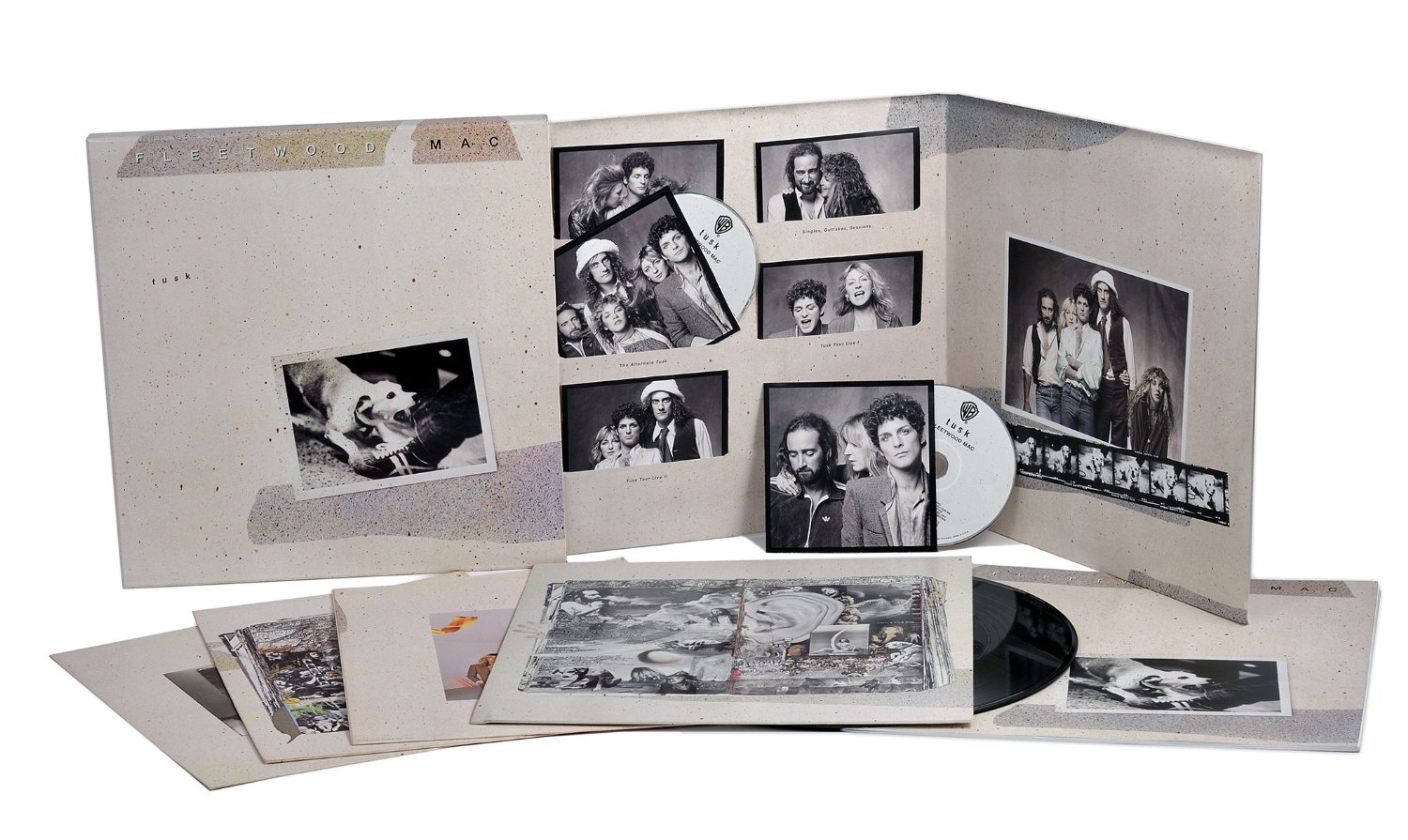
 After all of the mythologising — the most expensive rock album ever produced; a staggering commercial failure; a Lindsey Buckingham vanity project with the Fleetwood Mac name attached; what happens when too much money meets too much blow — Tusk remains a singular oddity in Fleetwood Mac’s oeuvre. By the time its recording commenced in June 1978, the band were in the stratosphere of commercial success: their previous album, Rumours, had shipped millions of copies and was on its way to becoming one of the best selling albums of all time. Yet the music that had inspired Buckingham during his respite from the gruelling Rumours tour was the opposite of commercial: the debut albums from The Clash and Talking Heads, both recorded on the cheap. As Rob Trucks recounts in his 33⅓ entry on the album, Tusk began its life as an ultimatum from Buckingham to band leader Mick Fleetwood: Buckingham had new songs he was going to record. In response, Fleetwood shot back another ultimatum: Buckingham was either in the band or out of it. The stage was set for a collision: between the moneyed, high-gloss world the band inhabited and the scrappy upstarts who were shaking that world’s foundations; between Buckingham’s musical ambitions and Fleetwood’s determination that Fleetwood Mac stick together as a band.