Fleetwood Mac Tango In The Night
*** (3 stars)
Warner Bros 0081227946388
(3CD+DVD+LP/2CD/CD)
Big box for Big Love
If their roller-coaster career offers frequent comparison to a high-gloss soap opera, then Tango In The Night is surely the lull before the storm: everyone seemingly on their best behaviour, the sleekest of production values and a plot that moves the story on while never straying too far from the crowd-pleasing formula that won us over in the first place.
Some 14 albums in, this actually ended up the second best-selling of their career but, despite outward appearances, all was not well with the classic line-up, who hadn’t actually released a new record in five years. Stevie Nicks was largely absent promoting her own material during the 18 months that work took on the album, and Lindsey Buckingham quit in August 1987, just four months after its release.
Largely remembered for the mainstream pop hits of “Little Lies” and “Everywhere,” this 12-track 30th anniversary collection has been remastered and the deluxe edition, packaged with a vinyl repress, comes with a CD of B-sides, outtakes and demos (10 of which are previously unissued). A third disc compiles 14 ubiquitous remixes in all their ’80s glory and the DVD includes the five singles’ videos and a stereo mix of the set.
Mark Elliott / Record Collector (UK) / April 2017 (p92)
According to the L.A. Times, Fleetwood Mac members Lindsey Buckingham and Christine McVie are planning to release their first…wait for it…duets album! There’s no doubt that Lindsey and Christine have long had musical chemistry. After all, some of their best songs — “Don’t Stop” and “Hold Me” — have been Buckingham/McVie collaborations, not to mention Billboard Top 5 singles and now SiriusXM classic rock radio staples.
But are they serious? Maybe. Stevie has made it clear that she isn’t in a hurry to release another Fleetwood Mac album, arguably residual effects from the contentious 2003 Say You Will sessions, where Stevie and Lindsey bickered like bitter ex’s (cue: their screaming match in Destiny Rules documentary DVD). The rest of the band is clearly restless to get back on the road and probably hoping to support something besides Rumours for the gazillionth time. So now they’re tired of waiting.
But the proposed name of the album, Buckingham McVie, sounds like a little…cheeky…and far too similar to the iconic Buckingham Nicks brand. And will they seriously go down the indie route again, like 2013’s Extended Play. (Warner Bros. Records is unlikely to back a Fleetwood Mac release without Stevie Nicks.) Sounds a little fishy.
With Mick Fleetwood and John McVie still involved in the project, it seems more likely the latest media bombshell is intended to light a fire under Stevie to finally get on board with a legitimate Fleetwood Mac release. It’s a passive-aggressive approach, but it may ultimately get Stevie to declare, “Uh, not over my dead body! Still, with Stevie’s 24 Karat Gold Tour to pick up again this February in the States, with a possible leg in Australia and New Zealand to follow, the dream of another Fleetwood Mac album with the classic 1975 lineup seems to be fading.
Whatever happens, the latest news adds yet another dimension to the crazy Fleetwood Mac story, whether it’s “the-drama-of-the-moment” posturing or going their own way, once again.
Read more about the ambitious project here, here, and here.
Any kind of contemporary reflection on Fleetwood Mac is going to necessarily make reference to the band members’ endeavours off the field of play. That’s not because they were better known, or even as well known, for their extracurricular activities as their music, but rather because the individual members’ personal lives seeped into the songs with such frequency and ferocity as to render the two worlds inextricable. There was certainly never a Chinese wall.
If anything, Rumours’ resurgence in recent years, the result of a bright new Urban Outfitters-clad generation discovering it, has been pleasantly innocent and pure, with the evergreen nature of the songs themselves apparently holding the core appeal rather than the stories behind them. It seems daft to talk about a record that’s shifted 28 million copies in a manner that suggests it’s somehow been hard done by, but there was a time when Rumours wasn’t cool — when “Dreams” was most prominent in the popular imagination for having just been covered by The Corrs, and when the very specific Seventies production style — clean lines, sharp tones — was viewed as positively kitsch.
Overall, though, Rumours — and, by way of extension, the entirety of the band’s Buckingham-Nicks glory years — is always going to be viewed through the prism of what was going on behind the scenes because that tension, be it romantic, creative or chemical, made the songs what they were. “Go Your Own Way” wouldn’t hit home the way it does if you didn’t know that every syllable was actually, honestly dripping with seething resentment. Fleetwood Mac’s folklore made their self-titled album, Rumours and, to a lesser extent, Tusk and Mirage what they were.
This is precisely why Tango in the Night is the anomaly in the catalogue. Unlike its predecessors, it wasn’t a product of the strife surrounding it; for the first time, Fleetwood Mac made an album in spite of intra-band turbulence, rather than because of it. By the time they started work on it in late 1985, nobody in the group was in an especially good place; as Lindsey Buckingham would later surmise, “everybody was leading their lives in a way that they would not be too proud of today.”
They were drugged up and worn out. It was probably the glow of youth wearing off; the lifestyle they’d fallen into as individuals had lost its lustre by this point. Stevie Nicks was struggling, her prodigious cocaine habit no longer romantic but sad; she wasn’t long out of the Betty Ford Center, and had more or less lost interest in the band with her solo career burgeoning. When she did turn up to cut vocals for Tango in the Night, she made a point of knocking back brandy beforehand; as a result, Buckingham would quietly bin most of her takes after she’d left.
His own investment in the band had dwindled, too. He’d put out two solo LPs, Law and Order and Go Insane, and was intending to cut a third when Mick Fleetwood nudged him back in the direction of writing for the group, if only because the financial rewards were likely to be more lavish. Despite his own personal issues, Fleetwood remained the anchor and the likeliest cheerleader for another record, with Christine and John McVie adrift; the former making her own records and the latter quite literally, as he retreated from music to go sailing.
Relations were strained, then, and nobody could reasonably claim to be on top form. That they managed to make a record isn’t necessarily all that impressive. Contractual commitments probably would’ve seen to that either way, as they did for The Rolling Stones around this time in the Eighties; Undercover and Dirty Work are now long forgotten and so they should be, sounding every inch what they were — albums made at a time when Ronnie Wood was probably the member of the band of most sound mind (talk about dire straits). The minor miracle was that Fleetwood Mac made a classic with Tango in the Night.
That there were multiple songwriters within the band was basically the foundation they were built on and the strange thing is that it never really proved problematic, either between themselves or in terms of how the records ran; even McVie’s contributions on Rumours, for instance, which are unlikely bedfellows for the rest of the album in terms of content and tempo, never derailed the overall sense of cohesion. Buckingham had overseen a similar atmospheric homogeny on Tusk in masterful fashion, bringing together no end of disparate creative threads to create a sprawling record that wasn’t ever properly fractured. It’s quite the trick and it’s one he pulled off again on Tango in the Night; it’s obvious that the writers were in very different places musically and personally, and yet the whole album is dripping with the same coat of lush pop gloss, laid on thick enough to conceal the fault lines.
The singles from the record would go on to rank amongst the band’s biggest hits; on that front, it’s McVie and her sharp ear for melody that are the stars, with “Everywhere” and “Little Lies” the out-and-out pop highlights. The former has an irresistible buoyancy that falls just the right side of the line in terms of its saccharine charms where, say, “Don’t Stop” overstepped the mark in its cloying optimism. The latter, meanwhile, features one of the hooks of the decade on the chorus. “Big Love” would become a setlist staple, too, simmering with the viscerally nervous energy that’s always been Buckingham’s calling card; that sense of simmering drama runs through the title track also, and he’s such a methodical writer that you know it was there by design rather than accident – even if the situation surrounding him surely fed into it.
As much as Tango in the Night might be viewed as a classic, it certainly isn’t timeless; everything about the sonic architecture screams the Eighties. It’s largely Buckingham’s doing and the instrumentation consistently sounds very much of its era — the chugging guitars on “Isn’t It Midnight,” the twinkly synths throughout “Seven Wonders,” the simple electronics that “You and I, Part II” opens with and that sound like they were plucked straight from an old arcade game like Outrun.
With that decidedly retro image of Tango in the Night in mind, though, it’s easy to forget just how vibrant, rich and layered the production is. That’s really brought to the fore on this remaster, on which the songs are a little brighter and deeper than we’ve ever heard them. Buckingham was a stickler for detail on the original and it was this perfectionism that led to him applying the same palette to every track, regardless of who’d written it, an approach he’d been refining ever since Tusk.
The sound, then, involves a clear break from the group’s Seventies identity, but many of the same themes continue to swirl. That’s especially true of Nicks’ contributions; always the band’s most confessional songwriter, she mines her own demons as usual, recapping rehab with “Welcome to the Room…Sara” and dropping a lyrical clanger in the process, her interpolation of the titular line from “The First Cut Is the Deepest” less nimble intertextuality than bizarre shoehorning.
She’s on affecting form throughout, though, and inevitably her relationship with Buckingham pops up on “When I See You Again”; given that this is the final album by the classic Rumours lineup and frankly the final true hit full-length they had, in the wider imagination that track is probably the one that closed the book on their tormented musical back-and-forth. Buckingham left the band a few months after the album came out, missing most of the tour in support of it; years later, he’d admit that he did so in order to finally put Nicks behind him. That frisson, clearly, had yet to properly fizzle out.
The reissue itself arrives to mark the thirtieth anniversary of Tango in the Night’s release and, as usual, is pleasant but not essential in and of itself. The remaster, as mentioned, makes everything a touch punchier than in 1987, and whilst the bonus material is by no means indispensable, there’s plenty of it and lots to aid the more devoted fan in picking apart Buckingham’s creative process.
The second disc offers up the B-sides “Down Endless Street” and “Ricky” — the former’s worth a look, the latter less so — as well as previously unreleased demos of songs that didn’t make the cut, like “Ooh My Love” and “Juliet.” The stripped-back alternate take of “Mystified,” also new, is perhaps the pick of the bunch, along with an early sketch of the title track that lacks vocals. Disc three collects the 12-inch mixes (remember them?) and will doubtless hold value for nostalgists; this is definitely a record that lent itself to being chopped up and bent out of shape, so solid was its pop grounding.
If Tango in the Night really is the point at which Fleetwood Mac ‘stop’ in the minds of anybody beyond their committed followers — and let’s be honest, the man on the street would probably struggle to name an album of theirs after this one — then it genuinely is a fitting place for them to have brought the curtain down. The Eighties stylings are so pronounced as to be almost aggressive and you can understand why, on a superficial level, that still puts off the same kids that are just now getting into Rumours, but scratch beyond that and you still have the consummate Fleetwood Mac record; brilliant pop songs, plenty of high drama and a story surrounding it all of its own, of the hazy portal the album provided them to escape from their problems.
It’s a remarkable testament to the talent of the five of them that they produced a classic despite being so burnt out heading into it, like a washed-up old prizefighter coming back for one last bout and rolling back the years to upset the odds. For many other bands, Tango in the Night would’ve been their masterpiece. It has to settle for second place in this particular catalogue, but divorced as they are stylistically, Tango in the Night shares something in common with Rumours — it reinforced the bedrock of the Fleetwood Mac mythology. One last time, they took their broken hearts and made them into art.
Fleetwood Mac Tango in the Night (expanded) Label: Rhino Release Date: 31/03/2017
Joe Goggins’s rating: 9/10
Joe Goggins / Drowned in Sound (UK) / March 28, 2017
Fleetwood Mac’s 1987 classic Tango in the Night is a blend of solid-gold pop and super-slick production, interwoven with the sound of a band sliding into chaos.
The mid-80s were not the kindest time for 60s and 70s rock legends. For every gimlet-eyed operator who successfully navigated an alien and unforgiving landscape of power ballads, crashing snare drums, Fairlight synthesisers and MTV moonmen – the Eagles’ Don Henley and Glenn Frey; Tina Turner – there were scores who seemed utterly lost. It was a world in which the natural order of things had been turned on its head to such a degree that the drummer from Genesis was now one of the biggest stars on the planet. David Bowie, Bob Dylan, Neil Young, Joni Mitchell, Lou Reed … at best, they ended up making albums that diehard fans pick over for tiny morsels that suggest they’re not as bad as the reputations preceding them; at worst they made stuff they’d spend subsequent years loudly disowning, involving terrible clothes, inappropriate producers, awful cover versions and – in extreme cases – attempts to rap.
In theory at least, Fleetwood Mac should have been in more trouble than anyone. The band that reassembled after a four-year hiatus to record 1987’s Tango in the Night was in even greater disarray than usual. The celebrated complications in their personal lives that had fuelled 1977’s 40m-selling Rumours were still taking a psychological toll, as was the band’s celebrated capacity for excess. Singer Stevie Nicks emerged from rehab, free of cocaine but soon to become addicted to clonazepam, a tranquilliser so strong she claimed not to remember a subsequent four-month US and European tour. Nicks rarely turned up to the recording sessions at guitarist and vocalist Lindsey Buckingham’s home studio; when she did, Buckingham banished her and drummer Mick Fleetwood to a Winnebago on the driveway, horrified at the state they were in. Bassist John McVie’s drinking was out of control; he had an alcohol-induced seizure the year Tango in the Night was released. The era was brought to a suitably miserable close when Buckingham and Nicks had a physical altercation after the former announced his departure from the band.
Tango in the Night should have been a disaster; instead it sold 15m copies. But despite Buckingham’s belief that its synthesised slickness successfully “bulldozed” away the chaos behind its making, this 30th-anniversary edition, complete with two CDs of outtakes, B-sides and remixes, reveals Tango in the Night isn’t quite so straightforward. It is certainly polished to gleaming perfection – the only outtake that isn’t improved on is the version of closer “You and I,” four minutes longer and packed with gorgeous vocal harmonies and dreamy atmospherics, curiously excised from the album. And there’s some bulletproof pop songwriting here, a lot of it from the pen of Christine McVie, always the most poised of Fleetwood Mac’s trio of composers: “Little Lies,” the peerless “Everywhere” and “Isn’t It Midnight,” the latter a confection of booming drums, precise, tinkly synth and wailing guitar solos that sounds as if it’s just waiting to appear in the background of a film starring Ally Sheedy.
But there are also tracks that speak loudly about Tango in the Night’s background. Most obviously, Nicks’s performances, which are pretty frayed at the edges. She pulled herself together for “Seven Wonders,” a song as gold-plated as any of McVie’s – though, in fact, it was written by Sandy Stewart and her contribution to its composition extended to mishearing and thus mis-singing a line. The reality of Nicks’s situation is revealed in “Welcome to the Room … Sara,” a fractured retelling of her time in rehab (“This is a dream, right?”) and “When I See You Again,” an acoustic ballad – or as acoustic as anything got in Tango in the Night’s heavily buffed sound world – on which she sounds authentically zonked, a spectral presence at the centre of her own song.
Buckingham, meanwhile, couldn’t seem to stop an unsettled twitchiness seeping into even his most commercial songs: the staccato vocals of “Family Man”; the title track’s surges from quiet tension to florid solos; “Big Love’s” backing of grunts, moans and scampering guitar riffs. The latter found an unexpected audience in Ibiza as a Balearic anthem, but it’s hardly blissed out. Quite the opposite: it’s edgy and self-loathing (“I wake up alone with it all”); music with its eyes nervously darting about.
This deluxe reissue feels timely. Buckingham may publicly fret that Fleetwood Mac are “incredibly unhip”, but we now live in a world where their influence hangs heavy over pop, from the sound of Haim to hipster DJ collective Fleetmac Wood, who play nothing but Fleetwood Mac records. Rumours is hailed as a work of consummate songwriting power, rather than the kind of thing punk came to save us from, Tusk is viewed as an experimental tour de force rather than a confused sprawl, and even 1982’s soft-rock compromise Mirage is lauded by artists including Hot Chip. But somehow Tango in the Night has escaped critical re-evaluation: something of what you might call the unrevived 80s – the aspects of the decade too crushingly uncool to warrant nostalgia – still clings to it.
But if anything, Tango in the Night seems even more deserving of the “flawed masterpiece” tag than Tusk. The gloss can’t hide the turmoil, no matter how thickly it’s applied. As with Roxy Music’s Avalon, you’re struck by the sense of an album with something far darker and odder at its core than its reputation as a yuppie soundtrack suggests. In the 30 years since its release, the five people behind Tango in the Night have not managed to make another album together. That’s a pity – as the run of albums that began with 1975’s Fleetwood Mac and ended here demonstrates, the quintet were once an unstoppable musical force, even when forces conspired to stop them. But listening to Tango in the Night’s repeated lurches from breeziness to angst and sparkle to gloom, it doesn’t seem terribly surprising.
Alexis Petridis / The Guardian (UK) / Thursday 23 March 2017
Special vinyl editions of Stevie Nicks’ and Fleetwood Mac’s recent catalog reissues will be released for Record Store Day on April 22. Stevie Nicks Rarities (pressed on 10″ vinyl) features tracks from the deluxe CD editions of Bella Donna and The Wild Heart; while Fleetwood Mac’s Alternate Mirage culls tracks from the 2016 deluxe edition of Mirage. Rarities will be limited to 5000 copies and Alternate Mirage, 3500 copies.
Fleetwood Mac will be closing out Classic West at Dodger Stadium in Los Angeles on Sunday, July 16. The supporting Classic West acts will be Journey and Earth, Wind & Fire.
The West Coast concerts are part of the larger Classic East Classic West Festival, debuting this summer. The Eagles, Steely Dan, and The Doobie Brothers are tentatively scheduled to kick off Classic West on Saturday, July 15.
Classic East will be held two weeks later on July 29 and July 30 at Citi Field in New York. The Classic East lineup is still being finalized.
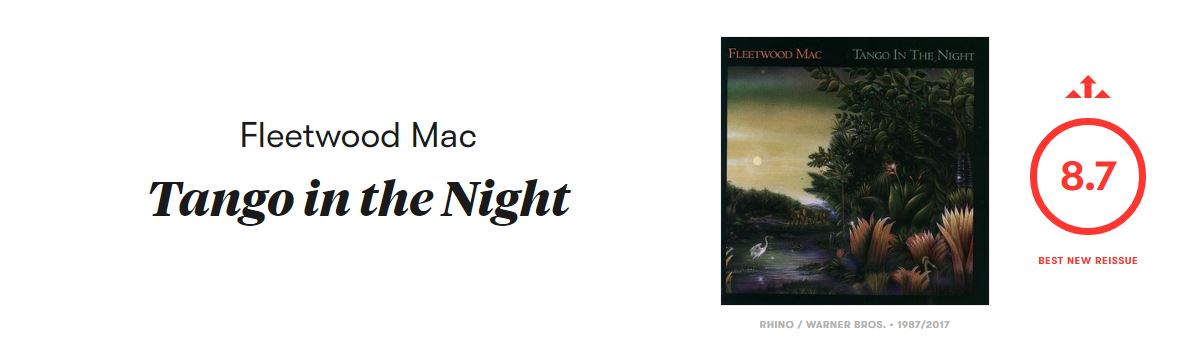
Tango in the Night is the final album the band would record as an infamous quintet. It’s a pop and production masterpiece, yet remains this monolithic, lucrative idea of a Fleetwood Mac record.
Rating: 8.7/10
It started with “Sara.” The first two Fleetwood Mac albums to feature Lindsey Buckingham and Stevie Nicks—the self-titled album and Rumours—featured production typical of the pop-rock generated in Los Angeles in the ’70s. They were professional and pristine, exhibiting an instrumental and emotional warmth that was, in terms of the actual recording technique and the cerebral atmosphere of the people making the records, a product of isolation. On their next record, Tusk, Buckingham shifted the balance of Fleetwood Mac’s studio pop. He deliberately produced his songs so that they sounded trebly and makeshift—as if they were translated from brain to tape as quickly as possible—and produced Nicks’ and Christine McVie’s songs with a lush and carefully-sculpted dimensionality. “Sara,” a song Nicks wrote to a daughter she never had, is so gently shaped that every instrumental and vocal materializes in the song like vapor in the atmosphere. At the Blockbuster Music Awards in 2001, Nicks said that when she writes songs, she tries to “make little worlds” for the listener. Whether intentional or not, this sensibility invaded Buckingham’s production of the song; “Sara,” as it appears on Tusk, is its own world, a complete environment, a beach house built out of sighs.
The follow-up to Tusk, 1982’s Mirage, was a kind reflexive scaling back; both Warner Bros. and Buckingham wanted to regenerate the success and the coherent atmosphere of Rumours. It didn’t take. The band members had already drifted too far from each other: Nicks sang country-western and synth-pop songs; Buckingham quoted Pachelbel’s Canon; McVie’s formal romanticism began to take on a crystalline quality; the production flowed in the direction of their individual fascinations. After a brief tour, the band went on hiatus. Nicks released two successful solo albums; McVie and Buckingham put out one each. In 1985, Buckingham had begun work on an additional solo album, when Mick Fleetwood suggested Buckingham fold his new songs into the more monolithic, more lucrative idea of a Fleetwood Mac record.
The resulting album, Tango in the Night, is exactly that: a monolithic, lucrative idea of a Fleetwood Mac record. It was recorded over eighteen months between 1986 and 1987, mostly at Buckingham’s home studio in L.A. Buckingham devoted himself to the record, laboring intensely over its songs, its sounds, and the integrity of its design. Recording technology had advanced substantially since the early ’80s, and Buckingham found the methods by which he could determine the shape and temperature of a Fleetwood Mac song had expanded.
“Most of the vocal parts were recorded track by track,” he told the *New York Times *in 1987. “The voices used in the textured vocal choirs were mostly mine. I used a Fairlight machine that samples real sounds and blends them orchestrally.” Out of these newly available materials, he could practically build an entire band, which was useful at the time. Mick Fleetwood was almost entirely consumed by his cocaine habit, and the band had been experiencing an internal drift for years. “Constructing such elaborate layering is a lot like painting a canvas and is best done in solitude,” Buckingham added.
The album’s artwork, “Homage a Henri Rousseau” by Brett-Livingstone Strong, is so lush and romantic that it walks a fine line between formal elegance and kitsch, blending the terrestrial with the celestial. It’s an accurate illustration of Tango in the Night’s sound design, of the glitterings and humid shimmers that Buckingham placed in the songs. He made each track on Tango just as he produced “Sara”: less an arrangement of bass, guitar, drums, and vocals than a complete world, a living panorama. There’s a phenomenal wholeness to the recordings on Tango that seems like a superficial compensation for how deeply fragmented the band was at the time.
After Nicks resurfaced from her cocaine addiction at the Betty Ford Clinic, she visited Buckingham’s studio for a few weeks. Three of her recordings figure into the finished Tango, only two of which were written by her. Her voice, invariably hoarse after years of cocaine abuse, often warps or fails the already incomplete material. She howls her way through “Seven Wonders,” a song written mostly by Sandy Stewart. (Nicks receives credit because she misheard “All the way down you held the line” as “All the way down to Emmiline”; for Nicks—and I don’t disagree—sometimes accident and authorship are indistinguishable.) For all of its bluster, the song is not only enhanced by the incidents of its arrangement but is the incidents of its arrangement; try to imagine the song without its synth hook and hear the rest of it evaporate. On “When I See You Again,” Nicks’ voice almost crumbles and shatters into atoms. “Stevie was the worst she’s ever been,” Buckingham told Uncut in 2013. “I didn’t recognize her…I had to pull performances out of words and lines and make parts that sounded like her that weren’t her.” Fittingly, each verse and chorus that Nicks sings sounds generated by a different uncanny assemblage of Stevie, among them one who sings in a kind of mutilated whisper. After the bridge, Nicks completely disappears. Buckingham finishes the song.
Buckingham’s songs on Tango are less knotted than they were on Tusk and Mirage, newly permissive of space. The first single, Buckingham’s “Big Love,” is a song that inadvertently simulates the essential failure of the album. It is devoted to a totally abstracted and imaginary form of love, while Tango in the Night is devoted to a totally abstracted and imaginary form of Fleetwood Mac (neither of which could be assembled in reality). The song’s arrangement feels austere and detached, a byproduct of the narrator’s alienation, but it’s also decorated with overlapping, pointillist guitar phrases. Even the empty spaces on Tango feel like deliberately-wrought emptinesses—for instance, the airy synths that hover over the verses of McVie’s “Everywhere,” or Buckingham’s title track, which through its sense of space imparts the feeling of rowing through fog and mystery.
Still, it’s McVie whose work is most realized by Buckingham’s impressionism. Her “Everywhere” is the best song on the record. Like “Big Love” it too is about encountering an idea too big to contain within oneself (love, again). But where “Big Love” apprehends it with icy suspicion, “Everywhere” responds with warmth, empathy, and buoyancy, describing a kind of devotion so deeply felt that it produces weightlessness in a person. Its incandescent texture is felt in almost any music that could be reasonably described as balearic. Elsewhere, “Isn’t It Midnight,” McVie’s co-write with Buckingham and her then-husband Eddy Quintela, seems an inversion of the values of “Everywhere,” a severe ’80s guitar rock song that gets consumed by a greater, more unnerving force by its chorus, as if it’s succumbing to a conspiratorial dread. “Do you remember the face of a pretty girl?” McVie sings, and Buckingham echoes her in an unfeeling monotone (“the face of a pretty girl”) while behind him synths chime in a moving constellation, UFOs pulsing in the dark.
This is the essence of Tango in the Night: something falling apart but held together by an unearthly glow. More of a mirage than Mirage, it is an immaculate study in denial (its most enduring hit revolves around McVie asking someone to tell her “sweet little lies”). It’s a form of dreaming where you could touch the petals of a flower and feel something softer than the idea of softness. In this way, Tango seems to emerge less from Buckingham’s pure will and imagination than from a question that haunts art in general: How can one make the unreal real, and the real unreal?
The remaster of Tango in the Night isn’t as topographically startling as last year’s Mirage, where new details seemed to rise out of the mix as if in a relief sculpture; it sounded good on CD in 1987. The reissue does sound warmer and brighter, and the instruments feel less digitally combined, which lifts background elements to the surface, like the seasick drift of the bass notes in “Caroline” and the coordinated staccato harmonies in the title track. The reissue also includes two discs of b-sides, demos, and extended remixes, several of which were previously unreleased. “Special Kind of Love” is described as a demo but sounds like a completely developed Buckingham song, gentle and simple, with every edge expressively filigreed; it could’ve been a potential second sequel to “You and I.” “Seven Wonders” appears in an earlier, more relaxed arrangement, with Lindsey’s guitar warmly swanning between the notes that would eventually be reconstructed in perfect digital isolation by a synthesizer.
The demos also reveal the ways in which the songs could fold into and out of each other. On the “Tango in the Night” demo you can hear Buckingham, at the edge of every chorus, begin to invent the trembling choral part that opens “Caroline.” Nicks’ eventual solo track “Juliet” is present in two of its primordial forms—as the instrumental “Book of Miracles” (credited to both Buckingham and Nicks) and as a five-minute “run-through.” The run-through is especially curious, reducing “Book of Miracles” to a formulaic blues-rock over which Nicks’ voice produces a just-barely musical static, full of wobbles and distortions and exclamations. After the take she says, ecstatically, “I thought that was wonderful! I didn’t play! I did not play because I am so smart!”
Nicks exhibits a strange, dissonant giddiness in this moment that isn’t present in any of the band member’s memories of the recording process. At the time, in his interview with the Times, Buckingham imaginatively described Tango in the Night as a restorative process. “This album is as much about healing our relationships as Rumours was about dissension and pain within the group,” he said. “The songs look back over a period of time that in retrospect seems almost dreamlike.” Twenty-six years later, Buckingham summarized the experience to Uncut in more severe terms: “When I was done with the record, I said, ‘Oh my God. That was the worst recording experience of my life.’”
The jealousy and resentment he felt toward Nicks for the success she experienced in her solo career, and the prevailing feeling that his architectural work on the band’s records went unnoticed and unappreciated, had built to a flashpoint. Later in 1987, the band met up in anticipation of the promotional tour for Tango, for which they had already secured dates and signed contracts. At the meeting, Buckingham announced he was quitting the band. “I flew off of the couch and across the room to seriously attack him,” Nicks told Classic Rock in 2013. “…I’m not real scary but I grabbed him which almost got me killed.” They spilled out of McVie’s house and into the street. Buckingham ran after Nicks and threw her up against a car. She “screamed horrible obscenities” at him, and he walked away, from the moment and the band. What’s left, after these harsh fragments of reality are swept away, is Tango in the Night: a remarkably complete album, a lavish garden growing out of negative space. Just a dream.
Stevie Nicks: Recording ‘Tango’ in my ex-boyfriend’s bedroom was ‘extremely strange’
Update: Rhino has pushed back the release date of the Tango in the Night Deluxe reissue to March 31.
On March 31, Fleetwood Mac releases a 30th anniversary expanded edition of one of its most popular and influential albums, Tango in the Night. The lavishly packaged reissue offers a remastered version of the original album, a disc of B-sides and outtakes, plus another disc of 12-inch dance mixes of its hit singles like “Big Love” and “Little Lies” and a vinyl LP.
The 30th anniversary edition of Fleetwood Mac’s 1987 album, Tango in the Night, hits retail on March 31. The album includes four Top 40 singles, “Big Love,” “Seven Wonders,” “Little Lies” and “Everywhere” and remains the last studio album to feature the original Rumours lineup.
For Stevie Nicks, the group’s star attraction, recording her parts for the 1987 album proved difficult. After the completion of a ragged tour for her third solo album, 1985’s Rock a Little, she went into rehab at the Betty Ford Center for a cocaine addiction. After her release, she was misguidedly placed on a Klonopin regimen. Few in her inner circle thought rehab would stick unless she was dosed on anxiety medication. They were wrong.
Her first test: joining her Fleetwood Mac band mates for the 1986 tracking sessions for Tango in the Night. The band hadn’t recorded since the release of Mirage in 1982.
Nicks’ ex-boyfriend Lindsey Buckingham, the group’s guitarist, was co-producing the band’s efforts, again, but this time the tension was poisonous, even by Fleetwood Mac’s standards.
I’d leave and Lindsey would take all my vocals off, and I’m not blaming him for that because I’m sure they totally sucked.”
“When I started recording for Tango, they were recording at Lindsey’s house up on Mulholland somewhere. He lived there with his girlfriend Cheri and this record was being recorded at his house and I didn’t find that to be a great situation for me. Especially coming out of rehab,” Nicks said in an interview last year. “And then I was on Klonopin and not quite understanding why I was feeling so weird and this doctor kept saying, ‘This is what you need.’ It’s the typical scenario of a groupie doctor. Discuss rock and roll with you, so in order to do that he would keep upping your dose so you’d come in once a week.”
Nicks sets the scenario: “I can remember going up there and not being happy to even be there and we were doing vocals in their master bedroom and that was extremely strange. In all fairness, it was like the only empty room and they had a beautiful master bedroom all set up like a vocal booth but I found it very uncomfortable, personally. I guess I didn’t go very often and when I did go I would get like, ‘Give me a shot of brandy and let me sing on four or five songs off the top of my head.’”
At her urging, Nicks said, Buckingham would cue up one of his songs or Christine McVie’s. Stevie would blend in like she always had. Except it wasn’t like she always had.
“I’d leave and he’d take all my vocals off,” Nicks said. “And I’m not blaming him for that because I’m sure they totally sucked. Vocals done when you’re crazy and drinking a cup of brandy probably aren’t usually going to be great and Lindsey is very precise when recording. … I wasn’t into it.”
For all of its problems in creation, Tango in the Night was a hit with consumers worldwide. In the U.S. the album spent 44 weeks in the Billboard Top 40 and spawned five chart singles, the biggest being McVie’s infectious “Little Lies.” The album was ultimately a hit with Nicks, as well. She feels the songs Buckingham contributed to the album — “Big Love,” “Caroline,” the title track, “Family Man” and his cowrite with McVie, “Isn’t it Midnight” — represent his best set of songs on any Fleetwood Mac album.
Tango has grown in stature since its release. The band has oft-been cited as an inspiration by alternative pop, rock and country acts like the Dixie Chicks, Little Big Town, Smashing Pumpkins, R.E.M., Hole, Haim, Sheryl Crow, Mumford and Sons, Ladies of the Canyon, Best Coast and Camper Van Beethoven.
Tango in the Night songs have been covered by a growing number of next generation and vintage acts. Vampire Weekend and Moustache each recorded McVie’s “Everywhere,” as did R&B star Chaka Khan. Singer-actress Hillary Duff, Ari Hest and Anna Ternheim all cut “Little Lies.” One Direction might as well be covering a Tango or Mirage track, given how close the British boy band channeled ’80s Fleetwood Mac on the 2016 cut, “What a Feeling.” Ditto Little Big Town on “Night On Our Side,” a track from the country group’s new album, The Breaker.
Since McVie’s return to the band in 2014, the Tango in the Night material has once again taken its place in the band’s concert setlist with her “Little Lies” and “Everywhere” among the highlights. Nicks’ “Seven Wonders” even returned on the 2014-15 On With the Show Tour’s first leg for the first time in 27 years, thanks to its featured spot during her acting debut on FX’s American Horror Story: Coven in 2014.
The Tango reissue’s remastering reinvigorates the music in a way the original 1987 CD release never could. There’s a new sense of muscle to the Mick Fleetwood-John McVie rhythm section on the title track. There’s air in the mix, allowing for the intricate harmonies and instrumentation — both organic and synthesized — to reveal its subtle layers. Disc three of the deluxe package offers 14 tracks of 12-inch remixes by that decade’s prominent DJs and remixers Arthur Baker and Jellybean. Fleetwood Mac, like seemingly everyone else in the Me Decade, found its footing in the dance clubs.
Some of the unearthed B-sides and outtakes, like McVie’s exotic and percussive “Ricky” and Buckingham’s hook-filled “Down Endless Street” and reflective “Special Kind of Love” are superior to a handful of songs that made the original 12-track running order.
Tango remains the last studio album to feature Fleetwood Mac’s Rumours lineup. Alas, Nicks’ discomfort in the studio shows in her performances. Her best song here, “Seven Wonders,” was actually written by Texan composer Sandy Stewart. Nicks contributed one line. “I was so used to saying ‘All the way down to Emmiline’ so we used that. I asked Sandy, a really good friend of mine, and she said fine. It totally created a character. It was a song I loved. … And on that show [AHS] I got to make a full-on music video,” said Nicks.
“Welcome to the Room…Sara” is Nicks’ oddest song, with vocals that veer off-key, but as the reissue reveals, it’s among her most personal.
With lyrics cribbed from Nicks’ Bella Donna outtake, “Blue Lamp,” the song is redeemed musically mostly by Fleetwood’s inventive, island-flavored drum pattern. The music, Nicks said, was inspired by the 1986 David + David hit, “Welcome to the Boomtown.”
‘“Welcome to the Room … Sara’ was written about Betty Ford [Center.] I went in there as Sara Anderson – the one and only time I was married, to my friend Robin’s husband Kim Anderson,” said Nicks. “I was inspired by the fact when you go into Betty Ford it is like, ‘Welcome to the room whoever you are,’ because it is one big room and you spend 30 days in there. Quite an experience you go through from day one to day 30. … It is a little more weird when you are famous. People are a little harder on you. I will never do cocaine again. That was my mantra. I will never be ‘Welcome to the Room Again Sara’ here.”
Ironically, the Nicks songs that didn’t make the album’s final cut, the ones that wind up on the second disc of Tango B-sides and outtakes, are her most vital of the period. A driving Tom Petty-like rock version of “Ooh My Love,” later re-recorded in a more ethereal fashion for Nicks’ 1989 solo album, The Other Side of the Mirror, is a find. We almost had her bewitching, yet still raw, “Joan of Arc” demo, a song Nicks wrote inspired by primatologist Jane Goodall, but she pulled it off the disc last year. “I still want to record it,” she explained. “The song has its really good moments but it’s not good enough to go out as that version.”
Said Tango special edition producer Bill Inglot of the outtakes collection: “When I put that stuff together I wanted to create a disc that would be playable. If you can get away with it you try to create a record. I don’t want to put out bonus material or outtakes if people play it once. That’s not the goal to create something.”
Howard Cohn / Miami Herald / Friday, March 10, 2017
The Eagles and Fleetwood Mac will headline the festivals being billed as Classic East and Classic West in July, Billboard has learned, with shows planned for Citi Field in New York and Dodgers Stadium in Los Angeles.
Each festival will take place over two days with additional artists to be announced in the coming months. A number of big-time music companies are involved in the blockbuster concert concept including Azoff MSG Entertainment, Live Nation, the Oak View Group and CAA.
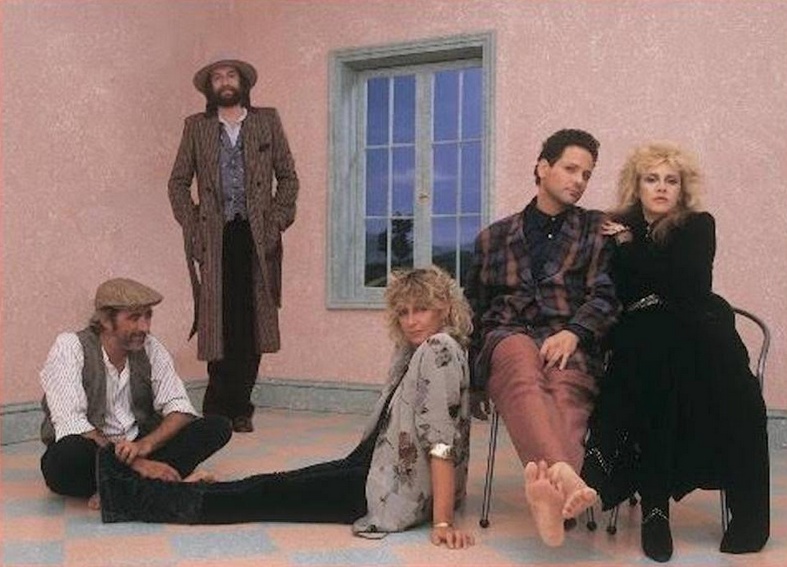
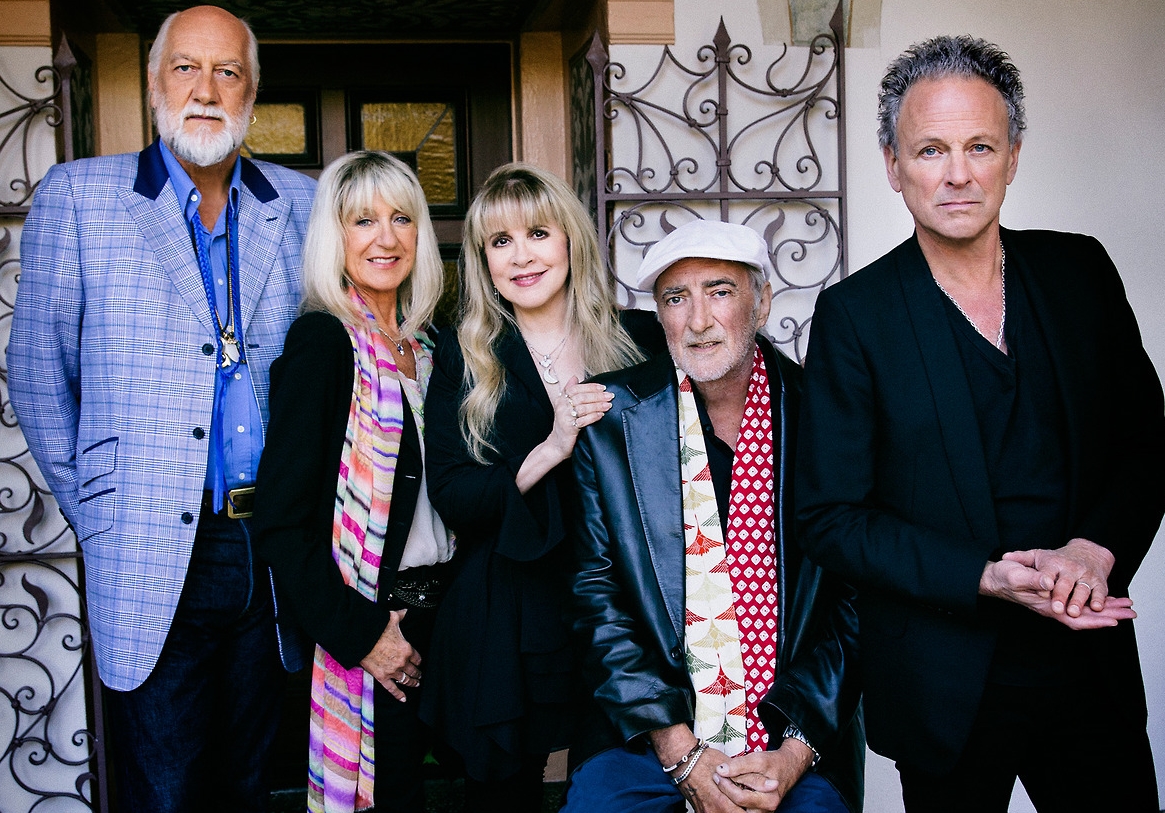
 Fleetwood Mac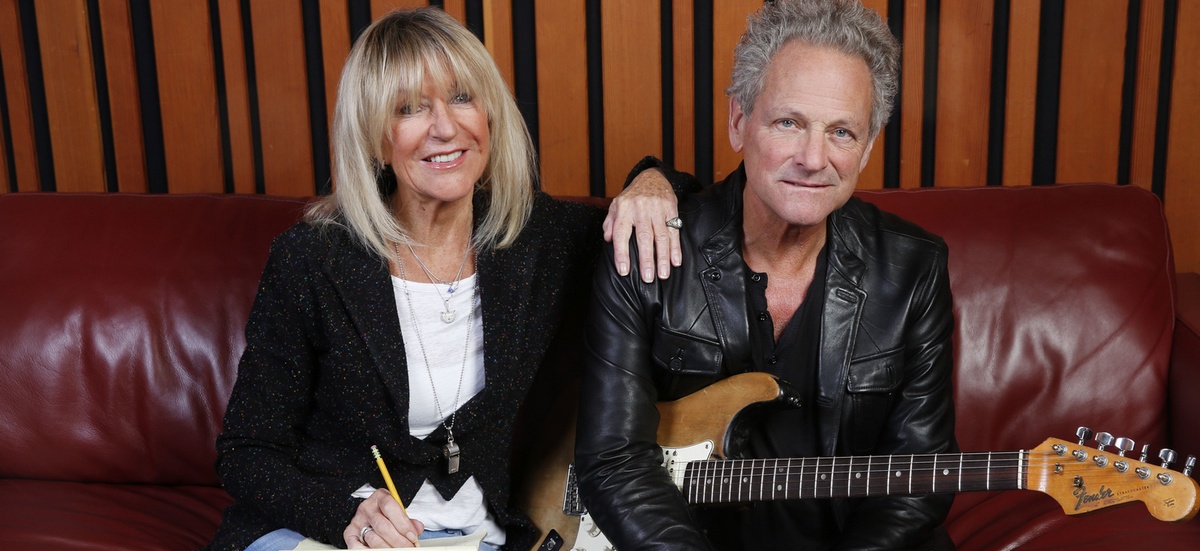


 Fleetwood Mac