
Watch the lyric video for “Prove You Wrong” by Sheryl Crow featuring Stevie Nicks and Maren Morris.
Tag: Sheryl Crow
Sheryl Crow, Stevie Nicks duet out next year
Sheryl Crow will be releasing her final album — featuring a duet with Stevie Nicks — sometime in 2019. The Grammy-award-winning singer-songwriter confirmed the news to Kyle Meredith in a new interview. Crow first revealed details of the project to Billboard back in 2016 and had hoped for the album to be released in the spring of 2017.
In the latest interview (available as a podcast from Consequence of Sound), Crow cited Stevie as one of the classic artists who fueled her creative drive to succeed in the music business, describing her as “the most fully-realized artist [she’s] ever known.” The two have collaborated several times over the years, notably on Stevie’s 2001 album Trouble in Shangri-La, for which Crow produced and sang on several tracks, such as “Candlebright,” “Sorcerer,” and “It’s Only Love”.
Section: Women in Rock
FORTY AND GOING STRONG: “Now I’VE GOT THE LUXURY OF CHOOSING WHETHER I WANT TO BE SEXY”
SHERYL CROW FIRST Appeared in the background — singing off in the distance behind the likes of Michael Jackson and Don Henley. Yet ever since she made her solo debut with Tuesday Night Music Club in 1993, Crow has spent a sometimes bumpy but uniformly impressive decade in the forefront. Currently, she’s on the road in support of her latest smash, C’mon, C’mon, which finds her exploring her own roots, thanks to a little help from Bob Dylan. “I called him,” she recalls. “I said, ‘I am totally wigged out and I don’t know what I’m supposed to be doing, and I’ve got a lot of pressure to incorporate what’s going on.’ He said, ‘You have to look at what’s out there and realize that it’s not based on anything. It doesn’t have any roots.’ He said, ‘Go back to your roots. Take out the albums that you loved and play those songs. Get your band together and rehearse those songs, and then you will start writing.’ And that’s what I did.”
Who was your first hero?
The first person I can remember wanting to be was Linda Ronstadt. I think it was all about that picture of her in cutoffs and roller skates. That’s what I wanted to look like, and who I wanted to be. And I still want to be her. I’m still a massive fan. She’s really underrated — when everybody is talking about women in rock, they forget her. She was like a white hippie version of Billie Holiday, just strength and sexuality.
What other female musicians do you most admire?
Stevie Nicks. She’s always working and growing up, and when she’s writing she doesn’t edit herself according to what people are going to think. Emmylou Harris is so beautiful and so sexy, and it’s completely uncalculated. She’s still making vital music; she’s growing older gracefully and still really involved. And I’m a huge Heart fan — they’re totally original, and totally full of testosterone. Nancy Wilson is one of the great guitar players.
What effect has being a woman had on your music?
It’s entered into every facet and defined it. When I was first getting started, I couldn’t get a record deal, because I was a woman. It was a different climate then. All of the women who were getting play on the radio or on TV were dance vixens like Madonna, Paula Abdul, Lisa Lisa, and then on the other end of the spectrum you had completely antihero types like Suzanne Vega and Tracy Chapman. And that was it. You were one or the other.
Did you face a lot of men who were attempting to remake you?
Well, I had a fantastic conversation with Bill Graham a couple of months before he died. I met with him to be my manager and ultimately hired him. And he sat me down and grilled me about whether I was willing to use my sexuality — what I was willing to do to get my music heard. Not what I was willing to do as far as compromising myself, but how far I would take it to have a believable sexual energy in the tradition of Janis Joplin and Tina Turner. Because he said that’s what rock & roll is based on: a sexual energy that is not overt but is threatening. And I remember comparing that to people that I was seeing around me — the Madonnas, the Paula Abduls — and thinking, “We’ve gotten away from the mystery of it: that feeling of coming into contact with somebody you don’t understand. The sexual fire of Mick Jagger and Robert Plant, or Janis. That thing that’s not containable. We’ve made it something that’s choreographed, we’ve made it something that’s calculated.” It had become marketing. Which is kind of where we’re at now, with marketing being king or queen.
How much do you think things have changed in the time you’ve been in the business?
How about in the last three years? Music has become generic, and now it’s all about the images. It’s made it virtually impossible to be ugly and be popular. And it’s really manipulating how young girls see themselves, how they define beauty. I don’t think that you get a chance to develop anymore as an artist, like I did. Thank God I got to hone my craft and figure out who I was without it all being dependent on images.
You caught some flak in the last year for addressing this issue and then being pretty sexy yourself in recent videos and photos.
It does become problematic. For me, it was necessary to explore that part of my personality. Although, unfortunately, I have done it twice before and nobody really cared. I feel like now I’ve got the luxury of kind of choosing whether I want to be sexy or not. I’m happy with my age. I’m proud of the fact that I’m forty. And it’s great to have the freedom to do what I want without having it be interpreted a certain way.
What’s your best advice for a young woman today who wants your job?
Well, God, it’s a different world now. But I would tell anybody to start with the greats, whether it’s blues or rock & roll, and learn how to write music. Learn how to write a song and then don’t let anybody tell you what to do or not to do. If you start following people’s advice, then you’re already behind.
Do you give any thought to the fact that there’s a young girl watching you the way you watched Linda Ronstadt?
Yeah, I am conscious of that. But everything that I’ve done has been based on honesty — even the major fuckups.
Defining Moment: She shattered her docile hippie-chick image with the nasty 1996 rocker “If It Makes You Happy.”
David Wild / Billboard / October 31, 2002
Sheryl Crow and Stevie Nicks
By James McNair
The Independent (UK)
Sunday, July 21, 2002Sheryl Crow, 40, was born in Missouri. Having sung backing vocals with Michael Jackson and Don Henley, she released her Grammy award-winning debut album, ‘Tuesday Night Music Club’ in 1993. Briefly engaged to Eric Clapton, she wrote ‘My favourite Mistake,’ allegedly about him, in 1998. Her new album, ‘C’mon C’mon’, features Gwyneth Paltrow, Emmylou Harris and Stevie Nicks.
Stevie Nicks, 53, was born in Arizona. She found fame with Fleetwood Mac and co-wrote ‘Rumours’, one of the bestselling albums ever. Currently single, she had long-term relationships with fellow band-mate Lindsey Buckingham and The Eagles’s Don Henley. Last years she released her sixth solo album, ‘Trouble In Shangri La’, on which Sheryl guested.
Stevie Nicks: I first became aware of Sheryl in 1994 when I heard her singing “All I Wanna Do” on the radio. A year or two after that, I did a song of hers for a movie soundtrack, Boys On The Side. I didn’t know that she was a fan of mine until we met at the launch party for that album in LA. And it wasn’t until we both did a charity benefit for Don Henley that we sat down and talked properly about recording together. I thought, “If it doesn’t work out at least we’ll each have a new friend.” I love that Sheryl does what I do. I’ve never really had a female friend like that before. I’m a rock star and I always wanted to be one. Sheryl is a rock star too, and under that umbrella, each of us listens to what the other says. If Sheryl says, “I don’t think you should do that,” I’m probably not going to do it. Only a few people in my life have that authority. Sheryl’s life, like mine, is very busy. And when I was her age, I didn’t want to have a day off, either. Now, if I can work for three days and rest for two, I’m happy. But Sheryl just wants to keep going. In one of my more maternal moments, I did convince her to take a holiday. We went to Hawaii: me, my assistant, Sheryl, her assistant, and Sheryl’s best friend. We took a catamaran and sailed to Molokai for 10 days. It was great, because nobody was going to mess with Sheryl and me together. We were like Thelma and Louise. My friends have begun to become Sheryl’s friends, but she’s kind of a loner. She’s not from here; her family is back East. She has a house in Florida and she’s thinking of buying one in Nashville. She’s not really settled, and she knows that being a famous woman in rock makes it hard to find relationships. I love living in LA but my real foundation is a house in Phoenix that I’ve owned since 1980. I think Sheryl’s looking for somewhere like that; a place where her heart wants to stay. We expect a lot from each other. Are we possessive of each other? I would say, “Yes.” I’m possessive in a way where I want what she does to be great. If she plays me something and I don’t like it, I’m going to tell her. And she’s not going to save my feelings either. We both know that you can’t pussy-foot around saying bad songs are great. How else do we differ? Well, Sheryl likes to go to parties and stuff. But then she’s 40 and I’m 53. I don’t like to party so much any more, and even when I was her age I was a little more private. We’re actually more similar than different. I’ve never found anything important enough to give up my music for, and Sheryl’s the same. If you want to get married and have a child, you have to stop. The world is fickle. If you give up the gauntlet — and that’s Sheryl’s phrase — you may not be able to come back. Our friendship will continue forever. Sheryl did a benefit for my father and the Heart Association, so my family loves her as much as I do. She committed first and then we got everyone else in and we raised enough to build a hospital. Now that’s girl power.
Sheryl Crow: I first met Stevie at a Grammy’s party about 6 years ago. She’d just recorded “Somebody Stand By Me,” a song of mine. I liked her, and she said, “We should get together and work some time.” I thought, “Great!” But then I didn’t hear from her for two years. My first impression was that I’d known her forever, that she was really open. I think the kindred spirit thing is also partly to do with us having similar backgrounds and both becoming well known around 28. Musically we both have a similar dictionary of references, too. She’s totally like a sister: one of the few people who takes care of me. If I’m sick, Stevie will come over with a cashmere blanket; that’s how she is. She’s a big rock star, and she doesn’t need to drop everything, but she cares about people. When I was first Grammy nominated she was very supportive at the awards ceremony. Other female artists in the room seemed to ignore me but Stevie didn’t have any of that. She doesn’t have an ego about music. Clothing wise, I have more masculine tastes. I like cowboy stuff, she’s more into frills. Neither of us is into furs or expensive cars but we do like to go to extravagant getaways. We went to Hawaii together and Stevie rented a house on the ocean. She knows how to live. Stevie can never know how much of an inspiration she’s been to me. Even when I was at school, I had my hair cut like hers and I was wearing shawls and stuff and my friends thought I was a freak. Also her singing style. Somewhere in there, she came out of blues and country, and when I first heard it, it validated what I liked. To me she was the greatest female songwriter of her generation, and I don’t know of anybody today who gets so lost in the mystery and power of their music. And she’s still like that. When we last played together here in LA, it was like a church revival, you could feel it in the air. It was right after 11 September and Stevie had people in the palm of her hand. She’s become quite matriarchal in recent years and she gave people a lot of strength and comfort that night. We disagree about personal things. When we were on the road together, I got on to her about not looking after herself. She drinks too much coffee and no water — ever. When she lost her voice, I said, “Well, you have to cut out the caffeine.” I’m the bossy little sister. We both know how hard it is to meet a partner when you’re a successful woman in music. In some ways I think we sacrificed our romantic and social lives for our work because we derive so much satisfaction and self worth from it. Stevie says that her songs are her children; that they go out and work on her behalf. And they do, because they are very healing for people. I’ve yet to make that peace with my work because it doesn’t have that depth. But if I ever wrote something as good as “Landslide,” say, I’d just get in my car, drive to Tennessee and have kids. I’d feel completely sated. Stevie should tell herself the wonderful things that she tells me — she’s way too tough on herself. It’s hard to be in the public eye, and getting older isn’t easier for any of us gals. Stevie’s still gorgeous, though, and I get frustrated with her because she doesn’t realise it.
Stevie Nicks, Don Henley, Lenny Kravitz on new Sheryl Crow LP
By Corey Moss
MTV News
Thursday, January 10, 2002All of Sheryl Crow’s collaborating over the last couple of years apparently gave the singer some ideas for her fourth studio album.
The as-yet-untitled follow-up to 1998’s The Globe Sessions, due in late March, will include contributions from several big-name artists, including Stevie Nicks, Don Henley, Lenny Kravitz and the Dixie Chicks’ Natalie Maines, according to Crow’s Interscope Records spokesperson. “Soak up the Sun,” the album’s first single, is due in February and features additional vocals by fellow female rocker (and could-be twin sister) Liz Phair.
Nicks, who appeared on Crow’s 1999 live album, Sheryl Crow and Friends: Live From Central Park , sings on “You’re Not the One.” Crow and Nicks recently collaborated on Nicks’ Trouble in Shangri-La (2001), sharing vocals on “It’s Only Love.” Crow also produced several tracks on Nicks’ record.
Eagles singer Henley, who’s among the artists Crow sang backup for early on in her career, appears on the track “It’s So Easy.” Kravitz sings on “You’re an Original,” and Maines adds her signature twang to “Abilene.” Crow and Maines performed several songs together at a breast cancer benefit in Los Angeles last fall, including Crow’s “It Don’t Hurt”. Maines’ Dixie Chicks also appear on Sheryl Crow and Friends: Live From Central Park.
Other guests on the upcoming album are folk and country veteran Emmylou Harris (“Weather Channel”) and blues guitarist Doyle Bramhall II (“Steve McQueen,” “Over You”).
Since the release of The Globe Sessions, which featured the single “My Favorite Mistake,” Crow has recorded with an array of artists, from Tony Bennett to Kid Rock .
While recording in New York last summer, Crow played several high-profile club shows that included many of the guests on her album along with Rolling Stones guitarist Keith Richards .
In other Crow news, she was just added to the list of presenters for the American Music Awards in Los Angeles on Wednesday night. The show will be broadcast live on ABC.
Tentative track list for Sheryl Crow’s upcoming album, according to her spokesperson:
- “Steve McQueen”
- “Soak up the Sun”
- “You’re an Original”
- “It’s So Easy”
- “Over You”
- “It’s Only Love”
- “Weather Channel”
- “You’re Not the One”
- “Missing”
- “Abilene”
- “Slave”
- “Safe and Sound”
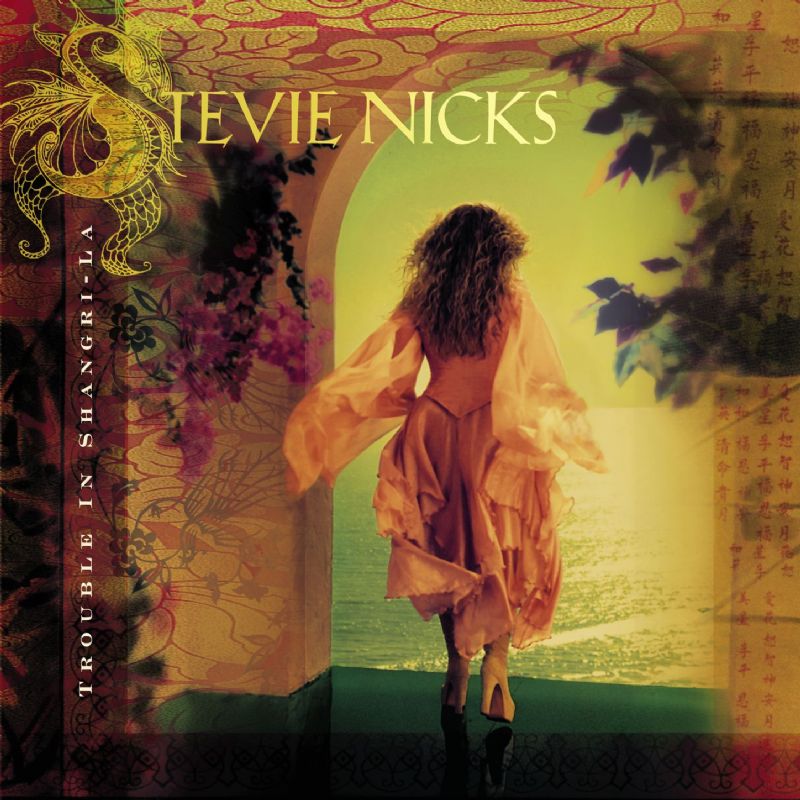
In the News: Stevie Nicks
In 1994, STEVIE NICKS was watching the O.J. SIMPSON trial when she came up with the title of her next album: Trouble in Shangri-La. “It’s the whole idea of achieving paradise,” says Nicks, “and how difficult it is to handle it. Trouble in Shangri-La is about a lot of people, including myself.” Nearly eight years later, on May 1st, the album will hit stores. Says Nicks, “I love these songs, and I’m so excited to share them with the world.”
Shangri-La was mostly written by Nicks but also features a variety of guest stars. Sheryl Crow plays some guitar and co-produced five of the album’s thirteen tracks, Macy Gray sings on “Bombay Sapphire,” and Dixie Chick Natalie Maines duets with Nicks on “Too Far From Texas.” “I’m really a harmony singer, so I love to sing with other lead singers,” says Nicks, who, in addition to her work with Fleetwood Mac, has topped the charts duetting with both Tom Petty and Don Henley. Another guest is Fleetwood Mac’s Lindsey Buckingham, who plays guitar on a song called “I Miss You.” Is the song about her former lover? “Well, it’s not,” says Nicks. “But a lot of these songs are about Lindsey.”
Expect Nicks to hit the road this summer. And, if she has anything to say about it, another Fleetwood Mac album remains a possibility. “I would love to see us do one more record,” she says. “I’ll be doing my Trouble in Shangri-La thing for however long, and next year we could be on our way to a Fleetwood Mac album. Life is short. Why wait?”
Rolling Stone / March 29, 2001

Reprise’s Stevie Nicks returns with Crow in tow
Stevie Nicks is ready for ‘Trouble’
Stevie Nicks is enjoying a rare moment of quiet. It’s a comfortably warm February afternoon in her Los Angeles home, and she is taking a brief breather before diving into what she describes as the “happy madness” of promoting Trouble In Shangri-La (Reprise, May 1), her first solo collection since 1994’s Street Angel.
“Even after all of these years, this is the hard part — living through that period of time between the day you finish a record and the day the world gets to hear it,” Nicks says, her voice brightening as she adds, “but I’m so content with these songs. I’m more itchy for people to finally hear them than anything else.”
And with good reason. Trouble In Shangri-La shows the sometime Fleetwood Mac siren in her finest musical form since her 1981 solo breakout, Bella Donna.
“In many ways, this album brings me full circle,” Nicks notes. “There are a couple of songs I’ve been holding on to since that era, waiting for the right context to bring them out. Also, there was an accumulation of time and life experiences — and songs — reminiscent of that period.”
Despite a diverse roster of producers — including Sheryl Crow, John Shanks, and Pierre Marchand — Trouble In Shangri-La boasts cohesion in style and structure as it strikes a balance between Nicks’ signature rock poetry and concise, radio-conscious pop hooks. The artist credits a renewed confidence in her songwriting as the driving force in the album’s direction.
“I remember asking my dear friend Tom Petty to work with me on some songs,” Nicks says. “I wasn’t feeling my best; I was unsure about a lot of things. He said, ‘No. You’re a premier songwriter. You don’t need anyone to help you with your songs. Do it yourself.’ It was the jolt I needed.”
Petty isn’t the only musical figure with such high regard for Nicks. Trouble In Shangri-La is brimming with high-profile guests. Dixie Chicks belter Natalie Maines harmonizes on the twangy midtempo rocker “Too Far From Texas,” while Macy Gray weaves her distinctive purr into the atmospheric shuffler “Bombay Sapphires.” Sarah McLachlan lends her voice to the lilting, set-closing ballad, “Love Is.” The common denominator among such seemingly disparate guests? Each cites Nicks as a prime musical influence — something that tickles her.
“OK, so now I’m ‘Mama Rockstar,’” Nicks says with a giggle. “It’s cool. Actually, it’s great. I take pride in knowing that people have benefited from the road I’ve traveled. We’ve had a wonderful time bonding.”
No recent bond has been deeper or stronger than the one Nicks has forged with Crow. The pair has been gradually developing a friendship for several years, but Nicks says the ties have become “unbreakable” since the two collaborated on five Shangri-La songs.
“First, Sheryl’s brilliant,” Nicks says. “She’s an amazing songwriter, singer, and musician. But she’s also someone who gets it. She understands the life of a woman in rock’n’roll. There’s no room for playing games with her or saying, ‘You don’t understand what I’m going through.’ She understands, and that’s brought us closer than I can explain.”
For Crow, connecting with Nicks is something she tries not to “get too deep into my head about,” she says. “She represents such a huge chunk of my life that it’s almost unreal to be in the same room with her.”
Still, Crow notes that there was an instant ease in their relationship — both in and out of the studio. “Stevie’s just so real, so completely open as a person,” she says. “And as an artist, she continues to work hard. Sometimes you meet your heroes, and you discover they’ve stopped growing or have gone past caring about what they do. Stevie’s still so vital. She’s still looking to try new things.”
Nicks and Crow both point at the “Shangri-La” highlight “Sorcerer” — a song the pair co-wrote and on which Crow lends guest vocals and guitars — as an example of their successful experimentation.
“Sheryl challenged me to explore different areas of my voice,” Nicks recalls, noting the soulful falsetto that she reaches during the song’s initial verses. “It was fun to do, and it wound up working so well within the song’s arrangement.”
Adds Crow, “Stevie’s an incredible singer. She approaches music in a such a unique manner. It would be easy for her to just stick to the same old thing, but she’s clearly not content to do that.”
In addition to “Sorcerer,” Nicks notes the Crow composition “It’s Only Love” as a personal favorite. “It’s a song that I love to sing,” she says. “I’m hoping that it will be part of the set for the tour.”
Touring is a key component of the Shangri-La marketing strategy. But don’t expect Nicks to drench the set with songs from the new album. “I learned an important lesson back during the first Rumours tour with Fleetwood Mac,” she says. “You can’t shove new songs down your audience’s throat. You can do three or four at the most.
“On that Rumours tour,” Nicks adds, “we did most of that album, and people didn’t want any part of it. They want familiarity. They want the comfort of songs that feel like old friends. You can’t exploit your fans by forcing them to embrace songs they don’t know yet.”
Nicks may offer a blend of classics and new material on her U.S. tour planned to run from mid-June through September. But in a “fair trade-off,” she is planning to perform much of Shangri-La during a showcase in Los Angeles shortly before the set’s release.
“This record is clearly from the heart — and it shows her as a fresh, vital artist,” Reprise executive VP Rich Fitzgerald says. “It’s the record her die-hard fans waited for, but it has the potential to draw new admirers.”
The label will begin working two singles from the project at radio in early April. Triple-A, mainstream rock, and classic-rock formats will be served the guitar-charged “Planets of the Universe,” while pop and modern AC will be offered the sweet, string-laden “Every Day.” A video clip for the latter cut is being planned for production in March.
Nicks’ Web site, nicksfix.com, will offer streaming samples of “Every Day” in late February/early March. Guest appearances on The Late Show With David Letterman and The Rosie O’Donnell Show are confirmed to air around the album’s release, while other shows — along with several special tie-ins with VH1 — are soon to be locked in.
Label enthusiasm seems to be running high, but Nicks admits that she isn’t the most competitive artist. “I’m not willing to kick and scratch to win,” she says. “That doesn’t mean that I don’t want to reach the largest possible audience. I’m one of the hardest-working people you’ll meet, but I’m just not driven by commerce. I make music and want people to hear it. It’s that simple.”
Nicks — who is managed by Sheryl Louis at the Howard Kaufman Agency and whose songs are published by Welsh Witch/Sony Songs (BMI) — is philosophical about releasing an album at a time when the music business continues to be dominated by teens.
“If you’re in it for real, then that’s what counts,” she says.
Here is the track listing of Stevie Nicks’ Trouble In Shangri-la:
“Trouble In Shangri-la”
Produced by John Shanks and Stevie Nicks
Written by Stevie Nicks“Candlebright”
Produced by Sheryl Crow and Stevie Nicks
Written by Stevie Nicks“Sorcerer”
Produced by Sheryl Crow and Stevie Nicks
Written by Stevie Nicks“Planets of the Universe”
Produced by John Shanks and Stevie Nicks
Written by Stevie Nicks“Everyday”
Produced by John Shanks
Written by John Shanks and Damon Johnson“Too Far From Texas”
Produced by Mike Campbell, Sheryl Crow, and Stevie Nicks
Written by Steve Booker and Sandy Stewart“That Made Me Stronger”
Produced by Sheryl Crow and Stevie Nicks
Written by Stevie Nicks, Scott F. Crago, and Timothy Drury“It’s Only Love”
Produced by Sheryl Crow
Written by Sheryl Crow“Love Changes”
Produced by David Kahne
Written by Stevie Nicks“I Miss You”
Produced by Rick Nowels
Written by Stevie Nicks and Rick Nowels“Bombay Sapphire”
Produced by Stevie Nicks
Written by Stevie Nicks“Fall From Grace”
Produced by John Shanks and Stevie Nicks
Written by Stevie Nicks“Love Is”
Produced by Pierre Marchand
Written by Stevie NicksLarry Flick / Billboard / Feburary 12, 2001