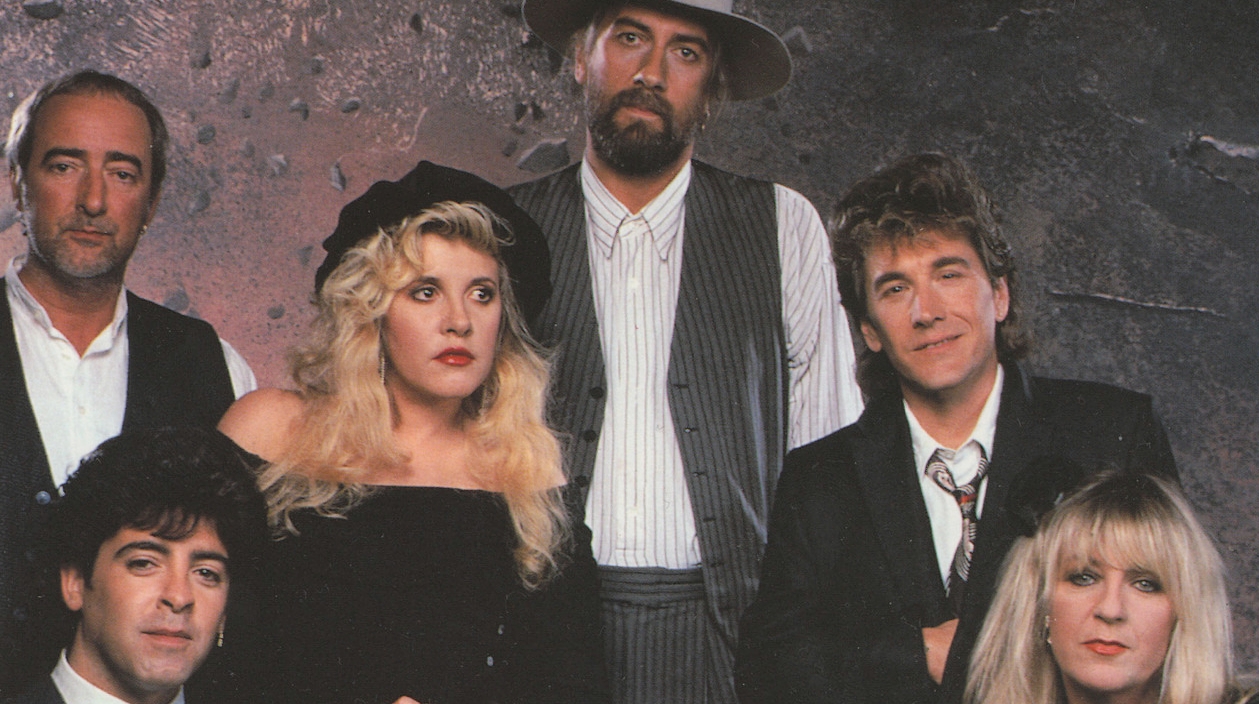
Following guitarist Lindsey Buckingham’s acrimonious split from the band in 1987, Fleetwood Mac forged on with a scheduled world tour, billed as the “Shake the Cage Tour,” and promoted its 14th album Tango in the Night, which Buckingham had meticulously produced. New members Billy Burnette and Rick Vito had the formidable task of filling Lindsey’s critical role on guitar, which they handled with skill and professionalism, as they performed Buckingham’s signature set closer “Go Your Own Way,” as well as a number of founding Fleetwood Mac member Peter Green classics (“Oh Well,” “Rattlesnake Shake,” and “I Loved Another Woman”).
(Corbis)
Filmed over two nights at Daly City’s Cow Palace (located at the southwest border of San Francisco), the band performed most of the hit songs from Tango in the Night, which included “Seven Wonders,” “Little Lies, “Everywhere,” and the international single “Isn’t It Midnight.” The set also included several songs from Rumours, such as “Dreams,” “Don’t Stop,” and “Gold Dust Woman.” Despite Buckingham’s absence, the tour was a commercial success and helped fuel sales of the album in upwards of 12 million copies worldwide.
With a slick, late 1980s production, complete with over-the-top close-up shots, particularly of Stevie Nicks, the video clearly marked its time in history, big hair and all.
MICK FLEETWOOD swears he’s leaped out of coffins only three times in his life, two of which were during performances by his band, Fleetwood Mac.
It’s an impressive record. But the band has risen from the dead more often than Mick.
In the beginning there were Peter Green, Fleetwood, John McVie and Jeremy Spencer. That was back in 1967. Fleetwood Mac was an outgrowth of the John Mayall Blues Band and its stock in trade was American blues, pure and simple. A lot has changed since then.
The band underwent periodic lineup changes with long, long gaps between albums. Even when the lineup wasn’t changing the dynamics were spectacular: The band even aired its private turmoils in Rumours, probably its finest album.
Each independent project (Fleetwood’s The Visitor, Stevie Nicks’ Belladonna, Lindsey Buckingham’s Law and Order) fueled rumors that the band’s days were over.
But each time Fleetwood Mac came back, stronger than ever.
Take the current reincarnation, for example. Shirley MacLaine would be proud.
Most bands would fold when their chief songwriter-guitarist-matinee idol packs it in just before a tour.
Not the Mac, not Mick.
“When Lindsey (Buckingham) decided not to do the tour,” Fleetwood said recently, “I decided, rather than roll over like a dead dog — which is not my style; I don’t think it’s Fleetwood Mac’s style — let’s at least keep the momentum going. We had everything going in a tour mode: We were booking gigs, we were putting a crew together.”
The band went out and recruited two guitarists, Rick Vito and Billy Burnett.
Is Fleetwood pleased with the current lineup?
“Oh, very much so. I mean, it’s still Fleetwood Mac in terms of what we’re playing, because we haven’t gone in and made a new album,” he said.
“I’m loving having two guitar players because in the early days we had three guitar players. It’s just brought a lot of new energy, a lot of excitement about what I know will happen in the future.
“In the meantime it’s blending really, really, well. We felt quietly confident …we wouldn’t have dreamt of going on the road in some gaffer tape situation.”
No, this is no gaffer tape situation.
Vito and Burnett are no strangers to the Mac.
In fact, Burnett is “like my brother” says Fleetwood. Son of rockabilly legend Dorsey Burnett, Billy has been a part of Fleetwood’s off-time band, the Zoo, for four years. He’s co-written music with Christine McVie. Vito has recorded with John McVie and John Mayall and most recently was touring with Bob Seger.
There was a comfortable feeling.
“We didn’t miss one beat,” says Fleetwood. “Rick and Billy just started exactly when we were supposed to. Had it not worked out then we would have canceled the tour, obviously.
“I was very much of the mind that we should continue to find a replacement or replacements for Lindsey, having been with Fleetwood Mac since it started and seeing varous changes taking place, this one being the most recent.
“One thing that we’ve never done is hang around, waiting and wondering. Just get on with it. If you want to continue being in the band, and you have that sort of feeling about it, then the people that are there have to become part of Rally Around Fleetwood Mac.
“We went into rehearsals and it took a half an hour before everyone turned around and said ‘Let’s go!’
Critics and fans have been rallying around the defiantly named “Shake the Cage Tour” as well. “The beast has some life in it yet,” said Rolling Stone. Weekly concert receipt reports routinely place the Mac in the top 10 since the tour began.
The most recent album, Tango in the Night, has been well positioned on Billboard’s album chart for 32 weeks now.
And that brings up a ticklish situation. Buckingham had a hand in writing seven of the album’s 12 songs. And he co-produced it. He gets co-credit for the cover concept and some additional engineering.
OK. Buckingham’s out. Doesn’t that leave a rather large hole?
It does, indeed. And you can either try to fill it or ignore it.
“We don’t do any of Lindsey’s songs,” said Fleetwood. “With respect to him, I don’t think it would be proper. One, it would be a tacky thing to do. Two, I wouldn’t dream of asking Billy or Rick to come into a situation and have to get up and be confronted with that sort of pressure. And thirdly and luckily, we don’t have to do that.
“The girls have plenty, more than enough, songs to draw on. Plus we’ve got some 20 years of records to draw on, which we are. We’re going way back to early blues stuff, which we’re having a lot of fun doing. People are loving it.”
They do one Buckingham song: “Go Your Own Way.”
Appropriate. But in no way meant to be acrimonious.
Buckingham’s departure “was like having the plug pulled,” says Fleetwood.
“It was not an easy thing for either Lindsey or us to go through after 12 years,” he said. “It’s no small thing to basically say goodbye to someone you’ve been working with that long. But needless to say, Lindsey changed his mind, which put us in a bit of a dilemma and him, too.”
As far as Fleetwood’s concerned, it’s all turned out for the best. Buckingham tried, but couldn’t bring himself to go on tour, he said.
“I give Lindsey all due credit,” he said. “Aside from initially feeling like one was sort of let down, in actual fact, in retrospect, he showed a lot of strength to tell us ‘I’m not doing it.’
“I’m glad it didn’t work out, because he would have been miserable, we would have been miserable, and it would not have been a pretty sight.
We’ve seen that sort of tour before, haven’t we?
At this fall’s MTV Video Awards show in Los Angeles the band made a big show of the newfound energy and togetherness. Both Stevie Nicks and Christine McVie, looking healthy and chipper, said their next album project would be a Fleetwood Mac album.
The U.S. tour ends Dec. 18, followed by a short rest, followed by Australian and European tours. The band should get into the studio by late spring, early summer.
“There won’t be a big five-year gap,” assures Fleetwood. “We’ve had enough of that.”
P.S.: Mick started leaping from coffins at the tender age of 12 while on a carpentry shop tour with his English boarding school class. “The next time,” he says, “was when I was relatively out of my brain, in early Fleetwood Mac times.” He had a touring case made up like a coffin and used it onstage until the rest of the band made him get rid of it.
The third time was this past Halloween. He did a drum solo from inside the coffin.
Some things never change, eh?
Robert J. Hawkins / San Diego Union-Tribune (CA) / December 4, 1987
Stevie Nicks, female rock icon of the 70s, is a motor-mouth.
She has a low, gruff, sexy speaking voice that goes on and on, telling about the new Fleetwood Mac, how she keeps young, her college days and the current tour which brings the band to Cedar Rapids Sunday.
She’s surprisingly open and chummy, even with a total stranger.
Her Gazette interview, scheduled for a recent Thursday evening, was postponed when a call came to say she was in the tub. Could she call back in 25 mintues?
When she calls, from a St. Petersburg hotel room where she is based for three days during Florida concerts, she confides that she only allows herself to conduct interviews on days off.
“I love to talk. But talking is much worse for your voice than singing really loud,” she says, explaining that talking makes one’s pitch drop, causing the vocal chords to slam together.
She says that despite some reports, she has no throat nodes. Nodes require surgery that would mean musical suicide for her: “that voice that some people hate and some people love would be clear as a bell and would sound like a million other people.”
Nicks, recently cleaned-up after a visit to the Betty Ford Center for chemical dependency, says her voice is in good shape. “My voice is pretty strong now. After all these years of singing I’m a pretty strong singer because I do sing all the time. On this kind of a tour I just have to take real, real good care of myself and make sure I get a lot of sleep — which is hard for me because I’m not used to getting eight hours of sleep.”
She may look fragile, but Nicks, at 39, is one of those lucky people with boundless energy.
“I’m stronger than anybody I know. I can probably tour harder and sing harder than anybody. I’ve got a lot of energy.
“I SING AND DANCE all during my getting-ready for the show. I drive people absolutely crazy because I’m always playing music,” she says. “I can’t just walk on that stage cold.”
What does she listen to? Lots of new rock music. “For me, it keeps me young and aware of what’s happening in music. I really know what’s happening all the time. I really do love music and I love new music. I love hearing a new song that I think is so special that I instantly send somebody out to get it.
“That’s what I try to do with my songs — reach out and make somebody’s day a little bit easier. It works both ways.”
Nicks owns a home in Phoenix and rents a house in Los Angeles, in close proximity to her bandmates. The band, formed in England 20 years ago as a traditional British blues band, has seen many members come and go.
Its 1977 Grammy-winning Rumours album remained at No. 1 for 31 weeks (only “Thriller” has held the top spot longer), but was followed by two less-than-successful albums, Tusk and Mirage. Now it is enjoying commercial success again with a new album, Tango in the Night, and the hit single “Little Lies.”
“Once you’re in a band like that it’s like a real, real old friendship. It’s very hard, in a year or two, to replace a friendship. To go around and try to re-create a situation like this is pretty silly for any of us. Bands like Fleetwood Mac don’t come around a dime a dozen. As long as some of us want to go on we will.”
One longtime member, Lindsey Buckingham, decided he didn’t want to go on, and departed a few months ago. Those left behind — Nicks, Christine McVie and co-founders Mick Fleetwood and John McVie — decided they could take one of two attitudes about Buckingham’s departure, she says. “Everyone was very, very pensive about this and you can have one of two attitudes: ‘I guess we should just all go off and quit’ or ‘he quit, we didn’t’.” They chose the latter, replacing Buckingham with Rick Vito and Billy Burnette. Both Vito and Burnette are songwriters and play guitars. “Rick does what Lindsey did. Billy plays all the parts Lindsey did rhythm-wise but couldn’t do in concert.”
Nicks and Buckingham go back a long way. They were asked to join Fleetwood Mac in 1974 after Fleetwood heard their album Buckingham Nicks.
“Mick called us up pretty much sight unseen and said ‘Do you want to be in this band?’ Which is similarly the way that Rick and Billy joined. Lindsey decided to leave and within three days we were in rehearsal,” she says.
Buckingham was Nicks’ first ticket to rock stardom. He auditioned her for his San Francisco-area acid-rock band Fritz and they opened for such rock luminaries as Jefferson Airplane, Janis Joplin and Jimi Hendrix. They were never married, but they were an item until the time of the Rumours album.
“In my heart he’s been gone for a long time,” she says. “I let Lindsey go a long time ago. I’m probably the only person in the whole world who was not surprised that Lindsey left.
“It’s all for the best. Lindsey just needed to go find whatever it is he’s searching for. He’s searching for a dream he hasn’t found yet. I really hope he finds it — I want him to be happy.”
She says her San Francisco days with Buckingham shaped her music and her career.
“I am kind of a traditional rock ‘n’ roller and the way I feel about music is because of my years in San Francisco,” she says. “If I hadn’t lived there I probably would’ve ended up in country music or something other than rock ‘n’ roll. I’d never sung rock ‘n’ roll in my life.”
Before that, she played the guitar and “sang all the time — at school assemblies, at home, I was always singing somewhere. Suddenly one night I was in this band (Fritz) that took up all my time. I was not quite 20, but overnight I was completely committed to this band. I’ve never rehearsed that much since. I also had to go to college. I had no social life whatsoever in college.”
She attended San Jose City College for five years, majoring in Creative Speech and Speech Communication without quite graduating. “If I hadn’t gone so seriously into music I probably would’ve been a teacher,” she says.
A fourth Stevie Nicks solo album (her first, Bella Donna, came out in 1980) is in the works, she says. Meanwhile, she contributed a song to the all-star album A Very Special Christmas, along with U2, Bruce Springsteen, Bon Jovi, John Cougar Mellencamp, Madonna, Whitney Houston and others. The album benefits the Special Olympics. She brought a portable recording studio along on the current Shake the Cage Tour, but after lugging it around for three weeks she “sent it all home because there just wasn’t enough time.” The tour began Oct. 1 and this leg ends Dec. 18.
THE CURRENT ISSUE of Rolling Stone reviews a recent Shake the Cage tour concert, saying Fleetwood Mac “has come up with a tight two hours of melodic, arena-friendly rock.”
Nicks says the concert will be 2 1/2 hours long, with only three songs off the new album. “We went back through each album and chose what we thought everybody’s favorite songs were. If you happen to love Fleetwood Mac, you’d probably really love this concert,” she claims.
Nicks also gets to perform two songs from her solo career, “Stand Back” and “Has Anyone Ever Written Anything for You.” “I was really surprised” when the band asked her to perform her own songs, she says. “It was a real nice thing to happen, and since it wasn’t my idea I feel real good about it.”
Fleetwood Mac performs Sunday at 7:30 p.m. at the Five Seasons Center. Tickets are general admission, $16.50 in advance. $17.50 on Sunday, on sale at the Five Seasons Center box office and its outlets.
Concert postponed to Sunday evening
The Fleetwood Mac Five Seasons Center concert has been postponed from Saturday to Sunday.
The Five Seasons Center released this statement Thursday from the promoter:
“Due to medical reasons, Stevie Nicks is unable to perform three nights in a row. Therefore the concert originally scheduled for Saturday, Nov. 21, at 8 p.m., has been rescheduled to Sunday, Nov. 22, at 7:30 p.m.”
The Five Seasons center will give refunds until 7:30 p.m. Sunday. All refunds are handled through the Five Seasons Center box office. Any questions may be directed to the Five Seasons Center administrative office, 398-5211.
Dee Ann Rexroat / Cedar Rapids Gazette / Friday, November 20, 1987 (This article was transcribed by Stevie Nicks Info)
Music review on Fleetwood Mac’s concert at The Omni Monday night.
Lindsey who?
That was the only logical response – other than resounding applause – after Fleetwood Mac’s concert at The Omni Monday night.
The long-running Anglo-American band may have found it necessary to replace Buckingham with two musicians when he quit in August, but any negative reaction to Fleetwood Mac’s performance without him was lost in the cheers of the crowd of 11,000.
The playing of guitarists Rick Vito and Billy Burnette, in fact, enabled the band to drop back in time and very satisfactorily mix blues music it recorded in the 1960s with songs from “Tango,” the current album – and one Buckingham masterminded before leaving to pursue a solo career.
The only noticeable effect stemming from Buckingham’s departure was a more prominent role visually for blond vocalist Stevie Nicks. Otherwise, the emphasis was on the music – well-crafted pop songs.
It was virtually a greatest hits performance by Burnette, Vito, Miss Nicks, keyboardist-vocalist Christine McVie, drummer Mick Fleetwood and bassist John McVie. Fleetwood and Ms. McVie, the only remaining original members of the band founded by Peter Green in 1967, provided a strong base that demonstrated why they’re regarded as one of the strongest rhythm sections in pop music.
The band, backed by three vocalists and a percussionist, moved fluidly through older hits such as “Say You Love Me” and “Rhiannon (Will You Ever Win)” to new ones such as “Seven Wonders” and “Little Lies.” Vito, who toured with Bob Seger last year, and Burnette, son of the late rock vocalist Dorsey Burnette, adequately filled in for Buckingham on songs such as “Go Your Own Way” – and Vito distinguished himself with his soaring guitar work.
After a shaky start, Miss Nicks’ voice improved as the concert progressed, while Ms. McVie’s performance vocally and on keyboards was -as during past tours – as constant as the propulsive playing of Fleetwood and John McVie, who remains the least animated member of the band.
Caption: Photo: Vocalist Stevie Nicks
Russ Devault / Atlanta Journal-Constitution / November 10, 1987
Buckingham goes his own way as the band takes to the road
FLEETWOOD MAC KNOWS how risky it can be for a hit rock band to confront a live audience with the unfamiliar.
The group received an object lesson in the dicey nature of novelty about 10 years ago in Kansas City, co-founder Mick Fleetwood recalled in a phone interview last month.
“We went out and played material that nobody had ever heard, and we just died. We just weren’t drawing on enough stuff that people knew. We weren’t booed off, but we realized something wasn’t going as well as it normally did. We hung ourselves in public.”
The new songs that were duds in concert turned up soon afterward on an album called Rumours, where, given the chance to seep in, they went over well enough. That 1977 album became one of the all-time blockbusters, with sales approaching 20 million.
Most of the songs Fleetwood Mac plays on the tour that brings it to the Civic Center Sunday night will be familiar to its fans. Even so, the group’s first tour since 1982 is full of the risk of novelty. The songs may be standards, but this is a radically changed Fleetwood Mac.
Over the summer, shortly after the release of Tango In The Night, the best Fleetwood Mac album since Rumours, key member Lindsey Buckingham announced he was finished with the band. Although Fleetwood Mac had two other popular singers and songwriters in Christine McVie and Stevie Nicks, Buckingham had figured most prominently in the group’s success over the past 12 years. More than a guitarist or a lead male voice, he was an important shaper of Fleetwood Mac’s high-gloss studio sound. Buckingham was the main architect of Tango In The Night, an album that’s as impressive for the crispness and splendor of its sound as for its generally strong songwriting. Tango was recorded in a studio Buckingham had built in his Los Angeles home. When the other members of Fleetwood Mac began planning to tour, the guitarist announced that home was where he was going to stay.
Lindsey ‘simply doesn’t want to’
“I understand why Lindsey’s not doing the tour – because he simply doesn’t want to do it,” Fleetwood said. “I can think of nothing more horrible than ‘doing it for the company store because I’ve got to do it.’ ”
When Buckingham joined with Nicks in 1975, Fleetwood Mac was well practiced at breaking in new personnel. The band started in 1967 as a British blues-rock group centered around alumni of John Mayall’s Bluesbreakers. By the time Buckingham joined, drummer Fleetwood and bassist John McVie already had gone through six guitarists in a line stretching back to Peter Green, the band’s original leader.
Fleetwood said there never was any question about carrying on with the band after Buckingham quit to pursue a solo career.
“I just didn’t feel like rolling over and dying. People that know about us realize the band doesn’t easily disappear.” At Fleetwood’s suggestion, the band started tour rehearsals with Billy Burnette, a guitarist, singer and songwriter who had recorded on his own and with Fleetwood’s side-project, Mick Fleetwood’s Zoo. Enlisted for the lead guitarist role was Rick Vito, a veteran session player who most recently had toured with Bob Seger.
“Billy was not a stranger to anyone in the band. He’d written with Christine and done demo stuff with Stevie. We went into the first day of playing just to see what was happening. I just had a strong intuition that everyone would like it.”
With the personnel change, said Fleetwood, came a commitment to be more of a cohesive, ongoing unit than the loose aggregation of individual careerists that Fleetwood Mac had become. During the ’80s, Nicks emerged as a headliner with three hit solo albums, and all the other Mac members except John McVie released records of their own. Every few years, between solo projects and coping with such publicized personal problems as Christine McVie’s troubled romance with Beach Boy Dennis Wilson, Fleetwood’s bankruptcy and Nicks’ treatment at the Betty Ford Center for substance abuse, Fleetwood Mac’s members would get around to recording together.
“All ’round there’s a new philosophy about what we’re doing and what we hope to be doing,” Fleetwood said. “It has to be a little more definite in terms of ‘Are you really in the band called Fleetwood Mac, or are you in it just every five years?’ Stevie volunteered what she wanted to do – which was to put all her energy into the band for quite some time.”
When Fleetwood Mac starts work on its next album after the current tour, the labor will be shared more evenly than it was with Buckingham overseeing the recording sessions as co-producer, Fleetwood said.
“When somebody is as talented as Lindsey most certainly is, and you give somebody the range to do that, you can find yourself a little bit looking on rather than participating. But the nucleus of the band is still very much there. It’s not as if we’ve lost an arm and a leg.”
For diehard fans
On tour, Fleetwood Mac will move into its post-Buckingham period by “pretty much steering clear of Lindsey’s material. I would hate to ask the two guys to come in and sing that – that’s not a cool thing to do.” In addition to songs by Nicks and Christine McVie and Buckingham’s Go Your Own Way, which Fleetwood described as “more a band-oriented song,” the show will include some blues-based material, “stuff from way back when the band first started. I don’t think people will be real familiar with it, except real diehard Fleetwood Mac fans.”
Risky, perhaps – but Fleetwood Mac, a band known for coping with changes as well as any other major rock group, has arrived once more at a point in its history where it can’t avoid taking risks.
Fleetwood Mac plays Sunday night at the Civic Center. The Cruzados open the show at 7:30. Tickets cost $17.50.
Mike Boehm / Providence Journal (RI) / October 30, 1987
Newest members Billy Burnette and Rick Vito rehearse for Fleetwood Mac’s Shake the Cage tour. (Corbis)
IT HAS been twenty years since Fleetwood Mac formed as a blues quartet, and long-time member Lindsey Buckingham celebrated the anniversary by leaving the group. As the group begins a new tour with two new members, Stevie Nicks is still fuming.
When Lindsey Buckingham announced his departure from Fleetwood Mac in mid-August, he threw the band’s future into doubt. “A lot of people probably expected us to do the old roll over on your back trick,” recalls Mick Fleetwood.
“What were we supposed to do?” asks Stevie Nicks, “Lindsey left. So did that mean we were done? No. Why should the rest of us quit just because of him?”
Mick adds, “Rather than shut down, we decided to press on and get out on the road.”
Tango in the Night, their first album in five years, was selling briskly; it recently passed the one million mark. There was every indication, then, that a Fleetwood Mac audience still existed. But who was going to fill Buckingham’s shoes on stage? “We did not hold auditions or anything,” answers Fleetwood. “I have been working with Billy [Brunette] – he played guitar with my [solo] group Zoo and had done some writing with Christine [McVie]. But he is not a lead guitar player, he is a great rhythm player and singer and writer, but he is not a lead man. So I also rung up Rick [Vito, who had previously played lead guitar with John McVie and John Mayall, as well as Jackson Browne and Bob Segar].”
Vito remembers, “I devoted a couple of days to learning the material. After I played with the band for a few hours, I think it was obvious it was gelling. I realized this could be fun and pretty great. But this chance…it was not something I would have sat down and thought about as being in my future.”
But both Vito and Burnette, introduced as permanent members at an August 18 press conference, are very much a part of Fleetwood Mac’s future. “The group will be my first priority,” says Burnette, who released an engaging solo album last year and is the son of 50’s rocker Dorsey Burnette. “I will continue to write on my own, but how much will depend on what they want to do.” After a brief pause he corrects himself: “I mean what we want to do.”
“Good answer,” snickers Stevie Nicks, seated next to him at a large conference table. The other members of Fleetwood Mac are there too. Seeing them all together in one room — an extremely rare occurrence away from the studio or concert halls — it is hard to ignore the magical aura they still project. They look like stars.
There is Stevie’s charming, impish smile, Mick’s rolling, Marty Feldman-eyes, Christine’s glimmering sapphire eyes, and John’s distinguished-looking salt and pepper stubble. Even Burnette and Vito could pass for daytime soap opera actors. Yet it is easy to understand how the guitarists, having only rehearsed with the band for a couple of weeks, could still feel like outsiders. But Nicks stresses, “They are not just fill-in guys. They are in the group. And everybody is playing as one unit now. Neither Billy nor Rick are freaking out on stage trying to get all their licks in.”
While it might seem odd that Buckingham was replaced by two guitarists, this move actually brings Fleetwood Mac closer to its original instrumental format. When the group was formed in England back in 1967, guitarists Peter Green and Jeremy Spencer worked in tandem with the enduring Fleetwood (drums) and John McVie (bass) rhythm section. A year later, Danny Kirwan was brought on board as a third guitarist.
This process shaped the bluesy sound of Fleetwood Mac, says singer/keyboardist Christine McVie, who officially joined the group in 1971. “When Californians Bob Welch, Bob Weston, then Buckingham eventually filled the guitarists spot, the groups sound, not surprisingly, shifted into more of a pop direction.” Christine believes, “I can now see us getting back to more of a blues thing. Rick…I do not want to say he is like Peter Green, but he plays wonderful blues a la Peter. And Billy’s got this great hard, driving voice. So we have definitely got a whole new can of beans here.”
This represents the first personnel change in Fleetwood Mac since 1975 when Buckingham and Nicks (formerly a duo act) joined up and helped catapult the band into American superstar territory. The albums Fleetwood Mac and Rumours, featuring such songs as “Rhiannon,” “Say You Love Me” and “Dreams” (the group’s first number one single), topped Billboard charts. And Rumours, which has now sold over 20 million copies worldwide, held the number one spot for 31 weeks (a record surpassed only by Michael Jackson’s Thriller) in 1977.
Mick reflects, “We had already been a highly successful band in England. In 1969, you could not get any bigger than we were over there. We did not reach that level in America until eight years later. But we could see it coming. It is not like we were a bunch of 18-year-old kids that had just put a band together and boom! and we have an album go through the ceiling. We were prepared and could deal with the inevitable comments like, Ah, look at you now, you have gone commercial on us.”
“When Lindsey and Stevie joined up,” says Christine, “we did not consciously alter our sound, but at the same time, I thought, Hmmm. I think this is something special we have got here.”
Stevie says, “The very first big concert I played with Fleetwood Mac, at the Oakland Coliseum with Peter Frampton [in 1976], I couldn’t believe all those people were out there. We were not famous. The record [Fleetwood Mac] had just come out. We hit the road. Then, within three months, we were all famous and on our way with the hits.”
Rather than follow up this commercial well-spring with similar material, the band unveiled an ambitious double-record set called Tusk in 1979. Filled with both conventional pop and adventurous percussion-dominated tracks, it cemented Lindsey Buckingham’s role as the group’s arranger/producer/musical director. He continued in this capacity for Fleetwood Mac Live (released in December 1980), Mirage (June 1982) and Tango in the Night (April, 1987).
Christine admits, “Lindsey and [co-producer] Richard [Dashut] were at the fore, without question, when it came to the ideas and the sound and the production. And they were very good at it. Of course, one has to say, nothing went on the albums that the rest of us did not like. If anything got a bit too left wing, which it might have in certain cases, I definitely would have put my foot down and said, Wait a minute lads.”
Press photo of Fleetwood Mac just prior to guitarist Lindsey Buckingham’s (middle) departure from the band in August 1987.
Stevie Nicks, whose stormy relationship with Buckingham has been well-documented, offers a different viewpoint. “In the studio, if Lindsey said the wall was gray, I will be absolutely sure it was pink. In order to get one of my songs on a record I will have to say, OK, the wall is gray, Lindsey. Otherwise, it was the back of the bus. Now this has nothing to do with the other members of Fleetwood Mac, who, from the beginning, have always been lovely to me, have always known how important my songs are to me, whereas, with Lindsey, he would rather I just stayed at home doing laundry. We are talking about a man who was in love with a woman and would just as soon she had faded out and just been his old lady or wife. Period.”
“Whooo,” sighs Christine after a full five seconds of silence. Mick interjects, “That situation changed somewhat, in my opinion.”
Stevie narrows her eyes and says, “Not when it came down to the real thing. Uh uh. Never changed.” When she launched her solo career in 1981 with the release of Bella Donna, Stevie admits, “There was a part of me that was saying, ‘See, I can do it myself. I do not need you every second to do everything for me.’”
On her first solo tour, however, she remembers, “In Houston, in front of 12,000 people, when they said, “Welcome, Stevie Nicks; I turned around and looked for Mick and Chris and John and could not believe I was walking out there by myself. I will do a song, then instead of being able to saunter off, have a touch-up done on my make-up, have my hair fluffed, and put on a different jacket, then saunter back on, I will hear, Hey, this ship is gonna sink if you go in there for five minutes! So I ran around on stage in circles for a couple of weeks.” Stevie adds, “I would just as soon not be the captain. I never liked being responsible for everything. Too much time is wasted handling problems that have nothing to do with music. Basically, I do not like being a businesswoman, which is what I have to be when I am on my own. Again, the only reason I started a solo career is because I wanted to do more of my songs. I will much rather work within Fleetwood Mac.”
Christine McVie echoes this sentiment, “I was never too keen on the idea of a solo thing,” she says. “I do not enjoy the pressure of being the only one up there who everybody looks to for leadership. I like being part of a group. But the time was trickling on by and [in 1983] I could see Fleetwood Mac was not going to be happening for a while, so I did an album [Christine McVie] and a tour [in 1984]. That was hard work. I had to do my own make-up and the whole bit. My make-up used to run down my face and by the end of the night, it was horrific. So no, I would not want to tour [solo] again. My life, musically speaking, has always been Fleetwood Mac — at least for the last 20 years — and I have enjoyed it thoroughly.”
It is doubtful anyone could have been happier to return to the Mac family than Mick Fleetwood. While he kept busy working with his side band, Zoo, and gave acting a shot, Fleetwood also ran into financial difficulties and had to file for bankruptcy. but the even-tempered drummer managed to keep his life together. Says Christine: “Mick is like the daddy for us all and he always sort of has been.” John McVie adds, “Musically, Mick is my first lock in.” “John and Mick,” Christine concludes, “they are the old backbone of the group.”
By his own admission, John needed a little support himself earlier this decade. Before the Tango in the Night sessions began in 1985, John’s life was dominated by a drinking problem — which he has since recovered from. Christine says, “He is really doing wonderfully now. But he is not the type of person who enjoys talking about himself. Like a great many rock bass players, he prefers to remain in the background. By nature,” says Christine, “John’s a very quiet, private person. He likes to read and keep to himself. On stage and in the studio, he is always so steady, he never loses the groove. On the last record, he played amazingly.”
Listening to Tango, the entire band appeared to be reaching frequent musical peaks. Stevie has never sounded better. (During “When I See You Again,” she sings the word baby about ten different ways). Christine’s “Little Lies,” the current Top 20 single, is poetic whimsy at its best. As for Lindsey Buckingham, he not only arranged and produced the record, but had a hand in writing seven of its 12 tracks. He sings so forcefully (particularly throughout Tango in the Night), plays guitar with such vigor and assurance, and seems to bring out the strengths of everyone around him, it is tough to figure how he could just walk away.
“During the sessions,” recalls Christine, “we sensed this was probably the last thing Lindsey would do with us. It was sort of said, but not said, you know? He admitted his solo career was becoming his priority. But by the end of the album, he did sort of agree to tour, then at the eleventh hour, he just pulled out, saying that he simply could not cope with it.”
Here is Lindsey’s statement, issued through his manager. “In 1985, I was working on my third solo album when the band came to me and asked me to produce the next Fleetwood Mac project. At that point, I put aside my solo work, which was half-finished, and committed myself for the next 17 months to produce Tango in the Night. It was always our understanding that upon completion of the Tango album I would return to my solo work. Of course I wish them all the success in the world on the road.”
Christine reveals, “Whenever we played live, Lindsey always did it sort of under sufferance. He simply does not like touring. He would just as soon stay in the studio. And that just is not the case with the rest of us.”
Buckingham chose not to respond further on his departure from Fleetwood Mac, and is now in the process of finishing up a solo project. He has also been in the studio as a producer for the Dream Academy and Brian Wilson.
“I have nothing but respect for Lindsey and what he is doing,” says Christine. “He was never less than honest with us. And after 12 years in the band, it must have been something of a wrench for him [to leave]. But if someone is not happy, then nobody is happy. I think his decision was best for everyone who is concerned.”
During rehearsals for the current Shake The Cage Tour, Mick says, “It felt good to be playing again and the songs came together rather fast. Before out last tour [the three-month Mirage Tour in ‘82] a lot of time was spent cogitating, then we will creep up onstage and play a bit. Now we seem to be much more focused, there are no distractions and the onus is on the band vs. the individual. I am all for solo projects, but when they create these long time lapses, everyone gets jittery. I mean, Fleetwood Mac used to be road dogs. So when we have a gap like this last one….over five years…”
“It makes you feel like you do not have a job,” says Stevie. With Fleetwood Mac touring schedule set to cover America this fall and include dates in Australia and Europe next year, she should not have to worry about checking the classifieds for a while. And she can put her solo career on hold indefinitely. That is not a problem Stevie says. “I can not think of nicer, more talented people to work with. I look forward to seeing them. I really do. For me, this is a pleasure thing. It makes everything else all right.”
1987 marks Fleetwood Mac’s 20th Anniversary, so it is surprising that the band (or their record company, Warner Bros.) has not made a bigger deal over the milestone. But as Mick points out, “Besides me and John, there have been so many different players.”
Stevie admits, “I have never met half the people who used to be in the band.”
“But the odds of seeing a grand anniversary celebration on stage is highly unlikely,” says Mick. “It might be fairly bizarre, though. I guess we could have then called this The Rolex Tour. but we have got enough going on without taking time out to look back. We are touring to establish the band as it is now.”
In the wake of Fleetwood Mac’s personnel shuffle, one has to wonder how it affected the balance of power within the band.
“What power?” asks Christine. “No one is coming out as a kind of boss. I guess you could say Lindsey used to fill that role in the studio, and at some point I am sure someone else will emerge. Right now, I seem to be the one who is taking care of the primary business. And Mick, like I said, is the group’s daddy. But we really do not have one person who acts as boss. We all just sit around and mutually agree on things. It is hard to say what will happen in the studio. We will just have to wait and see.”
The liner of the latest album reads like a precocious kid’s school project. Produced by Lindsey Buckingham; arranged by Lindsey Buckingham; additional engineering by Lindsey Buckingham; cover concept by Lindsey Buckingham; half of the music and lyrics by Lindsey Buckingham.
So Fleetwood Mac gets ready to head out on tour to promote the album, Tango In the Night, and who decides not to go?
Right – Lindsey Buckingham.
After 12 years with the band, he has quit and gone back to work on a solo album.
“It had been building up,” says Mick Fleetwood, co-founder of the 20-year-old group. “He was making it clear that this was the last Fleetwood Mac album he would do. Finally, going on the road became the catalyst for leaving. He basically doesn’t enjoy the road.
“But if you’re a rock band, that’s what you do.”
If you’re this particular rock band, you’re like a ticket agent at an airport – you get used to arrivals and departures.
So Billy Burnette and Rick Vito replace Lindsey Buckingham, who replaced Bob Welch, who replaced Jeremy Spencer 16 years ago. Peter Green, Daniel Kirwan and Robert Weston have all come and gone. Christine McVie and Stevie Nicks, now the heart of the Fleetwood Mac sound, were additions along the way. John McVie and Fleetwood are the only remaining members of the original band, which had its beginning in 1967.
“I prefer to see Lindsey happy out of the band rather than unhappy in it,” says Fleetwood, speaking by telephone from Los Angeles before a rehearsal session. “We’re fairly familiar with change, and it’s all been healthy, I think.”
He downplays the problem of touring with a new album that bears so many fingerprints of an ex-member. “We’ll only do about three songs off this album,” Fleetwood says. “One thing we’re not short of is material to draw on.” True. Their charted hits range from “Over My Head” in 1975 to “You Make Loving Fun” in 1977 to “Sara” in 1979 to “Seven Wonders” and “Little Lies” from Tango In the Night, and Fleetwood Mac is not averse to playing them.
“When I go to a concert, I like to hear the band do things I’m familiar with,” Fleetwood says. “When I browse around in a record shop, I tend to buy `greatest hits’ albums.
“The reason the audience is there is because they know you. We did a concert once with only new material, and we died.
“Besides, it would be unfair to the new members to say, `Here are 10 Lindsey Buckingham numbers. Learn them.’ That wouldn’t be very classy.”
When Buckingham decided to call it quits, deciding on his replacements was “painless,” according to Fleetwood. “In the Fleetwood Mac tradition, we kept going,” he says. “Billy Burnette is an extremely close friend who has played in my band, The Zoo, for the past four or five years. He had gotten to know everyone in Fleetwood Mac as a friend.
“I had known Rick Vito for several years, too, and had seen him perform. Also, he had been a huge Fleetwood Mac fan for years.”
If replacing Buckingham was a smooth, quick move, getting the album made in the first place was not.
“Logistically, it wasn’t easy,” Fleetwood says. “Lindsey had started working on the solo album he’s working on now, and the others were out doing other things. We had some meetings, with everyone hemming and hawing, and finally started talking about getting into the studio.
“Then Christine got a gig doing a movie sound track. She asked us to work with her on that, one thing led to another, and four of us found ourselves in a studio.”
That put them on course to make Tango In the Night, which was a relief to Fleetwood. “I was certainly keen to do it,” he says. “If we didn’t, there was a chance we never would do another album, and there would be no more Fleetwood Mac. I want the band to be a going concern.”
Buckingham was quoted by Rolling Stone magazine last spring as saying that this could be the last “Mac” album. Fleetwood says that isn’t so. “There’s no chance that this is the last album,” he says, and promised that the next one wouldn’t take four years to come together, as this one did.
He contends that the departure of Buckingham won’t seriously hamper the group’s song output. “There are no worries at all in that area,” he says. Neither of the latest hits is a Buckingham song, by the way. Nicks and Sandy Stewart wrote “Seven Wonders” and Christine McVie collaborated with Eddy Quintela on “Little Lies.”
Buckingham’s absence in the studio is likely to be felt. “Lindsey was definitely an instrumental part of the recording,” Fleetwood says. “It just will be different.”
The sound of the band could change subtly. “I hope so, in some respects,” says Fleetwood – but the Fleetwood Mac-ness seems to survive each goodbye.
“Christine and Stevie are inherently the basis of Fleetwood Mac music,” says Fleetwood, 45. “And with me on drums and John on bass as the rhythm section, that somehow ties it all together. When you hear us, you know it’s Fleetwood Mac.”
Jim Pollock / USA TODAY via Gannett News Service / October 2, 1987
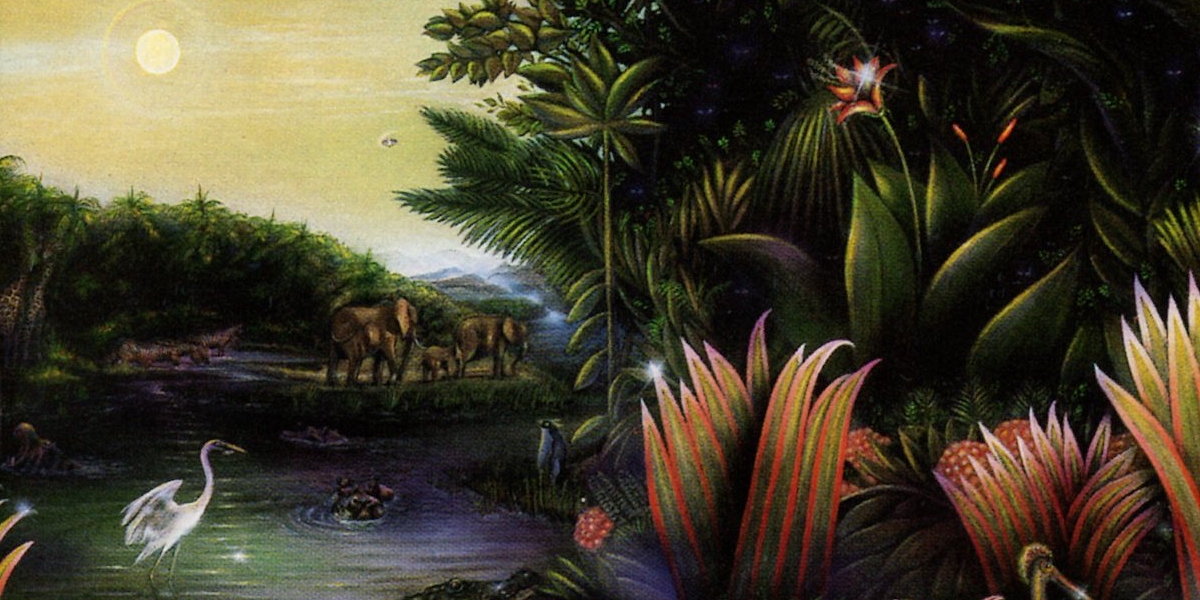
 Following guitarist Lindsey Buckingham’s acrimonious split from the band in 1987, Fleetwood Mac forged on with a scheduled world tour, billed as the “Shake the Cage Tour,” and promoted its 14th album Tango in the Night, which Buckingham had meticulously produced. New members Billy Burnette and Rick Vito had the formidable task of filling Lindsey’s critical role on guitar, which they handled with skill and professionalism, as they performed Buckingham’s signature set closer “Go Your Own Way,” as well as a number of founding Fleetwood Mac member Peter Green classics (“Oh Well,” “Rattlesnake Shake,” and “I Loved Another Woman”).