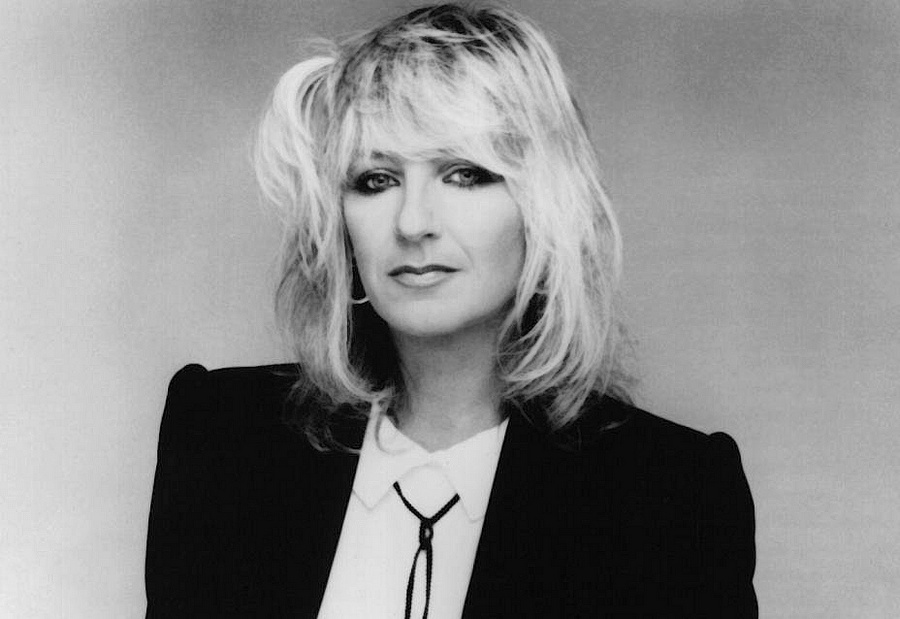
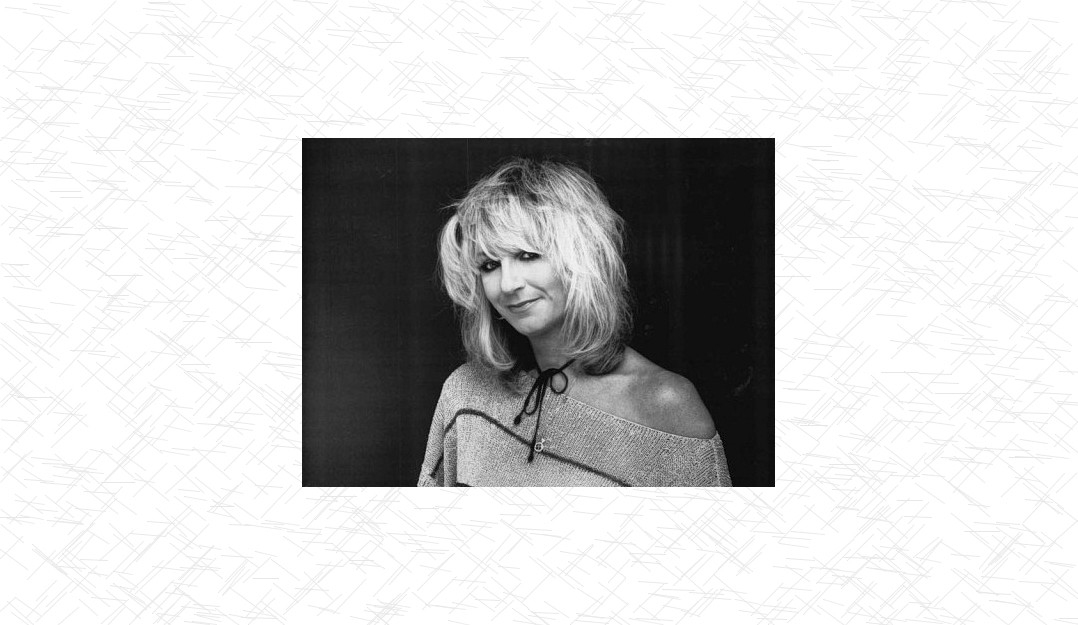
Category: Christine McVie (1984)

  • A fatigued McVie is still in fine voice

    A fatigued McVie is still in fine voice

    A nonstop tour schedule of one-night stands since April 15 has left singer-songwriter Christine McVie more than a mite weary. Her lack of energy was evident in concert Thursday night at Sunrise Musical Theatre, and was the only deterrent to an otherwise fine performance.

    McVie was in good voice, right on the mark with her distinctive smoky, sleepy, blues singing style. She was backed by an excellent five-piece band, most of whose members also accompanied her on her recently released solo album, titled Christine McVie. Her repertoire was a well-chosen selection of her solo songs, as well as those she has recorded in her 13-year career with Fleetwood Mac.

    McVie’s reputation as a laid-back performer seems to have preceded her throughout her first tour apart from the legendary band. Sunrise Theatre was less than half full, as has been the case at many of McVie’s other stops. This was unfortunate, not only for McVie and band, but also for those who missed the show, an enjoyable and musically proficient package of ballads, rockabilly and basic rock ‘n’ roll.

    McVie is more than aware that the tour hasn’t been a big draw.

    “Being on solo tour is less and more than I expected,” she said after the show. “Actually, I expected more people, but I’m happy with the response from the people that did come out.”

    Those who did made up for their small numbers with a warm reception, which became warmer and louder as McVie seemed to pick up on their positive vibes and opened up, if just a little.

    Accompanying herself on electric and acoustic piano, McVie sang most of the songs from the Christine McVie album, including its two singles — “Got a Hold on Me,” which became a hit soon after its release, and “Love Will Show Us How,” now rising on the charts. Also memorable were her album cuts “Ask Anybody,” a haunting ballad that clearly displays the soulful emotion of McVie’s voice, and “So Excited,” a rollicking rockabilly-style number.

    For the most part, the songs from McVie’s solo album sounded better than the Fleetwood Mac hits she sang — “Hold Me,” “Over My Head,” “You Make Loving Fun” and “Don’t Stop.” “Don’t Stop,” especially, sounded rather empty without Stevie Nicks’ high accompanying vocals.

    McVie’s back-up band nearly made up for her subdued manner with an energetic, rhythmic performance. Lead guitarist Todd Sharp (especially notable for some hot breaks), guitarist Steve Bruton, bassist George Hawkins, drummer Steve Ferrone and keyboardist Eddy Quintela formed a tight, balanced unit. When the three guitarists performed without McVie on Guitar Bug, a bouncy rocker a la Chuck Berry, the audience responded almost as enthusiastically as it did at McVie’s encore.

    McVie, who said she plans to record another solo album after helping Fleetwood Mac complete its new LP, looked smashingly British in red suede boots, a black and white leopard-spotted blouse, black vest and jeans.

    Opening the show for McVie was the Baxter Robertson Band, a five-piece Los Angeles-based rock group with a good beat, some promising songs, and a hard-working lead singer-guitarist- saxophone player.

    Linda R. Thornton / Miami Herald (FL) / June 2, 1984

  • Fleeing the Mac, Christine McVie goes solo

    Fleeing the Mac, Christine McVie goes solo

    It has certainly become fashionable for members of a superstar band to break out with their own solo LPs.

    Fleetwood Mac is a case in point. Side projects have made a solo star of the group’s resident mystic dreamer Stevie Nicks, and won critical renown for the rock eccentricities of Lindsey Buckingham. Mick Fleetwood has jumped at exotic African recording opportunities (for The Visitor) and hit the road with Mick Fleetwood’s Zoo. Unfortunately, Mick also has found himself recently in the bankruptcy courts.

    Pianist/vocalist/songwriter Christine McVie, the 40-year-old earth mother of Fleetwood Mac, is a latecomer to the solo LP arena. Now, she’s making up for lost time with an absolutely delicious Warner Brothers release of romantic rock shufflers (Christine McVie), and a tour bringing her to the Tower Theater tomorrow.

    Self-doubts, she says, have held her back from solo-land ever since 1968, when last this native Britisher headlined an LP as Christine Perfect, then stepping out from her blues cocoon Chicken Shack.

    “People have constantly been saying, ‘When is Christine going to do her album, when, when, when?’,” she says. “But I wasn’t ready when everybody else was doing it. I didn’t want that kind of pressure or responsibility. Also, I’m always insecure about material.”

    This, you gotta understand, is coming from the woman who has contributed the likes of “Show Me a Smile,” “Over My Head,” “Say You Love Me,” “You Make Lovin’ Fun,” “Think About Me,” “Hold Me” and “Love In Store” to the big Mac. However, producing three songs for a group project, knowing that your work will be balanced out by two or three other composers, isn’t nearly as difficult as doing it all yourself, she suggests. “I tend to get bored by solo artists.”

    So McVie’s LP, carefully planned out in California (a switch from FM’s painful “wing it-in-the-studio” approach) and then recorded in Montreux, Switzerland, and London, is also a collaborative effort. It’s designed, she says to “protect my own interests.” Guitarist Todd Sharp, whom she met when he was playing with former Mac member Bob Welch, co-authored five songs with Christine. Alone or with other writers, Sharp also takes credit for three of the remaining five tracks. “Ask Anybody” is a McVie-Stevie Winwood collaboration. Eric Clapton, Mick Fleetwood and Lindsey Buckingham make instrumental contributions.

    “Got a Hold On Me” has gotten the most radio play, to date. Now a very funny video for “Love Will Show Us How,” featuring Paul “Eating Raoul” Bartel as a symbolism-crazed director, is boosting the cause of that song.

    The LP’s sound is comfortingly familiar to Mac fans, though a bit happier, overall, than one might have suspected from the often bittersweet McVie. ”There was no particular thing I aimed at. I do have a personal love for close harmonies and guitars. And I do think I might have backtracked toward a blues flavor that’s been missing from recent songs with the band.”

    Yes, Virginia, there is still a Fleetwood Mac. The two once-married, now divorced couples in the band (Christine and John McVie, Nicks and Buckingham) are getting on quite amiably, claims McVie (which may explain why recent group albums have lacked the bitter sting of their soap-opera-on-vinyl Rumours.) Another FM group recording project, she says, is scheduled for the fall.

    Jonathan Takiff / Philadelphia Daily News / May 18, 1984

  • ALBUM REVIEW: Christine McVie (1984)

    ALBUM REVIEW: Christine McVie (1984)

    Christine McVie 1984Christine McVie
    Christine McVie
    Warner Bros. Records


    For years Christine McVie has been Fleetwood Mac’s hidden strength. Though the addition of the carbonated California pop of Lindsey Buckingham and Stevie Nicks in the mid ’70s is credited with rejuvenating this warhorse ’60s band, their frothy effervescence would have quickly dissipated without the cap provided by McVie’s solid, fundamental musical approach.

    In Mac’s vocal arrangements it’s her haunting smoky voice that provides the root melody for Buck/Nicks to soar through, and it’s McVie’s songs — “Over My Head,” “Say You Love Me,” “Don’t Stop,” “You Make Loving Fun, etc. — which consistently demonstrate the most soul and depth in the group’s book.

    It is this quality of soulfulness that has distinguished McVie’s work over the years, from her game contributions to the Chicken Shack blues band and her first solo album, Christine Perfect, to her role in Fleetwood Mac and now a second solo record after a 15 year hiatus, Christine McVie.

    The new solo project is less of a departure from her current day job than her first record was from Chicken Shack. Where Christine Perfect was far superior to anything Chicken Shack recorded, Christine McVie trades off the strengths of the Fleetwood Mac formula that she is such an essential part of. Though “Love Will Show Us How” is harder edged and simpler than a Fleetwood Mac song, stylistically it’s the similarities rather than the differences that stand out. Co-writer/guitarist/vocalist Todd Sharp uses the same kind of melodic single-line guitar figures that Lindsey Buckingham favors, and Buckingham himself guests on several tracks.

    McVie’s songs are as eloquent and personal an account of her love life as, say, Joni Mitchell’s, but without the unseemly exhibitionism. (The name of her publishing company, Alimony Music, indicated her bemused attitude toward affairs of the heart.) Her expressions of love’s pain (“The Challenge”) and exhilaration (“So Excited”) are couched in simple, universal images like the lonely bed and the long awaited knock on the door, yet her subtle melodies and sly, confiding voice infuse the images with tremendous emotional resonance. In “I’m The One” and “Keeping Secrets,” she adopts a get-tough attitude about love as she refuses to allow herself to be a victim, yet in “The Smile I Live For” she accents her capacity for total surrender through some beautiful piano accompaniment.

    Two of the album’s best songs feature vocal and instrumental exchanges with Steve Winwood. The opus-de-funk “One In A Million” is a dramatic vocal trade-off between the two that reminds you just how good a blues singer Christine is. In “Ask Anybody” McVie explores the psychology of her love entanglements with characteristic irony and that determined faith that keeps her searching for the ideal even after countless disappointments. The gentler, introspective tone she strikes here is supported superbly by Winwood’s brilliantly understated keyboard and backing vocals, all of which combines for McVie’s most moving vocal performance on the record. Let’s hope she doesn’t wait another 15 years to make her next record, because Christine McVie is, quite simply, the finest Fleetwood Mac spinoff solo album yet.

    John Swenson / Creem / May 1984

  • Mac’s First Songstress goes her own way

    Mac’s First Songstress goes her own way

    Christine McVie’s current solo album and cheery single, “Got a Hold on Me,” are being hailed as her first work apart from Fleetwood Mac.

    But the 40-year -old singer and songwriter, who appears in concert here Saturday, also had a solo effort in 1969 that was well-regarded but which she’d rather forget.

    “The Christine Perfect Album” might have sounded too boastful at the time, but Perfect was her maiden name.

    Miss Perfect was born in Birmingham, England, to a musical family.

    Her grandfather once played organ in Westminster Abbey. Her father began a musical career, switched in order to support the family, but eventually earned his teaching degree and became professor of music at the local university, where he still plays violin with a local ensemble.

    Piano Lessons

    Young Christine, meanwhile, got her piano lessons.

    “I absolutely hated it,” she said. “And my parents eventually let me stop.”

    She pursued art instruction, returning to the piano years later when she became interested in classical music. It wasn’t until her older brother John introduced her to some Fats Domino records.

    She hung around the burgeoning British folk and blues scene, sang with Spencer Davis for a time and eventually joined some friends in a blues band that became known as Chicken Shack.

    Around the same time, she married John McVie, a bassist for another struggling young British band, Fleetwood Mac, and was about to quit Chicken Shack for the married life.

    “I was quite happy being a housewife,” she said. “But I had sung a soul ballad on my last album with Chicken Shack, and a British music paper gave me an award for it top female vocalist of the year.”

    Managers at the time urged her to capitalize on the honor. So the Christine Perfect album was issued. It was well – received at the time but hardly a hit.

    It probably sold more copies when it was reissued in 1977 to cash in on her mega – success as part of Fleetwood Mac.

    Didn’t Mean It

    “I really didn’t intend to launch that first, disastrous solo career,” she said recently. “I did around 10 shows in pubs and other small venues. Not many other women were doing this sort of underground club circuit in the late ’60s.

    “And I was very immature emotionally; I wasn’t at all ready for it. I wanted to be with John. Then there were some personnel changes in Fleetwood Mac. I played keyboards on an album of theirs and then was asked to join the band.”

    Her first appearance on a Fleetwood Mac album came, uncredited, in 1969 with Then Play On. On 1970’s Kiln House she took a larger role, providing vocals, keyboards and another talent she painted the album cover.

    Fleetwood Mac had formed as a blues band in 1967, but had been changing since the departure of founder Peter Green.

    As an official member of the band in 1971, Miss McVie also began to write songs for the first time. They were light, frothy love songs that began with “Show Me a Smile” on the Future Games album and extended into some of the band’s biggest hits in 1976: “Over My Head” and “Say You Love Me.”

    By that time, Fleetwood Mac reached a favorable mix with two Los Angeles singer – songwriters named Stevie Nicks and Lindsey Buckingham, and the first album under the new lineup, titled simply Fleetwood Mac, sold 4 million copies.

    Rocky Romances

    The success put a strain on relationships in the band and in 1976, the McVies split. Buckingham and Miss Nicks also ended their romance.

    It all provided great material for music, though, and the next album, Rumours, sold more than 15 million copies.

    In the past few years, drummer Mick Fleetwood, Buckingham and Miss Nicks have turned out solo albums, but this is the first for Miss McVie since the success of Fleetwood Mac. She thinks it will help the band.

    “Fleetwood Mac has a reputation for taking a long time. It’s tough with five people with relatively big egos because there’s an almost constant changing of minds.”

    Her album, she said, “went so smoothly because everybody was prepared and knew what they were supposed to do. I think we should make demos of the songs just before the album is due to commence. It really makes life a lot easier. I never want to spend a year in the studio again to make one record, that’s for sure.”

    The touring band includes Todd Sharp on guitar, Steve Ferrone on drums and George Hawkins on bass all of whom also appear on the album along with Eddy Wuintela on additional keyboards and Stephen Bruton on rhythm guitar.

    She connected with Sharp and Hawkins after they backed Fleetwood on his two solo efforts. Guest stars on the record, recorded last year in Montreux, Switzerland, include Eric Clapton, Steve Winwood as well as Mick Fleetwood and Buckingham.

    The most recent of Fleetwood Mac’s appearances in the state was in October 1982 at Lincoln’s Bob Devaney Sports Center.

    By comparison, the City Auditorium Music Hall will be a much more intimate setting to hear the songs by Miss McVie. Opening the show is Baxter Robinson.

    Tickets for Saturday’s Christine McVie concert at the Auditorium Music Hall are $12.75 and are available at the Auditorium box office, Brandeis, Pickles, TIX and Uncle John’s in Sioux City.

    Roger Catlin / Omaha World-Herald (NE) / April 22, 1984

  • McVie juggles old, new at Fox

    McVie juggles old, new at Fox

    In Fleetwood Mac, Christine McVie appears as the stable Earth-bound performer balanced against Stevie Nicks’ wild flights of fancy and unfocused demeanor. The rock vs. the roll.

    McVie’s balancing number is more than just an act. She is a solid performer on her own as well, as her quiet take-control attitude indicated last night at the Fox Theater.

    The sparse, sedate crowd seemed to have the same quiet respect for McVie’s work as did the performer herself. The applause was frequent but controlled, and when McVie performed some of her early ’70s music, the loyal fans sighed in remembrance.

    “Say You Love Me” opened the set without much fanfare. McVie played keyboards and other than a few hellos and intros to the songs was silent and determined as she switched from old tunes to songs from her latest album.

    Fleetwood Mac brought her to prominence and McVie was wise enough to know the crowd wanted to hear the Mac hits. Once the audience became receptive she launched into some of the songs off her solo album.

    The Christine McVie album has the talents of Eric Clapton, Steve Winwood, Lindsey Buckingham and Mick Fleetwood contributing vocals and instruments.

    “Ask Anybody,” co-written with Winwood, was well-received as was the slightly countrified “So Excited.” Both songs were flavored a little differently than the standard McVie love ballads.

    It is the sameness of her songs that is McVie’s short suit. Almost all the tunes are about love — happy love — and most have the familiar Mick Fleetwood drum emphasis.

    Steve Ferrone plays drums on her album and on tour. The surprising difference is that on the album the beat becomes monotonous. Last night, his drumming gave a tougher rock sound to many of McVie’s numbers.

    Guitarist Todd Sharp was a vital toehold for McVie, saving many numbers from degenerating into bland white-bread rock ‘n’ roll.

    Sharp co-wrote several songs on the Christine McVie album and his guitar playing adds a much-needed bite to the music.

    This was not a hard-rocking type of concert, yet McVie conveys a tougher image than her soft ballads would suggest. One of her classics, “Spare Me A Little,” proved a powerfully tight song that received spontaneous applause.

    However, a new, mellow love tune, “Your Smile is All I Live For,” fell flat. Even Sharp’s guitar bridge on this song was trite and one-dimensional.

    Though McVie’s writing tends to fall into the top-40 genre, she brings a living fire and zest to her performance that is missing from her albums.

    Ehrenfeld is a free-lance writer.

    Marlee J. Ehrenfeld / San Diego Union-Tribune (CA) / April 17, 1984

  • Fleetwood Mac’s songbird flies solo

    Fleetwood Mac’s songbird flies solo

    “‘Got a Hold On Me’ is totally fictional, ‘cause at the time I wrote it no one did have a hold on me. If all the songs were autobiographical, I’d probably be 105 years old by now, I would have gone through so many emotions.”

    1984 Christine McVieChristine McVie’s Greatest Hits? Yeah, I have a copy on cassette that I play in my car, but don’t go looking for it in the shops. This is a custom job I made up in ‘82, compiling all of Christine’s lead vocals with Fleetwood Mac onto one tape, all the way from “Morning Rain” from Future Games to “Think About Me” from Tusk. Christine is a dusky, sensuous singer and superb keyboardist who’s never received her fair share of the spotlight, and her catalog of love songs, a subject she compulsively returns to time and again, is unmatched. She’s had her share of big hits like “Say You Love Me” and “Don’t Stop,” but tunes like “Prove Your Love,” “Remember Me” and “Songbird” are too often forgotten. Her contribution to Fleetwood Mac albums like Bare Trees and Mystery to Me has been overshadowed by the more flamboyant personalities of the various Fleetwood Mac line-ups. But last month she released her second solo album (the first was done in 1969 before she joined F. Mac and is best forgotten) called, for some reason, Christine McVie, and it’s already yielded the hit “Got A Hold On Me.” It features guests like Eric Clapton, Stevie Winwood and Ray Cooper around the core of guitarist Todd Sharp, drummer Steve Ferrone and bassist George Hawkins, with Christine on keyboards and vocals. McVie had a hand in seven of the songs, although she only wrote one, “The Smile I Live For,” by herself. Up until Fleetwood Mac’s Mirage album, she never wrote with anyone else.

    Christine was raised in Birmingham, England, and began piano lessons as a child at the insistence of her father, a classical musician who still teaches violin and plays with the Birmingham City Orchestra. She began to hate her lessons at about age eleven, but took them up again in her mid-teens and developed an interest in blues and rock. She also went to art school and studied fabric printing, silkscreen and painting, in between practicing Fats Domino licks. She worked briefly in London as a window-dresser at a department store before joining up with some Birmingham friends in a blues band at first called Sounds of Blue and later Chicken Shack. She met and married John McVie, bass player with another up-and-coming British blues band Fleetwood Mac, and lost her unusual maiden name Perfect. The story of how she eventually joined her husband’s band is told in the following interview.

    Christine’s house in Coldwater Canyon was purchased from Anthony Newly, and is the kind of mansion that befits a member of one of the world’s biggest groups. The decor combines oriental designs and art deco in stunning combinations, mother-of-pearl inlaid mirrors, silver cigarette cases and golden screen. There’s a Japanese garden, swimming pool with a view of Beverly Hills, a music room and pub, and the discreet sounds of a maid vacuuming the thick carpets.

    I was told that Christine is never seen without a drink in her hand, and sure enough she enters the room holding a tumbler of beer. (“I do like my wine,” she says, laughing, when I bring up her reputation for drinking.) Although she’s hardly glamorous in the usual sense, Christine does have a particular kind of sex appeal; considering I’ve had a crush on her for fifteen years, I managed to restrain myself quite well. “Just the facts, ma’am, only the facts…”

    When you started out with Chicken Shack were you already an accomplished singer?

    Chicken Shack was as basic as you could get, three chords and twelve-bar shuffles all the time. You can get real tired of that quick. But I didn’t consider myself a blues singer, or a singer particularly at all. I barely played piano even. I had to go out and buy all the Freddie King albums I could find. Everything I know I attribute to Sonny Thompson, who was Freddie’s cousin, producer and manager, I think. I picked up little licks from his playing.

    Looking over your songs, it appears you never wrote one that wasn’t about love.

    Except for “Don’t Stop,” which isn’t directly connected to love. I write about love, feel comfortable writing about it, but that puts me with many others. I feel pretentious writing about things I don’t really feel. Male-female relationships are better for me to write about. And all the songs are not autobiographical. I might just step into a friend’s shoes for a while. They’re still meant, felt. “Got A Hold On Me” on the new album is totally fictional, ‘cause at the time I wrote it no one did have a hold on me. If all the songs were autobiographical, I’d probably be 105 years old by now, I would have gone through so many different emotions.

    Your love songs have certain themes, falling in love as a kind of insanity, foolishness, a total kind of giving. The word “fool” appears in many of your songs describing the lover. “Ask Anybody” on the new record describes being “drive wild” by a man. Is that how love strikes you?

    No one’s ever gone to such lengths to analyze it before, to be quite honest. Those words about “He’s a devil and an angel/Ooh the combination’s driving me wild” were written three years ago, when I was with Dennis Wilson. They fit a certain melody that came up. You know, not everything is unhappy about love. This album is a very happy, very “up” album. Maybe I’m trying to retaliate. Maybe I haven’t had a very happy love life. I’ve had wonderful relationships but not always particularly joyous. Maybe I’m an idealist and want to have the perfect love. That’s impossible. I have this “magnificent obsession.” It’s something to do with fantasy, the idea of the unobtainable person. I’ll have to think about it…and I certainly won’t use the word “fool” on my next album, all right?

    I only meant to suggest a contrast between the new songs, which sound so happy and fulfilled, to the type of tunes you’re known for in Fleetwood Mac.

    It’s refreshing, I think. It’s the way I’ve felt, a little more confident. I didn’t make this album before because I wasn’t sure I was ready for it, didn’t want to take the responsibility, either the let-down or elation, the success or failure. I had a wonderful, enjoyable experience doing this album in Montreux.

    Do you feel that you’re less exposed on a Fleetwood Mac album where you might only contribute two or three songs?

    That’s a lot to do with it, for Stevie and Lindsey too. This configuration of Fleetwood Mac’s been together ten years, and it’s taken us entire years to make a single record. So if you only have a few songs per record you need an outlet. You have a backlog of songs sometimes, and that can be frustrating for a musician.

    A few years ago, everyone started doing their solo albums. Stevie did two, Mick went to Ghana, Lindsey did Law and Order. At that time I just didn’t want to follow suit. I was busy getting the house fixed up, happy being domestic. Inevitably, I woke up one morning bored, started spending more time in the music room. Todd Sharp was coming over a lot, and we spent three months getting this batch of songs together. I was ready for something adventurous, like stepping out the front door.

    I had been domestic before, in between Chicken Shack and joining Fleetwood Mac. John and I were married but never saw each other, since we were both in touring bands. When I left Chicken Shack I stayed at home for a while. And I had won ‘best female vocalist’ in a Melody Maker poll. I was dumbfounded, but at that time, Melody Maker was kind of underground, and there was really only Sandy Denny, Julie Driscoll and me around. My single of “I’d Rather Go Blind” was a hit in England — it got to Number Nine I think — and the students thought it was cool or something. I then recorded my, first solo album, which I can’t listen to anymore. I was forced out of my early retirement, pushed into a studio…the songs I wrote on that album are really weak. The Bobby Bland songs are okay, though.

    Then Peter Green left Fleetwood Mac, and the four-piece went to rehearse at this place called Kiln House. My solo career had been dumped quickly, and I was housewifing again. I watched the group rehearse every day. After the album Kiln House was released it took off in America, and the four guys were scheduled to tour, and decided they needed another musician. And they all looked at me. And they said, “You know all the songs. You’ve heard us rehearse every day.” And ten days later I was playing my first gig with Fleetwood Mac in America. They’d never had a keyboard before, although I did do some sessions with them on Then Play On and other albums. I’d met them in the first place from always being on the same bills with them. We were like a big family even then. Mick’s like my brother.

    Is that how you could stay on in Fleetwood Mac with John after your marriage broke up?

    Yeah. At the time, the band was at the pinnacle of their career, and we had a certain responsibility not to break that up for “anything as trivial as a divorce.” For a year or so it was tricky, but we worked it out. Now we’re really good friends. I’m glad we salvaged the friendship instead of letting seven years of marriage just go down. John and I just spent too much time in each other’s pockets. It’s pressure, being in the public eye. When people get married they can live in a house with more than one room. But on tour you’re in a hotel room together, you leave the hotel together, you drive together, eat together, sit on the plane next to each other. You’re like Siamese twins.

    Does John still know you the best, of your friends?

    No. Not anymore. We’re very good friends, but…he lives in the Virgin Islands now so we spend a lot of time on the phone. I have closer friends, I would say.

    Do you think you’re any easy person to get to know?

    Well. I have this mask of aloofness, which really isn’t aloofness, but shyness. Once you get over that, I’m easy to know. I have a reputation as the easiest member of Fleetwood Mac to know. But people have told me they thought I was stuck up. It’s a kind of protective shell I have, English reserve or whatever. I was in Tower Records in San Francisco a few weeks ago, buying some cassettes, and a couple of people recognized me and ran up with albums and I just wanted to cover my face and have a seizure or something. I want people to just go away.

    Fleetwood Mac doesn’t get much credit as musicians or arrangers, it seems. John and Mick are one of the greatest rhythm sections ever, but they don’t pop up on lists like Jack Bruce, Paul McCartney or Keith Moon do.

    John is a classic bass player. He says everyone thinks they can play bass, ‘cause you can pick it up and do something. But the selection of notes, and when not to play, is very important. Lead guitarists pick up bass and are busy busy busy. But to pick the right note to go with a kick drum is difficult.

    Mick was interviewed for the MTV special about the recording of my album, and he said he can’t play with any other keyboard player. “Chris presents something of a problem,” he said. I’m not a virtuoso, but I have a style which is rooted through the bass and drums. I leave room for the guitarists. I like that, it’s solid. I don’t solo much, and I don’t do those twiddly bits with my right hand. I’m back there with the rhythm, part of a rich foundation. You need that foundation. If I was to take more solos, stick knives between the keys or something, I’d get more credit, but I’m just not that type of player.

    You’ve said you co-wrote material for your solo album, and did other people’s songs, because you felt an album entirely of Christine McVie songs might be boring. I’m not sure what you mean.

    Self-indulgent is more correct. A solo album…it was more important to me that the content be exciting and innovative than it just be…mine. There was an injection of freshness because I did allow other songwriters in. I wanted exciting songs.

    This isn’t just another way of hiding?

    It’s not a question of hiding. I wanted to sing, and I’ve never sung better. I didn’t care who wrote the songs.

    When I met Todd Sharp years ago, while he was playing with Bob Welch, he struck me as an incredible perfectionist, doing solos over and over. Is he like that to write with too?

    He’s better now than he used to be. He and George Hawkins, my bass player, went to Ghana with Mick, and Mick said, “Todd’s great, but he takes a bloody long time to do anything!” But I found it quite the contrary. We did all the demos and zipped right through. We did a lot of preliminary work before going to Montreux. This album only took three months of studio time to record.

    That still seems like an awfully long time.

    Not compared to Fleetwood Mac taking a year. We would go in the studio on Tusk five days a week. Sometimes we’d just sit around and chat, waste studio time and lots of money. But there’s a lot that goes into the making of even one cut on one record. You can spend days getting the right drum sound. And vocals take a long time; you can’t just do one take and it’s perfect. I sang well on this album, so we didn’t have to combine various takes as much, like Russ Titelman is known to do.

    When did you become a good singer, then?

    Well, Mick always believed in my voice and encouraged me to write more, and I just got better over the years. My weak point used to be harmony singing. I just couldn’t keep in tune if someone else was singing. But Lindsey and Stevie really helped me and I find it relatively easy now. I love singing with Lindsey, we get such an interesting tone together.

    Did you record anything for this album that didn’t get on?

    There was a song that began as a studio jam, called “Too Much Is Not Enough,” a really good and raunchy rock and roll track, but I wasn’t satisfied with the vocal. If I do it over maybe it’ll be released as a B-side. That was the only thing we recorded and didn’t use. We didn’t over-record like some bands do; we were very compact.

    I have heard that Stevie Nicks sometimes saves songs for her solo albums and won’t let them appear on Fleetwood Mac albums. Have you ever done that?

    No. I write for projects when they come up. I have a thick book of unused lyrics, unfinished melodies. When a project arrives, I begin work. I don’t separate my work with the band from this solo project. I’m sure the group could have recorded any of these, and they would have if the Fleetwood Mac project had come up at this time. I don’t have any finished songs lying around.

    Tusk is one of your favorite Mac albums, isn’t it?

    Yes. Lindsey really dominates that one. He wanted to do something different, although we all enjoyed the success of Rumours obviously. Lindsey recorded a lot of it at his home studio, without any of us at all on certain tracks. I think if he hadn’t worked on Tusk so hard he would have left the group and gone solo then, the way he was feeling. We kept Lindsey in the band by letting him do his album within ours. He brought a lot to my songs, like the guitar in ‘Never Make Me Cry’. He enjoys working on other people’s songs. He’s a tremendous arranger, got a great imagination. Danny Kirwan was a great arranger too, even if he was King Neurotic. He was crazy for most of the time he was in Fleetwood Mac in the ‘70s. He was really difficult to work with, so paranoid. You constantly felt you had to accommodate him.

    Now that you’ve got your own band, will you be touring?

    We’ll go on the road with the addition of Billy Burnette and Eddy Qunitela. Mick Fleetwood really put this band together, and it’s a good one. I don’t know if Fleetwood Mac’s going to tour again. We’ll make another record, but we’ll have to see how the five personalities are getting on. The other night Mick and Lindsey were over and we realized that was the highest Mac count in some time. We’ve always done long tours, and personalities clash after such a long time. The Tusk tour was one year long. And it doesn’t matter if you go to exotic places, because Thailand is just like Chicago if the only thing you see is the hotel and the hall. These long tours are like being married to four people at once. I think we’re getting a little old for that. They’ll be carrying us off the planes on stretchers if we’re not careful!

    © Mark Leviton / BAM / March 9, 1984
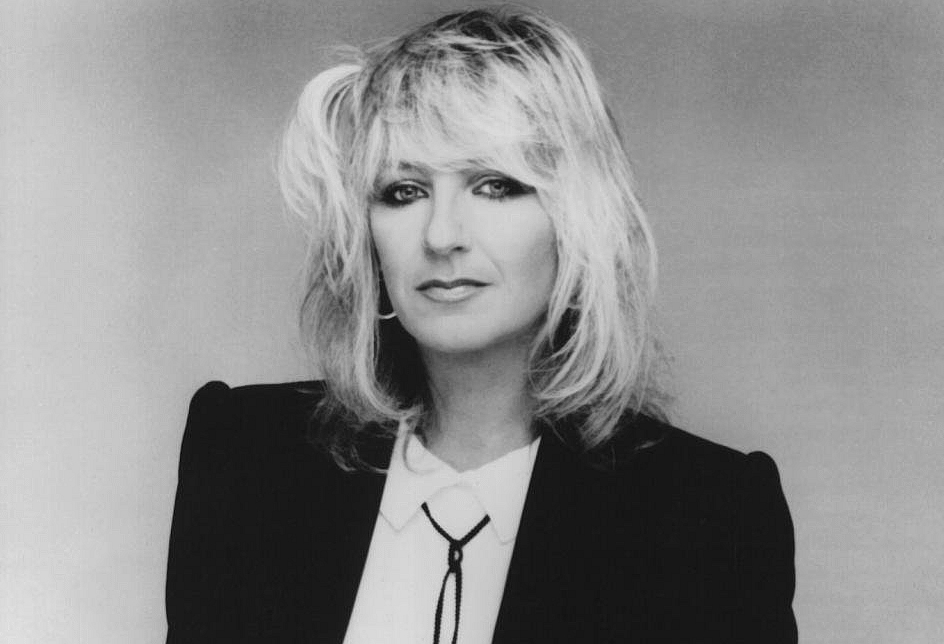
  • McVie is at top of list of new British rock stars

    McVie is at top of list of new British rock stars

    Rating system: A record with a rating of 1 is worthless; 10 is exceptional.

    Christine McVie (Warner Bros.) -When you talk about second-wave British blues musicians, you think of Eric Clapton, Jimmy Page, Steve Winwood, Jeff Beck, perhaps Rod Stewart and maybe even Peter Frampton. Nobody thinks to include Christine McVie in this company, but she belongs there.

    Her first solo album, recorded in the late 1960s under the name Christine Perfect, demonstrated a raw blues sensibility and a thick, expressive voice. After almost 15 years with Fleetwood

    Mac, she has recorded her second solo album, and it proves that her musicianship only deepened during that time.

    If the public has not been able to appreciate McVie next to her more flamboyant teammates — namely Stevie Nicks and Lindsey Buckingham — her peers know what she can do. Clapton and Winwood both contribute to this album, as do Buckingham and Mick Fleetwood.

    McVie hardly needed their help, however. The songs are every bit as catchy as anything Fleetwood Mac has recorded, and McVie’s faithful, romantic moods aren’t constantly interrupted. There’s no one else for her to share time with here except collaborator Tood Sharp, who seems to share McVie’s sturdy songwriting style.

    Nicks is like the prettiest girl in school, while McVie is the smartest. Nicks never had to develop her other abilities, and it shows as she ages. McVie, on the other hand, did her homework, and now she’s having all the fun. Rating: 9.

    Rick Shefchik / Lexington Herald-Leader via Knight-Ridder News Service / February 26, 1984