Category: Dave Stewart

  • Stevie Nicks: In Your Dreams and The Hamptons

    Stevie Nicks: In Your Dreams and The Hamptons

    Legendary singer/songwriter Stevie Nicks sat down with Hamptons.com to discuss In Your Dreams during the Hamptons International Film Festival.

    By Nicole B. Brewer and Nicole Barylski
    Hamptons.com
    Friday, October 5, 2012

    After a ten year hiatus legendary songwriter Stevie Nicks is back with her latest album In Your Dreams and a rockumentary, produced by the Eurythmics’ Dave Stewart, of the same name. “When you see it you are going to be living in my world for one hour and forty minutes,” said Nicks during our recent interview. The ‘gypsy’ is in the Hamptons this weekend for the 20th Hamptons International Film Festival. We sat down with her at The Maidstone on a gorgeous fall afternoon to get the scoop.

    “It was the best year of my life! I have never had so much fun in my life,” exclaimed Nicks as we sat in the garden and talked about nail polish a bit before our interview officially began. She prefers OPI Big Apple Red and does her nails herself saying as we settled in, “If I wasn’t doing this I’d be a manicurist!”

    The In Your Dreams album was ten years in the making and all started with 9/11 explained Nicks, “I went on the road at the end of June with Trouble in Shangri-La. I had been on the road for two and a half months, which is nothing and then 9/11 happened. So for all practical purposes the record and everything blew up.” Nicks was in New York by herself set to enjoy her one day off on that fateful day, her band was in Canada getting ready for the next leg of the tour. “I went to bed at 7:30 p.m.,” she went on to say, “and when [my assistant] Karen woke me up at 11 a.m. the world had changed.”

    Ever generous to her devoted fans, Nicks stayed on the road for another month because “no one had turned their tickets in or asked for refunds.” She went on the Say You Will tour with Fleetwood Mac in 2002, then again on her own in 2003 and 2004. During that time she kept pondering writing and another record but the music industry was in flux and piracy was a hot topic. Her advisors told her to enjoy touring and wait. Nicks says her managers told her, “You’re a songwriter, you create the song it’s yours, you write the poem, and you put it out. [Then] one person buys it and sends it out to 500 personal friends and they send it out to their friends. You are a songwriter this is how you make money. What we recommend is you go back on the road because you can still do big shows and sell tickets. A lot of people can’t.” So she did.

    Inspiration for In Your Dreams happened quite unexpectedly in 2009 while on tour with Fleetwood Mac in Australia. “I saw the second ‘Twilight’ movie and wrote ‘Moonlight (A Vampire’s Dream)’ right then.” Nicks told us, “There was a piano in my suite and I said to my assistant Karen, I am ready to make a record now. I don’t care what is going on around me I’m doing it. If nobody wants it or everybody steals it I will have to deal with that then.”

    As soon as she got off tour she called Dave Stewart and asked him if he wanted to work with her to produce. He jumped right in. “Dave came up [to my house] to spend one day discussing it and I said why don’t we do it here. We don’t have to go into the studio and pay $2,500 per day. He said, ‘let’s do it.’“ Vamping a bit and mimicking her dear friend and collaborator she went on, “By the third day he said, ‘Darling we have to film this.’ And I said, ‘Darling do you know what that means?’ Now this guy dresses up every day and loves it.” Nicks is not in full stage dress and makeup at home, she likes a more casual look. For her the thought of cameras every day meant hair, makeup, and wardrobe which caused some hesitation. She relented when he reassured her, “He said if you don’t love it, we won’t use it. I said, ‘Hand to God?’ and he promised ‘Swear to God.’“ But he didn’t get off that easy. “Fair enough,” she told him, “But I will hunt you down and kill you if any of it gets out and I don’t like it.”

    From there they filmed for a year and in her words, “Had the best time.” Stewart’s team then edited a year of her life down to three hours. Later the film would be cut to a final hour and forty minutes. “We finished just two weeks ago,” said Nicks, “With that kind of thing it’s like ‘no you can’t have it it’s not done yet.’“ When they finally handed it in and realized the film was complete Nicks was “in tears and I said ‘take it.’ It’s like your child.”

    Regarding the genius that is Dave Stewart, Nicks went on to gush a bit, “He is an amazing photographer. He’s been filming women for years. With Annie Lennox, he is the reason she cut off all her hair. He was behind all of this amazing stuff, I didn’t even know.” On In Your Dreams, Nicks says he gave everyone Flip cameras and said, “Everyone film and we will see what we come up with. If it doesn’t make sense or is an Alice In Wonderland bewitched world we won’t put it up. If we love it we will let people have it.” It was an “easy thing to do because Dave made it into a no big deal thing.”

    Having only been in and out of the Hamptons a mere three times for benefits over the years Nicks is looking forward to enjoying the film festival weekend in Sag Harbor with friends. So if you notice a familiar looking blonde with a crescent moon necklace window shopping next to you on Main Street take time for a second look, it might just be the Stevie Nicks, star of In Your Dreams and 140 million album selling Rock and Roll Hall of Fame legend.

    Get up close and personal with Stevie Nicks at Bay Street Theatre on Sunday, October 7, 2012, at noon for a “Conversation With Stevie Nicks” presented by Capital One. Catch a screening of In Your Dreams during the Hamptons International Film Festival this weekend at the Sag Harbor Cinema also on Sunday, October 7, 2012, at 3:00 p.m. For details check out www.hamptonsfilmfest.org

  • Q & A with Stevie Nicks, Dave Stewart

    Q & A with Stevie Nicks, Dave Stewart

    Interviewed by Dennis Constantine/ KFOG, San Francisco, Ca

    FRIDAY, NOV 9th

    The legendary Stevie Nicks has an instantly recognizable voice that rises above all others that stops you in your tracks – that has inspired and influenced artists for generations. It is at once haunting, romantic, filled with mystery and completely unforgettable. Added to the voice are her extraordinary songwriting talents which have brought joy to her millions of fans for generations. Collectively they add up to one of the most successful female artists in rock history. From the start of her career as a solo artist with the release of her five million seller Bella Donna up to her current critically acclaimed In Your Dreams, Nicks has never failed to deliver unforgettable performances on record and on the stage. In Your Dreams is Nicks’ first album of new material in a decade. “Dreams” was co-produced by former Eurythmic Dave Stewart and Glen Ballard. Nicks has been touring the last year and a half for her In Your Dreams Tour and has also appeared with Rod Stewart on the Heart & Soul Tour. “The Gold Dust Woman”is also completing work on a documentary on the making of the In Your Dreams album which will be released at the end of this year.

    It will also be screened at the upcoming Hamptons Film Festival and theMill ValleyFilm Festival.

    Stevie first came to Sunset Sessions in February 2011, where she treated our attendees to an impromptu performance with Vanessa Carlton! We are so excited to have her back!

    Dennis Constantine of KFOG San Francisco: Dennis started in radio when he was five years old; he was the class announcer for his kindergarten class. By the time he was 16, he had a job at the local top 40 radio station in Baltimore helping the deejays at the station and at their record hops. By the time he was 21, he was program director at WYRE in Annapolis,Maryland. After stints in Miami,Florida and legendary stations WYYQ and Y100, he moved to Colorado where he was music director and night deejay at KTLK, and then the morning guy and production director at AOR station KBPI. In 1977, he started KBOC in Boulder and programmed at the station for sixteen years. After consulting two dozen Triple A and and Alternative Stations, he moved to Portland,Oregon to program KINK. After thirteen years there, he moved to the Bay Area where he is now Director of FM Programming for Cumulus San Francisco. He can be heard on the air at the legendary KFOG every afternoon.

  • Gold Dust Woman: Q&A with Stevie Nicks

    Gold Dust Woman: Q&A with Stevie Nicks

    When Stevie Nicks started her musical and romantic relationship with Lindsey Buckingham, both were still in high school. By the time the romance ended, the folk-pop duo were in one of the world’s hottest bands, which also contained another splitting couple, John and Christine McVie, as well as drummer Mick Fleetwood, who also was in the throes of divorce. Their tangled, cocaine-addled lives—and Nicks’ affair with Fleetwood—would become fodder for 1977’s Rumours, one of the best-selling albums of all time. In the years since, Fleetwood Mac’s members would go their own ways, only to come together again periodically. But of all their solo careers, Nicks’ has been the most successful.

    Her string of hits, with and without Fleetwood Mac, represents one of pop music’s most beloved canons: the list includes “Rhiannon,” “Landslide,” “Dreams” (a favorite topic), “Edge of Seventeen,” “Leather and Lace” (a duet with one-time lover Don Henley), “Stand Back” and, with Tom Petty, “Stop Draggin’ My Heart Around.” Her gypsy/witchy-woman look—Victorian-inspired gowns, high-heeled boots, leather and lace, silk and satin, romantic hats over long, blonde hair, all shown off with frequent stage twirls—set a tone in the ‘70s from which she hasn’t wavered to this day. Her songwriting methods hadn’t changed much, either, till she called Dave Stewart and asked him if he’d like to produce her first solo album in 10 years. Released in May, In Your Dreams contains the first song collaborations she’s ever done with another writer while sitting in the same room, raw and open to anything.

    Their output, it turns out, is remarkably strong. This time, she’s inspired by soldiers, angels, vampires, New Orleans, Edgar Allen Poe and, of course, romantic notions—past, present and future. (Both Buckingham and Fleetwood are on the album, along with guitarist Waddy Wachtel, with whom she’d also reportedly been linked at one time.) Sometime writing partner Mike Campbell also participated. In a wide-ranging conversation, Nicks discusses her unusual methodology.

    You’ve written some of the most enduring songs in the pop-rock lexicon. I’m sure you’re very proud of that. How about if we start with Buckingham Nicks? “Frozen Love” was the biggest song that you two were known for as a team. Did you write that together?

    No, I wrote it. Lindsey and I did not ever write a song together. The only—strangely enough—time I’ve ever written a song with anybody is Dave Stewart.

    Wow!

    I mean anybody in the same room. I do write with [Heartbreaker] Michael Campbell, but he sends me a CD that has three or four tracks on it, so he’s not sitting there. That’s very different, because if you don’t like it you can like wait three days and call and say, “You know, I just didn’t see anything/hear anything right now, but I’ll revisit it.” So you can kind of get out of it without hurting anybody’s feelings. That’s a problem with writing songs with people—you can really end up hurting peoples’ feelings, because if you don’t like it, you either get stuck with something you don’t like or you’re honest and you tell them you don’t like it, and, it takes a very special team to be able to write together without that ego thing happening. So Lindsey and I never wrote. He would leave guitars all over our little house and they’d all be tuned in different tunings and God knows what. He’d be gone, I’d write a song, I’d record it on a cassette, and then I’d put the cassette by the coffee pot and say, “Here’s a new song, you can produce it, but don’t change it.” Strict orders. “Don’t change it, don’t change the words, don’t change the melody. Just do your magic thing, but don’t change it.”

    Did you ever overcome that feeling that once it was done, nobody could touch it?

    No. Very superstitious.

    How does that translate into your songwriting? When it’s done, it’s done?

    It’s done—pretty much. Sometimes when I write a song, I’ll just write the first two verses and the chorus, and in my head I know I still have to write another verse, and maybe I’ll do that down the line a couple weeks later or maybe even a month or two later, but it’s very set in stone because—I always have a tape recorder going, and usually the first time, if I’m singing [sings] “Now there you go again, you say you want your freedom /who am I to keep you down?”—I’m not changing that. And I know it. The second it comes out of my mouth, I’m like “Oh, that was good.” So I have a little overhead lightbulb thing that goes off, so then I’m never going to go back and change that even though a good example is Don Henley—I was going out with Don Henley when I was writing “Dreams,” and it says [sings], “When the rain washes you clean, you’ll know.” Well, he didn’t like that [sings]“washes you” [accent on “es”], and he wanted me to go, “When the rain washes you clean” [accent on “wash”]. And I’m like, “No, I don’t like it.” [laughs] And he’s like, “Well, wash-ES doesn’t sound good,” and I’m like, “Well, wash-ES is the way it’s gonna be.” So then you start getting into that with somebody, and we’re talking an ego [of] a fantastic songwriter here. So I’m arguing with Don Henley over this, you know? That’s why I really stayed away from writing songs with other people.

    Especially men, I guess.

    Well, yeah, and but then if you slip it over to women, then of course women are more sensitive. So then you’re really actually going to hurt somebody’s feelings. It didn’t hurt Don’s feelings that I didn’t like his idea. I think he just—he was like, way more famous than me, you know, Don Henley and the Eagles—so I think he probably just thought, “Well, you’re an idiot.” And just left it at that because certainly, me not liking the word “washes” is not going to wreck Don Henley’s confidence. But at the same time, it was a little thorn there for a moment.

    It’s interesting that you say, “He was way more famous than me.” In retrospect—and it’s so strange to ask a question like this: “Do you guys ever sit there and consider who is more famous?”—but honestly, as time has gone by, wouldn’t you say it’s pretty much equaled out?

    Well, maybe. But then, that was—well, when was “Dreams”? Was “Dreams” on the first or second record; I can never remember—whatever, when Lindsey and I drove to Los Angeles in 1971, “Witchy Woman” was on the radio, “One of These Nights” was on the radio, and we were totally inspired by them and by their amazing harmonies and amazing song craftsmanship. So in my little mind, this was two years—1976 is when it was, because that’s when I went out with Don—so in my mind, they had been famous for a good solid five, six years longer than we had been famous. So I was listening to the Eagles long before I even knew if we’d make it or not. There’s bands that are famous—well it’s generations —five years before us, and then us, and there’s the five-years-after-us generation, and then there’s even older than that, which would be Eric Clapton and his generation, a little bit older than the Eagles generation. So that’s actually like a two-year-older generation, so each one of those generations brought up these amazing bands, so I, Stevie Nicks, would open for the Eagles in a second because they’re awesome and they were my big inspiration. It’s why I was able to go out on the road just now and feel very good about opening for Rod Stewart, because Rod Stewart [is] awesome; one of my big influences.

    I was gonna ask you how that tour went.

    It went great. He’s trippy, he’s charming. I’m used to English people so I’m very comfortable with the English people. They are very witty and very funny and charming. You can’t not like Rod Stewart because he’s darling, and he was very good to me and he gave me a chance to take my new album around the United States and do 18 arena gigs, which, by myself, I could not command. I can’t play the arenas that Rod Stewart and Fleetwood Mac play. So taking me with him, he allowed me to be able to go play my single and say a few little words about my record in 18 huge cities, in 18 huge venues. He gave me a wonderful platform for that. On the last night I said to him, “If this record really does well Rod, I’m going to be sending you a cashmere blanket.” He really helped me in giving me that platform.

    Did it feel like there was a particular age group in the audience or were you reaching new fans as well?

    In Rod’s show?

    Yeah.

    Well, I’m starting to really be aware that there are children out there, I mean there’s kids, there’s 14-year-olds and 15-year-olds and 12-year-olds and 18-year-olds and 25-year-olds and 32-year-olds. It’s pretty much going across the board now, which is great. And it’s the same with Fleetwood Mac. When Fleetwood Mac first reconvened in 1998 for The Dance after not playing since 1987, since Tango in the Night, there were mostly people that were our age, a lot of people who looked definitely older, and Lindsey said, “Where are the younger people?” I said “Lindsey, give it a chance here, these are all the people that are our fans, and their children will come along with them and so will their grandchildren, by the way, so just give it two weeks,” and in fact that’s exactly what happened. Within weeks, there was like, super young people there, and it’s because we had great, serious fans, original fans in 1975-’76, ’77, ’78, and their children have grown up with us, and their children. Lindsey and I were 27 and 28 when we joined Fleetwood Mac—we had fans for those first two records that were probably, 50? Twenty-two years older than us? So think about that now. We’re 63 and 62. So if they’re still alive, we have fans in their 80s! [laughs]

    That’s what’s so cool about rock ‘n’ roll. When I was growing up, which was when you were coming out with Buckingham Nicks and Fleetwood Mac was out, the last thing you would ever do was go to a show with you parents. You didn’t even want them to consider liking your music.

    Right, but now it’s pretty different. I mean, I think that they might go in different cars and be at the same concert and not hang out that much, but they’re both there.

    If they’re lucky, their parents even bought them the ticket.

    So let’s get back to the craft of songwriting I’m amazed that they come out, from what you’re saying, fully formed almost. Do you sit down and start to write and have to plan it? Or do you just go with inspiration whenever?

    Mostly, I write poems. And my poems come directly out of my journals. On the righthand side of my big, leather-bound journals, I write prose, which is basically what happened today.  If nothing good or spectacular happened, I don’t write. But I just got back from London; I did Hard Rock Calling for like 50,000, 60, 000 people, so of course I’m going to write about that. So out of that, whatever I wrote about, if I see something that looks like a song, then I’ll go to the lefthand page, which I never write on except for poetry. And I’ll pull a poem straight out of that, so I might write a song about the experience of Hard Rock Calling—not that I am; that’s just a good example of something that was really fun and really exciting, and there were so many people there and I had been in London for three weeks, so I was really feeling very English—so I might pull a poem out of there and call it “Hard Rock Calling.” And then what I do—it’s a full-on, formal poem—let’s see, let’s compare it to the full-on formal poem of, say, “Soldier’s Angel,” which is a poem that has existed since 2005, five formal verses. Then I go to the piano, and I sit there and I stare at the words and I start playing. And just like in that little bit of “Dreams” I sang for you, all of the sudden I’ll just go [sings]“I am a soldier’s angel in the eyes of a soldier/ in the eyes of a soldier I am a soldier’s mother,” and then I’m on a roll, and the whole song just comes … it usually takes 20 minutes.

    I’m sure there are a lot of other writers who would be insanely jealous to know it’s so easy for you.

    They are, because anybody who knows me knows that’s how I write. I had a great experience when I was writing “For What It’s Worth.” I had gone to Hawaii for two weeks and my niece Jessi, who’s 19, came over, and I had some tracks from Mike and I had listened to them a couple months before didn’t hear anything, but I said, “I’m gonna revisit those tracks.” And there were, like, 10 tracks, and I hit track seven and I went, “oh my …” and I just started—I didn’t even have a formal poem—which doesn’t often happen. There’s this little train bell at the beginning and I started thinking about my granddad and how my grandfather rode the rails in the ‘40s and was a songwriter and played gigs all over the United States. And I just started singing along, and I was running around the room at the same time looking for paper and pencil and yelling at my assistant to get some kind of recording device. And all we have is a camera, so we immediately put the camera on video and we were able to record it. And then Jessi came in and I said, “Do you want to hear this?” I just sang it to her and at the end she said—and she’d lived with me, her parents [brother Chris and sister-in-law/backup singer Lori Nicks] have lived with me off-and-on for years—and she just said, “Oh, Aunt Stevie, that is so awesome.” Because it was the first time in the whole 19 years that she had known me that she actually saw the process and saw a brand new song happen; the second time I sang it, I sang it for her. And she was like, “How did you do that?” and I’m like, “I don’t know, Jess. It’s my little special gift from God.” That’s how I look at it.

    A lot of artists have said it’s just like channeling. So you always come up with the music after? Unless somebody like Mike offers some to you?

    Pretty much.

    How about with you and Dave, did you just trade verses, lyrics?

    No, what we did was, I called him in January 2010 and asked him if he wanted to produce this record that I had decided to do after 10 years. And that day I sent him 40 pages of poetry, never really expecting him to read all of it, but he did. We had my living room set up with a Pro Tools rig, so I’m sitting on my couch, he’s sitting across from me in front of the fireplace. He puts his guitar on and he takes one of the poems out of the binder that I had sent him, and he said, “I like this poem. Let’s do this one.” And I’m like a deer in headlights at this point because I want to say to him, “I don’t really write songs with people.” But I didn’t because something in me said, “Don’t say that. Just sit there and see what he is gonna do.” And he just started playing guitar, playing kind of a cool thing, and I’m staring at him like, I’m still the deer, you know, and he looks and me and he goes, “Well, sing.” And I’m like, dying, and I start reciting the poem in a sing-songy sort of way. That’s actually the third to the last song on the record, it’s called “You May Be The One.” [Sings]“You may be the one, but you’ll never be the one, you may be my love, but you’ll never be my love,” So that’s how it started, and 20 minutes later, we had a really good song and it was recorded.

    And I went to myself, “OK, I now understand why people write together. I understand why John Lennon and Paul McCartney wrote together when they didn’t have to, because they were great on their own. [It’s] because of what just happened between me and Dave.” Because there were no egos; he can read me like a book. He could tell if he played a chord I didn’t like. I didn’t say, “Stop, I hate that chord.” I think that my face probably twisted up, so he was reading my face as we went, and if I seemed to falter, he would go to another chord. So we never even stopped, it just went all the way through, almost as if I was writing it myself.

    I wrote all the lyrics on the whole record except for the chorus of “Everybody Loves You,” and that’s the first song that he sent me the night that I called him. It had the chorus, which said [sings], “Everybody loves you but you’re so alone, no one really knows you, but I’m the only one.” He said, “Write the verses to that.” And I said, “OK.” But that’s not like getting a track with no vocals. He had set the song up with that chorus, so then I had to build a story around those four lines, which was great—it was a challenge. And I immediately took it like he was writing that about Annie Lennox, because that sounded like a person from a duo writing a song about the other person in the duo. And what Dave and I had that was great was that we’d both been in really famous duos, so the whole time we were making this record, I feel like Lindsey and Annie were floating around in the room. Because a lot of the stuff that we both wrote seemed to be directed to our years as famous people in duos.

    Have you ever talked to Lindsey about that?

    Well, he’s very aware. And the words to “Everybody Loves You” came from a poem that’s pretty old, like maybe 12 years old, that was definitely written about him. Where it says, “No one else can play that part. No voice of a stranger could play that part/It broke my heart,” that’s pretty much all about Lindsey. I took Dave’s lead on that because I knew that this was about being in a duo, because being in a duo’s very different than being in a band, especially a man and woman. There haven’t been many famous duos, not that many men-and-women duos, that really lasted.

    True, and the ones there are, generally they are romantically linked.

    Lindsey and I were broken up at the end of 1976, so we were no longer a “duo” even within Fleetwood Mac, because we were no longer romantically linked. So you can be romantically linked and be a duo, or be in a band and that falls apart, and you can still stay in the band if you make the choice that you’re not gonna quit. And your reaction to that is like, “You quit, I’m not quitting. I’m not leaving Fleetwood Mac because we’re not getting along. You leave.” So nobody’s leaving.

    Was it stubbornness or resiliency?

    I think it was both, definitely. And it was all of us knowing that we had a good thing. And that none of us were gonna break that up over a personal relationship.

    That’s part of what’s amazing about your story—you all understood that the strength of the band outweighed all of the drama that was going on. Looking back on it with 20/20 hindsight, would you have changed any of it?

    No. I think it was fated. It was totally destiny that the guy who found Lindsey and I in San Francisco and who produced Buckingham-Nicks and the first Fleetwood Mac record would play “Frozen Love” for Mick Fleetwood. He knew that Mick was looking for a studio; he wasn’t that schooled in the fact that Mick was also looking for a guitar player because Bob Welch was getting ready to leave. Mick [was] searching for somebody to replace him if he did, so when Keith Olsen played “Frozen Love” for him, he definitely heard strains of Peter Green and all the other famous guitar players who had been in Fleetwood Mac for the five years before that. So the fact that that happened out of nowhere—that this big tall guy would come in and Keith Olsen would play him a song off a Buckingham-Nicks record that never really went anywhere, that two years before had opened to critical acclaim and then was dropped like a rock by Polydor—what are the chances of that? One in 20 million?

    I wanted to ask you a little bit about how you restored your voice, because there was a period of time when it went away or faltered, and now you sound so great. Can you give me a little bit on that?

    Sure. Well, I study with a vocal coach, a really great vocal coach who goes on the road with me. If I’m going on at 8 o’clock, I have to be done with my vocal lesson at 5, three hours before I sing. So at, like, 2:30 to 3, I work with Steve—his name is Steve Real—I work with him from 2:30 to 3 and then I work with him from 4 to 4:30 so that I’m done by 5. I do that absolutely rigidly before every single show. And if for some reason he’s not there—and he’s almost always there—if he’s not there, then I have a tape that is exactly what we do. It’s not as good as having him in person because he’s like the voice doctor, he can hear things in your voice that you don’t really hear, and he’ll be able to say, “You’re having a little trouble.” Like where I’m talking right now, sometimes that’s where the problem is, because I talk so much. So that’s what I’ve been doing since 1997, and he’s amazing, and he said to me, “If you want to sing into your 70s like opera singers do, then this is what we have to do.” And of course, in the beginning I was really reticent. I’m thinking, “That’s like going to the gym, that’s a big commitment,” or let’s put it this way: “I could be going to the gym.” That’s an hour commitment and I won’t be able to, because I’ll be spending an hour with you every single day before I go onstage. “how I realized that it worked was in 1997, for The Dance, we were in rehearsal and we were doing a dress rehearsal, and we’d invited like 500 people, and I was sick and I was this close to canceling it on that day, and my friend Liza said, “I have a great vocal coach. Can he come over and spend a half-hour with you?” And I said, “Oh, I’m so sure that this guy isn’t going to be able to do anything that’s going to be able to make me sing tonight. I am sick.” And she said, “Just give it a chance, Stevie.” So he came over about 3 in the afternoon and I hobbled downstairs to the living room and we sat at the piano, and for 30 minutes, he just ran me through some very interesting little scales. And he was very sweet and I liked him very much, and then he went home and I thought, “I’m going back to bed for two hours, so I won’t cancel it yet.” And I walked on that stage and sang pretty damn great considering how sick I was, and at that moment I said, “I will never go onstage without doing that workout again—ever—because I will never have another bad night if I do this, and I commit to this. I will never have another bad night no matter what—if I’m sick or if I’m having allergies or whatever happens to people that sing—sinus infection, whatever. I will still be able to sing and be able to sing pretty damn good no matter what if I do my 40 minutes with Steve.” And I have done it absolutely, determinedly, ever since.

    Do you use any potions or anything like that on top of it?

    No. Potions don’t work.

    I meant like tea, honey …

    No. Honey is acidic, for me. You can drink all the tea in the world, and I drink all the tea in the world, you can sip on olive oil, you can do tons of things that really don’t actually have one thing to do with the actual studying with a voice coach. Because when you study with a voice coach, what you’ll do is [demonstrates vocal exercise] and what you’re doing is, you’re vibrating the gunk off of your cords, because literally, you create a vibration. So anything that is on your vocal cords will vibrate right off. You can’t do that with tea. So it is worth it for any singer—and you don’t have to have your vocal coach come with you everywhere you go—what you do is, you go in and you do like two or three lessons with them and they’ll make you a tape. If it’s a good person, they’ll make you a tape, and then you use that. If you’re just playing in a little band and you do three gigs a week, you do your little tape a few hours before you go on and you’ll never have vocal problems; you’ll never get nodes, you’ll never get the nodule things, you’ll never have to have surgery. It’s like a gift. And if somebody had told me that in the first 15 years of Fleetwood Mac, man.

    Is there was anything you want to mention about the new album, any song in particular you want to talk about? You have some of the great usual suspects that you’ve hung around with for years on there; did you ever at any point have them all together at the same time?

    We did … we had Waddy, we had Mike … mostly it was me and Dave and the girls, Lori and [backup singer] Sharon [Celani], at my house. We did the record at my house, which was just fantastic. It was like a happening in San Francisco in 1968 or ’69. We only went into a big studio for two weeks to do the drum track. We started in January and we finished it Dec. 1. It was the best year of my life. I am probably more proud of this record than anything I’ve ever done. I am more proud of these songs than anything I’ve ever done—seven of them were written with Dave—and I think that caused the record to be diversified in a way that I could’ve never done by myself. Because you’re bringing another spirit in, and his spirit is great, and it’s all-knowing, and he has such a command of music, that to be working and writing with somebody like him was an adventure for me every second of every day.

    He would come Mondays, Wednesdays and Fridays, and then on Tuesdays and Thursdays and Saturdays and Sundays, the girls and I would work on our harmonies and on all our parts so that when Dave would come back, we’d have all the singing parts worked out to the song that we had just written two days before.

    We were moving fast and because of that, it was never a dull moment. It was just a lot of laughter. We made dinners for 10 or 12 every night in my dining room and we sat and talked about music and politics and the world, and it was the dream album to make.

    Every day when I would get up, I would just be going, “Today is going to be another amazing new song.” And whether it became “Moonlight” or “New Orleans” or “Cheaper Than Free,” which I personally think —I look at Dave sometimes and say, “This song, ‘Cheaper Than Free,’ may be the best song either of us ever writes,” because it’s such a precious song—I’m just very proud of it. This has been a big thing for me, to make a record that I think is this good at my age.

    And out of that—the diversification of “Secret Love” to “Soldier’s Angel” to “New Orleans” to “Ghosts Are Gone” to “Wide Sargasso Sea” to “You May Be The One”—I think of these songs and they’re all so different, and that’s what I love. My guitar player and musical director, Waddy Wachtel, always says, “In a way, since you only know six chords, you kind of just write one song.” And just after I kick him for saying that I say, “Well you’re right, actually.” So this allowed me to go places with my voice and with my creativity that I couldn’t go because I don’t know a thousand chords. I really do only know six or seven guitar chords and I never took piano lessons, so what I do on the piano is very much, the right hand never moves and the bottom hand moves bass notes, and that’s how I play. Which totally works for me, don’t get me wrong, it’s worked very well for me my whole life, but I’m really flying by the seat of my pants a lot of the time. And to have somebody like Dave, who just enjoys my life, enjoys my friends, enjoys the way I live, enjoys my hippie flowy things on the lamps and the candles and all that, he enjoys all that, he embraced all that, it really was like going back in time to when, like, Led Zeppelin made records at the Grange or that kind of situation. Every day when I would get up, I would just be going, “Today is going to be another amazing new song.” And whether it became “Moonlight” or “New Orleans” or “Cheaper Than Free,” which I personally think—I look at Dave sometimes and say, “This song, ‘Cheaper Than Free,’ may be the best song either of us ever writes,” because it’s such a precious song —I’m just very proud of it. This has been a big thing for me, to make a record that I think is this good at my age.

    Lynne Margolis / American Songwriter / Thursday, September 1, 2011

  • Wild ride

    Wild ride

    Blackbird Diaries coverDave Stewart: the blackbird diaries documents wild ride in Nashville.

    It’s an iconic group of albums that bear the name of a recording studio. The Beatles’ Abbey Road, Hendrix’s Electric Ladyland, and Elton John’s Honky Chateau are a few … and after his many decades of studio work, as half of Eurythmics, as solo artist, and as producer (Tom Petty, Aretha Franklin, Mick Jagger, Stevie Nicks, Joss Stone, etc.), there’s no question Dave Stewart understood the significance of calling his latest solo album The Blackbird Diaries.

    In the liner notes to this made-in-Nashville, eclectic, only slightly countrified rock record, Stewart describes first meeting Blackbird Studios owners John and Martina McBride, who treated him to a great night of hi-fi listening and high-end adult beverages in Studio D, where they would later record: “I remember being in a room with two-and-a-half thousand little sticks of wood pointing at me while Sgt. Pepper’s was coming at me in surround sound. John was serving vintage dessert wine and laughing … John McBride’s enthusiasm for music and recording was so infectious that I knew I had to record with him in that very studio.”

    Stewart proposed five days of cutting live in the studio: “… not trying to be country, just my own style, a little Dylanesque-meets-Leonard Cohen-meets-Tom Petty-meets-Lou Reed-meets-Johnny Cash-sounding kinda thing with my low vocals and some quirky Beatles-type chords and melodies thrown in.” He asked McBride to put together a band of musicians who would fit his complex sound.

    “I get an email from Dave that says, ‘I want to make my first solo album in forever, put a band together for me. Think Neil Young Harvest type feel, yet a bit more ethereal.’” says McBride. “I’m thinking, ‘Ethereal’–doesn’t that mean more reverb? I’m not sure, exactly.’”

    Enter the bandmembers: drummer Chad Cromwell (actually plays with Neil Young live); bass player Michael Rhodes (a consummate country sideman and versatile, melodic player); electric guitarist Tom Bukovac (Stewart: “Tom instinctively knows not only which of his 50 vintage guitars to pick up, but hones in on the exact tone within minutes”); pedal/lap steel guitarist Dan Dugmore (McBride: “There should be a law in Nashville that he needs to be on every recording session”); and keyboardist Mike Rojas (Stewart: “He plays a grand piano like he’s tickling under a baby’s chin”).

    Dave Stewart John McBrideBy phone from the office of his Weapons of Mass Entertainment business office in Southern California, Stewart says, “John helped pick certain musicians who were known for their amazing character of playing, but also because they could play improvising on the spot, and they also loved English music. It wasn’t just straightforward country players. Each one of them had a huge amount of musical knowledge. And they also had all of these amazing vintage amplifiers and guitars and things. It was kind of an instrument fest.”

    Stewart, who says he has been inspired by vintage instruments and gear since Kraftwerk producer Colin Plank turned him on to vintage synths in the 1980s, also calls McBride’s studio “Aladdin’s cave of amazing equipment: vintage instruments, vintage microphones, old valve amplifiers. And John is somebody who mixes live sound; I asked him to engineer the studio sessions because I wanted to have that feeling.”

    With an insane amount of instrument and recording technology at hand at Blackbird, an artist/ producer could spend endless hours belaboring sounds, but that is not how Dave Stewart rolls. During five days of basic tracking, he worked a “schedule” of songwriting in the late morning/early afternoon hours (either in his room or over coffee at the Pancake Pantry), tracking with the band from 2 to 7, and pouring vodka martinis for musicians, crew, and friends in the evening. (A tip from Dave: Coconut water cures a vodka hangover.)

    Dave Stewart

    McBride says that working at the pace of “Dave’s world” was liberating–all ideas were welcome, but nothing was “tweezed or overanalyzed.” But that doesn’t mean McBride didn’t put a lot of care into the recordings:

    “Technologywise, I went for the moon, as I like to do,” McBride says. “I wanted this to be real, not a bunch of manipulated, processed sounds. I also wanted to make a record that the band would be able to play live and have it kill.”

    McBride says that 95 percent of his miking/mic pre choices could have been made in 1970. He used loads of tube mic pre’s, because “Dave has a beautiful way of rounding things off, and analog distortion is beautiful. It sounds good to our ears, whereas digital distortion sounds like ass. I wanted to make sure that if we were going to overload a microphone or mic pre, there were tubes involved. Also, we recorded to Pro Tools at 96k so I wanted to frontload everything as analog as possible and as tubeand transformer-heavy as possible, so we could keep the warmth and the beauty and the love that I experience when I hear great recordings that have been made on tape.”

    Just a few of the details of his miking scheme include:

    Dave StewartGuitars: “You’ll love this,” McBride says. “On [each of the three guitarists], I used one microphone, an RCA BK5B, on each cabinet running through an RCA BA11A mic pre. That’s a ribbon mic going through the right mic pre with the matched impedance. Never once in the entire process of recording, overdubbing, and mixing did I ever put one touch of EQ or compression on any guitar. The guitars you hear are these guys plugging in and me hitting record. They sound incredible! We just had great players who have great tone, and we stayed out of the way.”
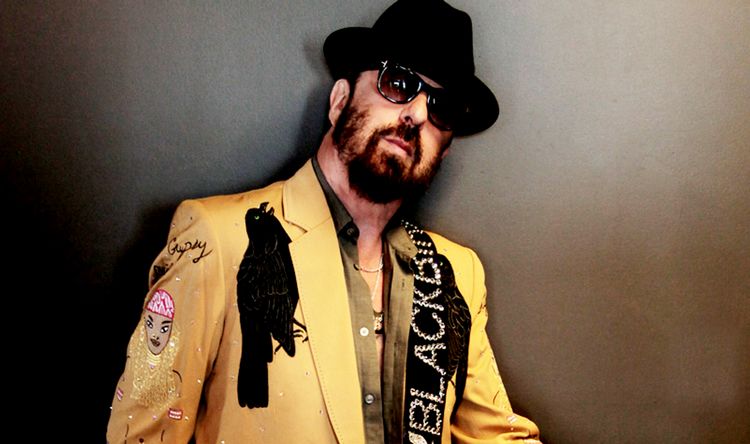
    McBride also notes that many of the guitars played on the album came from his studio’s collection, including a 1956 Strat, a ’55 tele, a 1949 Gibson SJ200 acoustic, and a 1937 Martin D28.

    Vocal miking: “I had a [Neumann] U47 [mic] on Dave with a V76 mic pre. I also had, at various times, a couple of EMI mastering EQs with a [EMI] Curve Bender, and that always seemed to work well. We also used a Pultec once or twice on Dave’s vocal, just for fun. His voice doesn’t need a lot of EQ by any means. And we were using a really over-the-top amount of compression on Dave’s vocal. I know it won’t say this in any instruction manual, but I ran Dave’s vocal into a [UREI] 1176 then into a Fairchild, then into an [Empirical Labs] Distressor, and then back. It’s a rarity that you would chain together those three compressors, but it worked. And if it’s unnatural, it’s not in a negative way. It’s just in your face.”

    Stewart also sang a couple of keeper vocals into a Shure SM7 in the main tracking room with the band: “On the song ‘Beast Called Fame,’ which has a big drum part–I mean loud drums, rockin’ guitars–he liked the vocal he did [in the room],” McBride says. “So I took all the 10k off the vocals, because the cymbals would have killed us all, and it still cut through in a beautiful way.”

    McBride also kept a couple of Neumann U47 vocal mics set up for guests, including his wife, Martina, who duets with Stewart on the track “All Messed Up on Love,” and The Secret Sisters, who added their harmonious backing vocals to a couple of tracks.

    Other vocal guests include Colbie Caillat on “Bulletproof Vest” and Stevie Nicks on “Cheaper Than Free,” a sweet love song that was co-written long-distance between Stewart in Nashville and Nicks in L.A.

    “I’m sitting there in the control room, and Dave and Stevie are on the phone together writing the song,” McBride recalls. “They’re writing the lyrics right there in front of us, and 10 minutes later, we’re recording [the band tracks]. The whole experience of being in Dave’s world was like that. It’s crazy, but it’s crazy in a great way.”

    Barbara Schultz  / Electronic Musician (p28) / August 2011

  • Music city magic

    Music city magic

    Blackbird Diaries cover
    Dave Stewart’s The Blackbird Diaries is due out Aug 23.

    Dave Stewart spends a week in Nashville and delivers a gem.

    From his legendary work with Eurythmics to his recent collaboration with Stevie Nicks on her latest album, In Your Dreams, Dave Stewart has had a reputation for capturing magic in the studio. He does it again on his new album, The Blackbird Diaries, due Aug. 23 on Weapons of Mass Entertainment/Surfdog Records/Razor & Tie.

    Recorded in Nashville at John and Martina McBride’s Blackbird Studio, Stewart’s 12-song set features guest appearances by Nicks, Martina McBride, Colbie Callait and the Secret Sisters. The Grammy Award-winning veteran British artist/writer/producer decided to record his new project in Nashville after visiting the McBrides.

    “I ended up just falling in love with the whole idea of Nashville and the whole idea of recording there,” says Stewart, 58. “Two weeks after I met John and Martina, I flew back and started recording the album, but I forgot that I didn’t have any songs, so I had to write them all on the spot.”

    The album was recorded in less than a week. “It was five days and nights, but the nights were mostly drinking vodka,” he says. “There wasn’t a lot of recording going on.”

    Stewart credits John McBride, who mixed the album, with helping him assemble a stellar band of studio musicians, including guitarist Tom Bukovac, drummer Chad Cromwell, bassist Michael Rhodes, steel guitarist Dan Dugmore and Mike Rojas on piano.

    “I felt at home and people just accepted me as somebody who was one of them,” says Stewart, who during his 30-year career has worked with Mick Jagger, Bono, B.B. King, Tom Petty and many others. “I know people who have gone to Nashville to make albums and come with some idea of making a country album, but I didn’t go with any idea of that in my head. I just came because I was drawn towards it, and while I was writing songs on the spot, I just let it happen. It’s got this weird mixture, like an Englishman landing in a country, blues and rock atmosphere, but it has kind of a quirky side to it too.”

    “Cheaper Than Free,” his duet with Nicks, is included on both their albums and was inspired by a comment from actress Reese Witherspoon.

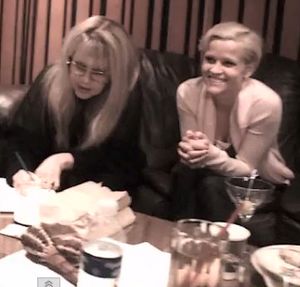
    Stevie Nicks Reese Witherspoon“Reese Witherspoon was in the studio watching me and Stevie record, and when I said I was coming to Nashville for the first time she said, ‘Oh, you can stay in my condo,’ “Stewart recalls. “Stevie said, ‘Yeah, that would be cheap,’ and Reese said, ‘What’s cheaper than free?’ I turned around and said, ‘Hey, that’s a great song,’ and Stevie and I wrote it.”

    Stewart says closing track “Country Wine,” featuring the Secret Sisters, was inspired by his Nashville experience. As he was finishing the album, he realized he hadn’t written a country song. “I couldn’t believe I’d been in Nashville with all these great country players and didn’t write one country song, so 15 minutes later I came out with ‘Country Wine,’ “he says. “This is how Nashville made me feel. We all sang it and played it live together and that was the end of the album. It’s like a sweet little end to the story.”

    Fans who visit his website, DaveStewart.com, can view the trailer for an upcoming film based on “The Blackbird Diaries.” The clip features Joss Stone and Diane Birch. “We’ve been using this video to supplement our online press and marketing initiatives, as it’s a fantastic introduction to the album,” Razor & Tie product manager Matthew Amoroso says. “It gives an interesting look into Dave’s world of songwriting–not to mention it’s fun to watch Dave, Joss and Diane Birch cut their acting teeth.”

    In addition to “Diaries” and co-writing and producing Nicks’ album, Stewart co-wrote and co-produced Stone’s latest record. He has also written a musical adaptation of the 1990 Patrick Swayze/Demi Moore/Whoopi Goldberg film “Ghost” with writer/producer Glen Ballard.

    “That’s been a very big success in Manchester [England] and now it’s moving to the West End of London to open in June,” Stewart says. “I’m flying over for the premiere. I think next fall probably is the time it will open on Broadway.”

    In the meantime, Stewart is busy promoting Diaries with media appearances stateside. The album, Amoroso says, “will find a home with a wide demographic of listeners. Whether it’s older fans of Dave’s previous work with the Eurythmics to younger fans just discovering classic artists like Tom Petty, Dire Straits, Warren Zevon and Bob Dylan, anyone with an ear for well-written rock’n’roll will love this album.”

    Deborah Evans Price / Billboard / June 11, 2011

  • Stevie Nicks: The men, the music, the menopause

    Stevie Nicks: The men, the music, the menopause

    (Photo by Kristen Burns)
    Stevie Nicks: ‘You gotta remember I am 62. So you got to have those cameras up, and the best lighting in the world.’ (Photo by Kristen Burns)

    Fleetwood Mac’s frontwoman is one of the last old-school rock stars left – and she’s still walking the walk, finds Craig McLean

    By Craig McLean
    The Guardian (UK)
    Friday March 25, 2011 6:31 p.m. EDT

    Stevie Nicks, legendary singer-songwriter and hard-living Fleetwood Mac frontwoman, is considering her greatest regret. It is not her “huge cocaine period”, the 10 years that elapsed between the making of Fleetwood Mac’s 40m-selling 1977 album Rumours and the moment, in 1986, when she finally entered the Betty Ford Center. Nor is it her complicated history with band members: she joined Fleetwood Mac in 1974 with guitarist Lindsey Buckingham, subsequently detailing their split in the hit song “Dreams,” and went on to have an affair with drummer Mick Fleetwood, which inspired the 1983 solo song “Beauty and the Beast.”

    It is not even the eight years she lost to Klonopin, a prescription tranquilliser to which she became addicted in the late 80s and early 90s, when she was “just a sad girl, sitting in a big, beautiful house, going, ‘What the f- hell happened?’“

    The regret that has really stayed with her is her marriage, in 1983, to Kim Anderson, widower of her best friend Robin Snyder. Snyder’s baby Matthew had been born two days before she died of leukaemia. Three months later, Nicks and Anderson were married.

    “It was insanity,” the 62-year-old says now. “Everybody was furious. It was a completely ridiculous thing. And it was just because I had this crazy, insane thought that Robin would want me to take care of Matthew. But the fact is, Robin would not have wanted me to be married to a guy I didn’t love. And therefore accidentally break that guy’s heart, too.”

    Nicks, now a multimillionaire, may have remarkable recall for details and dates from her four decades in music, but she also betrays the hallmarks of 70s cosmic thinking. She describes how she became aware of Snyder’s displeasure: “One day when I walked into Matthew’s room, the cradle was not rocking,” she says. “I know that sounds crazy, but it was always rocking whenever I’d walk in, and I knew Robin was there. And one day it wasn’t rocking and it was very dark and the baby was very quiet. And I said, ‘Robin wants this to end – now.’ I felt it as strongly as if she’d put her hand on my shoulder.”

    So it was a sign from beyond the grave?

    “It was absolutely a sign.”

    Nicks had visited Snyder during her cancer treatment. “I was so high on coke. I’d drink half a bottle of brandy on the way there, ‘cause I couldn’t stand it. She was so sick. And she said to me, ‘Don’t come back until you’re not high – don’t come back into this place where everybody is dying.’“

    Nicks shrugs. “So that was the Robin who would have said [of the marriage], ‘You’ve lost your mind. What were you thinking?’“

    Nicks and Anderson divorced after three months.

    Stevie Nicks is holding court in a hotel suite with spectacular views of the ocean off Miami, as her tiny terrier, Sulamith, yaps about in a blue sweater. She is here for the Heart & Soul tour, a month-long series of concerts with Rod Stewart. The tour, billed as “Two legends – one stage”, starts three days from now, but Nicks and Stewart have yet to rehearse together.

    Stewart has been in the UK playing the proud, new, 66-year-old father to his eighth child. Nicks has been at her LA home, putting the finishing touches to her seventh solo album, In Your Dreams. It’s her first new record in a decade. She and her producer/collaborator, former Eurythmic Dave Stewart, have spent a year in the mansion, writing, recording and filming vampire-themed promotional videos.

    This afternoon, Nicks – 5ft 1in (“and a half”), blond and well-preserved – is agitated at the prospect of driving to Fort Lauderdale for her first practice with Rod the Mod. “Two hours it takes to get to! For probably 15 minutes of rehearsal!”

    Only 15 minutes?

    “Yeah, he’s not a rehearser. He. Is. Not.”

    Because he doesn’t need to?

    “He doesn’t care. He’s just not like me. I’m like [I’m in] sixth grade: totally prepared, meticulous.”

    She is also relatively concert-ready: in 2009, Fleetwood Mac undertook a reunion tour of 83 shows around the world. Nonetheless, she says, “I’m scared, that’s what I am. Rod’s not scared. I have fear, he has no fear. And some people – me, Mick – we get panic attacks. Christine [McVie], too. That’s why she quit.” McVie, singer and ex-wife of bass player John McVie, left Fleetwood Mac in 1998 and now lives in the Kent countryside.

    Since the tour, Fleetwood Mac’s 1975 song “Landslide” – written by Nicks – has appeared in the US charts, though not in its original incarnation. “It’s on Glee: Gwyneth Paltrow’s done it,” she says. “And it’s number one!”

    Nicks loves Glee, and American Idol (“My friend Steven Tyler’s a judge now. I tell people, ‘Two hours, don’t call me, I’m watching Idol’“). She visited the Glee set during filming of the episode featuring “Landslide,” and creator Ryan Murphy has claimed Nicks asked him to write her a role in the series. “I did not,” she says. “I don’t really like to be filmed. But if I was ever going to do anything like that on TV, it would be Glee.”

    Nicks has strict rules about appearing on film. “I say, ‘You gotta remember I’m 62 years old. So you’ve got to have those cameras up, and I have to have the best lighting in the world.’ I’m not asking to look 16, I’m asking to look 40.”

    In the past, she has described the menopause as “horrible… rock and the menopause do not mix”. Is that behind her now? “Well, kind of. My mom is 83 and she still has hot flushes. She just starts to sweat from the very top of her head. So there’s parts of it that I feel don’t ever go away. It’s a way of life and you learn to live with it.”

    Does that make it harder to go on stage?

    “No,” she replies briskly, “because when you’re on stage you have to forget about it. There is no dizzies, there is no cramps, there is no menopause. All there is, is the audience and what you do. So you feel great for those two hours. And when I come offstage, then I can burst into tears.”

    The new album opens with a song called “Secret Love”: “The ode to the rock star,” as Nicks calls it.

    Which one, though? Lindsey, Mick, Don Henley, his Eagles bandmate Joe Walsh? She shakes her head. “I’m not sure who I wrote it about. I wrote it in 1976. It’s so old, I honestly cannot remember. In ‘75, ‘76, we were beautiful, fast, sexy, love was everywhere and we were moving from person to person. That’s it. Love was around every corner.”

    In “For What It’s Worth,” Nicks sings about a “forbidden romance that saved my life”. It’s not about Mick Fleetwood, she says. Rather, it refers to someone who stood by her in 1995, before the release of Fleetwood Mac’s live album The Dance and after her stint in rehab for Klonopin.

    It was “not a good time… I was freaked out. In rehab, when you’re leaving, the last thing they say to you is, ‘Don’t get married, don’t sign contracts, don’t buy a house, don’t sell a house. Nothing heavy.’ Because your judgment is impaired. You’re a shell. And you need to go out there and find out who you are, not on tranquillisers.

    “So you walk out into the world and you are a different person. And we were going on a tour and I was terrified. Terrified. And this person just sort of hung with me through that tour and buffered me from the world. And he did save my life.”

    The Klonopin was prescribed by a psychiatrist to wean her off cocaine. While on it, her skin peeled off and her hair turned grey. “If someone ever says to you, ‘I think you should take some Klonopin’, you should get a gun and shoot yourself,” she says.

    As for the song “Everybody Loves You” (“We cause each other such pain… at home or on stage”), the music and chorus were written by Dave Stewart. He based it on one of 40 poems in Nicks’s journal that she concedes is about Fleetwood Mac’s guitarist. “And the reason Dave wrote the chorus the way he did was because of his relationship with Annie Lennox. So we had two duos. Dave understood. He’s the same way with Annie – ‘Everybody loves you… no one really knows you, I’m the only one’ – I’m the only one that knew you before you were famous. So I let the song go ahead and be about Lindsey, and he let the song be about Annie.”

    Nicks and Buckingham met at high school in California and started out as a duo. Had Fleetwood Mac, fame and drugs not entered the picture, she believes, the couple would have stayed in San Francisco and had success anyway. “And we would have married and had children, ‘cause we were headed that way. We didn’t really mess up till we moved to Los Angeles. And that was when the whole world just ripped us apart.”

    Still, she says, “Fleetwood Mac was our destiny.” But Buckingham doesn’t feel the same way. “I think he regrets it totally. I think he wishes we hadn’t ever joined Fleetwood Mac and had just stayed together. Even though his life has now wound around to where he’s married to a lovely girl and he’s got three absolutely beautiful kids.”

    Nicks, meanwhile, is happily single. “It’s a decision I made, to not get married and have children,” she says, “because I want to always be free to follow my art wherever it takes me.”

    She has no plans to retire, and thinks there will be another Fleetwood Mac album next year. She spends the rest of her time drawing, writing poetry and reading; her current obsession is the Twilight series.

    One of her best friends, Sheryl Crow, recently adopted two boys, but Nicks isn’t tempted by family life. “I want to have complete freedom. Sheryl does not have complete freedom now. She doesn’t! But that’s what she wanted. She wanted a baby. And I have a Yorkie Chinese crested dog. I’m happy with that.”

    In Your Dreams is out on Warner Music on 27 June. Stevie Nicks will be at London’s Hard Rock Calling on Sunday 26 June.

  • Interview: Dave Stewart talks Stevie Nicks' new album 'In Your Dreams'

    Interview: Dave Stewart talks Stevie Nicks' new album 'In Your Dreams'

    2011-0301-hitfix-dave-stewartLearn about her obsession with poets

    By Melinda Newman
    HitFix
    Tuesday, March 1, 2011 4:31 Pm

    Stevie Nicks will release, In Your Dreams, her first solo album in 10 years on May 3. Nicks recorded In Your Dreams in her Los Angeles home with co-producers Dave Stewart and Glen Ballard.

    Stewart, best known as half of Eurythmics, says recording with Nicks was an absolute joy. “We co-wrote eight or nine songs together,” he tells Hitfix, seven of which ultimately ended up on the album. “After the second or third song, she said I’ve never sat together and written with someone in my life. It’s an amazing album.”

    Nicks, who inspired a generation of singers, is the last artist who will be chasing trends, Stewart says. “It’s not like trying to answer or compete with any pop market.”

    Stewart says he learned much about Nicks and her craft.  “I learned how incredibly focused she is and how unbelievably committed she is to her art form and includes the words, research, her obsession with poets like Edgar Allan Poe and all the details.”

    Nicks is prepping for a North American tour with co-headliner Rod Stewart. The Heart & Soul Tour kicks off March 20 at the Bank Atlantic Center in Ft. Lauderdale, Fla.

  • Stevie Nicks, Rod Stewart Hit the Road for Blowout Arena Tour

    By Patrick Doyle
    Rolling Stone
    February 17, 2011

    ON THE ROAD
    Inside the legendary singers’ first-ever union Plus: New LPs from both

    ROD STEWART HADN’T seen Stevie Nicks since the mid-1980s, when both of them were recording in the same L.A. studio Until last month, that is, when the pair – who are gearing up for a 16-date co-headlining tour — were reunited to perform on Ellen. “I tiptoed up behind him and put my arms around his waist from the back,” says Nicks. Adds Stewart, “I’d know those hands anywhere.”

    The pair have never worked together before, but they’ve crossed paths over the years. Nicks recalls attending a New Year’s party in the Seventies at Stewart’s L.A. home. Nicks remembers Stewart, afraid she was drunk and might damage his collection of Tiffany lamps, asking, “‘Can I have that glass of wine before you walk in?’ I was horrified.” Stewart says, “Oh, the bitch I am sometimes. I probably wanted more wine for myself.”

    The idea for the shows (which kick off in March) came last year from Stewart’s daughters Ruby and Kimberly. “They love Stevie,” he says. “She’s just ultra-cool — she has a cult.” Nicks will open the three-plus-hour show with solo tunes and Fleetwood Mac classics, followed by a, Stewart set that will likely mix deep tracks and hits. They’re still working out the pacing, but there will be a portion of the shows where they sing together. “We won’t let people, down on that score,” Stewart says, adding he hopes to tackle Nicks and Don Henley’s 1981 duet, “Leather and Lace.” Nicks wants to join Stewart on “The First Cut Is the Deepest” and “Reason to Believe.” “That’d be a wonderful one,” Stewart says. “We’re both sort of sopranos, so it’ll sound great.”

    Outside of the tour, Stewart is planning an LP with former bandmate Jeff Beck -their first full album together since they were in the Jeff Beck Group in the late Sixties. “Jeff and I had a lunch together just before Christmas,” he says. “He’s going to record some tracks with his band in February in San Francisco, and he’s going to send them over to me.” Adds Arnold Stiefel, Stewart’s manager, “They have some really clever things planned – it’s mindfucking stuff.” One proposed album title: Unfinished Business. Stewart is also in talks to extend his recent stand at Las Vegas’ Caesars Palace to multiple residencies over the next two years, and he’s considering a stint at Carnegie Hall performing only American Songbook material. “I’m proud of those records,” he says.

    Meanwhile, Nicks is readying her first studio album in a decade. In Your Dreams, due May 3rd, is co-produced by an old friend, Eurythmics’ Dave Stewart. Together, they wrote seven of the LP’s 13 tracks, including “Everybody Loves You,” inspired by their experiences of being in bands with lovers (Nicks with Lindsey Buckingham, Stewart with Annie Lennox). “We know what it’s like to be in love with the person and be in love with what the person does,” she says. “It’s different from just being in a band.”
    Nicks praises the producer for adding a Sixties pop vibe. “I have never written a song with anybody sitting in the room, not even Lindsey,” she says. “I suddenly realized why John Lennon and Paul McCartney wrote together. I haven’t had this much fun since Lindsey and I were working in the beginning.”

    “Stevie is just ultra-cool,” Stewart says of his tour partner. “She has a cult.”

  • Stevie Nicks, ‘Secret Love’ — new song

    Stevie Nicks, ‘Secret Love’ — new song

    2011-0208-secret-love
    Reprise Records

    By Scott Shetler
    AOL Radio
    Tuesday, February 8, 2011 12:21PM

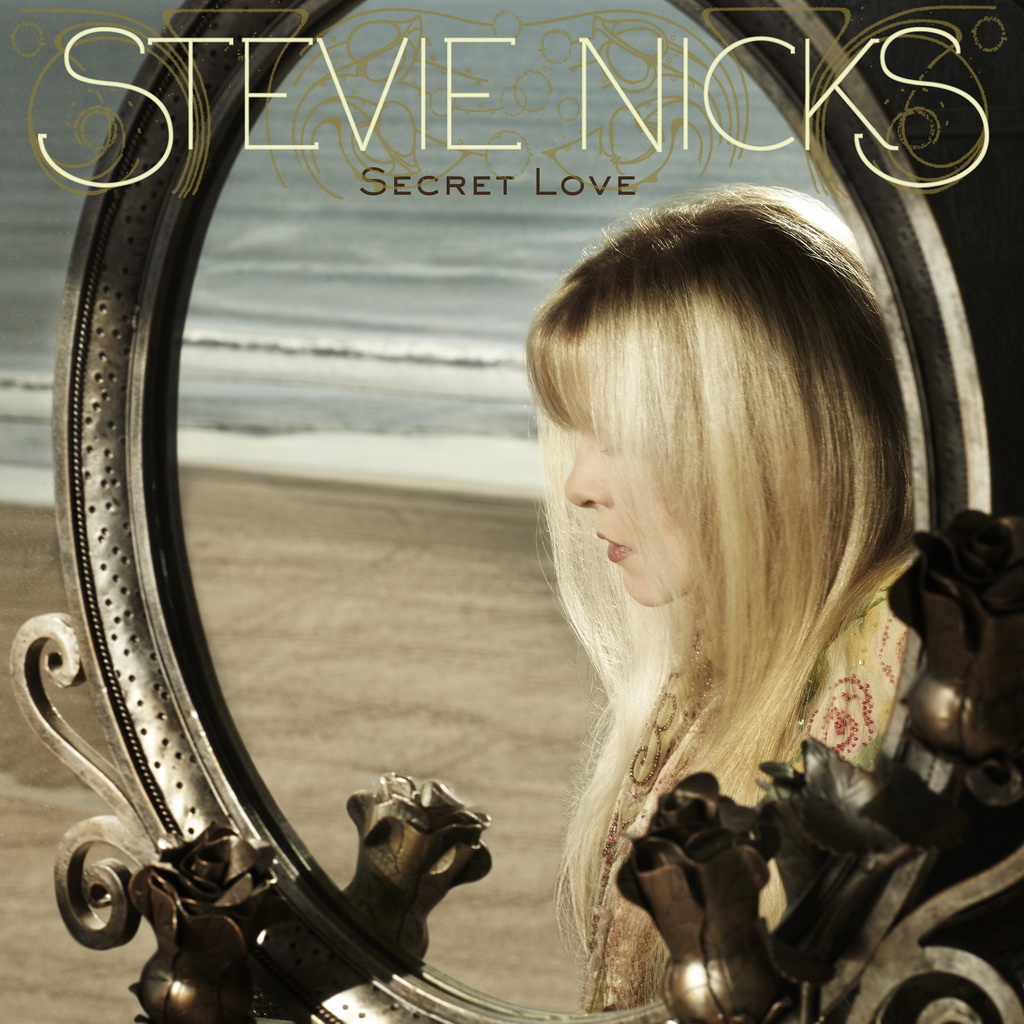
    Stevie Nicks has finally unveiled the track ‘Secret Love,’ the first single from In Your Dreams, her first studio album in ten years.

    “I am not asking forever from you / I’m just asking to be held for a while,” Nicks sings on the melodic mid-tempo song.

    Though she persists with “a timeless search for love that might work,” Nicks eventually professes, “My secret love secretly died.”

    Producer Dave Stewart of the Eurythmics has substantially updated the demo version with more vibrant drums, subtle synths and electric guitars that bring some brightness to the melancholy lyrics.

    Stewart co-wrote half of the songs on In Your Dreams, the seventh solo studio album by Nicks and first since 2001’s Trouble in Shangri-La. The record is set for a May 3 release on Reprise.

    Last month, Nicks appeared with Rod Stewart on Ellen, and the two plan to hit the road together for the first time on the Heart & Soul Tour, which kicks off March 20 in Sunrise, Fla.

    To hear the new Stevie Nicks song ‘Secret Love,’ head over to AOL Radio’s Female Focus station.

  • Stevie Nicks, Rod Stewart discuss touring together for the first time

    Stevie Nicks, Rod Stewart discuss touring together for the first time

    Stevie Nicks, Rod Stewart
    (Donald Kravitz/Getty(Nicks), Ethan Miller/Getty(Stewart)

    Idea for the shows came from Stewart’s daughters. Plus: New LPs from both

    By Patrick Doyle
    Rolling Stone
    February 2, 2011 5:35 PM ET

    Rod Stewart hadn’t seen Stevie Nicks since the mid-1980s, when both of them were recording in the same L.A. studio. Until last month, that is, when the pair, who are gearing up for a 16-date co-headlining tour‚ were reunited to perform on Ellen. “I tiptoed up behind him and put my arms around his waist from the back,” Nicks tells Rolling Stone. Adds Stewart, “I’d know those hands anywhere.”

    The pair have never worked together before, but they’ve crossed paths over the years. Nicks recalls attending a New Year’s party in the Seventies at Stewart’s L.A. home. Nicks remembers Stewart, afraid she was drunk and might damage his collection of Tiffany lamps, asking, “Can I have that glass of wine before you walk in?’ I was horrified.” Stewart says, “Oh, the bitch I am sometimes. I probably wanted more wine for myself.”

    The idea for the shows (which kick off in March) came last year from Stewart’s daughters Ruby and Kimberly. “They love Stevie,” he says. “She’s just ultra-cool – she has a cult.” Nicks will open the three-plus-hour show with solo tunes and Fleetwood Mac classics, followed by a Stewart set that will likely mix deep tracks and hits.

    They’re still working out the pacing, but there will be a portion of the shows where they sing together. “We won’t let people down on that score,” Stewart says, adding he hopes to tackle Nicks and Don Henley’s 1981 duet, “Leather and Lace.” Nicks wants to join Stewart on “The First Cut Is the Deepest” and “Reason to Believe.” “That’d be a wonderful one,” he says. “We’re both sort of sopranos, so it’ll sound great.”

    At the Ellen rehearsal, Nicks spent two hours running through “Stand Back” with her band while Stewart showed up and banged out “Hot Legs” once. “He walks in, expects the band to be fantastic, and then it’s, ‘Let’s go and I’m out of here,’” says Nicks.

    “In the Faces, we never rehearsed,” Stewart says. “I always like there to be the element of risk in any show. When things go wrong, I love it. We’ll have to meet in the middle.”

    Outside of the tour, Stewart is planning an LP with former bandmate Jeff Beck‚ their first full album together since they were in the Jeff Beck Group in the late Sixties. One proposed album title: Unfinished Business. Stewart is also in talks to extend his recent stand at Las Vegas’ Caesars Palace to multiple residencies over the next two years, and he’s considering a stint at Carnegie Hall performing only American Songbook material. “I’m proud of those records,” he says.

    Photos: The Who, Jeff Beck, Debbie Harry and More From the Concert for Killing Cancer

    Meanwhile, Nicks is readying her first studio album in a decade. In Your Dreams, due May 3rd, is co-produced by an old friend, Eurythmics’ Dave Stewart. Together, they wrote seven of the LP’s 13 tracks, including “Everybody Loves You,” inspired by their experiences of being in bands with lovers (Nicks with Lindsey Buckingham, Stewart with Annie Lennox). “We know what it’s like to be in love with the person and be in love with what the person does,” she says. “It’s different from just being in a band.”

    Nicks praises the producer for adding a Sixties pop vibe. “I have never written a song with anybody sitting in the room, not even Lindsey,” she says. “I suddenly realized why John Lennon and Paul McCartney wrote together. I haven’t had this much fun since Lindsey and I were working in the beginning.”