Category: Fleetwood Mac

  • Dysfunction doesn't fluster Fleetwood Mac

    Dysfunction doesn't fluster Fleetwood Mac

    Fleetwood Mac Say You Will (2003)

    By George Varga
    San Diego Union Tribune
    Sunday, April 6, 2003

    LOS ANGELES – If personal and creative tension between band members is essential to musical success in rock ‘n’ roll, Fleetwood Mac’s new album, “Say You Will,” is already a winner.

    “It hasn’t been an easy road,” said singer-guitarist Lindsey Buckingham, who produced or co-produced all 18 songs on the album. “It had some fork-in-the-road moments, and it had some very profound bonding moments.

    “Near the end it had some quite confrontational – and very pleasant – moments.”

    Due out April 15, the meticulously crafted collection is the first new studio album by Buckingham, singer Stevie Nicks, drummer Mick Fleetwood and bassist John McVie since 1986’s “Tango in the Night.”

    It is also only the group’s second album since 1970’s “Kiln House” that does not prominently feature singer-keyboardist Chistine McVie, whose songwriting credits include such Fleetwood Mac favorites as “Don’t Stop,” “You Make Loving Fun” and “Say You Love Me.”

    She quit after completing the enormously lucrative first leg of the quintet’s 1997 reunion tour, which then ground to a halt. Her departure came 10 years after singer-guitarist Buckingham had quit to pursue a solo career, over the heated objections of Nicks, Fleetwood and the two McVies, who were divorced in 1976 (a year after Buckingham and Nicks joined the band).

    “The Fleetwood Mac world certainly can be dysfunctional at times,” Fleetwood said, with classic British understatement. “But having been in this band for what seems to me forever – since 1967 – this is one moment in time that I think the band has done something quite exceptional.”

    Last month, on a day that – fittingly – was sunny one moment, cloudy the next, Buckingham, 55, Nicks, 54, and Fleetwood, 55, discussed their band’s tumultuous past and (for now) relatively peaceful present in separate interviews.

    Nicks spoke at her elegant, two-level home overlooking the ocean in Pacific Palisades. Buckingham (her boyfriend until the mid-1970s) and Fleetwood (who had an affair with Nicks that same decade) took turns chatting in a luxury trailer in Culver City.

    The trailer was adjacent to a massive sound stage, where Fleetwood Mac was rehearsing for its upcoming tour. At least for now, the three-month trek (which may be extended) skips San Diego in favor of a July 16 show at the Arrowhead Pond of Anaheim.

    Nicks and Fleetwood agreed that, in the years since the band achieved superstardom in the mid-’70s, its fortunes have ebbed and flowed depending on Buckingham’s degree of commitment.

    Buckingham, conversely, downplayed his importance to Fleetwood Mac, whose 1995 album without him and Christine McVie, “Time,” was such a commercial and artistic flop that Fleetwood and John McVie temporarily disbanded the group.

    “I don’t think the weight is so much on me,” Buckingham said matter-of-factly. “And I do think this thing is bigger than all of us.”

    That opinion was strongly disputed by Nicks, his former paramour.

    “Fleetwood Mac never would have broken up if it had been up to me, Mick, John or Christine. So this is all Lindsey’s ballpark,” said Nicks, as she curled up in front of the fireplace in her living room, filled with state-of-the-art workout equipment.

    “Lindsey either wants to be in Fleetwood Mac, or he doesn’t,” she stressed. “So he decided he wanted to do it again. And when he decides he wants to do it again, we all either say ‘No,’ or we say ‘Yes.’ Christine said ‘No,’ and the rest of us said ‘Yes, we’ll do it, we’ll give it one more run.’ And we all felt that we could do another great album, or we wouldn’t have done it.”

    In fact, Christine McVie is featured on “Say You Will’s” title track (written by Nicks as an homage to McVie) and on the Buckingham-penned song “Bleed to Love Her,” both of which date back to the band’s 1997 reunion tour. The majority of the new album, however, was recorded over the last 18 months in Los Angeles.

    With or without Christine McVie, this new album is the harmonious-sounding result of some of the same friction that’s fueled the group since 1977. It was then that “Rumours,” an album made in the wake of the McVies’ divorce and the Buckingham/Nicks split, made Fleetwood Mac one of the best-selling rock bands ever.

    “Say You Will,” while unlikely to match the success of the 17-million-plus-selling “Rumours,” has some of Buckingham and Nicks’ best work in years. It also boasts several likely hit singles, including the just-released “Peacekeeper,” although the 18-song album would be far stronger had it been trimmed by a third.

    “This was going to be a double album,” said Buckingham, who is dismayed that five songs had to be cut to contain “Say You Will” to one CD.

    “We ended up – in the process of the confrontations we were having about the (songs’) running order – pulling back and making it an aggressive single CD.”

    Fleetwood, who has headed the band through countless lineup changes over the decades, sounded fatherly when he weighed in on the album’s length.

    “Lindsey’s mind works on what’s right for the art, and I’m not devoid of that,” Fleetwood said. “But at some point I will be at least practical.”

    Buckingham is clearly proud of what he brought to “Say You Will.” But he sounded peeved that, while the rest of the band went to Hawaii on vacation, he had to remain behind to complete mixing and sequencing the album.

    “Well, somebody had to finish the record!” he said. “So that (process) went through a whole series of political spasms and not-very-pleasant phone conversations. But we got there.”

    The album showcases the most fluid and biting guitar work of Buckingham’s career. It also features nine songs he wrote or co-wrote, and nine that Nicks wrote or co-wrote, although the two do not share any of the co-writing credits.

    But Buckingham didn’t hesitate to express his disappointment that his work had yet to be praised by Nicks.

    “I know she must be thrilled with the album, on one level,” he said. “And yet, she’s never said anything to me, like ‘Nice job.’ That’s just been hard for us. So, in that sense, in the way that I’m almost disgustingly warm and fuzzy, she’s probably slightly defiant. But she’s great. I think all she needs to do is find her rhythm.”

    Her cosmic, hippie-dippie image to the contrary, Nicks was perfectly grounded and in sync as she spoke at her home.

    “I’m my own worst critic,” she said. “But I think my material on this album is some of my best material ever. And I think that Lindsay’s material is his best material ever. So I feel that whatever it was that made us reform, there was a real reason for it. And maybe it was all this material that needed to come out.”

    Buckingham regards Christine McVie’s departure as an “opportunity,” the next phase of the band’s evolution. Nicks agreed, if only to a degree.

    “The good news is that, without Chris, you take out the piano influence, since none of the rest of us play piano,” she said.

    “Since she’s gone and she doesn’t want to be here, and we have certainly done everything we can imagine to talk her into coming back, we have to accept that and move on. So it’s just the four of us. It’s going to be more guitar-oriented, it’s going to be more Ginger Baker and Eric Clapton and whoever the other guy (Jack Bruce) was (in Cream, rock’s proto-power-trio in the 1960s). . . .

    “The bad news is that I miss her, terribly. There’s not a day that I don’t think, ‘Where is she?’ It’s more about the friendship and her humor, and her funny, funny, stupid English jokes and how she could make everything lighten up with a flick of her personality. She was a joy to be around. And she was my best friend. So as much as I think that everyone else would like to hear me say, ‘Oh, it’s much better (now),’ no, I can’t say that. Because I miss her so much.”

    Ever the diplomat, Fleetwood carefully cast Christine McVie’s departure in a pragmatic light.

    “I think it’s just a change, and God knows we’ve changed as a band,” said the balding, white-haired drummer. “It’s allowed a whole new chapter of Fleetwood Mac, musically, to take place.”

    That new chapter should appeal to veteran fans, who made the band’s 1997 reunion one of the biggest-grossing tours of the 1990s, even without an album of new material. And Fleetwood Mac’s influence continues to be felt through the work of such admirers as the Dixie Chicks, who scored a major hit last year with their version of the Mac chestnut “Landslide.”

    The key questions now are whether or not Fleetwood Mac can draw a new generation of fans, especially if pop radio shuns its new album and whether the group’s appeal will be limited to nostalgia-hungry veteran fans, and if so, does it matter?

    “I think it’s always important, but it’s certainly not a tragedy if we don’t (reach new listeners),” said Fleetwood, the father of 1-year-old twin girls and, from a previous marriage, two daughters in their early 30s. “If you really want to know my opinion, I think this album is going to be huge. And I think it’s going to mutate into something that not even we can imagine.”

    “You know what?” Nicks asked. “I think that Fleetwood Mac’s fans’ children love Fleetwood Mac. I do. And that is what I seem to get through all my fan mail. Everywhere I go, really young kids come up to me.”

    She laughed.

    “If I had children, of course my children would have listened to exactly what I wanted to listen to for the last 20 years,” Nicks added with a grin. “I can’t help but think that people will love this record. But who knows? It could just tank completely.”

    Buckingham, the father of a 21/2-year-old daughter and a 41/2 -year-old son, is especially eager to attract younger fans. Accordingly, “Come,” one of his songs on “Say You Will,” is delivered with a musical and lyrical ferocity that should impress even the most hardcore, young industrial-rock fans.

    “It’s not a matter of playing down, but you can’t play to the age group that you think is your traditional buyer,” he noted. “Nor can you be something you’re not. We’re just trying to do what we think is interesting, and to be ourselves, but still push the envelope.”

    And should the members of this edition of Fleetwood Mac decide to go their own ways, will honcho Fleetwood put together a new version of the band that has been his life for nearly 40 years? Don’t count on it.

    “I would venture to say that that would just not be on the cards. This is it,” he declared with finality. “This is it for how I see this. And if this can work and (we can) be happy, my hope would be to go forward. That’s how I’m approaching it.”

  • Fleetwood Mac say new album

    Fleetwood Mac say new album

    Say You Will due in April, world tour in May

    Fleetwood Mac will release their new album, Say You Will, on April 15th. The album is their first full collection of new material with Lindsey Buckingham onboard since 1987’s Tango in the Night. However, Say You Will, the group’s first release since the half-new/half-unplugged The Dance five years ago, doesn’t feature keyboardist/singer Christine McVie, who had been with the band since 1970.

    Some of Buckingham’s contributions to Say You Will are as many as nine years old, as he initially considered using some for a solo release. “[Christine’s departure] kind of freed the Fleetwood Mac situation to be looked at in a fresh light and in some ways in the dynamic that Stevie and I had going before we joined the band,” Buckingham told Rolling Stone. “But this music is the best that I’ve ever done on my own, or with Fleetwood Mac, tapping into some new areas. And after all of this time, Stevie and I have managed to get to a point where we’re comfortable. There’s nothing we can’t talk about. I talked to Don Henley one time about the Eagles, and it seemed like there was so little love or idealism left in that group of people and perhaps that’s more the norm for people our age. But we seem to be slightly more arrested, and I think there’s some potential for some good stuff because of that.”

    Drummer Mick Fleetwood says that Buckingham’s input on the record reminds him of the band’s segue from 1977’s Rumours to the more sprawling 1979 release, Tusk. “His whole life is so involved in doing what he does,” Fleetwood said. “Quite frankly, I’m not sure how he stays focused all those years on pieces of music, but he does. It has a lot of the sensibilities [of Tusk] and Lindsey’s definitely pushed some envelopes that are exciting. I don’t think people will accuse us of standing still.”

    Nicks’ contributions came from a similar flood of material. The singer gave Buckingham, Fleetwood and bassist John McVie eighteen songs to work with, before she went out to tour behind her 2001 release, Trouble in Shangri-La. “So it was the power trio,” Fleetwood said. “And that was great, because we did a lot of reconnecting.” Nicks’ friendship with Sheryl Crow also resulted in a guest appearance by Crow, who added harmony vocals and keyboards to Say You Will.

    Fleetwood Mac are planning a world tour, to launch in May.

    Rolling Stone / Friday, February 7, 2003

  • Going her own way, but slowly this time

    After a fall from rock stardom, daring to embrace once again

    The miniature cheesecake sat in front of Stevie Nicks like a cruel temptation, crowned with a glaze of mandarin oranges and skirted with puddles of chocolate sauce. She took a bite, just to test it. Then she put down her fork, deciding the pleasure was not worth the penance.

    “I’ll eat a dessert if it’s really good,” Ms. Nicks said as the light from several candles in her suite at the Ritz-Carlton here flickered across her face, still made up from the concert that had ended two hours before, at 11 P.M. “But I won’t waste a carbohydrate unless it’s killer.”

    This is the vow of a woman who was 30 pounds heavier just last year. It is also a clue that Ms. Nicks knows something about indulgence, and about paying the price for it.

    Touring incessantly in the 1970’s and 80’s as a lead singer in the rock supergroup Fleetwood Mac, then as a solo act, she snorted enough cocaine, she says, to burn a permanent hole in her nose. She took inadequate care of her raspy voice, which on some nights lost its muscle, embarrassing her onstage.

    And she occasionally seemed to be twirling toward oblivion, a casualty not merely of excess but also of a persona that was wearing thin, of so much chiffon and so many balletic dance spins that she verged on self-parody. Some comedians mocked her. Many critics savaged her.

    But time, tastes and entertainment careers work in ways as mysterious as the lyrics to some of Ms. Nicks’s songs, and suddenly, at the age of 49, she is enjoying a rock-and-roll renaissance.

    Fleetwood Mac’s reunion tour, which goes to Madison Square Garden on Thanksgiving night, has sold out dozens of large venues across the country over the last two months. The group’s current album, The Dance, which was made from live performances in May featuring old hits and a few new songs, has been a fixture at or near the top of the Billboard charts since August.

    And the first single released from it, “Silver Springs,” was ineluctable on MTV, VHI and many FM radio stations until a few weeks ago. Ms. Nicks wrote this haunting romantic dirge, which also features some of the most stirring singing she has ever done. One newspaper critic raved that it “inspired shivers.”

    But Ms. Nicks is encountering more than just renewed favor. Nearly a quarter-century since she joined Fleetwood Mac and 20 years since its seminal collection of songs, Rumours, became one of the highest-selling albums of all time, Ms. Nicks is finding a new level of recognition as one of the more influential women in modern rock.

    Isaac Mizrahi and Anna Sui, the fashion designers, recognized her witchy wardrobes of black gossamer and velvet, gargantuan boots and glittering beads as inspirations behind collections they put together over the last year. Her name also pops up regularly in reviews of some younger artists like Tori Amos and Jewel, who share either her penchant for opaque lyrics or idiosyncratic vocal shadings.

    And a new generation of rock musicians, from Courtney Love to Billy Corgan, the lead singer of the Smashing Pumpkins, are doing cover versions of Ms. Nicks’s songs and publicly acknowledging a debt to her.

    “She had a huge effect on everybody, whether they admit it or not,” said Ms. Love, who paid tribute to Ms. Nicks in an interview she conducted with her in the October issue of Spin magazine.

    Ms. Love said Ms. Nicks’s unwavering adherence to a highly personal, deeply feminine songwriting and performing style at a time when men almost completely ruled rock was “pretty subversive.”

    “Any girl who takes the stage with total individuality is influenced by Stevie,” Ms. Love said. “She was a huge influence on me.”

    Ms. Nicks says she is well aware of such sentiments and is tremendously moved by them. In fact, she says, she appreciates everything about her long career more than ever before, and she tends it with newfound attention and diligence.

    If her singing on the new album and tour is stronger than in the past, it is because she quit smoking on Jan. 1 and does 40 minutes of vocal calisthenics several hours before every concert.

    “I’ve never done that in my whole life, ever,” Ms. Nicks said in a speaking voice much like her singing voice: at once coarse and tender, bitter and sweet. “I’ve never taken voice lessons. I did not know that you could be totally hoarse and have almost complete laryngitis and work with a really good vocal coach for an hour in the afternoon, so your voice has time to settle, and you can sing like a bird.”

    Ms. Nicks says she is also sober, having quit cocaine around 1986. And two years ago, she had eye surgery to correct vision problems that she says were responsible for occasional stumbles onstage.

    “I’m old enough and mature enough and — if you want to be mystical about it — ancient enough in my wisdom to take a little better care of everything: my emotions, my body,” she said. “Because I care now. I’m not going to miss out on anything in the next 20 years like I missed out on things in the last 20.”

    Ms. Nicks’s down-to-earth honesty and warm, slightly sassy laugh during the course of an early-morning snack, which consisted of a cup of coffee and the warily eyed, barely grazed cheesecake, were surprising, given her reputation for ethereal poses and metaphysical musings.

    But in other ways, she conformed perfectly to expectations. Indeed, one of the most interesting aspects of Ms. Nicks’s current popularity is that she has achieved it not by reinventing herself but by reinvigorating the time-tested model, dusting it off for another dizzy whirl through the limelight.

    Sitting at a table in the dining area of her suite, she wore a black chiffon skirt and a black velvet jacket, holdovers not only from the just-finished concert but also from the distant past.

    The suite itself had been given subtle aspects of a high priestess’s lair, with candles placed here and there, a scarf spread over one lamp and the harsh bulbs in two others replaced by softer, redder, moodier lights.

    A certain sense of spooky poetry was always at the core of Ms. Nicks’s appeal.

    In popular Fleetwood Mac hits and fan favorites like “Rhiannon,” “Gold Dust Woman” and “Sisters of the Moon,” she wrote and sang of magical, charismatic, tortured women like the one she pantomimed onstage.

    It made her a superstar, a commercial force as potent in the late 1970’s and early 80’s as Mariah Carey or Whitney Houston now. The songs she contributed to Fleetwood Mac, from “Dreams” to “Sara” to “Gypsy,” were powerful engines behind the group’s multi-platinum albums.

    But Ms. Nicks also had her part in the group’s romantic fractiousness.

    The songs on Rumours, many of which are resurrected on The Dance, chronicle her breakup with Lindsey Buckingham, the band’s lead guitarist and male vocalist, and the pianist-singer Christine McVie’s divorce from the bassist John McVie. Subsequently, Ms. Nicks had an affair with the band’s drummer, Mick Fleetwood.

    Ms. Nicks began making her own records before the Rumours lineup of Fleetwood Mac finally dissolved in 1987, juggling a solo career and membership in the band for many years. Her first three solo albums, Bella Donna, The Wild Heart and Rock a Little, sold millions of copies.

    Her image, moreover, was indelible, perhaps best exemplified by an annual event at Mother, a Greenwich Village night club where hundreds of people from all over the country come every spring to pay homage to Ms. Nicks, many of the men donning Nicks-ian drag. It is called “Night of a Thousand Stevies.”

    But somewhere along the way, the mixture of reverence and ridicule with which Ms. Nicks was always treated began to tip in the direction of the latter.

    As her voice moved from her head and throat to her chest, it sometimes got stuck in awkward places in between. In the early 90’s, she also battled the herpes-related Epstein-Barr virus, which dragged down her performances during a tour to promote her fourth solo album, The Other Side of the Mirror.

    Her most recent solo album, Street Angel, released in 1994, sold poorly, and its accompanying tour subjected Ms. Nicks to the humiliation of appearing onstage in a zaftig form that shocked fans.

    “It was a horrible, horrible thing for me,” she says, her voice dropping to a pained whisper. “I said, ‘I will not go onstage ever again if I don’t lose this weight.’”

    With the help of Dr. Robert Atkins’s famous low-carbohydrate diet, she did. “I just made a decision,” she says, “that I was going to be healthy and I was going to enjoy my life and I was going to enjoy my singing and I was going to enjoy how incredibly lucky I am to have been in a big, huge rock-and-roll band and been very successful and have songs that people loved and that they recite at their graduations and their funerals and their bar mitzvahs and their baby showers.”

    “Silver Springs” could become another of those classics. A studio version was originally recorded two decades ago for Rumours, but the other members of Fleetwood Mac decided it was too long and cut it from the album. It was consigned to the B side of a single and rare appearances on a handful of radio stations.

    But when the band members began rehearsals this year for the limited series of concerts to be recorded and assembled into The Dance, they decided to revisit “Silver Springs.” Ms. Nicks, singing in a craggier but more powerful style, transmogrified this tale of estranged lovers from a wistful lament into an anguished reproach.

    “Her voice is amazing,” said Mr. Corgan of the Smashing Pumpkins. “It’s matured into something almost as beautiful as it was when she was young. It’s different, but just as distinct.” Mr. Corgan, 30, met Ms. Nicks about a year ago, has become friendly with her and says he hopes to work with her on her next record. “I think she’s so ready to re-emerge as a completely vital artist,” he said. “It’s like she told me: ‘I feel like I’m coming out of a fog.’”

    Among the things Ms. Nicks says she sees more clearly now is the importance of family. She spends much of her time in her house in the Phoenix area, where her parents, younger brother, his wife and their daughter live. Ms. Nicks never had any children and says she is single for now, and maybe for a while. Music is once again absorbing her attention, and giving her back what comfort she needs.

    That was obvious when she paused before leaving the stage of the Lakewood Ampitheater in Atlanta to thank fans for staying faithful and coming to the show. “It matters,” she told them, “more than you’ll ever know.”

    Frank Bruni / New York Times / November 25, 1997

  • Fleetwood Mac back with album, video

    Fleetwood Mac back with album, video

    On Aug. 19, Reprise Records will commemorate the 20th anniversary of Fleetwood Mac’s landmark Rumours recording with The Dance, a live album culled from an MTV special that reunites the band’s classic lineup of Lindsey Buckingham, Stevie Nicks, Mick Fleetwood, Christine McVie, and John McVie. The set will trigger a 40-city U.S. fall tour that will put the group on the road together for the first time since 1982.

    The 17-track collection, which combines four new songs with familiar tunes, was gathered from three performances on a Warner Bros. Studios soundstage in June. The 90-minute MTV special, which will begin airing on Tuesday (12), will be issued Aug. 26 on h ome video via Warner Reprise Video, with a DVD release planned for Sept. 23. A laserdisc version of the show will be handled by Image Entertainment and will be offered Sept. 23.

    “This has become a monumental event that pays long-overdue tribute to a band that continues to have immeasurable influence on new musicians,” says Craig Kostich, senior VP of artist development/creative marketing (U.S.) at Reprise. “These songs sound as strong now as they did when they were first released. Judging from early interest in this project, people are still clearly very turned on by them.”

    The extensive marketing strategy behind The Dance started to unfold July 22, when Reprise issued the album’s first emphasis track, “Silver Springs,” to pop, AC, and mainstream rock radio formats. Since then, the Nicks-fronted tune–which was originally recorded for Rumours but did not make the final track listing–has gathered airplay on 47 stations, with audience impressions of 3.8 million, according to Broadcast Data Systems.

    WNOK, a top 40 station in Columbia, S.C., played “Silver Springs” more than a dozen times its first week out, but PD Jonathan Rush says it’s too early to determine the ultimate fate of the song. “I think the album will do very well, but will the single do well? I don’t know. It doesn’t jump off the radio quite like we’d like it to,” he says.

    However, Rush believes it was a good choice for a first single as a way to bridge the gap between the past and the present. “I think it’s kind of neat that it was an old song that was never on an album, and here’s a revised edition recorded by the same p arty in a new era.”

    Reprise widened the radio scope of The Dance by issuing a promotional CD pressing of “The Chain” Aug. 4.

    “We’re planning to go several cuts deep into this album,” Kostich says, noting that the label will eventually focus on the set’s new songs, which hark back to the sound of the band’s heyday.

    Since word of the Fleetwood Mac reunion has circulated for months, retailers are anticipating a strong consumer response to The Dance. “We’re already getting a strong buzz on this; the word has been out for a long time,” says Eric Keil, buyer for Compact Disc World, a New Jersey chain. “People have been asking about it and when is it coming out, when can they get it.

    “We put Fleetwood Mac albums in a [summer] promotion, and the Greatest Hits and Rumours flew out of the stores. We know there are people out there who still love this band. This has the potential to be big, not as big as [the Eagles’] Hell Freezes Over, but it could approach that. That was a monster for us.”

    Television exposure beyond MTV–which has already begun airing clips of “Silver Springs” and “The Chain” from the special–will play a vital role in the marketing of the album. VH1 will air a condensed, 60-minute version of the special in September and has designated Fleetwood Mac as the network’s artist of the month in October.

    VH1 has also recently featured Rumours in a recent episode of its “Classic Albums” series.

    Additionally, various members of the band are tentatively slated for a string of high-profile stints on shows, including “The Rosie O’Donnell Show,” “Good Morning America,” and “The Tonight Show With Jay Leno.” Most of these appearances will be made before Fleetwood Mac begins its tour in mid-September. Dates for the trek were still being confirmed at press time.

    The seeds of the band’s reunion were sowed earlier this year. Fleetwood and Buckingham had been working together on Buckingham’s solo project, so for Fleetwood, the reunion seemed like a natural progression.

    “I was really excited,” he says. “I felt we had already met musically somehow, because I had been working with Lindsey for over a year, or being there and being supportive. I knew the creative light was alive. It was not like a business manager called up and said, ‘You’ve been offered $20 billion to reconvene.’ It was not like that.”

    Fleetwood had disbanded the group two years ago, only after different permutations failed to ignite. “I was a person that very much tried to keep Fleetwood Mac together at any cost, literally,” he says. “It has been my life, and the letting go was a decision John [McVie] and I made. Every brick wall, people would say this is the end, but keeping it going was the only thing I knew.

    “We’d had such a cycle of reinventing ourselves as a band. After the [1995] album with Billy [Burnette] and Bekka [Bramlett], we realized that we weren’t going anywhere, and that was a major thing for me to admit, and it took me a little time to absorb t hat.”

    For Fleetwood, it was a chance to realize that he could survive in a world without Fleetwood Mac. “I truly had let go, and that was good. I sobered up and changed my life; there was a different life to be had, and it was a good one. I know now that I can function without the [band].”

    But to Nicks, functioning without Fleetwood Mac was never a question. “We can all go our separate ways for periods of time, but we always seem to come back to each other,” she says. “There’s a connection between each of us that has nothing to do with business. When I got the call about doing this, I took a deep breath, and then I said yes.”

    Because Buckingham was recording a new solo album, he was the hardest member to convince to come back; however, no reunion would have happened without his participation. His decision was based somewhat on the clout a reunion would give him when it came time to return to his solo work.

    “A lot of people seem to think that if you make an album every four years or so, as I do, there was nothing to be lost in doing the reunion, and possibly a great deal to be gained in terms of visibility and opening political doors,” he says.

    “The hardest part was thinking about putting down [an album] I’d been working on for two years plus and just leaving it on the back burner,” he continues. “[Warner Bros. Records chairman/CEO] Russ Thyret called me and said, ‘Are you doing this [reunion]? ‘ And I said, ‘Give me until the first of April,’ and I just took a chance, and I can’t say I’m sorry. I’m a different person now. It’s a great thing for everybody in the group. I mean, I feel like I’m giving something to these people who have contribute d to my life.”

    After Buckingham agreed to the reunion, the band began rehearsing immediately on April 1 for the MTV taping. “We thought MTV was Fleetwood Mac adverse, but they weren’t,” says Buckingham. “We rehearsed for six or seven weeks, which wasn’t quite enough. I think there was a general view that this thing may disintegrate in a week, and I was gonna do my best to make sure it wasn’t me that made that happen.

    “But, you know, Stevie is in a really good place, and there was something good about it. You just have to keep watching yourself to make sure that you don’t get petty. I went in and I tried to make nice, and it wasn’t hard. It’s sweet, it’s nostalgic; yo u could cry over it if you let yourself.”

    Nicks says there were actually quite a few tears shed during the last of the three shows the band played for the special. “In my heart, I knew that final show was the one that we would use, and I paced myself emotionally. Something clicked as we started to play that night. The magic was there again, only we weren’t mad at each other anymore. I looked into Lindsey’s eyes during so many of the songs, and the tears came. It was uncontrollable. And it was a beautiful night for us and everyone in the audience.”

    Buckingham was pleased with the wide demographics the taping attracted. “There really was a nice element of a younger, 20s and 30s crowd, which was great, because a lot of those people learned about us from their parents, or from the rekindled interest in the band since Billy Corgan and a few others have said, ‘Fleetwood Mac is not the enemy.’ “

    Nicks agrees, noting the previously untapped young audience that “Gold Dust Woman” reached after Courtney Love covered the Rumours cut with Hole late last year. “She claims to know more about me and my music than I can even remember–which is terrifying but probably very true,” Nicks says with a laugh. Love will interview Nicks for Spin magazine this fall.

    Buckingham confesses it’s been “surprisingly pleasurable” reuniting with his bandmates. “It’s been kind of a trip, because we’re getting along really well. There’s very little of the baggage left that was there when I left in 1987,” he says.

    Like Buckingham, Fleetwood’s antennae were up, checking for signs that the reunion might not work.

    “I would always be looking; that’s my nature,” he says. “We know each other so well. You know what to do to upset someone, and you know what to do to make the situation good; that’s what I do with anybody. I would be watching for what anyone would construe as the danger signal. The reality is that these five people have the capability of managing themselves, and we did for years. Basically, we were always very successful, and part of that success was because it was an unusual animal, this thing called Fleetwood Mac. And it came from within.”

    The live forum of the MTV special created the perfect environment for the band to reconvene, because, as Fleetwood says, creating a new studio album would have been “too stressful. This is a great way of celebrating who we are and then reinventing some o f the songs and just saying, ‘Shit, we haven’t played for years’ and have it be really good. I truly think the band is playing 40% better than it ever has before.”

    While there are no announced plans other than The Dance and a 40-city tour, Buckingham doesn’t know if the reunion will end after the last date is played. “Well, if you’d asked me a year ago whether I would be doing this, I would have said ‘absolutely not,’ but here I am, so I’m not going to discount anything.”

    Nicks is equally guarded about the band’s future–but admittedly optimistic. “Fleetwood Mac will never die. Whether any of us will ‘fess up to it or not, the spirit of this band will live in each of us forever. And that’s a good thing. Some people only d ream of the magic we’ve made–and then we get to revisit it and to build upon it. That is truly a blessing.”

    PHOTO (BLACK & WHITE): Stevie Nicks, left, and Lindsey Buckingham are shown performing during the taping of their forthcoming MTV special, which will be released on video and DVD.

    Larry Flick And Melinda Newman / Billboard (Vol. 109 Issue 33, p11. 2p.) / August 16, 1997

  • Stevie and Lindsey Interview on WZLX Radio

    Stevie and Lindsey Interview on WZLX Radio

    1997-fm-danceBoston, MA 100.7 FM
    Friday, August 15, 1997

    DJ: Lindsey Buckingham Stevie Nicks in Los Angeles this afternoon How you guys doin’.
    S (Stevie): Fine, how are you?

    L (Lindsey): How are you doing?

    DJ: I’m doing fine, thank you. So first we’re going to bring in the dump truck and heap tons of compliments on all of you for an absolutely amazing concert.

    S: (laughing) thank you

    DJ: You just blew people away with this.

    L: oh, great – thanks.

    DJ: Um, now you’re either Oscar caliber actors or you actually have put aside all of this biterness after the break up, and the books and the rumours and people talking and back biting and all of that stuff – to get this back together again. So what’s the deal with that?

    L: Time…I think. You know, I mean I’ve, it’s been ten years since I departed and um, I think a lot of things ah…got resolved for me. I think everyone else in the group has taken there own journey during those ten years and we’ve all grown up a little bit. And -um- so we’re coming back together with the chemistry and with the intuitive way of responding and none of the baggage.

    DJ: Man you sure got rid of that baggage. This concert was ah…I don’t know, I don’t know what people were expecting when they turned on MTV the other night to watch this, but I’ll tell you just far and away I’ve never heard response from fans to the way you look, the way you sound, how everything just seemed to come together like you never left but you got rid of all this stuff in between somehow.

    L: Um hmm.

    DJ: Did you make a pact of some kind for this tour to make sure you didn’t fall into some of those traps that did you in the first time?

    S: A pact?

    DJ: Ya, I mean you must have talked about…

    S: A promise?

    DJ: A promise amoung yourselves, you know?

    S: No, you know I don’t think we have to make promises to each other, I think that anything that we do we do it individually for ourselves. You know, as well as I know, that people can’t tell you what to do and what not to do. It has to come from you. So, you know, we’re older, we’re a lot wiser and we’re all better singers, we’re better musicians and we have been given an incredible opportunity to go out and do this one more time so – for me- I’m just in this for the ride. I just want to have a great time. I want this to be like an adventure.

    DJ: Boy, you’re in for an adventure too. So you’re coming to Greatwoods here on September 19th.

    S: Um hmm.

    DJ: And ah, you’re rehearsing around the Hartford area? Is that true?

    S: Ya.

    DJ: Is that where you’re going to your rehearsals?

    S: Um hmm.

    DJ: So have you started those yet?

    S: Ah, we are in rehearsal now. But we also were in rehearsal for six weeks before the MTV thing that was filmed in the middle of May – and ah, we went back into rehearsal last week so …we will be rehearsed.

    DJ: So when you’re walking around Hartford do people know you and hang out and want to shake your hand and get your autograph and stuff.

    S: I don’t know I havn’t ever walked around Hartford. (laughing) Laughter

    DJ: Well don’t do it after five O’clock cuz nobody’s in the streets – let me tell you.

    S: oh, o.k (laughs)

    DJ: So why is this CD called The Dance. What’s The Dance?

    S: Go ahead Lindsey, it’s Matisse.

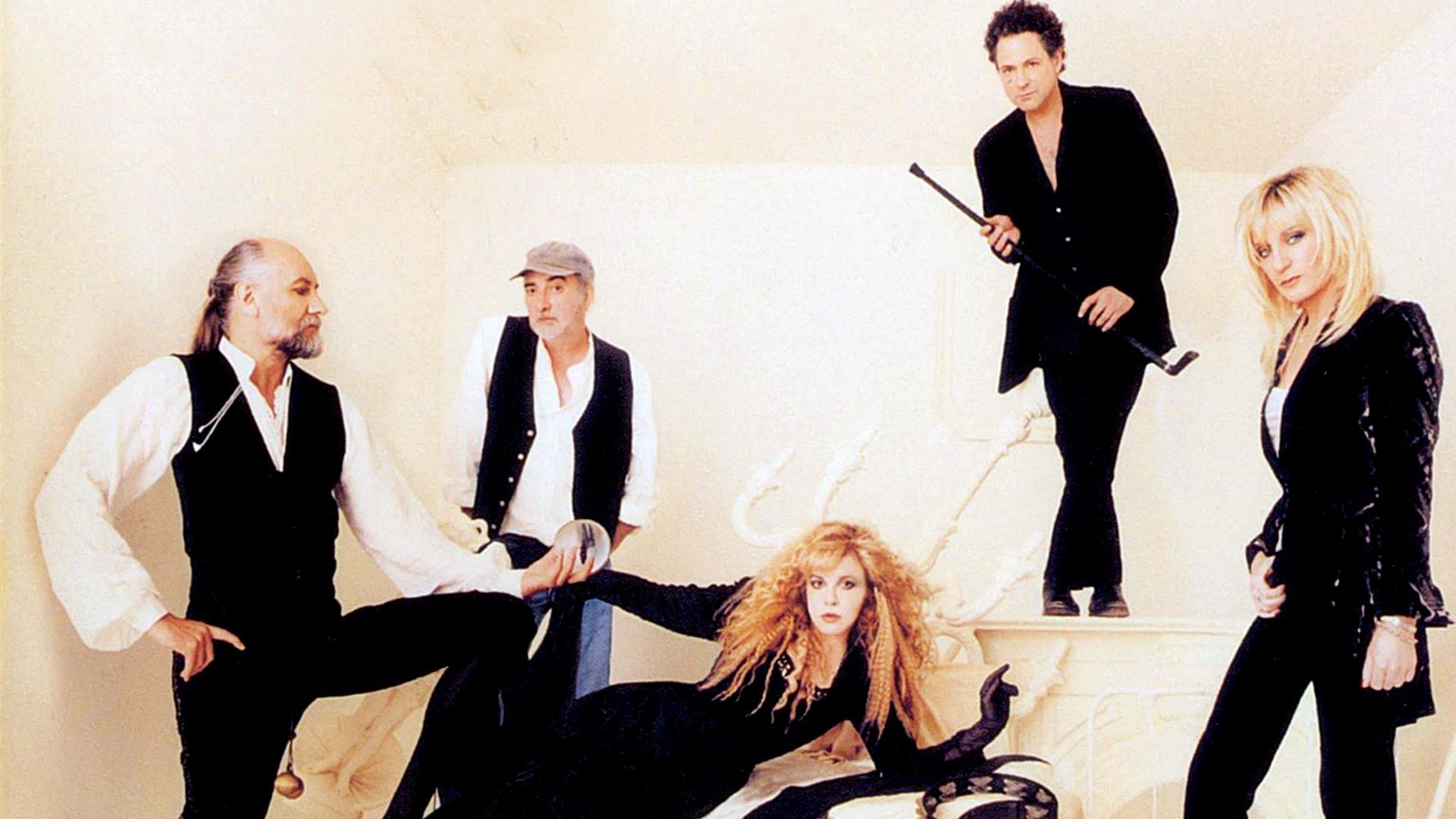
    L: Ya, we um, were attracted to a painting by Matisse called The Dance that’s just five people holding hands dancing in a circle. Uh, it’s a very well known painting and ah, there was a history to it that was very much analagous to our situation. And it just had, the feeling of the painting very much reflected how we were feeling when we first got into rehearsal. And so o we tried to paraphrase – if you will – that painting in a photograph where we were sort of loosly in a circle of owr own…atop the rubble of (laughs) 20 years of history, I’d say.

    DJ: I noticed some of the poses in there were pretty familiar on the ah… a lot of people haven’t seen the cover of The Dance because it’s not out in the stores till Tuesday.

    L: Right.

    DJ: But some of the poses on the front really are reminisant of Fleetwood Mac and the Rumours album and…

    L: Um hmm. That was definately homage to Rumours I would say.

    DJ: Ya. What about the tracks that were in the concert that aren’t included on this CD – are those going to show up somewhere?

    S: On the long – on the – you know on the one that will be sold that’s the whole concert. Um, they had to – you know- they had to really cut it up, you know, even for the long showing on MTV um because, you know, it was two and a half hours so to come down to 90 minutes – it’s like that’s why – you know, that’s why the only place you can get those extra songs will be on that other thing. We wish that we could have, you know, somehow stuffed them on there but…they don’t fit!

    DJ: So maybe we’ll just do Dance Part 2 sometime down the line – I mean Gold

    Dust Woman wasn’t on there. You were great on that by the way.

    S: Thank you.

    DJ: Umm… Now it says on the CD the choices were taken from 3 performances – so you did three performances for this shoot for MTV? Three different concerts?

    S: Three nights, ya.

    DJ: Wow, full audiences?

    S: But this was all Friday night except for maybe one little thing on Say You Love me or something. This was all from Friday night’s concert.

    DJ: Wow – and the other shows, how did you get audiences for the shows? MTV do that?

    S: Um hmm.

    DJ: Wow. So Lindsey I got to know where this phrase came from – this is an amazing new song that’s here – and I know that you talked about how you got – you wanted to get Mick to work on this song with you – Bleed To Love Her.

    L: (laughs) Ya. Well at the time – that song actually sort of evolved over about a two year period and when I wrote the chorus in which that appears – Bleed To Love Her – uh, I had just entered into a relationship with someone and I really felt that I, you know, would be willing to bleed in order to make that work. And then of course maybe two years later, uh, things had kind of, um, drifted a little bit and the verses in there are talking about how elusive someone can be, ah, which I guess is the other side of the coin.

    DJ: Ya, it’s great. What about the other two new songs that are on there? Are those – were those things that were brought into this reunion or things that when you guys when got together again came up with?

    L: Well I had been working on a solo record with Mick anyway and both of the songs there were cut in some form for that – and Stevie’s song and Christine’s um, were – what? – demo’d up?

    S: Um hmm.

    L: Ya…and those were just the songs of choice.

    S: Right. I only came in with one song. I really wanted to do Sweet Girl so that was like the only one I even brought down to rehersal when we started.

    DJ: Boy you must have a bunch of them tucked away in that manilla folder too Stevie.

    S: I do. And that’s why I was glad – I wrote this song just a week before we started on April 1st so I was really glad that this song really was written for this album and this group of people and it wasn’t something that I went back and pulled out of something else, you know, this really was hand-crafted for Fleetwood Mac.

    DJ: Now you’re doing a reasonable amout of dates on this tour? and..

    S: 40? In three months?

    DJ: 40 – That’s a reasonable number isn’t it? Come on.

    S: Reasonable?

    DJ: Ya. You’ll be tired after that – you guys’ll be going out to the Islands after that. Are you going to do a studio album do you think?

    S: I don’t think there’s any way to know. I think that probably, you know about 35 gigs after like the 35th gig we will probably have a good idea whether or not we want to tour more of the world or whether we want to do another record or what, you know. Cuz we haven’t toured like this in – well, since Lindsey was in the band – since 1983. So, this is a lot of, a lot of concerts in a short period of time. I think we’ll know at the end of this tour what’s… what we want to do.

    DJ: We’re not going to let you get away this easy this time, you know.

    S: Oh, that’s so sweet.

    (laughter)

    DJ: Hey, you all look great but I got to ask you something… Christine McVie looks fabulous – what did this woman do? She’s just stunning.

    S: Chris takes good care of herself.

    DJ: Man, she sure does. Is this a regime – she should be doing one of those exercise videos out there! She just looks great.

    S: She’s just naturally thin. She doesn’t even try. (laughs)

    DJ: You’re going to play Los Angeles on this tour too – you’re doing the Hollywood Bowl so I imagine there’s going to be some extra guests on stage. Maybe a bunch of guys in weird looking purple uniforms?

    L: Oh, yes that could very well happen. We thought about trying to get marching bands for um, you know, any number of cities but the logistics was, just it didn’t really work. But yes, definately for LA.

    DJ: God, those guys, you know these college kids would just die to be on stage with you.

    L: Well we heard that, you know, when we made the overture to Dr. Bardner who was the guy who was overseeing the marching band back in 1979 when we did it for Tusk originally – we had heard that ah, a lot of the people who were kids back then were calling him up wanting to do it again – and I said, well you think they can still fit into the uniforms? so…(laughter) we got the youngsters.

    DJ: Alright, we’re live on the radio here. It’s Lindsey Buckingham Stevie Nicks in Los Angeles. Before I let you go, you’ve done radio ID’s before we could just do one live on the air here and then poeple will all know who you are if you’d do that for us.

    S: Sure.

    DJ: you know…Hi this is Stevie, Hi this is Lindsey…when we’re in Boston… and it’s 100.7 WZLX. Go for it.

    S: OK I’m going to have to write that down.

    S: Do you want to say the number of it Linds?

    L: (in a weird voice) one hundred point seven

    LA DJ: Hey George.

    DJ: Hey ya.

    LA DJ: It’s Norm Patas (?) You’re through.

    DJ: Oh, thanks very much Norm. How you doing buddy?

    (laughter)

    DJ: Hey you know, old echo’s haunt you no matter where you go man.

    LA DJ: We’ve got to go to the next one.

    DJ: you’re going to the next one, well…

    S: George we have to go.

    DJ: OK we’re looking forward to having you here on September 19th and thanks very much for hanging with us this afternoon.

    S: Thank you.

    L: Pleasure, thanks a lot.

    S: Take care.

    DJ: Congratulations.

    S: Bye-bye.

    This transcription was originally published at The Nicks Fix.

  • Stevie Nicks, Christine McVie quit Fleetwood Mac

    Stevie Nicks, Christine McVie quit Fleetwood Mac

    LOS ANGELES — To paraphrase Fleetwood Mac’s 1977 hit, singers Stevie Nicks and Christine McVie have decided to “go their own way.”

    The singers announced yesterday that they are leaving Fleetwood Mac. According to publicist Mitchell Schneider, Nicks will concentrate on her solo career. McVie, who has been with the band for 20 years, has not made her future plans known.

    McVie and Nicks will perform 30 more dates with the band on its current U.S. tour.

    Drummer Mick Fleetwood and bassist John McVie will carry on with guitarists Billy Burnette and Rick Vito. The guitarists joined the band after the departure of Lindsey Buckingham in 1987.

    The singers’ departure heightened speculation that Mick Fleetwood’s forthcoming autobiography My Life and Adventures with Fleetwood Mac, has heightened tensions within the band. The book reportedly details numerous romantic liaisons within the band, including an affair between the drummer and Nicks.

    Schneider, however, said the breakup is “definitely not because of the book.”

    Fleetwood Mac’s current album Behind the Mask has sold 2 million copies worldwide. The band’s 1977 Rumours album was one of the best-selling albums in history, with more than 13 million copies sold in the United States.

    Los Angeles Daily News / Thursday, September 13, 1990

  • Fleetwood Mac keeps truckin’

    Fleetwood Mac keeps truckin’

    Buckingham goes his own way as the band takes to the road

    FLEETWOOD MAC KNOWS how risky it can be for a hit rock band to confront a live audience with the unfamiliar.

    The group received an object lesson in the dicey nature of novelty about 10 years ago in Kansas City, co-founder Mick Fleetwood recalled in a phone interview last month.

    “We went out and played material that nobody had ever heard, and we just died. We just weren’t drawing on enough stuff that people knew. We weren’t booed off, but we realized something wasn’t going as well as it normally did. We hung ourselves in public.”

    The new songs that were duds in concert turned up soon afterward on an album called Rumours, where, given the chance to seep in, they went over well enough. That 1977 album became one of the all-time blockbusters, with sales approaching 20 million.

    Most of the songs Fleetwood Mac plays on the tour that brings it to the Civic Center Sunday night will be familiar to its fans. Even so, the group’s first tour since 1982 is full of the risk of novelty. The songs may be standards, but this is a radically changed Fleetwood Mac.

    Over the summer, shortly after the release of Tango In The Night, the best Fleetwood Mac album since Rumours, key member Lindsey Buckingham announced he was finished with the band. Although Fleetwood Mac had two other popular singers and songwriters in Christine McVie and Stevie Nicks, Buckingham had figured most prominently in the group’s success over the past 12 years. More than a guitarist or a lead male voice, he was an important shaper of Fleetwood Mac’s high-gloss studio sound. Buckingham was the main architect of Tango In The Night, an album that’s as impressive for the crispness and splendor of its sound as for its generally strong songwriting. Tango was recorded in a studio Buckingham had built in his Los Angeles home. When the other members of Fleetwood Mac began planning to tour, the guitarist announced that home was where he was going to stay.

    Lindsey ‘simply doesn’t want to’

    “I understand why Lindsey’s not doing the tour – because he simply doesn’t want to do it,” Fleetwood said. “I can think of nothing more horrible than ‘doing it for the company store because I’ve got to do it.’ ”

    When Buckingham joined with Nicks in 1975, Fleetwood Mac was well practiced at breaking in new personnel. The band started in 1967 as a British blues-rock group centered around alumni of John Mayall’s Bluesbreakers. By the time Buckingham joined, drummer Fleetwood and bassist John McVie already had gone through six guitarists in a line stretching back to Peter Green, the band’s original leader.

    Fleetwood said there never was any question about carrying on with the band after Buckingham quit to pursue a solo career.

    “I just didn’t feel like rolling over and dying. People that know about us realize the band doesn’t easily disappear.” At Fleetwood’s suggestion, the band started tour rehearsals with Billy Burnette, a guitarist, singer and songwriter who had recorded on his own and with Fleetwood’s side-project, Mick Fleetwood’s Zoo. Enlisted for the lead guitarist role was Rick Vito, a veteran session player who most recently had toured with Bob Seger.

    “Billy was not a stranger to anyone in the band. He’d written with Christine and done demo stuff with Stevie. We went into the first day of playing just to see what was happening. I just had a strong intuition that everyone would like it.”

    With the personnel change, said Fleetwood, came a commitment to be more of a cohesive, ongoing unit than the loose aggregation of individual careerists that Fleetwood Mac had become. During the ’80s, Nicks emerged as a headliner with three hit solo albums, and all the other Mac members except John McVie released records of their own. Every few years, between solo projects and coping with such publicized personal problems as Christine McVie’s troubled romance with Beach Boy Dennis Wilson, Fleetwood’s bankruptcy and Nicks’ treatment at the Betty Ford Center for substance abuse, Fleetwood Mac’s members would get around to recording together.

    “All ’round there’s a new philosophy about what we’re doing and what we hope to be doing,” Fleetwood said. “It has to be a little more definite in terms of ‘Are you really in the band called Fleetwood Mac, or are you in it just every five years?’ Stevie volunteered what she wanted to do – which was to put all her energy into the band for quite some time.”

    When Fleetwood Mac starts work on its next album after the current tour, the labor will be shared more evenly than it was with Buckingham overseeing the recording sessions as co-producer, Fleetwood said.

    “When somebody is as talented as Lindsey most certainly is, and you give somebody the range to do that, you can find yourself a little bit looking on rather than participating. But the nucleus of the band is still very much there. It’s not as if we’ve lost an arm and a leg.”

    For diehard fans

    On tour, Fleetwood Mac will move into its post-Buckingham period by “pretty much steering clear of Lindsey’s material. I would hate to ask the two guys to come in and sing that – that’s not a cool thing to do.” In addition to songs by Nicks and Christine McVie and Buckingham’s Go Your Own Way, which Fleetwood described as “more a band-oriented song,” the show will include some blues-based material, “stuff from way back when the band first started. I don’t think people will be real familiar with it, except real diehard Fleetwood Mac fans.”

    Risky, perhaps – but Fleetwood Mac, a band known for coping with changes as well as any other major rock group, has arrived once more at a point in its history where it can’t avoid taking risks.

    Fleetwood Mac plays Sunday night at the Civic Center. The Cruzados open the show at 7:30. Tickets cost $17.50.

    Mike Boehm / Providence Journal (RI) / October 30, 1987

  • Tangoing without Lindsey Buckingham

    Tangoing without Lindsey Buckingham

    The liner of the latest album reads like a precocious kid’s school project. Produced by Lindsey Buckingham; arranged by Lindsey Buckingham; additional engineering by Lindsey Buckingham; cover concept by Lindsey Buckingham; half of the music and lyrics by Lindsey Buckingham.

    So Fleetwood Mac gets ready to head out on tour to promote the album, Tango In the Night, and who decides not to go?

    Right – Lindsey Buckingham.

    After 12 years with the band, he has quit and gone back to work on a solo album.

    “It had been building up,” says Mick Fleetwood, co-founder of the 20-year-old group. “He was making it clear that this was the last Fleetwood Mac album he would do. Finally, going on the road became the catalyst for leaving. He basically doesn’t enjoy the road.

    “But if you’re a rock band, that’s what you do.”

    If you’re this particular rock band, you’re like a ticket agent at an airport – you get used to arrivals and departures.

    So Billy Burnette and Rick Vito replace Lindsey Buckingham, who replaced Bob Welch, who replaced Jeremy Spencer 16 years ago. Peter Green, Daniel Kirwan and Robert Weston have all come and gone. Christine McVie and Stevie Nicks, now the heart of the Fleetwood Mac sound, were additions along the way. John McVie and Fleetwood are the only remaining members of the original band, which had its beginning in 1967.

    “I prefer to see Lindsey happy out of the band rather than unhappy in it,” says Fleetwood, speaking by telephone from Los Angeles before a rehearsal session. “We’re fairly familiar with change, and it’s all been healthy, I think.”

    He downplays the problem of touring with a new album that bears so many fingerprints of an ex-member. “We’ll only do about three songs off this album,” Fleetwood says. “One thing we’re not short of is material to draw on.” True. Their charted hits range from “Over My Head” in 1975 to “You Make Loving Fun” in 1977 to “Sara” in 1979 to “Seven Wonders” and “Little Lies” from Tango In the Night, and Fleetwood Mac is not averse to playing them.

    “When I go to a concert, I like to hear the band do things I’m familiar with,” Fleetwood says. “When I browse around in a record shop, I tend to buy `greatest hits’ albums.

    “The reason the audience is there is because they know you. We did a concert once with only new material, and we died.

    “Besides, it would be unfair to the new members to say, `Here are 10 Lindsey Buckingham numbers. Learn them.’ That wouldn’t be very classy.”

    When Buckingham decided to call it quits, deciding on his replacements was “painless,” according to Fleetwood. “In the Fleetwood Mac tradition, we kept going,” he says. “Billy Burnette is an extremely close friend who has played in my band, The Zoo, for the past four or five years. He had gotten to know everyone in Fleetwood Mac as a friend.

    “I had known Rick Vito for several years, too, and had seen him perform. Also, he had been a huge Fleetwood Mac fan for years.”

    If replacing Buckingham was a smooth, quick move, getting the album made in the first place was not.

    “Logistically, it wasn’t easy,” Fleetwood says. “Lindsey had started working on the solo album he’s working on now, and the others were out doing other things. We had some meetings, with everyone hemming and hawing, and finally started talking about getting into the studio.

    “Then Christine got a gig doing a movie sound track. She asked us to work with her on that, one thing led to another, and four of us found ourselves in a studio.”

    That put them on course to make Tango In the Night, which was a relief to Fleetwood. “I was certainly keen to do it,” he says. “If we didn’t, there was a chance we never would do another album, and there would be no more Fleetwood Mac. I want the band to be a going concern.”

    Buckingham was quoted by Rolling Stone magazine last spring as saying that this could be the last “Mac” album. Fleetwood says that isn’t so. “There’s no chance that this is the last album,” he says, and promised that the next one wouldn’t take four years to come together, as this one did.

    He contends that the departure of Buckingham won’t seriously hamper the group’s song output. “There are no worries at all in that area,” he says. Neither of the latest hits is a Buckingham song, by the way. Nicks and Sandy Stewart wrote “Seven Wonders” and Christine McVie collaborated with Eddy Quintela on “Little Lies.”

    Buckingham’s absence in the studio is likely to be felt. “Lindsey was definitely an instrumental part of the recording,” Fleetwood says. “It just will be different.”

    The sound of the band could change subtly. “I hope so, in some respects,” says Fleetwood – but the Fleetwood Mac-ness seems to survive each goodbye.

    “Christine and Stevie are inherently the basis of Fleetwood Mac music,” says Fleetwood, 45. “And with me on drums and John on bass as the rhythm section, that somehow ties it all together. When you hear us, you know it’s Fleetwood Mac.”

    Jim Pollock / USA TODAY via Gannett News Service / October 2, 1987

  • Fleetwood Mac: War & Peace

    Fleetwood Mac: War & Peace

    “I WANT TO look eighteen or younger, right?” says Christine McVie, aged 42. “I know — an impossible task!”

    “Could you hold your head a bit lower?” asks Adrian Boot, photographer. “It’s better for the structure of your face.”

    “My double chin you mean?”

    “Precisely. Nicely put though, wasn’t it?”

    The photo session and interview with McVie and Mick Fleetwood in their Mayfair Hotel suite passes off pleasantly. Fleetwood poses his six foot six inches with his usual good nature and improbable dandification: striped trousers and shirt, shiny waistcoat with fob-watch chain (curving across a hint of embonpoint), embroidered slippers, yellow and white socks and a matador’s hat. This is a man who, 25 years ago, used to drive a vintage Jaguar sports car to the dole queue and blow the giro on petrol rather than food.

    There is no sense of them carrying an exaggerated opinion of themselves. They still sound English, not Californian — Fleetwood slightly public school, McVie a trace of Brummie. But they do possess a comfortable awareness of status based with monumental solidity on Fleetwood Mac having sold the best part of 40 million albums around the world since 1975 and, in particular, on being one of the few bands who have written the soundtrack of a year, if not of an era. Rumours, released in February, 1977, stood at Number One in the US charts for 31 weeks, selling 20 million worldwide. It was the successor to Carole King’s Tapestry in the adult rock market. In Britain, if you couldn’t adjust to the Sex Pistols, you sang “Rhiannon” in the bath. It put a grateful record industry back on its feet.

    So, of course, Fleetwood Mac are people for whom doors are opened. Before we can begin Fleetwood is caught up in making arrangements for that night’s Paul Simon concert and the “private” reception to follow. Very early that morning, when they flew in from California, he had immediately been offered seats for the Hagler-Leonard closed-circuit cinecast. he’d refused them, pleading jet lag with a reluctant nod at advancing years.

    Journalistically this was a shame because Fleetwood Mac were just embarking on the same remarkable endeavour that Leonard had completed during the small hours — a successful comeback after five years out of the spotlight. Trying to remember all the old moves, keeping the chin out of the way.

    Later that week a Sunday Mirror reporter tracked down Peter Green, the peerless guitarist who formed Fleetwood Mac in 1967, wandering around Richmond looking like a tramp. He is said to have a house in the area but he often sleeps on a bench at the railway station. The photographer tried to capture his filth, his obesity, caught him with a hand raised to show off his grotesquely long finger-nails. Children pull faces at him and call him “the werewolf”. He is a man on whom all doors are shut.

    The name of the band used to be Peter Green’s Fleetwood Mac. Now the distance between them could hardly be greater. It’s not what anyone ever wanted. But it took Fleetwood Mac a very long time to learn how to keep pain out of their pursuit of happiness.

    IT HAD STARTED so well. Fleetwood Mac’s drummer Mick Fleetwood, bassist John McVie and singer/keyboards player Christine Perfect were founder members of the British R&B boom. Whether they knew it or not, they were barnstorming around with the aristocracy of a rock generation. Green replaced Clapton in John Mayall’s Bluesbreakers and was succeeded by Mick Taylor — McVie on bass for all of them. Fleetwood played with Rod Stewart in Shotgun Express and had a month with Mayall before being fired for drunkenness. Christine was a member of Chicken Shack and went out with Spencer Davis.

    Then in ‘67, seeking freedom from Mayall’s demanding ego, Green invited Fleetwood and McVie to join him from the Bluesbreakers crowd, adding the unknown Jeremy Spencer, a manic Elmore James impersonator. They recorded their debut album in three days and it stayed in the British charts for 13 months. Then Green began to roll out Mac’s single hits — “Need Your Love So Bad,” “Albatross,” “Man Of The World,” “Oh Well” and “The Green Manalishi” — a brilliant series of evolutionary moves away from the straightahead blues (in the middle of which they further excited their public by enlisting a third lead guitarist, Danny Kirwan). By 1969 they were one of the biggest live draws on the European circuit. Things could hardly have been sweeter.

    What hadn’t struck any of the principals was that things fall apart. Or, more particularly, that people fall apart.

    Suddenly Green announced that a Roundhouse gig in London’s Chalk Farm on May 24, 1970, would be his last with the band. All the stuff Fleetwood and McVie took in their stride he simply couldn’t stand any more. A turmoil of social, moral and religious ideals was whirling through his head and, if what he said about it was rarely coherent, it added up to guilt. Guilt about girls he’d casually screwed. Guilt about the children of Biafra whose bellies ballooned while he made a fortune playing guitar. He tried to assuage it. He read a New Testament Jeremy Spencer had given him. He gave thousands to famine relief charities. He began to study classical music, an antidote, one imagines, to the devil’s rock for which he’d become so prominent a disciple.

    Nothing worked. Certainly not Fleetwood’s persuasions. “I always told Peter, I don’t see why on earth you feel guilty about being liked and by being liked being successful,” says the drummer sitting in the Mayfair 17 years on, still passionate about it, still grieved. “But he said it was all evil, he had to give everything away. He was…highly sensitive.”

    Fleetwood still insists on viewing it as a crisis of personal ethics. Many others can’t accept such an upheaval as possible from the shrewd, ambitious Green they knew and can only go along with the story that he was spiked with a huge amount of LSD one night in Germany.

    Green himself said at the time: “I was drawing away from music into just being a Christian person and it made me very happy, but it only lasted two or three weeks…” It seems that, although the conviction remained, the happiness never came back. One of the great rock guitarists has spent the last 17 years as gravedigger, barman, hospital orderly, petrol pump attendant, mental hospital patient, tramp and God knows what else, with only brief and abortive interludes as a musician.

    Oddly enough, Jeremy Spencer had always seemed a far more likely candidate for a crack-up with a very obvious conflict between loony humour and inner seriousness. He would assure journalists his favourite reading was The Bible yet it was Spencer who managed to get Mac banned from The Marquee club by going on stage with a wooden dildo protruding from his unzipped fly. But it may be that it was the question of his musical identity that really screwed him up.

    As a blues purist he was obsessed with perfecting his imitation of Elmore James while as a stage performer his party piece was an impression of Elvis Presley. This went down a storm with the punters at the time, but privately Spencer was agonising about his inability to write anything that amounted to more than “Dust My Broom” Part 243. The first hint of it came when he didn’t appear at all on Mac’s third album, Then Play On, despairing he had nothing original to offer.

    His exit was even more dramatic and startling than Green’s. On the afternoon of a gig in Los Angeles, in February ‘71, he went AWOL, He walked out to buy a paper and he wasn’t seen for four days until he was tracked down to a nearby commune run by a pre-Born Again religious sect called The Children Of God. And that was that. He never came back.

    At the time Fleetwood described a conversation with him in which Spencer had poured out his fears about the San Andreas Fault and the pall of “evil” hanging over L.A. which he felt was out to “get him”, as well as his worries about acquiring wealth, the band losing touch with the “real” blues and, on listening to an old tape featuring Green, his own inferiority as a guitarist. Quite a mess.

    Naturally Mac were horrified at his fate, feeling that he had been caught at a low ebb and “brainwashed” by a sinister cult, snatched away not only from the band but from his wife and children. However, it has to be recorded that his family joined him immediately and stayed, and that ever since, when old friends have sighted him in Argentina, Brazil, Italy, Greece, he has been described as on an even keel and content with life.

    SUCH WAS Fleetwood Mac’s first great period of crisis. Fleetwood and the McVies — Christine had joined as Green’s replacement — responded in the way that was to become familiar. Tin hat over the ears, heads down. A cross between a family and a platoon, they had bought a country house at Bordon, Hampshire, converted it into flats and lived together there.

    They had a certain wildness, but also a feeling for security. Christine had twice earlier quit music for domesticity with John. She even refused a Top Of The Pops spot for a solo single to go on a planned summer holiday with him. She had been especially upset that Spencer dumped them in the middle of a tour. In front of a reporter she told her husband: “We could have lost a lot of money, lost this house, and that’s everything you’ve worked for for the last eight years.”

    You might imagine that McVie didn’t know he’d been playing bass to buy a house, but he was a high-wire man who was always taking sneaky looks at the safety net. He began his working life as a trainee tax inspector, had been very reluctant to leave Mayall, and to this day has only been in two bands. For all the legendary boozing and tumbling through two decades he’s not exactly a fly-by-night.

    Fleetwood does seem to have a more fundamental confidence in his own indestructability, probably encouraged by his family background. His father was a wing-commander in the RAF and he spent his boyhood in places like Egypt (at the time of Suez) and Norway. “So I feel comfortable anywhere on this planet,” he says. His Dad is probably the only wingco to have had a pop LP dedicated to him — Tusk.

    Through the band’s dog days of the early ‘70s, the core trio took in talented American Bob Welch, lost Danny Kirwan to stage fright (even Green had described him as “neurotic”), signed up mediocre artisans Dave Walker (from Savoy Brown) and Bob Weston (from Long John Baldry’s band), and kept on recording albums that sold 250,000 in the States and 5,000 in Britain. They paid their bills but it was an inglorious business.

    That was when their manager Clifford Davis tried to kill them off and inadvertently helped to make them superstars instead. And the band’s penchant for the traumatic shifted ground notably from the psychological to the romantic and the fiscal.

    First Bob Weston, their least blessed substitution, had an affair with Fleetwood’s wife Jenny Boyd (sister of Patti Boyd/Harrison/Clapton). In the circumstances Fleetwood — for once looking a bit of an emotional softy in the light of subsequent events — couldn’t stand being on the road. In Lincoln, Nebraska, he called a halt to Mac’s umpteenth US tour and they flew home. Then, astonishingly, Davis formed a new band and, in February, ‘74, put it out on tour in America as Fleetwood Mac. Ill-advisedly, he told Rolling Stone that Fleetwood and McVie’s names were nothing to do with it: “This band is my band. I’ve always been sort of the leader.”

    Audiences walked out. The real Mac slapped an injunction on the impostors, but were then grounded by Davis’s counter-suit. “That was the only time I really got panicky!” says Christine. “Because we couldn’t work, not until we’d proved he didn’t own the name.”

    By the time they’d extricated themselves, Davis and Weston were out and Mick Fleetwood was managing the band. The LP Heroes Are Hard To Find, delayed by a Davis claim, had been released to the same mass indifference that had greeted most of Mac’s output post-Green. It was obvious they needed a shake-up. At Fleetwood’s instigation they agreed to move en bloc to California, although Christine in particular took some convincing. “I hated the idea,” she recalls. “It was a very scary proposition.”

    In December ‘74, Bob Welch gave up the unequal struggle to drag Mac up by their bootstraps and went off to form his own band, Paris. So Fleetwood Mac were down to the eternal triangle — and no guitarist.

    Meanwhile in England the bogus Mac rechristened themselves Stretch and put out a single called “Why Did You Do It?,” a whinge at Fleetwood for taking them to court — and the bastard was a hit.

    HOWEVER, THE Fleetwood Mac principle of unorchestrated manoeuvres in the dark was about to achieve its greatest triumph. Just before Welch left, the eager new manager was scouting L.A.’s cheaper studios with the next Mac album in mind. At Sound City, to demonstrate their equipment they played him a tape by a duo called Buckingham-Nicks. By chance Buckingham was down the corridor and looked in. Short of a guitarist a couple of weeks later, Fleetwood remembered the encounter and asked the duo round. They hit it off and Buckingham-Nicks were invited to join Fleetwood Mac, on New Year’s Day ‘75, without so much as a 12-bar jam to confirm that their rapport extended into music.

    This epiphany has become enshrined in rock lore as one of the moments that made an epoch. For Mac though it was only typical. It had been just the same when Spencer got religion. Welch was the first candidate they saw and he too was signed up without picking a note.

    Buckingham-Nicks liked Fleetwood and the McVies well enough but they weren’t overexcited about the prospects of joining what had apparently become an irremediably Second Division outfit. Although they had been struggling in L.A. lately, their backgrounds had prepared them to anticipate success in life: Stevie’s Dad had been — simultaneously — Vice President of The Greyhound Bus Company and President of Armour Canned Meats; Lindsey’s father owned a coffee company. Still, they’d been in the music business for eight years with barely a sniff of a breakthrough, and had been living together for five years in steady descent down the ladder of poverty. They decided to give it a try. Stevie asked Mick if she could borrow all Fleetwood Mac’s albums off him because she didn’t have any of them and she couldn’t afford to buy them.

    They went back into L.A.’s Sound City studios and, using material already written by the two separate units, knocked out the Fleetwood Mac LP in ten days. Then, as ever, they toured for six months solid. Initially they were supporting top league earners like The Eagles and Jefferson Starship, but then their product started to perform. Christine McVie’s “Over My Head” was Mac’s first big single hit in the States, and the album went up to 9, then fell away to 40 before taking a real run at it when “Rhiannon” became a monster and finally reaching Number 1 60 weeks after release (a record!).

    At last, the dairy — except that the cream had curdled. The seemingly stolid old band which had somehow made a habit of wrecking individuals was about to start ruining relationships.

    THE EMOTIONAL chaos began on the road and carried on during the recording of Rumours throughout ‘76. The McVies reckoned that their 24-hour-a-day life together had added up to 40 years of normal time and they’d had enough. For Buckingham and Nicks perhaps it was just their inevitable moment coinciding with Fleetwood Mac’s unforeseen apotheosis — they too split up.

    Perhaps the most titillating aspect of the real life rumours we all so enjoyed was the implication that, even in extremis, the band’s play-it-close instincts were still dominant. It seemed that a sort of multiple extended-family incest was taking place. McVie turned up with one of Peter Green’s exes. He and Fleetwood were both said to have had a fling with Nicks. Christine settled in with the group’s lighting engineer, Currie Grant, for the next several years. Meanwhile, Fleetwood divorced his wife and remarried her just over a year later (though they were divorced a second time by ‘79), Buckingham characteristically kept a lower profile (though “meeting a lot of beautiful women”). He was sharing a house with Rumours co-producer Richard Dashut and concentrating, as only a Californian can, on “redefining my individuality.”

    The only extra-familial relationships being noised abroad suggested that even stars can get starry-eyed: John McVie was said to have an unrequited crush on Linda Ronstadt (though he ended up marrying his secretary, Julie Ann Rubens, in ‘78) and Stevie Nicks conducted a long-distance phone romance with Don Henley of The Eagles which eventually got a little more cosy.

    But nobody quit, though nobody outside the band could understand how or why. Looking back, Christine still asserts: “Everyone cared about everyone else. There might have been problems between me and John, but that didn’t mean we didn’t care about Mick, Stevie and Lindsey and vice versa. We’re friends. Very interwoven. And to let something that successful just all apart, to say, Sod the rest of you, I’m buggering off — there was a certain responsibility not just to the band but to the whole unit. There were a lot of people on the payroll. And then there was the fact that we knew we were good. Whatever happened that was the overriding factor.”

    For Buckingham it was clearly a matter of self-control and damage limitation. On Mac’s British tour in ‘77 one journalist watched while John McVie drank himself out of affability and into aggression until he threw a glass of vodka into Buckingham’s face. Buckingham laughed it off and calmed him down.

    WITH THE intimate areas of their lives in circus uproar, a bit of straightforward hedonism must have looked very appealing to Fleetwood Mac. Indeed they seem to have relished it royally. Stevie Nicks in her Blanche Dubois mood savoured the moments: “Stepping into the black limousine with the white scarves, the excitement — to me it’s the height of elegance, it’s what I always wanted if I was going to be in a rock band.”

    They bought mansions and Rolls Royces. Their merest snacks were banquets, the leftovers a feast. Back-stage vintage champagne was delivered by the crate and cocaine was sometimes wittily arrayed in coke bottle tops. Once, on Christine’s birthday, she came home to find that her then lover, Beach Boy Dennis Wilson, had dug out the garden in the shape of a heart and filled it with roses — their friends stood around the edge holding candles. The band spent a million dollars recording the double album Tusk and a lot on solo albums of various merit and success.

    Buckingham insists that the extravagant images are greatly exaggerated: “I don’t believe we were full bore into all that. Just having two women there made for a rather more refined and couth atmosphere I would say…though sure, there have been abuses.”

    The great pleasure hunt ran its course. On the down-side of elegance Stevie found herself checking into hotels some nights because her house was full of people she’d never met before. Christine McVie, claiming to be “too set in my ways” to be able to accommodate children, elected to have herself sterilised. The unsinkable Fleetwood was afflicted for a time with a weird variant on diabetes, then went bankrupt to the tune of £2m owed to two Californian banks, his lawyer, and WEA. He explained that he had overextended himself investing in property and run out of readies. Back on his feet now, though the “poorest” member of Mac, he reflects: “It was an interesting process. People expect you to fall apart. But it didn’t destroy me. What I’m saying is you can’t put credence in…being able to go out and buy a nice car isn’t the be-all and end-all of you as a person.”

    But they began to pick up the pieces. In January 1983, Stevie Nicks married Kim Anderson (the husband of her close friend, Robin, who’d died of leukaemia five months previously). The ceremony took place on the tennis court of her house in Marina Del Ray (they’re now divorced).

    Indeed, the mood has changed so much that it’s even possible for Lindsey Buckingham to reflect on what he might have lost by joining the band. “Sometimes I speculate on what I had to give up in terms of my own pure style of playing and writing. What troubled me was that the phenomenon of Rumours, the sales, took over from what the Work was.” Buckingham has the habit of saying “Work” with an audible capital. “You’ve got to remain true to the Work. And that’s quite hard to do at this level. These years have been extremely…demanding, not only in the Work but emotionally. There are lots of ways of getting hurt. Though I’ve lost touch with a lot of what happened. I guess I blocked it out.”

    The time had come for Fleetwood Mac to settle down.

    1987_tango_in_the_night_coverEVERYTHING ABOUT the recording of Tango In The Night was more pragmatic and practical than in their golden days. Although Fleetwood sticks to the party line about band independence free of record company molestation this is Buckingham’s story of the album:

    “We hadn’t worked together for four years and we weren’t really used to seeing one another. When that happens there’s pressure from Warners of course and the people on the periphery, the lawyers and the management, start to move in to initiate an album. There was a group need to record but all our individual managers and lawyers had to talk because there was no one else to put the thing together on a logistics level — the band as such doesn’t have a manager since Mick stopped doing that. The meetings are a little chaotic. More people than I’ve ever seen. But…that’s show business.”

    Fleetwood presents sincere pride in the new discipline with which they worked once they’d got through the paperwork to the music. Two to ten and then home to bed. A reformed character.

    The album and single did much better than expected — the LP sold 1.5 million worldwide in six weeks — and they’ve made no secret of the fact that their attitude to success has undergone some modification over the last 20 years. Christine, 44 in July, married Eddy Quintela, a Portuguese musician (and co-writer of two tracks on the new LP) last autumn and is still based in Los Angeles. “You know when we got this success what I felt most was an immense sense of security. ‘Thank God I’ve got enough money so that whatever happens I can sort it out.’ My house, which I bought ten years ago, is the closest thing to the Cotswolds you could get. I tend to be very much of a home body. I love my home. I love looking after my roses. I’ve got a wonderful husband and three wonderful dogs…”

    BUT THE raven’s still tapping at the window pane. Even after 17 years, the spectre of Peter Green still seems to haunt Mick Fleetwood and he’s remained determined to try and help him whenever he can.

    For instance: Green seemed to touch bottom in ‘77 when he went round to Clifford Davis’s office with a gun and, in one of the most improbable rock business confrontations on record, demanded that the manager take back a £30,000 royalty cheque. Green was committed to mental hospital where, a few months later, Fleetwood phoned him inviting him to work on his solo African extravaganza, The Visitor, when he felt ready. “We had a really good time,” says Fleetwood. “He was objective, he was a lot better than I’d seen him for years. He spent some time with me and even got married at my house in L.A. (on January 4, 1978 to Jane Samuel). But all that went wrong and he seemed to slip back.”

    Fleetwood the entrepreneur had been so hopeful that he lined Green up with a deal to relaunch his recording career but, to his mortification, when Green saw the contract he said it was “the devil’s work”. Back then, in his frustration, Fleetwood told a reporter: “I’ve totally given up with Peter. After a while it just wears me down.” Now he says: “I’ve got his phone number. I’ll check in with him before I leave. It’s just I get nervous because I don’t know whether he wants to talk or…It’s odd. He’s a stranger now really.”

    Over in Richmond the Sunday Mirror man asked Peter Green whether he would ever play the guitar again. “I had one a while ago,” he said, “but it broke.”

    © Phil Sutcliffe / Q / July 1987
  • REVIEW: The Mac is back

    Fleetwood Mac hits overdrive for 13,500 fans at Centrum; Fleetwood Mac at Worcester Centrum, Wednesday

    Fleetwood Mac was on the spot. Even loyal partisans wondered if they could put aside their famed ego conflicts and pull together in concert. All year there have been rumors of a breakup, piled on top of rumors the band was losing steam and purpose.

    But to all worry-warts and doubters came this emphatic news Wednesday: The Mac is Back.

    Pledging a new stance of unity, the Mac roared through an exhilarating 160-minute show, leaving a full house of 13,500 fans in a blissful stupor.

    “A lot of people thought Fleetwood Mac was no more, but we’re here to show you we’re still doing it!” singer Lindsey Buckingham shouted in a moment of bravado, setting the all-out, committed tone of the night.

    Where the band’s new album, Mirage, was short on energy — helping fuel some of the negative rumors — their concert was a high-powered coup. Four songs from Mirage were played (Buckingham’s cascading “Eyes of the World,” Stevie’ Nick’s gracefully haunting “Gypsy,” Christine McVie’s breezy “Love in Store” and the band’s whimsical hit “Hold Me”), but each had an intensity, exemplified by Buckingham’s rejuvenated guitar, that far outshone the studio versions.

    A big factor was drummer Mick Fleetwood, who drove the band as in the days of old. Raising his sticks in the air with his aircraft-carrier arms, he constantly pushed the band to smoking crescendos. Add to this John McVie’s reaffirmed bass work (a complete change from his languid jamming on John Mayall’s recent Bluesbreakers Reunion tour), and it was clear the Mac still had the rhythm section of rhythm sections.

    After a nifty warmup set from Men at Work, who literally worked hard with an active stage show on top of creative, sophisticated rock, Fleetwood romped through their hits (heavy doses from their Rumours LP), sliced with judicious cuts from their experimental Tusk LP (Buckingham’s “Not That Funny” included a spectacular, African-tinged drum solo by tireless drummer Fleetwood) and a remembrance of Mac founder Peter Green in a cover of his blues-rock anthem “Oh Well.”

    Stevie Nicks and Christine McVie were equally keyed up. Nicks staggered at first (she was off-key on “Rhiannon”), but shed her nervousness and joined the festive spirit, kissing the other members in a very intimate, unplanned gesture. McVie, the Mac’s earthy anchor, sang beautifully all evening, pouring out tete-a-tete romantic dialogues.

    No songs were done from any members’ solo albums. This was a strictly Fleetwood Mac night, suffused by a camaraderie and unselfishness that laid all worries to rest.

    Steve Morse / Boston Globe / September 17, 1982