Though UCR doesn’t state how many people actually voted in the poll, Fleetwood Mac’s Rumours Deluxe Edition (30.1%) won by 10% over The Who’s Tommy: Super Deluxe Box Set(20.12%) in the Best Reissue Archival Release category and Budweiser’s Clydesdale Brotherhood ad (26.38%) by 3% over Led Zeppelin’s “Good Times Bad Times” American Hustle movie trailer (23.05%) in the Best Rock Music Commercial of the Year.
Late last year, a packed audience at London’s O2 Arena went wild as Fleetwood Mac welcomed Christine McVie on stage – completing the line-up of the band that produced one of the biggest selling albums of all times, Rumours.
The success of Fleetwood Mac is without precedent considering the varying lineups. However, the constants include their remarkable drummer and ‘big daddy’ of the group, Mick Fleetwood, and the ‘quiet man’, bassist John McVie. Which is fortunate as that’s how the band’s name came about, combining their two surnames way back in 1967.
Across two hours, Johnnie speaks to Mick Fleetwood, Lindsey Buckingham, Stevie Nicks and features a rare interview with pianist and singer-songwriter Christine McVie. Listeners will get to hear how they all had their part to play in the jigsaw puzzle of Fleetwood Mac’s enduring success. Despite the sometimes hedonistic lifestyle, divorces, and ego clashes they couldn’t have produced decades of hit records without love and friendship.
Presenter/ Johnnie Walker, Producer/ Julie Newman for the BBC
…OK, Lindsey Buckingham admits, I did kick Stevie Nicks… Fleetwood Mac are back… and still settling old scores
Despite the acrimony and excesses, and after 45 years as soft rock’s favourite soap opera, the legendary band have reunited
Fleetwood Mac are fighting again. Rock-star fur is flying. But this is no ordinary argument.
For one thing, the contretemps is being conducted in three different countries.
Stevie Nicks fights her corner from an elegant apartment in Paris, Lindsey Buckingham boxes clever in his Californian study and Christine McVie counterpunches from her riverside penthouse in London.
Founder band members Mick Fleetwood and John McVie are keeping out of it. Fleetwood is licking his wounds after his fourth divorce and McVie is in hospital engaged in a more serious battle, with cancer.
The disagreement, believe it or not, concerns one of Fleetwood Mac’s few physical altercations.
After 45 years of soft rock’s favourite soap opera, it’s astonishing that the players haven’t come to blows more often.
‘I was dancing on stage,’ begins Nicks, now 65, in the salon of her rented Parisian pied-à-terre.
‘It was the Tusk tour, 1980, Auckland, New Zealand. I was doing my thing with my shawl and Lindsey pulled his jacket up over his head and started mimicking me, behind my back.
‘I thought, “Well, that’s not working for me.” But I didn’t do anything. This must have infuriated him, because he came over and kicked me.
‘And I’d never had anyone be physical with me in my life. Then he picked up a black Les Paul guitar and he just frisbee’d it at me. He missed, I ducked – but he could have killed me.’
‘I’m not sure that happened,’ Buckingham, 64, states flatly at his gated LA estate.
‘Oh, it happened, all right,’ asserts Christine McVie, 70, drinking in a glorious view of the Thames.
‘I threw a glass of wine in his face.’
It was always the friction within Fleetwood Mac that produced the most magical music.
The pristine production sheen of 1977’s gazillion-selling Rumours concealed a cauldron of simmering tensions and churning passions. They were an airport novel come to life, and with a sensational soundtrack.
Famously, during the recording of Rumours, chiffoned hippy siren Nicks split with Buckingham, her boyfriend of several years, and, after nearly a decade of marriage, Christine and John McVie stopped talking to each other, except to discuss musical matters.
And some of the songs – Go Your Own Way, You Make Loving Fun, Dreams – were pretty brutal.
‘It was tough stuff,’ admits Christine McVie. ‘But you had to sing about the emotions you were feeling at the time. It was hands-on-the-table honest.’
‘Stevie and I weren’t even estranged; we just weren’t a couple any more,’ recalls Buckingham.
‘But none of us had the luxury of time and distance to allow for closure. And that’s what a shrink will tell you helps us to heal. So it was difficult on a lot of levels. Very difficult.’
August 7, 1987 was an especially difficult day. According to Mick Fleetwood’s memoirs, a meeting was called to discuss Buckingham’s decision to quit touring, and Nicks remonstrated aggressively with her former boyfriend.
As she set about Buckingham, he screamed, ‘Get this bitch out of my way. And f*** the lot of you!’
The fracas, Fleetwood claims, culminated in Buckingham slapping her and bending her over the bonnet of a car, before storming off shouting, ‘You’re a bunch of selfish b******s.’
‘That was in the courtyard of my house,’ Christine McVie concurs. ‘There was a bit of a physical fight, and she wasn’t beating him up. It wasn’t nice.’
‘There wasn’t any physical violence,’ contends Buckingham. ‘It was an unpleasant situation that day, but you have to ask yourself the question, if someone is beating on your chest because they don’t want you to leave, isn’t that in a way kind of flattering?’
The level of acrimony the incident suggests begs another question: despite Buckingham and Nicks having put on a united front for their latest UK shows, during which they held hands, hugged and generally behaved civilly towards each other, have they ever actually agreed on anything?
‘That’s a very funny question,’ Buckingham laughs.
‘I don’t know how much we ever did agree. I’m trying to be tactful here, but there was never a huge set of sensibilities that we had in common.’
Of course, what the members of Fleetwood Mac did have in common – supernaturally inspired songwriting aside – was a fondness for drink and drugs. Cocaine and Champagne was their cocktail of choice.
‘Well, they go hand in hand, don’t they?’ shrugs McVie.
‘When we were in Sausalito making Rumours, the boys would be doing these huge rails of coke while Stevie and I would be in our own place with our little bottles of coke, with tiny coke-spoons that we’d wear on delicate chains around our necks.
‘Very ladylike – much more refined – and actually fairly acceptable at the time.
‘Inevitably, late at night the boys would run out and come looking for ours.’
And is it true that during their private-jet-and-pink-hotel-suite years, Fleetwood Mac would take cocaine while they were performing on stage?
‘Absolutely,’ confirms Nicks. ‘We thought that’s what entertainers did in order to maintain that level of activity and creativity.’
‘Mick had this rotating platform covered with beer-bottle caps full of coke so he could snort away as he was playing,’ marvels McVie.
‘At least us ladies would slip off stage for a discreet toot.’
‘You know, I never bought cocaine,’ Buckingham sniffs. ‘There were other people in the band who may have done that.’
(Herbert H Worthington III)
Indeed there were. And they bought it by the boatload. Cocaine became synonymous with the Fleetwood Mac brand (Mick Fleetwood reportedly wanted to give their drug dealer a credit on Rumours). But by the mid-Eighties, the comedown had kicked in.
‘And,’ says Nicks, ‘the payback was a complete bitch.’
Nicks went to the Betty Ford clinic in 1986 to be treated for cocaine addiction. She then spent eight years hooked on the prescription tranquillizer Klonopin. She gained weight, her hair turned grey, she shed her skin, her ‘life force died’.
Addicted to various substances and making bad business decisions, Mick Fleetwood went bankrupt.
Lindsey Buckingham had his own meltdown (documented on the rather brilliant Tusk album, replete with what Nicks cruelly refers to as ‘his bizarre ideas and weird little guitar solos’). Christine and John McVie, by their own admission, ‘drank far too much for far too long’.
Dark days followed, but disintegration and personal loss were nothing new to Fleetwood Mac.
This, after all, was the tenth incarnation of a group that had already survived the departure of seven members, including Peter Green, the British blues guru who formed the band in 1967.
‘I had a real crush on Peter,’ admits McVie. ‘I had my eye on him. He was so charismatic and funny, sharp as a tack. And, as we know, he was slightly good at playing the guitar, which was enormously seductive.’
Green left the band, and indeed the planet, following an LSD overdose in Munich in 1970.
He would never be the same man again. So began the ‘curse of the Fleetwood Mac guitarist’, with several unfortunate musicians ending up damaged or deceased.
Lindsey Buckingham says, ‘There have been times when I’ve feared for my own well-being in the great scheme of things, because historically the track record has not been kind to the guitar players in this band.’
‘I met Peter Green recently,’ McVie says solemnly. ‘He came backstage after the London show I guested at.
‘I sat down with him and he ate some of the buffet food, but he didn’t really speak and there was nothing in his eyes. No response. It was difficult and very sad.’
Darkness has descended in Paris. Stevie Nicks, wearing black silk and tinted glasses, is sitting in the shadows talking with calm candour about her love life.
‘I didn’t want to fall in love with Mick,’ she says of the band’s lanky drummer. ‘I had the attitude that you didn’t need to go after someone’s husband who had two children. So I felt awful, awful, awful.
‘Then Mick fell in love with my friend Sara. That was not a good thing. But I always considered Mick one of the great loves of my life.’
Having extensively road-tested men – she has had affairs with Eagles Don Henley and Joe Walsh, producers Rupert Hine and Jimmy Iovine and even politician Jerry Brown – has Nicks ever considered women?
‘Oh no,’ she frowns, sitting bolt upright. ‘I’m not gay. I could never do that. I like men way too much. That would never work for me.
‘I do love men. But I’m happy being single now. I don’t want to be in a relationship. I can do whatever I want. I’m in control.
‘But if the man of my dreams were to walk in right now, then all that s*** I just said would go straight out that window into the Seine.’
In LA, Lindsey Buckingham sighs: ‘I seldom look back. Living in the present is more important to me now. I’m very fortunate.
‘I have an amazing wife and three beautiful children, and that certainly makes you less obsessive about your art as a musician – which I’ve always felt was more like painting than anything.
‘And I’m sure there were times when I became a little unbearable and demanding in trying to make those pictures perfect. But I guess there will always be things you’ve done that you regret having done.’
Beside the Thames, Christine McVie is in buoyant mood. It’s six weeks since she made a surprise appearance on stage with Fleetwood Mac at London’s O2 Arena on September 25, an experience she ‘enjoyed immensely – not quite to the point of being tearful, but it felt really good and completely natural’.
Although in late October the band were forced to cancel the Australasian leg of their tour due to John McVie’s urgent cancer treatment, the grapevine remains abuzz with gossip.
(Neal Preston)
Bookmakers have long since suspended betting on Fleetwood Mac headlining Glastonbury 2014 (Macstonbury!), and despite Buckingham’s reservations about her temporarily rejoining (‘She can’t just come and go’), Christine’s cameo has fuelled hopes of a ‘classic Mac’ reunion next year.
‘Lindsey can be difficult and a bit of a control freak,’ she says. ‘But that’s his job, and that, for better or worse, is his character. And he has mellowed over the years.’
McVie reluctantly acknowledges that her voice, piano and presence make the band somehow complete.
Without her, Fleetwood Mac serve up a satisfying set of ingredients, but she is the sauce that unifies them.
‘The gravy?’ she suggests. ‘I think we all sensed that.’
As for Fleetwood Mac’s future recording plans, McVie lets slip that she has recently written new songs for the band.
‘I sent them to Lindsey and he loved them,’ she reveals. ‘You could hear his mind whirring, figuring how he could improve them, Mac them up.’
Then out of the blue, in that honeyed voice, she starts to sing.
‘We’ve only just begun…’
Rumours and The Very Best Of Fleetwood Mac are both out on Warners
Adrian Deevoy / Daily Mail / Saturday, December 28, 2013
The members of Fleetwood Mac are famous for their dysfunctional relationships, and it seems as though they have an equally dysfunctional time exchanging Christmas gifts — at least according to Stevie Nicks.
Asked if there’s an annual Christmas gift exchange among the members of the Mac — that’s Nicks, guitarist Lindsey Buckingham, drummer Mick Fleetwood and bass player John McVie — Stevie tells ABC News Radio, ‘There is, between Mick and I. I buy Lindsey things…I’ve probably bought him 25 cashmere scarves…He doesn’t like them. He won’t wear them. And he says, ‘Don’t buy me any more cashmere.’
Explaining why she keeps giving her former lover scarves, Nicks laughs and says, ‘It’s the only thing I can think that he might wear when we’re in Sweden and it’s cold. Everybody buys [him] a scarf. He must have drawers of scarves!’ She adds that, ultimately, ‘I wouldn’t even know what to buy Lindsey, so I don’t bother. He doesn’t buy me anything.’
But when it comes to Fleetwood, with whom she also had a romantic relationship, Stevie says she goes completely over the top. ‘Mick and I, we love to buy presents for each other, because we like the same things,’ she tells ABC News Radio. ‘We like 24-carat gold jewelry. We like opals and jade. We like diamonds. You know, Mick and I are one and the same. We’re kind of the same person.’
And even if the two are feuding, expensive gifts are still on the agenda, reveals Nicks.
‘Once, I was mad at Mick about something and I bought him a red skull, with diamond eyes, on a 24-carat-gold chain,’ she laughs. ‘And I said, ‘This is just so you know I’m always watching you!’ And that was a fantastic gift. And he loved it! So, you know, Mick and I have the same taste.’
Fleetwood Mac will close out the year with a December 30 show in Las Vegas.
Fleetwood Mac are on hold while bassist John McVie sorts out his recent health scare, but once he’s back on the mend, it’s looking more and more likely that the band will welcome back a former member.
We’re talking about longtime keyboardist and singer Christine McVie, whose presence has been sorely missed since she decided to retire from the band in 1998. As we recently reported, McVie’s brief appearances during Fleetwood Mac’s latest tour seem to have reawakened her urge to perform — and her love for the band she helped propel to superstardom in the ’70s.
Noting that it “felt great” to be back onstage with the group again, McVie told the Guardian that she recently realized that her dream of being an “English country girl” after leaving Fleetwood Mac wasn’t really what she wanted. “I like being with the band,” she admitted. “The whole idea of playing music with them.”
One member who’ll definitely welcome McVie back with open arms is Stevie Nicks, who recalled their instant bond in a separate interview with the paper. “We felt like, together, we were a force of nature,” Nicks said. “And we made a pact, probably in our first rehearsal, that we would never accept being treated as second-class citizens in the music business. That when we walked into a room we would be so fantastic and so strong and so smart that none of the uber-rockstar group of men would look through us. And they never did.”
As Nicks later found out, it was McVie’s deciding vote that got her in the band in the first place. “It was critical that I got on with her,” McVie said, “because I’d never played with another girl. But I liked her instantly. She was funny and nice, but also there was no competition. We were completely different on the stage to each other and we wrote differently too.”
Their friendship was cemented during the band’s most successful years — partly because, as Nicks sees it, they led a separate existence from the other members of the group. “The band had two couples in it, plus Mick was married with two little girls, so we had to behave,” Nicks explained. “We’d play a gig, get on an airplane right after the show and leave to the next place. And we were watched like hawks. We had security outside each of our rooms so Chris and I were almost like travelling rock ‘n’ roll nuns.”
Laughing off Nicks’ use of the word “nuns” but admitting it was “regimented … like the Army,” McVie added, “We shared rooms, did each other’s makeup and lived on Dunkin’ Donuts.”
And more shared crullers could be in the duo’s future, if McVie has anything to say about it. “At the time, they tried to persuade me to stay so hard,” she recalled of her decision to quit. “But back then I’d made my mind up that I’d done enough touring. I just couldn’t live out of a suitcase any more. Whereas now I would really rather like to again.”
Heroic drug abuse, physical violence, epic strops… Forget Rumours, Fleetwood Mac’s craziest album was Tango in the Night.
In December 2012, three members of Fleetwood Mac cried together. in public, at the memory of something that had happened all of 25 years previously. Singer Stevie Nicks, guitarist Lindsey Buckingham and drummer Mick Fleetwood were doing a round of media interviews to announce the band’s 2013 tour when they were asked about the events of 1987, when Buckingham quit the band following the release of the album Tango in the Night. Buckingham did not respond directly to the interviewer. Instead he turned to Nicks and Fleetwood and reiterated his reasons for leaving the group at a critical stage of their career: foremost among them, his sense that Nicks and Fleetwood had lost their minds and souls to drugs.
“What Lindsey said in that interview was very moving, ” Fleetwood says. “He told us: ‘I just couldn’t stand to see you doing what you were doing to yourselves. Did you ever realise that? You were so out of control that it made me incredibly sad, and I couldn’t take it any more.’ It was really powerful stuff. This was someone saying: ‘I love you.’ It hit Stevie and me like a ton of bricks. And we all cried, right there in the interview.”
It was a moment that Mick Fleetwood describes as “profound.” But even after all these years, his memories of that time in 1987 are still raw. For when Lindsey Buckingham walked out on Fleetwood Mac, he did not go quietly. When Buckingham told the band he was leaving, it led to a blazing argument that rapidly escalated into a physical altercation between him and former lover Nicks, in which she claimed she feared for her life.
“It is,” Fleetwood says, “a pretty wild story. It was a dangerous period, and not a happy time.”
And yet, for all the drama that came with it, Tango in the Night was a hugely important album for Fleetwood Mac. It became the second biggest-selling album of their career, after 1977′s 45-million-selling Rumours. Just as Rumours had done in the ’70s, so Tango in the Night defined soft rock in the ’80s. Perhaps most significant of all, it marked the third coming of the Mac, following the successes of the Peter Green-led blues rock Mac of the late 60s and the Buckingham/Nicks-fronted AOR Mac of the 70s. And for Mick Fleetwood, it represented a personal triumph. While he freely admits that his own drug-fuelled insanity was instrumental in Lindsey Buckingham’s exit, it was Fleetwood who kept the band together once Buckingham had gone. And this was key to the success of Tango in the Night.
“My motto” Fleetwood says, “was ‘the show must go on’. It was almost an obsessive-compulsive desire to not give up. And it worked.”
There is an irony about Tango in the Night that it began not as a Fleetwood Mac album but as a solo project by the man who would leave the band once it was completed. In 1985, Lindsey Buckingham was writing and recording songs for what was planned as his third solo album. Fleetwood Mac had been on indefinite hiatus since 1982, following a world [North America] tour in support of their album Mirage. In that time there had been solo albums from the three singers: Nicks’ The Wild Heart sold a million copies; Christine McVie’s eponymous album yielded a US Top 10 hit with Got A Hold On Me; but, to Buckingham’s chagrin, his album Go Insane didn’t make the Top 40.
There had also been problems for them over these years. Nicks had been treated for drug addiction. More surprisingly, Mick Fleetwood had been declared bankrupt following a string of disastrous property investments. It was rumoured that Fleetwood Mac had split up. “At that time,” Buckingham later admitted, “the group was a bit fragmented.” By the end of ’85, Buckingham — working alone at his home studio in Los Angeles had three songs finished: Big Love, Family Man and Caroline. But while he was busy making music, Mick Fleetwood was busy making plans to get the band back on track. The wheels had been set in motion when Christine McVie recorded a version of the Elvis Presley hit Can’t Help Falling In Love for the film A Fine Mess— backed by Mick Fleetwood and the band’s other remaining founding member, her ex-husband John McVie. She invited Buckingham to produce, alongside engineer Richard Dashut. “It was the first time for nearly five years that we’d all been in a working environment together,” Christine said. “We had such a good time in the studio and realised that we still had something to give each other in musical terms after all.”
Mick Fleetwood was more forthright. “The reality,” he says, “is that Fleetwood Mac were intending to make an album. And Lindsey was in many ways pressured into it. ‘Hey, we’re making an album — let’s go!” Buckingham relented, partly out of a sense of duty, had a choice,” he said, “of either continuing on to make the solo record, or to sort of surrender to the situation and try and make it more of a family thing. I chose the latter.” That Fleetwood didn’t know is that Buckingham’s agreement was conditional. “I had the idea,” Buckingham said, “that that was going to be the last work with the group.”
For all that, Buckingham threw himself into the album. He either wrote or co-wrote seven of the twelve tracks on the album. He also acted as co-producer with Richard Dashut. And it was at his home studio that most of the recording was done. What was unusual about the recording of Tango in the Night was the absence of Stevie Nicks for much of the process. Nicks contributed three songs to the album, but was in the studio for only two to three weeks. “She was not hugely present,” Fleetwood says. ”I don’t remember why. And I don’t think we would remember — Stevie and me were nuts!”
Fleetwood says that he and Nicks were doing more cocaine during the making of Tango than when they were recording Rumours — an album on which they seriously considered thanking their drug dealer in the credits. “Actually” he admits, “it was way worse on Tango in the Night. For sure.”
“Certainly , I smoked a lot of pot. But I was never a big user of coke,” Buckingham notes. And by the mid-80s, he’d had enough. ” The subculture was pretty much at the point of burning itself out,” he recalled. “The ‘anything goes’ attitude that existed in the 60s had become something entirely different. But still, everyone thought you had to do certain things to play, and I don’t know that I ever thought about it that way.”
While Tango was being recorded at his home, he found a way of keeping the two cokeheads — plus assorted hangers-on — at a safe distance. “Lindsey had a Winnebago put in his driveway,” Fleetwood says. “And that’s where Stevie and I would go with our wrecking crew. With me, the party never stopped. I was like Keith Moon. And for Lindsey having that around his own house was a fucking nightmare. So he gave us our own house outside in the garden. It wasn’t until years later that I asked him: ‘What was all that about?’ And he said ‘I couldn’t stand having you punks in the house. You’d turn up at the studio with people that you’d met from the night before, and you’d start gooning around. You were too fucking crazy.’ Lindsey was never a drama queen, enjoying the ’80s drug culture like Stevie and me. It wasn’t his scene. He wasn’t comfortable being around that much craziness. And we were blissfully unaware — completely oblivious to things that needed to be addressed.” The drug taking was only one part of the problem. There were other things eating away at Buckingham.
For all the money and fame that Fleetwood Mac’s success had brought him, Buckingham felt compromised on an artistic level — pressured by what Mick Fleetwood calls a “this monolithic thing known as Fleetwood Mac.” There is, Fleetwood says, a “tortured side” to Lindsey Buckingham.
Lindsey Buckingham didn’t enjoy the ’80s drug culture, according to Mick Fleetwood. He wasn’t comfortable being around that much craziness.
“Staying honest and staying creatively alive is very tricky in a commercial business,” Buckingham said. “You’re trying to hold on to a certain idealism, and not succumb to becoming a parody of oneself. Are you trying to flex your muscles creatively, or are you trying to sell records? In my mind it was pretty much clear-cut. There wasn’t a lot of middle ground.” Buckingham felt he had won this battle with Tusk. The easy option for Fleetwood Mac would have been to make another Rumours. Instead, Buckingham spiked the Tusk album with weird, left-field songs such as the new wave influenced Not That Funny and the bizarre title track. “A precedent was set by Tusk,” Fleetwood explains. “Lindsey could say: ‘I want to do this within the framework of Fleetwood Mac,’ without pissing everyone off.” Buckingham loved the dichotomy in Tusk: the contrast between his songs and Stevie’s and Christine’ s . “You got that sweetness and me as the complete nutcase,” he said. ”That ‘s what makes us Fleetwood Mac.” But he felt that the band’s next album. Mirage, was too lightweight, lacking the experimental edge of Tusk. And that nagging feeling returned to him as Tango in the Night was being completed.
Buckingham had written many oldie songs for the album. In addition, the songs he had recorded solo remained mostly untouched. “Those songs,” Fleetwood says, “were already very sculpted. All we did was rip some drum machines off and put drums on.” One trick of Buckingham’s, in Big Love, was especially brilliant. For the song’s climax, he used variable speed oscillators on his voice to create the effect of a male and female in a state of sexual excitement — the “love grunts,” as he called them. “It was odd that so many people wondered if it was Stevie on there with me,” he said, a little disingenuously.
Although there were other great songs on the album—slick pop rock tunes in the classic Fleetwood Mac style, such as Christine’s Little Lies and Everywere, and Stevie’s Seven Wonders — Fleetwood calls Tango in the Night “Lindsey’s album.” But for Buckingham himself, there was a sense that in the transition from solo album to band album, something had been lost. A perfectionist, intensely analytical, he felt that Tango in the Night was too predictable, too safe.
“For political reasons, I was pretty much treading water,” Buckingham admitted. “We sort of lost the moment, going back to try to find that Rumours territory. I couldn’t do that as a producer and as a player. I was demoralised. Maybe I wasn’t even motivated to go back. I did the best I could.” Fleetwood also believes that Buckingham felt undervalued in his roles of producer and arranger of others’ songs. “He was going, ‘Shit, does anyone ever realise what I do?’ Insecurities, we all have them, and that was part of Lindsey’s personality. I have insecurity even about walking on stage and thinking I can’t play drums. I don’t blame Lindsey for thinking: ‘It would be nice if someone thanked me for all the fucking work I’ve done!”
But the biggest problem for Lindsey Buckingham was, of course, Stevie Nicks . “I’ve known Stevie since I was 16 years old,” he said. “I was completely devastated when she took off. And yet I had to make hits for her, I had to do a lot of things for her that I really didn’t want to do. And yet I did them. So on one level I was a complete professional in rising above that, but there was a lot of pent-up frustration and anger towards Stevie in me for many years.” That frustration had first become evident on Rumours. Nicks wrote about Buckingham in the song Dreams, in which she sang the line: ‘Players only love you when they’re playing.’ Buckingham responded with Co Your Own Way, in which he claimed uncharitably, ‘Shacking up’s all you want to do.’ And over the years, things had only got worse.
“He got very angry with me,” Nicks said. “He tossed a Les Paul across the stage at me once and I ducked and it missed me. A lot of things happened because he was so angry at me.”
During one Fleetwood Mac show, Buckingham kicked out at Nicks. “it was just a little something coming through the veneer,” he said later. “There has been a lot of darkness. There was a time when I felt completely unappreciated by her.” Buckingham’s frame of mind was not helped by the not inconsiderable success that Nicks enjoyed in her solo career. In 1981, her solo debut, Bella Donna, went to No.1 in US. Other hit albums and singles followed. Buckingham’s solo records sold next to nothing. “Jealousy is the wrong word,” Fleetwood says. “But it was hard for Lindsey. The reality is, she’s Stevie Nicks! And Lindsey I think felt left out. That was his cross to bear.”
“We didn’t realise how unhappy Lindsey was,” Mick Fleetwood says.
Despite the hostility. Nicks tried to retain sympathy for Buckingham.” Lindsey and I were really breaking up when we joined Fleetwood Mac. We’d lived together for five years. It’s one thing when you break up for that person to go their way and you to go your way, quite another to break up and have to sit together in the breakfast room of the hotel the next morning. Not easy.”
But neither Nicks nor Fleetwood saw what was coming. “We just didn’t realise quite how unhappy Lindsey was,” Fleetwood says. “He had to get out. And of course he did.
Tango in the Night was released on April 13, 1987. The first single from the album, Big Love, was already a Top 10 hit on both sides of the Atlantic, and a tour was scheduled to begin in Kansas City on September 30. But when the band gathered at Christine McVie’s L.A home to discuss plans for the tour, Buckingham told them he was out. And at that moment, it turned nasty.
It was Nicks who landed the first blow. “I flew off of the couch and across the room to seriously attack him,” she recalled. “And I did. I’m not real scary but I grabbed him which almost got me killed.” Nicks ran out of the room with Buckingham in pursuit. “He ended up chasing me all the way out of Christine’s maze-like house,” she said. ‘Then down the street and back up the street. And then he threw me against a car and I screamed horrible obscenities at him. I thought he was going to kill me, and I think he thought he was probably going to kill me too. And I said: ‘If the rest of the people in the band don’t get you, my family will – my dad and my brother will kill you.”
Buckingham walked away. “We were all in shock,” Fleetwood says. “It was very upsetting for all of us, Stevie most of all.”
But in this crisis, Fleetwood acted quickly. “Most people would go: ‘You’ve just made an album and one of your lead components is not there? You’d better retreat rapidly, lick your wounds and reassess what the hell you’re gonna do.’ Well, that was not what my mind told me to do. I went: ‘We’re not stopping.’ And literally within a week, I convinced everyone that we should not stop and have this be a catastrophic non-event and have no promotion for the album.” Fleetwood was able to remain calm and pragmatic because he, and also John McVie, had been in this situation before – firstly, and most traumatically, when Peter Green, the original Fleetwood Mac’s guitarist, quit the band and the music business in 1970 after one too many bad acid trips. “When we lost our mentor, Peter Green, we felt completely adrift,” Fleetwood recalls. “We went: ’What the fuck are we going to do now?’ Seriously, I thought we’d never get over losing Peter. But we got through it. And then it became: there’s no such phrase as ‘the band’s going to break up’. And that became habit-forming. So when Lindsey left, we already had a blueprint.”
Guitarists Billy Burnette (left) and Rick Vito (Corbis)
For the tour, Fleetwood brought in not one but two guitarists to replace Buckingham, a measure of Buckingham’s high calibre. Billy Burnette, the son of rockabilly singer Dorsey Burnette, was a country artist of minor repute. Rick Vito had worked with John Mayall, Jackson Browne and even David Soul. Fleetwood knew he was taking a risk. “On paper,” he says, “it was sort of insane. But it worked.”
It had to. “We still did that tour,” Nicks said, “because we we’d signed the contracts. We couldn’t call in and say: ‘Oh, we can’t do the tour.’ We had to do it. Or Fleetwood Mac would have been sued forever.”
The tour was a huge success. It wasn’t the same without Buckingham. Fleetwood accepts that. But the numbers including eight sold-out shows at London’s Wembley Arena – spoke for themselves. And with the new-look Fleetwood Mac out on the road, sales of Tango in the Night went above and beyond Fleetwood’s expectations. In the UK the album went to Number One on three separate occasions, and three singles went Top 10: Big Love, Little Lies and Everywhere. In the US those three tracks reached the Top 20, along with Seven Wonders , and the album sold three million copies in a year.
“The album was well received,” Fleetwood says. “Somewhat sadly, the kudos of that was never really fully attributed to Lindsey because he wasn’t present. But on the other hand, there’s a comedic sense to it — that we were promoting an album that was mainly his body of work. It was like Brian Wilson and the Beach Boys: ‘I’ve made the album, but now I’m staying at home.’
“But also, when I look back, I see another example of how desperate Lindsey was to be heard. Basically, he was coerced and persuaded to do that album – mainly by me. And to his credit, he put aside everything that he’d dreamt of doing, including making his own album, for Fleetwood Mac. But then realised that he’d made a mistake and went: ‘Oh my God – I’ve got to get Out.’ Lindsey was not being heard. We just didn’t get it. And really, I think that excuses him for letting the side down.”
Mick Fleetwood is not sure it is simple coincidence that Fleetwood’ s two biggest-selling albums, Rumours and Tango in the Night, were made when the band was at its most dysfunctional. “Also,” he says, “I’m not sure I should be so proud of it.”
Equally, Fleetwood has reservations about Tango in the Night. “It’s an interesting album,” he says. “But it’s not my favourite Fleetwood Mac album sonically. We got a little too involved in electronic-y ways of doing things.” But that album is undoubtedly a classic of its time. With it, Fleetwood Mac were reinvented for a new era. One of the biggest bands of the 70s became one of the biggest bands of the 80s. And from an album created amid chaos came some of the best songs of the band’s entire career. Even Lindsey Buckingham conceded this much. “On the whole, that album is lacking in direction,” he said. ”But there’s good stuff on there.”
In the 90s, Buckingham rejoined Fleetwood Mac, and, more importantly’, made his peace with Stevie Nicks. They have both come a long way since that dark day in 1987: Buckingham now married and a father of three, Nicks happily drug-free. And every night that Buckingham and Nicks go on stage with Fleetwood Mac, all that remains between them is what Mick Fleetwood calls “the good stuff”.
“Stevie and Lindsey are not ‘in love’ but they love each other,” Fleetwood says. “And that’s why they’ve been able to get through some awful situations. There’s something I was asked recently: ‘What’s the most misconstrued thing about Fleetwood Mac?’ I said ‘I don’t want to sound over-sentimental, but I think that people don’t actually understand that we really do love each other — a lot.’ And you know, sometimes that’s been lost amid all the fear and loathing. But, to say the least, it’s been an interesting journey.
Special thanks to FleetwoodMac-UK for making this article available.
Lindsey Buckingham breaks down the hits, rarities, and new tunes they’re playing.
IT’S BEEN EXACTLY A DECADE since Fleetwood Mac released an album, but that hasn’t stopped a new generation of fans from discovering the band. “We’re doing the best business we’ve done in 20 years!” says guitarist Lindsey Buckingham, a few hours before the Tulsa, Oklahoma, stop on the Mac’s latest world tour. “There’s been a lot more young people in the crowd than three years ago. Maybe it’s a generational thing.” Buckingham called from his Tulsa hotel room to explain how they’re choosing the set lists for this tour – mixing up the hits with plenty of deep cuts and tunes from their new EP, Extended Play.
‘Second Hand News’
“Making a set list is like making the running order for an album,” says Buckingham. “This is the opening track from [1977’s] Rumours, and it was an obvious choice for the tour opener. We’re actually opening with three straight songs from Rumours — it gets them out of the way.”
‘Sad Angel’
“I wrote this song last year for Stevie [Nicks], who always had to fight for everything. ‘Sad angel, have you come to fight the war?’ We’re all warriors with a sword of one sort or another, and she and I have known each other since high school.”
‘Sisters of the Moon’
“Warner Bros. would have really liked to see us cut Rumours II right after Rumours, but I wanted us to subvert that notion on [1979’s] Tusk. I don’t remember if we’ve ever done this song onstage before. Stevie wanted us to try it, and it really works.”
‘Landslide’
“When Stevie wrote that, she was probably, oh, all of 25 or 24. She wasn’t exactly ‘getting older.’ Now, that line certainly resonates with a far deeper perspective.”
‘Don’t Stop’
“This is the only Christine McVie song we do. After we did The Dance tour in 1997, she pretty much burned all her bridges in L.A. — sold her house, ended her relationship, quit the band. I’m not particularly sure why. But this song is still so strong. It’s an anthem. That’s why Bill Clinton latched on to it.”
‘Say Goodbye’
“We end the show with this song — just me and Stevie onstage. For years, it was difficult to get complete closure with her, like picking a scab off a wound over and over. The song is about how all the illusions have fallen away, but that doesn’t mean there isn’t hope and belief in our future in a different context.”
(Original caption: RETURN OF THE MAC Nicks and Buckingham in Washington, D.C.)
Andy Greene / Rolling Stone / May 23, 2013 (RS1183)
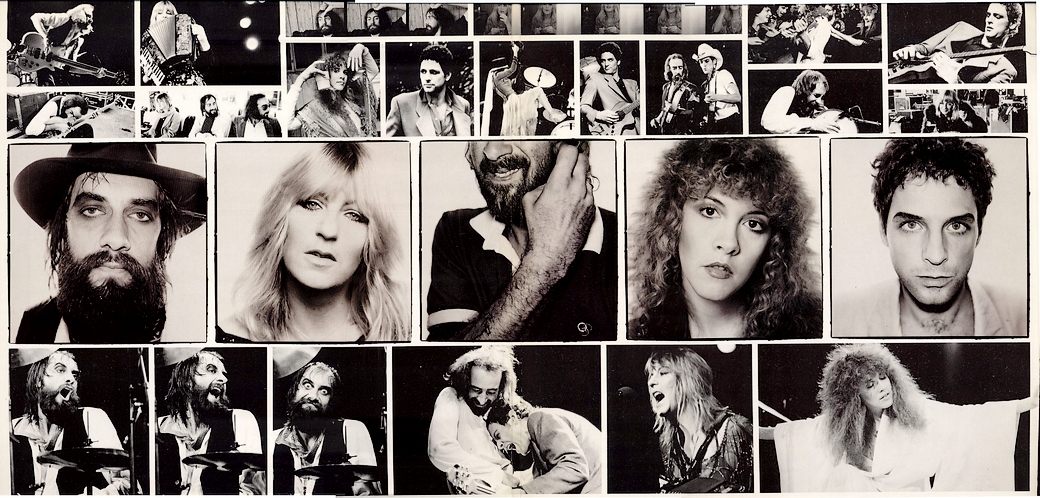
The band became arguably the biggest act in rock in the late 1970s after guitarist/singer Lindsey Buckingham and singer Stevie Nicks joined three previous members of Fleetwood Mac — drummer Mick Fleetwood, bassist John McVie and keyboardist/singer Christine McVie (the bassist’s former wife) — in 1975 and released three straight blockbuster albums, Fleetwood Mac (1975), Rumours (1977) and Tusk (1979) that established the lineup as the classic edition of Fleetwood Mac.
In a conversation with Fleetwood, it’s very clear that today’s four core band members (Christine McVie retired in 1998) are very much invested in the band and far from complacent about its live show. In fact, the band spent six full weeks rehearsing for this year’s tour, it’s first in three years.
“We know the nuts and bolts are all in place and we have confidence in that,” Fleetwood says. “But we also have like a garage band-like mentality where we go sh–, we’re actually playing down at the local town hall next week. We better be good. And it [that nervousness] doesn’t really go away, which is a nice thing. We’re not all jaded and so showbizzed out that we’re all super slick and go ‘Ah, piece of cake.’ We’re not like that at all. We’re all quite sh—ing ourselves.”
Fleetwood says the shows will, of course, feature signature hits.
“We know that we have sort of a body of songs that, in truth, if we didn’t do them, we’d probably be all lined up and shot,” he says. “So we have sort of eight or nine songs that no matter what, we know people are going to want for us to do them, and we are totally cool with doing them. If we walked on the stage and didn’t play ‘Dreams,’ I think people would be shocked. So we don’t go there. So what we do is we take the prime songs, ‘Go Your Own Way,’ ‘Dreams,’ songs like that, and then build a new show around the fact that we, of course, are going to be doing those songs.”
This is Fleetwood Mac’s first tour since 2009’s “Unleashed” tour. Buckingham and Nicks are busy with solo careers, making Fleetwood Mac part of the picture, but not the entire one. Following the “Unleashed” tour, Buckingham released the studio album, Seeds We Sow, and Nicks released In Your Dreams. Both artists toured extensively to support the albums.
The personal history and inter-personal dynamics within Fleetwood Mac also create challenges, and, according to Fleetwood, are another indication of why the four band members are all in when they reunite.
“When we do do it, we work really hard at it and we’re committed to it,” he says. “We fundamentally have to be happy to be doing this because we’re all ex-lovers and all the stuff that is well worn news out there.”
As has been well documented, Buckingham and Nicks were a couple (and were recording as Buckingham-Nicks) when they joined Fleetwood Mac. The McVies were also married at that time. But the relationships soon frayed, and the Rumours album (a deluxe expanded edition of the CD was released in January) was written in the midst of those breakups. Fleetwood and Nicks later became a couple for a time, while Buckingham later married and started a family.
“[This is] a bunch of people who aren’t just connected by the music, but connected by spending huge amounts of time [together], including Lindsey, Stevie and their journey,” Fleetwood says. “No, they’re not in love and Lindsey has an incredibly wonderful family. But the story they tell as two people is huge. And you know, there I am with Stevie, and me and Stevie had a long-lasting love affair. She’s the godmother of my children and it’s a trip. It’s a trip.”
This year’s reunion could turn out to be even more eventful than the one in 2009.
On the “Unleashed” tour, Fleetwood Mac essentially played a greatest hits set. But Fleetwood says this tour will blend in three or four new songs from those recorded last year when Buckingham, Fleetwood and McVie got together for a writing and rehearsal session.
“Stevie was on the road, and during that period she lost her mother, who passed,” Fleetwood says. “So she was not set up to come and join the party in that few weeks that me and Lindsey and John put some ideas together that Lindsey had.”
Nicks has since added her vocals to several of the songs Buckingham, Fleetwood and McVie recorded during the sessions and three of those songs will be available through iTunes shortly. Another song was written by Nicks. It’s an unreleased tune that dates back to before Nicks and Buckingham joined Fleetwood Mac, and was recently rediscovered by Nicks and recorded with the band.
“It really tells the story of how Stevie and Lindsey joined Fleetwood Mac, which is when they were known as Buckingham-Nicks,” Fleetwood says. “It was an unrecorded song that Stevie actually wrote about Lindsey, and it’s a beautiful song …
“And this was the music that I heard in the studio that spurred me on to make the phone call and ask them to join Fleetwood Mac.”
Fleetwood says with any luck these songs will form the basis of a new Fleetwood Mac album that may be recorded later this year and released either ahead of Christmas or in early 2014.
This would be Fleetwood Mac’s first collection of new music since 2003’s Say You Will. That was the band’s first album without Christine McVie, and the tour that followed the album was not as harmonious as the band members would have wanted.
For Nicks, it was difficult to be the only woman in the band and she sorely missed her close friend, McVie. And before regrouping for the “Unleashed” tour, the band flirted with having Sheryl Crow (a good friend with Nicks) join the band.
Nicks, in various interviews, has said she now is comfortable in the four-person Fleetwood Mac lineup, and Fleetwood notes that the guys try to help create a good environment for Nicks.
“Certainly the guys in the band are very aware of making sure that Stevie feels safe,” Fleetwood says. “When she comes back to Fleetwood Mac, she’s in a man’s world, you know. And two of them are men that she each had relationships with. It’s hugely important that she feels safe — and loved. And that’s the funny old thing that this band is all about. It’s powerful.”
FLEETWOOD MAC
When: 8 p.m. April 6
Where: Wells Fargo Center, Broad Street, Philadelphia
How much: $49.50, $79.50, $149.50
Set list: Hits such as “Go You Own Way” and “Dreams,” and recently recorded new music
“Sisters of the Moon” from Fleetwood Mac’s 1982 concert at the Los Angeles Forum is an essential performance by most longtime fans’ standards. “Intense silence” as she walks onto the stage, Stevie channels the spookier elements of “Rhiannon” and “Gold Dust Woman.” With her blond locks teased forward and black chiffon pulled over her head, she transforms from fragile gypsy beggar to high-octane rock and roll ballerina. It’s always sheer excitement to see Stevie so engaged and impassioned in tour-de-force rock mode, but the rest of the band seem to be having a great time, as well. With Lindsey rocking a verse, Christine head-banging at her keyboards, bug-eyed Mick fixated on Stevie’s curious movements, and even the normally-stoic John swinging his bass around a few times, “Sisters of the Moon” remains an unforgettable band moment in the Fleetwood Mac live catalog. It’s been more than 30 years since Fleetwood Mac performed the song in concert, but the anticipation has been building ever Stevie revealed on Thursday at SXSW that a resurrection is approaching on April 4…just in time for Easter. Perfect!



 Heroic drug abuse, physical violence, epic strops… Forget Rumours, Fleetwood Mac’s craziest album was Tango in the Night.
 “Certainly , I smoked a lot of pot. But I was never a big user of coke,” Buckingham notes. And by the mid-80s, he’d had enough. ” The subculture was pretty much at the point of burning itself out,” he recalled. “The ‘anything goes’ attitude that existed in the 60s had become something entirely different. But still, everyone thought you had to do certain things to play, and I don’t know that I ever thought about it that way.”