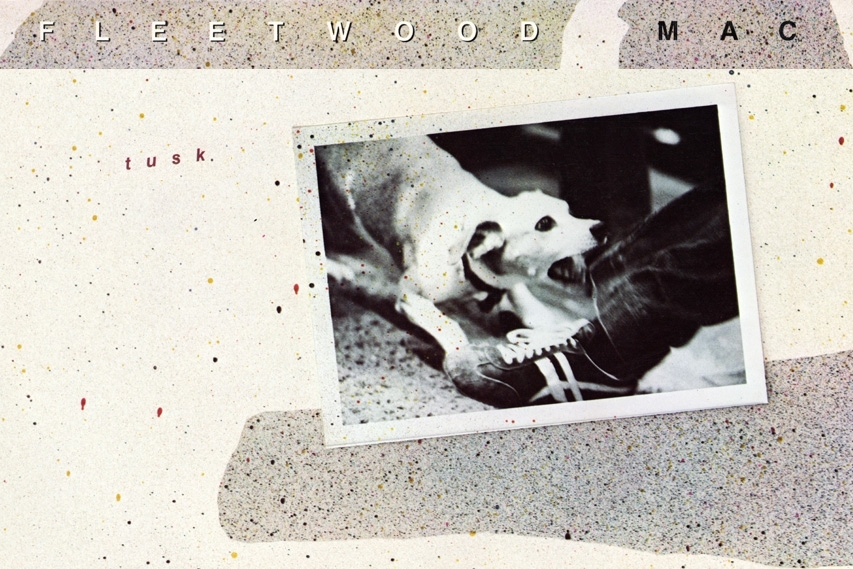
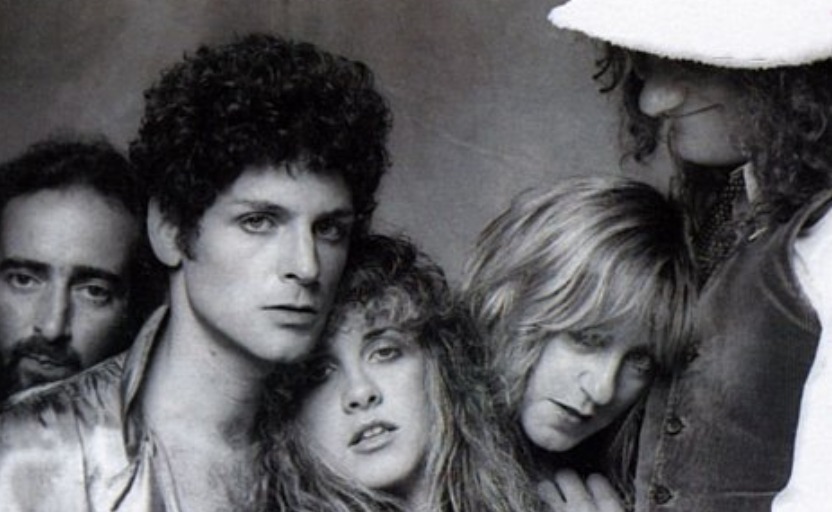
More than any other Fleetwood Mac album, Tusk is born of a particular time and place — it could only have been created in the aftermath of Rumours, which shattered sales records, which in turn gave the group a blank check for its next album. But if they were falling apart during the making of Rumours, they were officially broken and shattered during the making of Tusk, and that disconnect between bandmembers resulted in a sprawling, incoherent, and utterly brilliant 20-track double album.
At the time of its release, it was a flop, never reaching the top of the charts and never spawning a true hit single, despite two well-received Top Ten hits. Coming after the monumental Rumours, this was a huge disappointment, but the truth of the matter is that Fleetwood Mac couldn’t top that success no matter how hard they tried, so it was better for them to indulge themselves and come up with something as unique as Tusk.
Lindsey Buckingham directed both Fleetwood Mac and Rumours, but he dominates here, composing nearly half the album, and giving Christine McVie’s and Stevie Nicks’ songs an ethereal, floating quality that turns them into welcome respites from the seriously twisted immersions into Buckingham’s id.
This is the ultimate cocaine album — it’s mellow for long stretches, and then bursts wide open in manic, frantic explosions, such as the mounting tension on “The Ledge” or the rampaging “That’s Enough for Me,” or the marching band-driven paranoia of the title track, all of which are relieved by smooth, reflective work from all three songwriters. While McVie and Nicks contribute some excellent songs, Buckingham owns this record with his nervous energy and obsessive production, winding up with a fussily detailed yet wildly messy record unlike any other.
This is mainstream madness, crazier than Buckingham’s idol Brian Wilson and weirder than any number of cult classics. Of course, that’s why it bombed upon its original release, but Tusk is a bracing, weirdly affecting work that may not be as universal or immediate as Rumours, but is every bit as classic. As a piece of pop art, it’s peerless.
In Hear This, A.V. Club writers sing the praises of songs they know well—some inspired by a weekly theme and some not, but always songs worth hearing.
For most of Fleetwood Mac’s life, the band has been a hits machine, and it used that reputation to propel a singularly weird song—one vastly different from its usual output—into the Billboard top 10 in 1979. “Tusk,” which is featured prominently and often in the première of FX’s The Americans tonight, is a work of strange savagery, overlaid with jungle sounds and a thudding, endlessly repetitive drum riff that drives everything that happens in the song. The lyrics are simple enough to be a Dr. Seuss exploration of a relationship that’s crumbling, Lindsey Buckingham softly crooning “Why don’t you ask him if he going to stay? / Why don’t you ask him if he’s going away?” over the horrors building up beneath him.
It all explodes in the chorus, when Buckingham and backing vocalists Stevie Nicks and Christine McVie hiss “Don’t say that you love me!” to the unseen addressee, while the USC Trojan Marching Band’s urgent backing music heads off in another direction entirely. It’s a song at odds with itself, the various voices all tugging at the tune in different directions until everything unites when the vocalists scream the song’s title, an enigmatic moment that means… what, exactly? This relationship was doomed to begin with? These people are going to kill each other eventually? All love has violence inside of it somewhere? That “Tusk” is able to suggest all three of these things—and also have elements of wounded tenderness inside of it—makes it one of Fleetwood Mac’s very best, yet also easily its strangest song to hit on the charts.
Todd VanDerWerff / A.V. Club / Thursday, January 30, 2013
Carol Hinton claimed the rock band used her poem without permission.
A woman who brought suit against the rock group Fleetwood Mac for using the lyrics of her poem in the hit song ‘Sara’ has agreed to drop her complaint for an out-of-court settlement.
Carol Hinton sent the poem, written about her youngest child and titled ‘Sarah,’ to Warner Bros. Records Inc. in hopes of receiving rights and royalties if the poem were used in a song.
In her lawsuit, filed in U.S. District Court 14 months ago, Mrs. Hinton claimed the group used portions of the poem without permission, and sought royalties from the record and acknowledgement as author of the song.
She dropped the suit last week, however, after agreeing to settle out of court for an undetermined sum that sources estimated at about $1,500.
Stephanie “Stevie” Nicks, Fleetwood Mac’s lead singer, said the similarity between the poem and the hit song was just a quirk — “karma.”
Fleetwood Mac explores leaner sound on double album Tusk.
In a world of pedestrian rock stars, Fleetwood Mac has long been in the top of the line.
In the mid-70s, the five-member group strung a series of hits whose lush romanticism spellbound the record-buying public. Released in 1977, their album Rumours became one of the most owned records in history, selling 13 million copies nationwide.
Now, as rock music fragments into New Wave and three-chord Beatles nostalgia, Fleetwood Mac seems to typify the struggle of established stars to learn from the new music, yet maintain an old identity.
At a post-concert press conference, band founder Mick Fleetwood hunches his 6-foot-6 frame into a folding chair, squints at the TV lights, and explains yet again why the group abandoned the profitable mellowness of Rumours for a leaner sound.
“We felt like it,” he says.
Lead guitarist Lindsey Buckingham, a stylish dresser who looks like a trendy young architect adrift in a sea of blue jeans, is more specific. “The record is an expression of three years’ growth,” he says. “It’s a part of what’s been happening with us. We can’t separate part of ourselves and say, ‘Hey, this is what made us change.’ It just is.
Fleetwood Mac has never been a group to stand still. Originally founded in 1967 by Fleetwood, bass guitarist John McVie, and several refugees from John Mayall’s Bluesbreakers, the band has since shuffled enough members to staff a small orchestra. Its latest incarnation dates back to 1975, when Buckingham and lead singer Stevie Nicks joined Fleetwood, McVie, and McVie’s then-wife Christine, to produce an album called, logically, Fleetwood Mac.
That album sold 7 million copies, and was followed two years later by Rumours. Despite the breakup of the McVies’ marriage, it appears the current Mac lineup will survive into the ’80s.
“We play well because we appreciate each other’s attitude,” Fleetwood says. “That’s what keeps us together.”
Stevie Nicks casts a sidelong sly glance. “It pays well, too,” she says.
If there is a soul to the Mac magic, it lies in Stevie. A beautiful woman with wild hair and delicate porcelain features, she is the band’s centerpiece on stage. Her soaring, starchild voice is largely responsible for their romanticism. The songs she composes are the group’s mellowest material.
In contrast, Christine McVie plays thumping keyboards, writes earthier songs, and looks as if she hasn’t been getting enough sleep. She sits behind the others, trading inside jokes with roadies. Laughing, she comments on the name of the group’s latest album.
“‘Tusk,’ It’s just a nice-sounding word,” she says.
Fleetwood tries his best to look like a misunderstood artist. “It’s got nothing to do with elephants,” he claims.
Still, “Tusk,” the album’s title cut, sounds distinctly tribal. The song features the entire University of SC marching band, remixed to sound like Zulu warriors.
“I tend to look over my shoulder when I’m singing it,” Nick giggles, “like I’m waiting for the cannibals to come.”
The rest of the double album is less bizarre. It seems, at least partly, a response to the primitive rhythms of New Wave rock. A financial as well as artistic gamble (it cost over $1 million to produce, and carries a $15.95 list price in period of falling record sales), Tusk started fast but faded quickly, a moderate success in a business where “moderate” often means failure.
But the members of Fleetwood Mac still travel with the aura of legendary success.
Peter Grier / Christian Science Monitor (Boston, MA) / July 9, 1980
OF COURSE, Fleetwood Mac is the American Dream. The band’s success story is the stuff of which the mythology of modern day America is made: Mick Fleetwood, John and Christine McVie, down on their luck in the Oulde Country, make the decision to move to the Promised Land. Traveling as far west as possible, these humble immigrants settle on the most advanced technological frontier in the world, Los Angeles.
Operating within rock ‘n’ roll’s picaresque tradition, a surprise encounter teams up the three Britishers with two down-and-out American natives, Stevie Nicks and Lindsey Buckingham. Within a year, following closely the WASP work ethic, their fortunes change for the better.
Within three years of moving to America they have become part of the aristocracy to which you are granted entry in the United States by virtue of your material rather than your blood. In Washington Fleetwood Mac is invited to the White House for social chit chat with President Jimmy Carter.
By now they are so rich that Mick Fleetwood tells a friend he knows he need never work again in his life.
It’s like a good made-for-TV movie!
Rumours was a musical soap opera detailing the emotional chaos within the group following the breakthrough Fleetwood Mac album. The romantic traumas it dealt with, though, were those of wealthy, Beautifully Tanned People. A very glamorous record really, a sort of musical Dallas.
Incorporating as many emotional buzz-words and buzz-areas as possible. Rumours rather simply discussed the romantic problems of many people in their late twenties or early thirties. By doing so, it established once and for all the viability of what now has become known as AOR-Adult Oriented Rock.
Appropriately enough for Me Generation mid-’70s California-the state with the highest divorce rate in the world-Fleetwood Mac’s position became something like the group-as-group-therapy. Easier than est, safer than Synanon, Rumours seemed as Californian as the new quasi-religious texts like Zen and the Art of Motorcycle Maintenance or the collected works of L. Ron Hubbard.
That was not the sole factor, of course, behind Rumours selling close to 20 million copies. That was just the in-depth back-up team, really. The real reason Rumours sold so many copies-that it became bigger than life itself-was because, in the words of Warner Brothers’ Derek Taylor, “It’s just a very, very good double-sided pop record.”
Fleetwood Mac’s music is rock ‘n’ roll-the rhythm section alone would insure that-but it’s very poppy rock ‘n’ roll, closer to Abba than Elmore James (the inspiration of the band’s original guitarist).
But can you imagine what the vibes must’ve been like in the studio during the making of Rumours? Fleetwood Mac probably shouldn’t be begrudged a single cent of their wealth.
Even now – perhaps more than ever – there is something indefinably sad about Fleetwood Mac, especially about the three English expatriates. So it appears in San Francisco, where they are playing two dates at the Cow Palace to end their American tour.
Mick Fleetwood, for example, besides apparently still in love with Jenny (sister of Patti) Boyd, his ex-wife of two divorces, suffers from both diabetes and a related condition the exact opposite of diabetes; Fleetwood mustn’t eat sugar and must eat a lot of sugar. One wonders at the possible cause of such an imbalance within his body. Meanwhile, remarried John McVie (the band’s “Penguin” logo stems from the bassist’s fascination for the bird – he even has one tattooed on his forearm), for many the definition of a Good Bloke, continues to seem happiest with a glass in his hand. Christine McVie, who has taken up with recently fired Beach Boy Dennis Wilson, seems to epitomize the paradoxes scattered throughout all aspects of the group: a Cancer, with all its mother (Earth) implications, she had herself sterilized, a very Californian thing to do.
Regally named Lindsey Buckingham, the youngest group member at just 30, is the one F. Mac person very much in sympathy with newer ways of thinking. There’s obviously a link between this and the fact he has nine songs on the new album, as opposed to Christine McVie’s six or Stevie Nicks’s five.
When we meet for a formal interview session Buckingham quizzes me about the English music scene, and reveals a fair knowledge of Talking Heads and the Gang of Four. By contrast, the tapes playing in Stevie Nicks’s suite are Derek and the Dominoes and Steve Miller. Her tastes, though, are probably more representative of what the band listens to than Buckingham’s. Fleetwood Mac is essentially conservative in their outlook and not just as regards music, either: John McVie has a hard time relating to my pink socks.
At a time when most younger bands are trying to destroy the once assumed divinity of the massive studio bill, it’s hardly surprising that the production costs of Tusk, the Rumours follow-up, should make it the first million-dollar album. Tusk seems closer to a Hollywood movie production than good ol’ funky rock ‘n’ roll. With their homes in Bel Air, Beverly Hills and Malibu, Fleetwood Mac is part of the new Hollywood.
No one will admit it, but part of Tusk‘s expense must have been (unconsciously, perhaps) justified within the band as fighting uncertainty and insecurity about following as huge a success as Rumours.
According to Buckingham, the record’s cost has become a little overstated. Basically, Tusk cost so much because someone cocked up. Partially as an investment, no doubt, F. Mac was going to have its own studio built; they were strongly advised against it by people at Warner Brothers, who told them costs would be prohibitive. If they’d listened to their own advice-a rare slip for this self managed outfit-they’d have something more to show for all that money spent.
“In the context of the whole,” Buckingham’s high metallic voice tells me, “Rumours took longer to make than Tusk. One of the reasons why Tusk cost so much is that we happened to be at a studio that was charging a fuck of a lot of money.
“During the making of Tusk we were in the studio for about 10 months and we got 20 songs out of it. Rumours took the same amount of time. It didn’t cost so much because we were in a cheaper studio.
“There’s no denying what it cost, but I think it’s been taken out of context.”
In addition, the much touted digital recording hardly affected the band at all. Its real use was to preserve the quality of the master tape and the records that are pressed from it.
Tusk is a fine traditional pop/rock record. It’s only when Fleetwood Mac plays it onstage that you become aware of it’s deficiencies; the band did spend too long in the studio. Live, Tusk songs have a freshness and vital spirit which was muted during all that studio time. “You’ve got to play it a lot,” says John McVie. “It keeps getting better.” Yeah, unless you reach saturation point (as happened with Rumours, an inferior record to the preceding Fleetwood Mac).
Warner Brothers was anxious that the delay between Rumours and its successor was too great. For a while they wanted to release the first record of the two-LP set as soon as it was completed. That was nixed. So was a heavy advertising campaign the company had a New York agency present to the band. Mick Fleetwood: “The record company let this agency try something and when we saw it, it was…just nothing…It was scrapped immediately.
“I said I didn’t think they’d be able to do it, because for pretty obvious reasons we’re pretty preoccupied with not overselling ourselves. I think it’s very unfortunate that someone like Peter Frampton let his music be cheapened by doing things like putting adverts for Peter Frampton watches in his albums. That just shouldn’t happen. I think it’s real crass. A record’s supposed to be there to listen to.”
All this balance sheet stuff aside, it may interest fans of the original Fleetwood Mac to learn that none other than Peter Green himself plays on the album. “That’s right,” confirms Fleetwood, “he plays literally about eight notes at the end of one of Chris’s songs – ‘Brown Eyes’, I think it is. He just wandered into the studio while the track was being done.
“But,” Fleetwood continues with sudden despondency, “I’ve given up with Peter. I’ve totally given up. He’s just given up where anything to do with money is concerned. After a while it just wears me down.” The drummer confirms that on the recently released Peter Green solo album the guitar hero actually handles very little of the work on his chosen instrument: “A lot of the guitar is done by a friend of his. He told me that he’d handed over the guitar duties to someone else. Ridiculous.”
It was Mick Fleetwood – a good-natured fellow who presumably wanted to hand some of his new fortune to Green the same way he’s assisted former Mac guitarist Bob Welch – who set Green up with a Warners contract worth nearly a million dollars. “The day he was supposed to sign it he freaked out. I looked a bit stupid. After all, who would believe that he didn’t want to sign a contract because he thought it was with the Devil?” (Well, quite a few chaps, actually…)
Fleetwood Mac may be part of the New Hollywood but they’re not taken in by all the LA bullshit – three of them are British, after all, and all old lags in this rock ‘n’ roll circus; they’ve seen it all before.
Buckingham, meanwhile, would rather live in his native San Francisco than Los Angeles. Nicks would probably favor living on a flying carpet.
“America is my home,” Fleetwood says, “but I don’t plan to live in Los Angeles much longer; none of us do, in fact. There is definitely going to be an earthquake. LA will be flattened. I’ll have no regrets at all about moving.”
He claims that Hollywood’s flakiness hardly affects him. “We work a helluva lot so we don’t get much chance to think about it.”
Fleetwood Mac tours a lot for a band of its status (and age). “Out of the next 13 months,” Fleetwood adds, “we’re spending nearly nine months on the road. That is the sort of commitment to what we do. It’s not that we just want to throw out an album and say, ‘Oh, it’ll do alright!’”
As the new royalty, of course, it’s necessary for the band to occasionally hold court to meet local media dignitaries. These press conferences are fairly appalling affairs; in San Francisco the local press, TV and radio field their questions with strained, reverential smiles. Held in a bland conference room at the San Francisco hotel in Union Square, the event was strictly showbiz Presidential. The band – except Buckingham, who’d gone to visit his mother – sat at a dais at one end of the room as questions like “Who is Sara?” and “Mick, do you ever sneak out at night and go to clubs?” were put to the tolerant Mac. The killer was when some mutant got up and asked Nicks what she was doing for dinner that night.
In the middle of 80 minutes of this nonsense Mick Fleetwood’s whole body appears to go into spasms. Christine McVie, sitting next to him, massages his shoulders and arms with thoughtful concern. Fleetwood’s having one of his diabetes attacks. He’d been late arriving at the press conference because he’d felt so lousy he thought he might have to blow it out altogether.
At times like this one wonders: Is it worth it?
Onstage Fleetwood Mac is a great rock band.
Whatever Mick Fleetwood may say about Tusk attempting stepping away from the LA soft-rock sound, the band hasn’t gone far enough-or maybe they just stuck around too long in that overpriced studio blowing their Rumours bread on overdubs. Onstage, though, they really burn. Newly shorn Buckingham-the somewhat camp shots of him on the Tusk sleeve were only stage one of a metamorphosis into Beverly Hills new waver-spurs the band on from center stage. By the third number sweat’s running down his face and neck like a waterfall.
John McVie, who with Mick Fleetwood makes one of rock’s hardest, most inventive rhythm sections, adopts a most unusual stance for a bassist by moving about a lot and entering into duelling partnerships with Buckingham, himself a feisty rather than academic or soulful guitarist.
On stage right Christine McVie provides the Mother Earth image she is so keen to renounce, an anchor behind her keyboards.
Stevie Nicks has, as you might expect, six or seven dress changes. Her real strength is a superb deep voice – maybe deeper than Buckingham’s, even-resonant and clear, as though she’d been gargling with redwood sap. Mick Fleetwood looks very late-’60s and Jethro Tull-like in boots and waistcoat.
Each individual’s instrumental and vocal accomplishments aside, what really makes this show work is the number of great songs in the set, since the release of Tusk. Fleetwood Mac has effectively doubled the songs at their disposal.
Backstage at the Cow Palace (a mere 12 or 13,000-seater) there is a very good vibe. There is an undeniable elegance about the benchwood furniture and potted palms that fill the dressing rooms. John McVie is very happy. He is slumping around in an old army fatigue jacket, looking to put something in his empty glass. “This is a great band,” he nods to himself, and picks up a bottle of vodka.
Christine McVie and Dennis Wilson sit on a couch, spooning like teenagers at a drive-in movie. Dennis seems pretty drunk; at least that’s my interpretation of the near-total failure in communication we experience when we try to talk to each other. Maybe it’s just a bad case of culture gap. What seems like the entire Buckingham family tree is also present.
Mick Fleetwood and myself end up sitting around a tape recorder in the middle of the dressing room, the one that has urinals and toilets. It also has the F. Mac oxygen cylinder and mask. If all you breathe is conditioned air from hotels and limos, you probably need a drop of the bottled stuff now and then.
Mick Fleetwood was the original founder of Fleetwood Mac, in July, 1967. He had been kicked out of John Mayall’s Bluesbreakers after only a couple of months for drinking too much. Other Bluesbreakers were John McVie, who’d played with Mayall since the beginning of 1963, and Peter Green. Green followed Fleetwood shortly afterwards and an initially reluctant McVie joined in September of that year.
Fleetwood Mac’s 1977 album Rumours
Prior to the Bluesbreakers, Fleetwood had been working as a decorator for a few weeks following the break-up of white soul roadshow the Shotgun Express (also featuring Rod Stewart). He is a man with an absurd sense of humor rarely revealed in interviews. He seems keenest to play political spokesman, a role presumably due to his also managing the band; he took over after former manager Clifford Davis, claiming to own the name “Fleetwood Mac” and the right to use it as he saw fit, sent a bogus F. Mac on the road in America in January, 1974.
Fleetwood loathes the idea of managers now, and thinks no band or artist should need one: “A good accountant and lawyer and a good tour manager – an old roadie can do that – are all you need.”
Along with John McVie, Fleetwood’s the real backbone of Fleetwood Mac. He’s a formidable drummer, which is why it’s so puzzling that his actual drum solo – with handheld “talking” drum – should be so duff.
“We’ve never stayed one way for very long,” he says in not too practiced a manner, “and I don’t think we ever will. We’ve always changed a lot whether or not players have changed. We’re actually afraid to, I think, of getting into a rut, which can be very easy to do, and very awful, too –especially when it’s just so you can make a lot of money. Doing a double album didn’t make any business sense at all. But it meant a lot to us, artistically – whether we could still feel challenged. We really, really are pleased with it. We’ve also, I think, got enough discretion to know if the songs aren’t up to standard, in which case we’d have just put out a single album.
“We’ve got a great advantage, though, in having three songwriters. We’re very lucky. When Danny, Peter and Jeremy were in the band they all wrote and played very different stuff. So in a way we’re back to that sort of situation; again we have the advantage of three very different styles. So it’s come something like a full circle.”
Were you aware of just how strong the punk/new wave had become in England?
“No-o-o-o,” Mick Fleetwood shakes his head, perhaps with no great passion. He shrugs his shoulders, continuing in the slightly slurred, drawn-out Home Countries accent first popularized by near-contemporaries like Mick Jagger. “We’re not physically there…But I know there’s a whole social thing going on.
“The good musical things,” he continues, more confidently, “will stay behind. Most bands that I know of didn’t really have any great master-plan. They just started off listening to the blues and the Rolling Stones and Chuck Berry records, played the school dance or whatever and went on from there. Just went off and did it – and developed.
“It’s not that evident over here. England’s such a tiny place; all those great bands always come out of it. England brings out some kind of hardcore staying power. I don’t think this country has that, because it genuinely isn’t as hard here. I’m not saying people don’t have a hard time here. Stevie and Lindsey certainly did.”
With Jungian synchronicity, or maybe just good timing, Stevie Nicks sticks her rather shattered-looking head round the door with all the experience of someone who’s done a lot of waitressing. “Cheeseburger, fries, kidney pie, potatoes and starch…Well, anyway, I’m sorry I broke in your little tea party.”
She disappears. The door closes. Mick Fleetwood scratches his head, as though bewildered at this display of rock star looning. “Gosh,” he says, just like that.
Enough of this frivolity. On with the questions. One of the reasons Fleetwood left England in 1974 was his dissatisfaction with living there.
“We were just pissed off with the whole thing, because basically Fleetwood Mac didn’t mean a shit then in Europe. The band had changed, whatever we played wasn’t appealing-the balls of the band, namely Peter, had gone. At that point, anyway, we were playing more over here.
“Also, I thought England was very grey and full of depressed people. All those kids were just reacting to that. I know that. We just got out. But it can never have that same effect here, simply because of the size of the country. You can go through the whole Midwest and it’s just not there.”
There’s a colossal sense of history in the band’s songs.
“Yeah,” agrees Fleetwood, pleased. “Before I went on tonight I shouted out, ‘You know what this is? This is the last three gigs of the decade.’ Then while I was playing I was trying to count the years I’d been with John. I thought, ‘God! Not so long now and it’ll be something like 20 years!’ There’s a lt of feeling up there, of people that have developed together.
“There’s a lot of waste of talent that starts up and just fizzles out. You just see the spark of something and then they all start throwing TVs out of windows and showing they’re a load of bastards.”
You had the Youth Success thing…
“Yeah. But we held it together as a band. We were lucky; because of the people in the band we became involved in the thinking process of what we were trying to do. For ourselves. Selfishly, if you like. And were stilling doing that. It’s not just a ‘crank it out and let it roll in until it stops rolling in’ number. ‘Oh, I’ll just do it for a few years and clean up.’ This is a career. This is what we do.
“It’s just a question of having some integrity about what you do, and we definitely try to have that. I suppose when we stop having that feeling it will be time to stop altogether, rather than just ‘Oh, we’ll do a quick tour and rake it in.’”
After Rumours came out it was assumed the next F. Mac record would be a live album, after which the band would retire.
“We’ve recorded some gigs on this tour. We do it every tour and they just get put away. They might be used some time. Who knows?”
At one stage, though, wasn’t there talk of this double album being half live and half studio?
“I don’t remember that. We thought of the possibility of going into a concert hall and cutting these songs literally live. Live, these songs are very different. Without all the overdubs they really kick ass.
“I think it’d be interesting to go in an empty hall and develop the number the same way you have to play it onstage. We don’t do a lot of the stuff onstage. You can’t get all those little tinkles and cymbals and tom-tom overdubs. You play the gut of the number. To approach new tunes in that way could well be an interesting thing to try.
“A good live album can be great, but it’s often treading water a bit, and a very easy thing to do. People say we must be crazy that a band as big as we are haven’t put out a live record or a “Greatest Hits” in between Rumours and Tusk. But it takes the freshness away of what we’re trying to do. Of course, there’ll be a “Greatest Hits” sometime. One day. As a final curtain, perhaps.
“Certainly now the intention is to keep on recording new stuff. The next album should be out quicker than people think. I think we’ll just go for a quick one.”
Did Rumours do your heads in?
“Just the colossal success? We were working a lot of the time on the road. Again, I just think we’re lucky.” Fleetwood is very matter-of-fact. Didn’t he feel the band was becoming a commodity?
“No. Because we don’t let that sort of thing happen. If we wanted to utilize all the marketing resources we could make a lot more money, a lot more cash-in stuff. But” –derisively – “that’s going for a real cheap one. You shoot your integrity out the window. We’re internally very – well , we look after our own affairs for a start, so we don’t have anyone feeding us a load of bullshit on how great we are. We’re constantly having to make our minds up ourselves, which keeps us open-and relatively sane.
“Of course, there is pressure. You just have to hang on to the same thing you’ve hung on to for the last however many years it is. You just don’t presume that you’re anything special, ever. As soon as you do that, then forget it.
“There’s a lot of natural energy in this group. Without it it wouldn’t work. It’s apparent to me that onstage there’s genuine rapport. We know what numbers we’re going to play nest, but in point of fact it is relatively different every night. We need the subtleties that go on between us onstage. We need to look at each other and know you’re looking at someone and it feels good. I enjoy myself as much now as I ever have. It has nothing to do with how much money you’ve made or how well you’re doing.
“I really don’t think we’d be doing it if we weren’t enjoying it. And equally I know there are lots of people that make the choice to continue doing it, presumably because they’re making a lot of money.
“This band,” he adopts a Mancunian accent, “has got guts in it!”
Warners presumably wanted to do a huge ad campaign on Tusk to equal Rumours.
“I think with any record company you have to acknowledge that they want to make the record successful. And their measure of success is money. It would be naïve of me to say we’re totally oblivious to how much money you can make. But the music comes first, every time. Then maybe you can make some money. A lot of people approach it with, ‘This is the sort of music we’re going to do to make money.’ Shit on that! Because then the point of the music is lost. Gone. Totally.
“To me an artist with a huge amount of integrity is Neil Young. He’s doing exactly what he wants to do, he’s always done that, and-you know what? – he’s still bloody successful, too. People acknowledge that he has artistic integrity, period. I remember talking to him and he was absolutely intrigued – he’d even been to England – by all the punk rock things. You should be open to all influences. In turn you can then put out something which is really yourself-because everyone has influences: it doesn’t just come from out of the sky. There are always reasons for everything.
“Music is a development of a whole load of things. As soon as you stop developing, then forget it. I mean, all our recent success has been very, very gratifying. It’s also really nice to know you’re not just jacking yourself off-that other people really enjoy it, too, for however long they enjoy it. It means a lot to all of us.”
An hour or so later I’m sitting in the living room of Stevie Nicks’s mock Regency suite.
Stevie is drinking large Remy Martins and appears to have something of a bad head cold. I ought to tell you what she’s wearing but I can’t remember; I can’t keep up with all these clothes changes. Certainly the loopiest member of the band, she suffers from having lived for too long on the West Coast. Her patriotism and belief in America is quite absurd, though I’m sure she’ll never see that, and wouldn’t think of it in those terms anyway. She’ll be good on TV chat shows in a few years’ time.
On the Buckingham-Nicks album, released by Polydor in 1973 to no great success, there is a dedication to “A.J. Nicks, the grandfather of country music.” A.J. Nicks was also Stevie’s grandfather.
“He was a country singer and songwriter,” she explains, “very into it. He wanted to take me on the road when I was four. But my parents wouldn’t let him and he wouldn’t speak to them for years. We actually sang together when I was that tiny. He was definitely the one who got me interested in music.”
With her penchant for writing numbers like ‘Rhiannon’ and Isadora Duncan-like stage moves, Stevie Nicks is always (often not without irony) referred to as “the mystical member of Fleetwood Mac.” No doubt this is why-before we begin the interview-she drapes all the lamps with antique shawls or scarves.
“There’s always been a very mystical thing about Fleetwood Mac.” She responds. “When I first joined Fleetwood Mac I went out and bought all the albums – actually, I think I had asked Mick for them because I couldn’t possibly afford to buy them – and I sat in my room and listened to all of them to try to figure out if I could capture any theme or anything. What I came up with was the word ‘mystical’. There is something mystical that went all the way from Peter Green’s Fleetwood Mac straight through Jeremy, through all of them: Bob Welch, Christine, Mick and John. It didn’t matter who was in the band; it was always just there. Since I have a deep love of the mystical, this appealed to me. I thought this might really be the band for me because they are mystical, they play wonderful rock ‘n’ roll and there’s another lady so I’ll have a pal.
“I am mystical, with or without Fleetwood Mac or Lindsey, and that’s just me. I’m a Gemini; a Gemini has two very opposite personalities. I have the moving furniture, cleaning-up-the-room-quickly side and the cream-colored chiffon personality. I majored in speech communication and psychology at college. I am a communicator. When I stop doing this I want to be a writer. I’m writing a book. A whole album and all the last tour are typed up.”
There has been talk for some time about the possibility of Nicks quitting Fleetwood Mac to make a solo album and film based on Fleetwood Mac’s ‘Rhiannon’; she is said to have been made a number of highly lucrative offers. Mick Fleetwood dismissed such reports as nonsense. “Both Stevie and Christine definitely are going to make solo albums. I want to make one as well-in Africa. But if we can’t do that without having to split the band up, then it’s a bit of a pity.”
Nicks is equally scathing, claiming not to know where such reports come from. “I don’t talk about it. If someone’s saying these things, they’re not coming from me.”
She is very caught up in the legend of Rhiannon, though-the goddess of steeds and maker of birds. “‘Rhiannon’ is as much mine as I want. There are many connections. The last woman that wrote about her is Evangeline Walton, who lives in Arizona and must be about a hundred years old-or at least 80 or 90. She started her work on Rhiannon in 1934 and finished in 1974. I wrote ‘Rhiannon’ in October 1974 when she’d finished. Walton is a tiny old lady with intense grey hair.” Nicks likes the word “intense,” often using it at inappropriate moments. “She never married. She lives in a tiny little house in Arizona which is all pink satin-very much like me. She’s very intelligent.”
If there were any of it around I’d suggest Nicks had been smoking too much dope. As it is, though, Stevie’s (un) enlightenment seems very much a product of the Guru of the Month Club.
I attempt to relate all this to possibilities of apocalypse and F. Mac’s living in Los Angeles. Before I can formulate what I’m saying, though, Nicks is glugging the old brandy down and into a serious bit of communicating.
“With all that’s been going on in the world of late,” she free-associates, “I have to admit to myself that for the first time in my life I have felt a little bit of fear about the world. And my world has always been wonderful.
“I joined the band on New Year’s Eve, 1974,” Nicks reminisces. “We started the Fleetwood Mac album in February of 1975; that took three months. We went out for a few gigs in the summer, which was no big deal. Then we did a tour starting September 9 and coming back December 22. Four gigs in a row, one day off. No limousines. We didn’t exactly play teen clubs but we might as well have.
“We sold Fleetwood Mac. We kicked that album in the ass. Christine slept on amps in the backs of trucks. I hadn’t a clue! But I decided I was going to make it alright. There was no one going to say, ‘She can’t cope. She should give it up.’”
No one can accuse Nicks and Buckingham of not paying dues. “In 1971 I was cleaning the house of our producer Keith Olsen for $50 a week. I come walking in with my big Hoover vacuum cleaner, my Ajax, my toilet brush, my cleaning shoes on. And Lindsey has managed to have some idiot send him eleven ounces of opiated hash. He and all his friends – Warren Zevon, right? – are in a circle. They smoked hash for a month, and I don’t like smoke because of my voice. When you don’t smoke there’s something about that makes you really dislike other people smoking. I’d come in every day and have to step over these bodies. I’m tired; I’m pickin’ up their legs and cleaning under them and emptying out ashtrays. A month later all these guys are going, ‘I don’t know why I don’t feel very good.’ I said, ‘You wanna know why you don’t feel very good? I’ll tell you why-because you’ve done nothing else for weeks but lie on the floor and smoke and take my money.
“Lindsey and his friend Tom used to go into every coffee shop in Hollywood, write hot checks and never go back again. The Copper Penny, Big Boy’s…We fell into the American Dream out of nowhere. We were just nowhere.”
The night after the show I again find myself in the middle dressing room with urinals, toilet bowls and Lindsey Buckingham.
Brought up in Palo Alto, 30 miles to the south of San Francisco, Buckingham was turned onto rock ‘n’ roll-Elvis, Buddy Holly, Chuck Berry and Eddie Cochran – by his elder brother. He started playing guitar when he was seven.
Pausing frequently for breath-obviously the oxygen tank doesn’t work for him –he talks about the new, stronger role he has on Tusk.
“When we started the album we had a meeting at Mick’s house. I said I had to get some sort of machine into my house as an alternative to the studio. The trappings and technology of the studio are so great – the blocks between the inception of an idea and the final thing you get on tape are so many – that it just becomes very frustrating.
“That was why my songs turned out the way they did: the belief in a different approach. For me it wasn’t really a question of changing tastes, but of following through on something I’d believed in for a long time and hadn’t had a means of manifesting. For a number of years it’s been a process of being in the back without – I mean, making the choice of joining Fleetwood Mac was a very strange decision. It’s been a very human sort of journey.”
WHITE ELEPHANT is more like it, heffalumping into the thick four-sided forest, stomping on moby grapes, swatting at the metaphysical graffiti carved into the tree trunks. Tusk isn’t exactly a swingin’ safari, and who is the walrus?
Not Lindsey Buckingham, that’s for sure. This character, who wrote all of two good songs on Rumours (and one on the LP before that), has composed a healthy 45% share of this double-disked set, and not a “Go Your Own Way” in the portfolio. And the vixenish Stevie Nicks, her voice fairly ravaged into a not-unaffecting Wynette whine, is still spinning her mystic crystal revelations into melodies that sound like fruit suspended in Jell-O. Fleetwood and the male McV are, as befitting a tag-team that has been together since the Profumo scandal, the mainspring that keeps the mammal on time for his appointments, but rhythm sections are like Roscoe Karns and Zasu Pitts: you wouldn’t co-star them in History Is Made At Night. But Christine McVie, ah…here is rock’s only Bronte heroine.
See, Fleetwood Mac are not dumb. At long last lucky, maybe – if their former guitarists weren’t quite so flighty, they might be playing ‘Dust My Albatross’ for the 4,308th time at Klooks Kleek this very night, instead of having a uranium album on the U.S. pop charts – but not dumb. So they have wisely opened and closed Tusk with C. McV songs, “Over & Over” and “Never Forget,” bracketing the album in sexual mystery, coastal harmony, true-life adult oozemusic that is infused, like many of Christine’s contributions over the years (“Show Me A Smile,” “Spare Me A Little Of Your Love,” “Prove Your Love,” “Say You Love Me,” “Remember Me,” and Tusk‘s “Think About Me,” to name but a half dozen) with a warmth, uncertainty (check those titles) and vulnerability. Without Christine as the fulcrum between the British good-humored pragmatism and California helium-headonism of the group, things might well fall to pieces. How appropriate that she’s been consorting with a Beach Boy.
So much for mash notes. Tusk is dominated by interlopers, and it’s there that the weight must lie. On the credit side, a pat on the back to Lindsey Buckingham (assuming that his “special thanks” are basically for production duties) for getting so distinctive a sound for the LP: the instruments have true definition, there are edges where there should be edges, curves where there should be curves, and side four, especially, rolls like a scenic stretch of Abbey Road.
Unfortunately, Buckingham doesn’t sing all that well (the mix notes this, and camouflages as best it can), and most of his songs are Barthelme-dull sketches buried in thump and clangor. Exceptions: the ethereal “Walk A Thin Line,” the almost-rock “I Know I’m Not Wrong” (if only that harmonica, or whatever it is, weren’t playing “toast and marmalade for tea”…), the staggering “Tusk,” which explodes the mold and comes up a cross between T. Rex and John Philip Sousa. As for Ms. Nicks, she has her moments of sparkle – I’d keep “Storms” on a one-disk distillation of Tusk, plus the piano pattern on “Beautiful Child,” the way she sings “When you build your house, I’ll come by,” on “Sara,” and that might be all – but her meandering trance-tunes like “Sisters Of The Moon” have become a drag.
With its sparse, digitally-balanced ambience, artsy-obscuro graphics and diffused creativity, Tusk takes on the characteristics of a kind of blissed-out image risk (though not a commercial one); a real late-60’s move of an act following a freak mass-appeal success with an ambitious foray. In the past, The Mac have made minor, eccentric albums – Penguin, Future Games – that were noticed by perhaps 25,000 people. Tusk isn’t particularly impressive as a 20-song compendium, and it has its perverse touches, and it will be noticed by millions. Trouble is, the sprawling format makes even more obvious the fact that Fleetwood Mac is at least three different bands, led by three miniaturists of varying talent: one a fragmentary rock-technician; one a sexily swirling mistress of misty dreams; one a very human, thoughtful singer-composer as scared as most of us are of the impermanence of intimacy. Guess which one has been signed to do a film and a solo album. Hint: get the fog machines ready.
The rumors about all those Fleetwood Mac splits were true, and now their comment is Tusk, Tusk
It’s not because saving the elephant is one of their causes or that they identify with the magnificent if extinct mammoth that Fleetwood Mac called their current double LP Tusk. Explains the group’s drummer/manager, Mick Fleetwood: “The title itself has no bearing on anything. We just liked the sound of the word, in the abstract.”
But financially, Mick and Co. might as well have titled it Risk. Along with Led Zeppelin and the Eagles, Mac was the fall’s Great Vinyl Hope to resurrect the lagging music industry. Yet Tusk defiantly lists at $15.98 when, as Mick admits, “record sales are taking a complete dump.” Further, the group invested more than $1 million to create a jarring, audacious new sound. So why depart from the hit-cranking pop-rock formula responsible for some 20 million sales of their last two LPs? As lead guitarist Lindsey Buckingham points out invidiously, the Eagles’ new work “is just more of the same of the last five years. I mean, why bother?” “Our ideas and lives progressed, moved on,” seconds keyboardist Christine McVie. “Tusk is years more mature. If you’re complacent, you stagnate.”
Complacency has never been a vice of Fleetwood Mac since the group settled into its present composition in 1974 with Mick and two other Britons, bassist John McVie and his then wife Christine, plus two Californians, Buckingham and his then lover, singer Stevie Nicks. In the two years since their provocatively autobiographical last LP, Rumours, three of them have changed partners. John has found a new wife. Christine is riding the perfect wave with Beach Boy Dennis Wilson. Fleetwood, after remarrying his divorced wife, split again and lives with a model. Nicks is now unattached since busting up with a record executive. Buckingham is still with his model.
Under those circumstances, much of Tusk was put together piecemeal on what Christine says was a “noncommunal rotation system”; the five members were often not in the studio together. The involvement this time was less emotional than aesthetic and, to hear Lindsey, not even commercial. “If Tusk becomes an influential work over the next decade,” says Buckingham (who dominates the LP with nine of the 20 tunes), “then that’s the measure of success. Whether it sells three million or five million,” he adds ever-so-blithely, “is neither here nor there.” “People may not have expected Tusk,” says Mick, “and noses may be slightly out of joint. But we did this for us. It was a healthy challenge to pull it off.”
Now, obviously, they have. The Tusk LP and single are both Top Ten, and as Mick reports from the road, where they are on the 22-city first leg of a nine-month worldwide tour, “the energy is really poppin’.”
For Fleetwood, 31, it hasn’t been easy. His second split from his wife of 12 years, Jenny Boyd, now “seems permanent. But, luckily,” he adds, “we get on well.” She has custody of their two children and has taken them back to England. Mick, like the rest of the group, lives in the L.A. area and sees the kids during vacations. “I quite miss the fact that I can’t be a father,” he admits. “I happen to be one of those men who adores that thing of `alright, kids, let’s go.’”
Then, if his marital breakup weren’t trouble enough, last year while working on Tusk Mick discovered he was suffering from diabetes. “I had been feeling burned-out,” he recalls. “My eyes were going wild, I started drinking like a fish, I’d hyperventilate while talking.” One doctor suggested he see a shrink. “My ego couldn’t accept the fact that I was going around the twist. Manic-depressive one minute, eating a bowl of ice cream, quite happy, the next. I thought it was a brain tumor. I was afraid I was going to die. It was 18 months of hell.” But once the ailment was diagnosed (it’s a mild case), Mick adjusted his habits. “Bless her,” he says of Sara Recor, his companion of the past year. “She was there to hold my hand and look after me.” Though he concedes, “I have overworked and overplayed,” Mick says he now “feels like I did 10 years ago.”
Perhaps the least changed Mac member of all, says Fleetwood, is his co-founder John McVie, 34. McVie and second wife Julie Rubens live both in Beverly Hills and on his 63-foot sloop. The casual “rotation” recording system allowed McVie to leave his bass tracks behind and sail out to Maui while the group did the last month of polishing Tusk. And no less an expert than his first wife, Christine, finds John has “mellowed since marrying Julie. He’s become a gentle person.”
The Mac member who has changed most, according to Fleetwood, is Buckingham, 30. “He was volatile and intense in the beginning,” says Mick, “and afraid he was trapped into doing things a certain way.” But with almost half of Tusk under his name, he’s been freed. “My contribution was not that visible before,” says Lindsey. “Things that had been swimming around in my head for years finally got exorcised on Tusk.”
Doing some of his own cuts on his 24-track in Hancock Park, Buckingham bravely usurped some drumming parts from Mick. “We’ve broken down barriers that existed for five years,” says Lindsey.
The liberated Lindsey has even forsaken the furry curls, scraggy beard and skintight satins of his old lead guitar sex-idol image. He now displays a clean look and casually modish Gentlemen’s Quarterly couture. His retreat from classic rock macho has come home too. His girlfriend of three years, Carol Harris, will be along for only half the tour dates. “I want to give Carol the chance to express herself in her modeling without tearing too much from our relationship.” Meanwhile, Lindsey reports that without her on the road, “Getting crazy on a few drinks at the bar means nothing to me. I’m happier having time to myself in my room, doing my tunes, than looking for action.”
But if Lindsey ever needs some post-concert commiserating, he can probably call on Christine McVie. Her squeeze, Beach Boy enfant terrible Dennis Wilson, 34, will not be steady during the tour either. “It doesn’t suit Dennis’ personality,” says Christine, “to be a guest, to have to say, `Oh, I’m with the piano player.’” On her own, Christine is clearly less shy and more self-assured since they met a year ago. “He is a multifaceted jewel,” she exults. “Dennis has awakened things in me I’d have been scared to experience and made me feel the extremes of every emotion.” Specifically, says Christine, he has turned her onto speedboating and water-skiing. “Dennis has thrown me into the deep end, literally and figuratively.”
They commute between Dennis’ 68-foot ketch in Marina del Rey and her “very English” home in Coldwater Canyon. They “definitely” plan to marry in February, but Christine has ruled out kids. “I’m 36,” she says, “and my life-style is pretty much settled as far as sacrificing and accommodating myself to children.”
“She used to call me the Mad Songwriter,” says Stevie Nicks, 31, nothing that in Tusk Christine composed six tracks to her five. “Chris sits up all night and writes, she’s so inspired,” says Nicks. Stevie is prolific herself, in love or out, but for two years she has been mostly out. One problem: Male rockers, she finds, are “pretty chauvinistic. I strive to be taken seriously as a writer, and be as good as they are. So they resent my success. I see it in their eyes: `How did this dingbat manage to get everything she wants?’”
Another problem is her immersion in Mac’s work ethic. “How many men, even the nicest, most patient, can understand that for months you will come home at 7 a.m., dead tired and in a bad mood?” For now, she says resignedly, “the band is all there is room for in my life.” Just as well. On the road, she says, security is so tight that “no man can get within 10 feet. I hardly ever meet any new men.”
Nicks’ large Tudor home above Sunset Boulevard is now on the market because it attracted hangers-on who overstayed their welcome. “Any man I ever went out with called the place Fantasyland. I’m 31. I won’t always be in a rock band, and I don’t want to come out of this absolutely helpless.” So she is moving into a modest beachfront condo. “Some people thrive on being a rock star. I hate it. I don’t like being waited on all the time, people following me around saying, `Let me do this, let me do that.’”
Stevie has signed on with former boyfriend Paul Fishkin’s Modern Records to act in and do the solo sound track LP of Rhiannon, an upcoming movie based on her 1976 Mac hit. She has also written a children’s story and hopes to turn it into an animated film. “It’s a love story about a goldfish and a ladybug. A friend told me it would be the Doctor Zhivago of children’s cartoons.”
Though she is still the band’s sexily whirling, wailing focus onstage, Stevie claims, “The last thing the world needs is another sex symbol.” And what does Stevie need? “I don’t need doctors, nurses and babysitters. I need love.”
But even Nicks, who seems bent on going her own way, knows that this “is still the best rock band in the world.”
And one of the most durable. “The band’s been breaking up for five years,” says Fleetwood, sardonically, of all the reports. The group has two more years left on its record contract and the road stretches ahead until August. “If the members really felt suffocated,” Mick says, “then there’d be an obvious danger. Things do get a little crazy at all times. But this doesn’t feel like a band that’s breaking up.”
Jim Jerome / People (Vol. 12 Issue 22, p91. 3p.) / November 26, 1979
ALMOST EVERYONE, barring the inevitable elitist bores blinkered by their own super-hipness, seemed to have a soft spot for Fleetwood Mac’s Rumours. In late ’77, Rolling Stone even ran an absurd piece attempting to work out the whys and wherefores for the album’s astounding success, only to waste several thousand words of piffle concluding that it was, in the words of Warners’ Derek Taylor, “simply a very, very good two-sided pop record.”
Tusk, a long time in the making, is by and large a good four-sided pop record. It’s no untarnished masterpiece, of course, but a highly adventurous gamble for much of its playing time, and certainly not just another coldly precise and pristine work.
In retrospect, although the fact didn’t impinge on the listener, the contents of Rumours were housed within a framework, that being the very real breakdown of relationships within Fleetwood Mac, the traumas experienced thereby and the need to come to terms with a then newly gained independence, all of which were apparently occurring during the album’s recording. But now some three years have passed since then and Tusk, bereft of such a stormy emotional centrepoint, can clearly zero in on the diverse compositional talents of the group’s three songwriters, Christine McVie, Stevie Nicks and Lindsey Buckingham.
When this incarnation of Fleetwood Mac was ushered into the public eye with the Platinum ice-breaker Fleetwood Mac, of the three composers involved in the enterprise it was the two ladies who shone. Although prolific, Buckingham seemed unable to match their standards, to the point where his songs lacked clout, sounded anonymous and appeared mere fillers.
But Buckingham mustered his resources for Rumours and cuts like ‘Go Your Own Way’ were amongst the album’s high-points. Now on Tusk he’s become responsible for the largest output, clocking in a sturdy nine songs to McVie’s six and Nicks’ five. A ‘Pure pop’ purveyor, his work reeks of the influences of The Beatles, Beach Boys and Byrds, although he does manage to twist these tips of the pen to forceful effect.
After the set’s opener, McVie’s sparsely melodic “Over And Over,” Buckingham artfully breaks the potential preciousness of mood by throwing in a naggingly jaunty hoe-down of a rocker in the Carl Perkins tradition replete with effective loopy tweaks and a thick buzz-saw guitar sound worthy of Dave Edmunds entitled “The Ledge,” which could easily fit into Rockpile’s repertoire. McVie immediately responds with a smooth rocker, ‘Think About Me’, which, with Buckingham’s raunchy guitar phrasing very much in the Keith Richards tradition, is to pop what ‘Tumblin’ Dice’ was to rock.
Buckingham is all over the album, in fact, and his presence as a composer, producer and/or guitarist continually helps to keep everything diversified yet unified in its buoyancy. “What Makes You Think You’re The One” is an effective, lightweight and jokey slice of raucousness, not unlike some of The Beatles White Album frivolities. His Beach Boys debt is all too obvious in “That’s All For Everyone,” which features a gorgeously floating and incandescent coda that makes for the finest Brian Wilson music never written since “Sail On Sailor.” “Not That Funny,” on the other hand, is a Cajun-style bruising thump-up with a fade-out all too redolent of more White Album idiocies.
Buckingham’s finest moments occur on side three with “That’s Enough For Me,” a thrillingly dervish-fast blues rocker powered by Mick Fleetwood’s wicked bass drum mule kick and Buckingham’s sawing electric rhythm guitar underpinning a dazzling display of ragtime guitar picking. Finally, at the end of the side, Buckingham reshapes all the melodic power of “Go Your Own Way” into “I Know I’m Not Wrong,” a driving piece of rock action building to an infectious climax that mates The Byrds’ “Lady Friend” coda with all the bollocks of Sex Pistol-like multi-guitar power.
As important as Buckingham’s compositions are to Tusk, his production work helps to maintain an ever-effective spartan feel – only the essentials, with the odd embellishment carefully etched in for maximum impact – whilst his guitar playing continually impresses by dint of its virtuosity without ever being too flashy.
This feel is of paramount importance, particularly when faced with Nicks’ songs. If Patti Smith didn’t so desperately want to be a man and had a real comprehension of what makes for good musical structure, then she might well be Stevie Nicks. More to the point, even when her songs are obviously well constructed and lyrically intriguing, one continually gets this distinct image of Nicks as a young woman who played Ophelia at some high school production of Hamlet and never quite recovered from the experience. With “Rhiannon,” her dalliances with the supernatural were interesting and musically potent, but since then this infatuation with her dream-like enigmatic self as some extra-terrestial being touched by the whims of the muse’s wand has become just too precious to stomach.
“Sara,” for example, is a perfect example of this aspect of her writing and it’s becoming overbearing. Blessed by an ability to build attractive chord progressions, Nicks walks a thin line between what’s beguiling and what’s babble. Fortunately she has the musical wherewithal to paint an aural landscape on “Storms” that is genuinely affecting due mainly to the intimacy of the production at hand, whilst ‘Angel’ has a kick to it, a verve that keeps it lively and listenable. Her obvious piece de resistance “Sisters Of The Moon” is more heavenly wanderlust, made palatable by Buckingham’s blazing guitar holocaust.
Christine McVie is far more earthbound, and her six love songs are simple, pleasing paeans to the tender trap. Hers are woman’s songs that lack the self-consciousness of Joni Mitchell’s former odes to sweet surrender, say, and at their best, as in the hauntingly beautiful “You’ll Never Make Me Cry” and the seductive coda of “Brown Eyes,” make for quintessential adult pop music.
Dealing with the three composers separately, it’s all too easy to forget Fleetwood Mac as a group which, if nothing else, Tusk is testament to. Fleetwood’s drumming is an exercise in precision and sympathy, whilst bassist John McVie is so good you don’t even notice him.
Ultimately it’s time to stop bracketing Fleetwood Mac alongside Foreigner, Boston, Linda Ronstadt, The Eagles, etc, in the same way that reactionaries bracket together The Clash, Human League, pragVec, The Slits and Elvis Costello.
Fleetwood Mac make good, adventurous “pop.” As Charles S. Murray said of Joe Jackson, if you reckon you’re too hip for Tusk, then you’re simply too hip.