For Track No. 2, Stevie Nicks delved deep into her back catalog for “Kind of Woman,” a composition that dated back to the mid-1970s. In the song, Nicks confronted the infidelity in her romantic partner, pointedly addressing the temptation as the “kind of woman that’ll haunt you.” Although the completed 1981 track took on a less somber tone than the original demo, the weight of Nicks’ moral convictions — affirmed with a series of compelling vocal runs — remained undiminished.
Stevie Nicks and Lindsey Buckingham made a fine pop record pre-Fleetwood Mac.
Permanent Records is an ongoing closer look at the records that matter most.
Anyone who’s ever flipped through the dollar bin at a used vinyl store is familiar with the kind of old LPs that land there. Christmas albums. Children’s sing-alongs. Weird spoken-word rants. Campy celebrity vanity projects. K-Tel collections galore. And, occasionally, a record that looks like it could be big-time, even though the artist is unfamiliar. Maybe the cover art looks polished, or maybe it came out on a major label. Whatever the reason, the very existence of the album stops the shopper for a few seconds, and raise questions. Why’d these artists get signed? Why didn’t they have any hits? Does the music sound like a more generic version of everything else that was on the charts at the time, or did it flop because it was too original?
Take this one, for example:
This was a Polydor release, so the attractive, bare-chested, ultra-1970s pair on the front probably received a decent amount of money to sign their contract and cut the record. And while it’s hard to tell from their look what the group’s sound is (singer-songwriter folk? shaggy glam? Hall & Oates-style blue-eyed soul?), they’re certainly both pretty enough to be marketable. Nevertheless, Buckingham Nicks sold poorly, generated no hit singles, and was quickly dumped into the remainder racks, forcing the duo to take day jobs while they contemplated whether they should continue to pursue careers in the music business. In the original edition of The Rolling Stone Record Guide, critic John Milward gives the album two stars out of five, and dismisses it as, “pleasant, albeit middleweight Los Angeles folk-rock.”
Milward was being ungenerous—but he’s not entirely wrong. Buckingham Nicks is only 35 minutes long, and about a third of its tracks feel like filler. The second song, “Stephanie,” is a pretty-but-slight acoustic guitar exercise, as is the one-minute “Django” on side two. “Lola (My Love)” is a dreary, unconvincing stab at swampy blues-rock; and while the uptempo guitar-pop ditty “Without A Leg To Stand On” is one of the LP’s best tracks, it’s over and done in just two minutes. On a longer album, all of these songs might fit into a bigger picture. But there’s no grand design to Buckingham Nicks. It does build to an impressive, semi-epic closer, “Frozen Love,” but for the most part this record is a showcase for four potential chart-toppers: “Crying In The Night,” “Don’t Let Me Down Again,” “Long Distance Winner,” and “Crystal.”
But even if Lindsey Buckingham and Stevie Nicks hadn’t gone to multiplatinum success with Fleetwood Mac just two years later, any fan of mid-1970s west-coast pop should’ve been able to recognize the excellence of those four key Buckingham Nicks songs. “Crying In The Night” kicks off the album with soaring harmonies, an appealingly chunky beat, and an overall style that’s just a little too dry to qualify as country-rock. “Don’t Let Me Down Again” starts side two with driving rhythms and a choogling guitar line that transforms Buckingham’s virtuosity into stormy rock ’n’ roll. “Long Distance Winner” is a solid early example of the witchy atmospherics that would soon become Nicks’ stock-in-trade. And “Crystal” brings it all together, following a winding line that allows the guitar, the vocals, and producer Keith Olsen’s clean sound all to shine.
In the RSRG review, Milward writes, “Stevie Nicks and Lindsay Buckingham present narcotic voice and guitar respectively, although only ‘Crystal’ gives a hint of what would galvanize when they joined Fleetwood Mac and made two of the best-selling LPs of the Seventies.” Fleetwood Mac re-recorded the song for its self-titled 1975 release, which was the first album to feature Buckingham and Nicks, and the one that resuscitated the fortunes of all concerned.
When Rolling Stone first reported on the addition of Buckingham and Nicks to Fleetwood Mac, the magazine didn’t have much to say about the new members’ major label past, and instead focused mainly on whether the band could weather the departure of popular singer-songwriter-guitarist Bob Welch (the man responsible for the few Fleetwood Mac songs that were still getting radio play at the time). Elliot Kahn’s article reads:
Welch’s departure was just one more in a long line of setbacks to overcome. Within two months of his leaving they were in the studio with two new members, guitarist Lindsey Buckingham and vocalist Stephanie (Stevie) Nicks, recording a new album called Fleetwood Mac, which shows signs of being their most successful effort since the release of Bare Trees three years ago. Mick Fleetwood actually heard a tape of their Polydor album, Buckingham Nicks, the week before Welch quit; when there was an opening, he thought of them and played their record for John and Christine McVie and they all invited Lindsey and Stevie to join the band without ever having played with them onstage. … At the time Lindsey and Stevie were languishing in Los Angeles, having been dropped by Polydor after the poor sales of their album. They were in the midst of recording a demonstration tape when the offer from Fleetwood Mac came out of nowhere. Lindsey intimated that their acceptance of the offer was surprisingly less than automatic. “We were really excited about our tapes, and I wasn’t so thrilled about what Fleetwood Mac had done in the years with Bob Welch. But then we thought about the benefits and said, ‘Of course.’ I think it’s working out well for all of us.”
That last line is what’s called “an understatement.” Fleetwood Mac was a monster success. The follow-up, 1977’s Rumours, was even bigger. And then the divisive masterpiece Tusk in 1979 revealed the extent of Buckingham’s mad genius as a producer and guitarist. (If nothing else, Tusk is the kind of album where a song like “Django” would’ve fit right in, seamlessly.)
It’s because of the Fleetwood Mac connection that Buckingham Nicks won’t be found in any dollar bins. (Unless they’re being stocked by some clueless clerk, that is. There’s nothing vinyl collectors love more than vendors who don’t know what the value of what they’re selling.) A quick scroll through eBay shows vinyl copies going from $50 to $100, generally. But given how popular all things Fleetwood Mac-related are—especially among people who grew up in the 1970s and 1980s— it’s odd that Buckingham Nicks isn’t talked about more, or held in higher esteem. Odd, but not inexplicable. Fleetwood Mac fans do know about Buckingham Nicks. The problem is that a majority of them have never heard it.
Some rare albums are hard to hear because there’s not enough of a market for a reissue, while others get tangled up for contractual reasons. But no one can seem to explain why Buckingham Nicks has never (legally) been released on CD, and isn’t (legally) available to download. There’s definitely a demand for it, and no apparent concerns about who owns the rights to the music. As recently as 2012, in an interview with Andy Greene for Rolling Stone, Buckingham and Nicks both expressed an interest in re-releasing the record, perhaps for its 40th anniversary in 2013. But this never happened, and again, the reasons are vague.
Buckingham and Nicks apparently consider their debut album to be a part of their musical legacy. Along with “Crystal,” Fleetwood Mac used to play “Frozen Love” and “Don’t Let Me Down Again” in concert, and even included the latter on its 1980 live album. Nicks has kept “Long Distance Winner” in her repertoire, while Buckingham has included “Stephanie” in his solo sets.
But in that 2012 Rolling Stone article, both seem to treat a reissue as a complicated ordeal that may not be worth their time. Nicks talked about polishing up some bonus tracks and then hitting the road with the old band—which would include in-demand session-player Waddy Wachtel. Buckingham couldn’t figure out how to fit archive-digging, remastering, and promotion into their already busy schedules of making solo records and gigging with Fleetwood Mac. And so… nothing.
For what it’s worth, there’s already a very nice “deluxe edition” of Buckingham Nicks available on-line, for free—found with minimal Googling. In addition to a crisp-sounding version of the original album, the set adds the single edits of “Don’t Let Me Down Again” and “Crying In The Night,” plus some songs that didn’t make it onto the record (including an early take on “Sorcerer,” which Nicks would revive decades later for one of her solo albums) and a few live performances (including the first time Nicks sang “Rhiannon” in public, pre-Mac).
https://www.youtube.com/watch?v=nDHpcnHGYkM
The point being: It’s probably not as difficult as Buckingham or Nicks seem to think to reissue the album. It would just require them to agree to do it, without thinking about the project as some kind of major corporate launch. A tour would be nice, but inessential. If there’s more bonus material to add than has already leaked on-line, great, but the fake “deluxe” version is amply stocked as it is. Theoretically, the duo could start selling the record on iTunes tomorrow, if they really wanted to. But maybe after spending 40 years as two of the richest, most famous, most beloved rockers of their generation, it’s hard to go back to thinking small.
That’s what’s so fascinating about the major-label also-rans and never-weres that turn up in the dollar bin. Each represents a story that’s mostly gone untold, except to those who knew band personally. It’s a story about getting seduced by the money and promises of the recording industry, then enduring compromises and humiliations while trying to produce something commercial enough to justify the label’s expenses. Buckingham and Nicks came out of the other side of that combine okay. But if Mick Fleetwood had never picked up the phone, who knows? All they might’ve had to show for their years as professional musicians is one half-realized LP, brimming with a promise only recognized by those willing to pony up a buck.
Fans knew a Fleetwood Mac tour was imminent, but what they didn’t know was that new music was in the works. Two new songs, “Sad Angel” and “Miss Fantasy,” will come out before the tour kicks off in April. But longtime fans of Lindsey Buckingham and Stevie Nicks might be even more thrilled with this development: They’re seriously considering reviving their pre-Fleetwood Mac career as Buckingham Nicks – and recently recorded a song that was originally intended for the follow-up that never came to their one self-titled album. Buckingham sat down to talk exclusively to MSN about the new (and old) recordings.
MSN: When we spoke last year about your solo album Seeds We Sow you said a Fleetwood Mac reunion would happen.
Lindsey Buckingham: “Did I say it was going to happen in 2012?”
Yes, but you said you wanted to do an album first. Stevie told me she wanted to do an album but people aren’t interested in them anymore, so you have just the two songs for now.
“Oh no, that’s not true. I don’t know what she’s talking about. She just didn’t come with any songs. She didn’t want to do an album. I said ‘Stevie, what do you think?’ and she said ‘No, I don’t want to do that.’ So I didn’t push it. I’ve got all this stuff sitting around. I’ll get John (McVie) and Mick (Fleetwood) over here from Hawaii and do a low-key, under-the-radar situation, producer-wise, just see what happens. We cut like seven, eight tracks with Mitchell Froom and the stuff turned out great. We did it all in the proper keys for Stevie’s range, and for her to drop in her parts. My hope she would hear some of this stuff and love it and get drawn in. She wasn’t really prepared to love it, so she didn’t. She’s starting to love it more now, now that she’s on a couple. She felt sort of put-upon and that’s fair enough I guess. She had her idea of not wanting to do it and here I was getting John and Mick over, doing this rah-rah thing. Come on guys!”
I have a feeling this interview is going to get the tour canceled before it begins…
“No, no, no, not at all. But I think probably she felt put-upon in the sense she didn’t have a lot of material sitting around to bring. Maybe there was a sense of pressure on her part. I was talking to Mick yesterday. At some point we’re going to be very glad we did this material. Something’s gonna happen with this. What that is remains to be seen. If we only use a couple of these for now, that’s fine. Stevie still needs to come with something. Who’s to say? I’m not pushing for an album. Down the line, maybe. I think it would be great. Stevie’s gotta be happy, she’s gotta be comfortable and that’s really the bottom line.”
How did you hook up with Mitchell Froom?
“I had never met Mitchell but spoke with him on the phone. I like the guy. I like some of his reference points that I was aware of. I also knew he was a very skillful string-arranger in case we wanted anything more outside the box like that. And to top it off he lives about five minutes from me. We did this whole thing in a very handcrafted way. I’d go into his house and gave him all my rough demos first, some of which were fleshed out, others just snippets of things hummed into my phone….we sort of agreed on what songs we’d do, worked on arrangements. We had the whole thing worked out before John and Mick showed up. Then it was pretty organic. It was interesting for him – the peculiarity of how we do things… for three weeks we came up with all that’s stuff. It’s all very pop. It hearkens back to the Fleetwood Mac classic feel. And John and Mick were just playing their asses off.”
With all your recent touring and solo albums and new songs are you in a particularly prolific phase?
“I’m not sure. It’s maybe the fruition, or something like that, of the choices I’ve been able to make and implement. You can take it way back if you wanna get really philosophical and go back to Tusk. Since 2005, we got off the road from doing the Say You Will tour. I was working on a certain level of frustration at having several attempts of solo projects being co-opted and turned into Fleetwood Mac projects. It happened several times. I asked for three years off in order to do two back-to-back albums, which I did, just trying to get it all out of my system … I did Under the Skin and Gift of Screws … I began to get a much stronger sense of myself by putting some chronological things together …confidence enters into it, I guess, but just focus and momentum.”
Let’s talk about the new music coming out. There’s another deluxe Rumours package coming out with more unreleased stuff. After the DVD-A and the previous deluxe release what’s left in the vaults for that?
“You’re asking the wrong guy (laughs). I probably shouldn’t be saying this, but it’s a marketing thing. I don’t have much invested in that. What my function is when these things come out – someone else finds this stuff, finds stuff that hasn’t come out before. Then it’s my job to make sure it’s OK, that it’s something I’m comfortable with… that the whole thing makes sense or even relates to the Rumours album. Having said that I’m not a fan of repackaging things over and over again. I wouldn’t lose any sleep if this package didn’t come out, let’s leave it at that.”
It’s frustrating to fans to get that again while the surround-sound mix of Tusk is still sitting in the vaults.
“We did it! Getting Warner Brothers to put it out is another matter. And getting the band to want to put it out. That was my baby and there’s a certain subtext of it being the undermining factor of the brand. Maybe there’s a certain sublime level of suppression going on – not that anyone’s sitting around saying that, it’s just not on anybody’s A-list of things to do (laughs).”
Tell me about the new songs “Sad Angel” and “Miss Fantasy.”
“I was writing a lot of stuff. I was thinking about Stevie when I was putting these together. Many of the songs I came up with were directed at Stevie. They were a dialog to her. Both those are very much that. ‘Sad Angel’ – I think of her in all her traumatic splendor as having quite a bit of sadness that she still deals with. At the moment that it was being written I really was thinking about the fact that she and I were not agreeing on the idea of an album. The chorus is ‘Hello, sad angel, have you come to fight the war?’ It goes on to talk about ‘the crowd’s calling out for more.’ It’s sort of a cyclical look at our lives, the competitiveness of it yet the underlying unity of it. Each of our journeys has never been not a little about the other. ‘Miss Fantasy’ is more of the same thing. It’s a look back on….it’s talking about having a dream, recalling certain events that occurred years and years ago. The chorus is talking about ‘Miss Fantasy, it may be that you don’t remember me, but I remember you.’ That’s addressing all that’s happened over the course of time. You remember the person you were and the person I was back then? Is there any way to find any of that? Do we want to? Is it important to? Those are songs about Stevie and me.”
Doing the song “Stephanie” on your solo tour from the out-of-print 1973 Buckingham Nicks album raised fans’ hopes that it’ll come out on CD someday. You also made a comment on the BBC about working with Stevie again. I assume that meant this tour but it was interpreted by some as you saying you might want to re-form Buckingham Nicks.
“That’s not a misinterpretation. I would love to go out and do Buckingham Nicks. It’s sort of ironic because when Stevie came over here and started working we just had a great time, the best time we have had in years. She did bring in one song that was supposed to be her contribution to the Fleetwood Mac thing. After we were done with it she decided she wanted to put it on the Buckingham Nicks album (laughs). So that’s fine too. I don’t care. It’s an old song from pre-Fleetwood Mac. It was written sometime after Buckingham Nicks came out but before we joined Fleetwood Mac. We were working on a second possible Buckingham/Nicks album that never happened. So yes. The issue with all of that is once again a logistics issue. I have no problem with dropping a bonus track or one from her and one from me and putting out Buckingham Nicks finally on CD. …she said ‘We could do some dates between legs of the Fleetwood Mac tour.’ I’m thinking ‘No, I don’t think so. I don’t think it’s logistically possible.’ We’ve got a little less than 40 dates on the books, we’ll probably add a few more…we’ll do Europe and probably go down and do the summer in Australia and New Zealand. When the hell are we going to get together and rehearse a Buckingham Nicks show? So in my mind if she’s really serious what would be good to do is wait to put the (old) album out, or put it out and then do a new Buckingham Nicks album. The tour would have to wait till after that. Whether or not that will happen….she’s very heartfelt about what she’s saying, but it isn’t always clear. I don’t know what to say about that. But yes, to be very direct in response to your question if it were up to me… I would love to go out and do that again. That would be so cyclical and so karmically appropriate. If you see Stevie just tell her I said that.”
The following article was written after the last Buckingham Nicks concert in Birmingham, Alabama. Birmingham After Dark staff writer Jan Susina got a rare opportunity to sit down and chat with Lindsey Buckingham and Stevie Nicks. This is a portion of that interview, which was printed in February, 1975.
Major changes are underway for Lindsey Buckingham and Stephanie Nicks after their highly successful concert last Friday at the Birmingham Municipal Auditorium (one of two sellouts at the Auditorium during the last year). Back in L.A., the two will begin work, not as the Buckingham Nicks, but as members of Fleetwood Mac, later this month.
Both Lindsey and Stevie voiced strong misgivings over disbanding as a duo. “It wasn’t an easy decision for us, but we decided to do one album before we came out here (to Birmingham),” said Buckingham.
Buckingham and Nicks were recording material for this second album when Fleetwood Mac happened into the same studio. “They were just looking for a place to record, but after hearing our music they asked us to join and we just couldn’t turn them down,” explained Stevie.
The musical concept of the “new” band will be similar to the Buckingham Nicks with Lindsey as rhythm guitarist and Stevie as lead vocalist. Stevie continued, “It’s not exactly like we’ll be a backup singer and a backup guitarist since nobody but Christine sings and she doesn’t sing that much. They’re hoping that I’ll be able to bring Christine out more because she’s very shy and very overshadowed.” (Christine McVie is the lead singer for Fleetwood Mac.) Stevie goes on to say, “She doesn’t write a lot, but she writes a few really good songs.”
Playing with Fleetwood Mac will be a tremendous learning experience. They can help us and we can help them.
“The Buckingham Nicks thing — me and Lindsey — have been together eight years with the people we’re playing with, Tom (bass player) and Hoppy (drummer). As soon as Buckingham Nicks go back together, they’ll come too.
There’s no better bass or drummer than Tom and Hoppy. They know it and we know it. It’s a hard thing to do. They’ll gig around and do a lot of sessions, they don’t want us to leave but they know we’d be idiots to pass it up.”
The major reason behind the breakup is the lack of recognition. Buckingham Nicks all feel they have been overlooked by their recording label, Polydor. “Hopefully we can get our name known, instead of being buried within the name Fleetwood Mac. People will hear the difference in the music and take notice,” hopes Lindsey. “It would take us years to build up the reputation they have. And Warner Brothers is really into Fleetwood Mac. They’re not a monster or a giant act, but they consistently sell more albums than they did the last time. They’re going to put us on a fine, major tour where we’ll be playing to everyone,” says Stevie. “And they are super-nice people, so we figure it will be a tremendous learning experience. They can help us and we can help them, so it will be a give-and-take thing.”
Buckingham Nicks, 1973
The rest of the Buckingham Nicks band, Tom Moncrieff, Hoppy Hodges, and Waddy Wachtel plan to do session work during the meantime, but all feel strongly about the band’s breakup. Says bassist Tom Moncrieff, “We realize the benefits from it completely. And we’ll wish them good luck. But it’s more like a family, we’re really tight personally.”
“‘I mean, besides the money and the fact that I am in the band, was, still am in the band, I consider myself one of their biggest fans. I’ve heard everything they’ve ever done and I know what’s there and what can be there. And I don’t see any reason why they can’t be hot everywhere.” Tom goes on to say, “The music is so good, the whole scene is so incredible that it will be hard to fill that up. There are other people we can play with and enjoy, but it’s not the same. So they’ll go out there and do their best and when it’s over we’ll be here.”
A tour this summer will bring Buckingham Nicks back to Birmingham “for sure” says Stevie. Only this time it’ll be with Fleetwood Mac. But rest assured, there will be enough of Stevie and Lindsey around to keep the same, distinctive Buckingham Nicks sound that Birmingham has grown to appreciate so well.
Jan Susina / Birmingham After Dark / February 1975, Volume 1, No. 4

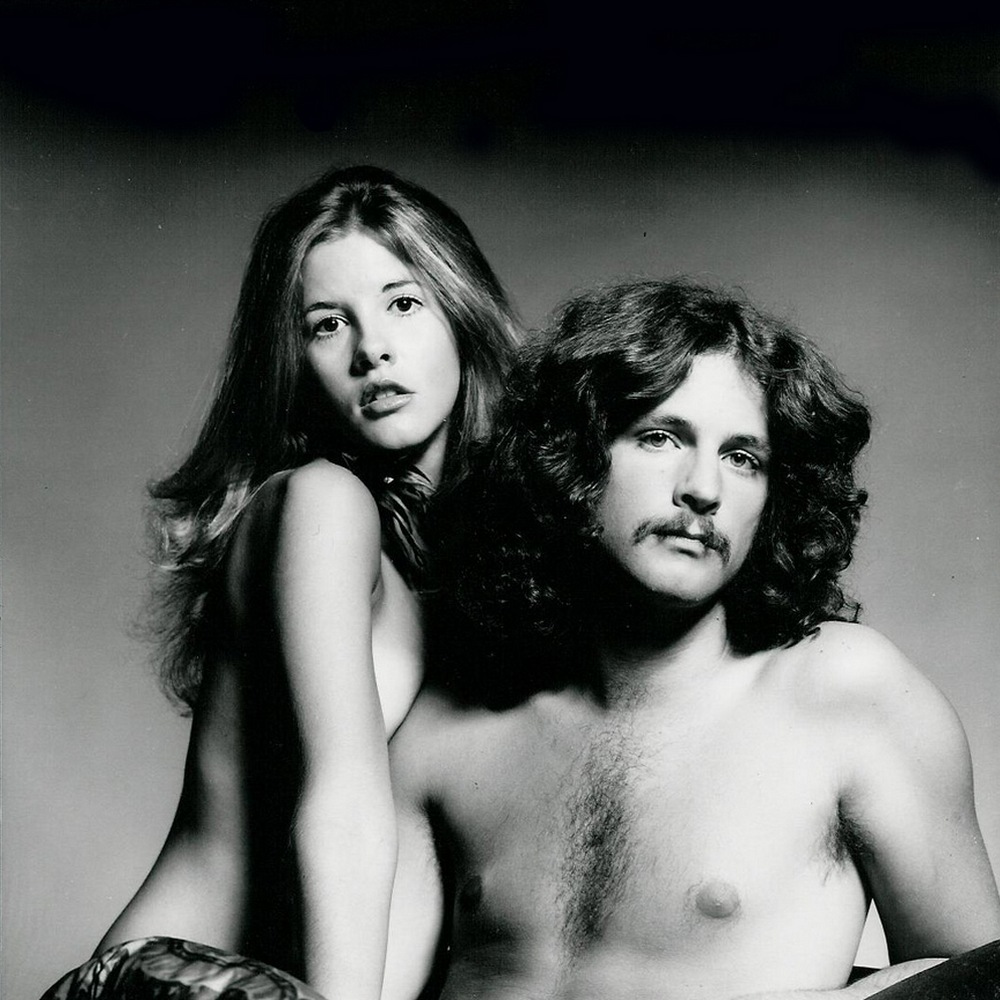
 Take this one, for example:
 But even if Lindsey Buckingham and Stevie Nicks hadn’t gone to multiplatinum success with Fleetwood Mac just two years later, any fan of mid-1970s west-coast pop should’ve been able to recognize the excellence of those four key Buckingham Nicks songs. “Crying In The Night” kicks off the album with soaring harmonies, an appealingly chunky beat, and an overall style that’s just a little too dry to qualify as country-rock. “Don’t Let Me Down Again” starts side two with driving rhythms and a choogling guitar line that transforms Buckingham’s virtuosity into stormy rock ’n’ roll. “Long Distance Winner” is a solid early example of the witchy atmospherics that would soon become Nicks’ stock-in-trade. And “Crystal” brings it all together, following a winding line that allows the guitar, the vocals, and producer Keith Olsen’s clean sound all to shine.
 That last line is what’s called “an understatement.” Fleetwood Mac was a monster success. The follow-up, 1977’s Rumours, was even bigger. And then the divisive masterpiece Tusk in 1979 revealed the extent of Buckingham’s mad genius as a producer and guitarist. (If nothing else, Tusk is the kind of album where a song like “Django” would’ve fit right in, seamlessly.)