There are countless breakup songs across the musical landscape, but Fleetwood Mac’s Rumours is much more than that; it’s a breakup album that happens to be dripping with the band’s coked-out excess.
Personal lives absolutely falling apart have never sounded so catty and catchy at once as they do on Rumours. Between the divorce filing of John McVie and Christine McVie, the breakup of Stevie Nicks and Lindsey Buckingham (and Nicks’ eventual “shacking up” with Mick Fleetwood), the band weren’t exactly hurting for material.
…And did we mention the coke? It’s heavy use by the band has been well documented and was so prolific, Fleetwood reportedly wanted to thank his dealer in the album’s credits.
All 11 tracks that make up Rumours could easily be singles, which could be why it has sold a staggering 40 million copies worldwide, with 20 million copies sold in the U.S. alone.
In short, it’s a pop-rock masterpiece, and it’s likely one of the few times it’s okay to be thankful for the pain and heartache of five individuals.
SOUTH PASADENA — Herbert W. Worthington III, Fleetwood Mac’s photographer, left many indelible images in people’s minds, but friends and family most remember a “gentle giant” capable of seeing beauty in even the grotesque.
He was 69 when he died earlier this month.
Worthington and Jimi Hendrix were pals, half-brother Bob Worthington Jr. said. But they would’ve been friends even if “Herbie didn’t know how to take a snapshot on a Polaroid.”
“Herbie had that kind of magnetism, that kind of aura that would draw people to him,” said Bob Worthington, 78. “He was kind of a Bohemian monkey, so to speak. He just could click with the greatest.”
After not hearing or seeing the famed photographer for four days, neighbors called authorities, Coroner Ed Winter said. The South Pasadena Fire Department performed a “welfare check” about noon on Nov. 10 and found Worthington dead on his bed.
Worthington died of heart disease, but his time of death is uncertain, Winter said.
The talented photographer is so beloved that friends and fans have devoted a Facebook page to his memory. Stevie Nicks Info also published an online tribute:
“Worthington is best known for photographing Fleetwood Mac’s iconic 1977 album cover, Rumours — providing the concept, inspiration and even the footstool for the Rumours album cover,” it said. “Worthington captured the mystical allure of the band and was instrumental in creating the iconic imagery (such as the crystal ball) which is still associated with Fleetwood Mac today.”
His family provided an intimate look into the life of a man who became a lovable recluse around 1992.
Lisa Bostwick-Eilar, 47, said she and her two siblings considered Uncle Herbie a father figure because their dad wasn’t in the picture and because Uncle Herbie didn’t have any children of his own.
“When we were younger, he never wore shoes,” said Bostwick-Eilar, from Colton. “Every time, even if he came for Thanksgiving or a holiday, he wouldn’t wear leather (because it comes from cow, and he’s a vegetarian). He would step out of his Mercedes with no shoes.”
Bob Worthington recalled how his half-brother began his career. One day Herbie Worthington called his older brother to tell him someone had given him a camera. Bob Worthington asked his younger brother what kind of camera it was.
“‘Oh, I don’t know,” the elder Worthington recalled Herbie Worthington saying. ‘It’s called a 3-5-M-M-S-L-R. Can you come over and show me how to use it?’”
“What you have is a 35 mm single-lens reflex,” Bob Worthington said before asking his younger brother if he had any film.
“Film? No. I don’t have any film,” Herbie Worthington said. “I don’t even know what I’d do with it.”
Three lessons and a short time later, Herbie Worthington began shooting album covers for Fleetwood Mac, Stevie Nicks, Neil Diamond and all kinds of famous folks, Bob Worthington said.
“He ended up having an eye through the camera that was absolutely remarkable,” he added. “Herbie had the ability to — through photographic means — bring out the more beautiful features of whatever he was photographing.”
Herbie Worthington’s fame never went to his head, said nephew Bobby Del Bostwick.
“You’re talking about a guy who, whenever he would walk into a room, he would naturally duck his head down,” Bostwick said of his 6-foot-4-inch uncle, who in the 1970s often jumped into limos with big, bell bottoms and no shoes.
Friend Lori Hyde-Glaser said Worthington had a gentle soul and had a never-ending supply of wonderful stories about his life.
“He was quite the photographer, and he knew how to make you smile,” she said. “I miss his voice and his laughter. I am thankful of his gifts he gave us — his photography — and for his memories. Herbert is one of a kind.”
Worthington is survived by his half-brother, Bob Worthington; nephew, Bobby Del Bostwick; niece Bostwick-Eilar; niece Joy Lydia King; and great-nephew, Chaun Franklin Ralls; as well as all of their children.
His memorial service hasn’t been announced, because the family is still looking for Worthington’s will.
“We want to put Herbie to rest the way Herbie wanted to be put to rest,” Bob Worthington said.
Zen Vuong / Pasadena Star News / November 24, 2013
Heroic drug abuse, physical violence, epic strops… Forget Rumours, Fleetwood Mac’s craziest album was Tango in the Night.
In December 2012, three members of Fleetwood Mac cried together. in public, at the memory of something that had happened all of 25 years previously. Singer Stevie Nicks, guitarist Lindsey Buckingham and drummer Mick Fleetwood were doing a round of media interviews to announce the band’s 2013 tour when they were asked about the events of 1987, when Buckingham quit the band following the release of the album Tango in the Night. Buckingham did not respond directly to the interviewer. Instead he turned to Nicks and Fleetwood and reiterated his reasons for leaving the group at a critical stage of their career: foremost among them, his sense that Nicks and Fleetwood had lost their minds and souls to drugs.
“What Lindsey said in that interview was very moving, ” Fleetwood says. “He told us: ‘I just couldn’t stand to see you doing what you were doing to yourselves. Did you ever realise that? You were so out of control that it made me incredibly sad, and I couldn’t take it any more.’ It was really powerful stuff. This was someone saying: ‘I love you.’ It hit Stevie and me like a ton of bricks. And we all cried, right there in the interview.”
It was a moment that Mick Fleetwood describes as “profound.” But even after all these years, his memories of that time in 1987 are still raw. For when Lindsey Buckingham walked out on Fleetwood Mac, he did not go quietly. When Buckingham told the band he was leaving, it led to a blazing argument that rapidly escalated into a physical altercation between him and former lover Nicks, in which she claimed she feared for her life.
“It is,” Fleetwood says, “a pretty wild story. It was a dangerous period, and not a happy time.”
And yet, for all the drama that came with it, Tango in the Night was a hugely important album for Fleetwood Mac. It became the second biggest-selling album of their career, after 1977′s 45-million-selling Rumours. Just as Rumours had done in the ’70s, so Tango in the Night defined soft rock in the ’80s. Perhaps most significant of all, it marked the third coming of the Mac, following the successes of the Peter Green-led blues rock Mac of the late 60s and the Buckingham/Nicks-fronted AOR Mac of the 70s. And for Mick Fleetwood, it represented a personal triumph. While he freely admits that his own drug-fuelled insanity was instrumental in Lindsey Buckingham’s exit, it was Fleetwood who kept the band together once Buckingham had gone. And this was key to the success of Tango in the Night.
“My motto” Fleetwood says, “was ‘the show must go on’. It was almost an obsessive-compulsive desire to not give up. And it worked.”
There is an irony about Tango in the Night that it began not as a Fleetwood Mac album but as a solo project by the man who would leave the band once it was completed. In 1985, Lindsey Buckingham was writing and recording songs for what was planned as his third solo album. Fleetwood Mac had been on indefinite hiatus since 1982, following a world [North America] tour in support of their album Mirage. In that time there had been solo albums from the three singers: Nicks’ The Wild Heart sold a million copies; Christine McVie’s eponymous album yielded a US Top 10 hit with Got A Hold On Me; but, to Buckingham’s chagrin, his album Go Insane didn’t make the Top 40.
There had also been problems for them over these years. Nicks had been treated for drug addiction. More surprisingly, Mick Fleetwood had been declared bankrupt following a string of disastrous property investments. It was rumoured that Fleetwood Mac had split up. “At that time,” Buckingham later admitted, “the group was a bit fragmented.” By the end of ’85, Buckingham — working alone at his home studio in Los Angeles had three songs finished: Big Love, Family Man and Caroline. But while he was busy making music, Mick Fleetwood was busy making plans to get the band back on track. The wheels had been set in motion when Christine McVie recorded a version of the Elvis Presley hit Can’t Help Falling In Love for the film A Fine Mess— backed by Mick Fleetwood and the band’s other remaining founding member, her ex-husband John McVie. She invited Buckingham to produce, alongside engineer Richard Dashut. “It was the first time for nearly five years that we’d all been in a working environment together,” Christine said. “We had such a good time in the studio and realised that we still had something to give each other in musical terms after all.”
Mick Fleetwood was more forthright. “The reality,” he says, “is that Fleetwood Mac were intending to make an album. And Lindsey was in many ways pressured into it. ‘Hey, we’re making an album — let’s go!” Buckingham relented, partly out of a sense of duty, had a choice,” he said, “of either continuing on to make the solo record, or to sort of surrender to the situation and try and make it more of a family thing. I chose the latter.” That Fleetwood didn’t know is that Buckingham’s agreement was conditional. “I had the idea,” Buckingham said, “that that was going to be the last work with the group.”
For all that, Buckingham threw himself into the album. He either wrote or co-wrote seven of the twelve tracks on the album. He also acted as co-producer with Richard Dashut. And it was at his home studio that most of the recording was done. What was unusual about the recording of Tango in the Night was the absence of Stevie Nicks for much of the process. Nicks contributed three songs to the album, but was in the studio for only two to three weeks. “She was not hugely present,” Fleetwood says. ”I don’t remember why. And I don’t think we would remember — Stevie and me were nuts!”
Fleetwood says that he and Nicks were doing more cocaine during the making of Tango than when they were recording Rumours — an album on which they seriously considered thanking their drug dealer in the credits. “Actually” he admits, “it was way worse on Tango in the Night. For sure.”
“Certainly , I smoked a lot of pot. But I was never a big user of coke,” Buckingham notes. And by the mid-80s, he’d had enough. ” The subculture was pretty much at the point of burning itself out,” he recalled. “The ‘anything goes’ attitude that existed in the 60s had become something entirely different. But still, everyone thought you had to do certain things to play, and I don’t know that I ever thought about it that way.”
While Tango was being recorded at his home, he found a way of keeping the two cokeheads — plus assorted hangers-on — at a safe distance. “Lindsey had a Winnebago put in his driveway,” Fleetwood says. “And that’s where Stevie and I would go with our wrecking crew. With me, the party never stopped. I was like Keith Moon. And for Lindsey having that around his own house was a fucking nightmare. So he gave us our own house outside in the garden. It wasn’t until years later that I asked him: ‘What was all that about?’ And he said ‘I couldn’t stand having you punks in the house. You’d turn up at the studio with people that you’d met from the night before, and you’d start gooning around. You were too fucking crazy.’ Lindsey was never a drama queen, enjoying the ’80s drug culture like Stevie and me. It wasn’t his scene. He wasn’t comfortable being around that much craziness. And we were blissfully unaware — completely oblivious to things that needed to be addressed.” The drug taking was only one part of the problem. There were other things eating away at Buckingham.
For all the money and fame that Fleetwood Mac’s success had brought him, Buckingham felt compromised on an artistic level — pressured by what Mick Fleetwood calls a “this monolithic thing known as Fleetwood Mac.” There is, Fleetwood says, a “tortured side” to Lindsey Buckingham.
Lindsey Buckingham didn’t enjoy the ’80s drug culture, according to Mick Fleetwood. He wasn’t comfortable being around that much craziness.
“Staying honest and staying creatively alive is very tricky in a commercial business,” Buckingham said. “You’re trying to hold on to a certain idealism, and not succumb to becoming a parody of oneself. Are you trying to flex your muscles creatively, or are you trying to sell records? In my mind it was pretty much clear-cut. There wasn’t a lot of middle ground.” Buckingham felt he had won this battle with Tusk. The easy option for Fleetwood Mac would have been to make another Rumours. Instead, Buckingham spiked the Tusk album with weird, left-field songs such as the new wave influenced Not That Funny and the bizarre title track. “A precedent was set by Tusk,” Fleetwood explains. “Lindsey could say: ‘I want to do this within the framework of Fleetwood Mac,’ without pissing everyone off.” Buckingham loved the dichotomy in Tusk: the contrast between his songs and Stevie’s and Christine’ s . “You got that sweetness and me as the complete nutcase,” he said. ”That ‘s what makes us Fleetwood Mac.” But he felt that the band’s next album. Mirage, was too lightweight, lacking the experimental edge of Tusk. And that nagging feeling returned to him as Tango in the Night was being completed.
Buckingham had written many oldie songs for the album. In addition, the songs he had recorded solo remained mostly untouched. “Those songs,” Fleetwood says, “were already very sculpted. All we did was rip some drum machines off and put drums on.” One trick of Buckingham’s, in Big Love, was especially brilliant. For the song’s climax, he used variable speed oscillators on his voice to create the effect of a male and female in a state of sexual excitement — the “love grunts,” as he called them. “It was odd that so many people wondered if it was Stevie on there with me,” he said, a little disingenuously.
Although there were other great songs on the album—slick pop rock tunes in the classic Fleetwood Mac style, such as Christine’s Little Lies and Everywere, and Stevie’s Seven Wonders — Fleetwood calls Tango in the Night “Lindsey’s album.” But for Buckingham himself, there was a sense that in the transition from solo album to band album, something had been lost. A perfectionist, intensely analytical, he felt that Tango in the Night was too predictable, too safe.
“For political reasons, I was pretty much treading water,” Buckingham admitted. “We sort of lost the moment, going back to try to find that Rumours territory. I couldn’t do that as a producer and as a player. I was demoralised. Maybe I wasn’t even motivated to go back. I did the best I could.” Fleetwood also believes that Buckingham felt undervalued in his roles of producer and arranger of others’ songs. “He was going, ‘Shit, does anyone ever realise what I do?’ Insecurities, we all have them, and that was part of Lindsey’s personality. I have insecurity even about walking on stage and thinking I can’t play drums. I don’t blame Lindsey for thinking: ‘It would be nice if someone thanked me for all the fucking work I’ve done!”
But the biggest problem for Lindsey Buckingham was, of course, Stevie Nicks . “I’ve known Stevie since I was 16 years old,” he said. “I was completely devastated when she took off. And yet I had to make hits for her, I had to do a lot of things for her that I really didn’t want to do. And yet I did them. So on one level I was a complete professional in rising above that, but there was a lot of pent-up frustration and anger towards Stevie in me for many years.” That frustration had first become evident on Rumours. Nicks wrote about Buckingham in the song Dreams, in which she sang the line: ‘Players only love you when they’re playing.’ Buckingham responded with Co Your Own Way, in which he claimed uncharitably, ‘Shacking up’s all you want to do.’ And over the years, things had only got worse.
“He got very angry with me,” Nicks said. “He tossed a Les Paul across the stage at me once and I ducked and it missed me. A lot of things happened because he was so angry at me.”
During one Fleetwood Mac show, Buckingham kicked out at Nicks. “it was just a little something coming through the veneer,” he said later. “There has been a lot of darkness. There was a time when I felt completely unappreciated by her.” Buckingham’s frame of mind was not helped by the not inconsiderable success that Nicks enjoyed in her solo career. In 1981, her solo debut, Bella Donna, went to No.1 in US. Other hit albums and singles followed. Buckingham’s solo records sold next to nothing. “Jealousy is the wrong word,” Fleetwood says. “But it was hard for Lindsey. The reality is, she’s Stevie Nicks! And Lindsey I think felt left out. That was his cross to bear.”
“We didn’t realise how unhappy Lindsey was,” Mick Fleetwood says.
Despite the hostility. Nicks tried to retain sympathy for Buckingham.” Lindsey and I were really breaking up when we joined Fleetwood Mac. We’d lived together for five years. It’s one thing when you break up for that person to go their way and you to go your way, quite another to break up and have to sit together in the breakfast room of the hotel the next morning. Not easy.”
But neither Nicks nor Fleetwood saw what was coming. “We just didn’t realise quite how unhappy Lindsey was,” Fleetwood says. “He had to get out. And of course he did.
Tango in the Night was released on April 13, 1987. The first single from the album, Big Love, was already a Top 10 hit on both sides of the Atlantic, and a tour was scheduled to begin in Kansas City on September 30. But when the band gathered at Christine McVie’s L.A home to discuss plans for the tour, Buckingham told them he was out. And at that moment, it turned nasty.
It was Nicks who landed the first blow. “I flew off of the couch and across the room to seriously attack him,” she recalled. “And I did. I’m not real scary but I grabbed him which almost got me killed.” Nicks ran out of the room with Buckingham in pursuit. “He ended up chasing me all the way out of Christine’s maze-like house,” she said. ‘Then down the street and back up the street. And then he threw me against a car and I screamed horrible obscenities at him. I thought he was going to kill me, and I think he thought he was probably going to kill me too. And I said: ‘If the rest of the people in the band don’t get you, my family will – my dad and my brother will kill you.”
Buckingham walked away. “We were all in shock,” Fleetwood says. “It was very upsetting for all of us, Stevie most of all.”
But in this crisis, Fleetwood acted quickly. “Most people would go: ‘You’ve just made an album and one of your lead components is not there? You’d better retreat rapidly, lick your wounds and reassess what the hell you’re gonna do.’ Well, that was not what my mind told me to do. I went: ‘We’re not stopping.’ And literally within a week, I convinced everyone that we should not stop and have this be a catastrophic non-event and have no promotion for the album.” Fleetwood was able to remain calm and pragmatic because he, and also John McVie, had been in this situation before – firstly, and most traumatically, when Peter Green, the original Fleetwood Mac’s guitarist, quit the band and the music business in 1970 after one too many bad acid trips. “When we lost our mentor, Peter Green, we felt completely adrift,” Fleetwood recalls. “We went: ’What the fuck are we going to do now?’ Seriously, I thought we’d never get over losing Peter. But we got through it. And then it became: there’s no such phrase as ‘the band’s going to break up’. And that became habit-forming. So when Lindsey left, we already had a blueprint.”
Guitarists Billy Burnette (left) and Rick Vito (Corbis)
For the tour, Fleetwood brought in not one but two guitarists to replace Buckingham, a measure of Buckingham’s high calibre. Billy Burnette, the son of rockabilly singer Dorsey Burnette, was a country artist of minor repute. Rick Vito had worked with John Mayall, Jackson Browne and even David Soul. Fleetwood knew he was taking a risk. “On paper,” he says, “it was sort of insane. But it worked.”
It had to. “We still did that tour,” Nicks said, “because we we’d signed the contracts. We couldn’t call in and say: ‘Oh, we can’t do the tour.’ We had to do it. Or Fleetwood Mac would have been sued forever.”
The tour was a huge success. It wasn’t the same without Buckingham. Fleetwood accepts that. But the numbers including eight sold-out shows at London’s Wembley Arena – spoke for themselves. And with the new-look Fleetwood Mac out on the road, sales of Tango in the Night went above and beyond Fleetwood’s expectations. In the UK the album went to Number One on three separate occasions, and three singles went Top 10: Big Love, Little Lies and Everywhere. In the US those three tracks reached the Top 20, along with Seven Wonders , and the album sold three million copies in a year.
“The album was well received,” Fleetwood says. “Somewhat sadly, the kudos of that was never really fully attributed to Lindsey because he wasn’t present. But on the other hand, there’s a comedic sense to it — that we were promoting an album that was mainly his body of work. It was like Brian Wilson and the Beach Boys: ‘I’ve made the album, but now I’m staying at home.’
“But also, when I look back, I see another example of how desperate Lindsey was to be heard. Basically, he was coerced and persuaded to do that album – mainly by me. And to his credit, he put aside everything that he’d dreamt of doing, including making his own album, for Fleetwood Mac. But then realised that he’d made a mistake and went: ‘Oh my God – I’ve got to get Out.’ Lindsey was not being heard. We just didn’t get it. And really, I think that excuses him for letting the side down.”
Mick Fleetwood is not sure it is simple coincidence that Fleetwood’ s two biggest-selling albums, Rumours and Tango in the Night, were made when the band was at its most dysfunctional. “Also,” he says, “I’m not sure I should be so proud of it.”
Equally, Fleetwood has reservations about Tango in the Night. “It’s an interesting album,” he says. “But it’s not my favourite Fleetwood Mac album sonically. We got a little too involved in electronic-y ways of doing things.” But that album is undoubtedly a classic of its time. With it, Fleetwood Mac were reinvented for a new era. One of the biggest bands of the 70s became one of the biggest bands of the 80s. And from an album created amid chaos came some of the best songs of the band’s entire career. Even Lindsey Buckingham conceded this much. “On the whole, that album is lacking in direction,” he said. ”But there’s good stuff on there.”
In the 90s, Buckingham rejoined Fleetwood Mac, and, more importantly’, made his peace with Stevie Nicks. They have both come a long way since that dark day in 1987: Buckingham now married and a father of three, Nicks happily drug-free. And every night that Buckingham and Nicks go on stage with Fleetwood Mac, all that remains between them is what Mick Fleetwood calls “the good stuff”.
“Stevie and Lindsey are not ‘in love’ but they love each other,” Fleetwood says. “And that’s why they’ve been able to get through some awful situations. There’s something I was asked recently: ‘What’s the most misconstrued thing about Fleetwood Mac?’ I said ‘I don’t want to sound over-sentimental, but I think that people don’t actually understand that we really do love each other — a lot.’ And you know, sometimes that’s been lost amid all the fear and loathing. But, to say the least, it’s been an interesting journey.
Special thanks to FleetwoodMac-UK for making this article available.
Fleetwood Mac Rumours Deluxe Edition (Warner Bros./Rhino)
In the parlance of Californication, fucking and punching. Rock & roll’s ultimate breakup album – four of five group members rending a pair of intraband partnerships and the fifth, founding drummer Mick Fleetwood, about to sunder his own marriage by taking up with Stevie Nicks – endures because it storms romantic volatility through a prism of rockstar sex, drugs, and a Beatlesque triad of singer-songwriters. Christine McVie’s sweet spot (“Songbird”) between the he said/she said of the UK survivors’ adopted Left Coast folk-pop duo, Buckingham (“Never Going Back Again”) and Nicks (“I Don’t Want to Know”), melts into layers of acoustic urgency and electric hush as animated by Fleetwood and John McVie’s heart-valve rhythms. The No. 8 bestseller of all time appended an hour’s worth of outtakes and demos to the 2004 reissue (Nicks’ early “Gold Dust Woman”), a trove now doubled on this 4-CD/DVD/vinyl LP set, including un-ironic Lindsey/Stevie duet “Doesn’t Anything Last.” An hour live on the ensuing world tour fills out the fourth disc, well-scrubbed to start – Christine McVie’s “Oh Daddy,” a slice of English balladry fit for Westminster Abbey – but exploding on Nicks’ eight-minute spook and spell “Rhiannon,” from Rumours’ eponymous precursor. Finally, a 30-minute video promo finds the 1977 quintet on a soundstage crackling through the hits, though an unidentified bowl appearance with high-flying Lindsey Buckingham guitar showcase “I’m So Afraid” borders on acid rock.
The band became arguably the biggest act in rock in the late 1970s after guitarist/singer Lindsey Buckingham and singer Stevie Nicks joined three previous members of Fleetwood Mac — drummer Mick Fleetwood, bassist John McVie and keyboardist/singer Christine McVie (the bassist’s former wife) — in 1975 and released three straight blockbuster albums, Fleetwood Mac (1975), Rumours (1977) and Tusk (1979) that established the lineup as the classic edition of Fleetwood Mac.
In a conversation with Fleetwood, it’s very clear that today’s four core band members (Christine McVie retired in 1998) are very much invested in the band and far from complacent about its live show. In fact, the band spent six full weeks rehearsing for this year’s tour, it’s first in three years.
“We know the nuts and bolts are all in place and we have confidence in that,” Fleetwood says. “But we also have like a garage band-like mentality where we go sh–, we’re actually playing down at the local town hall next week. We better be good. And it [that nervousness] doesn’t really go away, which is a nice thing. We’re not all jaded and so showbizzed out that we’re all super slick and go ‘Ah, piece of cake.’ We’re not like that at all. We’re all quite sh—ing ourselves.”
Fleetwood says the shows will, of course, feature signature hits.
“We know that we have sort of a body of songs that, in truth, if we didn’t do them, we’d probably be all lined up and shot,” he says. “So we have sort of eight or nine songs that no matter what, we know people are going to want for us to do them, and we are totally cool with doing them. If we walked on the stage and didn’t play ‘Dreams,’ I think people would be shocked. So we don’t go there. So what we do is we take the prime songs, ‘Go Your Own Way,’ ‘Dreams,’ songs like that, and then build a new show around the fact that we, of course, are going to be doing those songs.”
This is Fleetwood Mac’s first tour since 2009’s “Unleashed” tour. Buckingham and Nicks are busy with solo careers, making Fleetwood Mac part of the picture, but not the entire one. Following the “Unleashed” tour, Buckingham released the studio album, Seeds We Sow, and Nicks released In Your Dreams. Both artists toured extensively to support the albums.
The personal history and inter-personal dynamics within Fleetwood Mac also create challenges, and, according to Fleetwood, are another indication of why the four band members are all in when they reunite.
“When we do do it, we work really hard at it and we’re committed to it,” he says. “We fundamentally have to be happy to be doing this because we’re all ex-lovers and all the stuff that is well worn news out there.”
As has been well documented, Buckingham and Nicks were a couple (and were recording as Buckingham-Nicks) when they joined Fleetwood Mac. The McVies were also married at that time. But the relationships soon frayed, and the Rumours album (a deluxe expanded edition of the CD was released in January) was written in the midst of those breakups. Fleetwood and Nicks later became a couple for a time, while Buckingham later married and started a family.
“[This is] a bunch of people who aren’t just connected by the music, but connected by spending huge amounts of time [together], including Lindsey, Stevie and their journey,” Fleetwood says. “No, they’re not in love and Lindsey has an incredibly wonderful family. But the story they tell as two people is huge. And you know, there I am with Stevie, and me and Stevie had a long-lasting love affair. She’s the godmother of my children and it’s a trip. It’s a trip.”
This year’s reunion could turn out to be even more eventful than the one in 2009.
On the “Unleashed” tour, Fleetwood Mac essentially played a greatest hits set. But Fleetwood says this tour will blend in three or four new songs from those recorded last year when Buckingham, Fleetwood and McVie got together for a writing and rehearsal session.
“Stevie was on the road, and during that period she lost her mother, who passed,” Fleetwood says. “So she was not set up to come and join the party in that few weeks that me and Lindsey and John put some ideas together that Lindsey had.”
Nicks has since added her vocals to several of the songs Buckingham, Fleetwood and McVie recorded during the sessions and three of those songs will be available through iTunes shortly. Another song was written by Nicks. It’s an unreleased tune that dates back to before Nicks and Buckingham joined Fleetwood Mac, and was recently rediscovered by Nicks and recorded with the band.
“It really tells the story of how Stevie and Lindsey joined Fleetwood Mac, which is when they were known as Buckingham-Nicks,” Fleetwood says. “It was an unrecorded song that Stevie actually wrote about Lindsey, and it’s a beautiful song …
“And this was the music that I heard in the studio that spurred me on to make the phone call and ask them to join Fleetwood Mac.”
Fleetwood says with any luck these songs will form the basis of a new Fleetwood Mac album that may be recorded later this year and released either ahead of Christmas or in early 2014.
This would be Fleetwood Mac’s first collection of new music since 2003’s Say You Will. That was the band’s first album without Christine McVie, and the tour that followed the album was not as harmonious as the band members would have wanted.
For Nicks, it was difficult to be the only woman in the band and she sorely missed her close friend, McVie. And before regrouping for the “Unleashed” tour, the band flirted with having Sheryl Crow (a good friend with Nicks) join the band.
Nicks, in various interviews, has said she now is comfortable in the four-person Fleetwood Mac lineup, and Fleetwood notes that the guys try to help create a good environment for Nicks.
“Certainly the guys in the band are very aware of making sure that Stevie feels safe,” Fleetwood says. “When she comes back to Fleetwood Mac, she’s in a man’s world, you know. And two of them are men that she each had relationships with. It’s hugely important that she feels safe — and loved. And that’s the funny old thing that this band is all about. It’s powerful.”
FLEETWOOD MAC
When: 8 p.m. April 6
Where: Wells Fargo Center, Broad Street, Philadelphia
How much: $49.50, $79.50, $149.50
Set list: Hits such as “Go You Own Way” and “Dreams,” and recently recorded new music
Fleetwood Mac to go their own way performing new songs on tour — and fans outraged at ‘tickets that cost more than my rent’
Fans might clamour for the hits from Rumours but Fleetwood Mac will perform new material on their forthcoming tour.
Speaking to BBC 6 Music drummer Mick Fleetwood said the band had written three new songs, which they plan to play on stage later this year.
The 65-year-old hinted the recordings could be part of a “long term plan” to release a new studio album.
But fans hit back today at the price of tickets for the Fleetwood Mac tour, due to play in London, Birmingham, Manchester, Glasgow and Dublin. Tickets are priced between £50 and £125, but with a £12.50 booking fee can reach up to £137.50 each.
One fan tweeted: “Sorry Fleetwood Mac but your tickets cost more than my rent” while another said: “£135 each for Fleetwood Mac tickets…are they having a giraffe? Top price Beyonce tickets look set to be £95 too. Robbing bastards.”
The Rolling Stones were also criticised by fans last year for the cost of their tour, with tickets selling for as much as £1,300.
After frequent changes to the line-up since the band formed in London in 1967, the 2013 tour will feature Stevie Nicks, guitarist Lindsey Buckingham, and founding members Mick Fleetwood on drums and John McVie on bass.
Fleetwood revealed this morning that he had written some songs with guitarist Lindsey Buckingham six months ago as “a calling card” for singer Nicks.
“We wanted her to know we wanted to make some new music and we had some great songs,” he said.
“But her mother died not too long after and it wasn’t the time for her to do any singing, so we dropped it.
”Then recently she’s sung on three of them and recorded one original song of hers, so we’re going to mix these songs down and there’ll be something that we will play hopefully on stage.“
Nicks vowed last year that the tour would not be the band’s last, who have had more than four decades of making music.
“It’s never going to be a final tour until we drop dead. There’s no reason for this to end as long as everyone is in good shape and takes care of themselves,” she said.
ALBUM OF THE WEEK:Rumours is one of those albums where you know every song. Even if you think you don’t, they’ve crept in by soft rock radio osmosis.
The band work on Mac time, so this 35th anniversary reissue actually arrives 36 years after the album was released in February 1977.
Rumours — already in 40 million homes — is one of the most complete albums in history and was fuelled by class A harmonies, class A drugs and beautiful music being made in studios and bedrooms between band members.
The vaults have been raided for more unreleased demos to show rock classics as works in progress. Lindsey Buckingham sniffles his way through an early take on “Second Hand News” with mumbled vocals and a runny nose and there’s “Go Your Own Way” with lyrics — and vocals — that were yet to be polished. Buckingham says “That was good” at the end — he clearly hadn’t heard his flat vocals back yet.
An early demo of Stevie Nicks’ timeless “Dreams” manages to be acoustic but also intense. The album was so strong gems such as Nicks’ “Planets Of the Universe” were left off — she’d later finish it and release it in 2001. “Did you get that? It wasn’t wonderful or anything,” Nicks says at the end of this demo. She’s wrong. Her early “Gold Dust Woman” rocks too.
There’s Christine McVie’s “Keep Me There” (once called “Butter Cookie”) which ended up being an album highlight and “The Chain” (a Nicks solo version of which is a find here).
One of McVie’s songs that did make the album (and made the album), “Songbird” is here in simple demo form — it’d be honed vocally later to become a soundtrack to weddings for decades to come. There’s also an instrumental “Songbird” for Mac trainspotters’ karaoke competitions.
Deluxe versions have a warts-and-all, un-airbrushed live concert from 1977 (check out “Rhiannon”), which captures a band who really loved each other flying high in their prime.
ALBUM OF THE WEEK
FLEETWOOD MAC – RUMOURS (WARNER)
Rating: 4.5/5
Cameron Adams / Herald Sun (Australia) Thursday, January 31, 2013
Some chains are unbreakable, even after nearly four decades: Fleetwood Mac announced today that they will embark on a 34-date tour in 2013, beginning April 4 in Columbus, Ohio, and wrapping June 12 in Detroit; tickets go on sale Dec. 14.
EW spoke to the legendary, always loquacious Stevie Nicks about heading back out on the road with bandmates Lindsey Buckingham, Mick Fleetwood, and John McVie — and what she’s been up to since we last talked to her.
EW: You spent most of 2011 promoting and touring behind your most recent solo album, In Your Dreams. How different is that experience from touring with Fleetwood Mac?
Stevie Nicks: My solo career is more like an intimate gathering, an intimate beautiful party at your home, and Fleetwood Mac is like a big, huge Christmas ball at a big huge ballroom somewhere. Fleetwood Mac is just way bigger and way grander. And I think that’s one of the reasons why it’s always been so good for me to be able to go back and forth. Because what I do is very, very different than what Fleetwood Mac does and vice versa. So when I come out of one and go into the other, it’s very new for me.
And I always try to make sure, I put my foot down, on a three-year time allowance. I think that Fleetwood Mac should not go out any sooner than every three years. Because I think that we need to get out of the spotlight. And it’s the same with me. It’s like, I was out for the last two years, actually promoting a record. And then Fleetwood Mac really wanted to go out at the beginning of 2012 and I said ‘No, I’m not doing it. I will give you 2013. 2013 will then be the year of Fleetwood Mac.”
Three years is a great amount of time to be away. Because Fleetwood Mac is a big-ticket item, and if you just saw us last year, or a year and a half ago, we may not be the one when you choose when the five or six big bands come through your city. And it’s always really good to give people that rest from you. To let them get away from you and you from them. So when that tour starts up, everybody’s super excited. And you’re not gonna be near as super excited if you just saw us at the beginning of last year. I think that it’s really worth it to do that. I will always feel that way, so I have to take a little bit of flak for it.
After all these years and tumultuous relationships within the band, have you figured out how to get along with each other while you’re touring?
Well, in Fleetwood Mac there’s always gonna be drama [laughs]. You’re never gonna get away from that. And I think if we ever got away from that everybody would be very bored. The audiences would certainly be bored. So it’s never gonna happen. But what we have done is, I spent almost a week up at Lindsey [Buckingham]’s house two or three weeks ago. We were working on some music. But we spent probably 70% of the time just talking. And talking about all our old stories. And telling my assistant all the old stories, going all the way back to 1966, when I first met Lindsey. And she’s there, her eyes as big as saucers listening to all this.
It’s really good therapy for Lindsey and I too, you know, and we have stories for hundreds of years that we can tell you. It was great for us. It really reminds Lindsey and I of how far we’ve come and how hard we worked. And how lucky we are to be where we are today. And that Lindsey and I are always gonna be that dramatic couple on stage. Because we just are. It’s who we are.
We’re never gonna be, there’s that French word, laissez faire, we’re never gonna be that. We’re always gonna be tumultuous and we’re always gonna be crazy, and because there’s a part of Lindsey’s and my relationship that is so ultra-special from back in the day, that you can never, no matter how old we get, it’s never gonna go away. He’s married now, he has three beautiful children, and a really lovely wife. He lives in girl world! Between his wife and his two daughters, he and his son are like, they’re a minority. It’s like, these are beautiful little girls and they have little beautiful girlfriends that are all over at the house all the time. So he lives in a world full of women.
They probably don’t know him as a rock star, he’s just Dad.
Absolutely! They don’t know anything about all that. They are from a new generation. So they have softened him.
Do you find that with things like Rumours charting again after those songs were featured in a Glee episode last year, that much younger people are coming to the shows?
Absolutely. When you look out over our audience, you’d be very, very surprised to see how many younger people there are there. And I think that’s not just Glee. It’s mainly because their parents played Fleetwood Mac. And played Stevie Nicks. And those kids heard the music. And they caught onto it a long time ago. And so little kids that were listening to it that are now 25, they’re there.
And at first, when we first went back out in 1998, after not touring for almost 10 years, we thought, “Well really, the only people that are gonna come see us are gonna be people that are our age.” And that was really kinda true, for like the first half. And then, all of a sudden, there’s like tons of really young people, and I can remember Lindsey saying, “Oh my God, I thought that only people our age would come. And I said to him, “Lindsey, build a field and they will come. They are here. So lucky you, you’re not playing to an audience of totally older people. Half of this audience is not even 20!”
I know that you keep up with current pop music — you did the intro for that Katy Perry video last year, and dueted with Taylor Swift at the 2010 Grammys. What have you been listening to lately?
Honestly, I listen to so many people that I couldn’t even… My mind goes blank. I’m walking around singing “Call Me Maybe” all the time. And I can’t help it. It’s like a curse. And I love it. I totally love it. And I kinda like it when I’m singing it by myself and I love it when she’s singing it. I have it on my iPod. And it’s gonna go on my future treadmill tape that I’m getting ready to make.
I listen to Rihanna, I listen to Mary J. Blige — I kinda go toward R&B, and always have, strangely enough. And all my music tastes are about music I play before I get ready to go on stage for three hours, and music that I play when I’m walking on the treadmill and that I want to dance to. I love ballads, and I love the slow wonderful love songs, but they’re not the stuff I listen to that much, because I need energy, I don’t need to curl up in a ball and cry.
So I go more for the soul music, modern and un-modern, all the way back to the ‘50s. Because that’s when I first started singing. I started singing to Top 40 music when I was in the 4th grade, and that was all R&B. That was black girl groups, and the Ronettes, and the Righteous Brothers. That’s kinda where my heart went, strangely enough, since I had a grandfather who sang country music for real, as a job. And everybody in my family would go, “Who are you? Really, why do you like this R&B music when you have a total country background.” And I’m going, “I don’t know. But I do. And I wish you guys would all be quiet because I’m singing.” [Laughs]
What about this tour will be different than your last one?
You know, we always do probably 20-21 songs, and so there’s always those 10 songs that we have to do. Which are the hits. The audience came and bought their ticket to see those songs. But then we have the other 10-11 songs to play with. So what we do is we know the songs we have to do, so we put them all in one column. And then we put all the songs from all the different records, from you know, Fleetwood Mac, Rumours, Tusk, Mirage, Tango in the Night, Behind the Mask, all those, and then we start choosing, well what song have you always wanted to do, John? And Mick? Is there a song you have a soft spot for? So then we start making a list of slightly more unfamiliar Fleetwood Mac songs.
And then, once we’ve made that list, we start sitting around with acoustic instruments and we start playing them. And you never know what’s gonna stick. Because something you might have tried in 2009 or 2003 that didn’t work, and everybody said “No, that’s not gonna go.” And all of a sudden, when we go into rehearsal in February, might totally work. And I think that’s because, it’s just the time. There might be something going on in the world that might really speak to a song on Tusk that we’ve never done on stage before. And so that’s always a really super exciting part. Because we know what 10 songs are gonna be, but we don’t know what the other 12 are gonna be.
Do you feel stuff out on the road at all?
Not so much. If there’s a song where the first night we play we’re like, that didn’t work, we drop it immediately. It doesn’t even get another chance. Because it’s worked out and played beautifully the first night. So when we go up through our first show, we are, and I always say, as Michael Jackson said, in that last film of his rehearsals, when they ask if he’s ever nervous, and he said, ‘No, because if you know what you’re doing there’s no reason to be nervous.” And that’s really true.
So when we walk on that stage on that first night, we have played that show twice a day for six weeks. And we know it. And we are playing all those songs really beautifully. And we know all our parts. It just depends on, you can kind of feel what ticks the boxes of the audience and what doesn’t. There’s a song that we kinda feel was a little bit of a lull – it’s gone. It’s just gone. And then we have, we always have that extra five songs, that we know, and we know people love, and we can always pull a song back. So it’s very exciting.
I mean, because it is big, and because it is grand, it’s almost like it’s more dressy. It’s not casual. There’s nothing casual about it. It’s not casual Friday. It’s fancy Saturday. So you put on your black velvet and your high black velvet heels and you do your hair and you put on a lot of beautiful makeup and that’s Fleetwood Mac. Everybody knows they’re going to a big, dressy party.
Leah Greenblatt / Entertainment Weekly / December 03, 2012
A song-writing soprano with fragile vocal cords casts her sexy spell on rock
Rock doesn’t need a Farrah Fawcett. It has Stevie Nicks. So what if Stevie insists “turning men on has never been my design.” As Little Richard once sang, the girl can’t help it. Swirling sinuously in her black capes and clingy gowns, Nicks is the onstage focus and seductive soprano of this year’s powerhouse band, Fleetwood Mac. Unlike fellow Arizonan Linda Ronstadt, Nicks is also a successful songwriter whose tunes about a Welsh witch (“Rhiannon”) and lost love (“Dreams”) were no sooner composed than they were Top Ten. In short, Stevie Nicks at 29 can have it all ways: ethereal, funky, pouty and very commercial.
It is little more than two years since ex-waitress Nicks and her guitarist boyfriend, Lindsey Buckingham, joined the Anglo-American cult group. Today big Mac is the world’s best-selling rock band. Their quadruple-platinum Fleetwood Mac LP only softened up the market for this year’s astounding Rumours. Its six-month lock on No. 1 set an all-time pop-chart record, and by the end of 1977 it may sell an incredible eight million—octaplatinum.
Yet for Stevie, her career could have ended. Frighteningly, she is afflicted with tiny nodules on her overworked vocal cords. Earlier this year she canceled several performances and doctors ordered her to bed. Though risky surgery has not been necessary, she sings no more than three concerts a week, does not smoke and limits herself to two glasses of red wine a night. Nicks also has a speech therapist on tour with her, retraining her conversational voice and helping the band’s sound men adjust the mikes when Stevie’s vocal strain becomes apparent.
Throughout the year Stevie (“Stephanie” to her father, a retired Greyhound-Armour corporation executive) has kept a tenacious hold on reality. The trauma of Mac’s romantic roundelays has passed. Stevie and Lindsey have split, Christine and John McVie are divorcing. Mick Fleetwood and his civilian wife, Jenny, are back together again. Stevie, determined to have “no half-assed careers and no harassed relationships,” is making night moves with New Yorker Paul Fishkin, head of Bearsville Records. “It’s not easy to be involved with a lady singer who’s always gone,” Nicks says. “Paul is sweet and wonderful and understands as well as anyone. I’m not interested in playing around, but I do get terribly lonely on the road.” After Mac’s tour of Australia and Japan ends this month, Stevie will head for her retreat in the Hollywood Hills, where she’s “housemother” for her younger brother and three friends. “They let me know I’m not a queen and have no expectations of seeing me go up the front stairway on a broom,” Stevie says thankfully. “Rock is flash—the rest of my life I want to be normal.”
PHOTO (COLOR):”The two hours onstage are magic,” says Fleetwood Mac’s Stevie Nicks. “The other 22 are long and hard.”
It is a sad irony when someone with a special talent has the very medium of that talent endangered. A singer who struggles to keep her voice brings to mind the athlete with the trick knee, the musician with hearing trouble.
Stevie Nicks is not only an outstanding singer and songwriter for Fleetwood Mac, but she is a beautiful, elegant lady besides. Yet, a cloud will movie through her expression when she talks about her voice.
“The doctor has told me that my speaking voice is destroying my singing voice,” she says. She has pinpoint nodules on her vocal chords that are aggravated when she speaks in her natural low pitch.
“I can’t ’til the cows come home as long as I keep my pitch up, but it sounds ridiculous to me inside my head,” she told Weekend in a recent interview. Before a concert, she will spend all day inside, not speaking, taking face saunas and gargling. “I just have to do the best I can do,” she says.
Fleetwood Mac is talking a break from its world-wide tour to allow Nicks to rest her voice and also to prepare to the American Heart Association benefit concert Aug. 27, at the University of Arizona stadium.
The concert came about through Nicks’ father, Jess, former chairman of the board of the Maricopa County Heart Association. It will start at 5 p.m. to allow four bands to present a full set: The Marshall Tucker Band, Kenny Loggins and Arizona will join Fleetwood Mac to bring in a possible $350,000, the largest contribution for charity by rock entertainment.
Doing the benefit is not like doing just another concert, according to Nicks. “It takes months and months of work. A crew of 30 people from all over the country have to come together for just one night. If we always did it this way, we’d go into the red.”
But that is about all Nicks had to say about the money. “I never ask about money. I don’t want to know.” She has no idea how much the band is actually giving up to do the concert, but she knows it is a lot.
“That is the amazing thing about rock and roll. You can jig around and have a good time and make all that money — just having a good time.”
In a sad situation, anything can happen, but also it can be cleansing, like rain. — On the ‘Dreams’ lyrics ‘Thunder only happens when it’s raining’
As much as she loves the band and performing, she doesn’t like touring. “It’s grueling. I can’t do it again for a long time, ” she says. it is “the crazy Englishmen,” the band’s namesakes Michael Fleetwood and John “Mac” McVie, who love to tour. “Christine (McVie) and I just sort of hobble along with them,” says Nicks.
The real joy for Nicks comes from writing songs, and she has written several outstanding ones on the group’s two albums, “Fleetwood Mac,” and the more recent, Rumours.
“The fantasy of performing is infectious and it is hard not to be swept away by it all, but the song is real. I have to live, too, by searching for reality,” she says.
Her songs, “haunty and floaty” as she describes them, come from real experiences in her life. “Most are introspective, a running chronology of my life,” she says. Some have come about quickly, on the spur of the moment, like “Rhiannon,” inspired by the sound of the name. “It sounded so free — with personality traits of my own — about a woman who is into her own trip.” Nicks went to her piano and wrote the song in 20 minutes, a more “classical-sounding” version than the one that appears on the album.
Other songs have come about over many years, like “Dreams,” her favorite song their two albums. It is about her relationship with Lindsey Buckingham, also of the group, which lasted until a year and a half ago. “I wrote the first verse, about our break up, over a year before it happened. Then the rest of the song came much later,” she says.
“Thunder only happens when it’s raining” is the song’s chorus. “In a sad situation, anything can happen,” she says. “But also it can be cleansing, like rain.”
She writes whenever she can, even getting in an hour here and there during a tour, but her best writing, she says, is when she is alone and at home in Los Angeles or at her parents’ home in Paradise valley. “When I’m into a song I’m elated. It’s the very best thing for me.”
“My songs are a matter of circumstances, but there also is a natural progression. My earlier songs were bitter. ‘Frozen Love’ is very nonchalant and indifferent. Now, I am less cold. I was upset, and now, like in ‘Dreams,’ it’s okay.”
She cherishes times of quietude in her home and in Phoenix. “At home I try very hard to be ‘normal,” but it takes a couple of days to settle down, to get used to the idea that there won’t be a wake-up call, that we don’t have to get moving,” she says.
“I come to Phoenix often, always to relax, so I have very nice feelings about it here. There are friends here who were into our music before we became popular, so they’re very special.”
Yet, her ideal life still would include a couple of months performing each year.
“Don’t get me wrong — I really love to perform. I love to be up on that stage.”
Onstage, the sedate, poised lady puts on a show. “I’m a completely different person,” she says, and attributes it to the fact that she is a Gemini. Costumes she and her “little space cookie” dressmaker design are long and flowing, her most notable one a black chiffon affair, designed especially to create the fantasy atmosphere of the performance. But because of it, she says, she has been associated in the media with black magic and witchcraft.
“We work at making the show both musically and visually interesting,” she says. “I don’t like being associated with anything evil. We do all that for entertainment. I love to wear long, flowy things and the people love it. But that has nothing to do with the real me.”
The band will complete its tour Dec. 10 and then members will ive in Maui, Hawaii, where McVie has a house, for a few weeks. Out of that time of freedom and rest will develop the makings of their next album, which Nicks predicts for March, 1978.
On that album will be the song she says is the best she has ever written, “Beautiful Child.”
“It is from an experience that sent me in tears — it’s real sad.”
Producing a new album will not be easy. “There is horrendous pressure to be as good as the last album. You can never go back. You have to be as good or better,” she says.
The group faced this especially when it was producing Rumours, to follow up the platinum first album. “We worked 12 months on Rumours and we had our doubts. you start ripping yourself apart. Because it was taking so long, Lindsey was afraid it wouldn’t have the spontaneity, but I was sure that the songwriting was far superior.”
The band was held together despite the turmoil of Nicks’ and Buckingham’s separation as well as that of Christine and John McVie. “We just couldn’t let the emotional thing blow us apart,” says Nicks. “We are not kids, all of us are between 29 and 32, and we just had to handle things in an adult manner. The band stayed together because no one would leave.
“It’s a very integral band. There is strong chemistry among the five people.”
Yet, in their future, she sees them going their separate ways. “I see Lindsey going into producing, Christine to her hosue — she loves to cook and she is an artist and a sculptress.
“Michael and John always will be on the road. They’ll play ’til they can’t play anymore.”
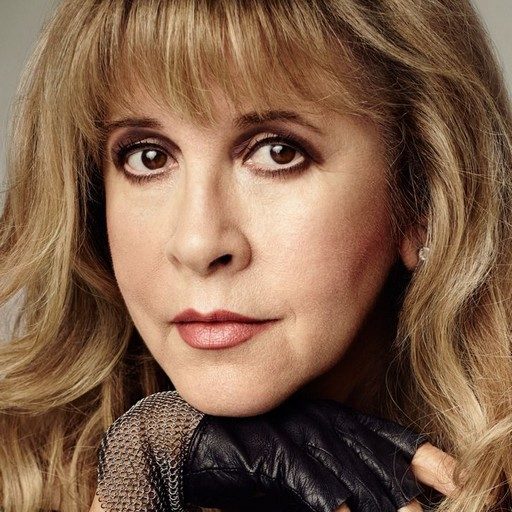

 There are countless breakup songs across the musical landscape, but Fleetwood Mac’s Rumours is much more than that; it’s a breakup album that happens to be dripping with the band’s coked-out excess.
 Heroic drug abuse, physical violence, epic strops… Forget Rumours, Fleetwood Mac’s craziest album was Tango in the Night.
 “Certainly , I smoked a lot of pot. But I was never a big user of coke,” Buckingham notes. And by the mid-80s, he’d had enough. ” The subculture was pretty much at the point of burning itself out,” he recalled. “The ‘anything goes’ attitude that existed in the 60s had become something entirely different. But still, everyone thought you had to do certain things to play, and I don’t know that I ever thought about it that way.”


