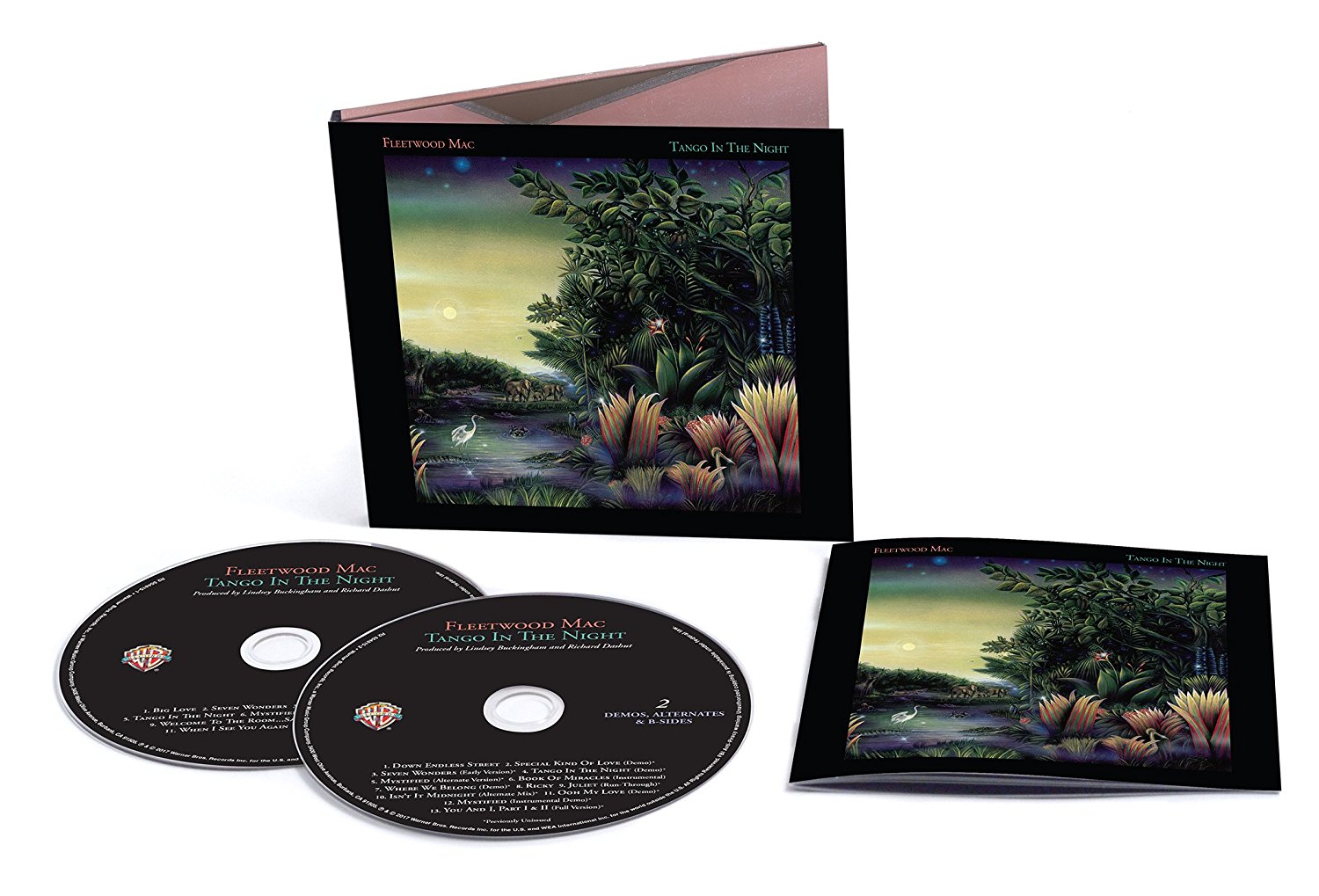
Rhino Records has shared an early version of “Seven Wonders” from the forthcoming Fleetwood Mac Tango in the Night reissue, due out March 31. The early version uses the same Stevie Nicks vocal as the completed track, but there are some unreleased parts at the end of the song. Other differences include some different guitar arrangements throughout the song.
UPDATE, 2/15: Fleetwood Mac’s Tango in the Night reissue is now scheduled to be released on Friday, March 31. No details were given for the delay.
Previously reported release dates:
March 10
February 24
[jwplayer mediaid=”378676″]
Rhino Records will be reissuing Fleetwood Mac’s 1987 album Tango in the Night. The deluxe edition will include the remastered original album; one disc of b-sides, demos, and outtakes; one disc of the 12″ single remixes; one DVD of the album’s music videos; and the full album on 180-gram vinyl LP.
Tango in the Night reached No. 7 on the Billboard 200 Albums chart, spawned the Top 40 singles “Big Love” (#5), “Seven Wonders” (#19), “Little Lies” (#4), and “Everywhere” (#14). In the UK, “Isn’t It Midnight” (#60) was also issued.
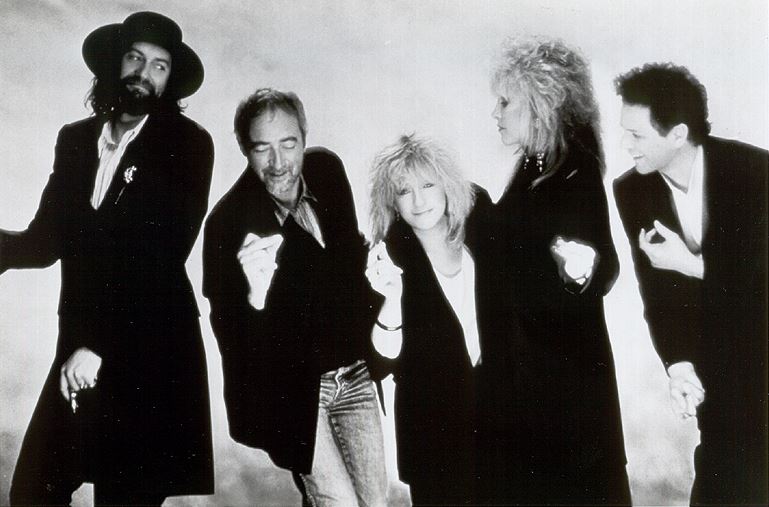
The release marks the 30th anniversary of the last full-length studio album featuring the classic 1975 lineup of the band.
Sample the demo for “Tango in the Night” below.
The following editions of the remastered album will be released:
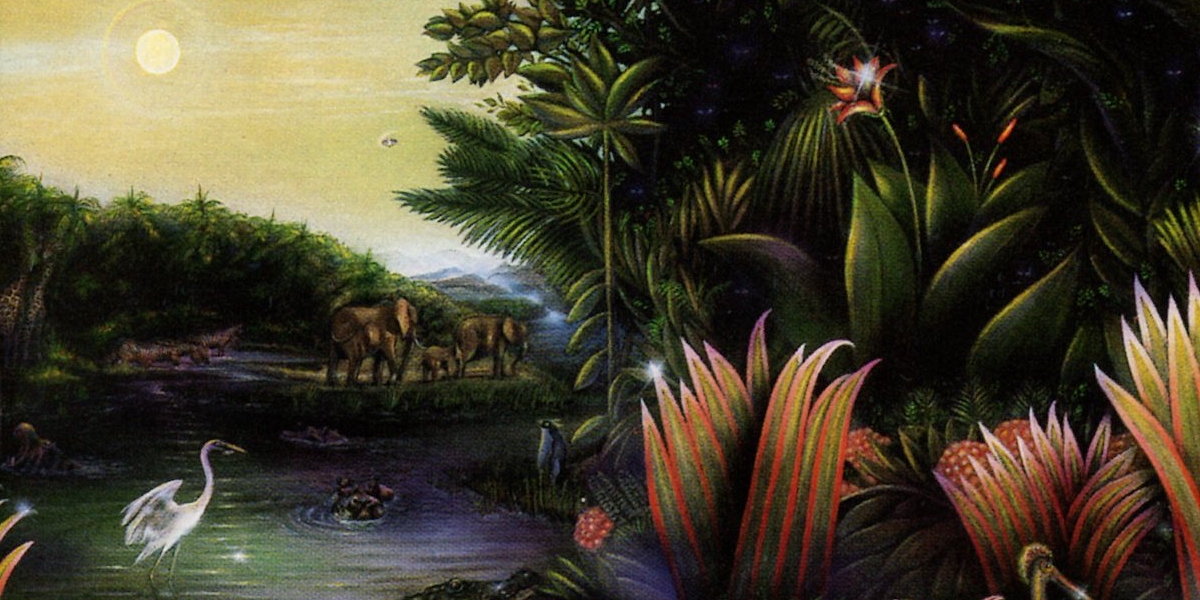
A preview of Rhino Records’ latest reissue project, Fleetwood Mac’s glossy 1987 album Tango in the Night
Later this year, Rhino Records will be reissuing Fleetwood Mac’s 14th studio album Tango in the Night, the latest release in a series of deluxe packages focused on the band’s back catalog (Rumours, Tusk, Mirage). Although details of the reissue are still forthcoming, it is expected to contain the remastered original album; bonus discs of session material and outtakes; new liner notes; and rare period photographs.
On December 8, 2016, Rolling Stone contributing writer David Wild confirmed in a Twitter post that he had written the new liner notes for the reissue project. It remains to be seen which route Wild took in reflecting on the tumultuous Tango in the Night sessions, which were first laid bare in drummer Mick Fleetwood’s revealing 1990 autobiography Fleetwood: My Life and Adventures in Fleetwood Mac. Those circumstances ultimately led to the departure of key member Lindsey Buckingham and the addition of his replacements, guitarists Billy Burnette and Rick Vito, to support the album’s ensuing world tour. As a band practically defined by its personal dramas, it would almost seem careless to omit or downplay such a critical juncture in the band’s history.
Packed with the radio-friendly singles “Big Love,” “Seven Wonders, “Little Lies,” and “Everywhere,” Tango in the Night attracted a whole new generation of fans and contributed to the Fleetwood Mac’s legacy as one of the most enduring and resilient recording acts in rock history. At the time, MTV networks saturated music-video play with the album’s singles (a grand total of six was released!), which propelled the album to become an international smash. To date, the album has sold more than five million copies in North America and two million overseas.
In 2014, Mike Duquette, founder of the catalog music blog The Second Disc, featured Tango in the Night as a proposed reissue in his column Reissue Theory. In anticipation of the Tango in the Night reissue, we look back on his thoughtful post (including a hypothetical track list) and celebrate the album that marked the return of Fleetwood Mac to the forefront of the vibrant 1987 pop music scene.
Excerpt from ‘Reissue Theory: Fleetwood Mac, Tango in the Night’
Welcome to another installment of Reissue Theory, where we focus on great albums and the reissues they could someday see. As we welcome one of our favorite ladies in rock back to her famous band, we remember their last album altogether and the pop success it enjoyed.
One of the best pieces of classic rock news to come out of this nascent year is easily the announcement of singer/keyboardist Christine McVie returning to Fleetwood Mac. McVie retired from the band (and touring in general) after the band’s incredibly successful The Dance tour in the late 1990s, leaving singer Stevie Nicks, singer/guitarist Lindsay Buckingham, bassist (and ex-husband) John McVie and drummer Mick Fleetwood to continue as a quartet, but made two surprise appearances with the band in England last year, later expressing her desire to rejoin the band.
While no official plans have been firmed up (beyond the possibility of a full tour), it certainly provokes one to think of the phenomenal albums the quintet have created – in particular, their final set as a quintet, 1987’s Tango in the Night.
—Read the full post here and be sure to scroll down to the comments section for fan discussion and commentary.
Fleetwood Mac’s 1987 album Tango in the Night will soon be getting the deluxe treatment, according to a new report. No date has been issued yet, but this latest reissue follows in the steps of Rumours, Tusk, and Mirage, which have all been reissued with remastered sound, bonus tracks, new liner notes, and period photographs.
Update, 12/8/16
Rolling Stone contributing writer David Wild has finished writing “a new set of liner notes,” presumably the one for the forthcoming Tango in the Night reissue.
Just finished a new set of liner notes for @fleetwoodmac, a group that's been in heavy and constant rotation for me since middle school. pic.twitter.com/jIh9kg2G0y
Following guitarist Lindsey Buckingham’s acrimonious split from the band in 1987, Fleetwood Mac forged on with a scheduled world tour, billed as the “Shake the Cage Tour,” and promoted its 14th album Tango in the Night, which Buckingham had meticulously produced. New members Billy Burnette and Rick Vito had the formidable task of filling Lindsey’s critical role on guitar, which they handled with skill and professionalism, as they performed Buckingham’s signature set closer “Go Your Own Way,” as well as a number of founding Fleetwood Mac member Peter Green classics (“Oh Well,” “Rattlesnake Shake,” and “I Loved Another Woman”).
(Corbis)
Filmed over two nights at Daly City’s Cow Palace (located at the southwest border of San Francisco), the band performed most of the hit songs from Tango in the Night, which included “Seven Wonders,” “Little Lies, “Everywhere,” and the international single “Isn’t It Midnight.” The set also included several songs from Rumours, such as “Dreams,” “Don’t Stop,” and “Gold Dust Woman.” Despite Buckingham’s absence, the tour was a commercial success and helped fuel sales of the album in upwards of 12 million copies worldwide.
With a slick, late 1980s production, complete with over-the-top close-up shots, particularly of Stevie Nicks, the video clearly marked its time in history, big hair and all.
Heroic drug abuse, physical violence, epic strops… Forget Rumours, Fleetwood Mac’s craziest album was Tango in the Night.
In December 2012, three members of Fleetwood Mac cried together. in public, at the memory of something that had happened all of 25 years previously. Singer Stevie Nicks, guitarist Lindsey Buckingham and drummer Mick Fleetwood were doing a round of media interviews to announce the band’s 2013 tour when they were asked about the events of 1987, when Buckingham quit the band following the release of the album Tango in the Night. Buckingham did not respond directly to the interviewer. Instead he turned to Nicks and Fleetwood and reiterated his reasons for leaving the group at a critical stage of their career: foremost among them, his sense that Nicks and Fleetwood had lost their minds and souls to drugs.
“What Lindsey said in that interview was very moving, ” Fleetwood says. “He told us: ‘I just couldn’t stand to see you doing what you were doing to yourselves. Did you ever realise that? You were so out of control that it made me incredibly sad, and I couldn’t take it any more.’ It was really powerful stuff. This was someone saying: ‘I love you.’ It hit Stevie and me like a ton of bricks. And we all cried, right there in the interview.”
It was a moment that Mick Fleetwood describes as “profound.” But even after all these years, his memories of that time in 1987 are still raw. For when Lindsey Buckingham walked out on Fleetwood Mac, he did not go quietly. When Buckingham told the band he was leaving, it led to a blazing argument that rapidly escalated into a physical altercation between him and former lover Nicks, in which she claimed she feared for her life.
“It is,” Fleetwood says, “a pretty wild story. It was a dangerous period, and not a happy time.”
And yet, for all the drama that came with it, Tango in the Night was a hugely important album for Fleetwood Mac. It became the second biggest-selling album of their career, after 1977′s 45-million-selling Rumours. Just as Rumours had done in the ’70s, so Tango in the Night defined soft rock in the ’80s. Perhaps most significant of all, it marked the third coming of the Mac, following the successes of the Peter Green-led blues rock Mac of the late 60s and the Buckingham/Nicks-fronted AOR Mac of the 70s. And for Mick Fleetwood, it represented a personal triumph. While he freely admits that his own drug-fuelled insanity was instrumental in Lindsey Buckingham’s exit, it was Fleetwood who kept the band together once Buckingham had gone. And this was key to the success of Tango in the Night.
“My motto” Fleetwood says, “was ‘the show must go on’. It was almost an obsessive-compulsive desire to not give up. And it worked.”
There is an irony about Tango in the Night that it began not as a Fleetwood Mac album but as a solo project by the man who would leave the band once it was completed. In 1985, Lindsey Buckingham was writing and recording songs for what was planned as his third solo album. Fleetwood Mac had been on indefinite hiatus since 1982, following a world [North America] tour in support of their album Mirage. In that time there had been solo albums from the three singers: Nicks’ The Wild Heart sold a million copies; Christine McVie’s eponymous album yielded a US Top 10 hit with Got A Hold On Me; but, to Buckingham’s chagrin, his album Go Insane didn’t make the Top 40.
There had also been problems for them over these years. Nicks had been treated for drug addiction. More surprisingly, Mick Fleetwood had been declared bankrupt following a string of disastrous property investments. It was rumoured that Fleetwood Mac had split up. “At that time,” Buckingham later admitted, “the group was a bit fragmented.” By the end of ’85, Buckingham — working alone at his home studio in Los Angeles had three songs finished: Big Love, Family Man and Caroline. But while he was busy making music, Mick Fleetwood was busy making plans to get the band back on track. The wheels had been set in motion when Christine McVie recorded a version of the Elvis Presley hit Can’t Help Falling In Love for the film A Fine Mess— backed by Mick Fleetwood and the band’s other remaining founding member, her ex-husband John McVie. She invited Buckingham to produce, alongside engineer Richard Dashut. “It was the first time for nearly five years that we’d all been in a working environment together,” Christine said. “We had such a good time in the studio and realised that we still had something to give each other in musical terms after all.”
Mick Fleetwood was more forthright. “The reality,” he says, “is that Fleetwood Mac were intending to make an album. And Lindsey was in many ways pressured into it. ‘Hey, we’re making an album — let’s go!” Buckingham relented, partly out of a sense of duty, had a choice,” he said, “of either continuing on to make the solo record, or to sort of surrender to the situation and try and make it more of a family thing. I chose the latter.” That Fleetwood didn’t know is that Buckingham’s agreement was conditional. “I had the idea,” Buckingham said, “that that was going to be the last work with the group.”
For all that, Buckingham threw himself into the album. He either wrote or co-wrote seven of the twelve tracks on the album. He also acted as co-producer with Richard Dashut. And it was at his home studio that most of the recording was done. What was unusual about the recording of Tango in the Night was the absence of Stevie Nicks for much of the process. Nicks contributed three songs to the album, but was in the studio for only two to three weeks. “She was not hugely present,” Fleetwood says. ”I don’t remember why. And I don’t think we would remember — Stevie and me were nuts!”
Fleetwood says that he and Nicks were doing more cocaine during the making of Tango than when they were recording Rumours — an album on which they seriously considered thanking their drug dealer in the credits. “Actually” he admits, “it was way worse on Tango in the Night. For sure.”
“Certainly , I smoked a lot of pot. But I was never a big user of coke,” Buckingham notes. And by the mid-80s, he’d had enough. ” The subculture was pretty much at the point of burning itself out,” he recalled. “The ‘anything goes’ attitude that existed in the 60s had become something entirely different. But still, everyone thought you had to do certain things to play, and I don’t know that I ever thought about it that way.”
While Tango was being recorded at his home, he found a way of keeping the two cokeheads — plus assorted hangers-on — at a safe distance. “Lindsey had a Winnebago put in his driveway,” Fleetwood says. “And that’s where Stevie and I would go with our wrecking crew. With me, the party never stopped. I was like Keith Moon. And for Lindsey having that around his own house was a fucking nightmare. So he gave us our own house outside in the garden. It wasn’t until years later that I asked him: ‘What was all that about?’ And he said ‘I couldn’t stand having you punks in the house. You’d turn up at the studio with people that you’d met from the night before, and you’d start gooning around. You were too fucking crazy.’ Lindsey was never a drama queen, enjoying the ’80s drug culture like Stevie and me. It wasn’t his scene. He wasn’t comfortable being around that much craziness. And we were blissfully unaware — completely oblivious to things that needed to be addressed.” The drug taking was only one part of the problem. There were other things eating away at Buckingham.
For all the money and fame that Fleetwood Mac’s success had brought him, Buckingham felt compromised on an artistic level — pressured by what Mick Fleetwood calls a “this monolithic thing known as Fleetwood Mac.” There is, Fleetwood says, a “tortured side” to Lindsey Buckingham.
Lindsey Buckingham didn’t enjoy the ’80s drug culture, according to Mick Fleetwood. He wasn’t comfortable being around that much craziness.
“Staying honest and staying creatively alive is very tricky in a commercial business,” Buckingham said. “You’re trying to hold on to a certain idealism, and not succumb to becoming a parody of oneself. Are you trying to flex your muscles creatively, or are you trying to sell records? In my mind it was pretty much clear-cut. There wasn’t a lot of middle ground.” Buckingham felt he had won this battle with Tusk. The easy option for Fleetwood Mac would have been to make another Rumours. Instead, Buckingham spiked the Tusk album with weird, left-field songs such as the new wave influenced Not That Funny and the bizarre title track. “A precedent was set by Tusk,” Fleetwood explains. “Lindsey could say: ‘I want to do this within the framework of Fleetwood Mac,’ without pissing everyone off.” Buckingham loved the dichotomy in Tusk: the contrast between his songs and Stevie’s and Christine’ s . “You got that sweetness and me as the complete nutcase,” he said. ”That ‘s what makes us Fleetwood Mac.” But he felt that the band’s next album. Mirage, was too lightweight, lacking the experimental edge of Tusk. And that nagging feeling returned to him as Tango in the Night was being completed.
Buckingham had written many oldie songs for the album. In addition, the songs he had recorded solo remained mostly untouched. “Those songs,” Fleetwood says, “were already very sculpted. All we did was rip some drum machines off and put drums on.” One trick of Buckingham’s, in Big Love, was especially brilliant. For the song’s climax, he used variable speed oscillators on his voice to create the effect of a male and female in a state of sexual excitement — the “love grunts,” as he called them. “It was odd that so many people wondered if it was Stevie on there with me,” he said, a little disingenuously.
Although there were other great songs on the album—slick pop rock tunes in the classic Fleetwood Mac style, such as Christine’s Little Lies and Everywere, and Stevie’s Seven Wonders — Fleetwood calls Tango in the Night “Lindsey’s album.” But for Buckingham himself, there was a sense that in the transition from solo album to band album, something had been lost. A perfectionist, intensely analytical, he felt that Tango in the Night was too predictable, too safe.
“For political reasons, I was pretty much treading water,” Buckingham admitted. “We sort of lost the moment, going back to try to find that Rumours territory. I couldn’t do that as a producer and as a player. I was demoralised. Maybe I wasn’t even motivated to go back. I did the best I could.” Fleetwood also believes that Buckingham felt undervalued in his roles of producer and arranger of others’ songs. “He was going, ‘Shit, does anyone ever realise what I do?’ Insecurities, we all have them, and that was part of Lindsey’s personality. I have insecurity even about walking on stage and thinking I can’t play drums. I don’t blame Lindsey for thinking: ‘It would be nice if someone thanked me for all the fucking work I’ve done!”
But the biggest problem for Lindsey Buckingham was, of course, Stevie Nicks . “I’ve known Stevie since I was 16 years old,” he said. “I was completely devastated when she took off. And yet I had to make hits for her, I had to do a lot of things for her that I really didn’t want to do. And yet I did them. So on one level I was a complete professional in rising above that, but there was a lot of pent-up frustration and anger towards Stevie in me for many years.” That frustration had first become evident on Rumours. Nicks wrote about Buckingham in the song Dreams, in which she sang the line: ‘Players only love you when they’re playing.’ Buckingham responded with Co Your Own Way, in which he claimed uncharitably, ‘Shacking up’s all you want to do.’ And over the years, things had only got worse.
“He got very angry with me,” Nicks said. “He tossed a Les Paul across the stage at me once and I ducked and it missed me. A lot of things happened because he was so angry at me.”
During one Fleetwood Mac show, Buckingham kicked out at Nicks. “it was just a little something coming through the veneer,” he said later. “There has been a lot of darkness. There was a time when I felt completely unappreciated by her.” Buckingham’s frame of mind was not helped by the not inconsiderable success that Nicks enjoyed in her solo career. In 1981, her solo debut, Bella Donna, went to No.1 in US. Other hit albums and singles followed. Buckingham’s solo records sold next to nothing. “Jealousy is the wrong word,” Fleetwood says. “But it was hard for Lindsey. The reality is, she’s Stevie Nicks! And Lindsey I think felt left out. That was his cross to bear.”
“We didn’t realise how unhappy Lindsey was,” Mick Fleetwood says.
Despite the hostility. Nicks tried to retain sympathy for Buckingham.” Lindsey and I were really breaking up when we joined Fleetwood Mac. We’d lived together for five years. It’s one thing when you break up for that person to go their way and you to go your way, quite another to break up and have to sit together in the breakfast room of the hotel the next morning. Not easy.”
But neither Nicks nor Fleetwood saw what was coming. “We just didn’t realise quite how unhappy Lindsey was,” Fleetwood says. “He had to get out. And of course he did.
Tango in the Night was released on April 13, 1987. The first single from the album, Big Love, was already a Top 10 hit on both sides of the Atlantic, and a tour was scheduled to begin in Kansas City on September 30. But when the band gathered at Christine McVie’s L.A home to discuss plans for the tour, Buckingham told them he was out. And at that moment, it turned nasty.
It was Nicks who landed the first blow. “I flew off of the couch and across the room to seriously attack him,” she recalled. “And I did. I’m not real scary but I grabbed him which almost got me killed.” Nicks ran out of the room with Buckingham in pursuit. “He ended up chasing me all the way out of Christine’s maze-like house,” she said. ‘Then down the street and back up the street. And then he threw me against a car and I screamed horrible obscenities at him. I thought he was going to kill me, and I think he thought he was probably going to kill me too. And I said: ‘If the rest of the people in the band don’t get you, my family will – my dad and my brother will kill you.”
Buckingham walked away. “We were all in shock,” Fleetwood says. “It was very upsetting for all of us, Stevie most of all.”
But in this crisis, Fleetwood acted quickly. “Most people would go: ‘You’ve just made an album and one of your lead components is not there? You’d better retreat rapidly, lick your wounds and reassess what the hell you’re gonna do.’ Well, that was not what my mind told me to do. I went: ‘We’re not stopping.’ And literally within a week, I convinced everyone that we should not stop and have this be a catastrophic non-event and have no promotion for the album.” Fleetwood was able to remain calm and pragmatic because he, and also John McVie, had been in this situation before – firstly, and most traumatically, when Peter Green, the original Fleetwood Mac’s guitarist, quit the band and the music business in 1970 after one too many bad acid trips. “When we lost our mentor, Peter Green, we felt completely adrift,” Fleetwood recalls. “We went: ’What the fuck are we going to do now?’ Seriously, I thought we’d never get over losing Peter. But we got through it. And then it became: there’s no such phrase as ‘the band’s going to break up’. And that became habit-forming. So when Lindsey left, we already had a blueprint.”
Guitarists Billy Burnette (left) and Rick Vito (Corbis)
For the tour, Fleetwood brought in not one but two guitarists to replace Buckingham, a measure of Buckingham’s high calibre. Billy Burnette, the son of rockabilly singer Dorsey Burnette, was a country artist of minor repute. Rick Vito had worked with John Mayall, Jackson Browne and even David Soul. Fleetwood knew he was taking a risk. “On paper,” he says, “it was sort of insane. But it worked.”
It had to. “We still did that tour,” Nicks said, “because we we’d signed the contracts. We couldn’t call in and say: ‘Oh, we can’t do the tour.’ We had to do it. Or Fleetwood Mac would have been sued forever.”
The tour was a huge success. It wasn’t the same without Buckingham. Fleetwood accepts that. But the numbers including eight sold-out shows at London’s Wembley Arena – spoke for themselves. And with the new-look Fleetwood Mac out on the road, sales of Tango in the Night went above and beyond Fleetwood’s expectations. In the UK the album went to Number One on three separate occasions, and three singles went Top 10: Big Love, Little Lies and Everywhere. In the US those three tracks reached the Top 20, along with Seven Wonders , and the album sold three million copies in a year.
“The album was well received,” Fleetwood says. “Somewhat sadly, the kudos of that was never really fully attributed to Lindsey because he wasn’t present. But on the other hand, there’s a comedic sense to it — that we were promoting an album that was mainly his body of work. It was like Brian Wilson and the Beach Boys: ‘I’ve made the album, but now I’m staying at home.’
“But also, when I look back, I see another example of how desperate Lindsey was to be heard. Basically, he was coerced and persuaded to do that album – mainly by me. And to his credit, he put aside everything that he’d dreamt of doing, including making his own album, for Fleetwood Mac. But then realised that he’d made a mistake and went: ‘Oh my God – I’ve got to get Out.’ Lindsey was not being heard. We just didn’t get it. And really, I think that excuses him for letting the side down.”
Mick Fleetwood is not sure it is simple coincidence that Fleetwood’ s two biggest-selling albums, Rumours and Tango in the Night, were made when the band was at its most dysfunctional. “Also,” he says, “I’m not sure I should be so proud of it.”
Equally, Fleetwood has reservations about Tango in the Night. “It’s an interesting album,” he says. “But it’s not my favourite Fleetwood Mac album sonically. We got a little too involved in electronic-y ways of doing things.” But that album is undoubtedly a classic of its time. With it, Fleetwood Mac were reinvented for a new era. One of the biggest bands of the 70s became one of the biggest bands of the 80s. And from an album created amid chaos came some of the best songs of the band’s entire career. Even Lindsey Buckingham conceded this much. “On the whole, that album is lacking in direction,” he said. ”But there’s good stuff on there.”
In the 90s, Buckingham rejoined Fleetwood Mac, and, more importantly’, made his peace with Stevie Nicks. They have both come a long way since that dark day in 1987: Buckingham now married and a father of three, Nicks happily drug-free. And every night that Buckingham and Nicks go on stage with Fleetwood Mac, all that remains between them is what Mick Fleetwood calls “the good stuff”.
“Stevie and Lindsey are not ‘in love’ but they love each other,” Fleetwood says. “And that’s why they’ve been able to get through some awful situations. There’s something I was asked recently: ‘What’s the most misconstrued thing about Fleetwood Mac?’ I said ‘I don’t want to sound over-sentimental, but I think that people don’t actually understand that we really do love each other — a lot.’ And you know, sometimes that’s been lost amid all the fear and loathing. But, to say the least, it’s been an interesting journey.
Special thanks to FleetwoodMac-UK for making this article available.
The Classic Album Review is back after a two week hiatus. Maybe it was the trip across the pond that did it, and got me thinking of the best cross-Atlantic musical collaborations to date. Fleetwood Mac naturally came to mind first, and seeing as it’s suddenly become cool within the past few years to celebrate them (Radiohead and Deerhunter have openly professed their love), I figured it was their turn.
When people think of Fleetwood Mac, they undoubtedly think of Rumours, copious amounts of cocaine consumption, incestuous affairs where every band member sleeps with every band member, and Steve Nicks.
I’ll be the first to admit that Tango in the Night is not some kind of rarity, with critics dismissing it as the final demise of the band into a mushy-adult-contempo-soft-boiled-soft-rock -commercial-radio-mess. As the second bestselling FM album, a heavy rotation on CHFI to this day, and the last release from the legendary McVie-McVie-Buckingham-Nicks-Fleetwood line-up, there doesn’t seem to be anything remotely indie about it. But who cares? What it is, is a damned good recording with some of the best guitar, drum, and bass lines known to man. Besides, that’s not what this series is about anyway.
Here’s the long and short of it: Tango in the Night has some of the happiest songs that take me to the crux of musical glee. There’s something about upbeat Christine McVie songs that puts me into a temporary, lulled yet elated state of mind, and there’s no funk too deep that it won’t drag me out of.
In its heart of hearts, Tango in the Night is a Christine McVie and Lindsey Buckingham (who I still have a crush on, despite his increasing resemblance of a deep fried Dr. Emmett “Doc” Brown from Back to the Future) show. They both produce all of the best tracks (“Everywhere,” “Big Love”) on the album, along with some of its guiltiest rockin’ 80’s pleasures (“Isn’t It Midnight,” “You and I Part 2”).
Let’s go through a play-by-play:
Big Love – The original is still by far, my favorite Buckingham penned and voiced FM tune. It’s very synth, slick, and is simply an odd little ditty that works, even with the weird “uh-ah” wheezes that serve as some kind of back-up vocal substitute.
Seven Wonders – This is Stevie Nicks’s greatest contribution to Tango in the Night. I’m not sure if this is because this was the time period where she was addicted to tranquilizers that her doctor at the time had prescribed to help defeat her cocaine addiction, or if she was doing this as a favor in-between her solo career. Either way, it’s one of the few Stevie songs that’s not a downer, and though I love her more melancholy songs, I’m happy this one came along as it serves her nomadic spiritual crystal-collecting image well.
Everywhere – This might as well be the only song on the album, because it would single-handedly make Tango in the Night one of the best albums of the 80’s . I listen to this song an average of three times a day, everyday, and there’s nothing in my life that it can’t seem to solve. Last.fm indicates that I have listened to it around 200 times since January 15, 2010, and if you hear it for yourself, you may understand why. There’s something about it that is akin to magic…it’s got that fairy-dustsish feeling that pacifies me to the point of stupid grin for no apparent reason. Maybe because I would imagine this is what it feels like to be dumb and happy all the time must feel like (or young love, as this was co-written by McVie’s new and second husband, which must have been more than awkward for alcoholic ex-husband John).
Caroline – Kind of what Peter Gabriel was doing at the time with all of his tribal-beat-new-age-sex-sounding songs, only with an anthem-ish edge.
Tango in the Night – I can imagine how this might be the type of song I will be playing around the house a decade from now, much to my childrens’ mortification at their uncool mom. OK, so it’s got a bunch of terrible cliched 80’s mood guitars churning away unnecessarily to fill the oddly high number of dramatic pauses. But how can you resist that opera-like chorus, or that ridiculously over-the-top guitar solo towards the end??
Mystified – A surprising Buckingham/McVie collaboration that isn’t what you might expect from them. Slow, methodical, and longing. One of those long-forgotten adult-contemporary FM songs you dust off that makes you remember how good it was.
Little Lies – The other huge McVie standout that still reminds me of riding in the back of my parents’ car in the late 80’s / early 90’s, where I would always downplay my joy at hearing something my parents might have liked, too. I’m still riding in the back of their car, but no one plays this song nearly as often as they ought to.
Family Man – This one just puzzles me, as does its placement in their Greatest Hits collection. Well, maybe Buckingham just had a kid or something.
Welcome to the Room Sara – The first of Nicks’s two slow numbers, and neither of them are very memorable. Her voice is sounding increasingly goat-bleatish at this point.
Isn’t It Midnight – Completely shameless 80’s rock-out that I hate to admit I love in a nostalgic Ray Ban, caped neon cap kind of way.
When I See You Again – See above.
You and I Part 2 – A slightly higher class rendition of “Simply Having a Wonderful Christmas Time,” demonstrating Buckingham’s irrepressible ability to make even the tackiest beat sound catchy.
Now that I have the opportunity to, I want to talk a bit more about Christine McVie. Tango in the Night demonstrates that she had become a songwriting force and performer in her own right. I always felt she deserved more attention as an equal force to be reckoned with along with Nicks, but that she wasn’t really recognized publicly as one-half of the female talent of the band. Maybe that’s my false perception coming into play, but I thought her equally tawdry but comparatively unglamorous personal life contributed to some of her being downplayed in the group. Buckingham, too I felt carried much of the band in its heyday both as a songwriter, vocalist, and plucky guitarist. He added a distinctive flair to everything he wrote, usually with some sort of staccato accent.
MICK FLEETWOOD swears he’s leaped out of coffins only three times in his life, two of which were during performances by his band, Fleetwood Mac.
It’s an impressive record. But the band has risen from the dead more often than Mick.
In the beginning there were Peter Green, Fleetwood, John McVie and Jeremy Spencer. That was back in 1967. Fleetwood Mac was an outgrowth of the John Mayall Blues Band and its stock in trade was American blues, pure and simple. A lot has changed since then.
The band underwent periodic lineup changes with long, long gaps between albums. Even when the lineup wasn’t changing the dynamics were spectacular: The band even aired its private turmoils in Rumours, probably its finest album.
Each independent project (Fleetwood’s The Visitor, Stevie Nicks’ Belladonna, Lindsey Buckingham’s Law and Order) fueled rumors that the band’s days were over.
But each time Fleetwood Mac came back, stronger than ever.
Take the current reincarnation, for example. Shirley MacLaine would be proud.
Most bands would fold when their chief songwriter-guitarist-matinee idol packs it in just before a tour.
Not the Mac, not Mick.
“When Lindsey (Buckingham) decided not to do the tour,” Fleetwood said recently, “I decided, rather than roll over like a dead dog — which is not my style; I don’t think it’s Fleetwood Mac’s style — let’s at least keep the momentum going. We had everything going in a tour mode: We were booking gigs, we were putting a crew together.”
The band went out and recruited two guitarists, Rick Vito and Billy Burnett.
Is Fleetwood pleased with the current lineup?
“Oh, very much so. I mean, it’s still Fleetwood Mac in terms of what we’re playing, because we haven’t gone in and made a new album,” he said.
“I’m loving having two guitar players because in the early days we had three guitar players. It’s just brought a lot of new energy, a lot of excitement about what I know will happen in the future.
“In the meantime it’s blending really, really, well. We felt quietly confident …we wouldn’t have dreamt of going on the road in some gaffer tape situation.”
No, this is no gaffer tape situation.
Vito and Burnett are no strangers to the Mac.
In fact, Burnett is “like my brother” says Fleetwood. Son of rockabilly legend Dorsey Burnett, Billy has been a part of Fleetwood’s off-time band, the Zoo, for four years. He’s co-written music with Christine McVie. Vito has recorded with John McVie and John Mayall and most recently was touring with Bob Seger.
There was a comfortable feeling.
“We didn’t miss one beat,” says Fleetwood. “Rick and Billy just started exactly when we were supposed to. Had it not worked out then we would have canceled the tour, obviously.
“I was very much of the mind that we should continue to find a replacement or replacements for Lindsey, having been with Fleetwood Mac since it started and seeing varous changes taking place, this one being the most recent.
“One thing that we’ve never done is hang around, waiting and wondering. Just get on with it. If you want to continue being in the band, and you have that sort of feeling about it, then the people that are there have to become part of Rally Around Fleetwood Mac.
“We went into rehearsals and it took a half an hour before everyone turned around and said ‘Let’s go!’
Critics and fans have been rallying around the defiantly named “Shake the Cage Tour” as well. “The beast has some life in it yet,” said Rolling Stone. Weekly concert receipt reports routinely place the Mac in the top 10 since the tour began.
The most recent album, Tango in the Night, has been well positioned on Billboard’s album chart for 32 weeks now.
And that brings up a ticklish situation. Buckingham had a hand in writing seven of the album’s 12 songs. And he co-produced it. He gets co-credit for the cover concept and some additional engineering.
OK. Buckingham’s out. Doesn’t that leave a rather large hole?
It does, indeed. And you can either try to fill it or ignore it.
“We don’t do any of Lindsey’s songs,” said Fleetwood. “With respect to him, I don’t think it would be proper. One, it would be a tacky thing to do. Two, I wouldn’t dream of asking Billy or Rick to come into a situation and have to get up and be confronted with that sort of pressure. And thirdly and luckily, we don’t have to do that.
“The girls have plenty, more than enough, songs to draw on. Plus we’ve got some 20 years of records to draw on, which we are. We’re going way back to early blues stuff, which we’re having a lot of fun doing. People are loving it.”
They do one Buckingham song: “Go Your Own Way.”
Appropriate. But in no way meant to be acrimonious.
Buckingham’s departure “was like having the plug pulled,” says Fleetwood.
“It was not an easy thing for either Lindsey or us to go through after 12 years,” he said. “It’s no small thing to basically say goodbye to someone you’ve been working with that long. But needless to say, Lindsey changed his mind, which put us in a bit of a dilemma and him, too.”
As far as Fleetwood’s concerned, it’s all turned out for the best. Buckingham tried, but couldn’t bring himself to go on tour, he said.
“I give Lindsey all due credit,” he said. “Aside from initially feeling like one was sort of let down, in actual fact, in retrospect, he showed a lot of strength to tell us ‘I’m not doing it.’
“I’m glad it didn’t work out, because he would have been miserable, we would have been miserable, and it would not have been a pretty sight.
We’ve seen that sort of tour before, haven’t we?
At this fall’s MTV Video Awards show in Los Angeles the band made a big show of the newfound energy and togetherness. Both Stevie Nicks and Christine McVie, looking healthy and chipper, said their next album project would be a Fleetwood Mac album.
The U.S. tour ends Dec. 18, followed by a short rest, followed by Australian and European tours. The band should get into the studio by late spring, early summer.
“There won’t be a big five-year gap,” assures Fleetwood. “We’ve had enough of that.”
P.S.: Mick started leaping from coffins at the tender age of 12 while on a carpentry shop tour with his English boarding school class. “The next time,” he says, “was when I was relatively out of my brain, in early Fleetwood Mac times.” He had a touring case made up like a coffin and used it onstage until the rest of the band made him get rid of it.
The third time was this past Halloween. He did a drum solo from inside the coffin.
Some things never change, eh?
Robert J. Hawkins / San Diego Union-Tribune (CA) / December 4, 1987
Stevie Nicks, female rock icon of the 70s, is a motor-mouth.
She has a low, gruff, sexy speaking voice that goes on and on, telling about the new Fleetwood Mac, how she keeps young, her college days and the current tour which brings the band to Cedar Rapids Sunday.
She’s surprisingly open and chummy, even with a total stranger.
Her Gazette interview, scheduled for a recent Thursday evening, was postponed when a call came to say she was in the tub. Could she call back in 25 mintues?
When she calls, from a St. Petersburg hotel room where she is based for three days during Florida concerts, she confides that she only allows herself to conduct interviews on days off.
“I love to talk. But talking is much worse for your voice than singing really loud,” she says, explaining that talking makes one’s pitch drop, causing the vocal chords to slam together.
She says that despite some reports, she has no throat nodes. Nodes require surgery that would mean musical suicide for her: “that voice that some people hate and some people love would be clear as a bell and would sound like a million other people.”
Nicks, recently cleaned-up after a visit to the Betty Ford Center for chemical dependency, says her voice is in good shape. “My voice is pretty strong now. After all these years of singing I’m a pretty strong singer because I do sing all the time. On this kind of a tour I just have to take real, real good care of myself and make sure I get a lot of sleep — which is hard for me because I’m not used to getting eight hours of sleep.”
She may look fragile, but Nicks, at 39, is one of those lucky people with boundless energy.
“I’m stronger than anybody I know. I can probably tour harder and sing harder than anybody. I’ve got a lot of energy.
“I SING AND DANCE all during my getting-ready for the show. I drive people absolutely crazy because I’m always playing music,” she says. “I can’t just walk on that stage cold.”
What does she listen to? Lots of new rock music. “For me, it keeps me young and aware of what’s happening in music. I really know what’s happening all the time. I really do love music and I love new music. I love hearing a new song that I think is so special that I instantly send somebody out to get it.
“That’s what I try to do with my songs — reach out and make somebody’s day a little bit easier. It works both ways.”
Nicks owns a home in Phoenix and rents a house in Los Angeles, in close proximity to her bandmates. The band, formed in England 20 years ago as a traditional British blues band, has seen many members come and go.
Its 1977 Grammy-winning Rumours album remained at No. 1 for 31 weeks (only “Thriller” has held the top spot longer), but was followed by two less-than-successful albums, Tusk and Mirage. Now it is enjoying commercial success again with a new album, Tango in the Night, and the hit single “Little Lies.”
“Once you’re in a band like that it’s like a real, real old friendship. It’s very hard, in a year or two, to replace a friendship. To go around and try to re-create a situation like this is pretty silly for any of us. Bands like Fleetwood Mac don’t come around a dime a dozen. As long as some of us want to go on we will.”
One longtime member, Lindsey Buckingham, decided he didn’t want to go on, and departed a few months ago. Those left behind — Nicks, Christine McVie and co-founders Mick Fleetwood and John McVie — decided they could take one of two attitudes about Buckingham’s departure, she says. “Everyone was very, very pensive about this and you can have one of two attitudes: ‘I guess we should just all go off and quit’ or ‘he quit, we didn’t’.” They chose the latter, replacing Buckingham with Rick Vito and Billy Burnette. Both Vito and Burnette are songwriters and play guitars. “Rick does what Lindsey did. Billy plays all the parts Lindsey did rhythm-wise but couldn’t do in concert.”
Nicks and Buckingham go back a long way. They were asked to join Fleetwood Mac in 1974 after Fleetwood heard their album Buckingham Nicks.
“Mick called us up pretty much sight unseen and said ‘Do you want to be in this band?’ Which is similarly the way that Rick and Billy joined. Lindsey decided to leave and within three days we were in rehearsal,” she says.
Buckingham was Nicks’ first ticket to rock stardom. He auditioned her for his San Francisco-area acid-rock band Fritz and they opened for such rock luminaries as Jefferson Airplane, Janis Joplin and Jimi Hendrix. They were never married, but they were an item until the time of the Rumours album.
“In my heart he’s been gone for a long time,” she says. “I let Lindsey go a long time ago. I’m probably the only person in the whole world who was not surprised that Lindsey left.
“It’s all for the best. Lindsey just needed to go find whatever it is he’s searching for. He’s searching for a dream he hasn’t found yet. I really hope he finds it — I want him to be happy.”
She says her San Francisco days with Buckingham shaped her music and her career.
“I am kind of a traditional rock ‘n’ roller and the way I feel about music is because of my years in San Francisco,” she says. “If I hadn’t lived there I probably would’ve ended up in country music or something other than rock ‘n’ roll. I’d never sung rock ‘n’ roll in my life.”
Before that, she played the guitar and “sang all the time — at school assemblies, at home, I was always singing somewhere. Suddenly one night I was in this band (Fritz) that took up all my time. I was not quite 20, but overnight I was completely committed to this band. I’ve never rehearsed that much since. I also had to go to college. I had no social life whatsoever in college.”
She attended San Jose City College for five years, majoring in Creative Speech and Speech Communication without quite graduating. “If I hadn’t gone so seriously into music I probably would’ve been a teacher,” she says.
A fourth Stevie Nicks solo album (her first, Bella Donna, came out in 1980) is in the works, she says. Meanwhile, she contributed a song to the all-star album A Very Special Christmas, along with U2, Bruce Springsteen, Bon Jovi, John Cougar Mellencamp, Madonna, Whitney Houston and others. The album benefits the Special Olympics. She brought a portable recording studio along on the current Shake the Cage Tour, but after lugging it around for three weeks she “sent it all home because there just wasn’t enough time.” The tour began Oct. 1 and this leg ends Dec. 18.
THE CURRENT ISSUE of Rolling Stone reviews a recent Shake the Cage tour concert, saying Fleetwood Mac “has come up with a tight two hours of melodic, arena-friendly rock.”
Nicks says the concert will be 2 1/2 hours long, with only three songs off the new album. “We went back through each album and chose what we thought everybody’s favorite songs were. If you happen to love Fleetwood Mac, you’d probably really love this concert,” she claims.
Nicks also gets to perform two songs from her solo career, “Stand Back” and “Has Anyone Ever Written Anything for You.” “I was really surprised” when the band asked her to perform her own songs, she says. “It was a real nice thing to happen, and since it wasn’t my idea I feel real good about it.”
Fleetwood Mac performs Sunday at 7:30 p.m. at the Five Seasons Center. Tickets are general admission, $16.50 in advance. $17.50 on Sunday, on sale at the Five Seasons Center box office and its outlets.
Concert postponed to Sunday evening
The Fleetwood Mac Five Seasons Center concert has been postponed from Saturday to Sunday.
The Five Seasons Center released this statement Thursday from the promoter:
“Due to medical reasons, Stevie Nicks is unable to perform three nights in a row. Therefore the concert originally scheduled for Saturday, Nov. 21, at 8 p.m., has been rescheduled to Sunday, Nov. 22, at 7:30 p.m.”
The Five Seasons center will give refunds until 7:30 p.m. Sunday. All refunds are handled through the Five Seasons Center box office. Any questions may be directed to the Five Seasons Center administrative office, 398-5211.
Dee Ann Rexroat / Cedar Rapids Gazette / Friday, November 20, 1987 (This article was transcribed by Stevie Nicks Info)


 On December 8, 2016,
  Packed with the radio-friendly singles “Big Love,” “Seven Wonders, “Little Lies,” and “Everywhere,” Tango in the Night attracted a whole new generation of fans and contributed to the Fleetwood Mac’s legacy as one of the most enduring and resilient recording acts in rock history. At the time, MTV networks saturated music-video play with the album’s singles (a grand total of six was released!), which propelled the album to become an international smash. To date, the album has sold more than five million copies in North America and two million overseas.
 Excerpt from ‘Reissue Theory: Fleetwood Mac, Tango in the Night’
 While no official plans have been firmed up (beyond the possibility of a full tour), it certainly provokes one to think of the phenomenal albums the quintet have created – in particular, their final set as a quintet, 1987’s Tango in the Night.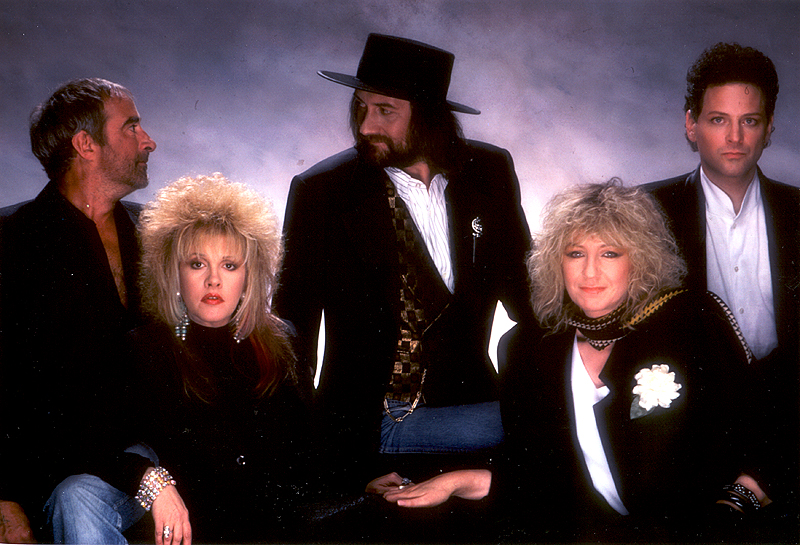


 Heroic drug abuse, physical violence, epic strops… Forget Rumours, Fleetwood Mac’s craziest album was Tango in the Night.
 “Certainly , I smoked a lot of pot. But I was never a big user of coke,” Buckingham notes. And by the mid-80s, he’d had enough. ” The subculture was pretty much at the point of burning itself out,” he recalled. “The ‘anything goes’ attitude that existed in the 60s had become something entirely different. But still, everyone thought you had to do certain things to play, and I don’t know that I ever thought about it that way.”


