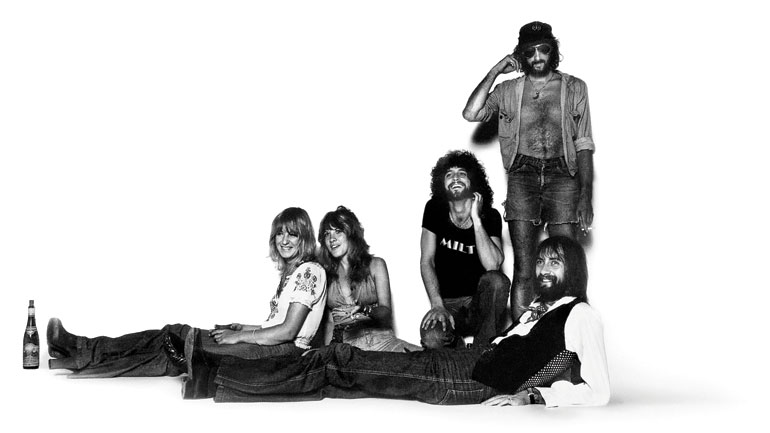
Fleetwood Mac are back and bigger than ever, but is it finally time guitar fans dropped their pretensions and embraced one of the greatest “uncool” acts of the 1970s?
Rampaging commercial success will not earn an artist the acceptance of the wider rock fraternity. Music fans can be more than a little sniffy. The second a band breaks through the glass ceiling and becomes a pop culture staple, eyebrows arch and skepticism takes hold. It’s a bizarre phenomenon but one that every music fan can recognize. There is no magic formula to earn credibility and kudos. Every critic in the land can fall in line and exalt an artist’s latest work, but it won’t stop the second-guessing and it won’t make you cool.
Fleetwood Mac represent the ultimate contradiction. When they ditched the trappings of blues-rock and embraced folk-pop they became the biggest band in the world. The critics adore Rumours and the public grabbed copies in their millions — but the Mac were never cool. Indulgent, genteel, and contrived, to their adversaries Fleetwood Mac were regressive and safe when music was at its madcap revolutionary best. Lindsey Buckingham was never on trend as far as guitarists were concerned — he chose to askew his considerable technical talents in favour of chart friendly sheen.
Fleetwood Mac’s guilty pleasure status has only grown with age. Chatting with young rock fans at Sonisphere Festival 2010 about the best live bands they’d seen in the last year, it was amusing to witness a fan try and couch his enjoyment at seeing Fleetwood Mac live. After a minute of mumbling hedges (“Well they’re not my kind of thing,” “Of course I didn’t expect to enjoy it”) he meekly came to the conclusion, in hushed tones, that “you know, when they played “The Chain” and really got going, they’re pretty good…if you like that sort of thing.”
It was truly astounding, not the length this one rock fan went to hide his clear admiration for the Mac, but the fact that he had to hide it in the first place. This was a Festival that featured prominent performances by the likes of Europe and Motley Crue, and the gent in question was wearing a Whitesnake tee! Surely if hair metal has been redeemed to the point where hardened rock fans will proudly don the garb of their poodle haired icons, it should be socially acceptable to admit that “you know, Fleetwood Mac are kind of alright.”
Perhaps the time is now. Fleetwood Mac have reformed with more fanfare than either their 2004 or 2009 sojourns and Rumours has been reissued to ravenous reviews. Even Pitchfork, the hipster bible which historically avoids dolling out top marks to even the most highly regarded middle of the road releases (see The Joshua Tree), took the plunge and gave Rumours a perfect 10. The fans are certainly excited, selling out a mammoth arena tour and forcing the band to add two extra dates in London. It’s self-evident: Fleetwood Mac are still relevant.
But if the band has always been this beloved, it begs the question…
Why Were Fleetwood Mac So Uncool In The First Place?
Victims of circumstance: the injection of pop songsmiths Lindsey Buckingham and Stevie Nicks in 1975 happened to coincide with one of the most revolutionary periods in pop music history. New genres and new sounds were being invented on a monthly basis and if the 70s could be distilled down into one succinct musical motto it would read: never look back.
David Bowie encapsulated this sense of experimentation as he ditched twee mod-pop, rushed through psychedelic isolation, mastered glam, went crazy on cocaine and released two Krautrock masterpieces in the space of seven short years.
Consider the breadth of innovation in the years when Fleetwood Mac released their best work – look at how dramatically music was evolving with each passing year:
1975 (Fleetwood Mac): Blood On The Tracks (Bob Dylan), Psychical Graffiti (Led Zeppelin), Blow By Blow (Jeff Beck), Wish You Were Here (Pink Floyd), Born To Run (Bruce Springsteen), A Night At The Opera (Queen), Horses (Patti Smith), Another Green World (Brian Eno), Captain Fantastic… (Elton John), Neu ’75 (Neu!), Mothership Connection (Parliament), Ted Nugent (Ted Nugent)
1977 (Rumours): Marquee Moon (Television), Never Mind The Bollocks (The Sex Pistols), Low & Heroes (David Bowie), Animals (Pink Floyd), The Clash (The Clash), Exodus (Bob Marley), My Aim Is True (Elvis Costello), Bat Out Of Hell (Meatloaf), Trans-Europe Express (Kraftwerk), Rocket To Russia (The Ramones), Pink Flag (Wire), Talking Heads 77 (Talking Heads), The Idiot (Iggy Pop), The Heart Of The Congos (The Congos), Saturday Night Fever (The Beegees)
1979 (Tusk): London Calling (The Clash), Unknown Pleasures (Joy Division), Highway To Hell (AC/DC), The Wall (Pink Floyd), Entertainment (Gang Of Four), Off The Wall (Michael Jackson), Specials (The Specials), Metal Box (PIL), Singles Going Steady (The Buzzocks), Y (The Pop Group), Three Imaginary Boys (The Cure), 20 Jazz Funk Greats (Throbbing Gristle)
In four years the music world went from the height of excess back to its barest punk bones and came out the other side with a desire to rip it up and start again. By comparison the latter-day Fleetwood Mac feel cosy. When the rock world was living life on the edge, they occupied the middle ground, recreating the easy life aesthetic of the Californian pop maestros (albeit with the help of a boat load of cocaine).
But it’s 2013! Kraftwerk and The Clash are classic rock, and all that progression is ancient history…it’s time to ask the immortal question:
Is It Okay To Like Fleetwood Mac?
Revisiting the three classic albums of the Nicks/Buckingham era with fresh ears is next to impossible. The bizzarest aspect of listening to Fleetwood Mac, Rumours and Tusk is how unnervingly familiar the first two records sound. The hits are unavoidable of course, “Dreams” remains seductive and “Go Your Own Way” is an eternal toe tapper, but the albums (particularly Rumours) have been absorbed so thoroughly into the popular consciousness that every hook, harmony and sly riff is already buried in the deepest recesses of your mind.
Listening to Rumours is simply the trigger device. A signal is unleashed; a little microchip goes off in the back of your brain instantly alerting you to the Mac’s entire oeuvre. The sound of this album (which was already steeped in pop culture familiarity) has gone on to inform three further generations of radio rock and pristine pop.
This certainly doesn’t help “Don’t Stop”, or “Second Hand News” (with its nauseating bow-bow-bow adlibs), sound exhilarating in 2013. The thrill of discovery is rendered null and void by decades of pre-conditioning, but thankfully the highly touted tension remains in tact.
To the unconverted the endless discussion of the fraught Nicks/Buckingham relationship adds little depth to the music. Hearing “Go Your Own Way” on the radio is like sitting in on an episode of a soap opera that you’re not remotely invested in. Rumours brings the outsider up to speed in an instant as heart-breaking scorn, revengeful lyrics, and biting personal critiques are stacked curtly atop one another. It’s a bruising emotional affair. Neither party manages to land the knock out punch and both Buckingham and Nicks emerge the worse for wear.
Tusk, the much-derided flop of a follow up to Rumours, holds the most excitement for the intrigued newcomer. It’s still entirely off its rocker and thankfully it hasn’t been watered down by years of radio play. Tusk retains the capacity to astonish and had it been a commercial success, it would have been a daring triumph of weird progressive pop. Buckingham’s million pound pet project holds some of the band’s most austere ballads (“Never Make Me Cry”) and delicately crafted gems (“Storms”), but also their barmiest inventions and loosest playing.
Tusk is full of detours; mad country marches, explorations of new wave, and strange predictions of what pop might (and ultimately would) sound like in the next decade. It’s Fleetwood Mac’s cocaine record. It lurches from moments of despair and paranoid lethargy into explosive bursts of unfettered energy. Where Rumours sounded effortless, Tusk sounds on edge; it could careen off the rails at any point (and arguably does, repeatedly). If “Strawberry Fields Forever” nailed the mind altering allure of LSD then “Tusk” captures the skittish, near psychopathic, blend of paranoia and frustration that only cocaine and heartache can induce. Hardly easy listening.
Ultimately, Tusk represents a chance for the modern guitar rock fan to hear those mellifluous harmonies and slick riffs in a new context. Allowing a younger audience to understand the band’s brilliance without being burdened by the sheer familiarity of Rumours.
Will Fleetwood Mac ever be as cool or as socially acceptable as Jimi Hendrix? Probably not (just look at them), but in 2013 it’s time rock fans dropped their pretentions, fell in love with the precision-engineered arrangements of Rumours and embraced the insanity of Tusk.
Stevie Nicks, that five-foot-one-inch rock goddess in a floppy hat, one-time lover of cocaine, tranquilizers, Lindsey Buckingham, Don Henley and Mick Fleetwood, a woman who doesn’t just live in California but embodies that state with every fibre of her tiny, glittering, ragged-voiced, flat-ironed blond being, once said that “to be in Fleetwood Mac is to live in a soap opera.” And so it proved to be.
She went on to add, in a much more recent interview, that 2013 would be “the Year of Fleetwood Mac.” Here, again she was correct.
While classic-rock reunions come and go—a tedious conveyor belt of pot-bellied boomers in pleather pants desperately cashing in on youthful glory—this year’s much-anticipated reunion of Fleetwood Mac could not have been better timed. It’s been three and a half decades since the band members overcame their toxic web of mutual heartbreak, divorce and addiction, crammed themselves into a sweaty studio, and emerged with Rumours, quite possibly the most uplifting collection of breakup songs ever written. Just rereleased as a digitally remastered box set, the album, which produced four Top 10 U.S. singles, is the eighth-highest-selling album of all time.
In addition to the new release, the band is preparing for its most ambitious North American tour since the eighties. It won’t be a full reunion—Christine McVie, ex-wife of bassist John McVie (whose name accounts for the “Mac” in Fleetwood Mac) and one of the band’s best songwriters, will not be taking part, having long ago scooped up her royalties and permanently retired to the English countryside.
But that isn’t stopping the waves of adulation pouring forth from both sides of the pond for what is arguably the greatest British-American rock ’n’ roll fusion of all time—and the most drama-prone. In the band’s most famous incarnation, it was composed of two established couples: Stevie Nicks and her long-time partner, guitarist Buckingham; and the McVies; plus Mick Fleetwood on drums. By the time the Rumours tour was finished, Nicks had thrown over Buckingham, first for Henley (of the Eagles), and later for Buckingham’s best friend, Mick Fleetwood. The McVies divorced after Christine’s torrid affair with the band’s lighting director. Add soap, coruscating harmonies and guitar flourishes, and lather vigorously.
But Rumours is more than a big ol’ melodrama. It’s also the record that defined the baby-boomer generation. More than anything by the Beatles. More than anything by the Rolling Stones. It is that rarest of pop-cultural artifacts: a work of art in conversation with itself—a shifting dialogue of angry kiss-offs (“Go Your Own Way,” “The Chain”), sexual boasts (“You Make Loving Fun”) and earnest laments (“Songbird”) that sum up the emotional condition of a generation learning to live according to an individualistic ethic.
To put the album in context: The cultural shift we’ve come to call the generation gap was actually the popular emergence of the Freudian notion that self-discovery was the key to personal fulfillment. Fleetwood Mac’s original audience was the first generation to believe and act, en masse, as though it was their job to live not according to the circumscribed roles bestowed upon them at birth, but in keeping with Shakespeare’s maxim: “To thine own self be true.” Rumours, which came out in 1977, long after the dust from the sixties had settled, was essentially a pop paean to this new way of life.
The album was (and still is) the unofficial soundtrack of the culture of divorce—a string of easy-listening theme songs for a generation unchained from social expectation. Back in the seventies, the invention of the Pill, combined with the rise of feminism, dovetailed neatly with this new ethos, and a generation of women and men who once might have stayed in stifling marriages suddenly saw a practical way out. Fleetwood Mac, along with Erica Jong, Marilyn French, Sonny & Cher and ABBA, provided the common pop wisdom at the time. And the wisdom was simple: If you’re not happy, get the hell out.
For better or for worse, it’s a relationship mantra most of us live by today. Since the release of Rumours, we have come to see divorce as a disruptive but necessary liberation—something to be endured, overcome and succeeded at in the all-consuming quest to live a fully self-actualized life.
While the ideas in Rumours remain culturally pertinent, it’s the catchy tunes, breezy rhythms, genius guitar lines and lush harmonies that truly explain its ability to endure the test of time. Go into any hipster dive bar in Brooklyn, Parkdale or Hackney, and you are likely to hear it being played, alongside such contemporary inheritors of its sound as Haim, Bon Iver and Fleet Foxes.
The irony, of course, is that when Rumours was released, it was roundly rejected by the counterculture hipsters of the time—punk-rock fans—who saw it for the earnest collection of accessible soft-rock hits that it is. Could anyone have foreseen its eventual success as a generation-defining work of pop art? Certainly not the five baby boomers who made it—they were too busy getting wasted, having affairs and getting divorced. How nice, then, to know that people do sometimes get back together, even if it is only to cash in on their youthful glory.
ALBUM OF THE WEEK:Rumours is one of those albums where you know every song. Even if you think you don’t, they’ve crept in by soft rock radio osmosis.
The band work on Mac time, so this 35th anniversary reissue actually arrives 36 years after the album was released in February 1977.
Rumours — already in 40 million homes — is one of the most complete albums in history and was fuelled by class A harmonies, class A drugs and beautiful music being made in studios and bedrooms between band members.
The vaults have been raided for more unreleased demos to show rock classics as works in progress. Lindsey Buckingham sniffles his way through an early take on “Second Hand News” with mumbled vocals and a runny nose and there’s “Go Your Own Way” with lyrics — and vocals — that were yet to be polished. Buckingham says “That was good” at the end — he clearly hadn’t heard his flat vocals back yet.
An early demo of Stevie Nicks’ timeless “Dreams” manages to be acoustic but also intense. The album was so strong gems such as Nicks’ “Planets Of the Universe” were left off — she’d later finish it and release it in 2001. “Did you get that? It wasn’t wonderful or anything,” Nicks says at the end of this demo. She’s wrong. Her early “Gold Dust Woman” rocks too.
There’s Christine McVie’s “Keep Me There” (once called “Butter Cookie”) which ended up being an album highlight and “The Chain” (a Nicks solo version of which is a find here).
One of McVie’s songs that did make the album (and made the album), “Songbird” is here in simple demo form — it’d be honed vocally later to become a soundtrack to weddings for decades to come. There’s also an instrumental “Songbird” for Mac trainspotters’ karaoke competitions.
Deluxe versions have a warts-and-all, un-airbrushed live concert from 1977 (check out “Rhiannon”), which captures a band who really loved each other flying high in their prime.
ALBUM OF THE WEEK FLEETWOOD MAC – RUMOURS (WARNER) Rating: 4.5/5
Cameron Adams / Herald Sun (Australia) Thursday, January 31, 2013
It has happened over and over again in the past few years. Someone in their 20s tells me how much they love Fleetwood Mac, and in particular its monster-selling album Rumours. My reaction is always the same. Their reaction is invariably deep surprise. I could never stand that record.
In 1977, when Fleetwood Mac’s 11th studio album came out, I was working in a record store in Rockville, Maryland. Needless to say, I heard Rumours a lot. I know the songs all too well. In fact, 35 years later I can still tell you the label and number on the spine of the record: Warner BSK 3010. (To keep track of inventory back before bar codes, we’d write down — on paper with an actual pen that went through carbon paper — the label and number of everything we sold.)
But it wasn’t the constant in store listening that turned me off to Rumours. To understand my indifference — verging on disdain — toward this record, you have to think about the state of rock music in 1977. Here’s what was selling well back then: the Bee Gees, The Eagles, Abba, KC and the Sunshine Band, Wings, Barry Manilow. In this era, of course, Rumours was number one for 31 weeks. It was the ultimate easy listening album, a mere refinement on what felt like an old L.A. rock formula. But for a music geek looking for new adventures in music, what was great about 1977 were the brash fresh faces and sounds coming out of New York and London. Toward the end of 1976, Patti Smith had led the way for me, and then ’77 gave us the debut albums by Talking Heads, Television, The Sex Pistols, The Ramones, Richard Hell, Wire, Elvis Costello, The Clash and on and on and on.
Having come from a generation that saw huge changes to the musical landscape (The Beatles released “I Want to Hold Your Hand” in 1964 and “A Day in the Life” just 3 years later), I always expected music to mine new territory. And in the early ’70s — with Pink Floyd and Genesis, Bowie and Eno, even Elton John and Electric Light Orchestra — rock was taking chances. But at some point, it got comfy and really bloated and we wound up with Kansas, The Doobie Brothers and the Captain and Tennille.
So 1977 felt like one generation giving the big finger to the the previous one, and it felt good. Rock was shedding its skin, it was a constant amazing rush of wonder and surprise. Attitudes changed. My musical heroes were more likely to be DIY kids than superstars in supergroups. The shows I went to moved from soulless stadiums and arenas to clubs and found spaces. Small labels with tightly defined sounds were popping up everywhere, another middle finger to the corporate bloat that shaped and controlled the music we heard. We think of the Internet as redefining the music industry, but it had a precursor here.
We’re a lot more territorial about music we share and hear in our teens and twenties. Back in 1977, my world had zero room or tolerance for a middle-of-the-road, though pretty, rock band like Fleetwood Mac. The shiny production on Rumours felt planned and orderly, which made it suitable for moms and dads in their 30s and up but not for unsettled 20-year-olds and teens. Which makes me wonder why so many in this generation are latching on to that sound.
This morning, 35 years after its release, I thought I’d give Rumours another chance and wirelessly streamed it to my home stereo. For the most part that perfect shine didn’t sound as shiny. The pop charts these days are filled with clinical perfection, beats locked to clocks and sequencers that makes Rumours feel more like a casual home recording. Once I got past some of the goofy lyrics (“Lay me down in tall grass and let me do my stuff” made me laugh out loud), I found it to be a fine record, one whose influence is all over many of the records I hear now. Fleet Foxes really aren’t that far from Fleetwood Mac in name or in sound … a bit darker, perhaps. And where Fleetwood Mac, in 1977, was on the extreme pop side of the musical scale, Fleet Foxes feels somewhere in the middle, given the much more extreme landscape today, with, let’s say, Carly Rae Jepsen on one side and, say, Godspeed You! Black Emperor on the extreme side.
It’s all relative. In 2013, the lockstep dance beats — the heart of electronic dance music — and the drummers playing to click tracks — the heart of pop — make Rumours feel organic. And look at the cover art, with its wistful and graceful image of the soon-to-be-couple Mick Fleetwood and Stevie Nicks. Back then they seemed like hippies dressed too well. These days it seems like a painting from a long ago past, almost renaissance.
I understand how art can be seen in such different light, that it’s never as simple as just the music, that it’s always wrapped up in the cultural zeitgeist. And most importantly, there’s no right or wrong to loving what you love. But it’s wise to keep an open mind, and that’s easier to do as you get older. That said, I won’t be putting Rumours back on the stereo anytime soon. Though there’s strong songwriting on the record and the drums and harmonies stand out, there are plenty of bands these days making music equally wonderful and — for me — without the taint of the past.
Bob Boilen / NPR (All Songs Considered) / Tuesday, January 29, 2013
Fleetwood Mac’s classic album Rumours is on course to re-enter the UK Top 10 this Sunday (February 3). The band’s 1977 collection debuted at number 77 on February 27 of that year, meaning the record will re-enter almost 36 years after its initial outing.
However, it wasn’t until the following year (January 1978) that Rumours finally hit number one on the UK chart, reports The Official Charts Company. To date, Fleetwood Mac’s Rumours has spent a total of 493 weeks on the Official Albums Chart, making it the most charting collection in British music history. It is trailed by Queen’s Greatest Hits at 484 charting weeks and Meat Loaf’s Bat Out Of Hell with 474 weeks.
Meanwhile, Mick Fleetwood has confirmed that the band will headline some UK shows later this year, and teased the possibility of a new album.
Lewis Corner / Digital Spy / Tuesday, Jan 29, 2013
The classic 1977 album has just been re-released in several deluxe packages
Fleetwood Mac’s Rumours is set to re-enter the UK Top Ten this weekend — 35 years after it first reached Number One.
Several deluxe reissue packages were released yesterday (January 28) to mark the 35th anniversary of Rumours hitting the top spot on the UK’s Official Albums Chart. The album originally came out in February 1977, but did not climb to Number One until January 1978, nearly a year later. After spawning the classic hits “Don’t Stop,” “Dreams,” and “Go On Your Way,” it would go on to sell over 40m copies worldwide, placing it in the all-time Top Ten.
Responding to the success of the reissue packages so far, Official Charts Company bigwig Martin Talbot said: “As someone who grew up with Rumours on the family stereo, it is great to see it back in the Official Albums Chart again.”
Meanwhile, Fleetwood Mac singer Stevie Nicks has recently spoken about the undimmed popularity of Rumours. “When I listen to it, I think if I was 20 years old, I would definitely want to be in that band,” she told Rolling Stone. “There is something strangely timeless about it that makes you feel like it was just recorded last year.”
Continuing, Nicks insisted she still finds the classic tracks from Rumours exciting to perform. She explained: “The songs morph a little bit every time we do them. Instrumentally, they morph. ‘Gold Dust Woman’ is sometimes Indian. Sometimes it’s just rock & roll. It travels, and all these songs do that. To me, they are always exciting. I never feel bored when we burst into one of our big hit songs, because what they were all written about was so heavy that they could never be boring.”
Fleetwood Mac are now gearing up for a massive North American tour, which kicks off in April and runs all the way into July. UK dates have yet to be announced, but Mick Fleetwood has recently hinted that the band could hit Britain in September or October.
A song-writing soprano with fragile vocal cords casts her sexy spell on rock
Rock doesn’t need a Farrah Fawcett. It has Stevie Nicks. So what if Stevie insists “turning men on has never been my design.” As Little Richard once sang, the girl can’t help it. Swirling sinuously in her black capes and clingy gowns, Nicks is the onstage focus and seductive soprano of this year’s powerhouse band, Fleetwood Mac. Unlike fellow Arizonan Linda Ronstadt, Nicks is also a successful songwriter whose tunes about a Welsh witch (“Rhiannon”) and lost love (“Dreams”) were no sooner composed than they were Top Ten. In short, Stevie Nicks at 29 can have it all ways: ethereal, funky, pouty and very commercial.
It is little more than two years since ex-waitress Nicks and her guitarist boyfriend, Lindsey Buckingham, joined the Anglo-American cult group. Today big Mac is the world’s best-selling rock band. Their quadruple-platinum Fleetwood Mac LP only softened up the market for this year’s astounding Rumours. Its six-month lock on No. 1 set an all-time pop-chart record, and by the end of 1977 it may sell an incredible eight million—octaplatinum.
Yet for Stevie, her career could have ended. Frighteningly, she is afflicted with tiny nodules on her overworked vocal cords. Earlier this year she canceled several performances and doctors ordered her to bed. Though risky surgery has not been necessary, she sings no more than three concerts a week, does not smoke and limits herself to two glasses of red wine a night. Nicks also has a speech therapist on tour with her, retraining her conversational voice and helping the band’s sound men adjust the mikes when Stevie’s vocal strain becomes apparent.
Throughout the year Stevie (“Stephanie” to her father, a retired Greyhound-Armour corporation executive) has kept a tenacious hold on reality. The trauma of Mac’s romantic roundelays has passed. Stevie and Lindsey have split, Christine and John McVie are divorcing. Mick Fleetwood and his civilian wife, Jenny, are back together again. Stevie, determined to have “no half-assed careers and no harassed relationships,” is making night moves with New Yorker Paul Fishkin, head of Bearsville Records. “It’s not easy to be involved with a lady singer who’s always gone,” Nicks says. “Paul is sweet and wonderful and understands as well as anyone. I’m not interested in playing around, but I do get terribly lonely on the road.” After Mac’s tour of Australia and Japan ends this month, Stevie will head for her retreat in the Hollywood Hills, where she’s “housemother” for her younger brother and three friends. “They let me know I’m not a queen and have no expectations of seeing me go up the front stairway on a broom,” Stevie says thankfully. “Rock is flash—the rest of my life I want to be normal.”
PHOTO (COLOR):”The two hours onstage are magic,” says Fleetwood Mac’s Stevie Nicks. “The other 22 are long and hard.”
It is a sad irony when someone with a special talent has the very medium of that talent endangered. A singer who struggles to keep her voice brings to mind the athlete with the trick knee, the musician with hearing trouble.
Stevie Nicks is not only an outstanding singer and songwriter for Fleetwood Mac, but she is a beautiful, elegant lady besides. Yet, a cloud will movie through her expression when she talks about her voice.
“The doctor has told me that my speaking voice is destroying my singing voice,” she says. She has pinpoint nodules on her vocal chords that are aggravated when she speaks in her natural low pitch.
“I can’t ’til the cows come home as long as I keep my pitch up, but it sounds ridiculous to me inside my head,” she told Weekend in a recent interview. Before a concert, she will spend all day inside, not speaking, taking face saunas and gargling. “I just have to do the best I can do,” she says.
Fleetwood Mac is talking a break from its world-wide tour to allow Nicks to rest her voice and also to prepare to the American Heart Association benefit concert Aug. 27, at the University of Arizona stadium.
The concert came about through Nicks’ father, Jess, former chairman of the board of the Maricopa County Heart Association. It will start at 5 p.m. to allow four bands to present a full set: The Marshall Tucker Band, Kenny Loggins and Arizona will join Fleetwood Mac to bring in a possible $350,000, the largest contribution for charity by rock entertainment.
Doing the benefit is not like doing just another concert, according to Nicks. “It takes months and months of work. A crew of 30 people from all over the country have to come together for just one night. If we always did it this way, we’d go into the red.”
But that is about all Nicks had to say about the money. “I never ask about money. I don’t want to know.” She has no idea how much the band is actually giving up to do the concert, but she knows it is a lot.
“That is the amazing thing about rock and roll. You can jig around and have a good time and make all that money — just having a good time.”
In a sad situation, anything can happen, but also it can be cleansing, like rain. — On the ‘Dreams’ lyrics ‘Thunder only happens when it’s raining’
As much as she loves the band and performing, she doesn’t like touring. “It’s grueling. I can’t do it again for a long time, ” she says. it is “the crazy Englishmen,” the band’s namesakes Michael Fleetwood and John “Mac” McVie, who love to tour. “Christine (McVie) and I just sort of hobble along with them,” says Nicks.
The real joy for Nicks comes from writing songs, and she has written several outstanding ones on the group’s two albums, “Fleetwood Mac,” and the more recent, Rumours.
“The fantasy of performing is infectious and it is hard not to be swept away by it all, but the song is real. I have to live, too, by searching for reality,” she says.
Her songs, “haunty and floaty” as she describes them, come from real experiences in her life. “Most are introspective, a running chronology of my life,” she says. Some have come about quickly, on the spur of the moment, like “Rhiannon,” inspired by the sound of the name. “It sounded so free — with personality traits of my own — about a woman who is into her own trip.” Nicks went to her piano and wrote the song in 20 minutes, a more “classical-sounding” version than the one that appears on the album.
Other songs have come about over many years, like “Dreams,” her favorite song their two albums. It is about her relationship with Lindsey Buckingham, also of the group, which lasted until a year and a half ago. “I wrote the first verse, about our break up, over a year before it happened. Then the rest of the song came much later,” she says.
“Thunder only happens when it’s raining” is the song’s chorus. “In a sad situation, anything can happen,” she says. “But also it can be cleansing, like rain.”
She writes whenever she can, even getting in an hour here and there during a tour, but her best writing, she says, is when she is alone and at home in Los Angeles or at her parents’ home in Paradise valley. “When I’m into a song I’m elated. It’s the very best thing for me.”
“My songs are a matter of circumstances, but there also is a natural progression. My earlier songs were bitter. ‘Frozen Love’ is very nonchalant and indifferent. Now, I am less cold. I was upset, and now, like in ‘Dreams,’ it’s okay.”
She cherishes times of quietude in her home and in Phoenix. “At home I try very hard to be ‘normal,” but it takes a couple of days to settle down, to get used to the idea that there won’t be a wake-up call, that we don’t have to get moving,” she says.
“I come to Phoenix often, always to relax, so I have very nice feelings about it here. There are friends here who were into our music before we became popular, so they’re very special.”
Yet, her ideal life still would include a couple of months performing each year.
“Don’t get me wrong — I really love to perform. I love to be up on that stage.”
Onstage, the sedate, poised lady puts on a show. “I’m a completely different person,” she says, and attributes it to the fact that she is a Gemini. Costumes she and her “little space cookie” dressmaker design are long and flowing, her most notable one a black chiffon affair, designed especially to create the fantasy atmosphere of the performance. But because of it, she says, she has been associated in the media with black magic and witchcraft.
“We work at making the show both musically and visually interesting,” she says. “I don’t like being associated with anything evil. We do all that for entertainment. I love to wear long, flowy things and the people love it. But that has nothing to do with the real me.”
The band will complete its tour Dec. 10 and then members will ive in Maui, Hawaii, where McVie has a house, for a few weeks. Out of that time of freedom and rest will develop the makings of their next album, which Nicks predicts for March, 1978.
On that album will be the song she says is the best she has ever written, “Beautiful Child.”
“It is from an experience that sent me in tears — it’s real sad.”
Producing a new album will not be easy. “There is horrendous pressure to be as good as the last album. You can never go back. You have to be as good or better,” she says.
The group faced this especially when it was producing Rumours, to follow up the platinum first album. “We worked 12 months on Rumours and we had our doubts. you start ripping yourself apart. Because it was taking so long, Lindsey was afraid it wouldn’t have the spontaneity, but I was sure that the songwriting was far superior.”
The band was held together despite the turmoil of Nicks’ and Buckingham’s separation as well as that of Christine and John McVie. “We just couldn’t let the emotional thing blow us apart,” says Nicks. “We are not kids, all of us are between 29 and 32, and we just had to handle things in an adult manner. The band stayed together because no one would leave.
“It’s a very integral band. There is strong chemistry among the five people.”
Yet, in their future, she sees them going their separate ways. “I see Lindsey going into producing, Christine to her hosue — she loves to cook and she is an artist and a sculptress.
“Michael and John always will be on the road. They’ll play ’til they can’t play anymore.”
SURE, THIS album deserves platinum status as much as the next Kiss LP, but frankly there’s only one cut that really sends me – “Dreams,” written by Stevie Nicks.
Look, I know she has an air that she’s hot stuff, and it broke my heart too when she frosted her hair like someone’s pet Yorkie last year, but when I get around to assembling my bionic playmate, that’s the voice I want – lazily sensual, with a glassy baby shiver that can melt your heart faster than Bain de Soleil sliding down a greased thigh at the Beverly Hills Hotel pool.
“Dreams” is a pulsing, soothing blanket of sound similar to Ace’s great “How Long” ― only better, because little tulip lips is rippling the silvertones. Lyrically, I could do without the meteorology lecture in the chorus, but any girl who’s as crazy for “crystal” imagery as Nickers is deep enough for American pop romance.
The rest of the album rates about even with their last sweepstakes winner. Lindsey Buckingham will never be one of my favorite singers or songwriters, but “Go Your Own Way” ― the punchy single with the distinctive staggered rhythm and slicing guitar lines ― tops the last LP’s pretty fair “I’m So Afraid.” Another delectable morsel is Stevie’s “Gold Dust Woman,” with much of the haunting atmosphere of “Rhiannon.” One does sense a dip though, in Christine McVie’s compositions. While her writing is consistently attractive, only “You Make Lovin’ Fun” really lives up to the four remarkable songs that established Fleetwood Mac’s cruising level ― “Over My Head,” “Warm Ways,” “Say You Love Me” and “Sugar Daddy.”
In case you haven’t been keeping up on you Golden State social notes, the conjugal harmonies of Fleetwood Mac were smithereened last year, and the songs on Rumours are mostly about grownups bidding various forms of adieu. The lyrics aren’t particularly memorable, but they’re effectively bittersweet and reflectively “mature” (i.e. no vicious revenge or suicide histrionics like heartbroken nihilists enjoy threatening).
Hopefully, this band will continue to display the rustic authenticity of their pre-Buckingham, Nicks folk-blues roots (check out Penguin among others). It lends their spirited pop an edge that the bathetic Beagle boys sorely lack. For their gritty, smoky flavoring, though, they’re kidding themselves if they don’t recognize the little witch with the spells in her voice as their front-woman.
The Long Hard Drive from British Blues to California Gold
By Cameron Crowe Rolling Stone Thursday, March 24, 1977 (RS 235)
Fuck it…
Peter Green didn’t want his 30,000 [pounds] a year. The money was royalties from his work with his old blues band, Fleetwood Mac. He’d quit the band in 1970, saying he wanted to live a Christian life. He gave his money away and eventually took various menial jobs, including one as a gravedigger.
But now, as more and more people acquaint themselves with Fleetwood Mac and dig back to old reissues, this money keeps arriving. He tries to get rid of it, but it’s all just a bother. “I want to lead a new life,” he would say. “I don’t want to be followed around by the past”.
When Green could tolerate it no longer, he paid his accountant a visit, brandishing a pump-action 22 shotgun. He wanted the money stopped. Soon Green was standing in Marlebone Court in London, listening calmly as the judge read this verdict. Peter Green, blues-guitar-star-turned-ascetic, was ordered committed to a mental institution.
After ten years and a particularly lean time just before the group’s 1975 smash, Fleetwood Mac, broke loose, everybody loves this quiet little British-American band that could. Fleetwood Mac’s music has evolved into a sophisticated pop and rock sound that’s just right for the Seventies, thanks primarily to two women, old-timer Christine McVie and newcomer Stevie Nicks. The group’s latest album is being shipped out in greater quantities than any other record in the history of Warner Bros. There are, of course, reasons for Warner’s optimism: Fleetwood Mac produced three hit singles (“Over my head” and “Say you love me” by McVie; “Rhiannon” by Nicks), sold 4 million units, has danced around the top half of the album charts for over 80 weeks and is Warner’s all-time best seller.
And adding to everyone’s enthusiasm were shows like the one at LA’s Universal Amphitheater last fall. There, in front of an adorning crowd that included Elton John and two princesses of Iran, FM looked like they were feeling good. New energy was being supplied by Stevie Nicks and the other most recent addition Lindsey Buckingham. What with Buckingham prowling around the stage, dropping feisty lead runs into all the right places, and singer Nicks playing the whirling dervish Welsh witch Rhiannon, the group’s dignified reserve was clearly a thing of the past.
Even drummer Mick Fleetwood finally ventured out from behind his drum kit to play the African talking drum on “World Turning”. And Christine McVie, Fleetwood Mac’s brandy-voiced keyboardist of six years, recently overcoming a phobia against talking to the audience. Only John McVie, perhaps in the grand tradition of bassists, remains impassive and faultlessly proficient.
But one would soon learn that their minds were elsewhere – namely, in the tiny studio across town from the Amphitheater, where they were still struggling to finish their very latefollow LP, a trouble child, called Rumours.
Work on the album began in February ’76, immediately after the group had introduced their new lineup on a marathon six-month cross-country tour. Traveling to the Record Plant Studios in Sausalito, just north of San Francisco, FM had walked straight into an emotional holocaust. Christine and John McVie, married for almost 8 years, had recently split up and weren’t talking to each other. Stevie Nicks and Lindsey Buckingham were about to do likewise. And Mick Fleetwood certainly wasn’t talking to anybody. The father of two children, he and his wife Jenny were in the midst of divorce proceedings.
“Everybody was pretty weirded out”, Christine McVie explained. “Somehow Mick was there, the figurehead: “We must carry on… let’s be mature about this, sort it out. – Somehow we waded through it.”
They returned to LA, but the tapes from their nine weeks in the Sausalito studio – many of them mangled by a “recording machine” that earned the nickname “Jaws” – sounded strange wherever they played them. They were almost resigned to starting all over when one of their crew found a cramped dubbing room in the porno district of Hollywood Boulevard, a studio that perfectly accommodated what they had recorded. A fully booked fall tour was canceled, and there, while films like Squirm and Dick City played next door, Fleetwood Mac started the mixing process. As the songs took shape, the album began to sound like True Confessions: the band’s three writers – Christine McVie, Nicks, and Buckingham – were all writing about their crumbled relationships.
As they added finishing touches to an album more intimate than they had ever anticipated, the band firmly closed their studio doors. “It was clumsy sometimes,” said John McVie. “I’m sitting there in the studio and I get a little lump in my throat especially when you turn around and the writer’s sitting right there.” So they asked that interviews be done separately.
I always did have a kind of candle shining for Peter Green. I mean, he was my god. I thought, “Give me one chance at him…” Christine McVie, who looks considerably younger than her 33 years, grew up alongside Fleetwood Mac on the British blues circuit. Mick Fleetwood and John McVie are loath to dwell on FM’s many past lives, but sitting in this cluttered office adjoining the studio where she has just finished mixing Rumours, Christine is happy to play the keeper of the FM legacy.
She pours a tall glass of white wine and surprises even herself with a fan’s diary that is by turns, melancholy and passionate. “I dearly remember the old days… FM had this one-of-a-kind charm. They were gregarious, charming and cheeky on-stage. Very cheeky. They’d have a good time. Peter Green just made the audience laugh at this funny little cocky Jewboy. Jeremy Spencer was really dirty on-stage. At the Marquee one night he put a dildo in his trousers, came out and did an impersonation of Cliff Richard. Half the women left, escorted by their boyfriends.” Green had also created a dark, mystical aura about the band. “He had this tremendous, subtle power,” says Christine.
By the time she made friends with the group, Christine Perfect was already a journeywoman blues-circuit rocker herself. As a “real tubby” teenager – she weighed 160 pounds at 16 – Christine and a girlfriend/singing partner snuck away from their strict parents in Birmingham and visited every talent agency they could find in London. Their act consisted of strumming guitars and warbling Everly Brothers hits. Their career, which was highlighted by a obe-song pub appearance backed by the Shadows, was cut short when their parents found them out. Christine was sent to art college in Birmingham where she joined a folk club. “We’d meet every Tuesday night, above a pub somewhere, and drink cheap beer. Whoever could, would play a folk song or violin, whatever they could do. Anyway, one night in strolls this devastatingly handsome man, who was from Birmingham University. It was Spencer Davis. I just fell in love with Spence. I swore I would get thin and go out with him.
“And I did.”
Christine and Spencer began singing together, fronting the university’s jazz band, but, she says, their relationship proved more musical than illicit. “Stevie Winwood was about 14, still in school and playing at a jazz club called the ChappelPub at lunchtime,” Christine says. “He met Spencer Davis Group.”
“I used to trail around religiously. Boy, they were so hot. Nothing was like that. Stevie Winwood played like I’d never heard anybody play before. It just gave me goose bumps. They were just a blues band, but a really, really great blues band. He [Winwood] could yell the blues. A 15-year-old boy. No one could believe it. The 19-20-year-old girls would have the hots for him.”
Christine joined another blues band called Chicken Shack. The gruesome cover photo, showing severed fingers in a can, won as art award for their first album. Forty Blue Fingers Packed and Ready to Serve. “We had an underground following,” Christine deadpans.
Chicken Shack did occasional gigs with Fleetwood Mac, and Christine, now, playing piano, was invited to guest on some of Fleetwood Mac’s early sessions because she “played the blues the way Peter liked.” She never had designs on any of the band, she says. Besides, both Green and McVie already had girlfriends.
Christine stops and slaps her forehead. “I’m forgetting a whole two-year episode with a Swedish guy I was engaged to. Ended up totally traumatizing my kitten who hated me evermore ’cause I just ran around the house screaming when he left me. I scared the shit out of it.”
Caught up in her story-telling, Christine in not the same woman Stevie Nicks has characterized as “very private, very much to herself.” She shakes her head, as if she’s been talking too much. “I can’t believe I’m remembering all these things.” But, she continues, “I went to see Fleetwood Mac one night. John didn’t have his girlfriend… He asked me if I wanted to have a drink and we sat down, had a few laughs, then they had to go on-stage. All the time I was kind of eyeballing ol’ Greenie. After the concert was over, John came over and said, ‘Shall I take you out to dinner sometime? I went, ‘Whoa… I thought you were engaged or something.’ He said, ‘Nah, ‘sall over.’ I thought he was devastatingly attractive but it never occurred to me to look at him.”
They went out for a time, then John McVie disappeared overseas for Fleetwood Mac’s first American tour. “By this time I was really crazy about him,” Christine recalls, “but I didn’t know what was happening with him. Chicken Shack did a ten-day stint at the Blow-Up Club in Munich and I had this strange relationship with a crazy German DJ who wanted to whisk me off and marry me. I turned him down… and wrote John a big letter.”
Fleetwood Mac returned from America and McVie proposed. They were married ten days later, mostly to please Christine’s dying mother. But John and Christine didn’t see much of each other. Both bands toured often and when she left Chicken Shack, she tried a disastrously unprepared solo tour and LP. Christine gladly retired to be John McVie’s old lady.
“I thought it was extremely romantic,” she says. “Obviously a little bit of the glamour of what Fleetwood Mac was in those days rubbed off. It was almost like someone marrying a Beatle. You married one of the locks in the chain and you were part of them.
“We were very very happy. Very happy for probably three years and then the strain of me being in the same band as him started to take its toll. When you’re in the same band as somebody, you’re seeing them almost more than 24 hours a day. you start to see an awful lot of the bad side ’cause touring is no easy thing. There’s a lot of drinking… John is not the most pleasant of people when he’s drunk. Very belligerent. I was seeing more Hyde than Jekyll.”
Peter Green, in a sudden plea for Christ, left the band in late ’70, and Christine McVie came out of her retirement, adding keyboards to the band. Green’s departure, says Christine, “was an out-of-the-blue shock to everybody. Peter had been quite happy and was starting to write this really incredible music like “Green Manalishi.” It was like he was being lifted. He’d wrung the blues dry and already played 50 times better than most of the black guitarists.”
In the midst of a German tour the group’s first peak of popularity, Green fell in with some people Christine remembers as “jet-setters.” The band had recorded a Green composition, “Black Magic Woman,” and, ironically, the group he ran into were reportedly into black magic and the occult. They turned him on to acid. He left Fleetwood Mac on that same tour.
“Something snapped in him,” Christine says, looking saddened. “He dropped this fatal tab of acid and withdrew. He still has this amazing power, but it’s negative. You don’t want him around. We’ve all cried a lot of tears over Peter. We’ve all spent so much energy talking him into more positive channels. He’ll just sit there and laugh. “Fuck it…”
Not long ago, exasperated at being asked the perennial reunion question, Mick Fleetwood told an interviewer that sure, someday, maybe on an English tour, the original Fleetwood Mac might get on-stage one night.
Later, when the band arrived in London, Peter Green was waiting for them in the lobby of their hotel. Unannounced, Christine didn’t recognize the flabby, slept-in figure carrying a disco-droning cassette machine. “I heard this voice say, Hello Chris, I turned around and see this rotund little guy with a big beer gut and pint in his hand. I couldn’t believe it. I said, Aren’t you embarrassed?, Nah, he says, fuck it, what the hell.” We gave him a room at the hotel for a few nights. He’d knock on your door, come in and just sit there on your bed. He wouldn’t volunteer anything.”
Jeremy Spencer left Fleetwood Mac a year after Peter Green, under vaguely similar circumstances. He stepped onto a Children of God bus in Hollywood and never returned. The writer met Spencer recently on a London Street, blank-eyed and selling Children of God books. His pitch: “I used to be in a group called Fleetwood Mac until I found…”
Christine meticulously recollects the details of all the ensuing clock-in/clock-out personnel changes during Fleetwood Mac’s lean years between their Future Games and Fleetwood Mac LPs. But she places particular emphasis only on Bob Welch. “I have so much love for Bob,” she says, “He is such a big part of the band. I don’t really get off on what he’s doing in Paris [Welch’s current band]. When he quit, he was getting into a real feel of the kind of guitar playing that Peter used to have and Lindsey definitely has got a lot of. It’s very nebulous quality, very difficult to explain. It’s a question of what note not to play.”
Welch’s last LP with the groups was Heroes are Hard to Find, their first as a transplanted LA band. After breaking up with their manager they had moved to LA to start all over. The McVies lived in a small three-room in Malibu. It was there, on a portable Hohner piano in the bedroom that she wrote “Over my Head” and “Say you Love me.”
“I don’t struggle over my songs,” she offers. “I write them quickly and I’ve never written a lot. I write what is required of me. For me, people like Joni Mitchell are making too much of a statement. I don’t really write about myself, which puts me in a safe little cocoon… I’m a pretty basic love song writer.”
Christine shrugs off the suddenly massive acceptance of Fleetwood Mac as “a lot of rewards for a lot of hard work.” And it wasn’t the flush of super-stardom, she stresses, that caused her to split with John McVie. She explains compassionately: “I broke up with John in the middle of a tour. I was aware of it being irresponsible. I had to do it for my sanity. It was either that or me ending up in a lunatic asylum. I still worry for him more than I would ever dare tell him. I still have a lot of love for John. Let’s face it, as far as I’m concerned, it was him that stopped me loving him. He constantly tested what limits of endurance I would go to. He just went one step too far. If he knew that I cared and worried so much about him, I think he’d play on it.”
“There’s no doubt about the fact that he hasn’t really been a happy man since I left him. I know that. Sure, I could make him happy tomorrow and say, yeah John, I’ll come back to you. Then I would be miserable. I’m not that unselfish.”
Then there were the Sausalito sessions. “Trauma,” Christine groans. “Trau-ma.” The sessions were like a cocktail party every night – people everywhere. We ended up staying in these weird hospital rooms… and of course John and me were not exactly the best of friends. Stevie and I spent a lot of time together. She was going through a bit of a hard time too because she was the one that axed it. Lindsey was pretty down about it for a while, then he just woke up one morning and said, Fuck this, I don’t want to be unhappy, and started getting some girlfriends together.
Then Stevie couldn’t handle it…
Almost immediately Christine McVie entered into a romance with Curry Grant, FM’s strapping lighting director. They lived together for a year in Christine’s home, above Sunset Strip. “I haven’t been without a man in my life for… God, it must be 12 years. I can’t imagine what it’s like not to have an old man… but I have no intention of getting married. I don’t think I’m in love…” She considers that for a few seconds. “I don’t really know what the hell love is.” Then, she suddenly adds, “I’m proud of having been John’s wife.” She still wears McVie’s ring, but on another finger. Maybe we don’t feel the same about each other anymore, but I wouldn’t like to wipe that off board. John can’t handle Curry too well, even though he’s much more at ease with other women around me than I am with men in front of him. He’s making an effort. But if I was the kind of girl who wandered in with a new boyfriend every week, enjoying my newfound freedom, I don’t know how he could handle that.”
Isn’t she tempted to play the field?
“It would be a new experience,” she says shyly, growing amused at the thought. “Sure, you know.” She leans toward a telephone. “Kenny Loggins! Call me up. I’d love to have a load of dates. I haven’t done that since I was at college. But it’s really out of the question. I mean I hardly meet anybody. I’m so involved in the band.”
Christine McVie’s eyes light up with a revelation. “Seven more years until I’m forty. Then I’ll start all over again…”
John McVie stares silently out across a windy Marina del Rey, a half-hour away from Hollywood. “Two choppy today,” he mumbles. “We shouldn’t take the boat out.” Having had this 41-foot schooner a year now, he is brisk and expert at tidying it up, taking down the sail and draining out side compartments before we find seats outside, on the stern, to talk.
For years, McVie dreamt about buying a boat. With the success of Fleetwood Mac, he was able to get one of the best. And when Christine asked for a separation, he moved on board, storing away everything, but some sailing books, a radio, a television set and numerous statuettes of penguins.
McVie, who is 30, claims that he’s “much more comfortable here than in a house anyway.” But he seems oddly unhappy. He is a solemn man. If he is pleased with realizing one of his fantasies, his poker face doesn’t show it.
One wonders what success has meant to him.
“This,” he says quietly, knocking the stern of the boat, “the freedom to be here, rather than slogging your heart out in Hollywood. But this isn’t… would you say this is a luxury? If there was a house with it, I’d say so. But this is half the price of a house.”
John McVie, the Mac in Fleetwood Mac, started the band with Mick Fleetwood, Jeremy Spencer and Peter Green in ’67. Before that he was a four-year charter member of John Mayall’s Bluesbreakers. He has seen Fleetwood Mac through the complete musical spectrum – 6 guitarists, 3 label changes, innumerable tours, every album and many, many, times more bad than good.
If Fleetwood Mac had been a mediocre-selling album for the band, there would have been no desperation or breakup. If Buckingham or Nicks hadn’t worked out, McVie would have dutifully helped find replacements. He’s a strange creature to rock and roll: a patient man.
“Fleetwood Mac was doing fine before that album,” he figures. “People are always asking me how does it feel to have made it. If that’s the case, what do I do now? Now that I’ve made it. I hate that phrase.” For once, his voice is audible above the din of the marina. “I didn’t anticipate all the commotion around the last album,” he says. “Not as much as 4 million sales. There’s a lot of good albums we’ve done. It’s just one of those things – the right album the right time. But that’s the criteria of making it in this business: a big album. Then you get your own TV show, you go make a movie. It’s not important. Being seen wearing a Gucci suit… that syndrome is so sad.”
So what’s the motivation to be around it for more than 14 years?
“Playing bass,” comes the ready reply. “I’m not a dedicated musician particularly, but it’s the one thing I enjoy doing.”
Would he soon consider retiring?
What would I do? Sit on the boat, but that would get as boring as sitting around the studio…”
One cautiously broaches the subject of his split with Christine. It must have been a major turning point…
“Yeah,” McVie agrees. “It still affects me. I’m still adjusting to the fact that it’s not John and Chris anymore. It goes up and down.”
Feeling suddenly awkward, McVie stops and assembles a statement explaining himself. “Its difficult to tell someone, yeah, I’m this kind of person… the quiet thing is fine,” he says softly. “If I had anything that I thought was world shaking or profound, I’d say something. I really can come up with anything on politics, state of society, the relation of music to society… it’s just horseshit. I play bass.”
McVie sounds like his soft-spoken fellow member from the Bluesbreakers, Eric Clapton, in both philosophy and personality. (Christine McVie: “those two? They’re like two peas out of the same pod”).
Clapton has said he finds his personality by drinking…
“I drink too much, period,” McVie bristles, “but when I’ve drunk too much, a personality comes out. It’s not very pleasant to be around.”
In the end, John McVie is a droll, likable gentleman with a sullen aura. Used to touring and recording with his wife and band, he is suddenly alone on his boat.
“He’ll cheer up,” an associate of the band says with a laugh. “He always does. Everyone’s attitude is just leave him to himself. They know there’s only one thing that could bring him around instantly: an affair with Linda Rondstandt.”
McVie wistfully admits to this crush. Last year, suspiciously soon after learning that Fleetwood Mac would be on the Rock Music Awards show with Rondstandt as a fellow nominee, he bought an exquisitely tailored burgundy velvet, three-piece outfit. He wore it that night, and Fleetwood Mac won Rock Group of the Year, among other honors.
Rondstandt never showed up.
Mick Fleetwood’s the tall menacing-looking one who is, for all purposes, the manager of the band. When former manager Clifford Davis burned his bridges by sending out a bogus band with the same name and owners of the name, Fleetwood Mac was too broke to find another. Decisions fell directly to Fleetwood and McVie, the original members and owners of the name. McVie held no ambitions as a businessman, but Fleetwood became obsessed with the music business. He grew to love the new responsibility of managing himself. Fleetwood retained a lawyer, Michael “Mickey” Shapiro, and together they guided the band’s career.
Fleetwood is surely in his element this morning. We’re sitting in the executive conference room at the tip of a private Warner’s jet returning to LA from a last minute Fleetwood Mac benefit in Indiana for Birch Bayh.
“Everything has taken a very natural course,” he reflects pleasantly. “We’ve never made records with the attitude of making hits. With us, it’s potluck. The fact that they are is great. That’s not just from the present lineup of the band, that’s going back years and years. Like when Peter Green wrote “Albatross” [FM’s first successful single in England]. Everyone thought it was a concerted effort. It was a complete accident that it was a hit. The BBC used it for some wildlife program and then someone put it on Top of The Tops and it was a hit. If Rumours was a radical failure, I’m sure we’d all be disturbed, but we wouldn’t feel disillusioned.”
Mick Fleetwood, like John McVie, cannot think of a time when he was ever frustrated with the band’s stalled sales figures. After ten years, they value Fleetwood Mac more as a way of life than as a business investment. Success was a pleasant surprise. “You go to the office every day and you don’t think about it in the end, you just go,” Fleetwood explains. “That’s what we were doing. Being part of Fleetwood Mac, playing through the ups and downs.”
Fleetwood is resolute: “I could have never planned any of this. I don’t even believe in making plans. They only create an atmosphere of disappointment. So, it’s not a day-to-day situation with us, but there’s always full potential of either great things happening. That is very important to me personally… Fleetwood Mac, from point one, has been like that. We’ll always be able to move without breaking a leg… I definitely want to have a baby in the next four years. For sure, I want to have one or two children and I don’t want to wait any further than, say, 34. This is all part of my plan. By that time I hope that I’ll be living up in the mountains somewhere with a very pretty house and a piano and a tape recorder, just writing, and then going to New York every once in a while to shop. I love that too, but I mostly like to be in a really warm place with a bunch of animals, dogs and cats.”
It’s a long way from Peter Green.
Twenty-eight-year-old Stephanie “Stevie” Nicks is an endearing blend of beatnik poet and sassy rock and roller. One thing is for sure: success does not faze her. She has, in fact, lived around it much of her life. Until heart surgery forced him into early retirement two years ago, her father, Jess Nicks, was simultaneously executive vice-president of Greyhound and president of Armour Meats. Stevie, the only girl, was “the star in my family’s sky.”
Born in Phoenix and raised along her father’s corporate climb in LA, New Mexico, Texas, Utah, and finally San Francisco, she nearly graduated from San Jose State with a degree in speech communication. Instead, she quit a few months early to go on the road in 1968 with an acid-rock band called Fritz.
“That did not amuse my parents too much,” Stevie notes wryly. Just out of the shower and toweling off her mousy-brown-flecked-with green-tint hair on an antique couch in her Hollywood Hills duplex, she makes easy conversation. “They wanted me to do what I wanted to do. They were just worried I was going to get down to 80 pounds and be a miserable, burnt out 27-year-old.”
Despite a senior citizen’s penchant for detailing her various aches and pains – she’s always got a sore throat or a cold – the one thing Stevie Nicks does not exude is weakness.
Through the three and a half year existence of Fritz, her all-male band members made a private agreement: hands off Stevie. That included Lindsey Buckingham, the slender, curly-haired bass player with whom she shared lead vocals.
“I think there was always something between me and Lindsey, but nobody in that band really wanted me as their girlfriend because I was just too ambitious for them. But they didn’t want anybody else to have me either. If anybody in the band started spending any time with me, the other three would literally pick that person apart. To the death. They all thought I was in it for the attention. These guys didn’t take me seriously at all. I was just a girl singer, and they hated the fact that I got a lot of credit.”
Nicks flouts the memory, laughing with defiance, “They would kill themselves practicing for ten hours, and people would call up and say: ‘We want to book that band with the little brownish-blondish-haired girl.’ There was always just really weird things going on between us.” Now she is charged up and scoots to the edge of her sofa to make her point: “I could never figure out why I stayed in that band. Now I know that was the preparation for Fleetwood Mac.”
But it would be another two years between the inevitable breakup of Fritz and an invitation to join Fleetwood Mac. Stevie and Lindsey chose to stay together as a duo, calling themselves Buckingham Nicks. “We started spending a lot of time together working out songs. Pretty soon we started spending all our time together and… it just happened.”
They moved down to LA, started knocking on doors, and eventually signed a contract with Polydor Records. They released an album and toured to good audience reaction. The band even developed a cult following in Birmingham, Alabama.
In New York, however, Polydor was not impressed and dropped them before they could finish a second album. Lindsey resorted to a phone-soliciting job. Stevie became a $1.50-an-hour waitress in a Beverly Hills singles restaurant.
Waiting on tables? What about mom and dad?
“I’d get money from them here and there,” says Stevie, “but if I wanted to go back to school, if I wanted to move back home, then they would support me… If I was gonna be here in LA, doing my trip, I was gonna have to do it on my own.”
They auditioned for Russ Regan, head of 20th Century records, who, Buckingham recalls, “thought we were a smash act but couldn’t sign us” and Ode records president and artist’s manager Lou Adler, who listened to half of one song and thanked them very much. Another manager recommended they learn the Top 40 and play steak and lobster houses.
When she visited home just seven months before joining Fleetwood Mac, her father was also discouraging. “He saw me getting skinnier and I wasn’t very happy. He said, ‘I think you better start setting some time limits here,’ they saw, I really think, shades of my grandfather A.J. (Aaron Jeff Nicks). He was a country and western singer and he drank way too much. He was unhappy, trying to make it. He wanted to make it very badly. He turned into a very embittered person and he died that way.”
In late 1974, Keith Olsen, engineer on the Buckingham Nicks LP, met with Mick Fleetwood. Olsen, pitching himself and his studio for the Fleetwood Mac account, presented Stevie and Lindsey’s demo and his studio portfolio. Fleetwood listened to the album and made a mental note. When Bob Welch left Fleetwood Mac six weeks later, he looked up Stevie and Lindsey.
They went up to Mick Fleetwood’s house in Laurel Canyon to talk. Buckingham offered to do an audition, but Fleetwood declined. Instead, he simply asked: ‘Want to join?’ The two looked at each other and said, ‘Yes.’
“John and Mick,” Buckingham says, “have always been open to having a lot of different people in the band – which is odd. I would never be able to do that. I would think it was real important to keep an identity. I remember being a kid – if a new member joined a group, I just didn’t like that at all. But that openness is what’s kept them going for so long.”
But he and Nicks had one more commitment: a headlining concert in Birmingham. The show drew a screaming sellout crowd of more than 6000 fans who knew all the words to their songs. “We went out in style,” says Buckingham.
Fleetwood went directly into the studio, reworking such Buckingham Nicks material as “Monday Morning,” “Landslide,” and a new song written originally on acoustic piano about a Welsh witch Stevie had read about named “Rhiannon.” “Everything was already worked out,” says Buckingham. He plucked up a belly-backed acoustic guitar and played the introduction to “Rhiannon.”
The newest members of the band were happy with the album, but Stevie Nicks went through an anxious period of self-doubt. She can quote entire passages from a review in Rolling Stone that, she says, almost caused her to quit. “They said my singing was ‘callow’ and that really hurt my feelings.” She began to think that maybe she wasn’t that good, and that she had been asked into the band only because she was with Buckingham. “Time after time I would read: ‘…the raucous voice of Stevie Nicks and the golden-throated voice of Christine McVie, who’s the only saving grace of the band.’ When it comes to competition, I won’t compete for a man and I won’t compete for a place on that stage either. If I’m not wanted, I’ll get out. I was bummed.”
But the bum didn’t last long: Fleetwood Mac immediately became a gold album and Christine’s ethereal song, “Over my head,” broke big in both pop and easy-listening radio. Nicks, who’d done harmonies on the track, felt better. And when “Rhiannon” found an even bigger audience, with its mainstream rock and roll getting both AM and FM airplay, she forgot all about quitting.
She also became Rhiannon, a witch in Welsh mythology. “I see her as a good witch,” Stevie says. “Very positive. I sink into that whole trip when I’m on stage.” With her diaphanous black outfits, her chiffon and lace, and a graceful way around the stage, she just as quickly became the band’s first willing star/focal point.
There was, of course, a price for all this. Last year, during the ill-fated stretch in Sausalito, she separated from Buckingham after over six years.
“The best explanation is: try working with your secretary… in a raucous office… and then come home with her at night. See how long you could stand her. I could be no comfort to Lindsey when he needed comfort.”
She cites an example from Sausalito. Lindsey was feeling depressed because he couldn’t quite get some guitar parts down right. “So we’d go back to where we were staying and he would really need comfort from me, for me to say, ‘it’s all right, who cares about them?’, you know, be an old lady.”
One problem, “I was also pissed off because he hadn’t gotten the guitar part on. So I’m trying to defend their point of view at the same time trying to make him feel better. It doesn’t work. I couldn’t be all those things.”
Stevie has kept mostly to herself since the breakup with Lindsey. Outside of a short romance with drummer/singer Don Henley of The Eagles, she’s spent her days either in the studio or at home writing and taping her songs. She icily denies talk of an affair with Paul Kantner.
“It’s strange for me,” she says in confidential tones, “I’ve never been a dater. I don’t really like parties. I’m very alone now. I’m not one of those women who are just willing to go out and sit at the rainbow. In my position I could meet a lot of people just because of the band I’m in. Well, I don’t want to meet anybody because of the band I’m in.”
Stevie doesn’t mind airing her personal life like this at all. “I don’t care that everybody knows me and Chris and John and Lindsey and Mick all broke up,” she declares. “Because we did. So that’s fact. I just don’t want people to pick up a magazine and go, ‘oh, another interview from Fleetwood Mac,’ if it’s interesting, I’m not opposed to giving out information”.
“On this album, all the songs that I wrote except maybe ‘Gold Dust Woman’ – and even that comes into it – are definitely about the people in the band… Chris’ relationships, John’s relationship, Mick’s, Lindsey’s and mine. They’re all there and they’re very honest and people will know exactly what I’m talking about… people will really enjoy listening to what happened since the last album”.
The sun sets in Hollywood and Stevie lets her house darken along with it. “I’ll tell you an interesting thing that hit me after the Rock Awards,” she says. “We won the Best Group and the Best Album awards – that was very far out and everybody was really blessed out over that and we went to some party at the Hilton or something afterward and just stayed about 30 minutes. My brother Chris and I got in our limousine and came home. And it really struck me, driving home in the back seat of a black limousine. I was so lonely.”
“I thought, ‘Here I am, we just won these fantastic awards, we’ve just been on TV, everybody is singing our praises and here I am driving home in my black limousine,’ terribly alone. Sort of knowing how it would feel to be Marilyn Monroe or something. It was a very strange feeling and I didn’t like it at all.”
Stevie Nicks opens her eyes very wide. “It scared me.”
Lindsey Buckingham is no doubt the first member of Fleetwood Mac to list Brian Wilson as a major inspiration. Lindsey’s California influence on the band is legitimate too. Born and raised in Palo Alto, Buckingham was “another jock in a family of swimming jocks.” His brother Greg won a silver medal in the ’68 Olympics. Late in high school Lindsey drifted into a rock and roll band and was sufficiently smitten to spoil family tradition. He quit the water polo team. “My coach went insane,” Lindsey says. “He started screaming, ‘you’re nothing, you’ll always be a nothing.’”
And he was nothing for a while, when that band went psychedelic and became Fritz. Buckingham couldn’t master mind-blowing lead guitar and was put on bass for the next three and a half years. “I was just a young kid who thought it was really neat that we were in a band,” he says. Then he teamed up with Nicks, and finally they joined Fleetwood Mac.
Now, Buckingham lopes into the house of a mutual friend, looking a little dazed. Listening to the radio on the way over he’d finally heard himself singing the just released single, “Go your own way.” “It sounded real weird,” he shrugs. “I just want it to be so good that I got paranoid. I have to relax, get this whole time behind us…”
Ten months devoted to Fleetwood Mac’s album has left Buckingham spindly and studio wan. He gives a rundown of how a group can spend so long taping 45 minutes of music: “there’s one track on the album that started out as a one song in Sausalito. We decided it needed a bridge, so we cut a bridge and edited it into the rest of the song. We didn’t get a vocal and left it for a long time in a bunch of pieces. It almost went off the album. Then we listened back and decided we liked the bridge, but didn’t like the rest of the song. So I wrote verses for that bridge, which was originally not in the song and edited those in. We saved the ending. The ending was the only thing left from the original track. We ended up calling it “The Chain,” because it was a bunch of pieces.”
His face lights up as he realizes that it’s all behind him now. “I feel really lucky that I’ve had the opportunity to go through some of the heartaches and shit we’ve been through the past year. it’s had a profound effect on me. I feel a lot older. I feel like I’ve learned a whole lot by taking on a large responsibility slightly unaided.” Buckingham laughs to himself. “Being in this band really fucks up relationships with chicks. Since Stevie, I have found that to be true. I could meet someone that I really like, have maybe a few days to get it together and that’s about it. The rest of the time I’m too into Fleetwood Mac”.
Buckingham has overcome the breakup with Nicks. “It was a little lonely there for a while,” he admits. “The thought of being on my own really terrified me. But then I realized being alone is a really cleansing thing… as I began to feel myself again. I’m surprised we lasted as long as we did.”
Buckingham doesn’t object to the confessional tone of Rumours either. “I’m not ashamed of my personal life,” he proclaims. “Just ’cause you’re in the public eye doesn’t mean you don’t go through the same bullshit.”
Lindsey Buckingham sets down the guitar. “Tonight I just want to get drunk,” he announces. “I know the exact place too. They let me throw the foos…”
The two doormen at Kowloon’s Chines restaurant greet Buckingham and his party warmly. They know him as the young gentleman who leaves a big mess and a bigger tip.
“Do you know who he is?” one doorman asks the other.
The other doorman nods casually. “He’s an actor or something. I think he plays in a soap opera…”


 Is It Okay To Like Fleetwood Mac?